


From stepping on a bathroom scale each morning to carefully evaluating a life-changing decision, weighing touches nearly every part of daily life. This guide covers the full range of what weighing means - as a word, a physical process, and a metaphor - along with practical advice on choosing and using modern weighing scales.
What "Weighing" and "Weighing Scale" Mean (Quick Answer)
Weighing is the act of determining how heavy something is by measuring the force of gravity acting on it or by comparing it against known masses. By definition, weight equals the gravitational force on a mass, and a weighing scale is the device we use to quantify that force. In a broader sense, weighing also serves as a synonym for careful consideration - thinking through options, evidence, or consequences before reaching a decision.
The word "weighing" is the present participle of the verb "weigh," documented in English since before the 12th century in the sense of measuring heaviness. In everyday conversation it appears in contexts as varied as weighing a person on a bathroom scale, weighing food ingredients for a recipe, or weighing pros and cons before accepting a job offer.
The difference between literal and figurative weighing is straightforward. Literal weighing involves a device - a scale, a balance - and produces a number in pounds, kilograms, or grams. Figurative weighing happens entirely in the mind: you compare arguments, evaluate changes, and determine which option carries more importance. Both senses share the same root idea - placing things side by side to see which is heavier, whether physically or mentally. Think of weighing your luggage before a 2026 international flight to dodge overage fees, or weighing yourself during a fitness program to track progress over time.
To Weigh: Core Meanings and Everyday Usage
The verb "weigh" carries several core meanings that range from physical measurement to mental evaluation. Here are the main dictionary senses with examples you can use right away.
-
To measure the weight of - "She weighed the apples at the supermarket to ensure she bought the correct amount." A nurse may weigh a baby on a pediatric scale, while a courier office uses a bench scale to weigh parcels before delivery.
-
To have a certain amount of weight - "The suitcase weighs 22 kilograms." "My hiking boots weigh more than 2 pounds." This sense describes what an object represents on the scale, not the act of measuring.
-
To consider carefully - "The board is weighing multiple proposals for the 2025–26 budget." "Before her June 2026 graduation, she spent weeks weighing job offers." Here the verb implies thoughtful consideration of options, risks, or evidence.
-
Idiomatic expressions - "Weigh on someone's mind" suggests mental burden: "The decision about relocating kept weighing on him." "Weigh in on a topic" means to contribute opinions or influence: "The CFO was asked to weigh in on the merger." There is also "weigh anchor," a nautical term meaning to raise the anchor and set sail - sometimes used figuratively to mean starting a new venture.
Examples of "Weighing" in Real Sentences
Below are ready-to-use example sentences grouped by context. These are designed to be easy to scan, suitable for language learners and writers looking for natural sentence patterns.
Physical weighing:
-
"I weighed the coffee beans on my kitchen weighing scale to measure exactly 20 grams for a pour-over."
-
"Before the July 2026 vacation, she weighed her suitcase on a portable digital scale so she wouldn't pay overage fees."
-
"In the lab, the technician weighed tissue samples on a microbalance to reach precision within millionths of a gram."
Decision-making weighing:
-
"The committee is still weighing the proposals for the 2026 budget."
-
"She spent weeks weighing the risks before investing her cash in that startup."
-
"We are weighing the evidence in court before reaching a verdict."
Emotional weighing:
-
"The responsibility of leading the children's charity was weighing on him all year."
-
"Past mistakes kept weighing her down as she tried to move forward."
-
"Uncertainty about the future weighed heavily on their minds, like stones they couldn't put down."
History and Etymology of "Weigh"
Understanding where a word comes from can deepen your grasp of how it is used today. The history of "weigh" stretches back well over a thousand years and reveals an interesting shift from physical action to abstract thought.
The verb descends from Old English wegan, meaning "to move, carry, or bear a load." The Proto-Germanic root wegan and the deeper PIE root wegh- ("to go, move, transport") show that the original scene was one of lifting something heavy - and from that lifting came the idea of gauging its heaviness. As noted by etymonline.com, the transitive sense "to weigh something" appears in English texts before the 12th century, while the figurative sense of pondering or evaluating is recorded by the mid-14th century. Cambridge University Press dictionaries similarly trace the tradition of dual meaning back to Middle English weyen.
The noun "weigh" (as in "weigh station") surfaced later, around the 18th century, referring to a place or measure of weighing. Meanwhile, the noun "weight" - from Old English gewiht - became the standard term for the result of weighing: how heavy an object is, or figuratively, how significant something is.
-
Weigh (verb): the action of measuring or evaluating.
-
Weight (noun): the quantity of heaviness, or the importance something carries.

How Weighing Works: From Balances to Force-Based Scales
At its core, every sort of weighing method compares an unknown mass or force against a known reference. The differences lie in how that comparison is made. Weighing methods include mechanical balance, spring tension, electronic load cells, and hydraulic or pneumatic pressure systems.
-
Mechanical balances measure mass using a pivoted lever system. A classic two-pan balance places the unknown object on one side and calibrated reference weights on the other until equal equilibrium is reached. Because it compares masses directly, local gravity cancels out, making it reliable across different locations. Ancient Egyptians used such balances as early as 2600 BC.
-
Spring scales use Hooke's law to measure weight. Spring balances measure the distance a spring stretches under weight to determine mass, then display that displacement on a dial. Pendulum scales, a related mechanical design, are unaffected by variations in gravity because they rely on oscillation rather than static extension.
-
Electronic load cells and strain gauges detect minute deformation under load and convert it into an electrical signal. Digital scales use strain gauges or load cells for measurement, offering fine resolution and easy readability.
-
Hydraulic scales use the pressure of a liquid in a sealed chamber to determine weight. Specifically, a hydraulic scale measures weight by the increase in fluid pressure when a piston compresses a liquid - suitable for heavy industrial applications.
-
A pneumatic scale measures weight by the change in air pressure in a chamber, useful in environments where sparks or contamination must be avoided.
-
A piezoelectric scale generates an electrical charge under mechanical stress from dynamic forces, making it suitable for high-speed industrial sorting.
Sources of error include gravity variations by altitude, temperature effects on springs, friction, and user mistakes like failing to zero the scale. Even small drafts can shift readings on sensitive laboratory instruments.

Types of Weighing Scales in Everyday Life
Weighing scales come in a wide range of designs built for specific tasks. Multi‑purpose devices like rechargeable electronic digital weighing scales can serve several roles at once in homes and small businesses. Here is a survey of the most common categories you will encounter.
-
Home and health scales - Bathroom scales for tracking body weight include both analogue dial models and digital weighing scales with features like step-on activation, body composition estimates via bioelectrical impedance, and Bluetooth connectivity for syncing with health apps. In healthcare, weighing is crucial for monitoring patient health and medication dosages, with digital baby and mother weight machines supporting safe growth and postpartum monitoring. Specialized baby weighing machines are used for newborns and infants, and weighing is also applied in medicine for calculating medication doses based on body mass.
-
Kitchen weighing scales - Digital kitchen scales are compact and used for food weighing, measuring ingredients to the gram for cooking, baking, and portion control. The food industry uses weighing for ingredient portioning and quality control in product packaging.
-
Retail and trade scales - Counter scales in grocery shops, commercial weighing scales for shops and warehouses, jewelry scales for grams and carats, and devices certified "Legal for Trade" that meet strict regulatory accuracy for customers in commercial transactions. Platforms like Flipkart offer various brands of weighing scales; common brands include Venus, Omron, and Dr. Morepen. Lifelong scales start at ₹479, and weighing scales often come with discounts and warranties.
-
Industrial weighing scales - Logistics extensively uses industrial scales to calculate shipping costs and vehicle loads. Transportation systems weigh cargo to improve safety and prevent overloading. Crane scales measure the weight of suspended objects with a hook, while programmable scales can perform functions like counting and batching. Automated weighing systems are used in manufacturing for verifying component counts and material consistency, often relying on digital weighing scales from established manufacturers.
-
Agricultural scales - In the agricultural sector, weighing is used to determine the weight of crops and livestock. Farmers use specialized commercial weighing scales to monitor animal growth rates and optimize feed distribution.
-
Laboratory and microbalances - A microbalance measures mass in millionths of a gram, enclosed in draft shields to block air currents. In pharmaceuticals, precision weighing and jewellery scale–level accuracy ensure correct active ingredient ratios in drug formulations. Accurate weighing is important in scientific research for experiments and chemical solutions. Environmental science uses weighing to monitor pollution and sample mass changes.
Analogue vs Digital Weighing Scales
Choosing between an analogue and a digital scale comes down to what you need: simplicity or precision, durability or data.
Analogue weighing scales rely on springs or mechanical levers to move a pointer across a dial. Analogue scales do not require batteries to operate, making them a good case for remote or rugged settings. Analogue scales have fewer parts, reducing damage risk and keeping maintenance easy. However, reading fractions on a dial is harder, and accuracy tends to be lower.
Digital weighing scales use electronic load cells to convert force into a number displayed on an LED screen. Digital scales are more accurate than analogue scales, generally offering finer resolution - 50 to 100 gram increments for body weight, or down to 1 gram for a kitchen digital scale. Premium stainless steel digital personal scales can calculate body mass index and memory features let multiple users track trends over time. Modern models in India and elsewhere also offer unit switching (kg, pounds, stones), auto on/off, and app connectivity.
|
Feature |
Analogue |
Digital |
|---|---|---|
|
Power source |
No battery required |
Battery or mains |
|
Accuracy |
Lower |
Higher |
|
Display |
Dial and pointer |
LED / LCD screen |
|
Extra features |
None |
BMI, memory, app sync |
|
Price |
Generally cheaper |
Digital scales are generally more expensive than analogue scales |
|
Durability |
Fewer parts, robust |
Electronics can fail |
|
When to choose which: Pick analogue for a room where simplicity and zero maintenance matter - a warehouse corner, a remote farm. Choose digital when you need to compare small changes over time, such as a fitness program where even a 100-gram difference matters, or when cooking demands precision to the gram. |
|
|
Best Practices for Accurate Weighing
Even the most advanced weighing scale will lie if used incorrectly. Follow these tips to ensure your measurements are reliable.
-
Placement: Always set your scale on a hard, level surface. Carpet or uneven tiles cause the device to flex, producing incorrect readings.
-
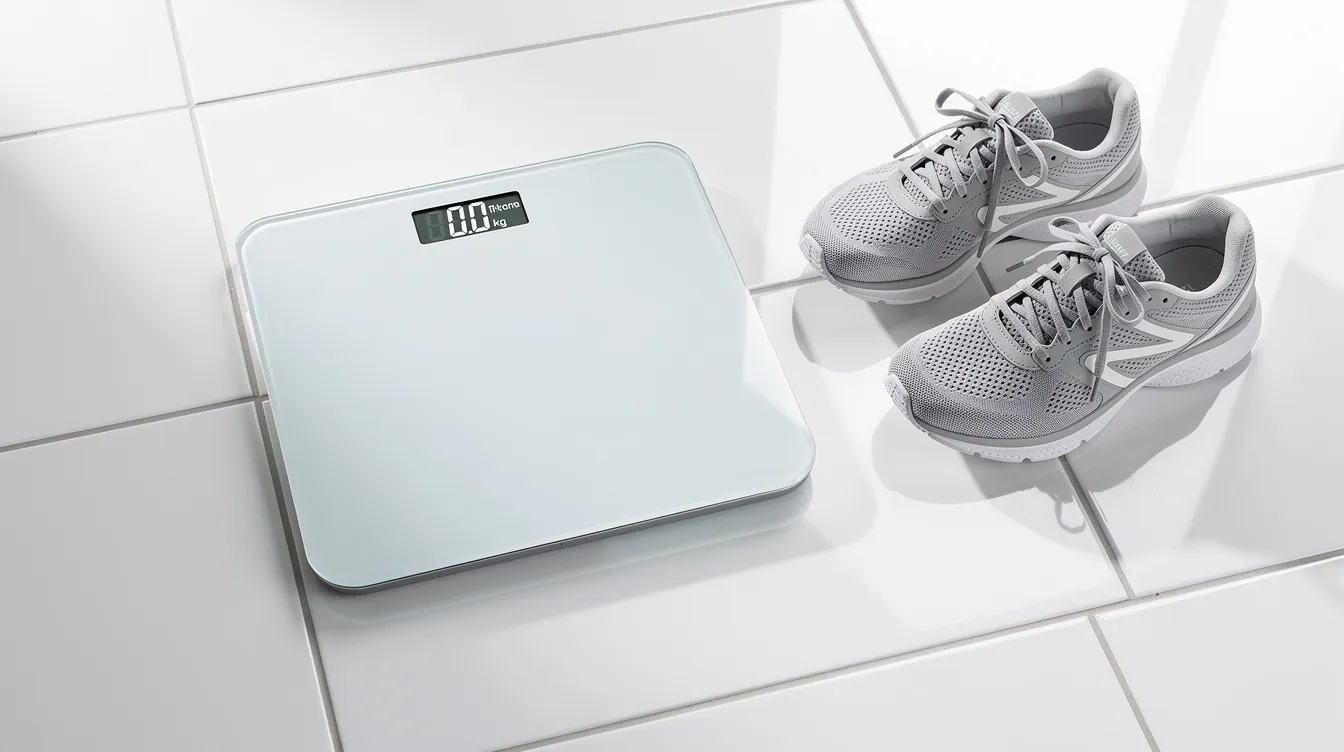
Calibration and zeroing: Before each use, confirm the display reads "0.0." If your model supports calibration against known reference weights, calibrate your digital weighing scale at home monthly - this is required in trade and lab environments.
-
Consistent conditions: For body weight tracking, weigh yourself at the same time each day - morning, before breakfast, in similar clothing. If you do not have a scale, there are several ways to check your weight without a weighing machine, but note that fluctuations from water intake, food, and hydration can shift readings by over a kilogram.
-
Environment: Sensitive balances need a room free from drafts, vibration, and temperature swings. In a lab, keep draft shields closed when weighing fine powders. Electrostatic interference can also skew readings on analytical instruments.
-
Maintenance: Clean the platform regularly, replace the battery in digital units before it runs low, and check that mechanical parts in analogue devices move freely. Maintaining your scale extends its lifespan and keeps it accurate.
Weighing and "Weigh Anchor" as Metaphors in Decisions and Emotions
The figurative sense of weighing borrows directly from the physical scene: just as heavy objects are harder to carry, difficult decisions are harder to bear mentally.
When people weigh options - whether job offers, financial choices, or health treatments - they are comparing arguments, costs, and chances of success much like placing items on opposite pans of a balance. "She weighed the evidence carefully before writing her report" shows this evaluative sense in a formal context. In legal and journalistic settings, weighing evidence means judging the strength and reliability of data before reaching a decision.
Emotional weight works the same way. Expressions like "weighing on my mind" and "weighing you down" represent the burden of guilt, responsibility, or stress. "Choosing between staying close to family or moving for a better career weighed on him for months" illustrates how the metaphor captures inner conflict. The money, the scene, the relationships - all these considerations press down like physical mass.
This metaphor endures because it is intuitive: heavy things are hard to carry, and hard decisions are hard to make. Whether you are delivered good news or bad, the weight of what comes next is something everyone understands.
Summary: Why Weighing Still Matters Today
Weighing plays a dual role in modern life. On one side, precise measurement with tools like digital weighing scales supports everything from health tracking and cooking at home to commerce, logistics, and scientific research. On the other, the figurative act of weighing - carefully evaluating evidence, opinions, and emotions - guides the decisions that shape our personal and professional lives.
Whether you are checking body weight trends, measuring ingredients for tonight's dinner, or sorting through a difficult choice, accurate weighing habits make a real difference. Step on a reliable scale, zero it first, and trust the data. And when the decision is mental rather than physical, take the same disciplined approach: gather the facts, compare them honestly, and act on what the balance tells you.


