


Your weight on a scale is one of the simplest health numbers you can track, yet it is also one of the most misunderstood. What does that number actually represent? How can you get an accurate result every time? And which type of weighing scale fits your life - or your business? This guide covers everything from the physics behind your reading to the manufacturing capabilities behind the instrument itself.
Understanding "Weight on a Scale"
In a strict scientific sense, mass and weight are different things. Mass is the amount of matter in your body, measured in kilograms or pounds. Weight is the force that gravity exerts on that mass, technically measured in newtons. On Earth, gravity is roughly constant, so every weighing scale you step on is calibrated to convert that downward force into a mass reading you can read in familiar units.
A weighing machine accomplishes this conversion through either a mechanical spring or an electronic sensor. When you stand on the platform, the device registers how much load is applied, processes that data, and displays a number. The entire system assumes a stable gravitational field, which is why a scale calibrated at sea level might show a slightly different reading on a mountain peak - though for everyday purposes, this difference is negligible.
Why might two weight scales disagree? Imagine stepping on a digital bathroom scale that reads 70.0 kg, then moving to a mechanical dial scale that shows 69.4 kg. The difference comes down to calibration, sensor quality, and the surface the device sits on. Research has shown that dial scales can carry an initial offset of nearly 1 kg, while digital models auto-zero more reliably. Omace Brands Private Limited manufactures both mechanical and digital scales for home, kitchen, clinic, and industrial use, so the comparisons in this guide refer to real weighing machines in everyday environments.
How to Read Your Weight on a Scale Accurately
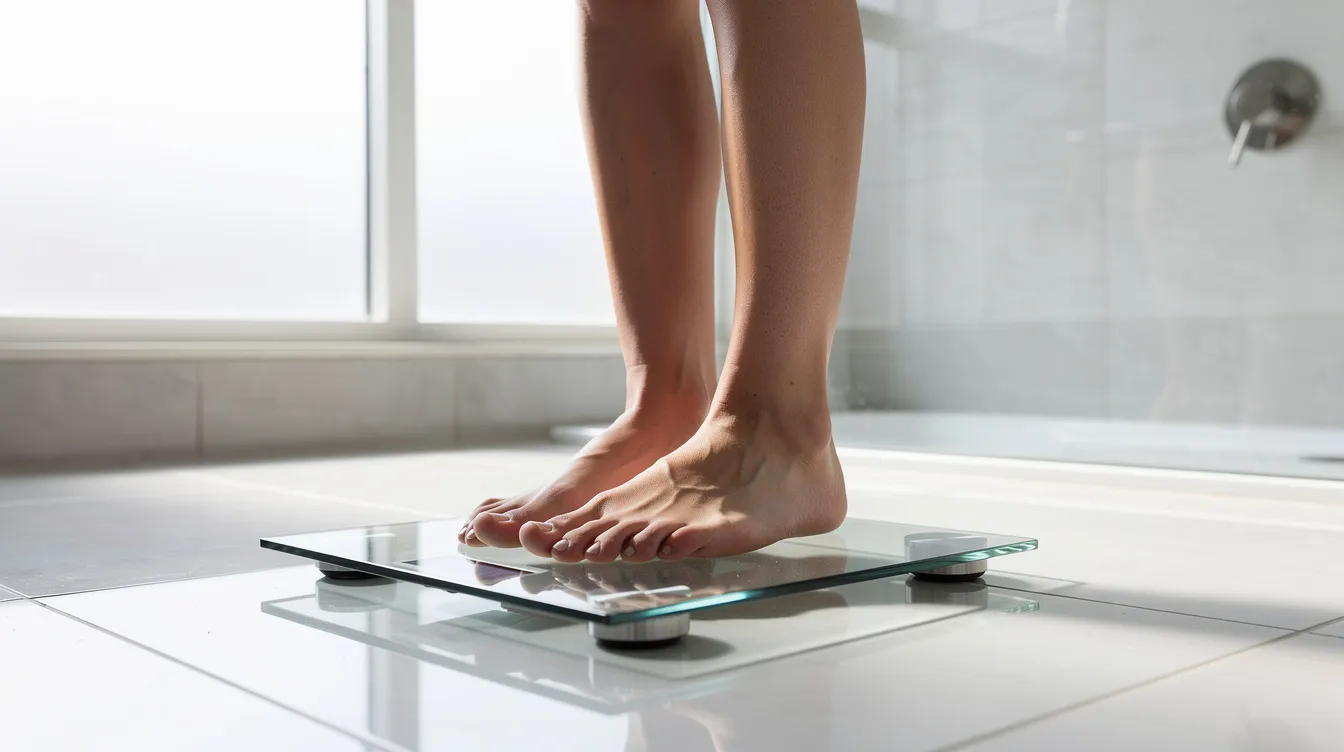
To weight accurately on a digital bathroom scale, start by placing the device on a hard, flat surface such as tile, marble, or hardwood. Carpet absorbs pressure unevenly and can affect your reading by a kilogram or more. Wait for the display to reset to 0.0, then step on with both feet centered on the platform. Stand still, distribute your weight evenly, and wait until the digital weight reading stabilizes - typically two to three seconds.
Daily weigh-ins should be done under similar conditions for accuracy. The most reliable approach is to weigh yourself at the same time each day - for example, at 7:00 am, after using the toilet and before breakfast, wearing minimal clothing. Heavy clothing can add extra weight during scale measurements, and even a glass of water adds roughly 250 grams. Many health professionals recommend weighing two to three times per week rather than daily, since daily weight fluctuations occur due to hydration and food intake. A high-carb meal can significantly alter weight due to glycogen and water binding, and fluid loss from sweating can decrease scale weight without fat loss. Hydration can cause temporary increases in weight from water consumption, so water weight is a factor you should expect, not fear.
In doctor's offices and clinics, you may encounter a balance beam scale - a mechanical instrument with sliding counterweights on a horizontal bar. To read it, a nurse moves the large slider to the nearest major increment (for example, 50 kg) and then fine-tunes with a smaller slider (say 3.5 kg), giving a total of 53.5 kg. Mechanical balances measure mass using a pivoted lever system and remain common because they require no batteries and hold calibration well when maintained.
Common mistakes include placing the scale on carpet, leaning against a wall, or weighing immediately after a heavy meal or intense workout. Each of these creates a reading that does not reflect your true resting body weight.
Types of Weighing Scales and What They Measure
Not all weighing scales are the same. There are several types of weighing scales sold across consumer and commercial markets, each designed for a specific range, precision, and use case.
On the consumer side, a digital bathroom scale handles body weight at home, typically up to 180 kg with 100 g resolution. A smart weighing machine goes further: many digital scales measure body fat and muscle mass alongside weight, body mass index, and water percentage. Kitchen weighing scales handle 5 kg to 10 kg loads with 1 g precision for recipes and portion control. Baby weighing machines use cradle-shaped trays to safely measure infants up to about 20 kg. Jewellery weighing scales operate in grams and milligrams - 600 g capacity with 0.01 g resolution is standard for gold and gemstone work. At the extreme end of precision, a microbalance measures mass in the millionths of a gram, serving pharmaceutical and research applications.
On the commercial and industrial side, crane scales measure the weight of suspended objects using a hook, making them essential for logistics and construction. Bench and platform scales handle packages and sacks from 150 kg to 500 kg and beyond. Retail price-computing models support shops and kirana stores with balanced price-per-kg calculations. Pendulum scales are unaffected by variations in gravity, making them useful in specific scientific and trade contexts. A programmable scale can be set for various applications like counting, making it valuable for inventory management.
Omace Brands manufactures personal, smart, kitchen, baby, jewellery, hanging, and platform models - and offers OEM and private label variants for each category.
How Digital Scales Work vs Mechanical Weighing Machines
Older mechanical weighing machines rely on a metal spring that compresses under load. As the spring moves, levers translate the motion into a pointer rotating over a circular dial marked from 0 to 130 kg or 150 kg. These devices work without electricity, but springs lose elasticity over months and years, creating drift. Most dial models display weight in 500 g increments, which limits how precisely you can monitor small changes.
Digital weighing scales use a fundamentally different approach. Digital scales typically use strain gauges for accurate measurements. A strain-gauge load cell is a small metal beam that deforms microscopically under pressure. That deformation changes the electrical resistance of bonded gauges, producing a voltage signal. Internal electronics - an analog-to-digital converter and a microcontroller - process this signal and display the result. Digital scales display weight on a liquid crystal display (LCD), giving users a clear, unambiguous number.
For example, a 150 kg digital bathroom scale from Omace uses four high precision sensors (one load cell per corner) with 100 g divisions. Compare that to a 120 kg dial scale with 500 g increments: the digital version is five times more granular and far less susceptible to mechanical drift. Digital scales provide precise weight readings for health tracking precisely because they eliminate the spring fatigue and parallax errors that affect analog models.
Omace digital weighing machines use CE-compliant, tested load cells and are manufactured under ISO 9001 quality systems in India, making them reliable for both home and professional environments.
Body Composition and Body Fat: Beyond Just Weight on the Scale
Weight alone is a limited measure of fitness and health. Two people can step on a scale, both reading 75 kg, yet one may carry 18% body fat while the other sits at 30%. The difference lies in body composition - how much of your weight is fat, muscle, bone, and water.
Digital scales can measure body fat and muscle mass through bioelectrical impedance analysis (BIA). A smart body composition scale passes a low, safe electrical current through metal footpads. Fat, muscle, and water resist this current differently, and the scale's algorithm uses those resistance values alongside inputs like height, age, and sex to estimate body fat percentage, muscle mass, bone mass, and water percentage. BMI is a tool for evaluating weight in relation to height but has limitations - it cannot distinguish between fat and muscle. Using body composition metrics provides a better understanding of health than BMI or weight alone.
Some digital scales sync with mobile apps for health tracking, and digital scales can store previous measurements for trend tracking. For instance, an Omace Hoffen smart scale can sync wirelessly via Bluetooth to a mobile app, showing trends over weeks. An office worker starting at 32% body fat might track progress down to 27% over three months - that kind of data is impossible to capture with a basic scale. Weight measurement should consider body composition for accurate health assessment, and tracking trends over weeks provides more insight than daily fluctuations. Composition numbers are estimates with potential errors of 2–4 kg for fat mass, but they remain useful for monitoring fitness tracking over time.
Domestic Weighing Scales: Bathroom, Kitchen, and Baby
Home weighing scales are daily health and life management tools. Choosing the right one depends on who is using it and why.
Digital bathroom scales typically offer 150–180 kg capacity with 100 g resolution. Look for clear LED displays for easy reading, tempered glass platforms for durability, anti-slip feet, and large backlit LCDs. Select a model with a higher weight capacity for multiple users in a household. Most adults and teenagers benefit from weekly weight monitoring to track progress without obsessing over daily swings. Choose durable materials like tempered glass for longevity - they resist scratches and are easy to clean.
Kitchen weighing scales handle capacities of 5 kg to 10 kg with 1 g resolution, perfect for weighing 200 g flour, 30 g nuts, or 500 g chicken for precise recipes or calorie counting. Omace is a 5kg kata manufacturer from India and supplies government stamped kata at a competitive rate for small retailers, mandis, and institutional buyers.
Baby weighing machines feature special tray designs for infants up to around 20 kg. Monitoring newborn growth month by month during the first 12 months is critical, and some Omace baby scales offer dual mode - a removable baby tray plus a standing toddler platform - making the machine useful well beyond infancy.
Jewellery, Laboratory & Industrial Weight Scales
Omace is a made-in-India manufacturer and exporter for precision and industrial weighing machines across a wide range of applications.
Jewellery precision scales commonly offer 300 g or 600 g capacity with 0.01 g or 0.001 g resolution. These are standard equipment in jewellery stores and hallmarking centers for weighing gold chains, diamond stones, and silver coins. Precision scales are important for industries requiring accurate weight measurements down to fractions of a gram.
Laboratory and analytical balances serve schools, colleges, and R&D labs with even higher precision requirements. Draft-shield designs and stable platforms protect sensitive measurement from air currents and vibration, ensuring each reading reflects true mass.
Industrial and platform weighing scales come in platform sizes like 400×400 mm and 600×600 mm with capacities from 150 kg to 500 kg or more. Example uses include weighing sacks of rice, cartons, and drums in warehouses, agro markets, and manufacturing units. Omace can integrate simple indicator displays or advanced weighing scales with indicators featuring RS-232 or USB for data logging.
All trade-use models are available as legal metrology of India certified and government stamped instruments. Institutional buyers can purchase through the Indian Government e-Marketplace (GeM).
Accuracy, Calibration and Legal Metrology in India
Two weighing machines showing slightly different weights is normal - but for trade, that gap has legal consequences. Calibration is the process of checking and adjusting a scale against certified reference weights (1 kg, 5 kg, 20 kg) at regular intervals, typically every 6–12 months in commercial settings.
Under India's Legal Metrology Act of 2009 and subsequent rules updated through 2025, weighing scales used for buying and selling - in vegetable shops, jewellery stores, pharmacies, and industrial trade - must be verified and stamped by the Legal Metrology Department. Models must receive pattern approval from Regional Reference Standards Laboratories before manufacture. Non-trade scales used at home, gyms, or clinics should be clearly marked "Not for Trade." Calibration best practices apply to both trade and home scales.
Omace weighing machines can be supplied as legal metrology of India certified and government stamped kata at cheap rate for small traders, mandis, and retail chains.
To maintain accuracy at home: keep the scale on a stable, level floor; avoid overloading beyond rated capacity; protect the device from moisture, shock, and extreme heat or cold; and replace batteries promptly in digital scales when the display fades.
Choosing the Right Weighing Scale for Your Needs
Choose a scale based on your tracking needs. Here is a practical plan for both individuals and businesses.
For home users, a simple digital bathroom scale with 150–180 kg capacity handles basic monitoring. For detailed fitness tracking, a smart body composition scale with Bluetooth app integration lets you monitor body fat and muscle mass trends - tracking weight can motivate users to achieve fitness goals. For cooking, a compact kitchen weighing scale with tare function covers everything from baking to calorie counting. Weighing scales help set realistic health targets effectively, and regular weight monitoring helps track health changes over time.
For professional and business buyers: jewellery shops need 0.01 g precision scales with counting functions; retail stores require price-computing bench scales with legal-for-trade approval; warehouses and factories benefit from platform scales in the 150–1000 kg range with robust mild steel or stainless steel construction.
When reviewing specification labels, check capacity, division size, power type (battery or mains), protection rating, and legal metrology markings. Omace Brands offers house brands (Ace, Venus, Hoffen) for direct purchase and unbranded OEM shells ready for private label customers. Reading reviews and comparing models before purchase will help you determine which features matter most.
Omace OEM & Private Label Manufacturing Capabilities
Omace Brands Private Limited is a B2B and B2C manufacturer, exporter, and OEM/private label partner for weighing scales and digital weighing machines. With over 30 years of experience, Omace supports brands that want to develop and launch their own weighing product lines without building a factory.
Private label options include custom branding - logo printing on glass, metal, or plastic platforms, branded gift boxes, and user manuals. Clients can specify custom colors, finishes, and platform designs. For example, a European kitchenware retailer might order stainless-steel kitchen scales with their own logo, while a wellness brand could launch a custom smoart Bluetooth body fat scale range with Omace as the backend manufacturer, creating a product line that includes app integration and cloud APIs.
Product categories available for OEM include personal digital scales and digital bathroom scales (with or without body composition features), smart Bluetooth and Wi-Fi scales, kitchen scales (5 kg and 10 kg kata) for supermarkets and kitchenware brands, baby scales, jewellery scales, hanging scales, and industrial platform scales.
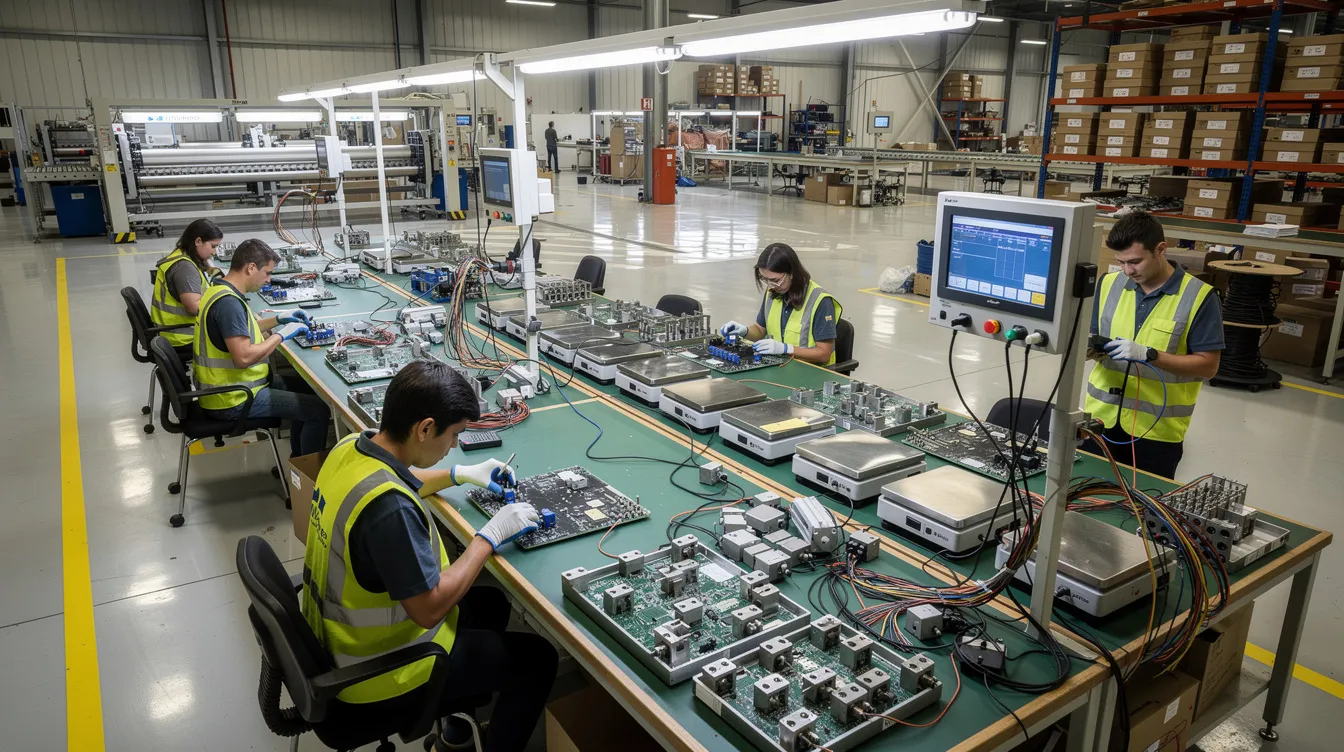
Manufacturing and quality advantages include made-in-India production under ISO 9001 quality systems, CE-compliant electronic designs, RoHS components where applicable, in-house tooling, PCB assembly partnerships, and final calibration lines. Omace serves domestic Indian brands, export buyers across the Middle East, Africa, and Europe, and supports bulk orders through the government e-marketplace and direct export channels. Minimum order quantities for private labeling start from approximately 200 pieces.
Best Practices for Using and Caring for Your Weighing Scale
An accurate reading of your weight on the scale depends as much on how you use and maintain the device as on the device itself.
For daily use, always place your weighing scale on a hard, flat surface - never on carpet. Step on gently and stand still; shifting your feet during measurement skews the reading. For family scales, assign one fixed weighing slot per day (mornings between 6–8 am work best). Consistent readings come from consistent habits.
For maintenance, wipe the platform regularly with a soft, slightly damp cloth and avoid harsh chemicals on tempered glass or ABS plastic. Never overload beyond maximum capacity - stepping 180 kg onto a 150 kg scale can permanently damage sensors. Remove batteries if you plan to store a digital scale for several months.
For longevity, keep scales away from continuous moisture unless rated for such conditions. Ensure rubber feet or anti-slip pads remain intact to prevent the device from sliding. For baby and jewellery scales, store them in protective cases to preserve sensitivity. Check batteries every 6–12 months, and monitor whether the scale still returns to zero consistently - if it does not, it is time for recalibration or replacement.
Frequently Asked Questions About Weight on a Scale
This section addresses common questions that Omace customers and general users ask about weighing.
Why does my weight change during the day? Body weight changes can occur from salt and carb intake that causes water retention, food sitting in your digestive system, and fluid loss through sweat and respiration. It is common to see a 1–2 kg difference between a morning and evening measurement. Extreme fluctuations in weight are typically not representative of fat gain - they usually reflect water and food mass. Weight fluctuations can indicate health issues requiring attention only if they are persistent and unexplained.
Is a digital scale more accurate than an analog one? Yes, generally. Studies show digital scales have errors of about ±0.1–0.6 kg, while dial scales can be off by 0.5–1.2 kg depending on the load. Digital models auto-zero reliably; many analog scales do not, making it almost impossible to get a balanced baseline without manual adjustment.
Can a weighing scale measure BMI or body fat by itself? Basic digital scales measure weight only. To calculate BMI, a scale needs your height input. For body fat, muscle mass, and water percentage, you need advanced weighing scales with bioelectrical impedance sensors. Not every model has these features - check the specifications before you buy.
Do digital scales need special batteries? No. Most consumer models use standard AA, AAA, or CR2032 lithium coin cells. There are no proprietary batteries required for any Omace scale.
When should I replace my weighing scale? Replace it after clear physical damage, repeated inconsistent readings despite recalibration, or when your needs evolve - for instance, moving from a basic bathroom scale to a smart composition scale to shed light on deeper health metrics.
Can Omace make a custom-branded weighing scale for my company? Absolutely. Omace offers full OEM and private label services with minimum orders starting at approximately 200 pieces. You can customize branding, packaging, colors, and electronic features. Reach out through our B2B sales channel to discuss your requirements and achieve a product line tailored to your market.


