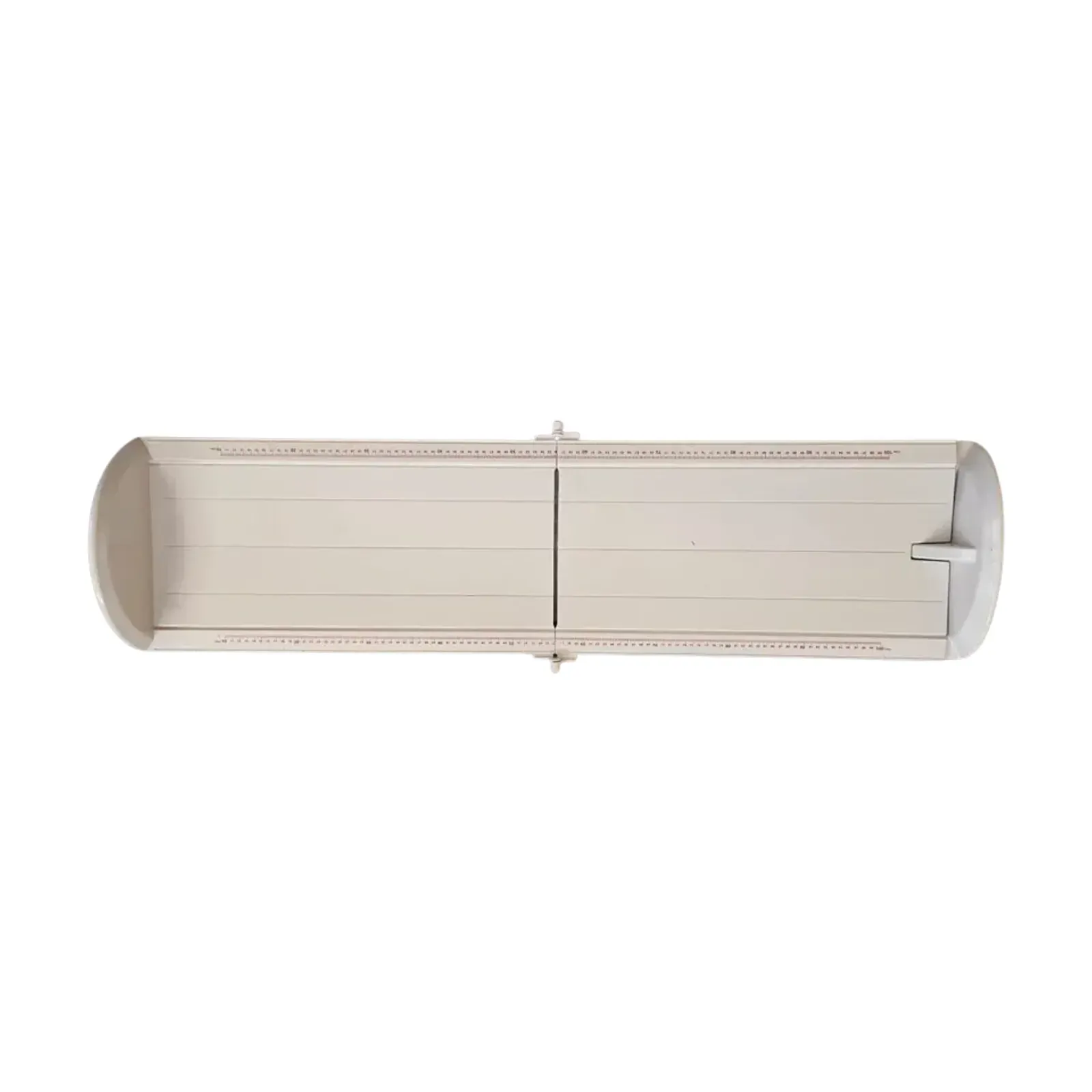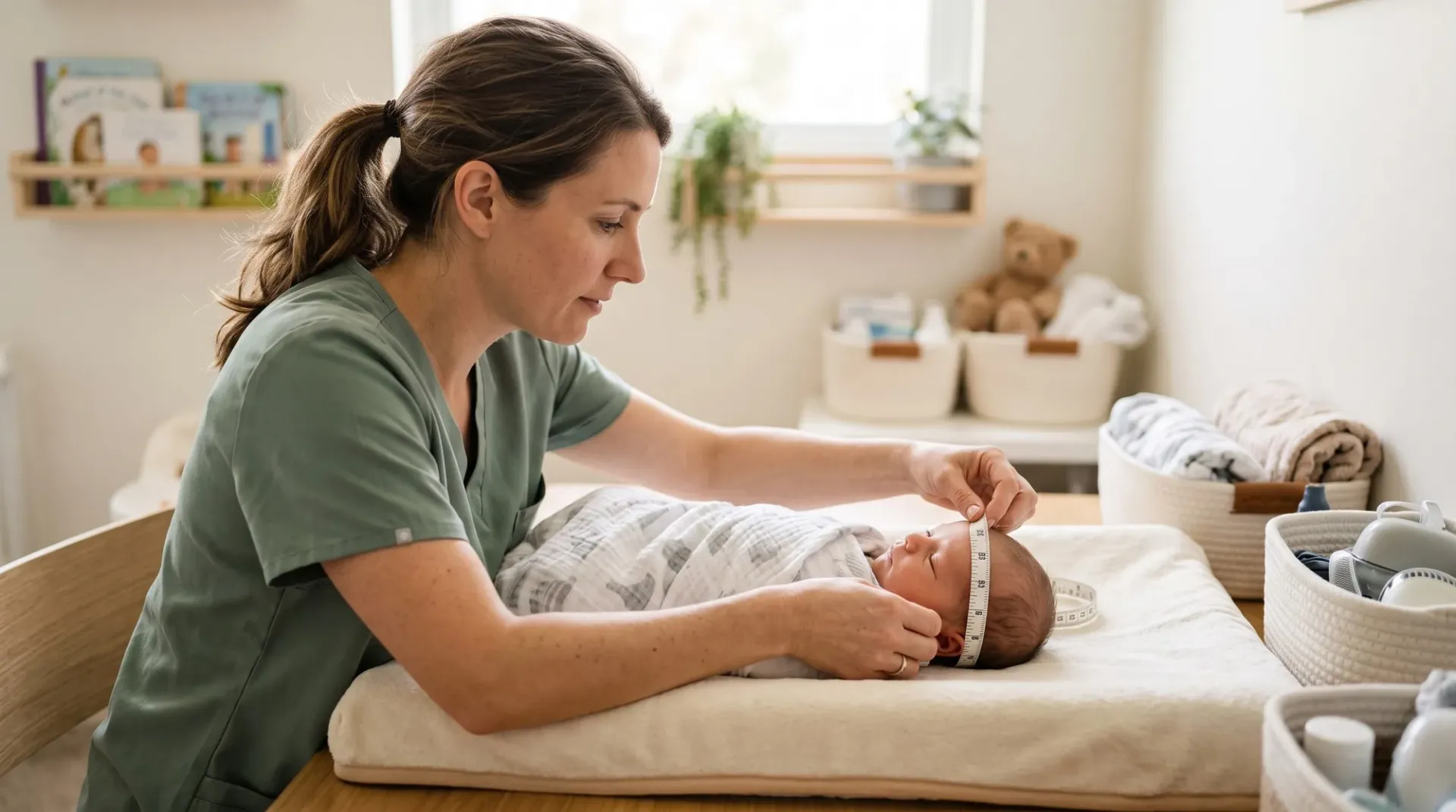
An infantometer measures a baby's length lying down, and it is used from birth until about 2 years of age. The WHO growth-assessment course measures every child under 2 this way, with two people: one holds the head against the fixed headboard, and the other straightens the legs and slides the footboard against the feet. The length is read to the last completed 0.1 cm.
What an infantometer measures
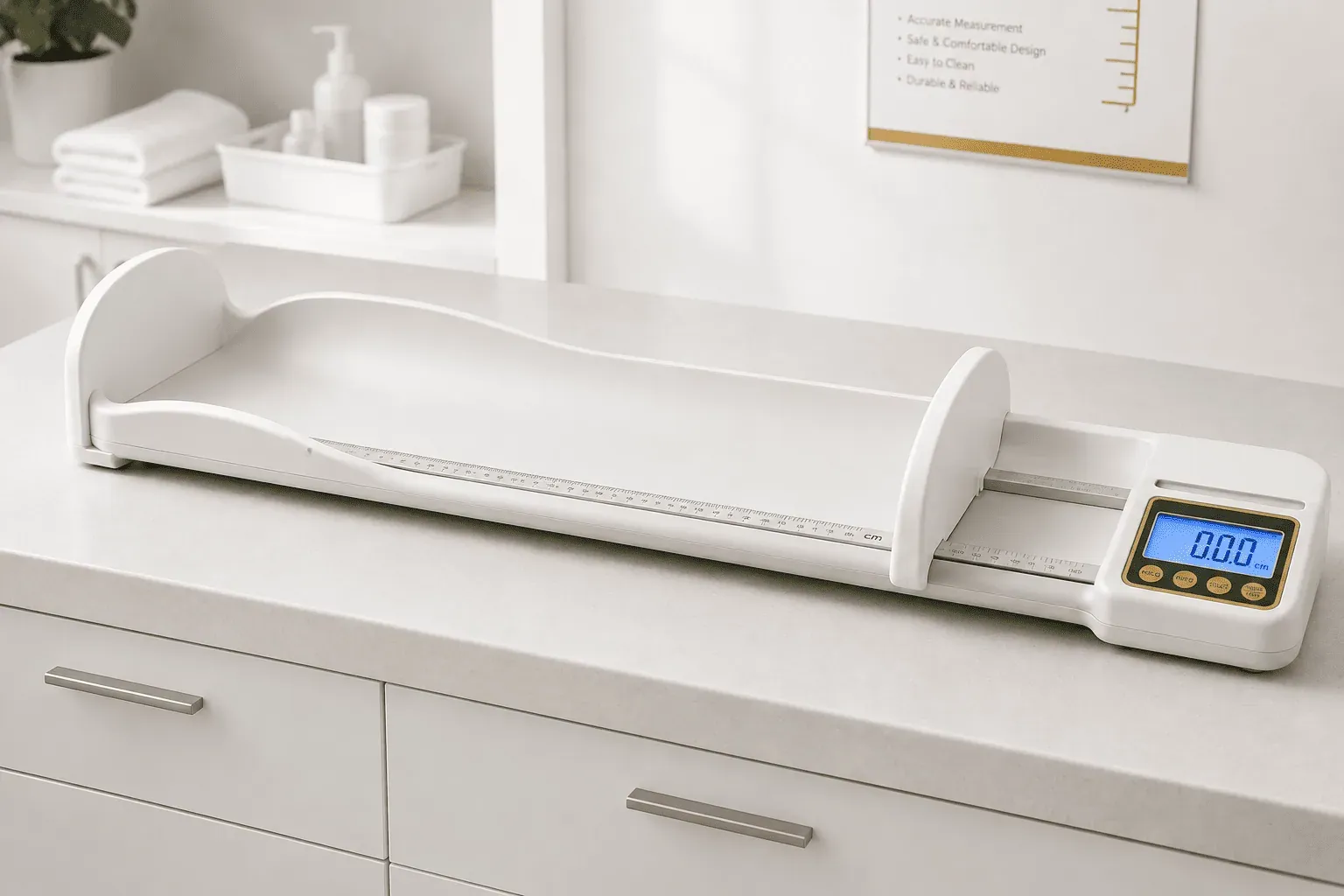
An infantometer is a length board with a fixed headboard and a sliding footboard that measures a baby's length from the top of the head to the soles of the feet, with the baby lying on its back. WHO's training course calls it a length board, "sometimes called an infantometer". The reading is plotted on the WHO length-for-age chart, one of the main charts a doctor uses to follow a baby's growth.
A good board has a firm, flat surface and a tape marked in 0.1 cm (1 mm) steps. WA Health's length assessment procedure also asks for a headboard fixed at a right angle to the tape and a footboard that moves at a right angle to it.
Infantometer age range: birth to 2 years
WHO measures length lying down for every child under 2 years, and standing height from 2 years onward. Standing height is about 0.7 cm less than lying length, so the two methods are not swapped without a correction:
- A child under 2 who will not lie down is measured standing, and 0.7 cm is added.
- A child of 2 or older who cannot stand is measured lying down, and 0.7 cm is subtracted.
The board must be long enough for the oldest child it will measure. On WHO's length-for-age tables, a 2-year-old boy at the 97th percentile measures 93.6 cm, so a 0–100 cm board covers the full age range.
Infantometer vs stadiometer vs stature meter
All three measure how tall a child is; they differ in whether the child lies or stands.
| Tool | Child's position | Age | Omace model and range | Price |
|---|---|---|---|---|
| Infantometer (length board) | Lying on the back | Birth to 2 years | Omace ICDS-IFM Infantometer, up to 1 m in 1 mm divisions | ₹1,499 |
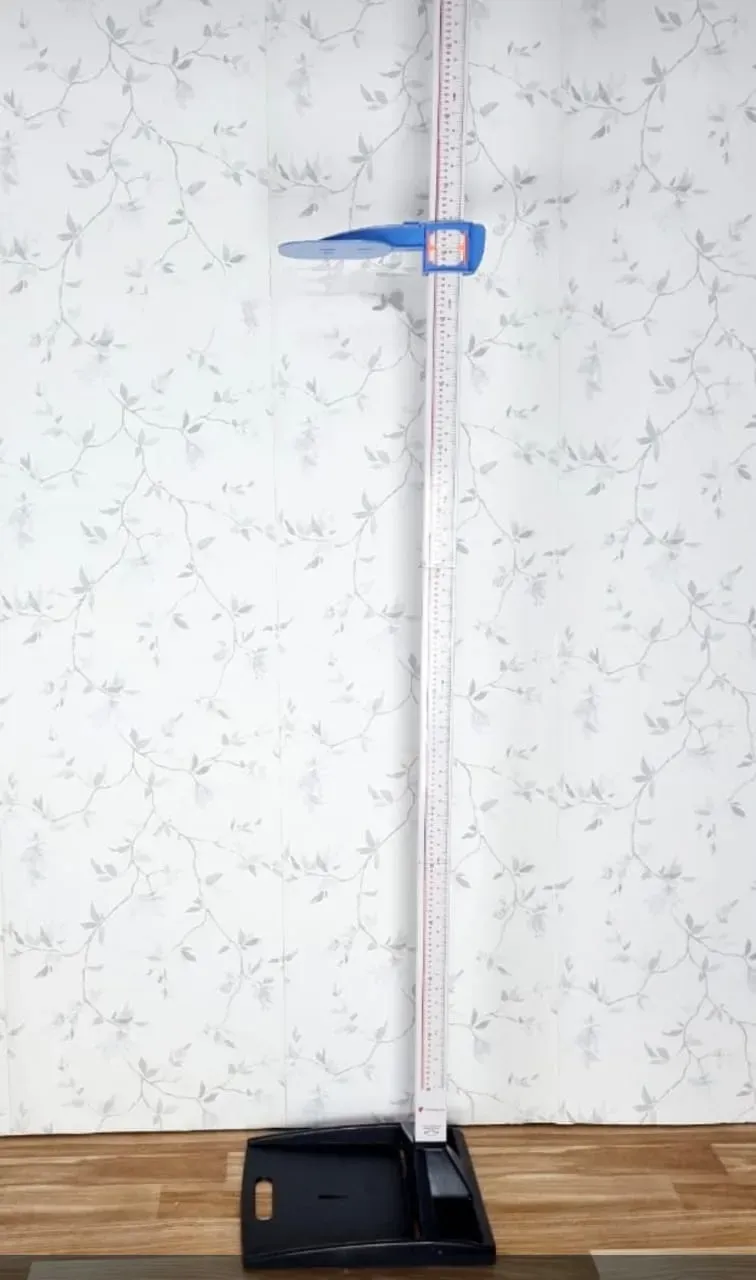
| Stadiometer (height board) | Standing | 2 years and older | ICDS-SDM Stadiometer, up to 2 m in 1 mm divisions | ₹1,499 |
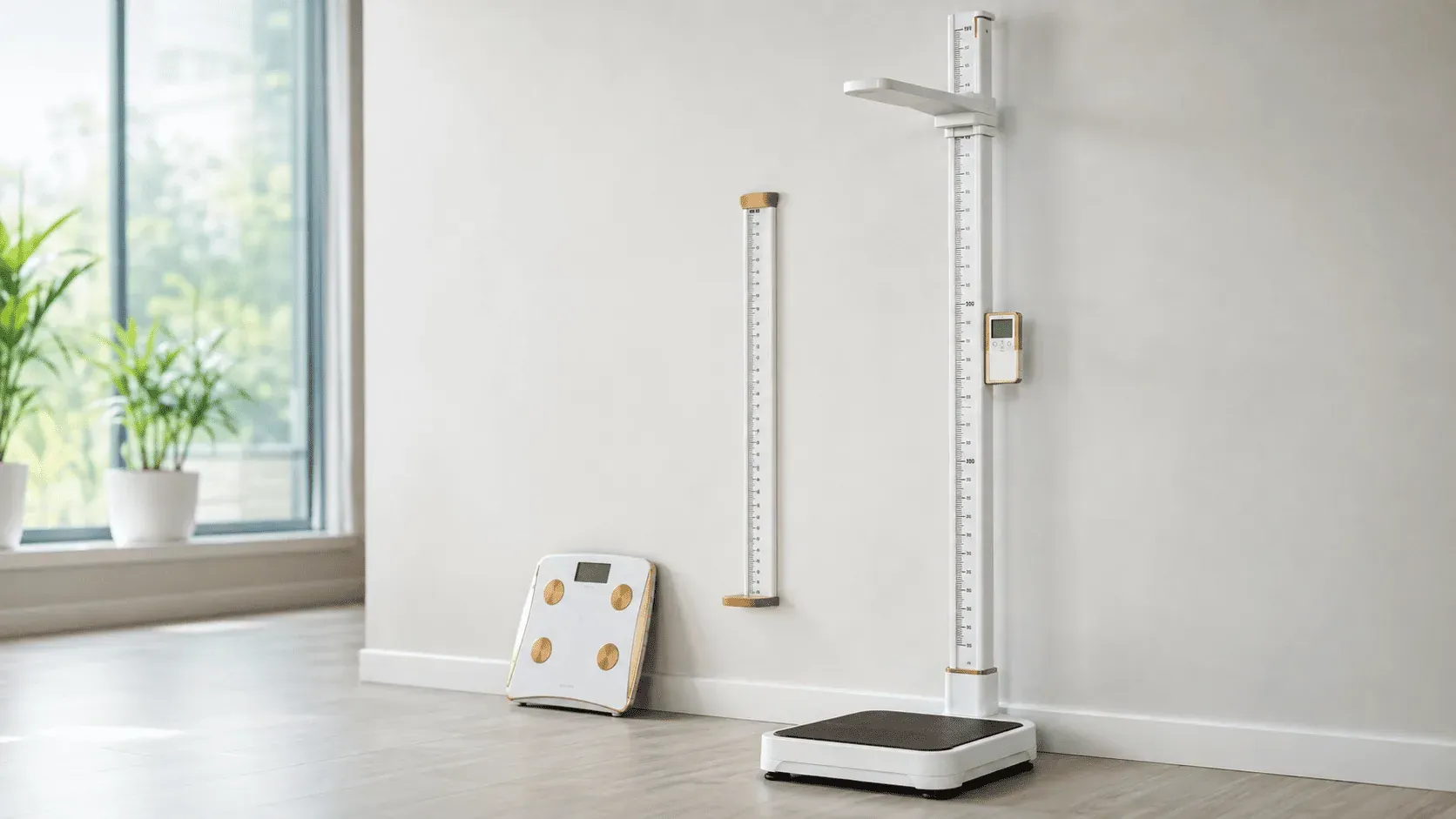
| Stature meter | Standing against a wall | Children who can stand, and adults | ICDS-SDM stature meter, wall-mounted tape, 0–200 cm | ₹320 |
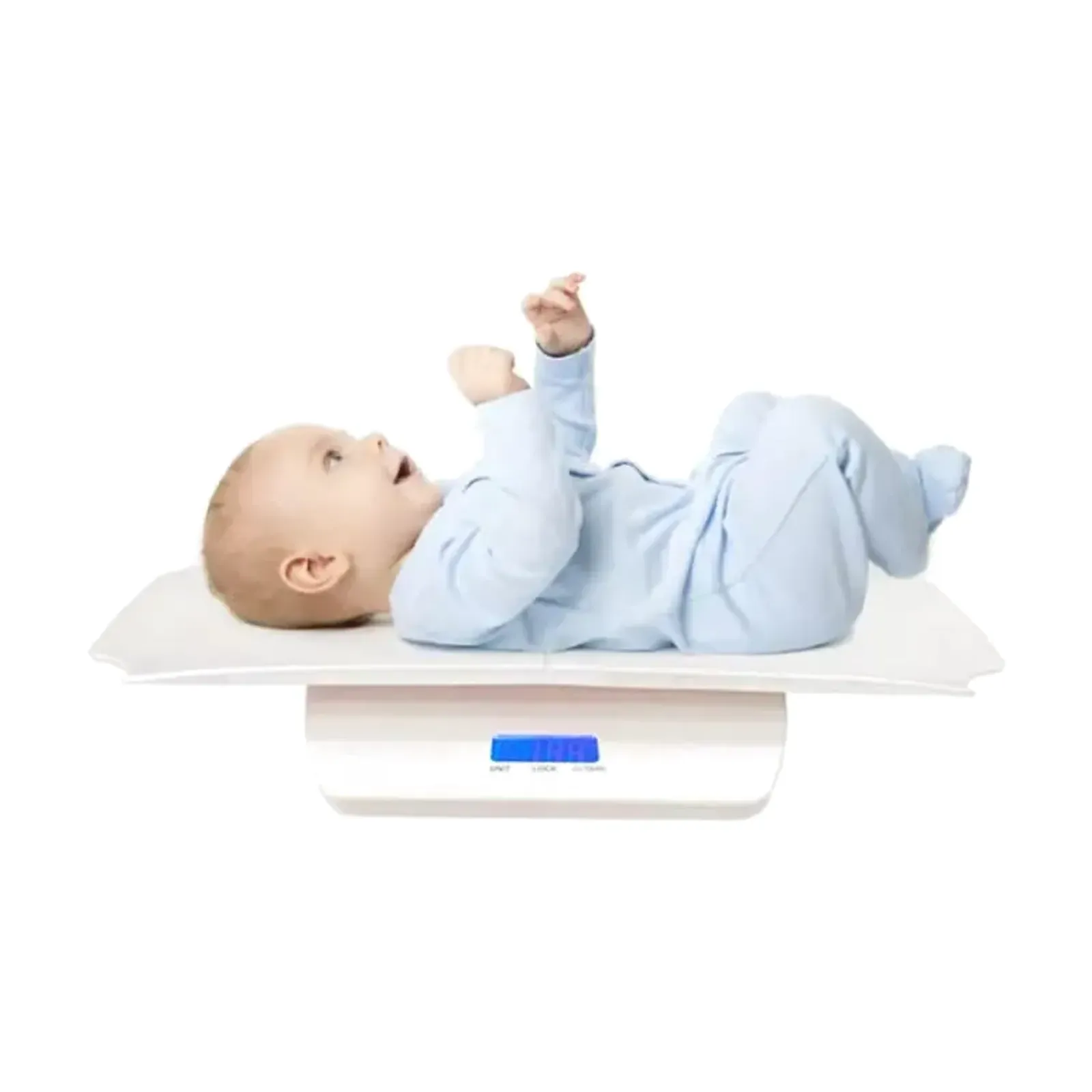
| Baby scale with length tape | Lying in the tray | Babies | Ace ICDS-MBS-KS-810 digital baby weighing scale, 600 mm tape | ₹3,299 |
Prices are from the Omace store in October 2026. The stadiometer and stature meter sit with the infantometer in Omace's height measuring instruments. For the standing tools, see what is a stadiometer and the wider guide on how to measure height accurately.
Before you measure
- Place the board on a firm, flat table or the floor, never on a bed or sofa.
- Cover it with a thin cloth or soft paper for hygiene and the baby's comfort, as the WHO course suggests.
- Remove shoes, socks, caps, hair clips and bulky clothing. WA Health notes that removing all clothing and the nappy gives a more accurate reading.
- Check that the footboard slides freely and that the markings are clean and easy to read.
- Have two people ready: usually a parent at the head and the person measuring at the feet.
Measuring a baby's length, step by step
These steps follow the WHO training course and the WA Health procedure:
- The parent lays the baby on its back, with the top of the head against the fixed headboard, then stands behind the headboard and holds the head in place.
- Position the head so the baby's eyes look straight up.
- Check that the body lies straight along the board, the shoulders touch it and the back is not arched.
- Hold the knees with one hand and gently straighten the legs. A newborn's knees cannot straighten as far as an older baby's, so use only light pressure.
- With the other hand, slide the footboard against the feet until the soles sit flat on it, toes pointing up.
- Lock the footboard if it has a lock, and read the length to the last completed 0.1 cm, the last line you can actually see.
- Write the reading down straight away with the date, then wipe the board with a mild disinfectant.
The Omace ICDS-IFM Infantometer has a fixed head piece and a sliding foot piece that locks, so the reading stays put while you note it down. Its scale is marked in 1 mm divisions, so the last completed 0.1 cm can be read directly.
Tips for an accurate reading
- Work quickly. The WHO course stresses speed, because a baby who gets upset will not lie straight.
- Measure twice. Take two readings and use the average if they differ slightly.
- Use one leg if needed. If a baby is very agitated and both legs cannot be held, WHO allows measuring with one leg in position.
- Re-measure odd results. WA Health re-takes a length that looks unexpected on the chart before acting on it.
- Check the board. The WHO course checks measuring boards at least once a week. It measures rods of known length when a board is assembled, keeps the joints tight and straight, and replaces a tape that is too worn to read.
Infantometers in India's child health programmes
The Ministry of Women and Child Development has adopted the WHO growth standards for children from birth to 5 years at Anganwadi centres. Length and height measurement was added after Poshan Abhiyaan began in 2018, with infantometers and stadiometers supplied to all Anganwadi centres. In Haryana, the Women and Child Development department reports 25,962 growth monitoring sets supplied to Anganwadi centres, each with an infantometer, a stadiometer, a mother and child weighing scale and an infant weighing scale.
Hospitals, ICDS projects and distributors can ask Omace for bulk quantities through the dealer and bulk order page.
Choosing an infantometer
- Clear markings in 1 mm steps, so a reading can be taken to 0.1 cm.
- A fixed headboard and a sliding footboard at right angles to the tape, with a lock to hold the reading.
- A range to at least 95 cm, enough for a tall 2-year-old.
- Rounded edges and a wipe-clean surface, because the board is cleaned before and after every baby.
- A wide, non-slip base that stays steady on a table.
The Omace ICDS-IFM Infantometer measures up to 1 m (0–100 cm) in 1 mm divisions. It is made in India of medical-grade ABS plastic with rounded edges and a wide non-slip base, measures 1100 × 300 mm and weighs 1.6 kg. It is fully manual, so it needs no batteries. Omace Brands Private Limited has made and supplied weighing scales in India since 1994, checks every product before dispatch, and gives a 2-year warranty on manufacturing defects for store purchases. More about Omace. Omace scales are made in India. As a manufacturer, Omace Brands Private Limited holds ISO 9001:2015, ISO 13485:2016 and EU MDR quality certificates, and CE and US FDA compliance certificates; each is listed with its certificate number on the Omace certificates page.
Length is one of three readings a doctor follows, with weight and head size. The boys growth chart lists the WHO length and height figures by age, and a doctor or paediatrician should assess any reading that worries you.