
Tested before dispatch
Precision isn't a feature we add, it's the standard we build to.
Every scale we dispatch goes through individual calibration and testing before it reaches you, so the number on the display is a number you can trust.
Whether you're measuring a gram of gold, tracking your body weight at home, weighing a newborn's first milestone or loading a warehouse pallet, accuracy shouldn't be something you have to hope for.
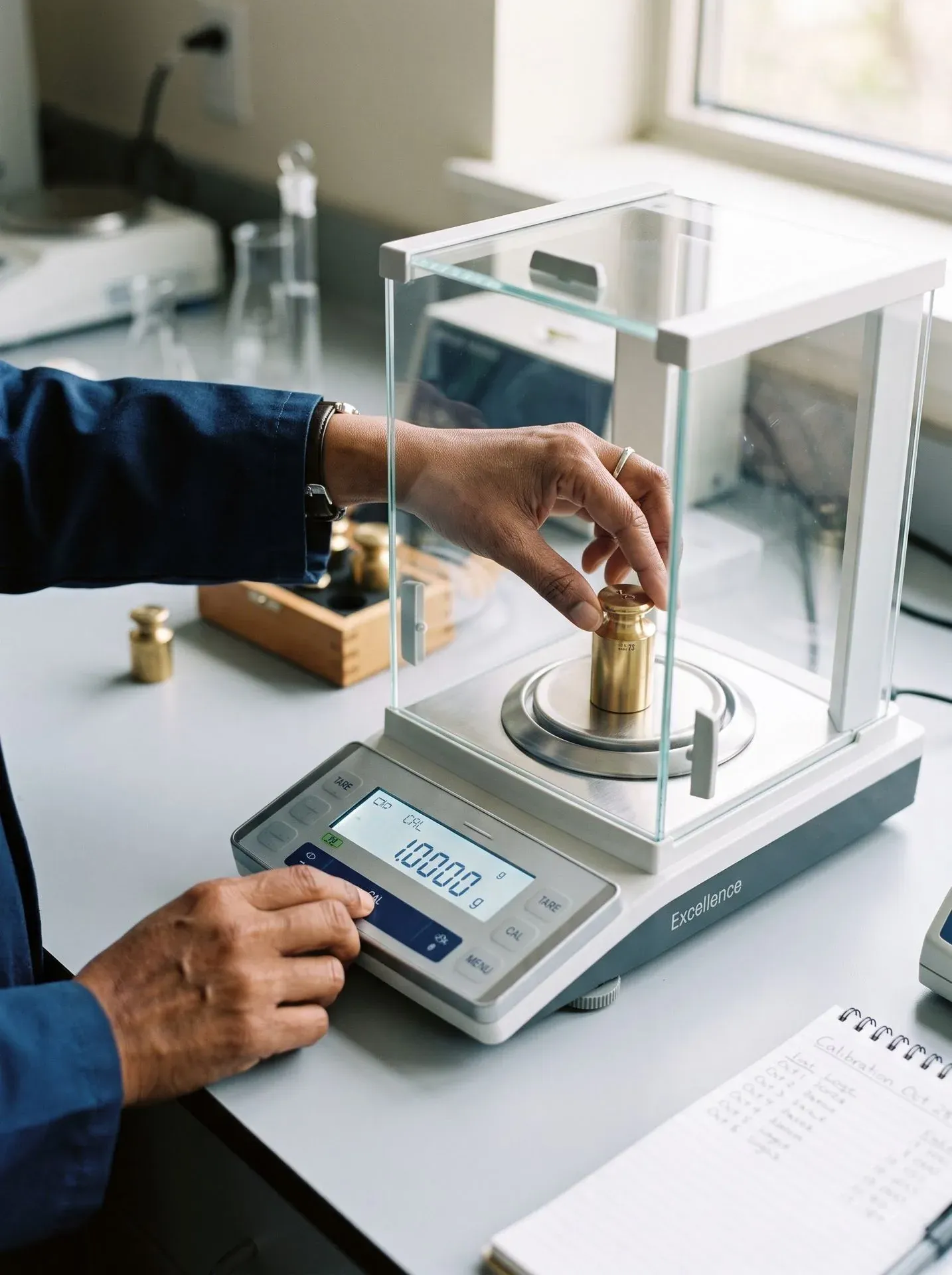
Why test again if it was calibrated at the factory?
Because calibration and delivery happen weeks or months apart.
Every scale is calibrated when it's made, usually in bulk, batch by batch. But between the production line and your doorstep, a scale goes through freight, warehouse storage, stacking and handling. Vibration, knocks, heat and humidity along the way can shift a load cell's reading. The scale still looks perfect, but the number may no longer be.
Most sellers ship the carton exactly as it arrived from production, and they trust that nothing changed on the way.
We open it and check. Right before packing your order, each unit goes on certified weights that match its capacity. If it reads true, it ships. If it doesn't, it's recalibrated or pulled.
- Units tested before dispatch
- 100% Units tested before dispatch
- One scale, one test
- 1 : 1 One scale, one test
- Failed units shipped
- 0 Failed units shipped
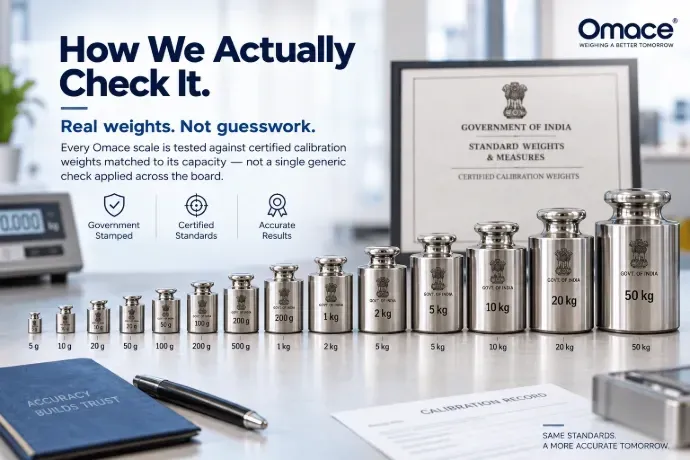
How we actually check it
Real weights. Not guesswork.
Every scale is tested against certified calibration weights matched to its capacity, not a single generic check applied across the board. A 20 kg platform scale is calibrated using 10 kg and 20 kg reference weights; a jewellery scale, built for gram-level precision, is tested with weights suited to its range.
What pre-dispatch testing actually gets you
- 1
Accuracy from day one
No calibration or "break-in" needed after unboxing: it's already verified to spec.
- 2
Less time troubleshooting, more time using it
No wondering if a weird reading is the scale's fault or yours: it was checked before it left our hands.
- 3
Numbers you can actually act on
Whether it's gold, medicine or a newborn's weight, "close enough" was never the goal.
The real cost of an untested scale
It's not just about accuracy on day one. It's about what happens after.
| Without individual testing | With individual testing (us) |
|---|---|
Reads slightly off from the first few days, and that gap only grows with time | Verified accurate before it ever leaves our facility |
A scale reading 2 kg off still looks and behaves like a normal scale: no error message, no warning light | You're not left guessing: it has already been checked against a certified reference before it reaches you |
Once it's noticeably wrong, you're looking at a replacement, and you bear the shipping and other charges | Nothing gets shipped until it's already correct, so this cost never arises |
Your only real fix is buying a calibration weight yourself: a cost that's useless for 99% of people, for a problem you shouldn't have had | We calibrate it for you, with the right reference weights, before dispatch |
No manufacturer, factory or trader, provides spare parts, so "out of warranty" often means "out of options" faster than people expect; most end up buying a new one anyway | We do the testing before you ever own it, so this risk is handled upfront |
Calibration is complex and differs by scale design: a YouTube fix on a similar model offers no guarantee on yours | You never need to attempt this: it's already been done correctly, by our own testing team |
Opening the scale to try a manual fix can void your warranty entirely, and the company may refuse further support or charge you extra | You're never in a position where you'd need to open it yourself |
Add up shipping costs, wasted time, and a scale you still can't fully trust | One less thing to worry about, from day one |
Untested doesn't mean broken. It means the risk of all of this (the cost, the wasted calibration weight, the voided warranty, the hassle) has been quietly handed to you instead of being caught before it was shipped to you.
What happens if a unit fails testing?
It doesn't leave our factory warehouse. Full stop.
If a scale doesn't meet our calibration standard, it doesn't get a pass: it goes back for recalibration and re-testing, or it's pulled from dispatch entirely. Nothing gets packed on the assumption it's "probably fine".
That's not a policy we advertise because it sounds good. It's simply what individual, unit-by-unit testing means in practice: you can't claim to test every scale and then ship the ones that fail anyway.
Backed by certification, not just claims
We don't just say our scales are accurate: we back it with independent certification.
01
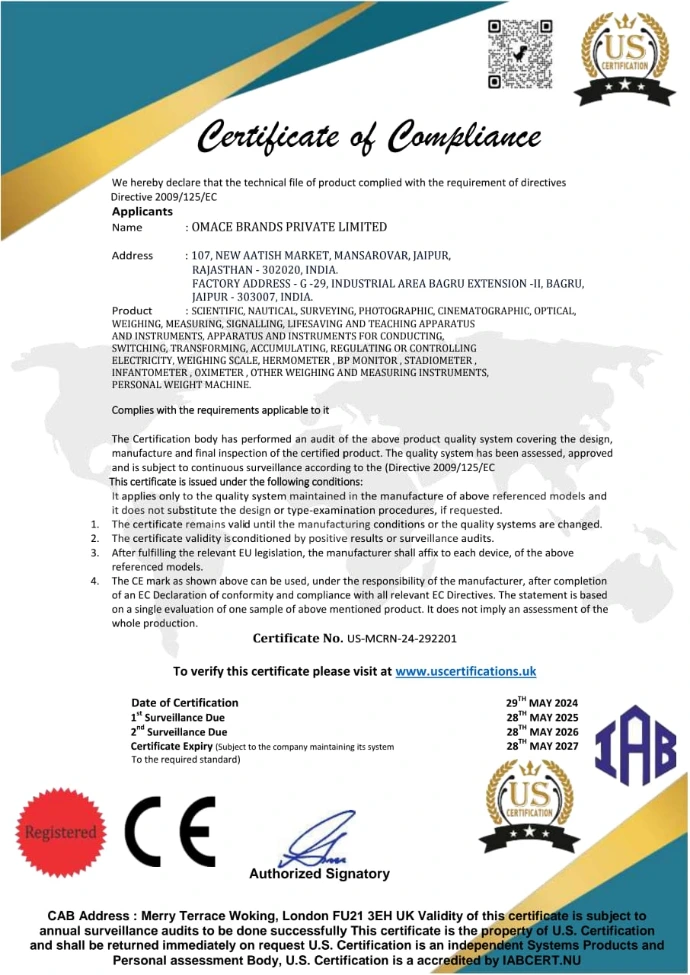
Certified to European Union safety and quality standards for weighing and measuring instruments.
02
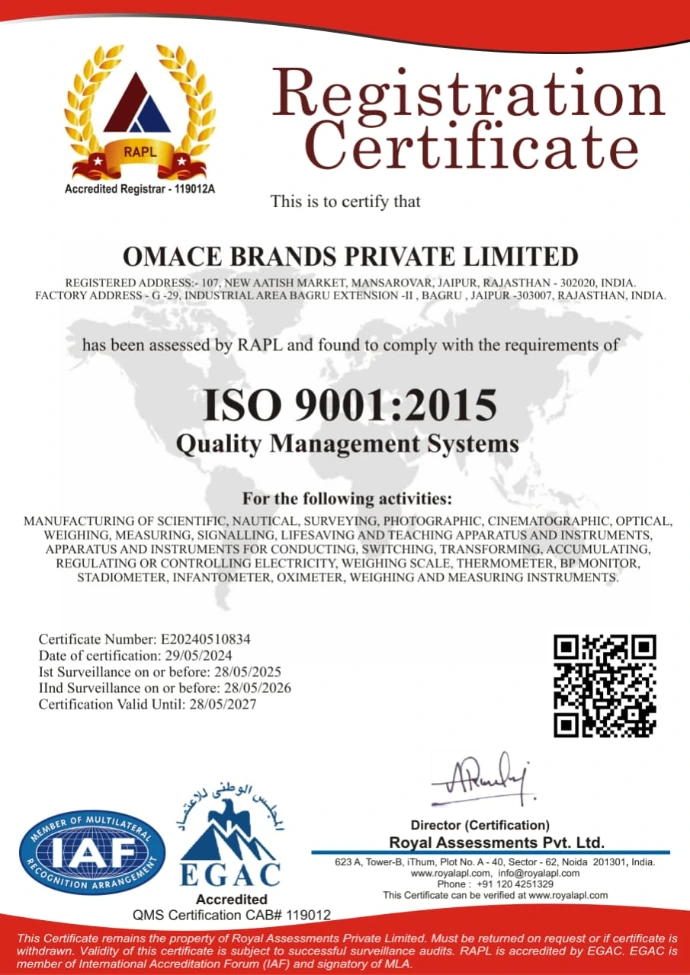
ISO 9001:2015 certified quality management system ensuring consistent manufacturing and reliable product quality.
03
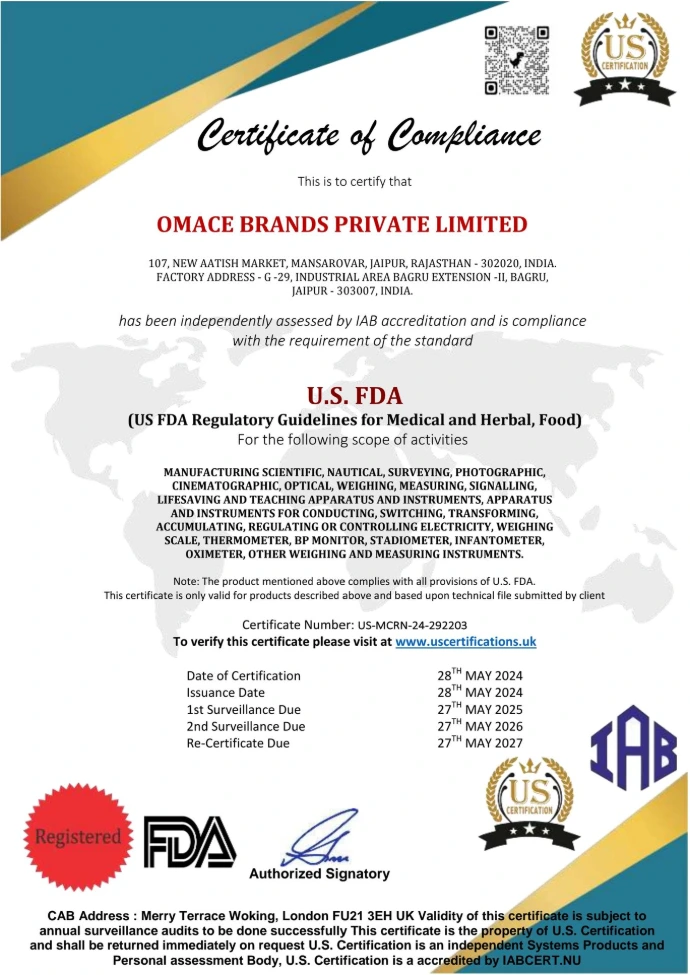
Certified to US FDA regulatory guidelines for manufacturing scientific and medical weighing instruments.
04
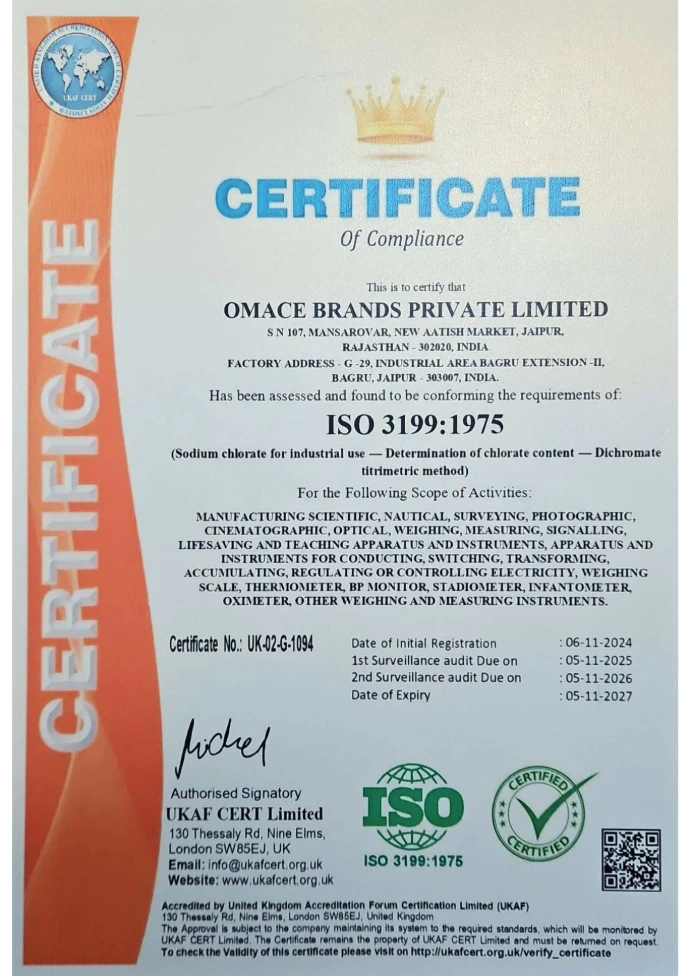
Certified to ISO 3199:1975 standards for accurate weighing and measurement instrument manufacturing.
05
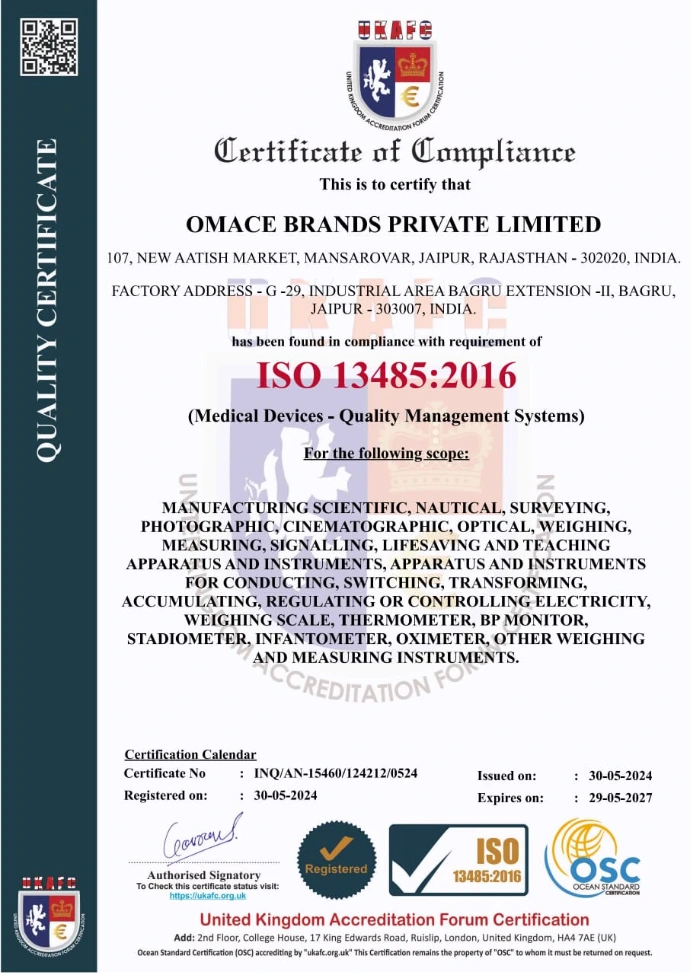
ISO 13485:2016 certified quality management system for manufacturing medical-grade weighing equipment.
06
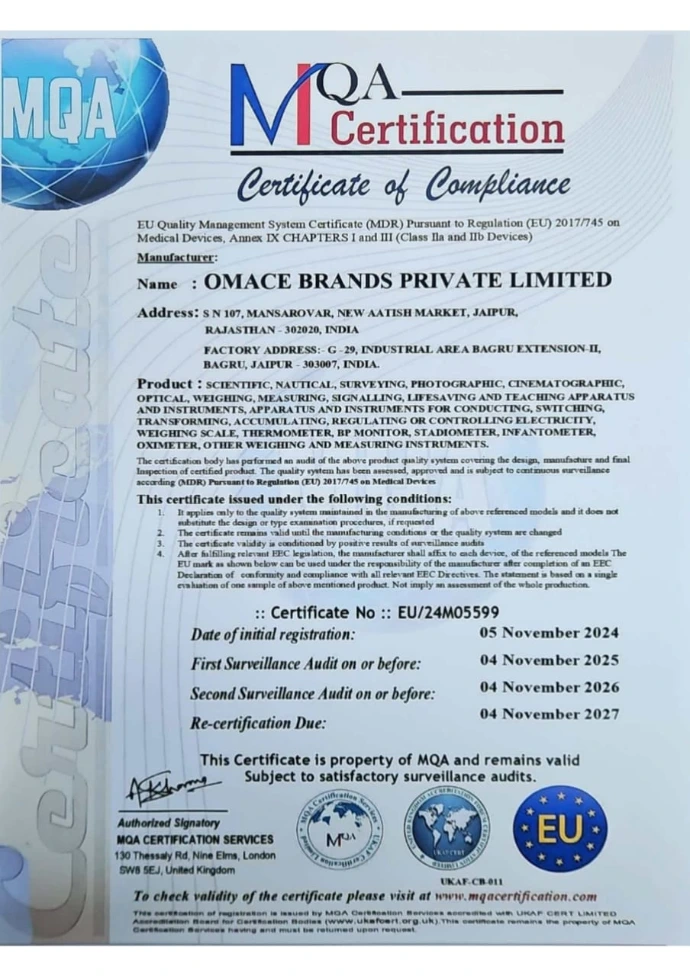
Certified under EU MDR (Regulation 2017/745) for safe, traceable medical device manufacturing.
Frequently asked questions
Here are some common questions about how we test every scale.
If the scale was calibrated at the factory, why test it again?
Factory calibration happens in bulk, often months before a scale is sold. Transport, storage and handling can shift its reading without any visible sign. We test each unit against certified weights just before it ships, so the accuracy you get is checked on the day it leaves us, not assumed from the day it was made.
Why does individual testing matter if the scale looks fine out of the box?
Because a scale that's off by a kilogram or two still looks and works like a normal scale: no error message, no warning light to tell you something's wrong. Testing every unit individually catches that gap before it ever leaves our hands, instead of you finding out the hard way weeks or months later.
How long does the calibration accuracy last? Do I need to recalibrate?
What if my scale reads incorrectly after delivery?
Can I calibrate or repair the scale myself if something seems off?
We'd advise against opening the unit yourself: it can void the warranty, and calibration steps differ from one scale design to another, so a fix that works for one model won't necessarily work for yours. Every scale is pre-tested before it reaches you, so this is rarely an issue, but if something does come up, reach out to us and we'll sort it out rather than you attempting a manual fix.
Are your certifications specific to certain products, or company-wide?
They're company-wide. Our ISO 9001:2015, ISO 13485:2016, CE, US FDA, EU MDR and ISO 3199:1975 certifications cover how we manufacture and quality-check everything we make, not just select products.