Weighing scale stamping in Rajasthan now costs ₹200 for an electronic scale up to 20 kg and ₹400 for one from 25 kg to 300 kg. These Legal Metrology fees come from the state schedule notified on 29 July 2026. Omace has seen the stamping fee per scale rise from ₹200 to ₹400 since August 2026.
Stamping is the Legal Metrology verification every trade scale needs before first use and again every 12 months. Since October 2025, Government Approved Test Centres (GATCs) may also verify smaller scales, at fees set by the central government. What you pay now depends on your state, the scale's capacity and who verifies it.
What stamping is and which scales need it
Section 24 of the Legal Metrology Act, 2009 requires every weight or measure used in a transaction or for protection to be verified before use, on payment of the prescribed fee. Verification ends with the inspector's seal on the scale, which is why traders call it stamping, or kanta stamping.
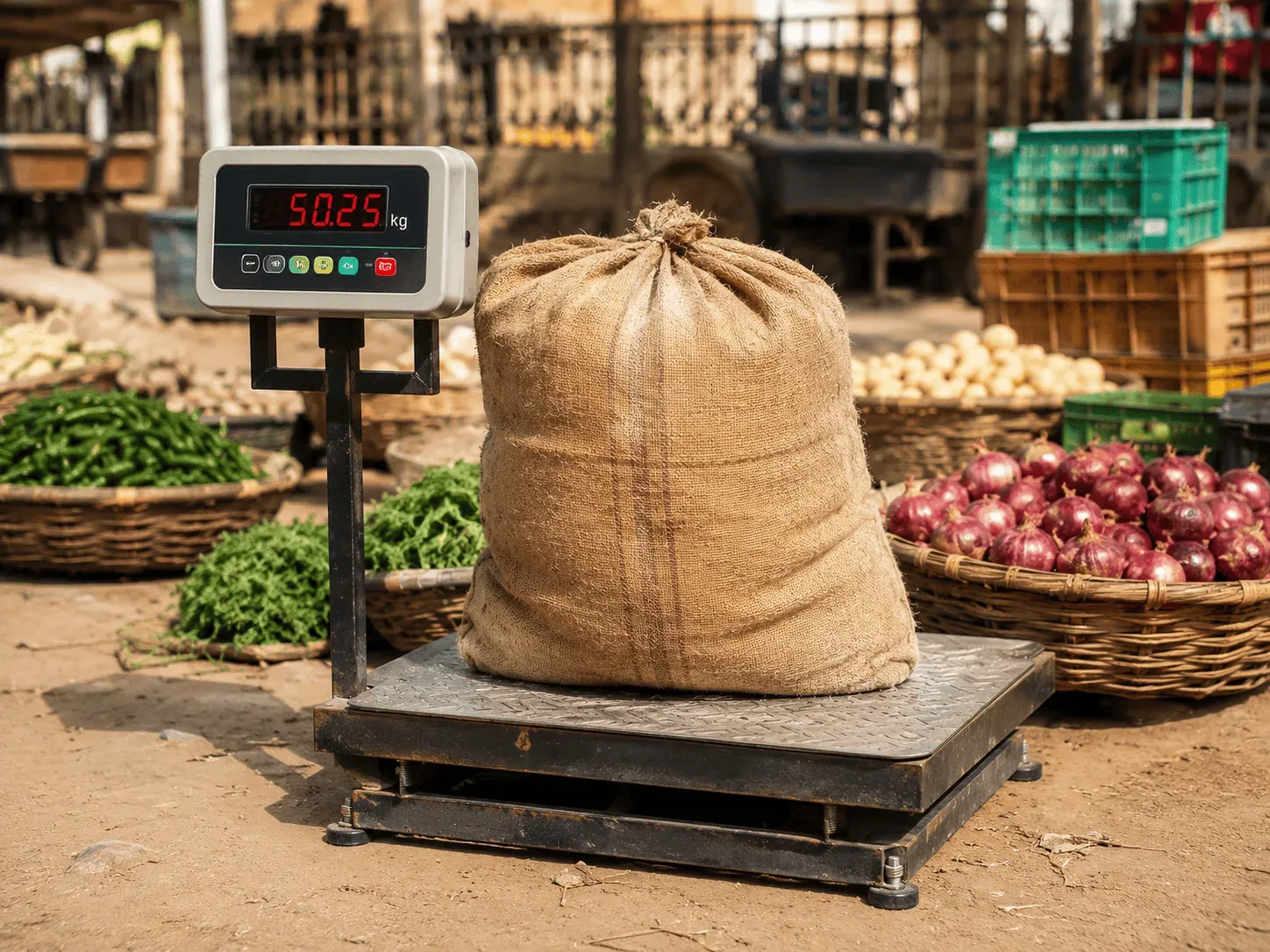
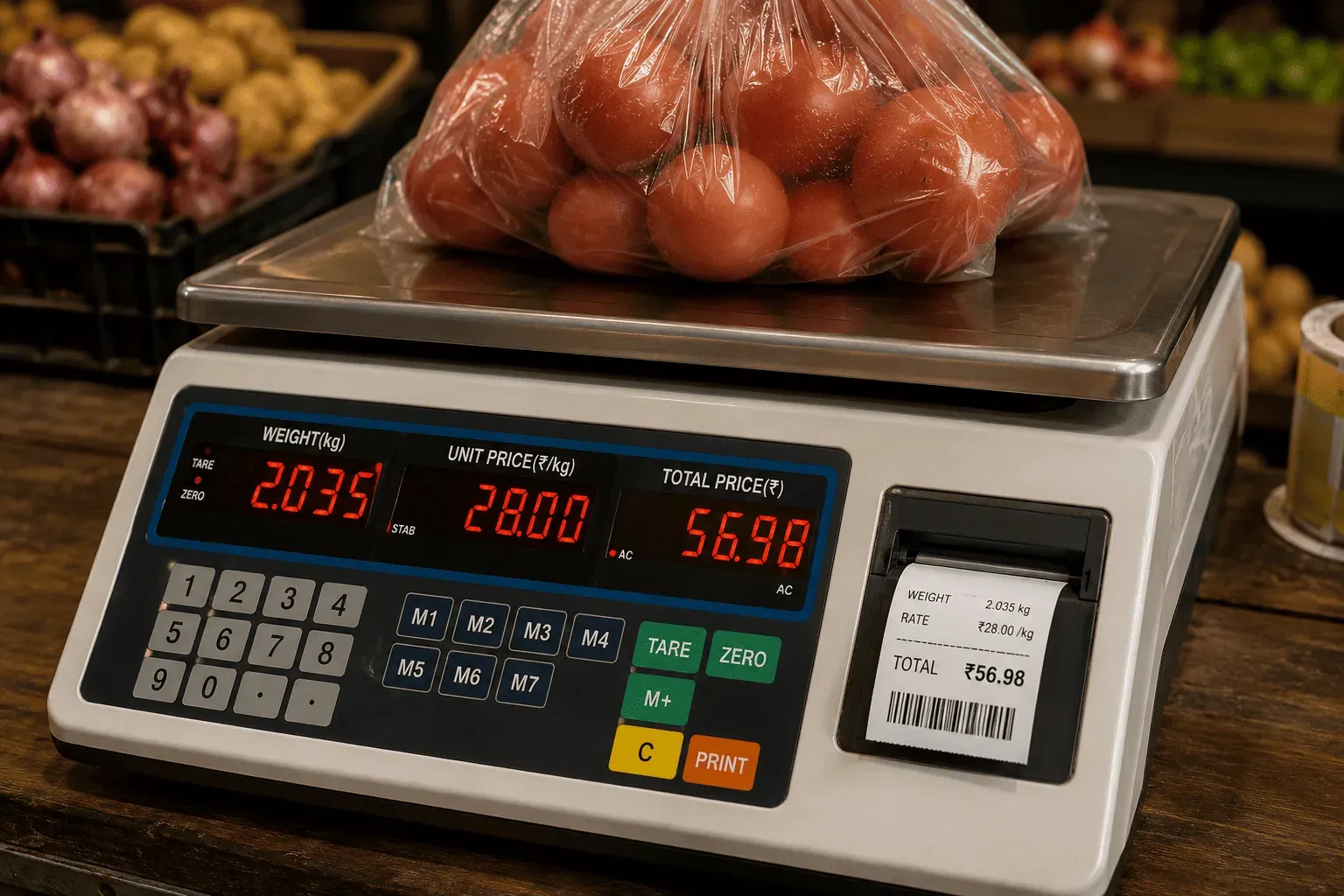
The rule covers kirana and sweet shop counters, vegetable and chicken shops, mandi platform kantas, crane scales that weigh goods for sale, and weighbridges. The Press Information Bureau also lists weighing machines among the medical instruments regulated under Legal Metrology law. A bathroom scale used only at home weighs nothing for sale, so it needs no stamp.
The stamp does not last. State rules, Assam's for example, require weighing instruments to be re-verified every 12 months, and weights, beam scales and counter machines every 24 months. A scale must also be re-verified after a repair, or when a fixed scale is moved to a new place.
Rajasthan stamping fees from July 2026
Rajasthan replaced its fee schedule through the Rajasthan Legal Metrology (Enforcement) (Amendment) Rules, 2026. The State notified them on 29 July 2026, and they took effect on publication in the Rajasthan Gazette on 30 July 2026. The new Schedule IX sets one fee per piece for each capacity.
- Electronic scales, class III and IIII: ₹200 up to 20 kg, ₹400 from 25 kg to 300 kg, and ₹500 from 500 kg to 1,500 kg.
- Large electronic scales: ₹1,000 for 2 to 3 tonnes, ₹2,000 for 5 to 10 tonnes, and ₹4,000 from 15 to 150 tonnes.
- Mechanical scales, class III and IIII: ₹60 from 2 kg to 15 kg, ₹120 for 20 kg and 25 kg, and ₹200 from 30 kg to 200 kg.
- Class I and II scales: the high-accuracy scales jewellers use cost ₹400 up to 10 kg and ₹600 up to 50 kg.
Omace's ₹200 to ₹400 experience matches the schedule's ₹400 band for electronic scales from 25 kg to 300 kg. On a ₹3,000 Omace Om-TT-Running SPR 30 kg weight machine, the yearly ₹400 fee equals about 13% of the scale's price. On a ₹8,900 500 kg platform kanta, the ₹500 fee is about 6%.
The same amendment helps buyers of new scales. For a scale held in stock by a maker or dealer, the validity of the stamp now runs from the stamping date or the invoice date, whichever is later, if the original stamp is intact. Stock with an intact stamp need not be stamped again before sale.
Stamping fee comparison by capacity
State fees differ, and the central GATC rules set figures of their own. This table compares Rajasthan's July 2026 schedule, the schedule published on Delhi's Legal Metrology department site, and the GATC fee in the central rules.
| Electronic scale capacity | Rajasthan, from 30 July 2026 | Delhi, published schedule | GATC, central rules | Omace example |
|---|---|---|---|---|
| Up to 10 kg | ₹200 | ₹100 | ₹2,000 | Om-TT-ECO 10 kg kirana scale |
| 15 kg to 20 kg | ₹200 | ₹100 | ₹3,000 | Om-TT-ECO 20 kg kirana scale |
| 25 kg to 150 kg | ₹400 | ₹200 | ₹3,000 | Om-TT-Running 30 kg, 100 kg platform kanta |
| 200 kg to 300 kg | ₹400 | ₹200 | State officer only | 200 kg and 300 kg chicken scales |
| 500 kg to 1,500 kg | ₹500 | ₹250 | State officer only | 500 kg and 1,000 kg platform kantas |
| 2 t to 10 t | ₹1,000–₹2,000 | ₹500–₹1,000 | State officer only | OCS crane scale, 2 t to 10 t |
Every Rajasthan fee for electronic scales is exactly double the Delhi fee for the same capacity. The GATC column covers only class III scales up to 150 kg and class IIII scales, the weighing categories the central rules open to test centres.
How to get a scale stamped in Rajasthan
- Apply online. Log in to the Rajasthan SSO portal and open the eTulaman application, as the Rajasthan Legal Metrology FAQ explains.
- Pay the fee. Deposit it through eGRAS or the state's revenue system. The challan is cancelled electronically so it cannot be reused.
- Present the scale. Take it to the Legal Metrology office or camp office on or before the due date. Weighbridges are verified where they stand.
- Fix any fault within 7 days. A scale found incorrect is returned for adjustment and must come back for re-verification within seven days.
- Display the verification certificate. The digitally signed certificate must be shown where the scale is used.
Owners can go to the district inspector directly. Rajasthan's FAQ says using a licensed dealer or repairer for verification is not mandatory. Late re-verification costs more. Rajasthan's rules add a fee when a stamp has expired, and its draft test centre rules set that surcharge at half the fee for each quarter of delay.
Government Approved Test Centres (GATCs)
A GATC is a laboratory the government approves to verify and stamp listed weights and measures. The Legal Metrology (Government Approved Test Centre) Amendment Rules, 2025, notified on 23 October 2025, let either a GATC or a Legal Metrology officer verify the listed instruments.
What a GATC may verify
The 2025 rules list 18 categories of instrument. The weighing items on the list are these:
- Non-automatic weighing instruments of accuracy class III, up to 150 kg
- Non-automatic weighing instruments of accuracy class IIII
- Load cells, beam scales and counter machines
- Weights of all categories
- Automatic rail weighbridges
The same rules made all Regional Reference Standard Laboratories and National Test House laboratories deemed GATCs, able to verify anywhere in India. National Test House runs one of its laboratories in Jaipur. A GATC must issue a separate verification certificate for each instrument, and it may work across its district or its whole state.
Private firms pay ₹2 lakh per weight or measure to apply for recognition, the Department of Consumer Affairs said when it opened its online portal in November 2025. An amendment dated 8 May 2026 raised the list to 23 items by adding fuel dispensers, and lets each State Government add more.
What a GATC may charge
The 2025 rules added a Fifth Schedule of GATC fees. For class III scales up to 150 kg and for class IIII scales, it lists ₹2,000 up to 10 kg and ₹3,000 above 10 kg. Beam scales are listed at ₹500 up to 5 kg and ₹1,000 above. Where an item is missing from the Fifth Schedule, the state's own enforcement rules set the fee.
For a 30 kg shop scale in Rajasthan, that central GATC figure is ₹3,000 against ₹400 at the state office, so ask a centre for its fee before you book. Rajasthan published draft Rajasthan GATC rules on 9 October 2026. Under the draft, state-approved centres would charge the department's ₹200 and ₹400 rates and add nothing for verifying at your premises. Each fee would be shared 25:75 between the State and the centre. A centre owned by a scale maker could not stamp that maker's own scales.
Penalties for using an unstamped scale
Using an unverified scale is an offence under section 33 of the Legal Metrology Act. The fine is ₹2,000 to ₹10,000 for a first offence. A second or later offence can bring imprisonment of up to one year, and a fine as well. Rajasthan's rules require every user to present a scale for re-verification on or before its due date.
The Jan Vishwas Act, 2023 left section 33 unchanged. It replaced imprisonment under section 25, which covers weights and measures that do not meet the legal standards, with fines of up to ₹1 lakh, then ₹2 lakh for a second offence and ₹5 lakh after that. The Jan Vishwas Act, 2026 added an improvement notice for some first-time lapses, the Press Information Bureau notes.
Rajasthan lets most offences be settled by paying a compounding fee. Its July 2026 schedule sets the first-offence fee for using an unverified scale at ₹2,000 for a hawker, ₹5,000 for a retailer, ₹7,000 for a wholesaler and ₹10,000 for a manufacturer or dealer. A retailer's ₹5,000 is more than twelve times the ₹400 stamping fee on a 30 kg scale.
Why traders want one national stamping fee
Fees and penalties still vary from state to state, and the trade has asked for one system. At its national convention in Jaipur on 30 August 2026, the All India Federation of Weighing Industries and Traders Association (AIFWITA) gathered more than 200 representatives from 18 states, Dainik Bhaskar reported. Its general secretary called for a uniform central framework for stamping fees, penalties and rules. Delegates also discussed GATC rules, registration, licensing, consumer awareness and dealer training.
Rajasthan is still changing its rules. The July 2026 amendment replaced licences with registration certificates issued on self-declaration, at ₹25,000 for a manufacturer and ₹10,000 for a repairer or dealer. A draft of 27 October 2026 would allow self-certification for folding scales, surveying chains and dispensing measures under one litre. Weighing scales are not on that list, so they still need an officer or a GATC.
Omace scales that ship stamped
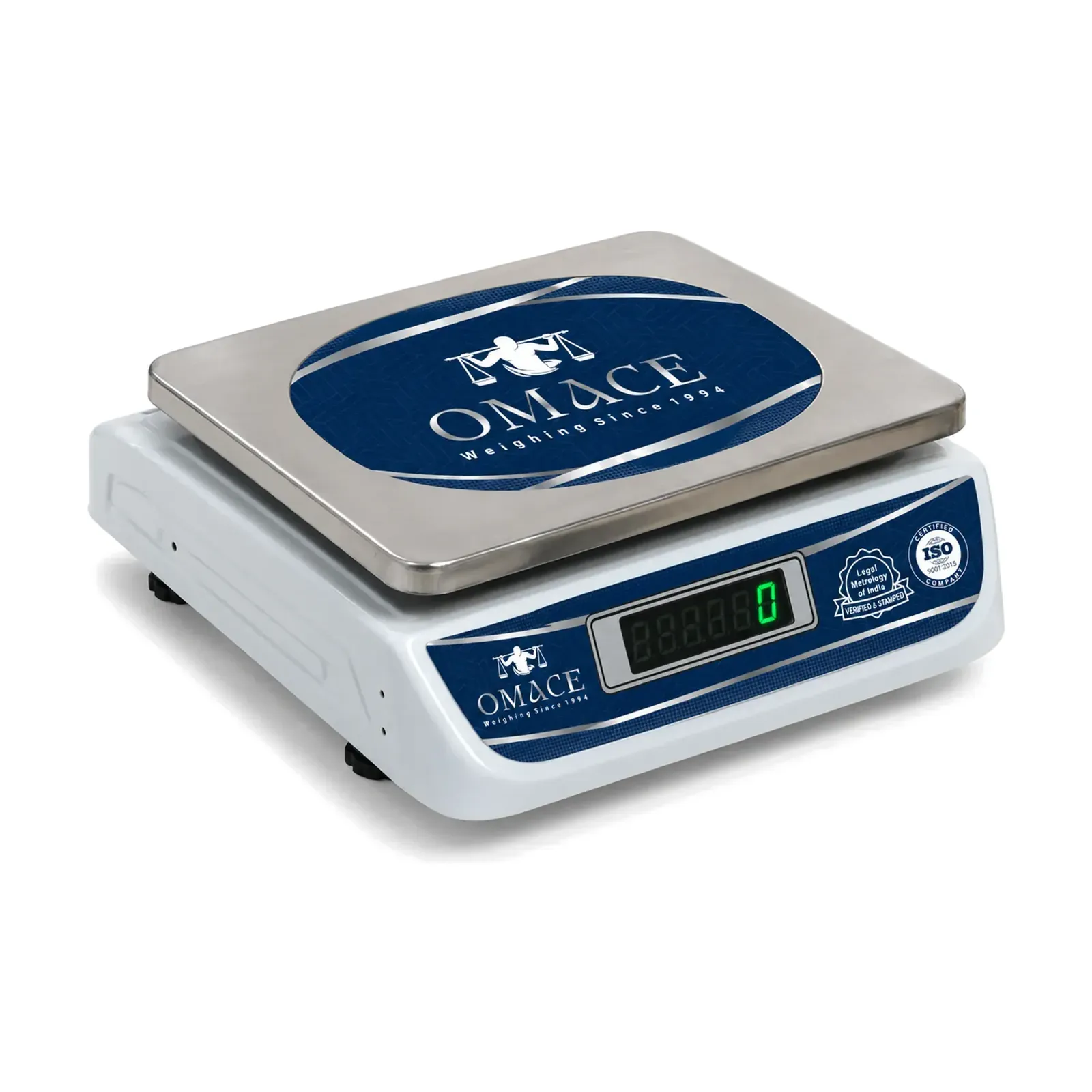
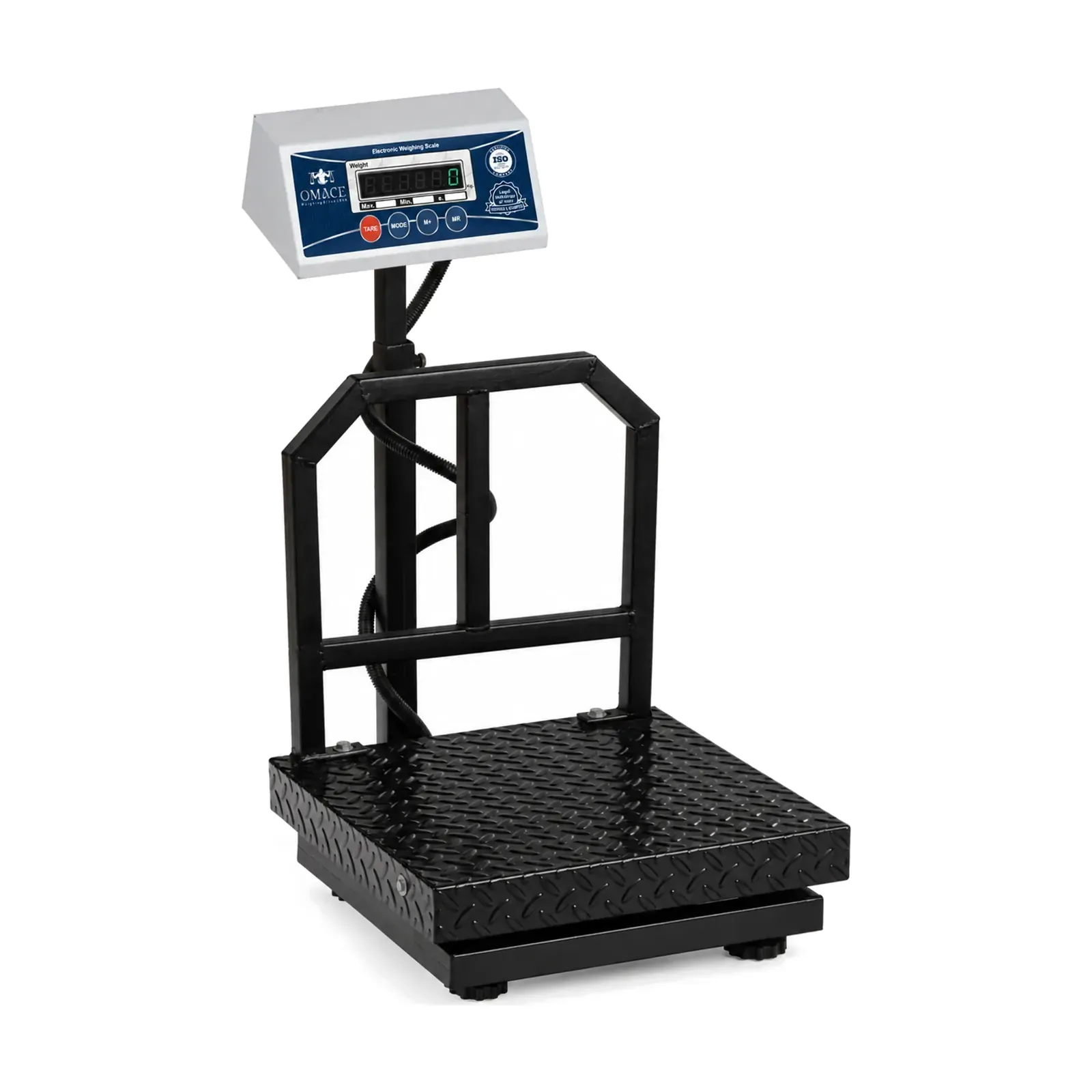
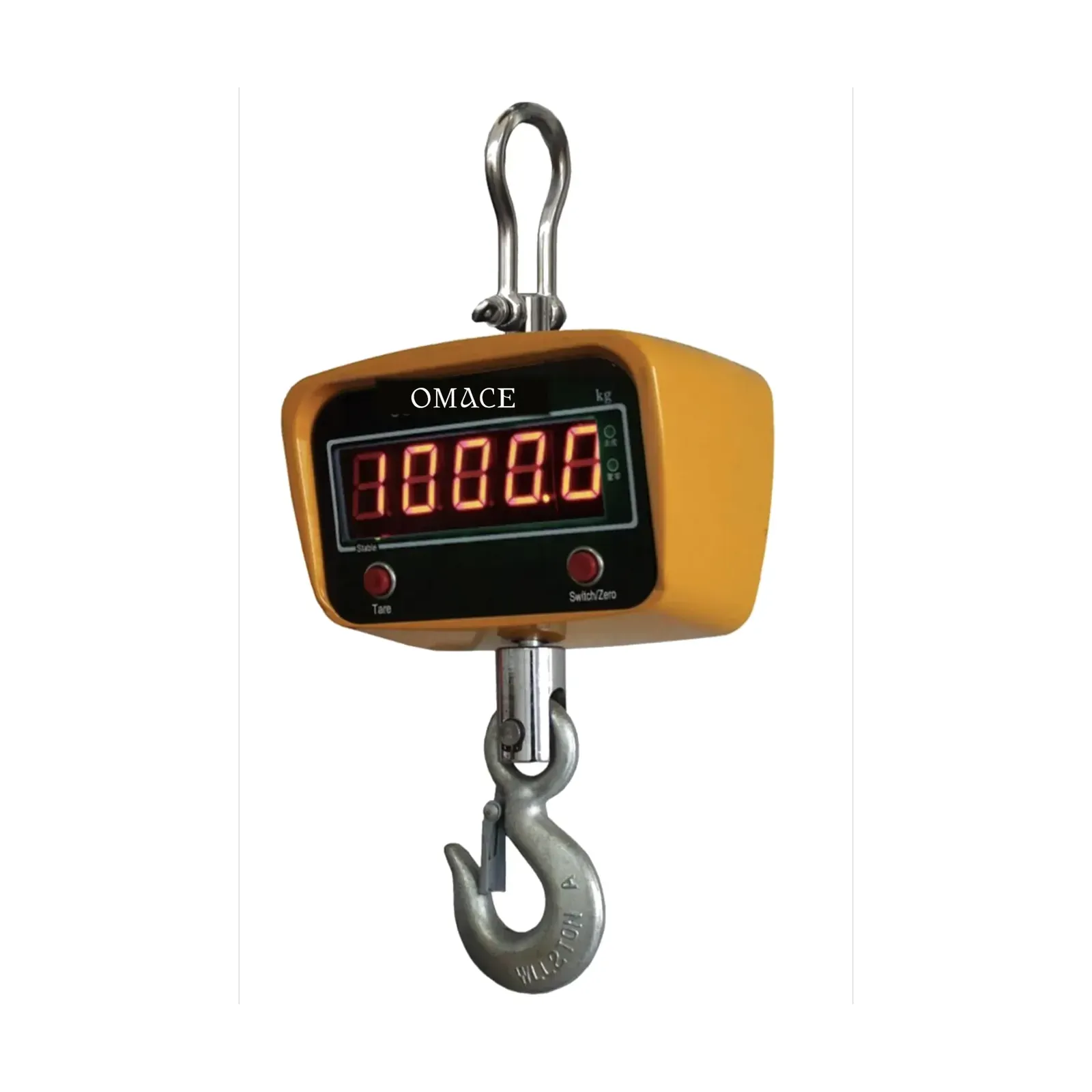
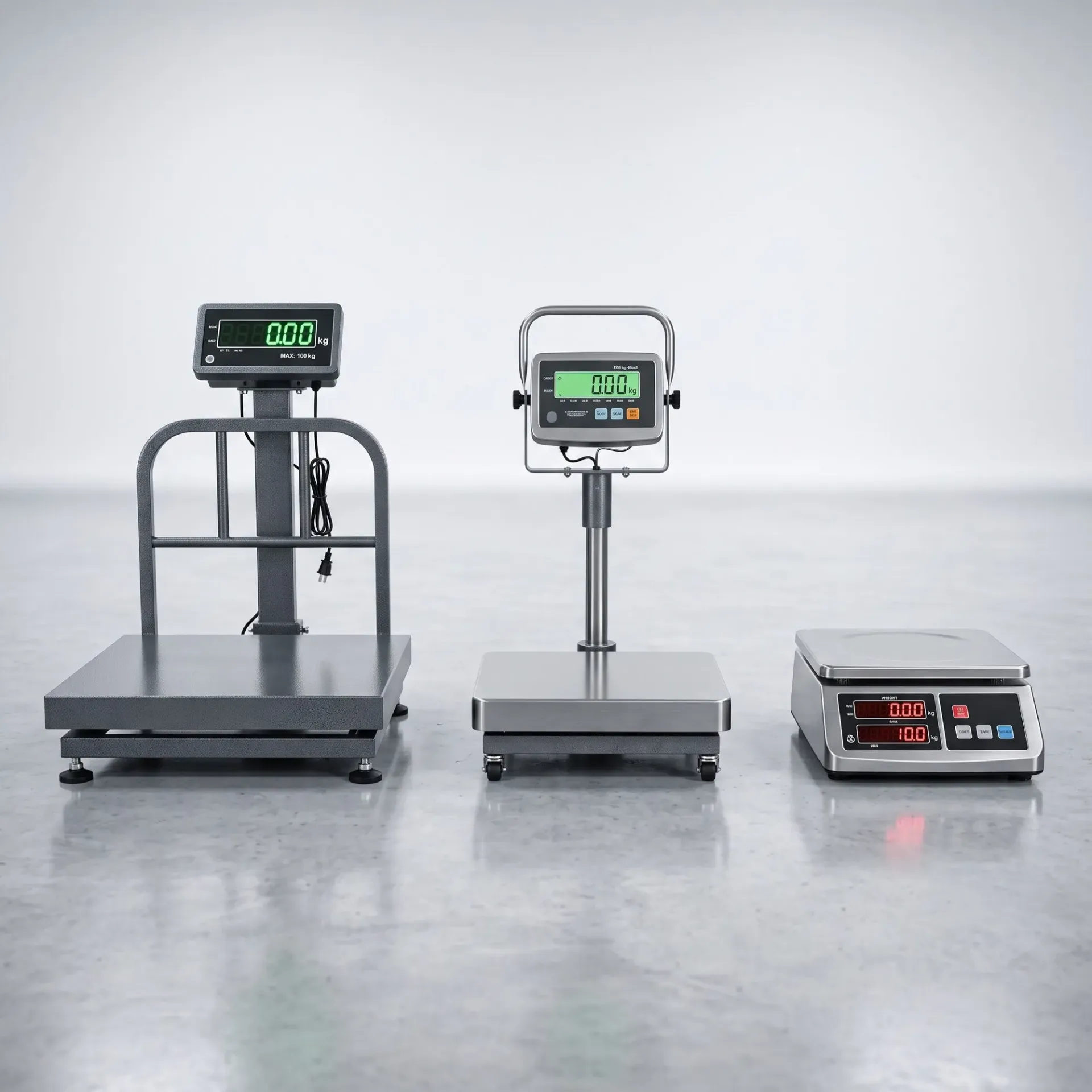
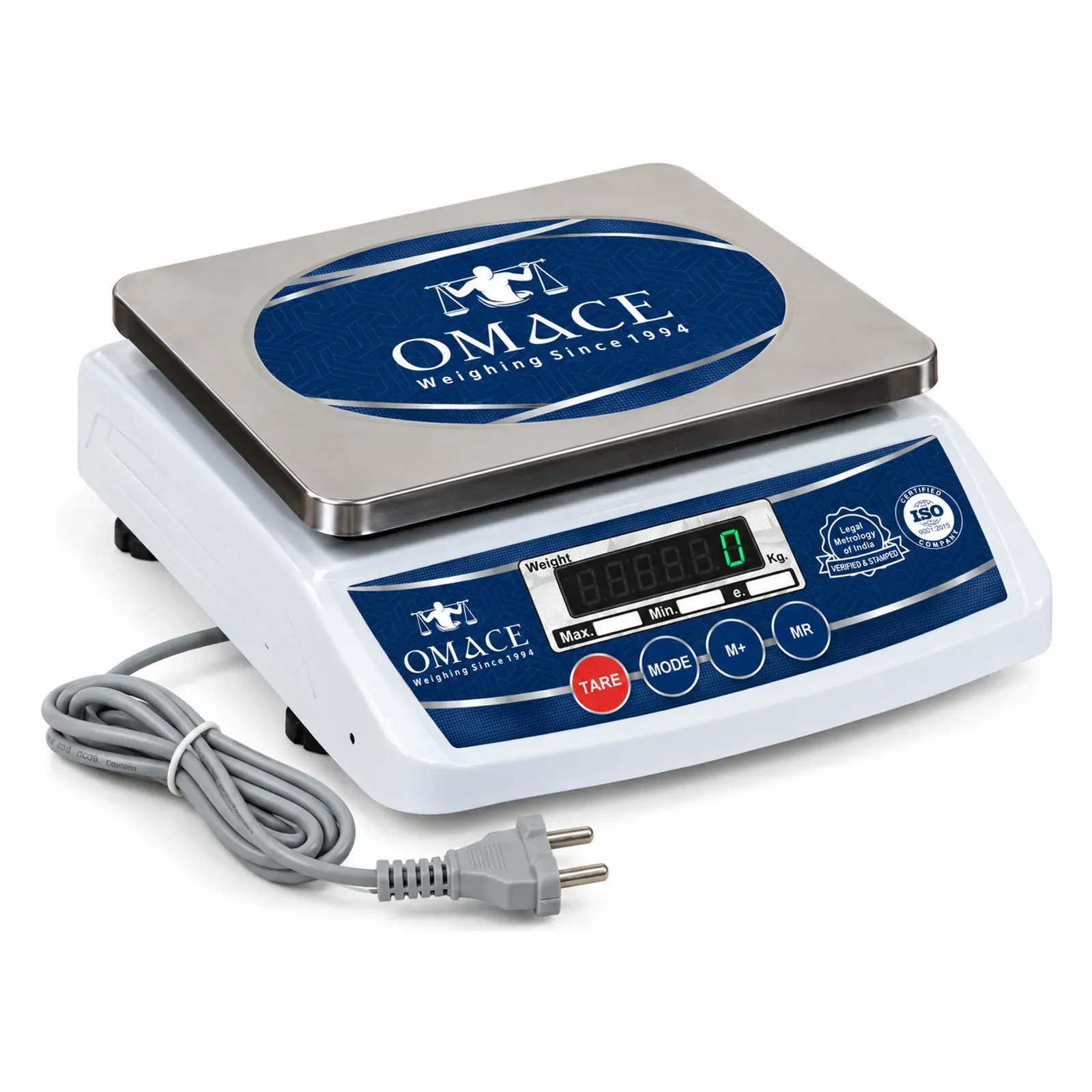
Omace shop, platform, chicken and crane scales leave the Bagru factory verified and stamped by Legal Metrology. Omace's OM-TT shop scales, OM-PS platform scales, OM-CK chicken scales and OM-CS crane scales up to 30 t are Legal Metrology approved models in accuracy class III. A stamped scale is sealed, so only a registered repairer may recalibrate it.
- Shop weighing scales: Om-TT counter models from 10 kg to 30 kg, including the Om-TT-ECO kirana weighing machine at ₹2,200.
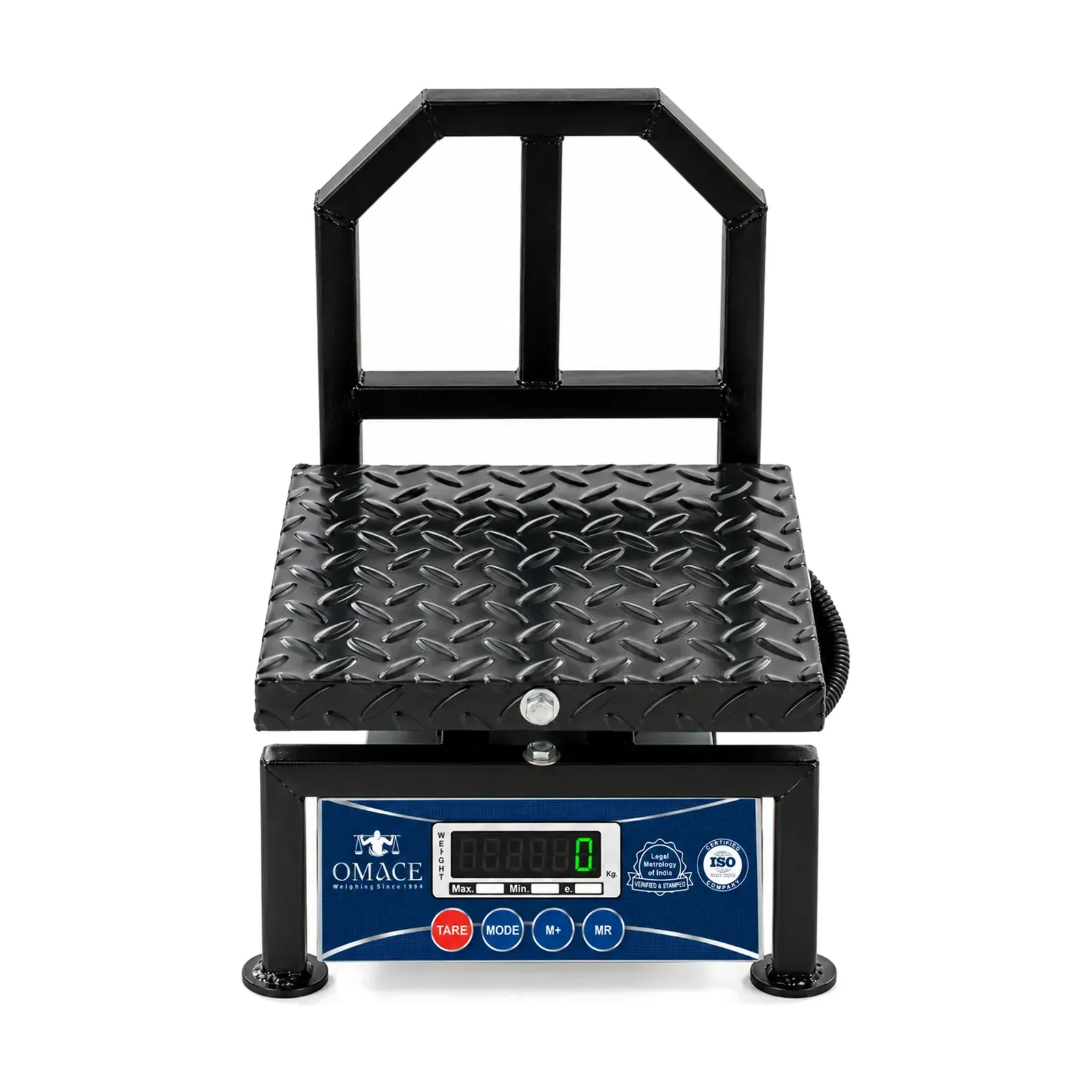
- Om-CK-MS chicken weighing scale: 60 kg to 300 kg on a mild steel platform, ₹3,900–₹8,000.
- Platform weighing scales: the Om-PS-MS platform kanta runs from 100 kg to 1,000 kg at ₹6,000–₹29,999.
- Crane scales: the Omace OCS crane scale covers 1 to 50 tonnes at ₹10,999–₹2,52,999.
Clinic and hospital scales, such as the Venus EPS-2003 clinical weighing scale, can be supplied stamped on request. The buyer pays the state's stamping fee, which is ₹400 in Rajasthan for a 180 kg electronic scale. That capacity is above the 150 kg GATC limit, so a state officer verifies it.
Omace Brands Private Limited has manufactured weighing scales in Bagru, Jaipur, since 1994, and Omace scales are made in India. Scales bought from the Omace store carry a 2-year warranty on manufacturing defects, and Omace delivers across India. More about Omace. For the rules behind the stamp, read what a legal for trade weighing scale means in India.