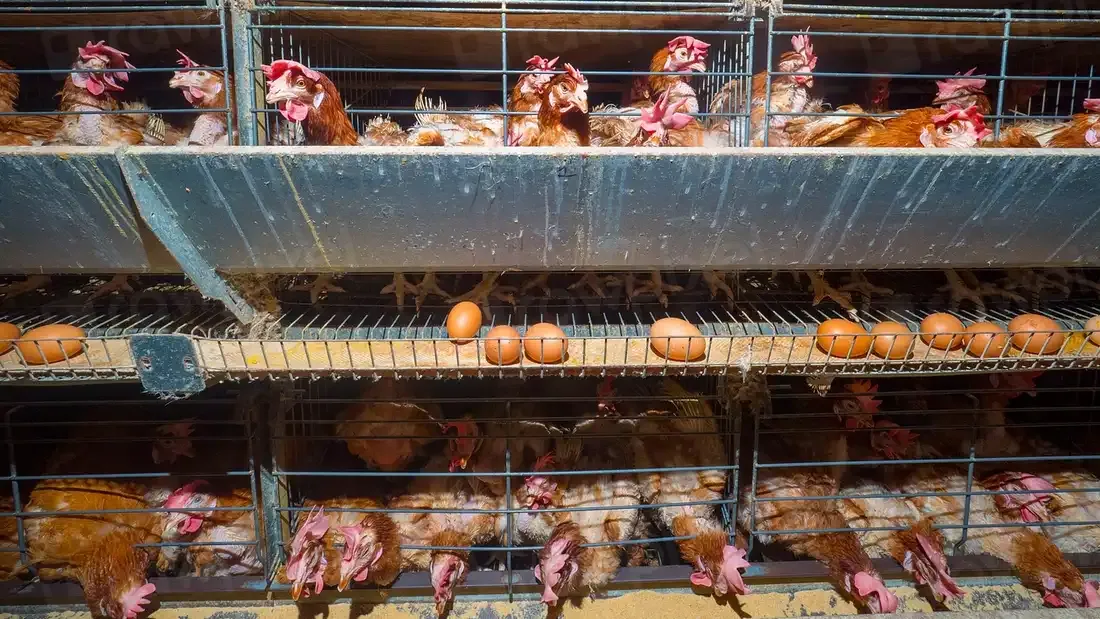
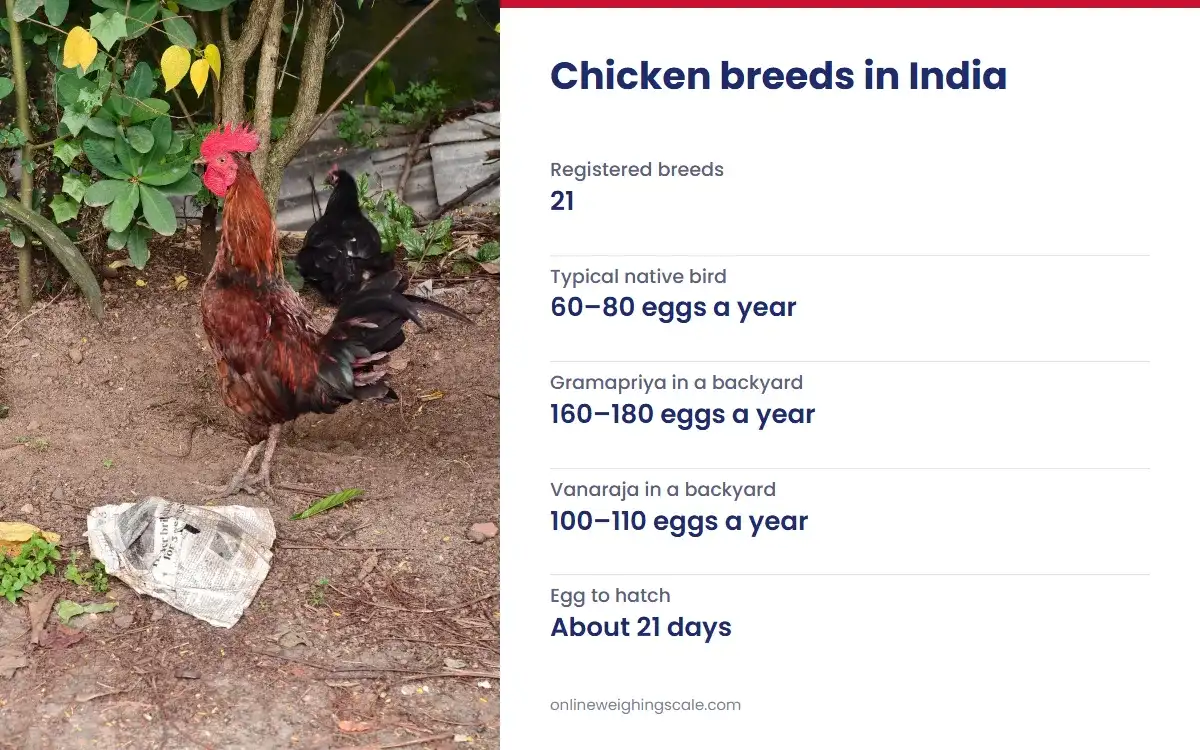
Chicken breeds in India number 21 on the national register kept by ICAR-NBAGR, the breed bureau in Karnal. Mala from Jharkhand joined in November 2025. Aseel and Kadaknath are the names most people know. Most native birds lay only 60–80 eggs a year, so improved varieties such as Vanaraja and Gramapriya were bred for village flocks.
Breed, variety and hybrid: what the words mean
A registered breed is a native population with a recognised home tract and an accession number from the bureau. Kadaknath's number, for example, is INDIA_CHICKEN_1000_KADAKNATH_12009. The count keeps rising: a 2020 review in Livestock Research for Rural Development listed 19 breeds, and the ICAR release of 12 November 2025 gives 21. That review also put native chickens at 109.22 million birds in 2019, and it mentions lesser-known types such as Tripura Black and Titri.
An improved variety is bred by a research institute from selected lines, often to look like a desi bird. A commercial hybrid comes from a breeding programme built for one job, eggs or meat, and its chicks are bought fresh for each flock. Desi murgi means a local hen, which may or may not belong to a registered breed.
The 21 registered chicken breeds of India
This table sorts the bureau's list by region, with each breed's home tract as registered. The regional grouping is added here for easy reading, and it shows that almost every part of the country has a breed.
| Region | Registered breeds and home tract |
|---|---|
| North | Kashmir Favorolla (Jammu and Kashmir), Punjab Brown (Punjab and Haryana), Uttara (Uttarakhand) |
| West | Ankaleshwar and Aravali (Gujarat), Busra (Gujarat and Maharashtra), Mewari (Rajasthan) |
| Central | Kadaknath (Madhya Pradesh), Aseel (Chhattisgarh, Odisha and Andhra Pradesh) |
| East | Harringhata Black (West Bengal), Hansli (Odisha), Mala (Jharkhand) |
| North-East | Chittagong (Meghalaya and Tripura), Daothigir and Miri (Assam), Kaunayen (Manipur) |
| South | Danki and Kalasthi (Andhra Pradesh), Ghagus (Andhra Pradesh and Karnataka), Tellichery (Kerala) |
| Islands | Nicobari (Andaman and Nicobar) |
Main desi chicken breeds
Published egg and weight figures vary widely with feed and rearing. Birds on a research farm get balanced feed and protection, so they outperform the same breed scratching in a village. The figures below name their source for that reason.
Aseel
Aseel, also spelt Asil, is India's famous game bird. Tamil Nadu Agricultural University notes its pugnacity, high stamina and majestic gait, and rates it poor in productivity yet well known for meat quality. It lists seven varieties: Peela, Yarkin, Nurie, Kagar, Chitta, Teekar and Reza. Standard weights are 4–5 kg for cocks and 3–4 kg for hens.
ICAR-Directorate of Poultry Research gives 60–70 eggs a year for its farm stock and 1.8–2.0 kg at five months. A Central Avian Research Institute table quoted by the university gives 92 eggs and 1,220 g at 20 weeks, with first egg at 196 days. Aseel murga prices differ too much by bird and seller to quote one here.
Kadaknath
Kadaknath is the black chicken of Madhya Pradesh, once known as Kalamasi, meaning a fowl with black flesh. The university says melanin colours its internal organs, and that its skin, beak, shanks and toes are slate-coloured. Day-old chicks are bluish to black with dark stripes on the back. It resists disease when ranging free but is more prone to Marek's disease under intensive rearing.
The university's text says about 80 eggs a year and its table says 105. ICAR-DPR's farm figure is 150–170 eggs, at 1.4–1.6 kg by five months. The Geographical Indications registry lists Jhabua Kadaknath Black Chicken Meat as application 378, in class 29, filed by Gramin Vikas Trust on 8 February 2012. Its certificate was issued on 30 July 2018 and the registration runs to 7 February 2032. Sellers often make health claims for this meat. Those claims are not repeated here, so ask a doctor or dietitian about your own diet.
Ghagus and Nicobari
Ghagus comes from Andhra Pradesh and Karnataka, and ICAR-DPR lists 110–118 eggs a year and 1.8–2.0 kg at five months. Nicobari, from the Andaman and Nicobar Islands, is smaller and lays more, at 170–180 eggs and 1.3–1.5 kg. Both figures describe farm performance.
Other native types
The university names Busra of western India among only four pure breeds, with Kadaknath. The Central Avian Research Institute table also covers two feather types found in desi flocks: Naked Neck at 99 eggs and Frizzle at 110, both about 1,005 g at 20 weeks. Mewari of Rajasthan, Aravali of Gujarat and Mala of Jharkhand are recent additions to the register, and performance figures for them could not be confirmed.
Improved chicken varieties from Indian institutes
Native birds lay in three or four clutches a year, which keeps output low. Research institutes answered with coloured birds that look desi and lay more. A 2022 paper in the Indian Journal of Animal Sciences credits the University of Agricultural Sciences, Bengaluru, with the first such bird, Giriraja, in the 1980s. ICAR-DPR released Vanaraja in 1999 and Gramapriya in 2001. The same paper says Vanaraja made up about 52% and Gramapriya 38% of the germplasm from its five varieties.
State universities bred varieties for their own regions, according to an Indian Farming article from ICAR-DPR scientists. Pratapdhan came from Udaipur, Narmadanidhi from Jabalpur, Kamrupa from Guwahati, Jharsim from Ranchi and Himsamridhi from Palampur. Their backyard egg counts run from 110 to 170 a year.
Chicken breeds and varieties: quick reference
All figures here come from ICAR-DPR's 2024 pamphlet. The native breeds and Vanashree are its farm figures, and Vanaraja, Gramapriya and Srinidhi are its backyard figures.
| Bird | Type | Eggs a year | Body weight |
|---|---|---|---|
| Aseel | Native | 60–70 | 1.8–2.0 kg at 5 months |
| Kadaknath | Native | 150–170 | 1.4–1.6 kg at 5 months |
| Ghagus | Native | 110–118 | 1.8–2.0 kg at 5 months |
| Nicobari | Native | 170–180 | 1.3–1.5 kg at 5 months |
| Vanaraja | Improved, dual purpose | 100–110 | 1.8–2.0 kg at 3 months |
| Gramapriya | Improved, egg | 160–180 | 1.6–1.8 kg at 3 months |
| Srinidhi | Improved, dual purpose | 140–150 | 1.7–2.0 kg at 3 months |
| Vanashree | Improved, dual purpose | 170–180 | 1.8–2.2 kg at 5 months |
Foreign breeds and commercial hens
The types of chicken on commercial farms trace mostly to foreign breeds. The university sorts them into classes. The American class holds New Hampshire, White Plymouth Rock, Rhode Island Red and Wyandotte. The Mediterranean class holds Leghorn, Minorca and Ancona, which are light-bodied and bred for high egg production. The English class holds Australorp, Sussex and Orpington, and the heavy, feather-legged Asiatic class is where the Indian breeds are grouped.
Indian research produced commercial lines as well. The Central Avian Research Institute strains listed by the university include Priya at 290 eggs to 72 weeks and Sonali at 275. Its CARIBRO-91 meat bird reaches 1,650 g at six weeks. ICAR-DPR's Krishilayer lays 270–290 eggs on a farm, and its Krishibro reaches 1.4–1.5 kg at six weeks with a feed conversion ratio of 2.0.
Life cycle of a hen
A hen's life runs through five stages, and the timing below uses Indian sources.
- Egg: a fertile egg takes about 21 days to hatch. Forced-draft incubators run at 37.2–37.8 °C with about 60% humidity for 18 days, then about 70% for the last three.
- Chick: the chick stage lasts to week 8 under IS 1374, the Indian poultry feed standard. ICAR-DPR says rural varieties reach 650–750 g by six weeks and can then go out to free range.
- Grower or pullet: weeks 9 to 20 build the frame for laying. A pullet is a young female that has not started to lay.
- Laying hen: commercial strains lay their first egg at 17–19 weeks. Native breeds start later, at 180–201 days in the Central Avian Research Institute table.
- End of lay: IS 1374 splits laying into Phase I, weeks 21 to 45, and Phase II, weeks 46 to 72. The NABARD layer model counts 52 weeks of laying before birds are sold as culls.
Which chicken breed suits your purpose
No single bird is the best chicken breed in India, since each was kept or bred for a different job. Your feed budget, climate and market decide more than the name does.
- Eggs from a home flock: Gramapriya gives 160–180 eggs a year in a backyard, and it is the egg bird of ICAR-DPR's backyard range.
- Eggs and meat together: Vanaraja and Srinidhi are dual purpose and suit village free range.
- Premium native meat: Aseel and Kadaknath sell on reputation, though they grow slowly and lay little in a village.
- Commercial eggs or meat: commercial hybrids lead on output and need full feed and tight management.
- Your own region's breed: a registered native breed from your home tract is adapted to local conditions, and it helps keep that breed alive.
Why weight matters when comparing breeds
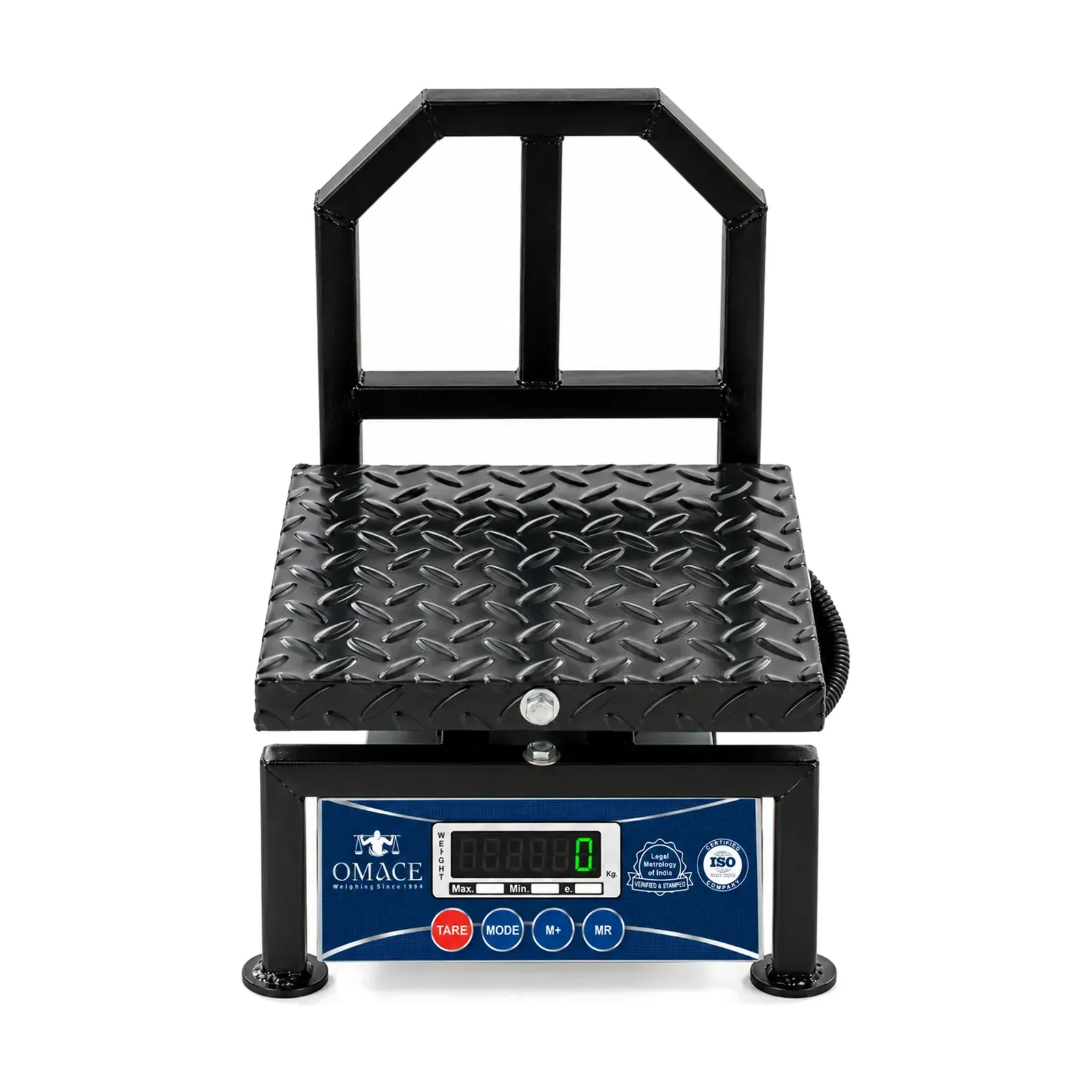
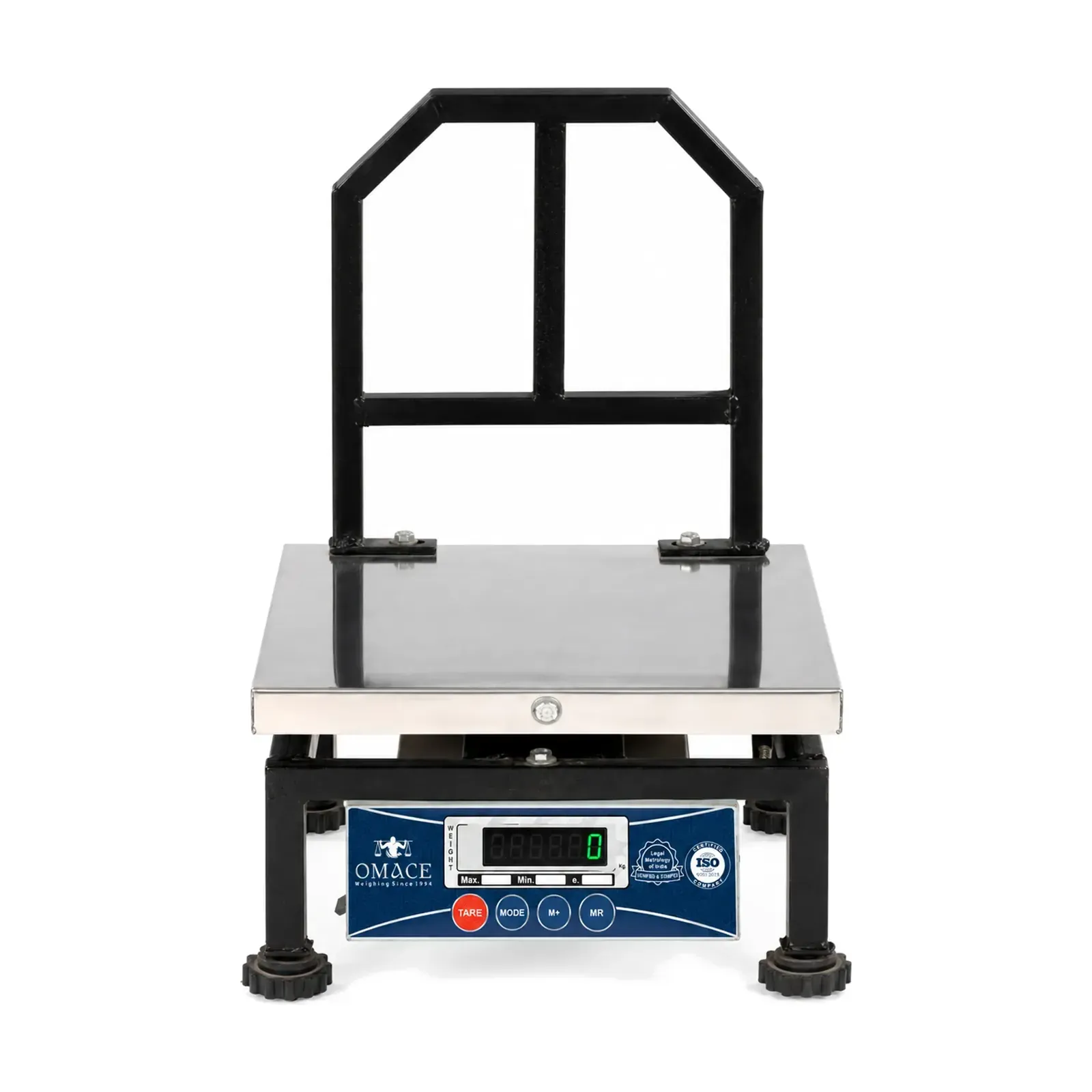
Most figures above are weights at a set age, and a bird's condition cannot be judged by eye. A hen at 1.4 kg and one at 1.8 kg can look alike under full feathers. Weighing a sample at the same age, month after month, shows whether your flock is keeping up with its breed figure. Sellers need a stamped scale as well, because birds are sold by weight. The Om-CK-MS chicken weighing scale reads in 5 g steps at 60 kg and leaves Bagru verified and stamped by Legal Metrology. Omace Brands Private Limited sells scales only, and no birds. Farm set-up and feed are covered in the poultry farm guide.
Checking a breed before you start a flock
Names get used loosely, and a black bird sold as Kadaknath may be something else. Ask the seller where the parent stock came from, and compare what you see with the breed's description. Government research farms such as ICAR-DPR in Hyderabad supply hatching eggs and day-old chicks, and your state's veterinary department can point you to farms nearby. If you plan to keep a heritage breed, choose a flock kept pure, with no commercial crosses in it.