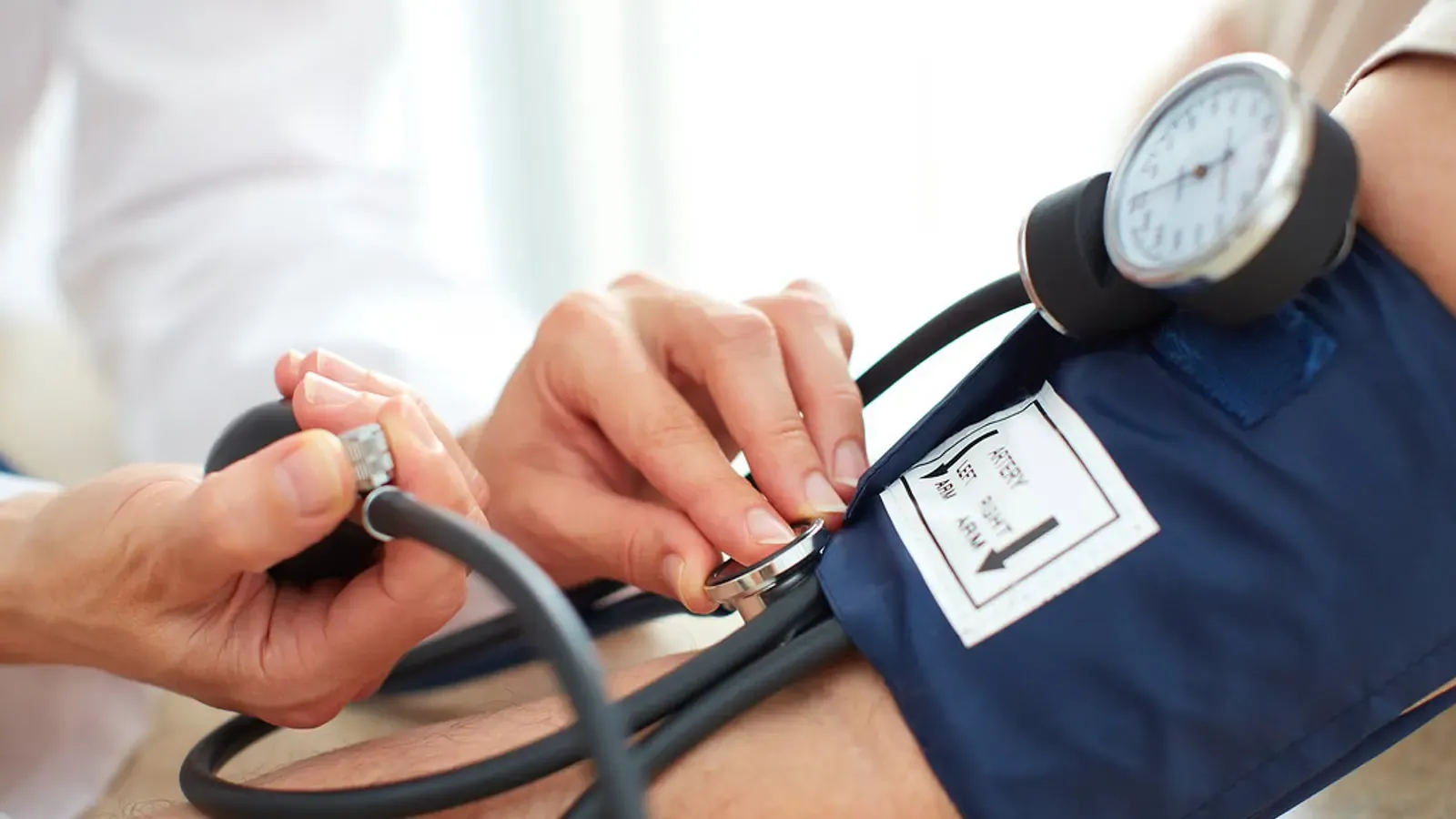
A blood pressure machine, called a sphygmomanometer in medical books, measures the pressure of blood in your arteries in millimetres of mercury (mmHg). The ICMR treatment workflow counts 140/90 mmHg or higher on two clinic visits as hypertension. WHO prefers an automated upper-arm machine that has passed clinical validation. The machine gives the number, and a doctor decides what it means.
What a BP machine measures
Every reading has two numbers. Systolic pressure is the peak when the heart contracts, and diastolic pressure is the lowest point when it relaxes, as defined in India's Legal Metrology rules for automated sphygmomanometers. A reading of 130/85 means 130 mmHg systolic and 85 mmHg diastolic.
A digital machine uses the oscillometric method. The cuff squeezes the arm and the pressure then changes slowly. Each pulse makes a tiny pressure change in the cuff, and an algorithm works out the systolic and diastolic values from those changes. A manual machine takes another route: a trained person listens through a stethoscope for the Korotkoff sounds as the cuff is released.
Most Indian homes say BP machine or BP apparatus, and rakt chaap is the Hindi word for blood pressure. Sellers also list it as a blood pressure monitoring machine or a blood pressure reading machine.
Measuring matters because high pressure rarely announces itself. The WHO hypertension fact sheet estimates that 1.4 billion adults aged 30–79 had hypertension in 2024, which is 33% of that age group. About 600 million of them, or 44%, did not know. Most people with hypertension feel no symptoms at all.
Types of BP machine
WHO's 2020 technical specifications sort blood pressure measuring devices into manual and automated groups. The type decides who can use the machine and how much upkeep it needs.
Automated upper-arm machine
This digital blood pressure monitor has a pump, a pressure sensor, a display and an arm cuff, and it inflates and deflates at the press of a button. WHO calls the upper arm the standard location, because the cuff compresses the brachial artery evenly there. WHO lists home use and screening among its strengths. It needs battery or mains power, and its cuff and tubing wear with use.
WHO also notes that some automated machines may not read reliably in people with heart arrhythmia, pre-eclampsia or certain vascular diseases. Anyone with those conditions should ask a doctor which device to use.
Semi-automated machine
A semi-automated machine has a digital display, but you pump the cuff by hand. WHO warns that this can give false measurements if the cuff is not fully inflated.
Wrist machine
A wrist machine wraps a small cuff around the wrist and is easy to carry. WHO says these machines may give inaccurate readings, particularly if the arm is not kept at heart level, and that most guidelines do not recommend them. Pressure at the wrist may also differ from pressure in the upper arm. India's 2025 rules cover arm, wrist and thigh devices, so a wrist machine on a shop shelf can be legal and still sit behind the upper-arm type for a doctor.
Aneroid machine
An aneroid machine has a dial gauge, a hand bulb and a cuff, and it is used with a stethoscope. It is inexpensive and needs no electricity. WHO says it needs calibration at least every 6 months and can lose accuracy when jostled or bumped. The Legal Metrology (General) Amendment Rules, 2026 describe this manual type as an instrument used by a trained person, and allow ±3 mmHg of error on its pressure scale.
Mercury machine
The mercury column was long treated as the clinic reference. WHO notes that mercury is an environmental hazard, and it gives countries guidance on phasing these machines out under the Minamata Convention on Mercury.
Finger and cuffless devices
WHO says finger devices are no longer recommended, because limb position and narrowing of small blood vessels affect them badly. Its 2020 table rates cuffless techniques and mobile apps as generally poor in accuracy, with no accuracy validation standard at that time.
BP machines in India: rules, screening and cost
India regulates these machines as measuring instruments. The Legal Metrology (General) Third Amendment Rules, 2025, notified on 28 July 2025, cover automated machines, including those for self-measurement and home healthcare (rules checked November 2026). They set these limits and marks:
- Cuff pressure error: ±3 mmHg or ±2% of the reading, whichever is greater, between 10 °C and 40 °C.
- Clinical error: a mean error within ±5 mmHg and a standard deviation within 8 mmHg.
- Measuring range: at least 60–230 mmHg systolic and 40–130 mmHg diastolic outside neonatal mode.
- Marks on the machine: maker's name or trademark, type, units, measuring range, model approval number, serial number, year and country of origin.
- Marks on the cuff: the limb circumference it fits and the centre of the bladder.
Those marks give a buyer something to check before paying. You do not need your own machine to get a first reading, either. The Ministry of Health and Family Welfare's 2025 year-end report counts 39.50 crore hypertension screenings, and its screening programme targets people above 30 years of age through health centres, including Ayushman Arogya Mandirs. ICMR's workflow says all adults aged 18 and above should have blood pressure measured at every clinic visit.
On BP machine cost, the National Pharmaceutical Pricing Authority capped trade margins at 70% of the price to distributor in July 2021. Of the 216 brands of these machines that reported, 195 cut their MRP, by as much as 83%, according to the Press Information Bureau. That order is several years old, so read the MRP on the box today. Within a shop's range, price usually rises with extras such as memory, a mains adaptor or a wider cuff, so check validation before paying for extras.
BP machine types: quick reference
This table condenses WHO's 2020 specifications for each type.
| Type | Cuff site | Who operates it | Upkeep or limit | WHO's position |
|---|---|---|---|---|
| Automated | Upper arm | Home user or health worker | Accuracy check usually every 1–2 years | Preferred when validated |
| Semi-automated | Upper arm | Home user or health worker | Cuff must be fully inflated by hand | False readings possible if under-inflated |
| Wrist | Wrist | Home user | Arm must stay at heart level | Most guidelines do not recommend it |
| Aneroid | Upper arm | Trained person with stethoscope | Calibration at least every 6 months | Often inaccurate without routine testing |
| Mercury | Upper arm | Trained person with stethoscope | Mercury is an environmental hazard | Guidance given on phasing it out |
| Finger | Finger | Home user | Affected by limb position | No longer recommended |
Blood pressure reading chart
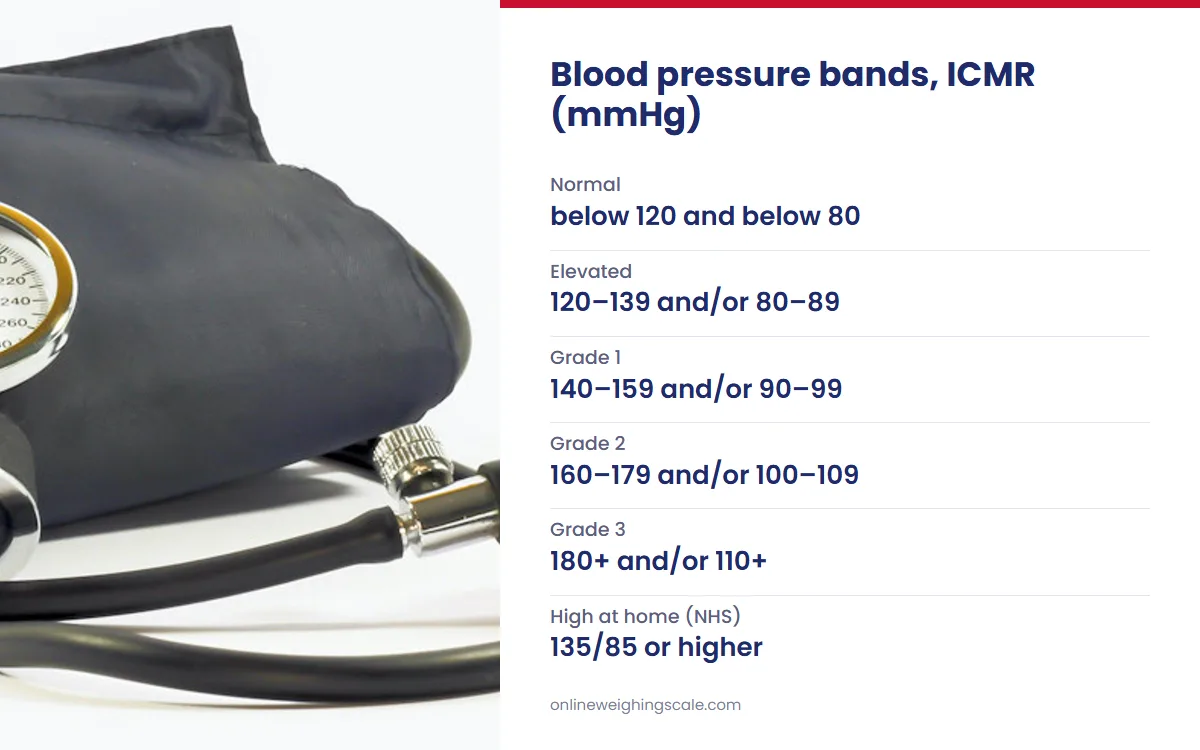
ICMR's Standard Treatment Workflow for adults, dated May 2026, sets these bands in mmHg. If only one of the two numbers is high, the higher category applies.
| Category | Systolic | Diastolic | What the workflow says |
|---|---|---|---|
| Normal | Below 120 | and below 80 | Reassure, encourage a healthy lifestyle |
| Elevated | 120–139 | and/or 80–89 | Lifestyle changes |
| Hypertension grade 1 | 140–159 | and/or 90–99 | Doctor's treatment plan with lifestyle changes |
| Hypertension grade 2 | 160–179 | and/or 100–109 | Doctor's treatment plan with lifestyle changes |
| Hypertension grade 3 | 180 or higher | and/or 110 or higher | Doctor's treatment plan with lifestyle changes |
The workflow diagnoses hypertension at 140 systolic and/or 90 diastolic or higher on two different clinic visits. One clinic visit is enough at 160 and/or 100 or higher. WHO also asks for raised readings on two different days.
Home readings use a different yardstick. The NHS treats 135/85 or higher at home as high, against 140/90 when a professional checks it in a clinic. This chart is a reference for adults, and no machine diagnoses anything by itself.
How to measure blood pressure at home
Technique changes the answer. WHO cites one study in which the diagnostic classification of more than 50% of people changed when pressure was measured with a standardised method instead of the usual clinical method. The US CDC sets out these steps for a home reading:
- Do not eat or drink for 30 minutes before the reading. Caffeine, alcohol, smoking and exercise in that window may raise it.
- Empty your bladder.
- Sit in a comfortable chair with your back supported for at least 5 minutes.
- Keep both feet flat on the ground and your legs uncrossed.
- Rest your arm on a table so the cuff is at chest height.
- Put the cuff on your bare upper arm, snug against the skin.
- Do not talk while the machine runs.
- Take at least two readings, 1 or 2 minutes apart, at the same time each day.
- Write every reading in a log.
The NHS usually asks for readings twice a day, once in the morning and once in the evening, with a minute's wait before repeating. Your doctor or nurse decides how many days to continue.
How to choose a BP machine for home
- Clinical validation: a WHO South-East Asia FAQ says 75–80% of automated devices marketed globally are not clinically validated. Validation is done once per model, by an independent body, under a protocol such as ISO 81060-2:2018. Check your exact model on a registry such as STRIDE BP, which the FAQ names.
- Cuff size: measure around the middle of your upper arm and match it to the range marked on the blood pressure monitoring cuff. India's rules ask for a bladder about 0.80 times the limb circumference in length and at least 0.40 times in width. WHO says the most accurate devices offer a variety of cuff sizes.
- Power: every automated machine needs batteries or mains power, so check what yours uses and keep spares.
- Memory: WHO notes that many machines store readings and show pulse rate. Memory helps, and a paper log does the same job.
- Upkeep: WHO says even validated machines lose accuracy over time, usually through wear of the cuff and tubing. The usual interval for an accuracy check is once every 1 or 2 years, so follow the maker's manual.
When a reading needs a doctor
ICMR's workflow treats 180 or higher systolic and/or 120 or higher diastolic as an urgent reading, with a doctor's review needed and follow-up within 1 week. The same reading with symptoms is a red flag for emergency care. Those symptoms include chest pain, breathlessness, sudden weakness, trouble speaking or swallowing, vision problems, dizziness, confusion and headache.
Below that level, one high reading is a reason to rest and repeat it correctly, then show the log to your doctor. Any change to medicines stays with the doctor.
How a BP log and a weighing scale fit together
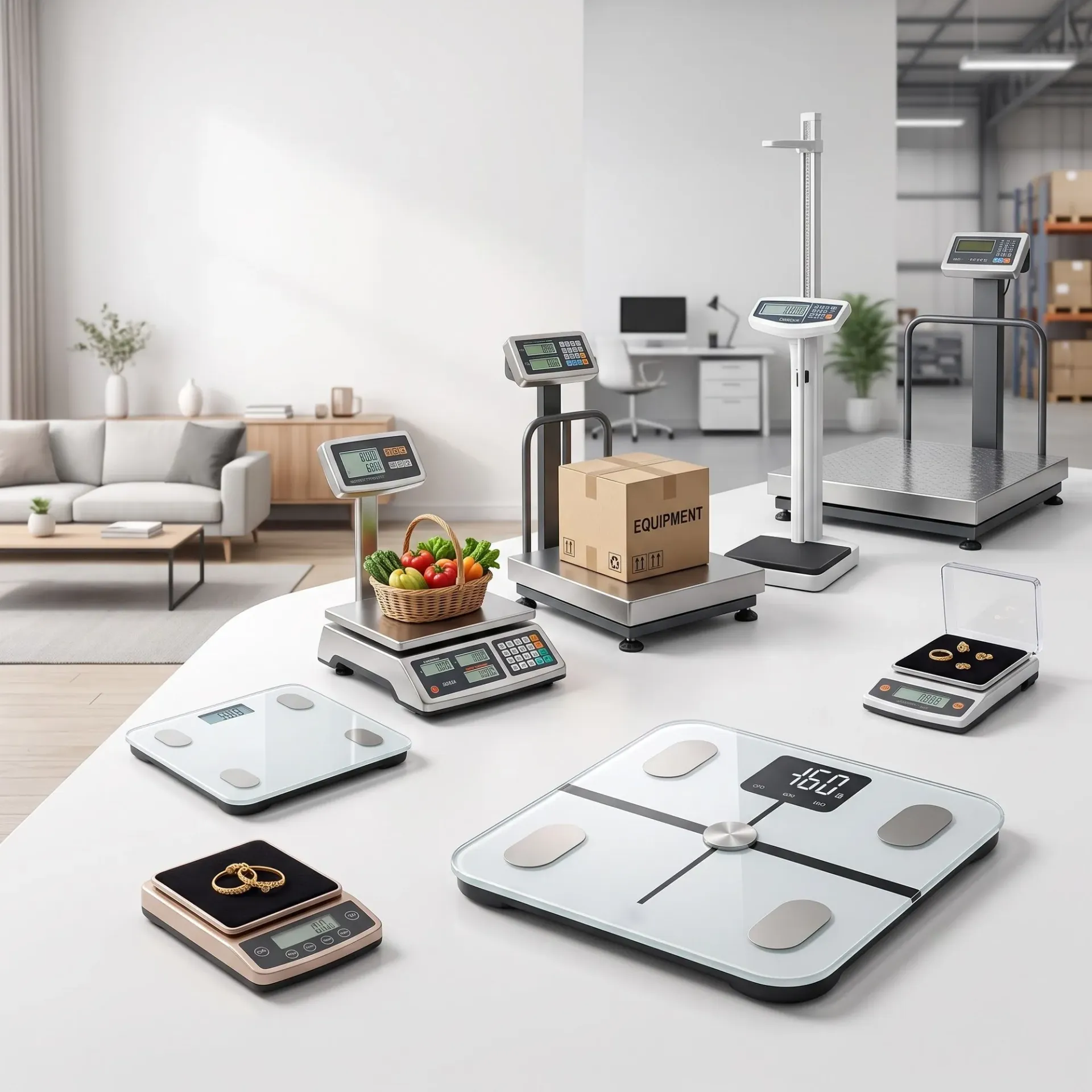
A BP machine and a weighing scale are both measuring instruments, and each is only as useful as its last check. India's rules give BP machines a permitted error in mmHg. On the weighing side, Omace Brands Private Limited makes scales in Bagru, Jaipur, and checks every scale with certified test weights before dispatch. The company sells no BP machines.
Weight does sit near blood pressure in the medical picture. ICMR's workflow lists obesity among the risk factors, and WHO's advice covers weight alongside salt and physical activity. If your doctor asks for it, a weekly reading on a personal weighing scale can go in the same notebook as your BP numbers. A BMI calculator turns height and weight into the figure your doctor may ask about. A scale reading is one more line of information for that conversation, and it diagnoses nothing.
What to carry to your next clinic visit
Take the machine and your log to the next visit. A health worker can show you how to use it correctly, and the clinic's reading gives you something to compare it with. WHO says people can measure their own pressure with automated devices, and it still calls a professional's evaluation important for judging risk and related conditions.
A BP machine does not check sugar, which needs a drop of blood and a test strip. That is explained in this guide to the glucometer. This is general information. Ask your doctor about your own readings.