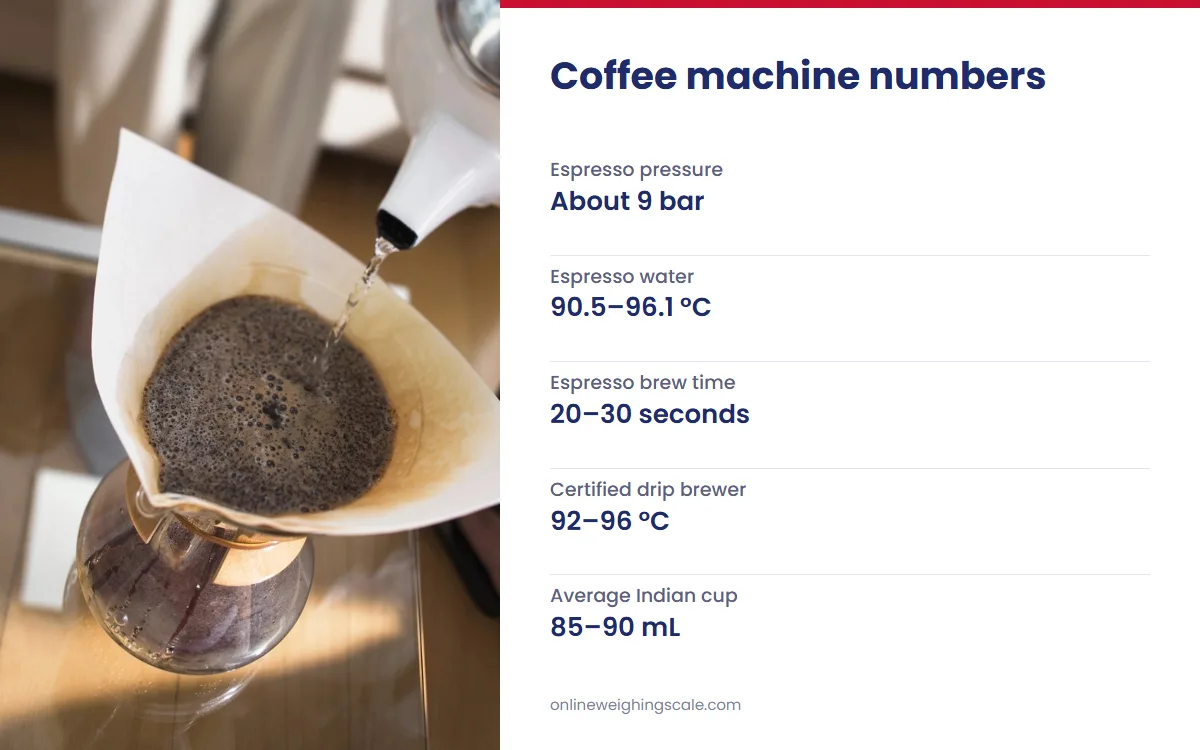
A coffee machine pushes hot water through ground coffee using gravity, steam or a pump. Espresso machines brew at about 9 bar, while certified drip brewers hold water at 92–96 °C with no pump pressure on the coffee. Prices in India run from about ₹1,000 for a basic drip maker to ₹2,00,000 or more for a large bean-to-cup model.
What a coffee machine does
Every coffee machine does the same job. It heats water, brings it into contact with ground coffee for a set time and separates the liquid from the grounds. The Coffee Board of India's brewing note says each design uses one of six basic methods to pull flavour from the coffee, and that one coffee tastes different from one machine to the next.
Shops use coffee maker, coffee machine and coffee pot loosely. A coffee maker usually means a simple drip or filter appliance, and a coffee machine can be anything up to a cafe espresso unit. Contact time separates the types as clearly as the name does, from about 30 seconds in espresso to 6–8 minutes in a percolator.
Types of coffee machines
Drip coffee maker
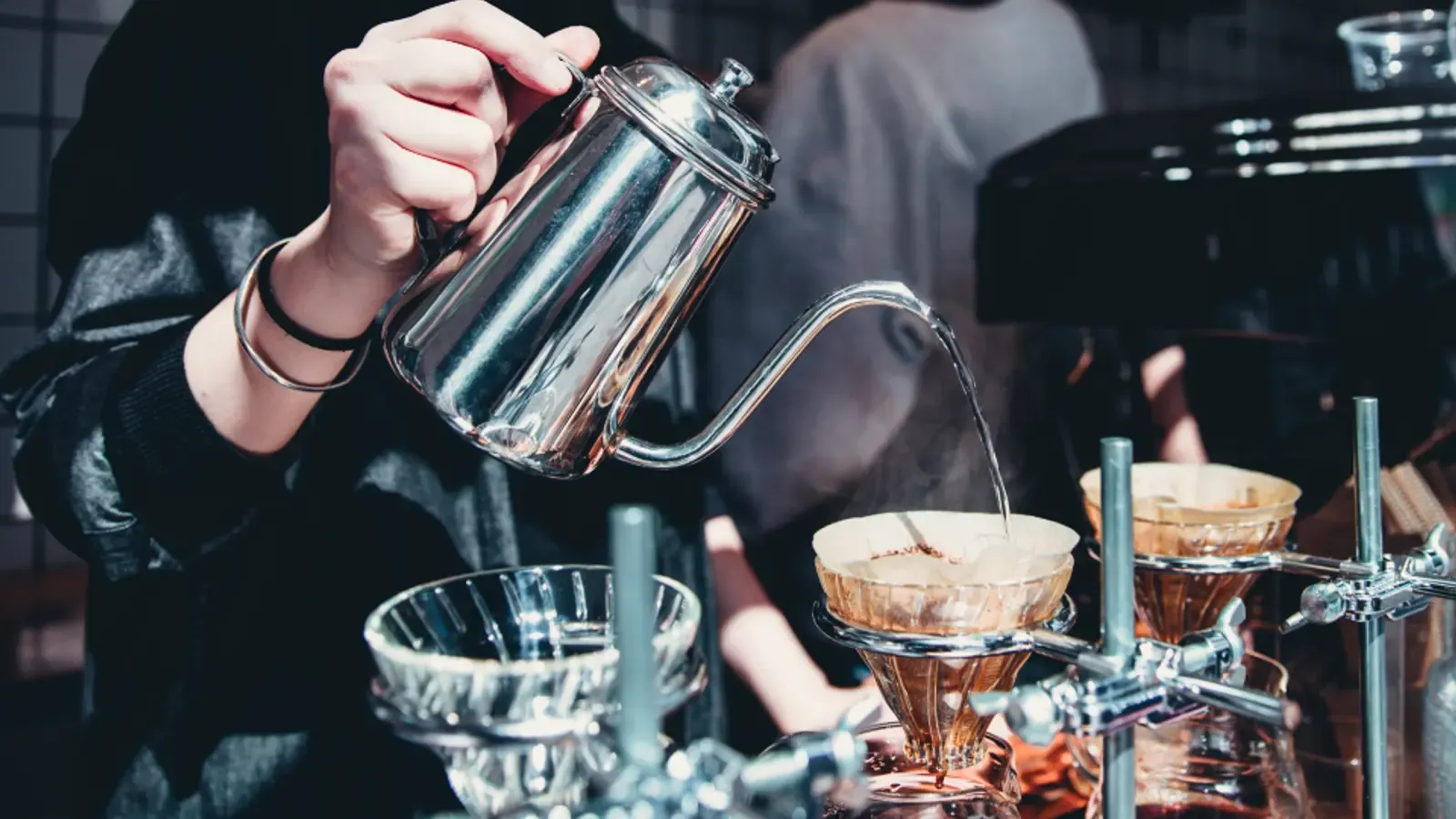
A drip coffee maker heats water and lets it fall over ground coffee in a filter basket, and gravity carries the brew into a jug. The Coffee Board notes that most drip machines keep the jug on a heating plate, and that coffee left there for a long time changes taste in a generally unpleasant direction. Pour it soon, or move it to a flask.
Home brewers fail the Specialty Coffee Association's certification if they cannot hold 92–96 °C, according to a 2020 UC Davis paper in Scientific Reports. The same paper found tasters could not tell coffee brewed at 87 °C from coffee brewed at 93 °C when strength and extraction were held equal. Dose and water amount therefore count for at least as much as the heat figure, and the brew ratio chart for each method gives the numbers.
Espresso machine
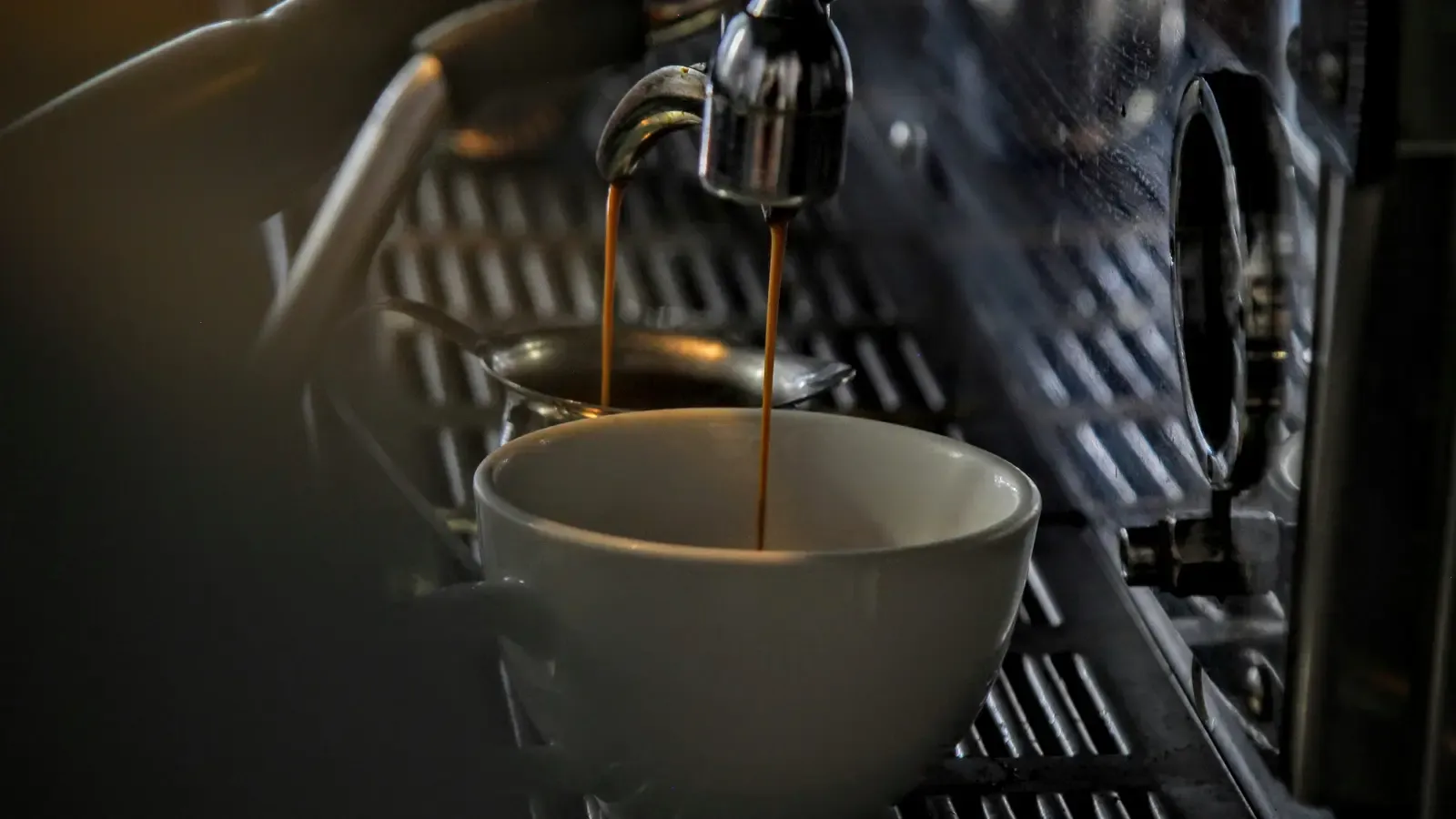
An espresso machine forces hot water through a tamped bed of fine coffee with a pump. The older SCA definition, quoted in the association's magazine, asks for water at 90.5–96.1 °C, 9–10 atmospheres of pressure and a brew time of 20–30 seconds. The Coffee Board's note gives a matching picture: 6–7 g of coffee, about 30 cc of water at 90 °C, 9 atmospheres and 30 seconds. Baristas in the SCA's survey averaged 8.5 bar, and the most common answer was 9 bar.
Home machines often carry 15 or 20 bar on the box. That figure is the pump's maximum, and it says little about what reaches the coffee. A 2023 paper in the journal Foods reports that earlier studies raising pressure from 7 to 11 bar saw a decreasing trend in extracted mass in the cup. A bigger number on the label gives no promise of a stronger shot.
A semi-automatic machine leaves grinding, tamping and stopping the shot to you while the pump handles pressure. A manual lever machine also leaves the pressure in your hand.
Bean-to-cup machine
A bean-to-cup machine grinds, doses, tamps and brews at the press of one button. It suits a home or office where nobody wants to learn espresso, and it costs the most among home machines. Whole beans are also the less common habit in India. The Coffee Board's 2023 consumption study found 5% of coffee consumers buy beans to brew at home, against 41% who buy powder.
Capsule machine
A capsule or pod machine pierces a sealed portion of coffee and pumps hot water through it. There is no grinder and nothing to weigh, so the cup is quick and repeatable. The machine is often cheap and the capsules are the long-term cost, so work out the price per cup over two or three years and check which capsules are sold in your city.
Moka pot and percolator
These two sit on the stove. The Coffee Board describes the moka pot as an inexpensive three-chamber brewer, often misnamed a stove-top espresso, in which steam pressure forces boiling water up through the coffee. It advises lowering the flame when the first drops appear, because too much heat gives a burnt taste. Most aluminium pots will not heat on an induction hob.
A coffee percolator uses a stem and a basket of coarse coffee over cold water. The Coffee Board's method brings the water gently to the boil, then lets it percolate for 6–8 minutes. Electric versions do the same job with a built-in heater.
South Indian filter and electric filter machine
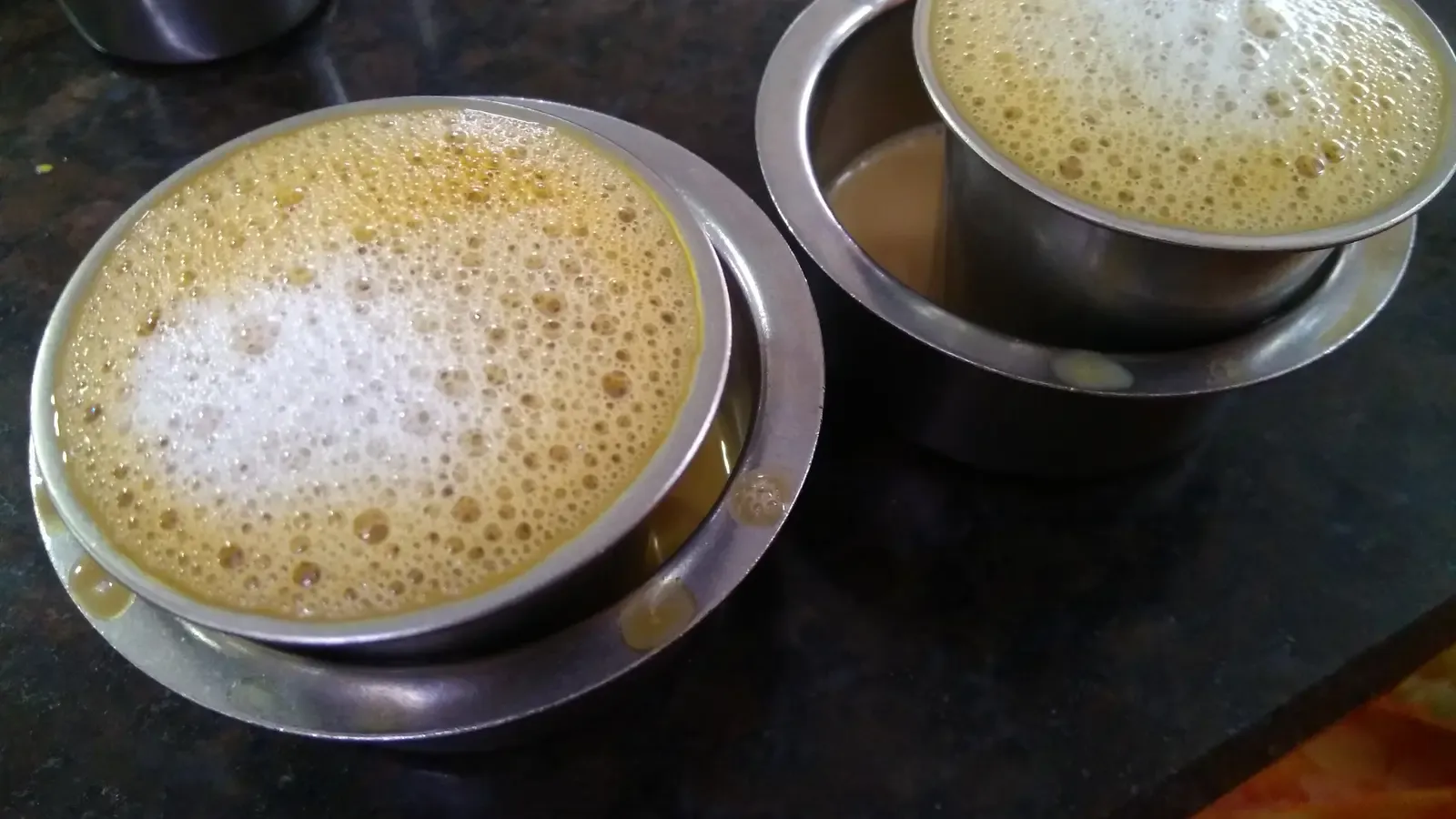
The Indian two-tier filter needs no power at all. The Coffee Board describes it as a brass or stainless steel jug with a perforated upper unit, a plunger and a lower unit that collects the decoction. Shops sometimes list it as a filter coffee percolator or filter coffee pot, though the water passes through just once. An electric filter machine heats the water and drips it through the powder for you. The full method is in the guide to South Indian kaapi.
Coffee machines in India
India consumed an estimated 91,000 tonnes of coffee in 2023, and 93–94% of that was drunk at home, according to the Coffee Board study. South India accounts for 75–80% of consumption. Instant coffee now makes up 60–65% of the total, so much of the coffee drunk at home involves no machine at all.
Two local checks matter before you buy.
- Cup claims: the Coffee Board found an average Indian cup of 85–90 mL, while machine boxes define a cup in different ways. Compare the jug or tank size in millilitres.
- Hard water: India's drinking water standard, IS 10500, accepts total hardness up to 200 mg/L, or 600 mg/L where no other source exists. The World Health Organization says water above about 200 mg/L may cause scale deposits. SCA-102 asks for calcium hardness of 50–175 ppm and no chlorine in brewing water. Borewell homes should test the water and plan for filtering and descaling.
Coffee machine comparison: quick reference
| Type | How water moves | Key figure | India price band | Suits |
|---|---|---|---|---|
| Drip coffee maker | Gravity | 92–96 °C in certified brewers | ₹1,000–₹8,000 | Black coffee, several cups |
| Capsule machine | Pump | Sealed single portion | ₹4,000–₹20,000 | Quick single cups |
| Home espresso machine | Pump | About 9 bar at the coffee, 20–30 seconds | ₹8,000–₹1,00,000 | Milk drinks at home |
| Bean-to-cup machine | Pump with built-in grinder | One button from bean to cup | ₹40,000–₹2,00,000 | Offices and busy homes |
| Commercial one-group | Pump and boiler | About 40–80 cups a day | ₹1,00,000–₹1,90,000 | Small cafes |
| Commercial two-group | Pump and larger boiler | About 150–300 cups a day | ₹1,90,000–₹3,20,000 | Busy cafes |
These price bands are rough market ranges seen across Indian guides and listings, checked November 2026. They name no seller and they change often. A manual French press usually costs under ₹1,000.
How to choose a coffee machine for home
- What you drink: 80% of Indian coffee drinkers add milk, according to the Coffee Board study. Milk drinks need steam or a separate frother, and black coffee does not.
- The coffee you buy: powder is the most common purchase for brewing at home. Machines with a pressurised basket forgive ready ground powder, while a plain basket needs a fine, even grind and usually a burr grinder.
- How much you make: a drip jug suits several cups at once, and pump machines work one or two shots at a time.
- Cleaning time: the Coffee Board adds maintenance as a fifth essential for espresso, and names the portafilter, filter holders, gaskets and water softener as parts to keep clean.
- Service: check that parts and a repair centre exist in your city before you pay for a pump machine.
Coffee grinders and milk frothers
Coffee grinder
A burr grinder crushes beans between two plates set a fixed distance apart. A blade grinder chops them, so particle sizes vary more and cannot be set precisely. Grind size must match the machine. The Coffee Board's note uses coarse grounds for a percolator, medium for paper filter drip and medium-coarse for a plunger press, while espresso goes far finer.
SCA-102 gives one fixed reference point. Its cupping grind passes 70–75% of the grounds through an 850 µm sieve, slightly coarser than usual paper filter drip. A 2016 paper in Scientific Reports found that particle size did not depend on bean origin or processing, and that colder beans ground to a narrower spread with a smaller average size.
Milk frother
- Steam wand: built into many espresso machines, it heats and foams milk with steam and takes some practice.
- Electric frother: a small jug that heats and whisks the milk on its own, and suits people with a capsule or moka set-up.
- Handheld frother: a battery whisk that foams milk you have already heated, and usually the cheapest of the three.
Office and cafe coffee machines
Workplace machines come in two main kinds: brewing machines and liquid-model machines that mix coffee concentrate with hot water. A 2025 Swedish study in Nutrition, Metabolism and Cardiovascular Diseases measured cafestol, a cholesterol-raising compound in unfiltered coffee. Workplace brewing machines had a median of 176 mg/L, liquid-model machines 8 mg/L and home paper-filtered coffee 12 mg/L. Boiled coffee reached 939 mg/L. The study measured the coffee, and it did not test people's health. This is general information. Ask your doctor about your own readings.
A cafe buys on cups per day. Boiler size and the number of groups drive the price, and a second group roughly doubles output. Home machines are not built for continuous commercial use, so a shop that serves all day should plan for a commercial unit. Budget too for a commercial burr grinder, roughly ₹31,000–₹1,20,000, and water treatment, roughly ₹10,000–₹31,000.
Staff can train with a government body. The Coffee Board's Kaapi Shastra programme teaches roasting, brewing and retailing over 5 days in Bengaluru, at ₹15,000 plus 18% GST per participant, with a batch listed for 30 November to 4 December 2026 (checked November 2026).
Why weighing helps with any coffee machine
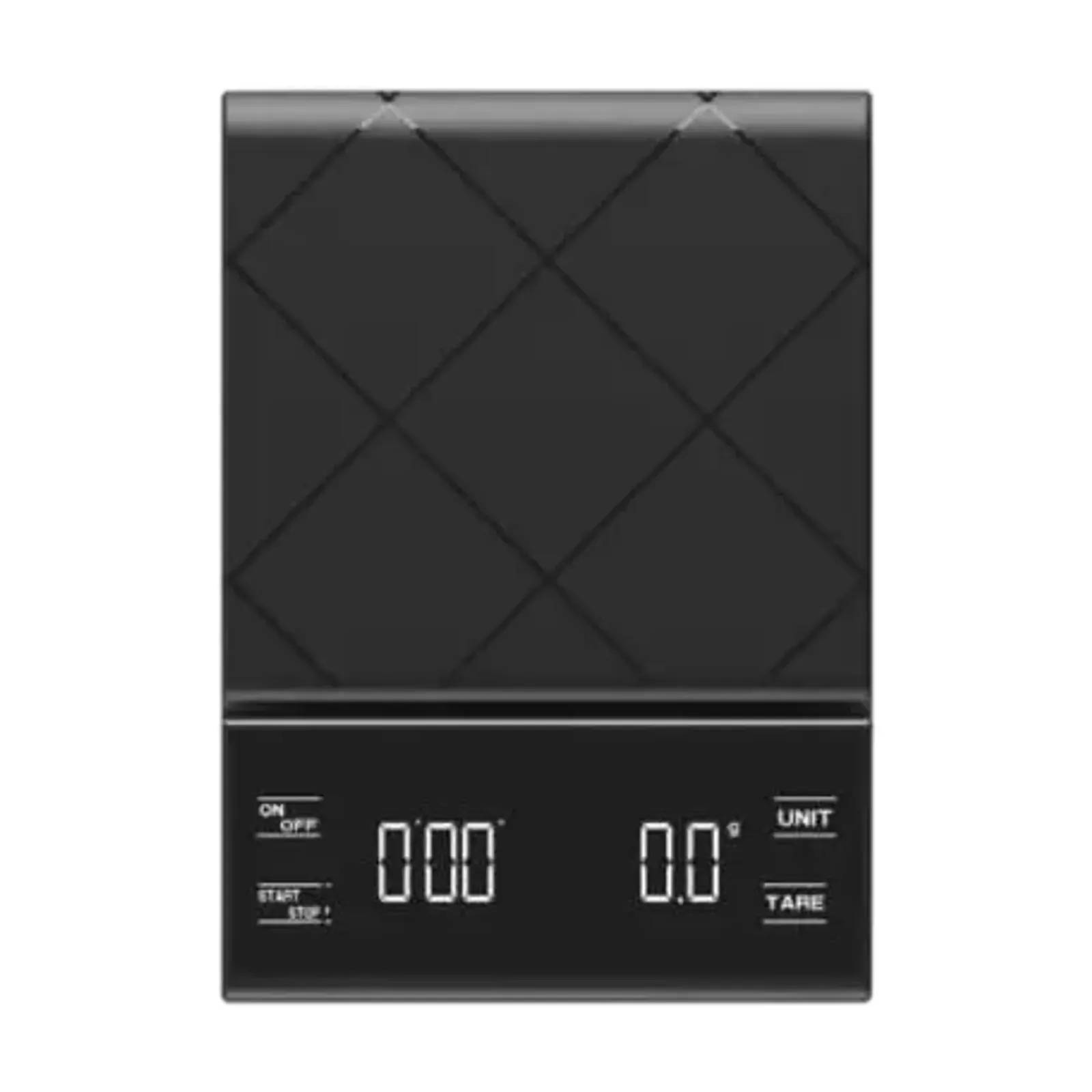
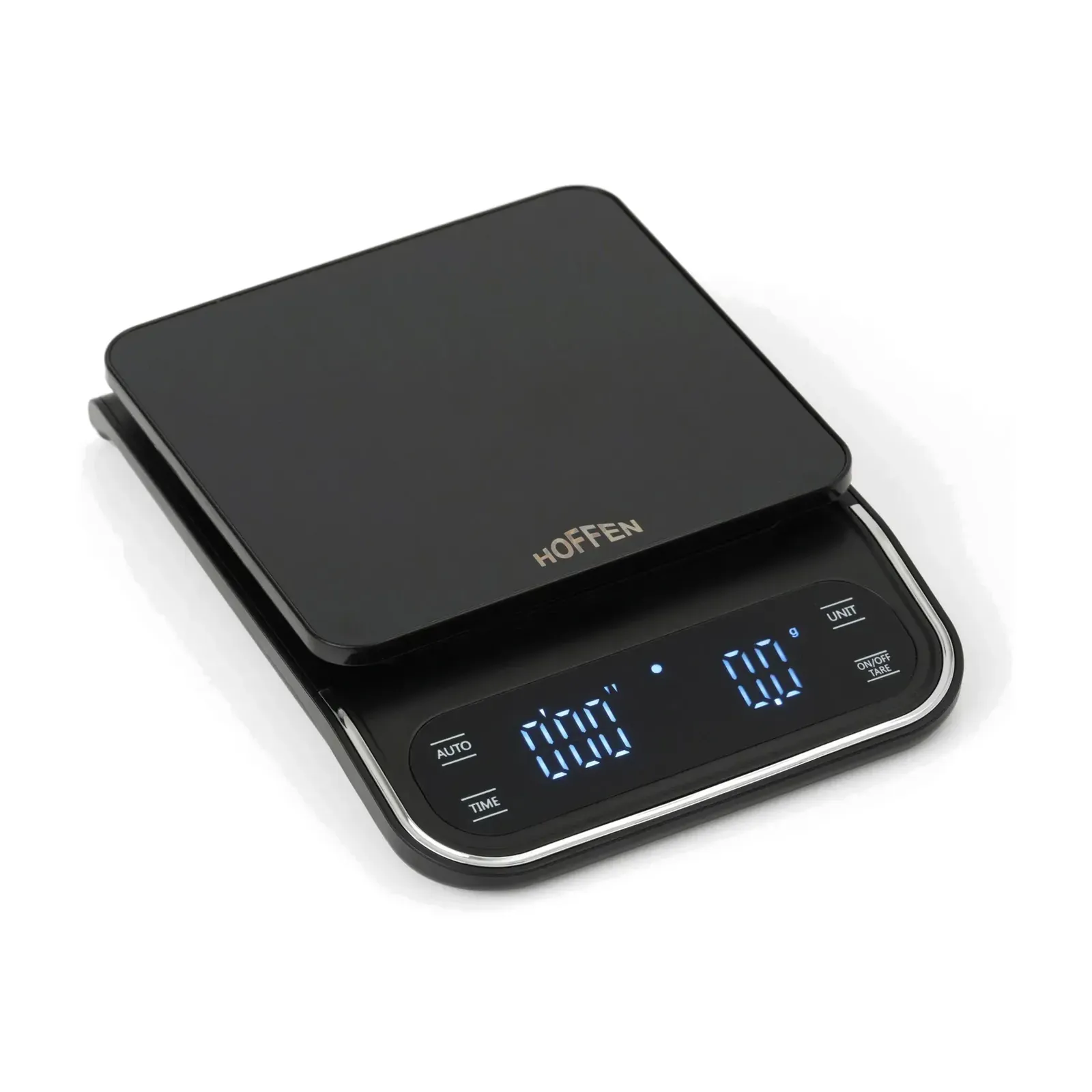
A machine controls heat and pressure, and it leaves the dose to you. SCA-102 weighs coffee on a scale with 0.1 g or higher accuracy and allows ±0.2 g on each cup. In the SCA's survey, 82% of baristas measured espresso by weight. A coffee scale reading in 0.1 g steps shows the dose going in and the drink coming out, which is how you repeat a good shot or fairly compare two machines. Omace Brands Private Limited makes weighing scales at Bagru, Jaipur, and does not make coffee machines, so this guide stays with machine types and leaves the choice of model to you.
Matching a machine to the way you drink coffee
Start from your daily cup and work backwards. A black coffee drinker gets good results from a simple drip maker with fresh coffee. A milk coffee drinker needs a pump machine or a moka pot with a frother. A home that loves kaapi may need no appliance beyond a steel filter. Water quality and cleaning time matter at every price, and both are easy to check before you spend anything.