The standard coffee-to-water ratio is 55 g of coffee per litre of water, about 1:18 by weight, the figure the Specialty Coffee Association uses for cupping. The same standard sets 55–60 g per litre for filter and French press brews. Espresso runs far stronger, at about 1:2. In a steeped brew, that one ratio sets the strength.
How to work out a brew ratio
A brew ratio compares the weight of coffee with the weight of water. A ratio of 1:18 means 1 g of coffee for every 18 g of water. The Specialty Coffee Association writes the same idea the other way round, as 18:1 water to coffee, so check which number comes first in any recipe you read.
Grams and millilitres of water can be treated as equal here. SCA-102, the association's 2024 sample preparation standard, approximates water at a density of 1 g per mL, so 250 mL counts as 250 g.
- Coffee needed: divide the water by the ratio number. For 300 g of water at 1:18, 300 ÷ 18 = 16.7 g of coffee.
- Water needed: multiply the coffee by the ratio number. For 20 g of coffee at 1:16, 20 × 16 = 320 g of water.
- From grams per litre: divide 1,000 by the grams per litre. So 55 g per litre is 1:18.2 and 60 g per litre is 1:16.7.
Coffee ratio chart by brew method
This chart gives a starting ratio for each common brew. The last column says whether the figure comes from a standard, a survey or everyday home recipes.
| Brew method | Coffee : water | Example | Brew time | Basis |
|---|---|---|---|---|
| Filter and pour over | 1:17–1:18 (55–60 g/L) | 15 g with 250 g water | Until drained | SCA standard |
| French press | 1:17–1:18 (55–60 g/L) | 30 g with 500 g water | About 4 minutes | SCA standard, Coffee Board time |
| Espresso | 1:2 (range 1:1.5–1:2.5) | 18 g in, 36 g out | 20–30 seconds | SCA survey and definition |
| Moka pot | About 1:10 | 20 g with 200 g water | Until the top chamber fills | Home recipes |
| South Indian filter | About 1:5–1:8 | 20 g with 100–160 g water | 10–20 minutes | Home recipes |
| Cold brew | About 1:10 | 100 g with 1 litre water | 14–22 hours | Published lab studies |
The filter and French press range comes from SCA-102, which sets it for batch brews made for tasting. The moka pot and South Indian filter rows have no published standard behind them, so they show what home recipes commonly use.
Ratio notes for each way of brewing
Pour over and drip
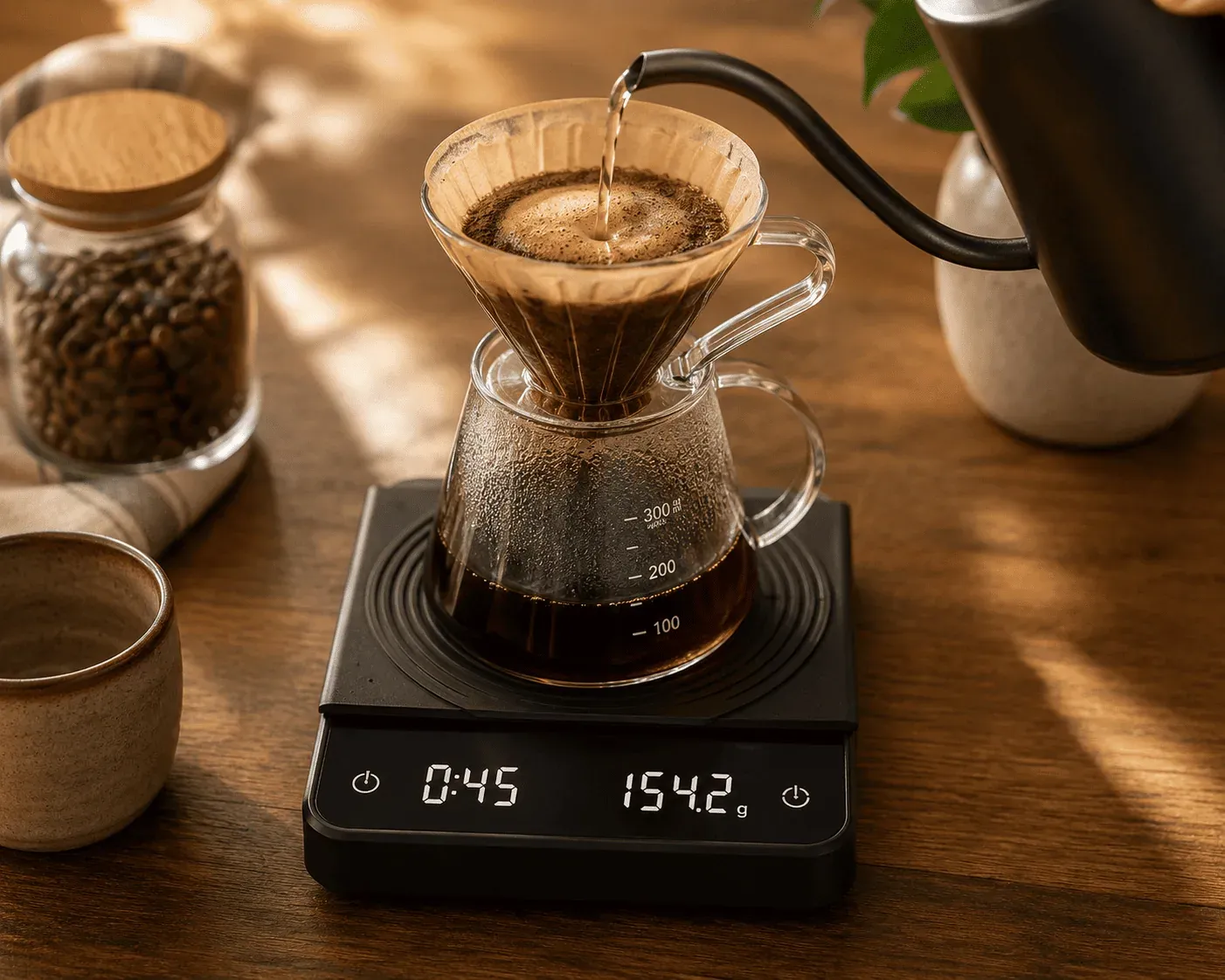
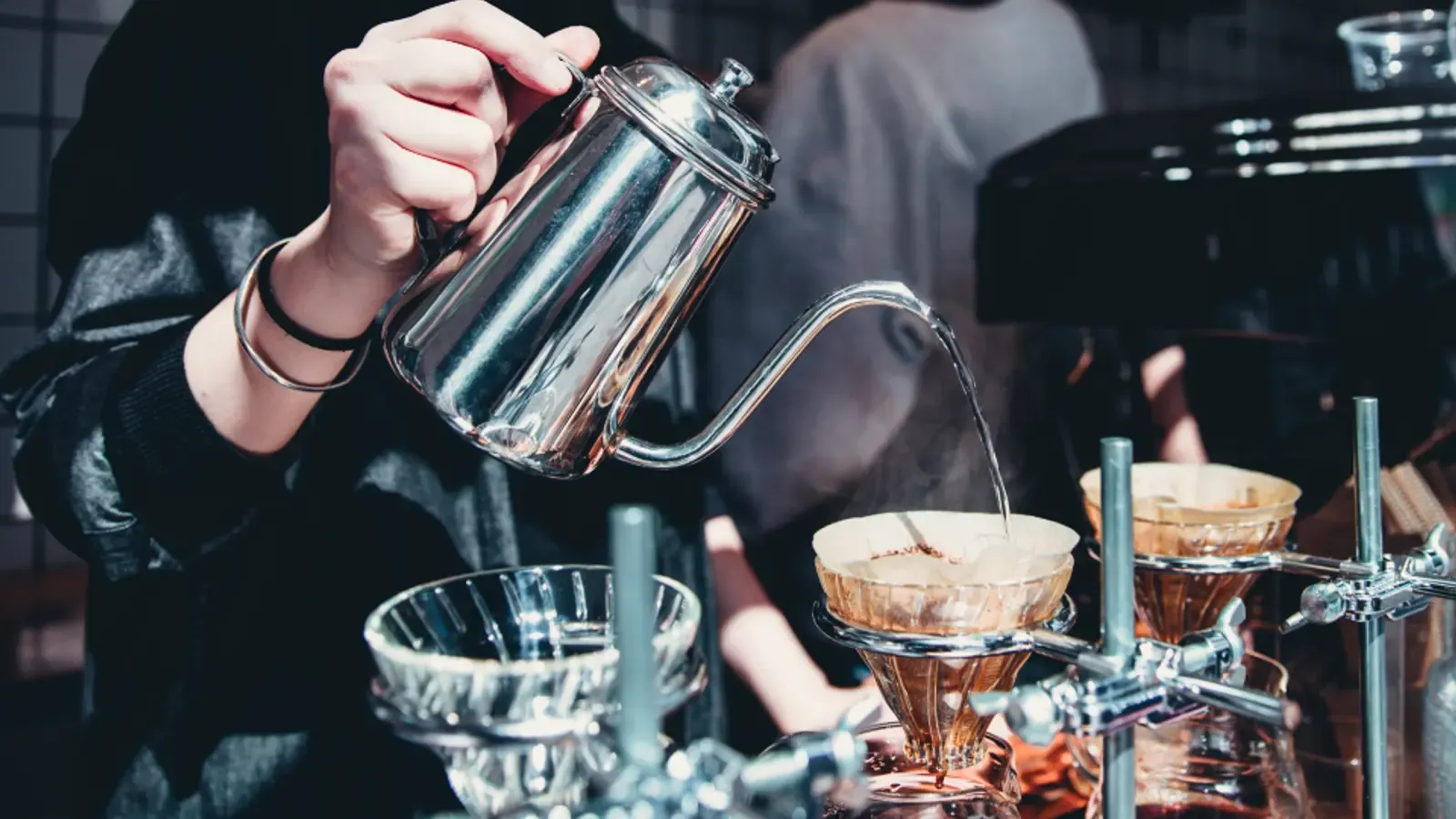
Pour over coffee is made by pouring hot water by hand over ground coffee in a filter cone and letting it drain into a jug below. The Coffee Board of India's brewing note describes the set-up as a paper filter in a cone-shaped holder, medium ground coffee and a glass jug. An electric drip maker does the same pouring for you, and the guide to coffee machine types explains how it differs from a pump machine.
Many home recipes go a little stronger than the SCA range, at 1:15 to 1:17, and that is a taste choice. For a single cup, 15 g of coffee with 250 g of water is a sound start. A hand-pressed plunger brewer, a short steep finished with air pressure, usually takes a similar 1:15 to 1:18.
French press
A French press steeps all the coffee in all the water, which makes the ratio easy to reason about. A 2021 University of California, Davis study in Scientific Reports found that strength in this full immersion style is roughly inversely proportional to the brew ratio. Halve the water and the brew comes out about twice as strong. The authors called brew ratio the most important setting for full immersion brewing.
The Coffee Board's note infuses medium-coarse grounds for about 4 minutes before pressing the plunger. A 30 g dose with 500 g of water sits at the top of the SCA range, and more water per gram simply gives a lighter cup.
Espresso
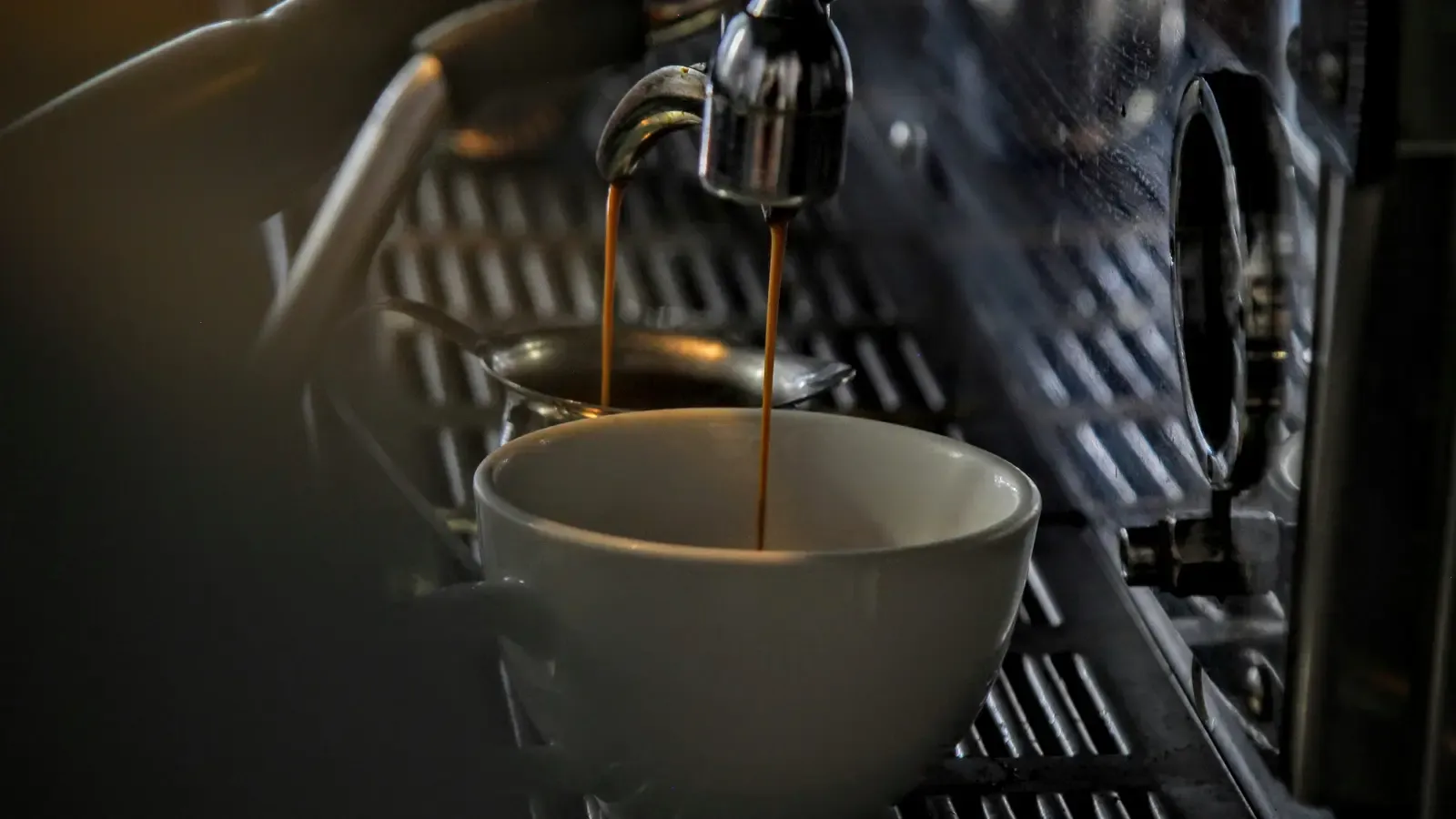
Espresso recipes give dose in and drink out, both in grams, so 18 g in and 36 g out is 1:2. Baristas in a Specialty Coffee Association survey averaged 1:2, with answers from 1:1.5 to 1:2.5. In that survey, 82% measured the drink by weight and 66% dosed between 18 g and 20 g. The older SCA definition quoted in the same article sets 14–18 g for a double and a brew time of 20–30 seconds.
Less coffee can work. A 2020 study in the journal Matter reached the same extraction from 15 g ground much coarser as from 20 g, cutting the dose by up to 25%. Those shots can run under 15 seconds and taste different, so treat it as an experiment.
A coffee doser on a grinder releases a set portion, and the Coffee Board lists the grinder-doser among espresso's essentials. Check that portion on a scale now and then, because a doser set by volume or time can drift in grams.
Moka pot
The Coffee Board says a moka pot's filter should be filled up to the rim, because the rim marks the optimal dose. The pot therefore sets its own ratio: the basket decides the coffee and the boiler decides the water. Home recipes land near 1:10, such as 20 g with 200 g of water. Weigh what your own pot holds once and keep that number.
South Indian filter
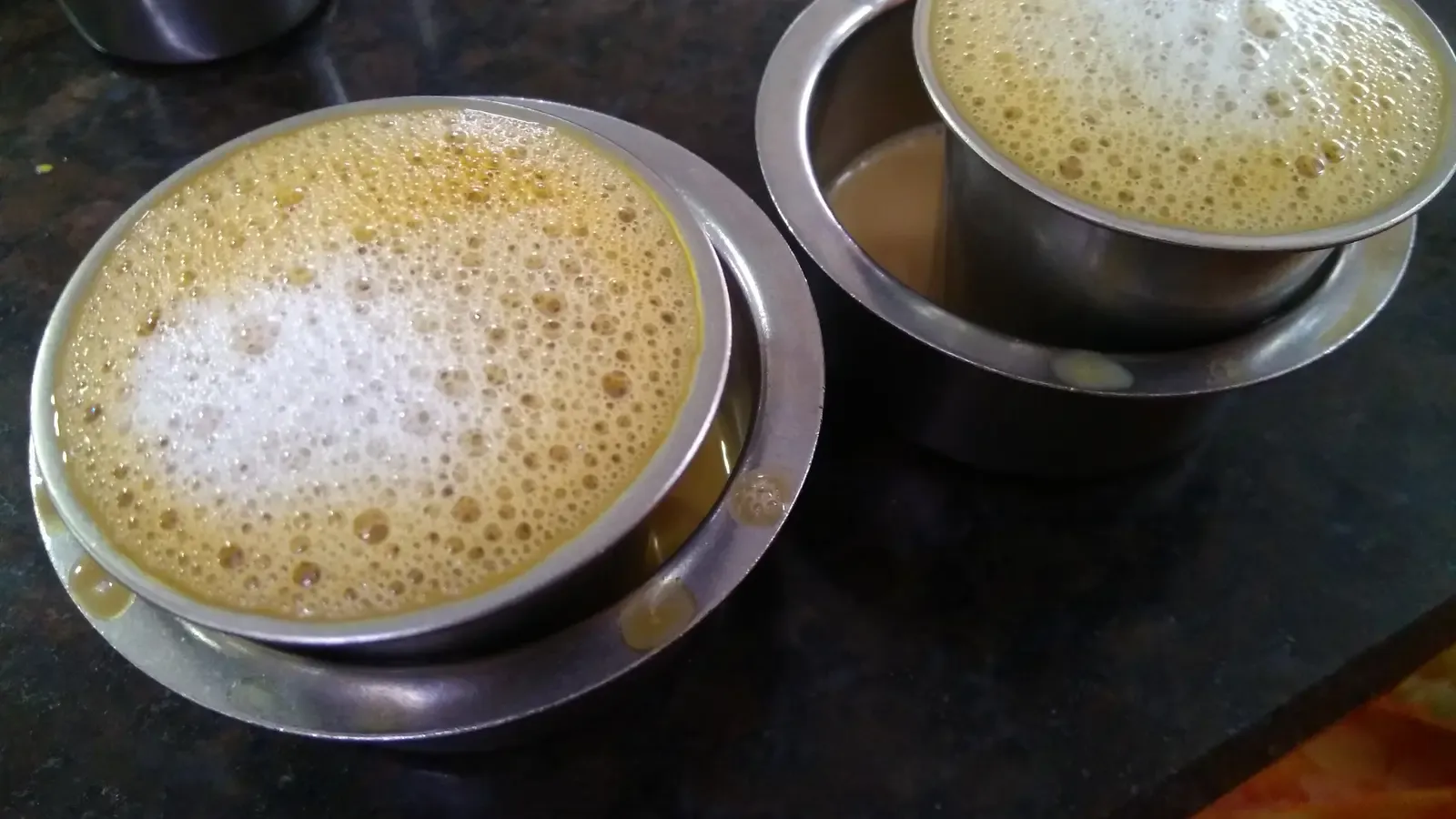
South Indian filter coffee makes a concentrate first and adds milk later. Home recipes use about 1:5 to 1:8 by weight, for example 20 g of powder with 100–160 g of water, then 1 part decoction to 2–3 parts hot milk. The method, the chicory rules and the bean choices are in the guide to South Indian kaapi.
Cold brew
Cold brew steeps for many hours in cold water. A 2019 study in Scientific Reports tested 14 to 22 hours, and tasters scored the 14 hour, coarse-ground samples highest. A 2025 study in the Journal of Food Technology, Siam University used 1 part coffee to 10 parts water. Dilute the result to taste.
What the ratio changes: strength and extraction
Two measures describe a brew. Strength is the share of dissolved coffee in the cup, written as total dissolved solids or TDS. Extraction is the share of the dose that dissolved. The classic Coffee Brewing Control Chart marks 1.15–1.35% TDS and 18–22% extraction as ideal, and a 2020 UC Davis paper identifies that box as the SCA's Golden Cup Standard. On a 16.5 g dose, 18–22% extraction means 3.0–3.6 g of coffee dissolves.
Many guides say the ratio itself pushes a cup into over-extraction or under-extraction. The UC Davis immersion study measured something different. Extraction stayed near 21% over a wide range of ratios, and brew temperatures from 80 °C to 99 °C, grind size and roast barely moved it. This holds for full immersion brews left to reach equilibrium. Drip brewing behaves differently, since grind, ratio and flow rate all interact.
The same paper links taste to these measures. Higher strength brings more bitter, smoky and roast-like aromas, and higher strength with low extraction leans sour and citrus. Lower strength brings out sweetness and tea-like or floral notes. Decimal chasing adds little, since researchers writing for the SCA say most experts cannot tell 17.9% extraction from 18.1%.
- Cup too strong or heavy: add water, moving from 1:16 to 1:17.
- Cup thin and watery: use less water, moving from 1:17 to 1:16.
- Drip or pour over tastes sour: grind finer before you touch the ratio.
- Drip or pour over tastes bitter and dry: grind coarser before you touch the ratio.
How much coffee in one cup
A 150 mL cup takes 8.25 g of coffee at the SCA cupping ratio. Cup size varies a lot in India. The Coffee Board's 2023 consumption study found an average cup of 85–90 mL and used 120 mL as its standard cup. So size the dose from the millilitres in your own cup.
| Water | 55 g/L (about 1:18) | 60 g/L (about 1:17) | 1:15 (stronger) |
|---|---|---|---|
| 90 mL | 5.0 g | 5.4 g | 6.0 g |
| 120 mL | 6.6 g | 7.2 g | 8.0 g |
| 150 mL | 8.3 g | 9.0 g | 10.0 g |
| 200 mL | 11.0 g | 12.0 g | 13.3 g |
| 250 mL | 13.8 g | 15.0 g | 16.7 g |
| 1 litre | 55 g | 60 g | 66.7 g |
These weights apply to whole beans and to ready ground coffee alike, which some shop listings call grounded coffee. Weigh the water you pour rather than the drink you end up with. The UC Davis authors note that spent grounds always hold back some brew, so the cup comes out smaller than the water poured.
A spoon measures volume, and roast changes how much a spoonful weighs. In a 2017 study in Phytochemical Analysis, Arabica lost 14.0–14.9% of its mass in a light roast and 17.6–19.2% in a dark roast. To learn how much coffee powder per cup your spoon gives, put a cup on a scale, zero it, add one level spoon and read the grams.
Instant coffee works differently. It dissolves fully in the cup, so brew ratios do not apply, and the pack's own serving is the place to start. Close to 65% of the coffee drunk in India is instant, according to the Coffee Board study.
What else moves your ideal ratio
- Roast: four regular roasts from light to extra dark gave effectively the same strength at the same ratio in the UC Davis immersion tests. A new roast usually calls for a taste check before any change of ratio.
- Bean: species and origin change flavour, as the guide to types of coffee beans explains.
- Water: a cup at 1.25% TDS is 98.75% water. SCA-102 asks for no chlorine, calcium hardness of 50–175 ppm, alkalinity near 40–70 ppm and a pH of 6–8. India's drinking water standard, IS 10500, accepts total hardness up to 200 mg/L, or 600 mg/L where no other source exists. Try filtered water if the cup tastes dull.
- Temperature: SCA-102 pours at 93 ± 3 °C. Tasters in the 2020 UC Davis paper could not tell coffee brewed at 87 °C from coffee brewed at 93 °C when strength and extraction were held equal.
- Milk: 80% of Indian coffee drinkers add milk, according to the Coffee Board study. A milky cup usually starts from a stronger brew, so move one step towards 1:15.
How to make coffee by weight
- Place the scale, or kanta, on a flat, steady table and switch it on.
- Put the jug and dripper, or the empty press, on the platform and press TARE.
- Add the coffee, note the weight, and press TARE again.
- Start the timer and pour water until the display reaches your target.
- Let it drain or steep, taste it, and change one thing next time.
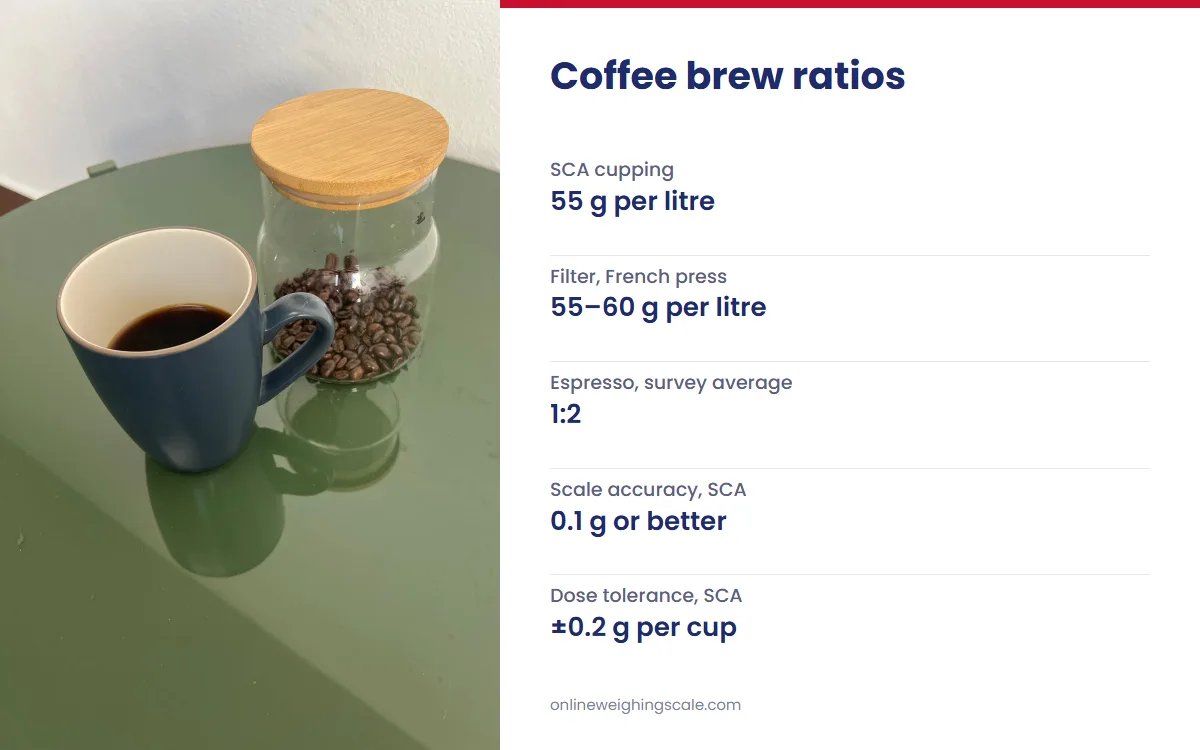
SCA-102 weighs coffee on a scale with 0.1 g or higher accuracy and allows ±0.2 g on each cup's dose. On a 15 g dose, a kitchen scale's 1 g step equals 6.7% of the coffee, which suits a litre batch better than a single cup.
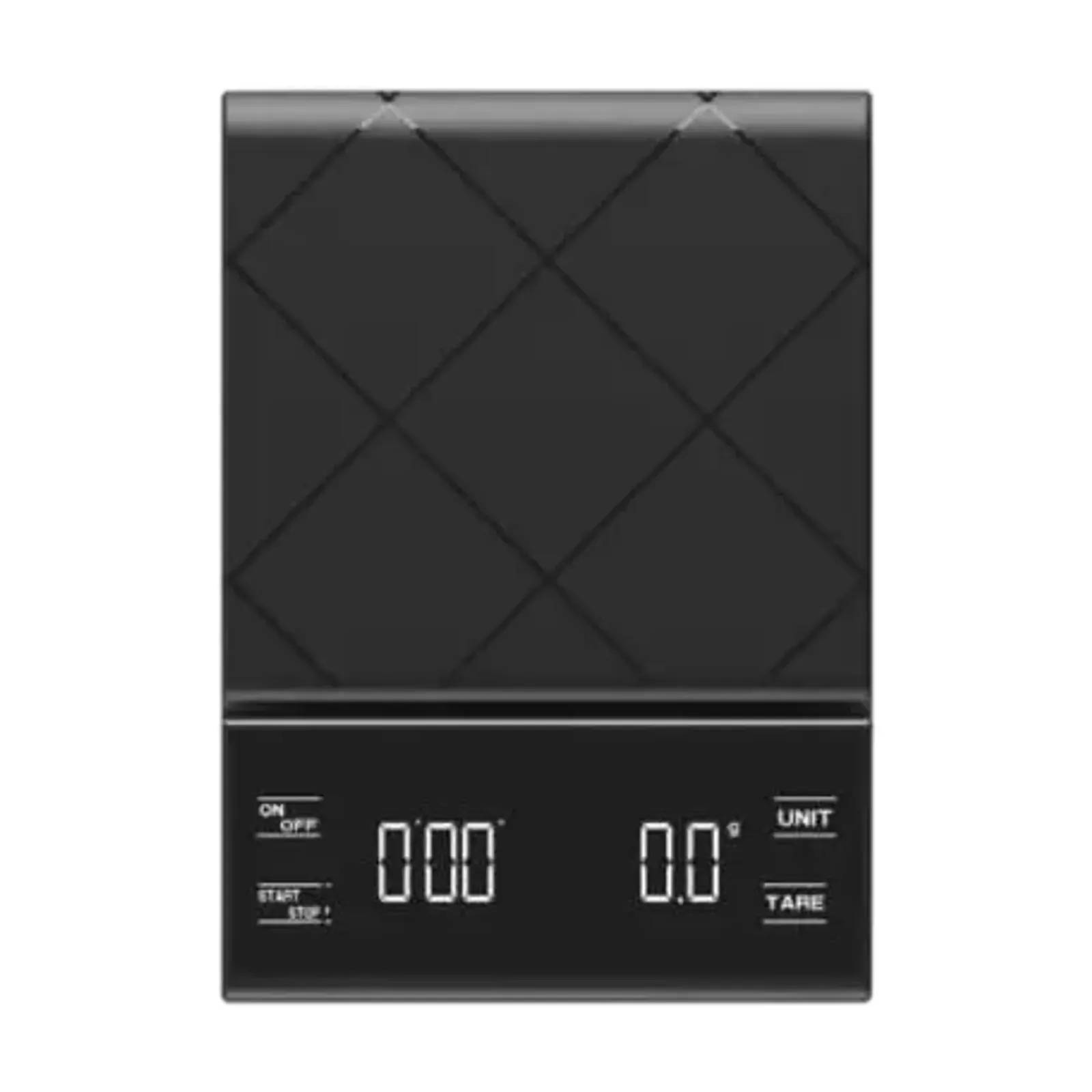
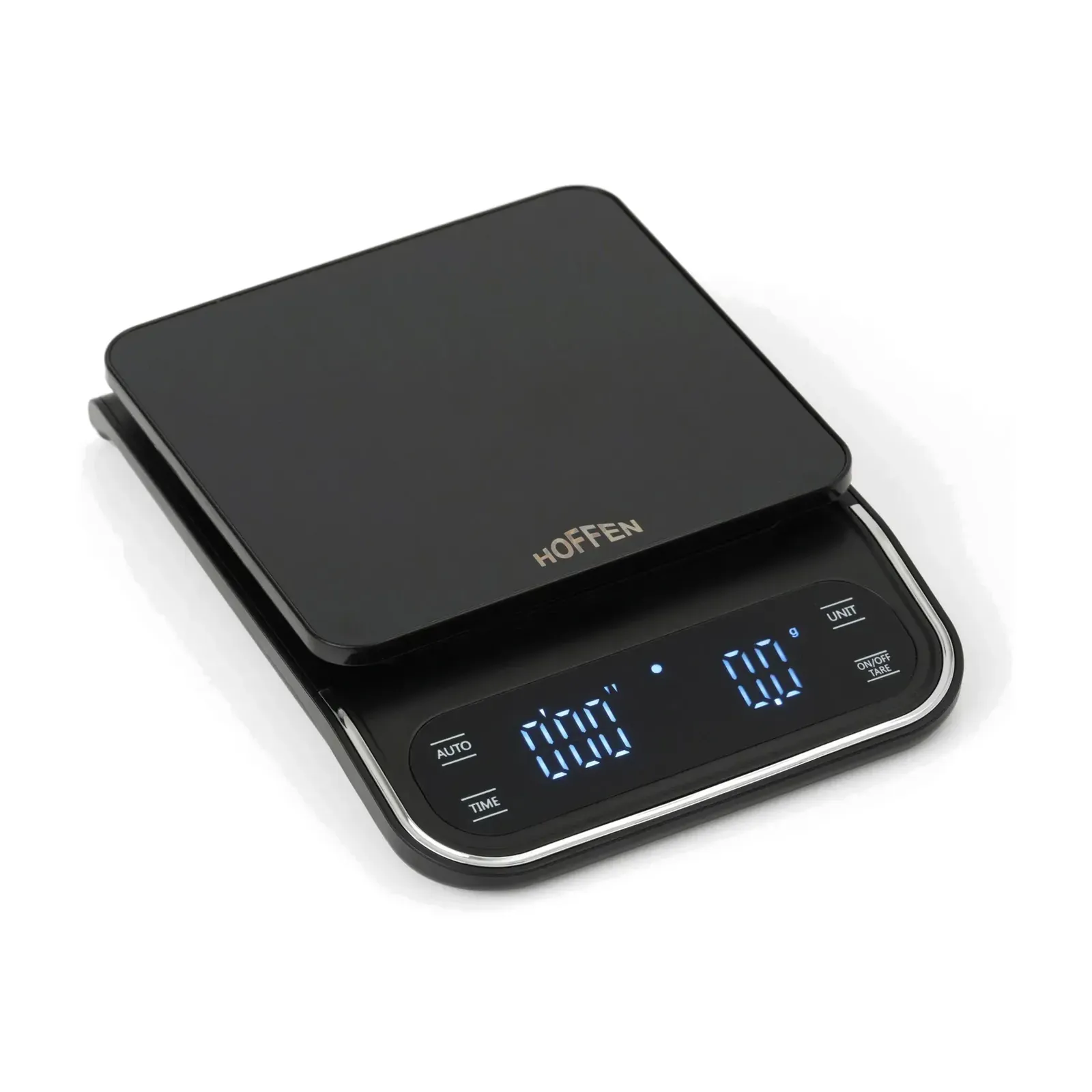
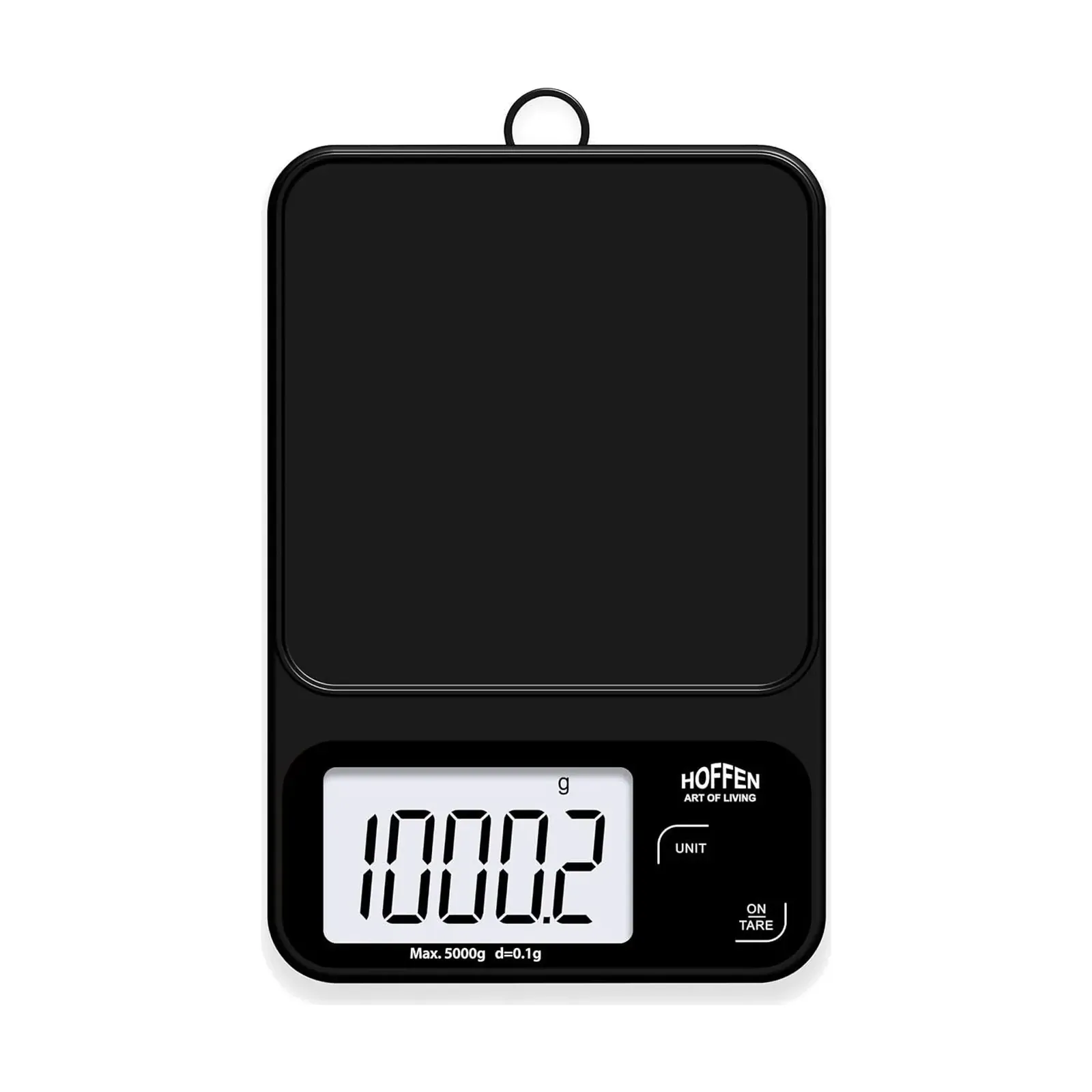
The Hoffen KS-301 coffee weighing machine reads in 0.1 g steps up to 3 kg, has a built-in brew timer and costs ₹1,575. The Hoffen KS-303 coffee weighing scale has the same range and adds an AUTO key that starts the timer when you begin pouring, at ₹1,785. Both models are listed with the other coffee scales. How to check a scale against a known weight is covered in coffee scale calibration and the Golden Cup standard.
Who makes and checks Omace coffee scales
Omace Brands Private Limited makes weighing scales in India and has been in the weighing trade since 1994. The factory is at G-29 RIICO Industrial Area, Bagru, Jaipur. Every scale is checked with certified test weights before dispatch. Every Omace digital scale opens calibration mode when TARE is held for about 5 seconds. As a manufacturer, Omace Brands Private Limited holds ISO 9001:2015, ISO 13485:2016 and EU MDR quality certificates, and CE and US FDA compliance certificates, all listed on the certificates page. Scales bought from the Omace store carry a 2-year warranty on manufacturing defects. A scale that reads wrong is replaced under warranty. Every Omace scale is made in India.
Starting ratios to try this week
Begin at 1:17 for filter or French press and 1:2 for espresso. Brew the same recipe two or three times before judging it, because a single cup can mislead. If the strength feels off, change the water first. If a drip brew tastes sour or bitter, change the grind. Note the grams each time, since a written recipe is what lets you repeat a good cup with the same coffee next month.