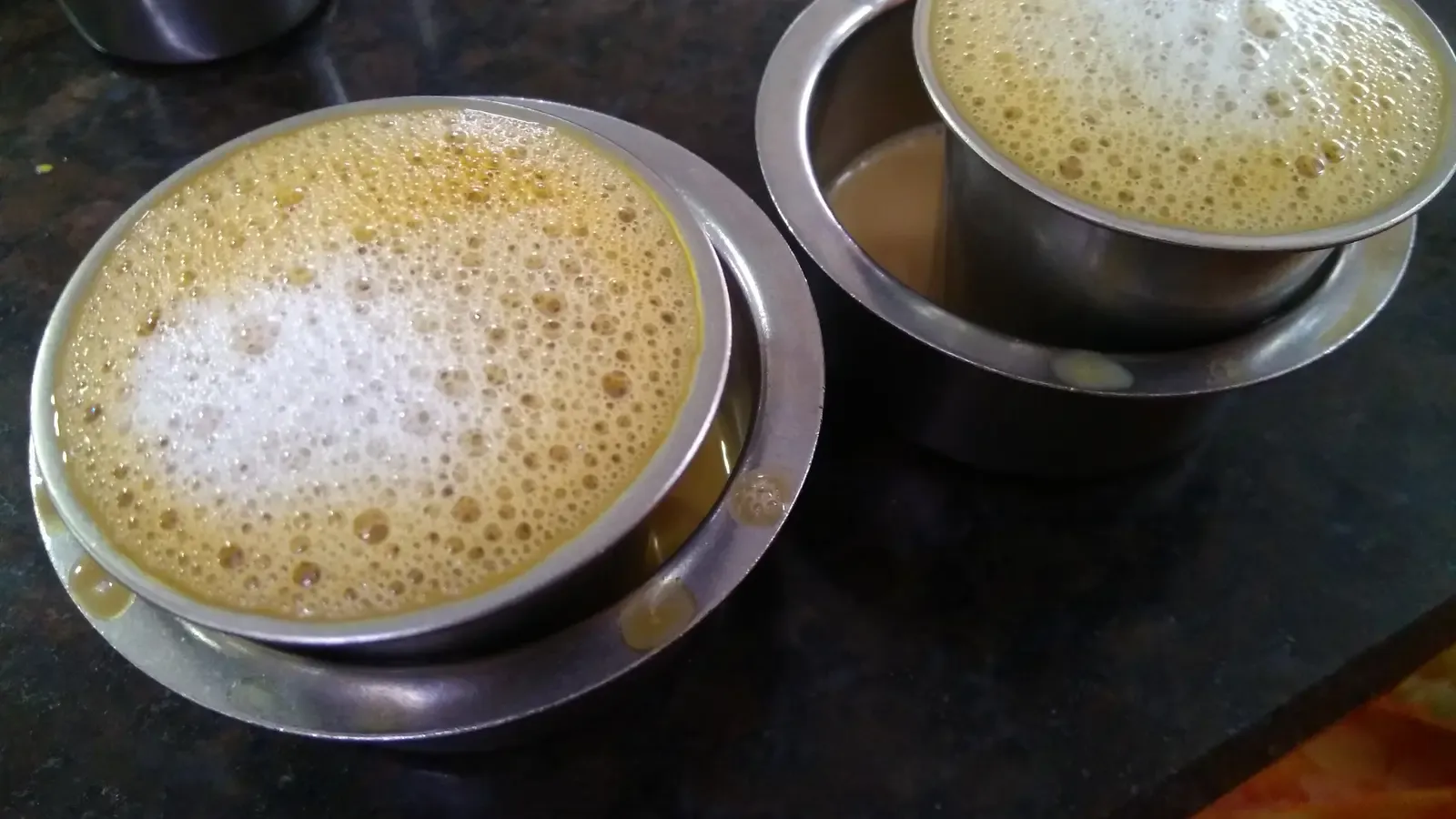
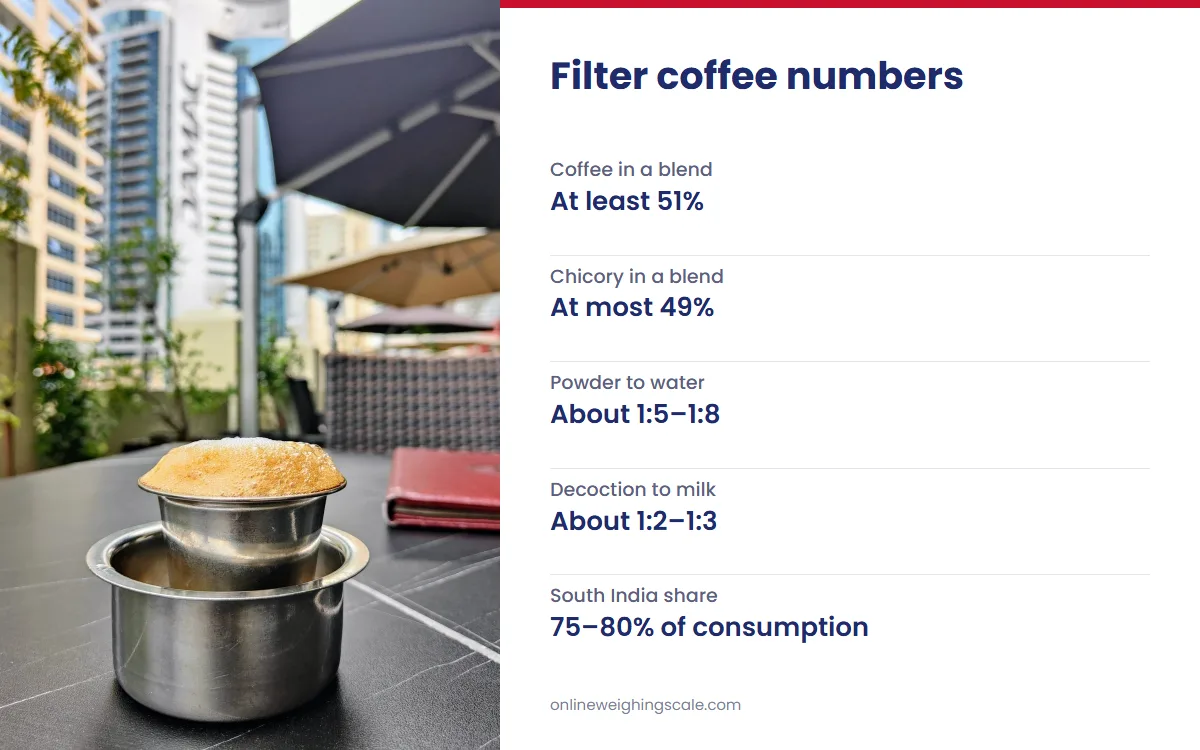
Filter coffee, or South Indian kaapi, is a strong decoction that drips slowly through a two-tier steel or brass filter and is then mixed with hot milk and sugar. Home recipes use about 1 part powder to 5–8 parts water by weight. Food rules in India cap chicory at 49% of a blend, and the pack must declare both percentages.
What filter coffee means in India
In India the phrase means a decoction made in a metal filter. The Coffee Board of India's brewing note describes the device as a brass or stainless steel jug in two tiers. The upper unit has a perforated bottom and a plunger that keeps the grounds down, and the lower unit collects the drip. Hot water poured over the plunger seeps through the powder and becomes decoction.
The same note uses the words filter and drip for the paper method common in Northern Europe, where boiled water seeps through medium ground coffee in a cone. That brew is ready to drink. Kaapi decoction is much stronger and always needs diluting, usually with milk.
People also say filter kaapi, Madras coffee or degree coffee. Accounts of the word degree differ. Some tie it to the first and strongest decoction, and others call it a slip of the tongue for chicory. Neither story has firm proof. The drink is served in a steel tumbler set inside a wide-lipped bowl called a dabarah, and pouring between the two cools and froths it.
Types of coffee filter and filter coffee maker
Steel or brass filter
This is the classic South Indian coffee maker, and it needs no power. Stainless steel is cheap, light and easy to clean, and brass is the older choice. Filters are sold by rough cup count, so a small home set makes enough decoction for two or three tumblers. A stainless steel coffee filter has no moving parts beyond the plunger, so regular washing is all it asks for.
Electric filter coffee machine
An electric filter coffee machine heats the water and drips it through the powder into a jug. It saves watching the kettle. Follow the same powder and water weights as the steel filter, then taste and adjust, because models differ in how quickly they pour.
Paper filter dripper
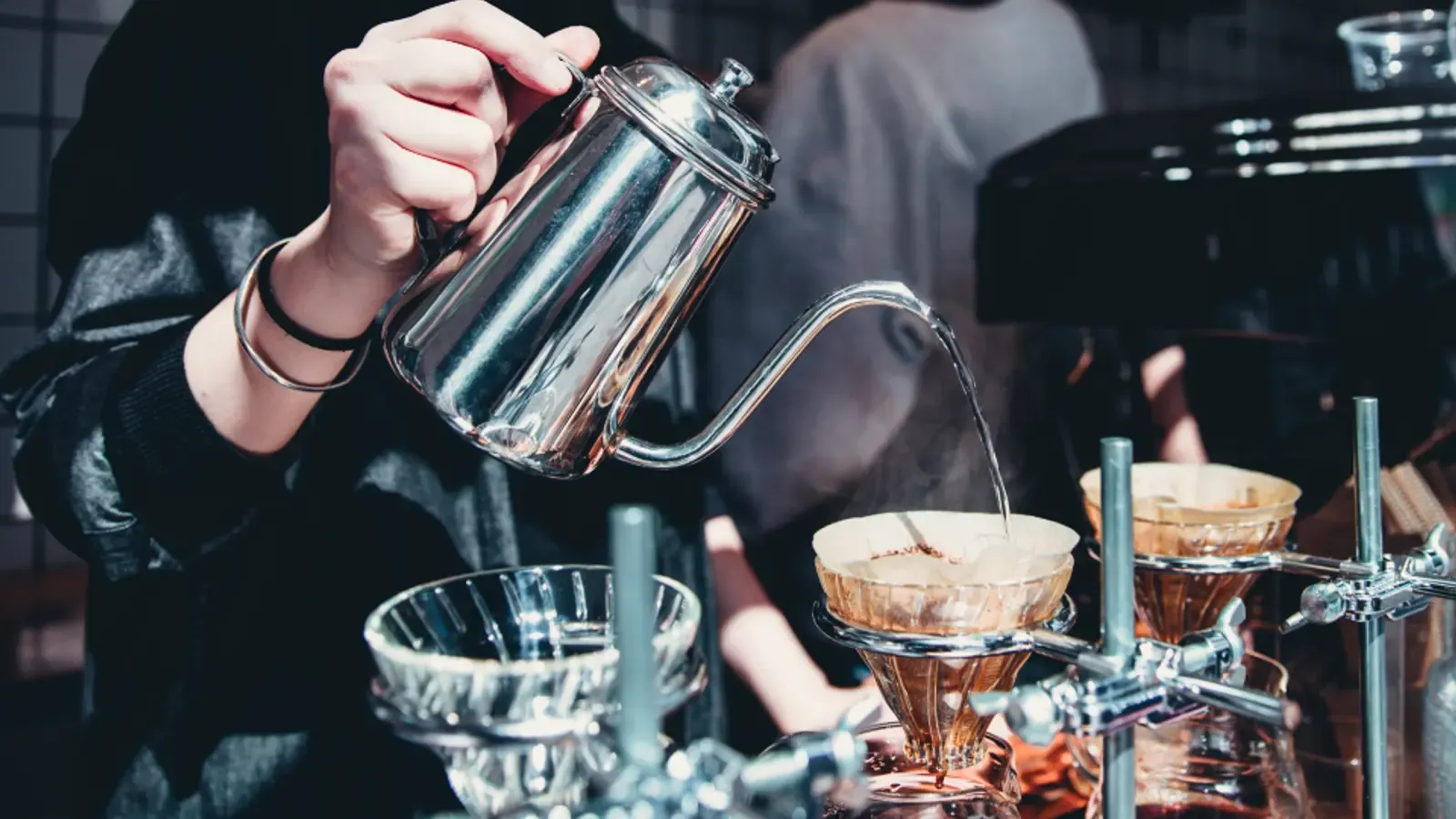
A paper filter coffee uses far less powder, near 1:17 by weight, and gives a light black cup. Paper also holds back oily compounds. A 2025 Swedish study measured cafestol, a cholesterol-raising compound, at a median of 12 mg/L in home paper-filtered coffee against 939 mg/L in boiled coffee. Steel filter kaapi was not part of that study. This is general information. Ask your doctor about your own readings.
Cloth filter
The Coffee Board's note says cloth filters work but need proper maintenance for hygiene. The Swedish study found that pouring boiled coffee through a fabric filter cut its cafestol from 939 mg/L to 28 mg/L, so cloth does hold back much of the oil.
Filter coffee in India
South India accounts for 75–80% of the coffee drunk in the country, according to the Coffee Board's 2023 consumption study. Total consumption was an estimated 91,000 tonnes that year. Ground and filter coffee fell from 82% of consumption in 2010 to 35–40% in 2022, as instant coffee rose. Even so, 41% of Indian coffee consumers buy powder to brew at home, ahead of the 31% who buy pure instant coffee.
The habit runs deepest in the south. The Board's 2009 study found filter coffee ahead of instant in the south zone and the reverse in the north, east and west. Tamil Nadu made up 36% of southern consumption, followed by Karnataka at 31%, Andhra Pradesh at 18% and Kerala at 15%.
The Coffee Board traces Indian coffee to seven Mocha seeds planted around 1600 AD by the saint Baba Budan in Karnataka's Baba Budan Giris. The Government of India set up the Board through the Coffee Act of 1942, and it still promotes coffee through 12 India Coffee Houses in major cities.
Anyone looking for top rated coffee from India can start with the Board's own tasting. A Press Information Bureau report says the Flavour of India Fine Cup Award began in 2002, and the Know Your Kaapi programme of 2022-23 now rates cup quality across six categories.
Chicory in filter coffee and what the label must say
Chicory is the roasted, ground root of the chicory plant, and it contains no caffeine, as a 2025 review of coffee and chicory blends notes. The Coffee Board study says chicory gives an earthy flavour and costs nearly 10 times less than coffee. Chicory-mixed coffee rose from about 25% of Indian consumption in 2010 to about 70% in 2022. Blends sold for filter coffee commonly run from 90:10 to 70:30, and many drinkers like the thicker, darker cup a blend gives.
- Minimum coffee: the Food Safety and Standards Authority of India requires at least 51% coffee by mass in a coffee-chicory mixture, so chicory can reach 49% at most.
- Percentages on the pack: every package of a coffee and chicory mixture must declare the percentage of each.
- The word pure: FSSAI rules keep "pure" for a single ingredient food, so a blend cannot be sold as pure coffee.
- Front of pack: a direction dated 21 July 2026 sets the wording "COFFEE …%, CHICORY …%" on the front of the pack from 1 July 2027. The minimum font height is 1 mm, or 2 mm where the display panel is over 100 cm² (checked November 2026).
Read the label yourself. In a 2022 FSSAI check, only 13 of 42 centrally licensed coffee-chicory manufacturers met the labelling rules.
Filter coffee methods: quick reference
| Method | Filter | Coffee : water | Time | What you get |
|---|---|---|---|---|
| Steel or brass filter | Perforated metal | About 1:5–1:8 | 10–20 minutes | Decoction, mixed with milk |
| Electric filter machine | Metal or paper | About 1:5–1:8 | Set by the machine | Decoction, mixed with milk |
| Paper cone dripper | Paper | About 1:17–1:18 | Until drained | Light black coffee |
| Moka pot | Metal basket | About 1:10 | Until the top chamber fills | Strong coffee, often diluted |
| French press | Wire mesh | About 1:17–1:18 | About 4 minutes | Full-bodied black coffee |
The paper and press ratios rest on the Specialty Coffee Association's standard, and the press time on the Coffee Board's note. The kaapi and moka figures are home recipes. The chart of brew ratios by method shows where each number comes from.
How to make filter coffee at home
The Coffee Board's note describes the device and gives no quantities, so these weights are common home starting points. This batch gives enough decoction for two or three small tumblers.
- Wash and dry the filter, then fit the upper unit on the lower unit.
- Weigh 20 g of filter coffee powder into the upper unit. Level it and rest the plunger on top with light pressure.
- Pour 120 g of water, just off the boil, over the plunger. Use 100 g for a stronger decoction and up to 160 g for a lighter one.
- Put the lid on and leave it for 10–20 minutes. Do not lift the top unit to check.
- Boil the milk. Mix 1 part decoction with 2–3 parts hot milk, and add sugar to taste.
- Pour between the tumbler and dabarah a few times to froth and cool the coffee, then serve.
Recipes disagree about water heat, and it matters less than people think. The Specialty Coffee Association's SCA-102 standard pours at 93 ± 3 °C. A 2021 UC Davis study of steeped coffee found final strength and extraction barely changed from 80 °C to 99 °C, though flavour can still differ. A slow filter is a different brew, so treat that as a guide. Water just off the boil works well.
- Drip stops or crawls: the powder is too fine or pressed too hard. Blends with more chicory are also often said to drip more slowly.
- Decoction runs through fast and thin: the powder is too coarse or too little. Add 2–3 g next time.
- Cup tastes thin even with enough milk: cut the water first, because the ratio sets the strength.
- Second pour: water poured again through used powder gives a weak second decoction, so keep it apart from the first.
Coffee powder for filter coffee: beans, roast and grind
India grows both main species. The Coffee Board's 2025-26 final estimate puts Robusta at 2,62,000 tonnes and Arabica at 1,11,000 tonnes, out of 3,73,000 tonnes in all. Karnataka alone grew 2,56,695 tonnes. Filter blends often mix the two, with Arabica for aroma and Robusta for body and extra caffeine. The guide to types of coffee beans covers species and regions in detail.
- Roast: filter powder is usually a medium to dark roast. A dark roast loses more mass than a light one, so a dark spoonful weighs less.
- Grind: ask for filter grind, finer than a paper drip grind and coarser than espresso. Powder that is too fine blocks the holes in the filter plate.
- Freshness: SCA-102 asks for coffee ground as close to tasting as practical and kept airtight in a cool, dark place. Small packs make that easier at home.
- Label: check the coffee and chicory percentages. New drinkers usually find a lower chicory share easier to start with.
Ready decoction is a small market. The Coffee Board's 2023 study found 3% of coffee consumers buy it for use at home.
Coffee production process: from cherry to powder
Indian coffee passes through these stages before it reaches a filter. The Coffee Board's specialty coffee page sets out the first three for its specialty grades, and ordinary coffee follows the same broad path.
- Harvest: ripe berries are picked by hand.
- Primary processing: washed coffee goes through natural fermentation and an overnight soak in fresh water, then slow drying in natural light. Dry-processed coffee is sold as Arabica Cherry and Robusta Cherry.
- Curing: curing works grade beans by size, shape and density, then garble them to remove defects.
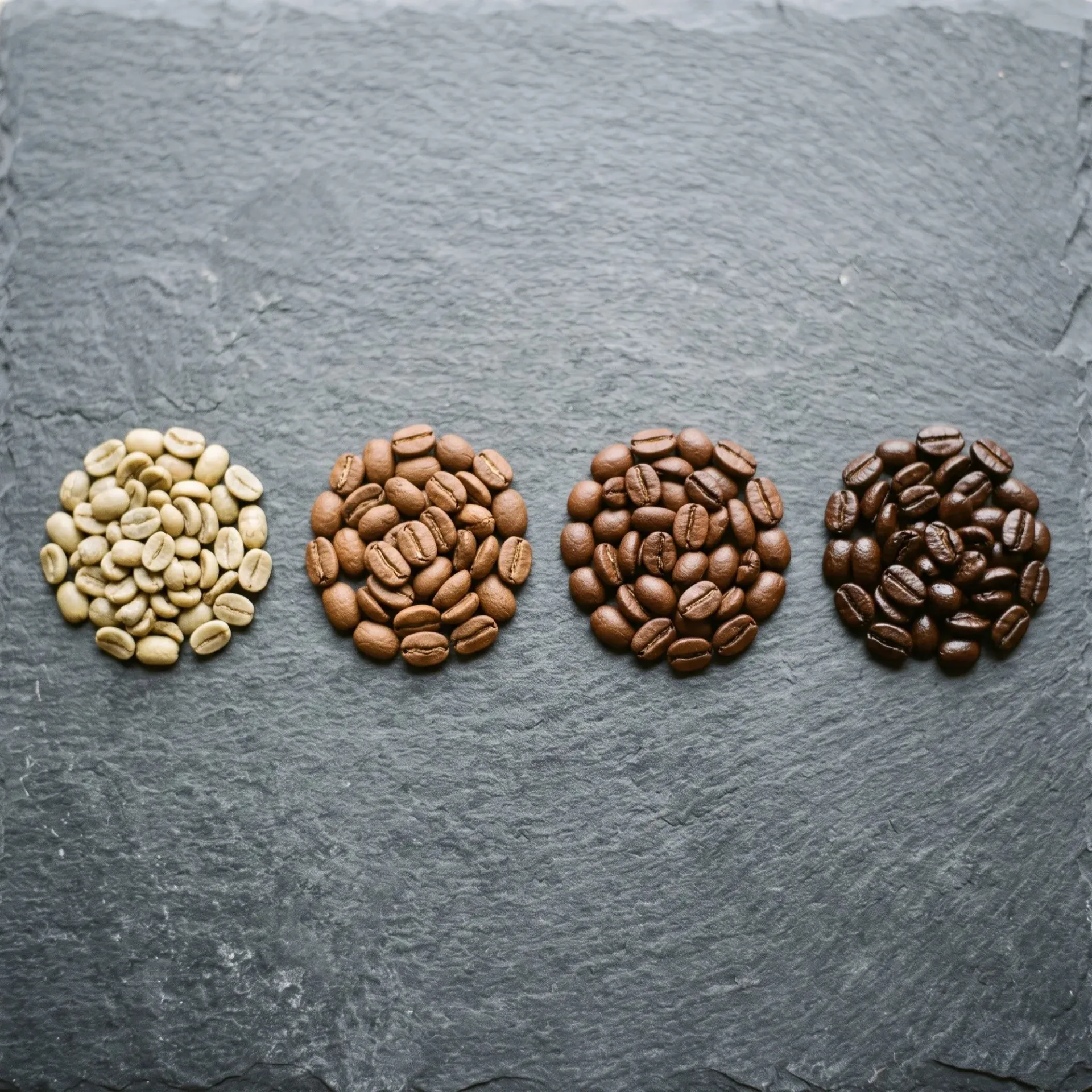
- Roasting: heat turns green beans brown and drives off water, so the beans leave lighter than they arrived.
- Blending: the roaster may add roasted chicory, up to the 49% limit.
- Grinding and packing: the powder is ground, packed and labelled with its percentages.
About 65–70% of Indian coffee is exported, according to the Coffee Board, and the rest stays in the country.
Why weigh filter coffee powder and water
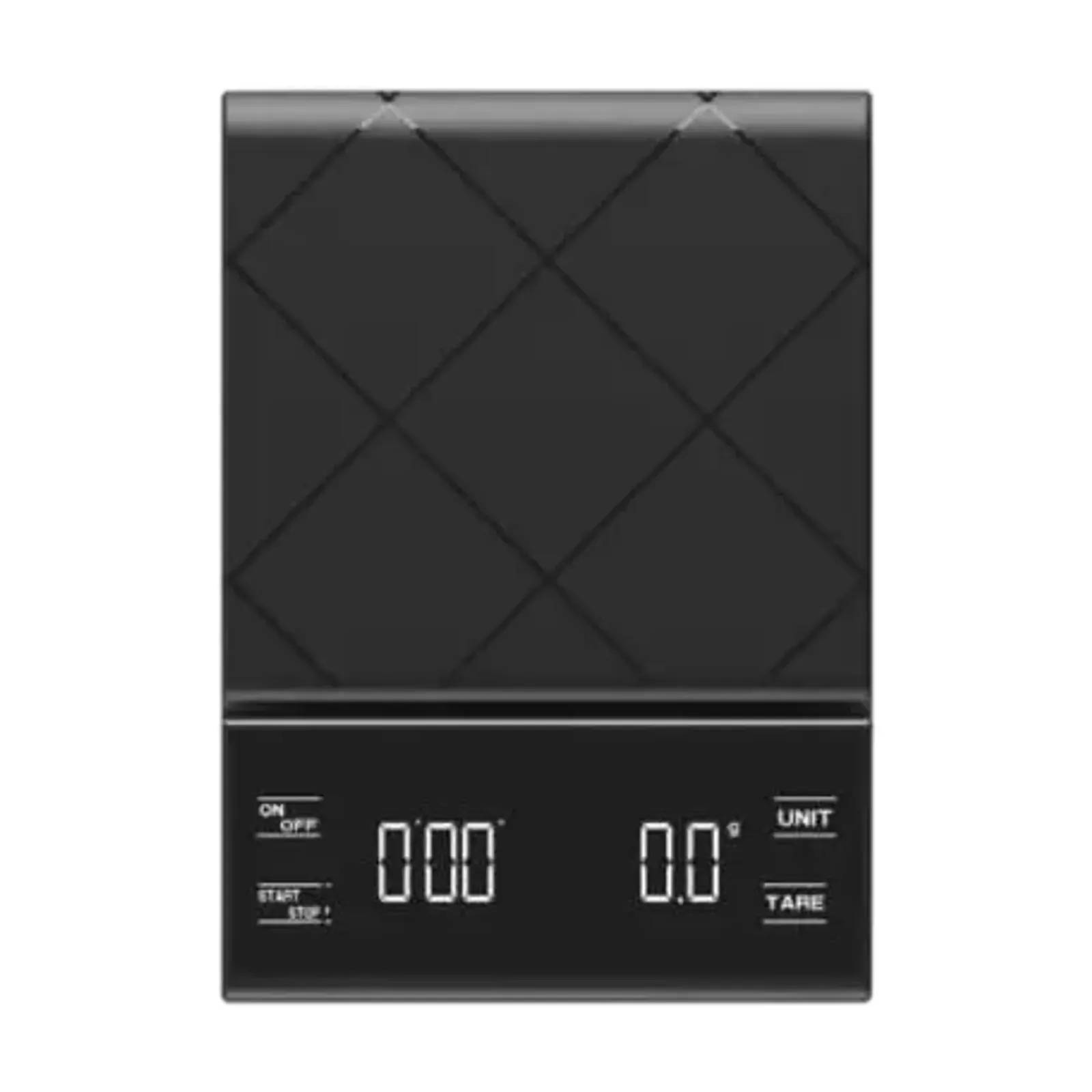
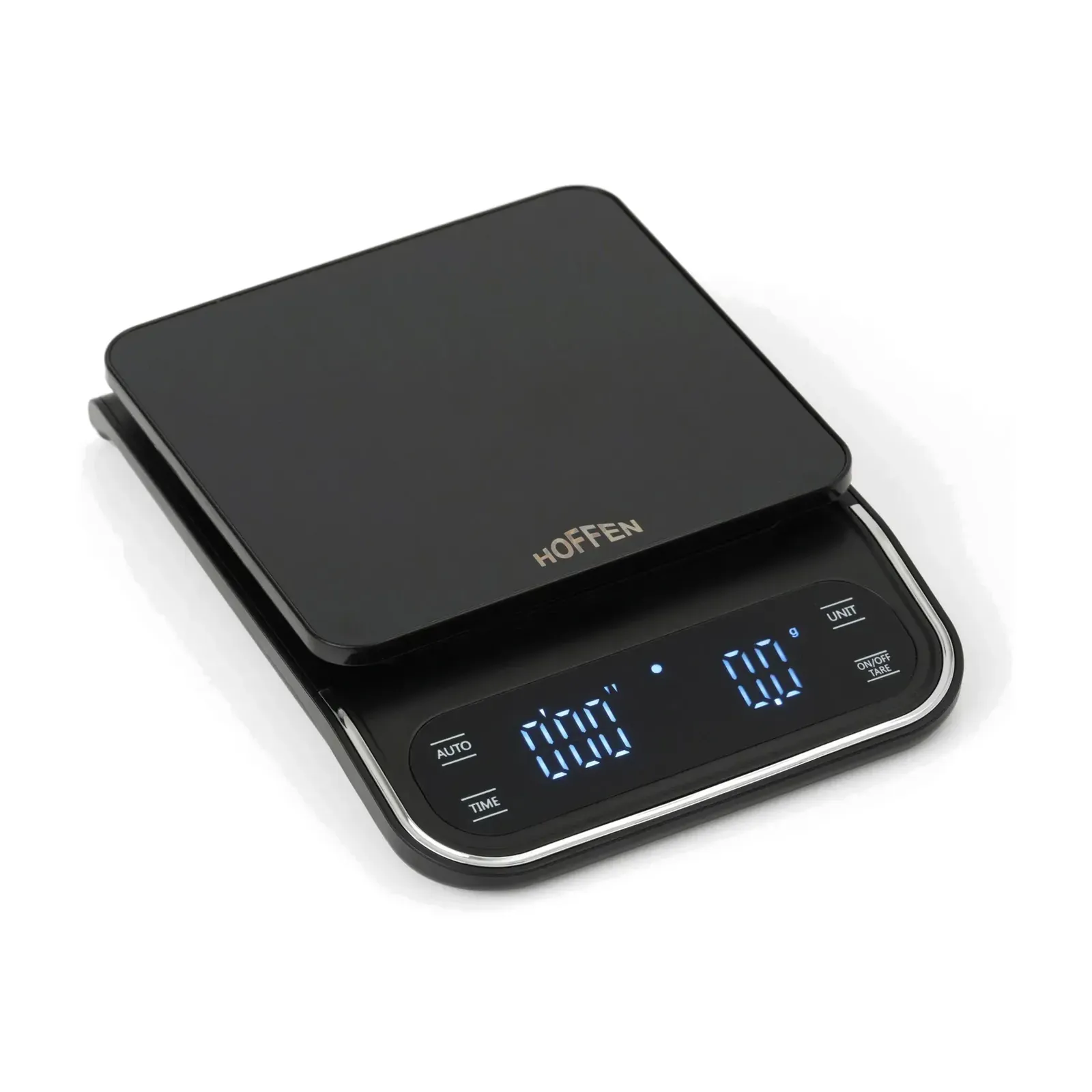
Spoon recipes for kaapi vary widely, because spoons, grinds and roasts all differ. Two grams more or less changes a 20 g dose by 10%, and the decoction shows it. The Specialty Coffee Association weighs coffee on a scale with 0.1 g or higher accuracy. A coffee scale with 3 kg capacity holds the whole steel filter and water together, so you can zero the display with the filter on it, add powder, zero again and pour. Omace Brands Private Limited makes these scales at Bagru, Jaipur. Once your cup tastes right, the two weights are all you need to repeat it every morning.
Making kaapi your own
Filter coffee has no single correct recipe, and families across the south hold firm views about it. Change one thing at a time: powder weight first, then the milk, then the chicory share of the blend. A decoction you enjoy in Chennai may taste too strong in Jaipur, and hard water can change the cup as well. Keep notes for a week and you will settle on your own numbers quite quickly.