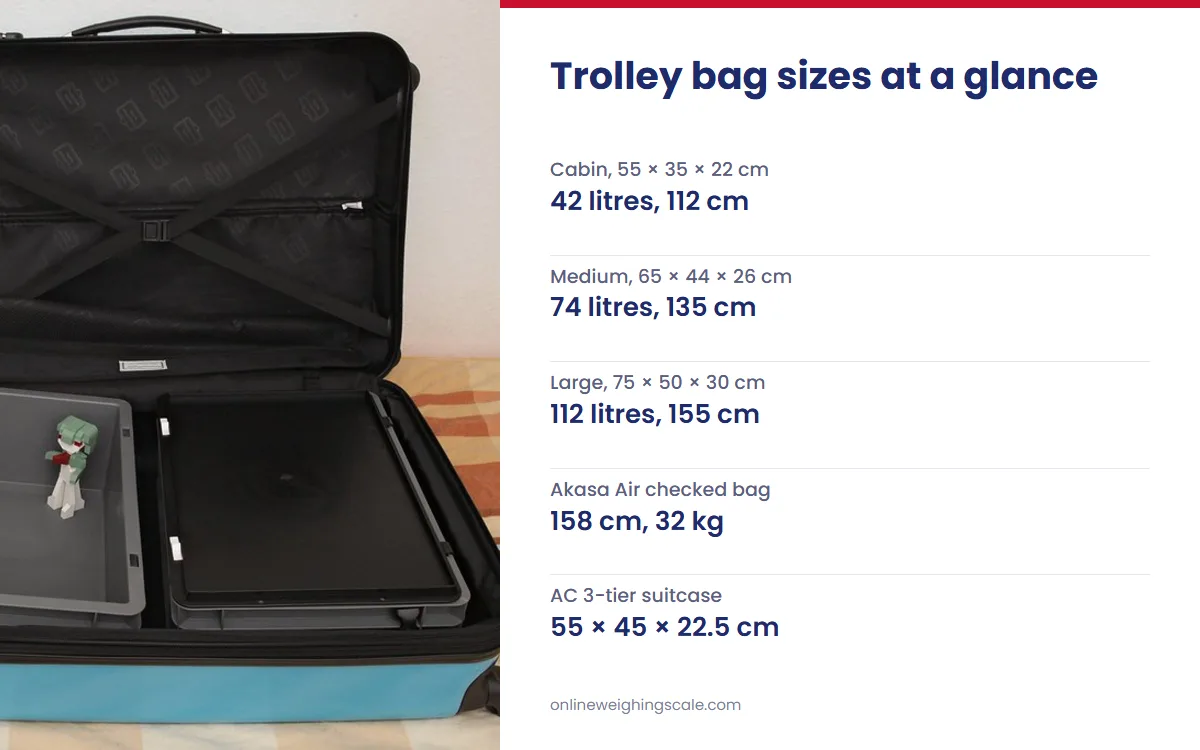
Trolley bag sizes in India are named by height, from a 55 cm cabin bag to an extra-large check-in bag of 80 cm or more. A 55 × 35 × 22 cm cabin trolley holds about 42 litres, and a 75 × 50 × 30 cm large trolley about 112 litres. Akasa Air caps any checked bag at 158 cm, with length, width and height added together, checked November 2026.
How a trolley bag is measured
The number on a trolley's tag is its height, so a 65 cm bag stands about 65 cm tall. Two more measurements decide where it can travel: the width and the depth. Airlines add all three and check the total, which Akasa Air writes as 158 cm or 62 inches for a checked bag.
Tags are not always measured the same way. Some quote the body alone and leave out the wheels and the handle housing, which add a few centimetres. Measure the outside of the bag yourself before you trust the label:
- Stand the bag upright with the pull handle pushed fully down.
- Measure the height from the floor to the top of the handle housing, wheels included.
- Measure the width across the widest point, side handles and feet included.
- Measure the depth from the front pocket to the back of the shell.
- Add the three for the total linear size. Multiply them and divide by 1,000 for the volume in litres.
For inches, divide the centimetres by 2.54. The US National Institute of Standards and Technology lists one inch as 2.54 cm, so a 55 cm bag is 21.7 inches tall. One litre is 1,000 cubic centimetres. Litres worked out this way are box volume, measured outside. The packing space inside is smaller, because the wheels, the handle tubes and the shell itself take a share.
Suitcase size chart in cm, inches and litres
Travel trolley bags fall into four broad classes. The chart uses a typical outer size for each one. Makers' figures differ by a few centimetres, so read each row as a reference point and check the tag on the bag in front of you.
| Size | Outer size (cm) | Outer size (inches) | L + W + H | Box volume | Rough trip length |
|---|---|---|---|---|---|
| Small (cabin) | 55 × 35 × 22 | 21.7 × 13.8 × 8.7 | 112 cm | 42 litres | 2–4 days |
| Medium | 65 × 44 × 26 | 25.6 × 17.3 × 10.2 | 135 cm | 74 litres | 5–8 days |
| Large | 75 × 50 × 30 | 29.5 × 19.7 × 11.8 | 155 cm | 112 litres | 10–14 days |
| Extra large | 80 × 54 × 32 | 31.5 × 21.3 × 12.6 | 166 cm | 138 litres | 2 weeks or more |
Inches and litres in the chart are worked out from the centimetres. Trip length is a rough guide for one adult packing clothes; shoes, gifts and food fill a bag sooner.
Two of the four sizes sit close to an airline line. The large trolley's 155 cm total is 3 cm inside Akasa Air's 158 cm limit. It is 5 cm over the 150 cm limit that Emirates sets on piece-concept routes to and from the Americas and Africa. The extra-large trolley, at 166 cm, is 8 cm over Akasa Air's limit, though Emirates accepts up to 203 cm per bag on its weight-concept routes.
Small, medium and large trolley bags
Each size suits a different trip. The cabin trolley stays with you on board. The other three travel in the hold, where the airline's checked-bag limits and the kilos you pack decide which one makes sense.
Small trolley bag for the cabin (50–56 cm)
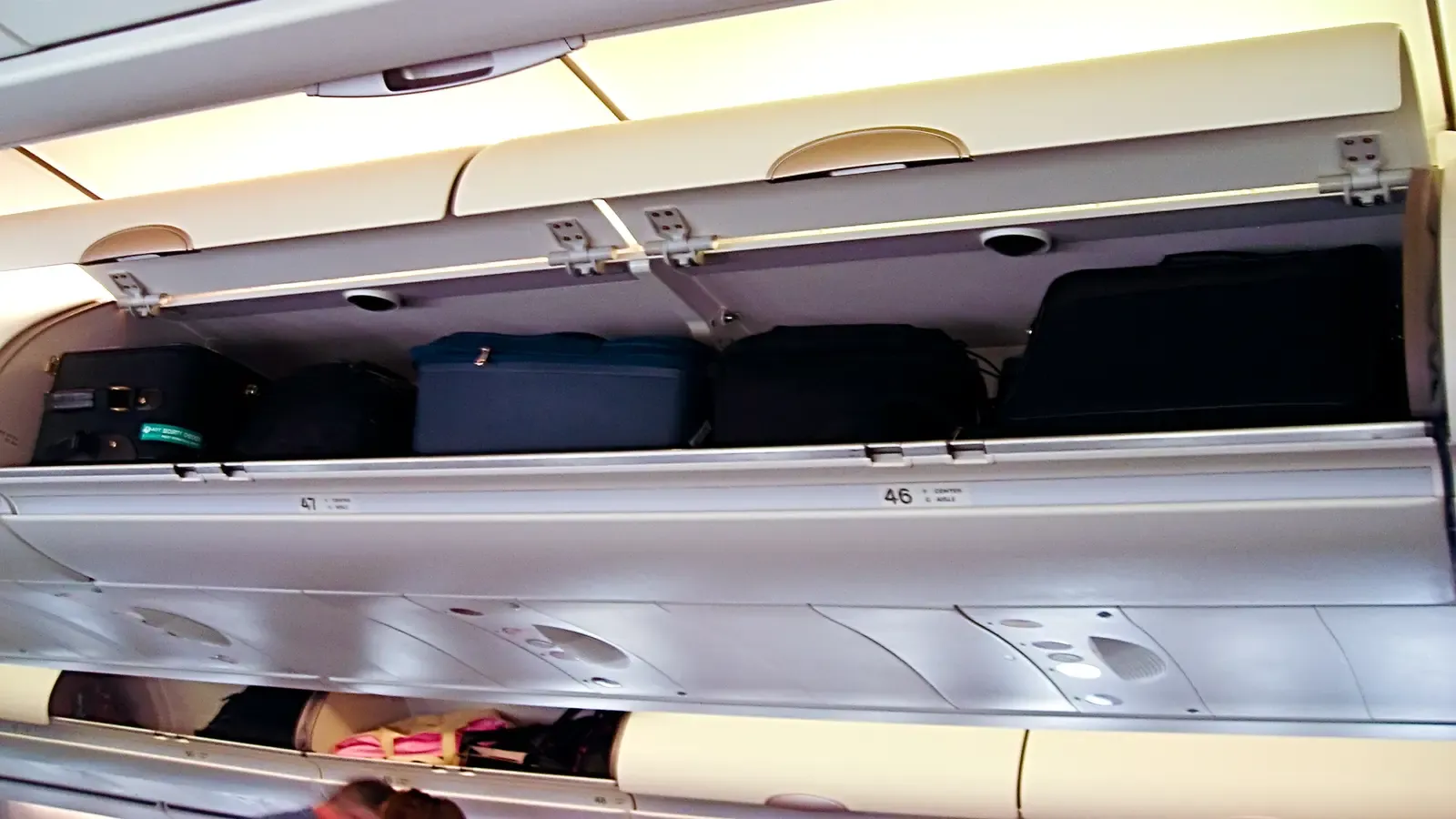
A small trolley bag of 50–56 cm is the only size meant to ride in the cabin. Akasa Air allows one cabin bag of up to 115 cm in total and 7 kg. Each airline draws its box a little differently, and the cabin baggage size guide compares those boxes and finds one size that fits several airlines. A 42-litre cabin trolley holds two to four days of clothes for one person.
The smallest size trolley bags are under-seat models, shorter than a cabin bag. Akasa Air lets a passenger carry one personal item that fits under the seat besides the cabin bag, so read the airline's personal-item rule before counting a wheeled bag as one.
Medium trolley bag size (60–69 cm)
Medium size trolley bag dimensions sit around 65 × 44 × 26 cm, which gives about 74 litres and 135 cm in total. That total clears both the 150 cm and the 158 cm check-in limits with room to spare, so the medium trolley fits within every checked-bag size limit quoted on this page. It suits a week away for one person, or a short trip for two people sharing. A packed medium bag can still cross a 15 kg domestic allowance once shoes and toiletries go in, so weigh it at home. Trolleys are also sold as a set of 3 trolley bags, small, medium and large, that nest one inside the other for storage.
Large trolley bag size (70–79 cm)
Large trolley bag dimensions run around 75 × 50 × 30 cm, which gives about 112 litres and 155 cm in total. A bag this size suits ten days to two weeks, a family's shared clothes, or a student's first move abroad. Weight is the catch. Akasa Air caps any single checked bag at 32 kg, and 32 kg spread over 112 litres is under 0.3 kg per litre. Books, rice, pickle jars or steel utensils push a large trolley past that limit long before it is full. On piece-concept routes, where Emirates economy fares allow 23 kg per bag, the margin is smaller still.
Extra large: the largest trolley bag size (80 cm and above)
Extra-large trolleys of 80 cm and more are the largest common size, and the one most likely to break an airline rule. The example in the chart totals 166 cm, which is over Akasa Air's 158 cm. On Emirates piece-concept routes, a bag between 150 cm and 203 cm pays an oversize fee. Anything over 203 cm cannot travel as checked baggage at all and has to go as cargo. A 138-litre bag also reaches 32 kg at only 0.23 kg per litre. Keep this size for long stays or a move abroad, and check the size limit on your fare first.
Size limits for flights and trains from India
Airline and railway rules are the real test of a trolley's size. The figures below come from the carriers' own pages, checked November 2026.
- Akasa Air: one checked bag may total 158 cm and weigh 32 kg. Domestic tickets carry 15 kg in one piece, and international tickets 30 kg across up to two pieces.
- Emirates, piece concept: on routes to and from the Americas and Africa, economy Saver and Flex fares carry two bags of up to 23 kg each. Each bag may total 150 cm.
- Emirates, weight concept: on routes outside the Americas and Africa, each checked bag may total 203 cm.
Allowances for more airlines, and what extra kilos cost at the counter, are in the airline baggage allowance and excess fee guide.
Trains set their own limits. Indian Railways lets a trunk or suitcase of up to 100 × 60 × 25 cm travel in the passenger compartment. Anything larger in any one measurement goes in the brake van. In AC 3-tier and AC chair car, the limit is 55 × 45 × 22.5 cm. The 55 × 35 × 22 cm cabin trolley fits that space. The medium trolley in the chart is 10 cm too long for it, and laid flat, its 26 cm depth is 1 cm over the 25 cm height in the general rule.
| Class | Free allowance | Marginal allowance | Most allowed in the compartment |
|---|---|---|---|
| AC First Class | 70 kg | 15 kg | 150 kg |
| AC 2-tier and First Class | 50 kg | 10 kg | 100 kg |
| AC 3-tier and AC chair car | 40 kg | 10 kg | 40 kg |
| Sleeper class | 40 kg | 10 kg | 80 kg |
| Second class | 35 kg | 10 kg | 70 kg |
Luggage over the free allowance can be booked and carried in the compartment, up to the class maximum, at 1.5 times the luggage rate. Unbooked luggage found over the maximum is charged at six times the luggage scale rate, with a minimum of ₹50.
Hard shell or soft trolley: materials compared
Hard trolleys use a moulded plastic shell that opens in two halves. Soft trolleys use woven fabric stretched over a frame, usually with outside pockets and a lid that opens from the front.
| Material | Type | Strong point | Watch for |
|---|---|---|---|
| Polycarbonate | Hard shell | Flexes under a knock and springs back | Glossy finishes show scuffs |
| ABS | Hard shell | Costs less and holds its shape | Stiffer, so a hard hit can crack it |
| ABS and polycarbonate blend | Hard shell | Sits between the two on cost and toughness | Ask what share is polycarbonate |
| Polyester | Soft | Light, low cost, outside pockets | Thin, low-denier fabric tears sooner |
| Nylon | Soft | Resists abrasion on rough handling | Usually costs more than polyester |
Fabric bags list their weave in denier, written as 600D or 1680D. The same NIST conversion table sets one denier at 0.000111 grams per metre of yarn, which is 1 gram for every 9,000 metres. A higher denier means a heavier, thicker yarn, so 1680D fabric uses yarn nearly three times as heavy as 600D.
Choose by what you carry. A hard shell protects bottles and boxes of sweets better and stacks well in the hold. A soft trolley squeezes into a tight car boot and keeps documents within reach in an outside pocket.
Wheels, locks and other details
Two wheels or four
Four-wheel spinner trolleys roll upright beside you and turn on the spot, which suits smooth airport floors. Two-wheel inline trolleys tilt and pull behind you. Their wheels sit recessed in the shell, so they cope better with broken pavements, kerbs and railway platforms, and they take less packing space. Whichever you pick, test the pull handle at full height and ask whether the wheels can be replaced.
What a TSA lock means
A TSA lock is a luggage lock that officers of the US Transportation Security Administration can open with a master key. TSA says it holds universal master keys under agreements with two lock companies, so certain branded locks need not be cut to inspect a bag. The lock's packaging should say that TSA officers can open it. TSA also says it takes no position on how well these locks protect a bag, and it will remove them if an inspection needs it. The arrangement is TSA's own, so the benefit applies to bags screened in the United States.
Expansion zips and smart bags
An expansion zip adds depth and litres. It also adds to the total size, so measure the bag with the zip open if you plan to use it. Bags with built-in chargers need care. IATA says a bag with a built-in lithium battery is allowed only if the battery can be removed, and lithium batteries travel in hand baggage only. Spare power banks follow the same rule. Akasa Air's conditions of carriage say a checked bag found holding a power bank will not be loaded on the flight.
Weigh the empty trolley before you pack
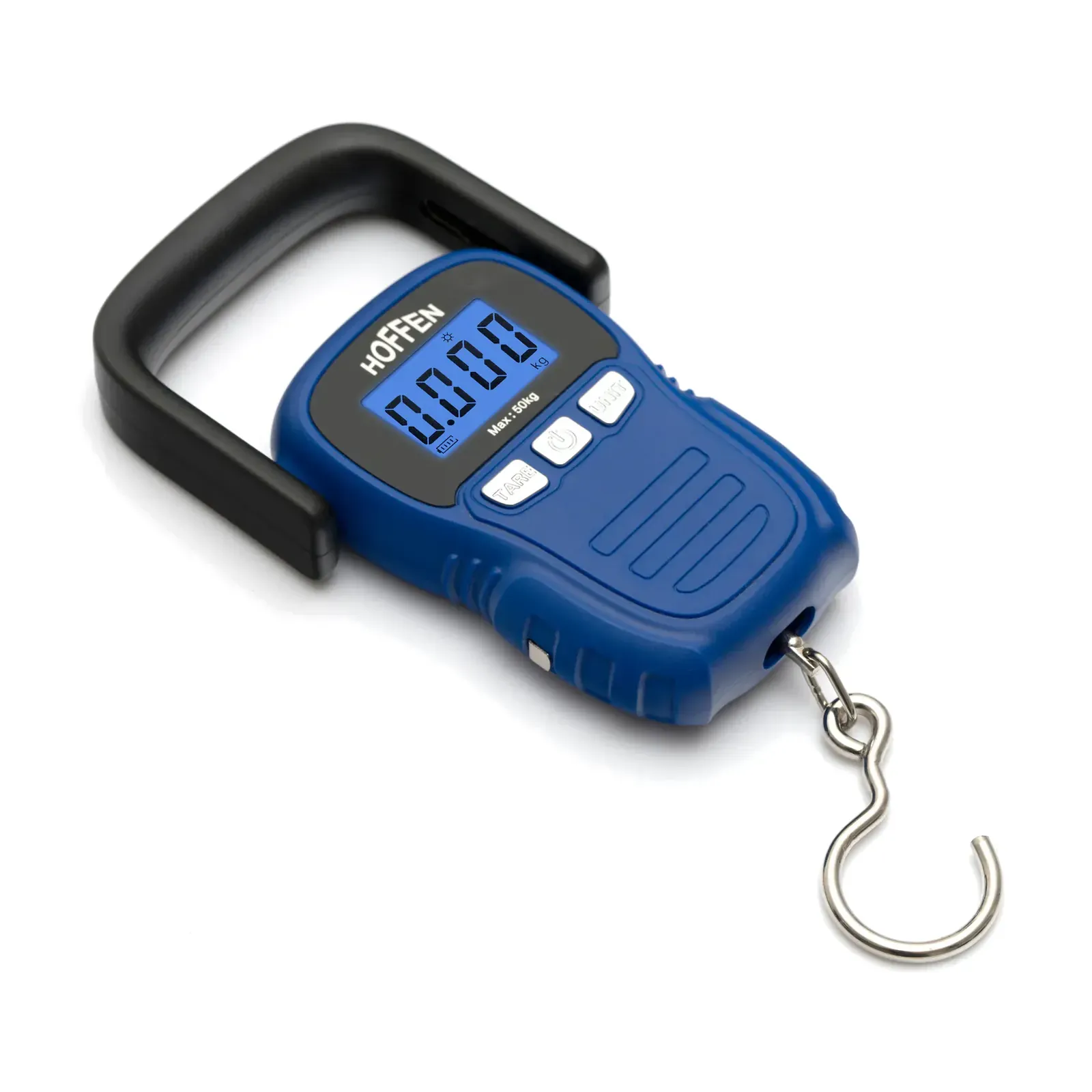
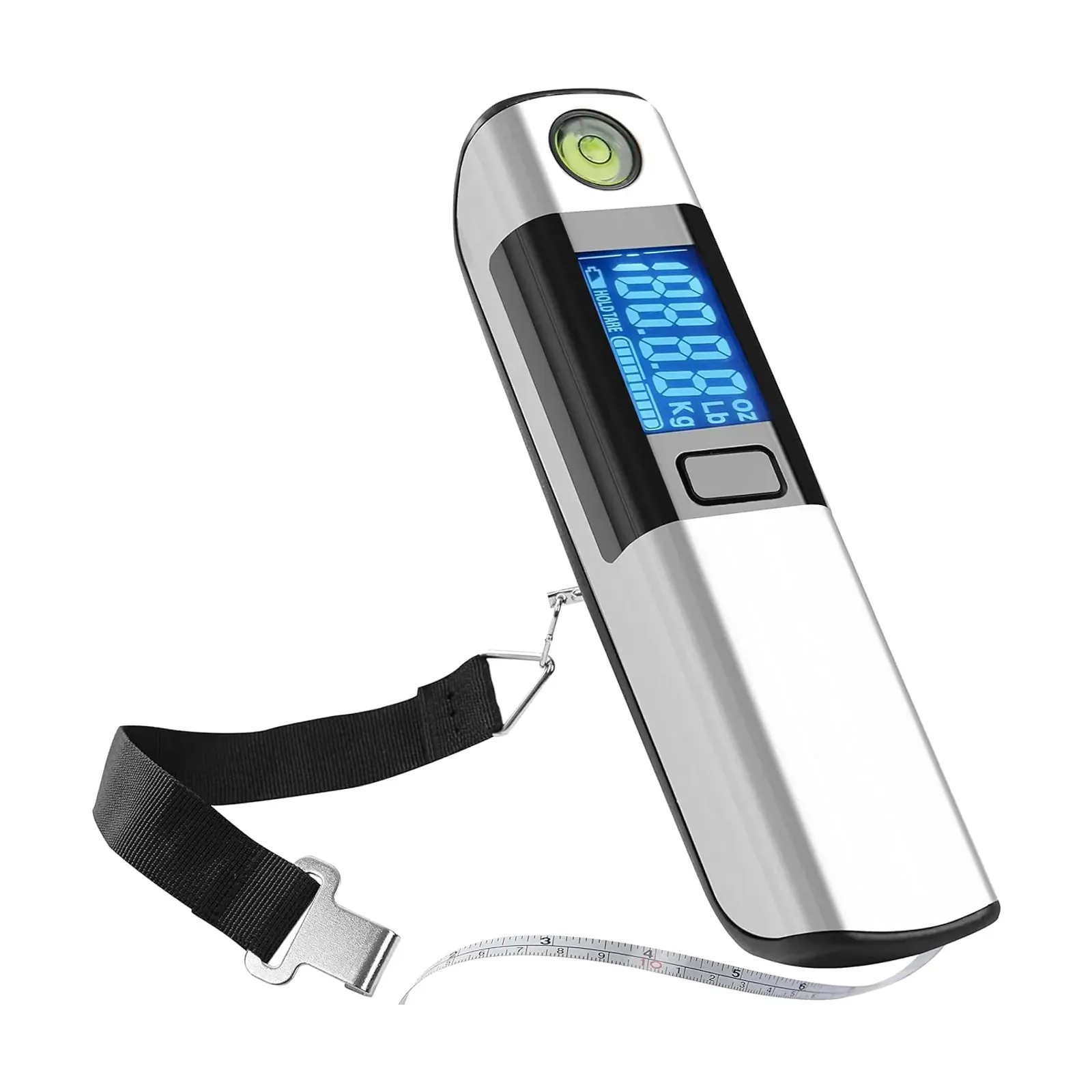
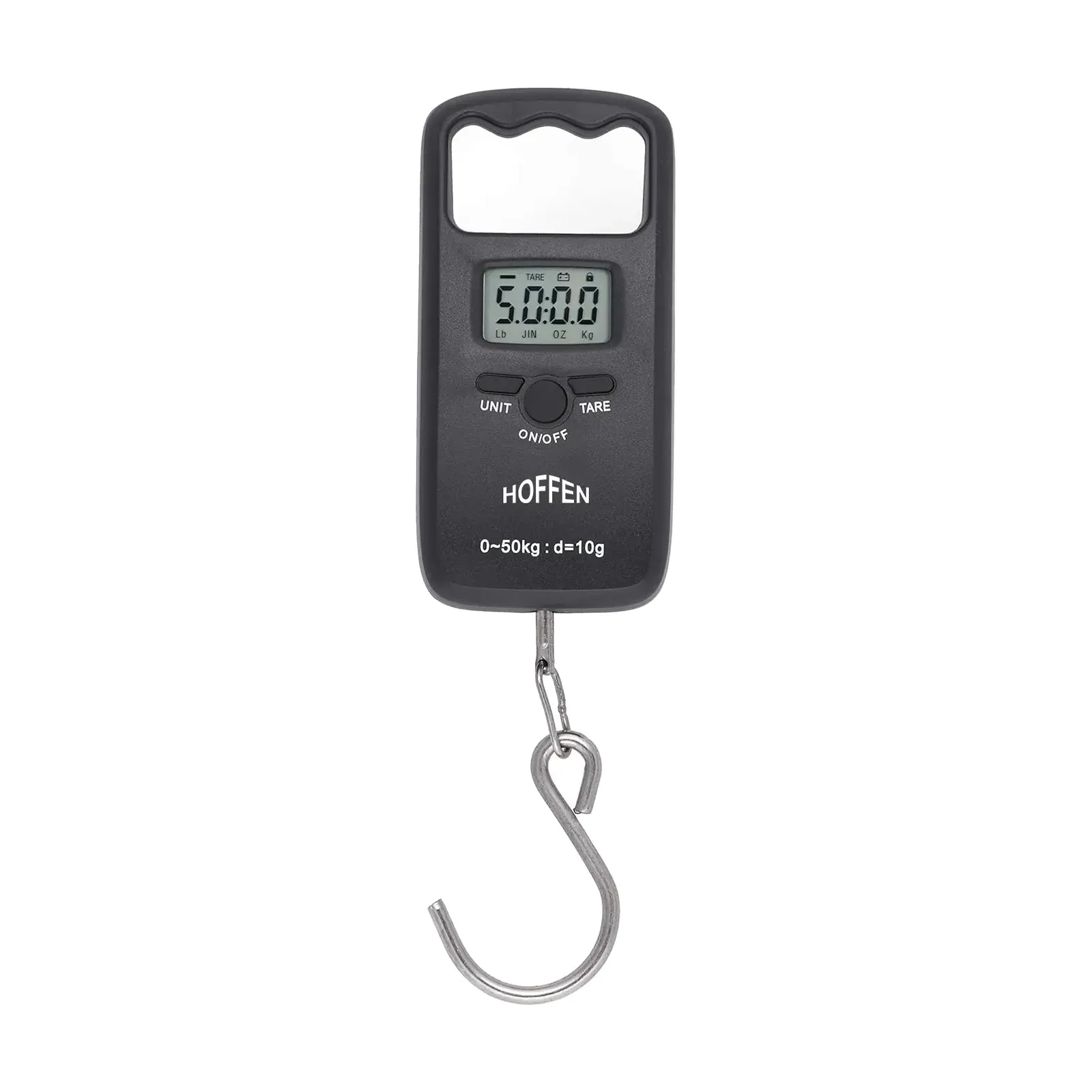
An empty trolley's own weight counts against your allowance. If the tag says 4.5 kg and the fare allows 15 kg, 10.5 kg is left for everything inside; a 3 kg bag leaves 12 kg. If the tag gives no empty weight, weigh the bag empty, write the vajan on the tag, and weigh it again once packed. A hanging luggage scale does both jobs: hook it to the top handle, lift the bag clear of the floor and read the display. Hoffen luggage scales from Omace Brands Private Limited, a scale manufacturer in Bagru, Jaipur, weigh up to 50 kg. The HO-L-7 and HO-L-18 also carry a measuring tape for the dimensions. Every scale is checked with certified test weights before dispatch.
Matching the size to the trips you take
Start from the trip you take most often. A week with family in another city fits a medium trolley and a cabin bag. A student leaving for a semester abroad needs a large trolley that stays under 158 cm and under the airline's per-bag weight. An overnight train in AC 3-tier calls for nothing bigger than the cabin size. Whatever the trip, measure the outside with the wheels counted, and weigh the bag empty before it ever leaves the house.