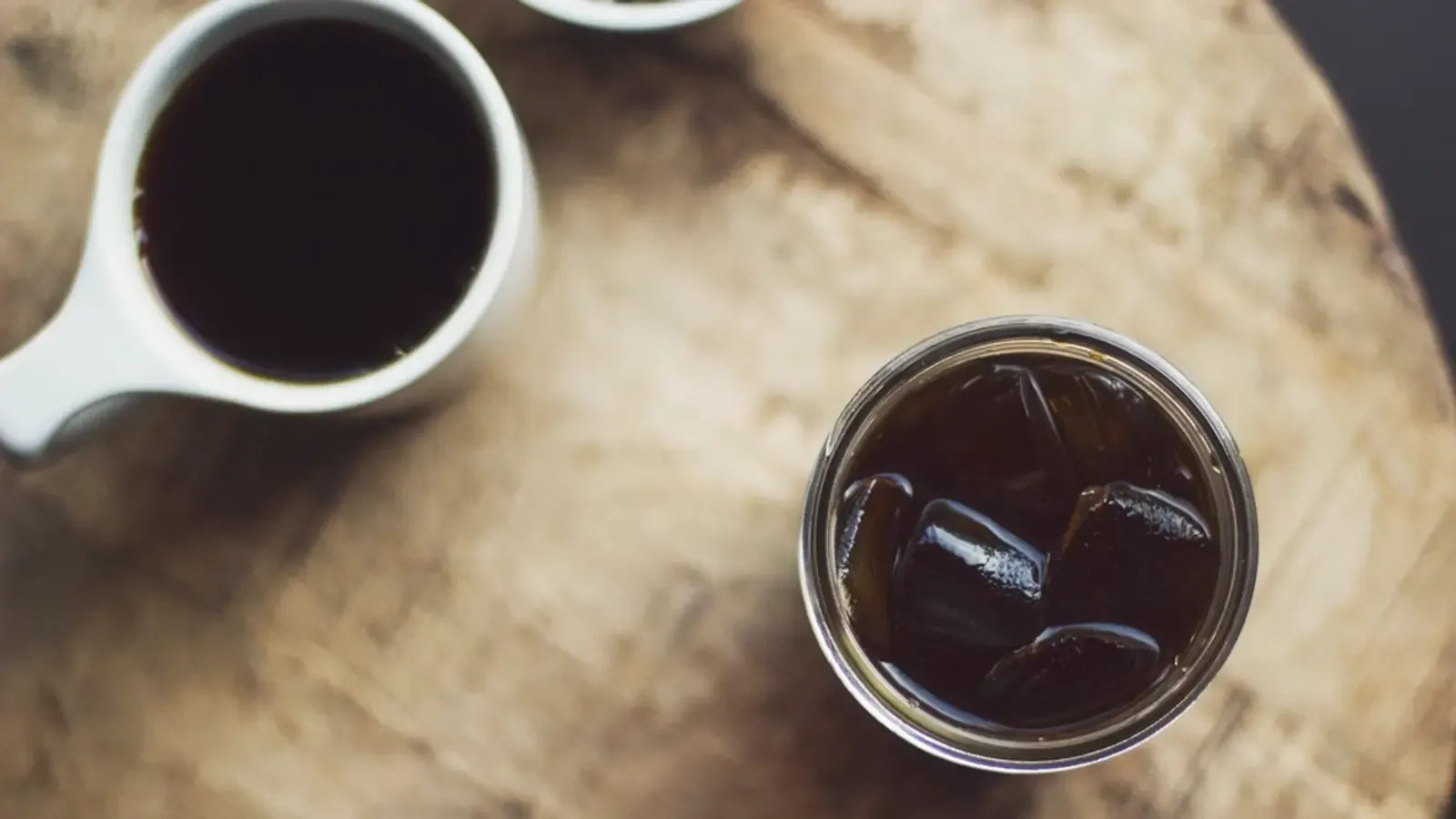
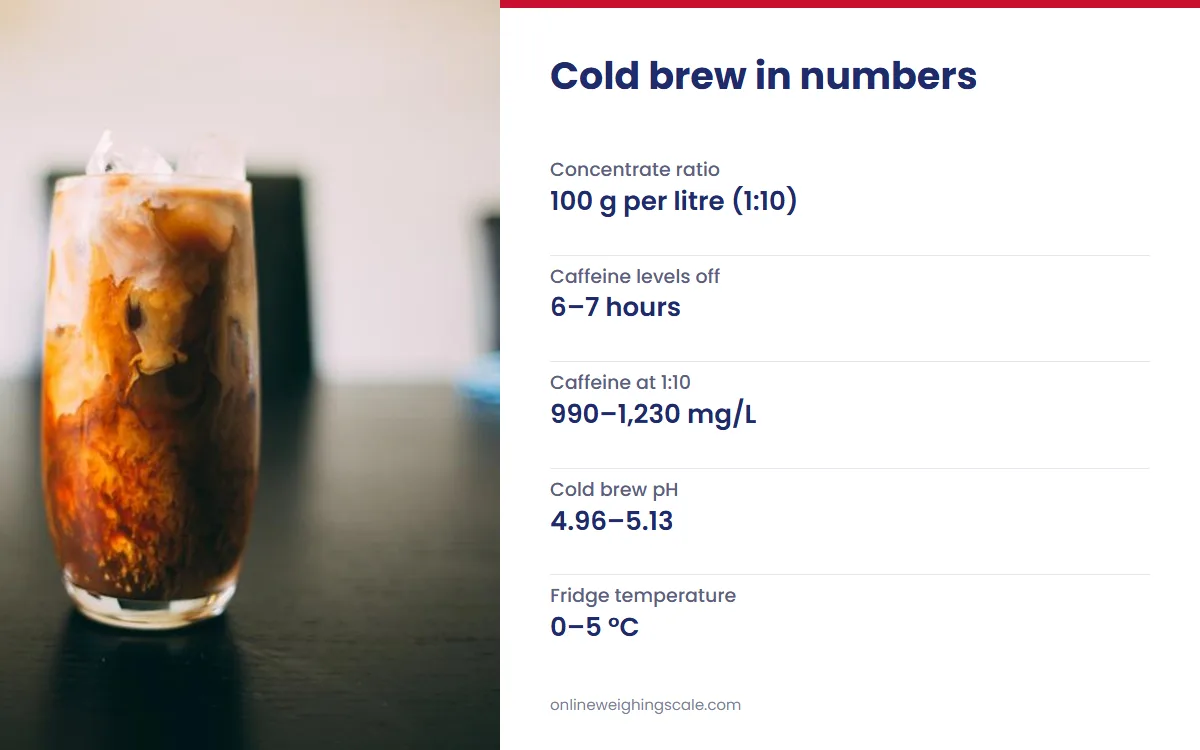
Cold brew coffee is made by steeping coarsely ground coffee in cold or room-temperature water for hours, then filtering it. In a 2017 study in Scientific Reports, a 1:10 brew at 21–25 °C stopped gaining caffeine after 6 to 7 hours. Most recipes steep for 12 to 24 hours and dilute the strong concentrate with water or milk before drinking.
What cold brew is
Cold brew swaps heat for time. Hot water pulls flavour and caffeine out of ground coffee in a few minutes, while cold water needs hours to reach a drinkable strength. A 2019 paper in Scientific Reports describes cold brewing at room temperature, 20 to 25 °C or colder, with steeping times usually between 8 and 24 hours. It names the ways to do it: dripping, direct immersion, and indirect immersion where the grounds sit in a bag or filter.
Two words get mixed up in shops and recipes. Cold brew concentrate is brewed strong and meant to be diluted. Ready-to-drink cold brew is brewed weaker, or already diluted, so it can go straight into a glass. In most Indian homes and cafes, cold coffee means something else again: a blended drink of milk, sugar, ice and coffee.
Many people find the cup smoother. The lab work further down shows which acidity measures fall in cold brew, and that its pH barely changes.
Kinds of cold coffee
Four drinks share the counter, and only the first two are cold brew. They differ in the water temperature at brewing, the time taken and what goes in the glass.
Immersion cold brew
Coffee and water sit together in a jar or pitcher, and the liquid is filtered off at the end. It is the simplest method at home, and it is what the Scientific Reports studies tested: 35 g of coffee in 350 ml of water, steeped and then filtered. A cold brew maker sold for home use is usually a jar with a fine mesh insert that holds the grounds, so lifting the insert out ends the steep. No machine or power is needed.
Cold drip
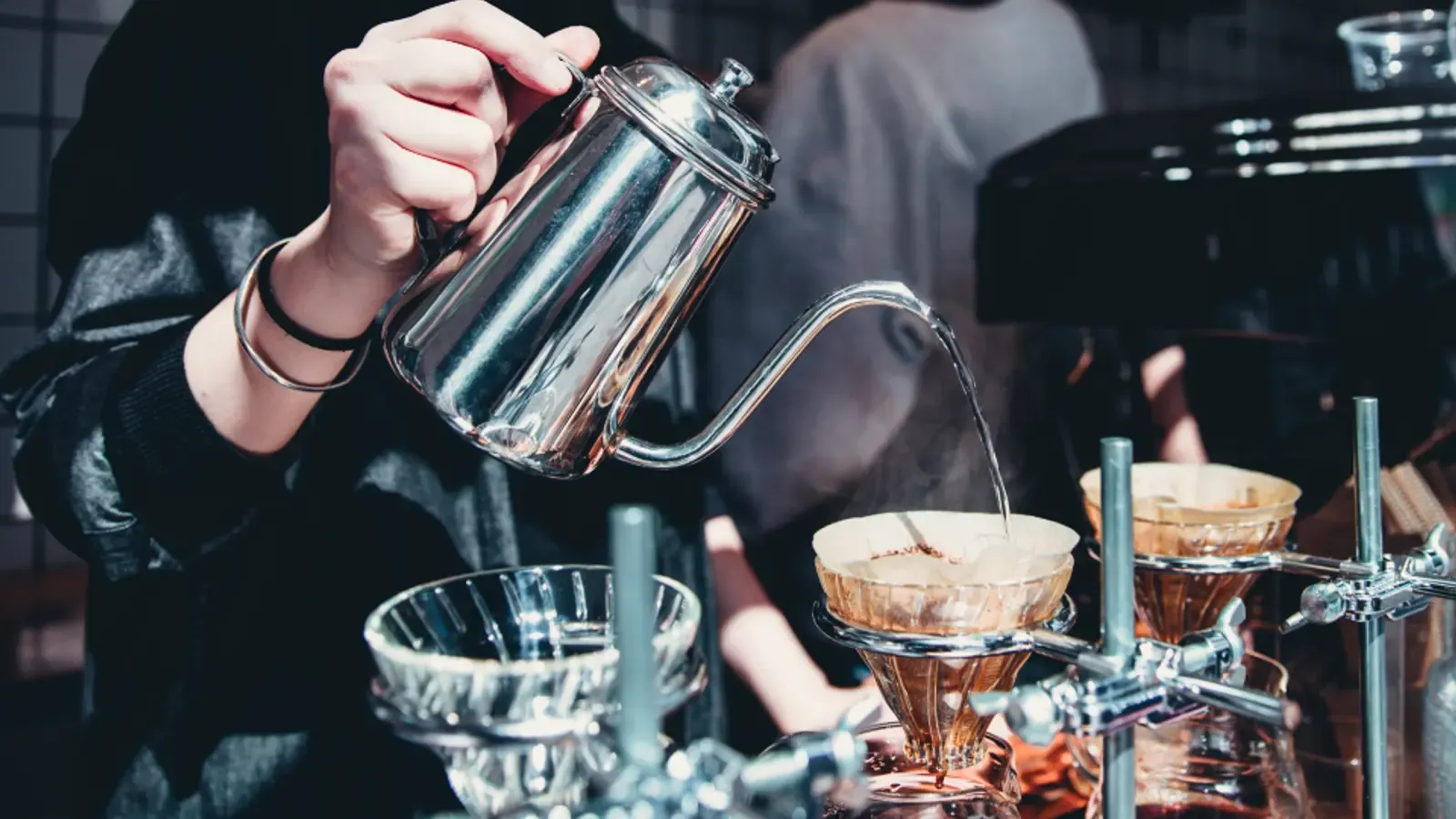
Cold drip lets cold water fall drop by drop through a bed of coffee over several hours. The towers are tall glass sets with a water chamber, a valve, the coffee bed and a carafe below. The 2019 paper cites a study that compared dripping with steeping and found higher levels of caffeine, chlorogenic acid and trigonelline in the steeped brews. A drip tower also needs its valve checked during the run, because the drip rate sets the contact time.
Iced coffee
Iced coffee is brewed hot and then chilled, or poured hot straight onto ice. Because it is brewed with hot water, it keeps the acidity and aroma of hot coffee. When brewing onto ice, count the ice as part of the water, or the drink ends up weak. Iced coffee is ready in minutes, while cold brew needs planning the night before.
Indian cold coffee
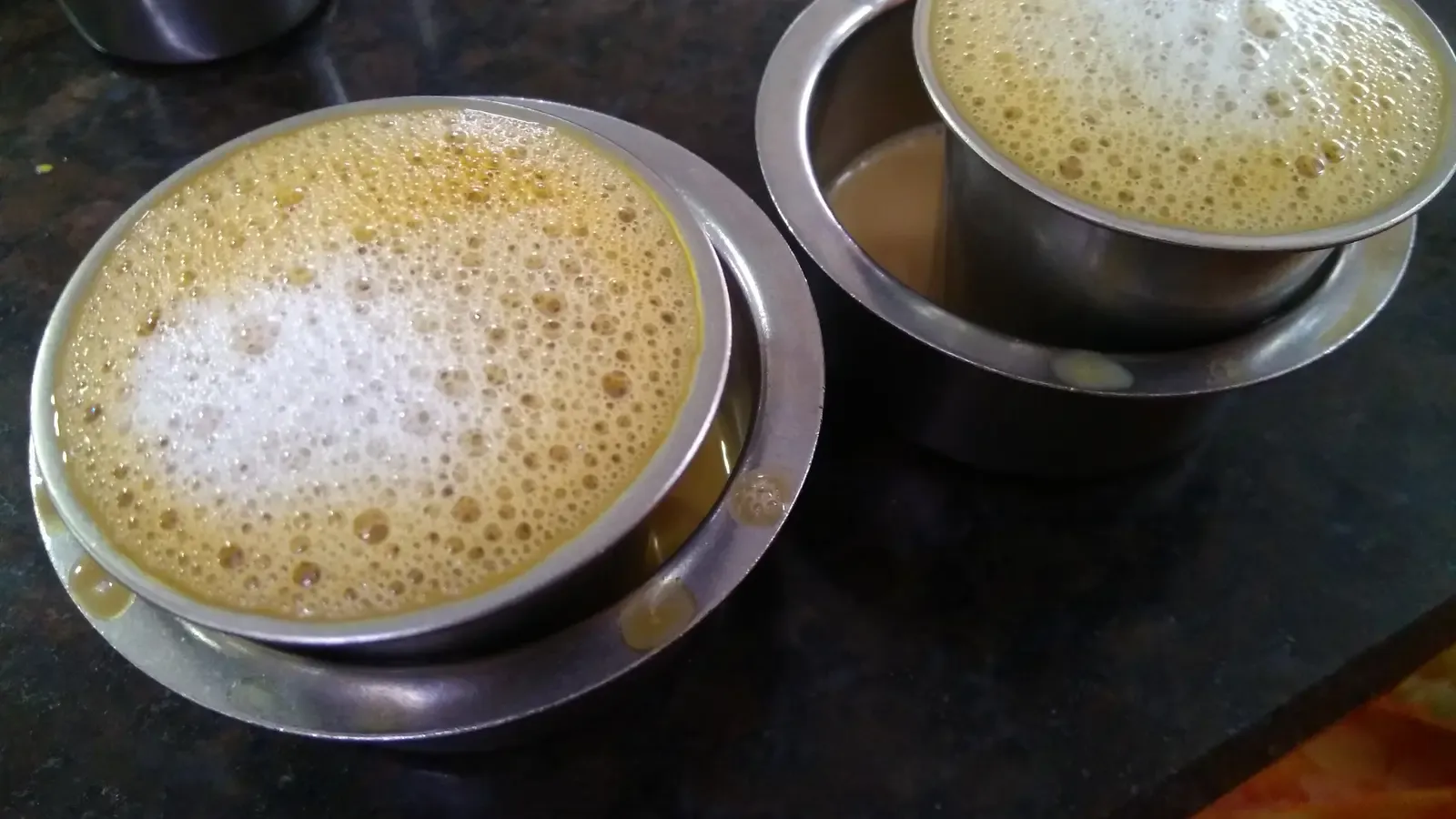
In India, cold coffee usually means a blended milk drink. Chilled milk, sugar and ice are whizzed with instant coffee, or with a shot of South Indian filter coffee decoction, until it froths. Thick cold coffee adds ice cream or uses full-cream milk. Cold coffee with instant coffee is the quickest version, since the powder dissolves without brewing. Cold brew concentrate can stand in for the instant coffee.
Cold coffee in India
Cold coffee is now a large part of how Indians drink coffee. The Coffee Board of India's 2023 consumption study recorded cold coffee drinking among 41% of urban coffee consumers and 11% of rural ones, against 87% and 91% for hot coffee, since many drink both. Across India the figures were 88% for hot coffee and 33% for cold.
The same study estimated India's coffee consumption at 91,000 tonnes in 2023, up from 84,000 tonnes in 2012. It found that instant coffee has become a top favourite. Cold coffee drinking builds through the afternoon and peaks in the evening, with 30% of it between 4 pm and 8 pm.
Cold brew vs hot coffee: quick reference
Two papers by researchers at Thomas Jefferson University brewed hot and cold coffee from the same beans at the same 1:10 ratio. That makes their numbers a fair side-by-side test.
| Measure | Cold brew | Hot brew | Study |
|---|---|---|---|
| Water temperature | 21–25 °C | 98 °C | Fuller and Rao, 2017 |
| Brew time | Caffeine level reached in 6–7 hours | 6 minutes in a French press | Fuller and Rao, 2017 |
| Caffeine at 1:10, after 24 hours | 990–1,230 mg per litre | 840–1,060 mg per litre | Fuller and Rao, 2017 |
| pH | 4.96–5.13 | 4.85–5.10 | Rao and Fuller, 2018 |
| Titratable acidity to pH 6 (ml 0.1 N NaOH per 40 ml) | 2.13–2.93 | 3.17–4.27 | Rao and Fuller, 2018 |
| Antioxidant activity (mmol Trolox per litre) | 13.36–17.45 | 18.34–20.72 | Rao and Fuller, 2018 |
The pH figures barely differ, so cold brew is not noticeably less sour by that measure. The 2018 study measured titratable acidity, which counts all the acid a drink can neutralise, and found it lower in every cold sample from six coffees. Hot brews also held more chlorogenic acids, 2,503–3,270 mg per litre against 1,616–2,201 mg per litre cold, and showed more antioxidant activity. The 2019 paper agrees on acidity: all of its cold brew samples had lower titratable acidity than their hot counterparts.
How to make cold brew at home
Weigh both the coffee and the water, so the next batch tastes the same as this one. This method needs no machine.
- Weigh the coffee. For concentrate, use 100 g of coffee per litre of water, the 1:10 ratio of the Scientific Reports studies. For a lighter brew to drink straight, 70 g per litre matches the 7% brew used in a 2023 study in Foods.
- Grind it coarse. A coarse grind filters cleanly and keeps the brew clear. The 2017 study found grind size made no significant difference to caffeine, and tasters in the 2019 study scored coarse, 14-hour brews highest.
- Add cold water and stir. Use filtered water and stir until every ground is wet, then close the jar.
- Steep in the fridge. Brewing guides commonly say 12 to 24 hours, according to the 2017 study. The 2023 study steeped for 17 hours at 4 °C. Longer steeping raised dissolved solids in the 2019 study, but its tasters preferred 14 hours over 22.
- Filter twice. Pour through a fine steel mesh or a clean cotton cloth, then through a paper filter for a clear cup.
- Dilute to taste. Mix concentrate about half and half with water or milk, and pour over ice.
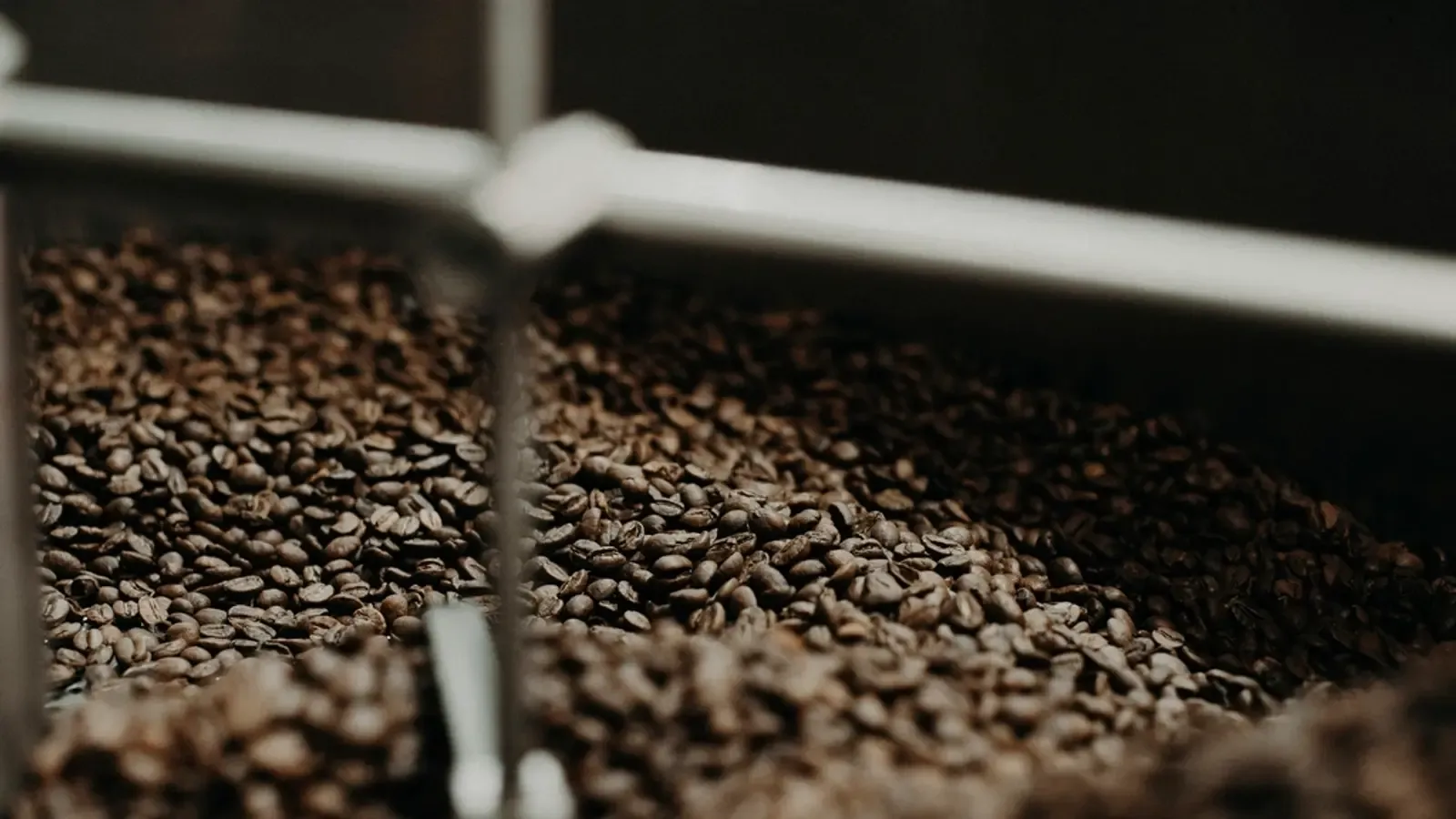
Coffee bought as ground filter powder works too, though it is finer than ideal and needs the paper filter. Medium roasts gave more caffeine and chlorogenic acid than dark roasts in the 2017 study, so a medium roast suits a first batch.
Storing cold brew safely
Cold brew never gets a heat step, so the bacteria that reach the jar are not killed by brewing. The 2023 study in Foods lists the lack of any preservation step after brewing, long infusion times and cross-contamination as the hazards. It notes that pathogenic bacteria may survive in coffee brews for several weeks. In its own trial, E. coli O157:H7, Listeria and Salmonella added to untreated cold brew were still detectable after 60 days at 4 °C.
No food safety agency publishes a fridge life for homemade cold brew, so treat it as a chilled, perishable drink. Britain's Food Standards Agency says a fridge should run between 0 and 5 °C. Brew in a clean, lidded jar inside the fridge, keep the concentrate sealed, and add milk only to the glass you are about to drink. Make small batches you will finish within a few days, and throw out any that smells sour or looks slimy.
Factory cold brew can be given a treatment step that a home jar never gets. The same study pressure-treated cold brew at 600 MPa for 3 minutes, which cut the added bacteria by more than a million times and kept them undetectable for 90 days.
Caffeine in a glass of cold brew
Most of the kick in a glass of cold brew comes from the concentrate. At 990–1,230 mg of caffeine per litre in the 2017 study, 100 ml of 1:10 concentrate holds roughly 99–123 mg. Diluted half and half with milk, a 200 ml glass carries that same amount. Coarse-ground cold brew had substantially more caffeine than the matching hot brew in that study, while medium-ground samples showed no significant difference.
The European Food Safety Authority says intakes up to 400 mg a day spread through the day raise no safety concerns for healthy adults. For pregnant and breastfeeding women, its figure is 200 mg a day from all sources. Four such glasses come to about 400–490 mg before any tea or cola is counted. This is general information; ask your doctor if you are pregnant or take regular medicines.
Why weigh coffee and water for cold brew
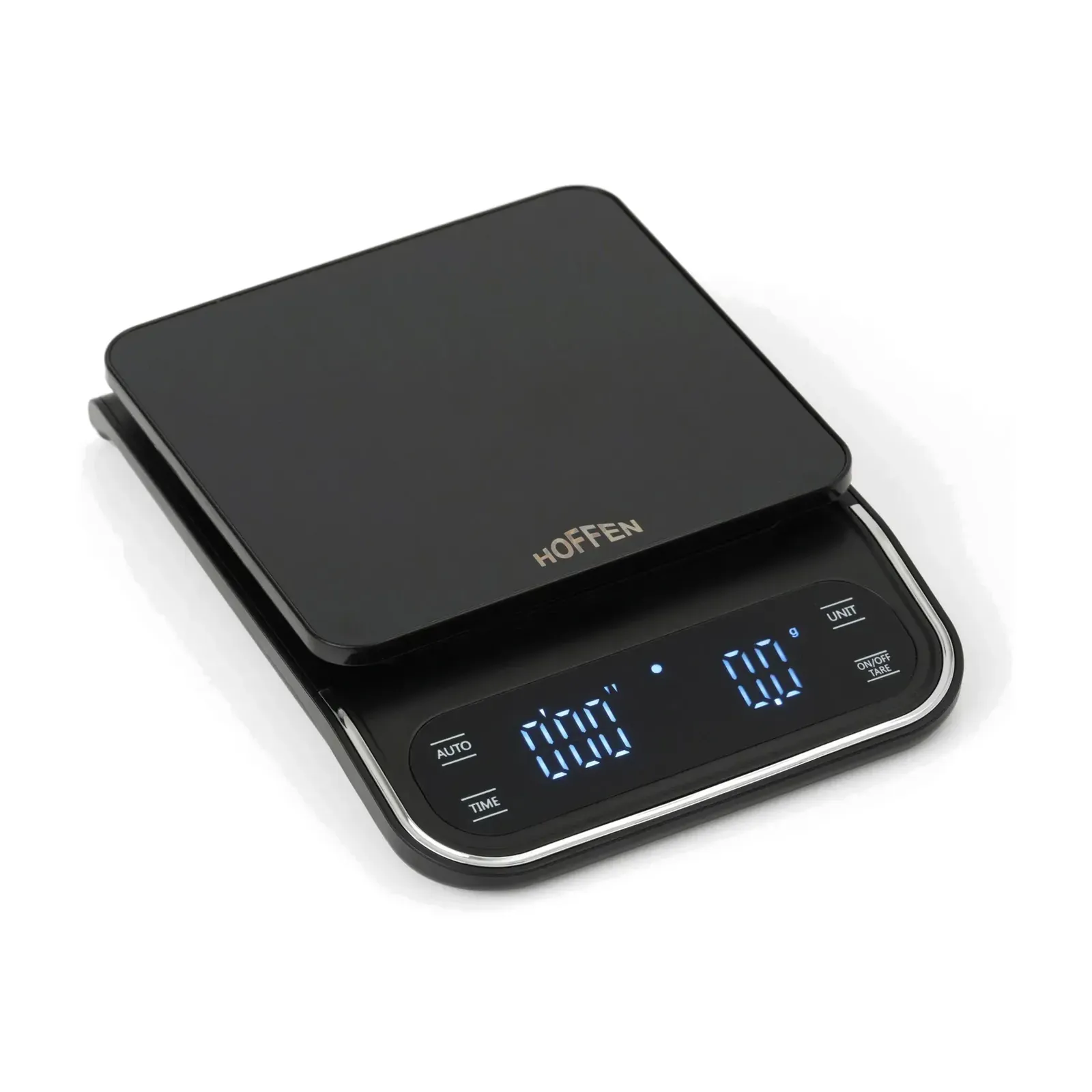
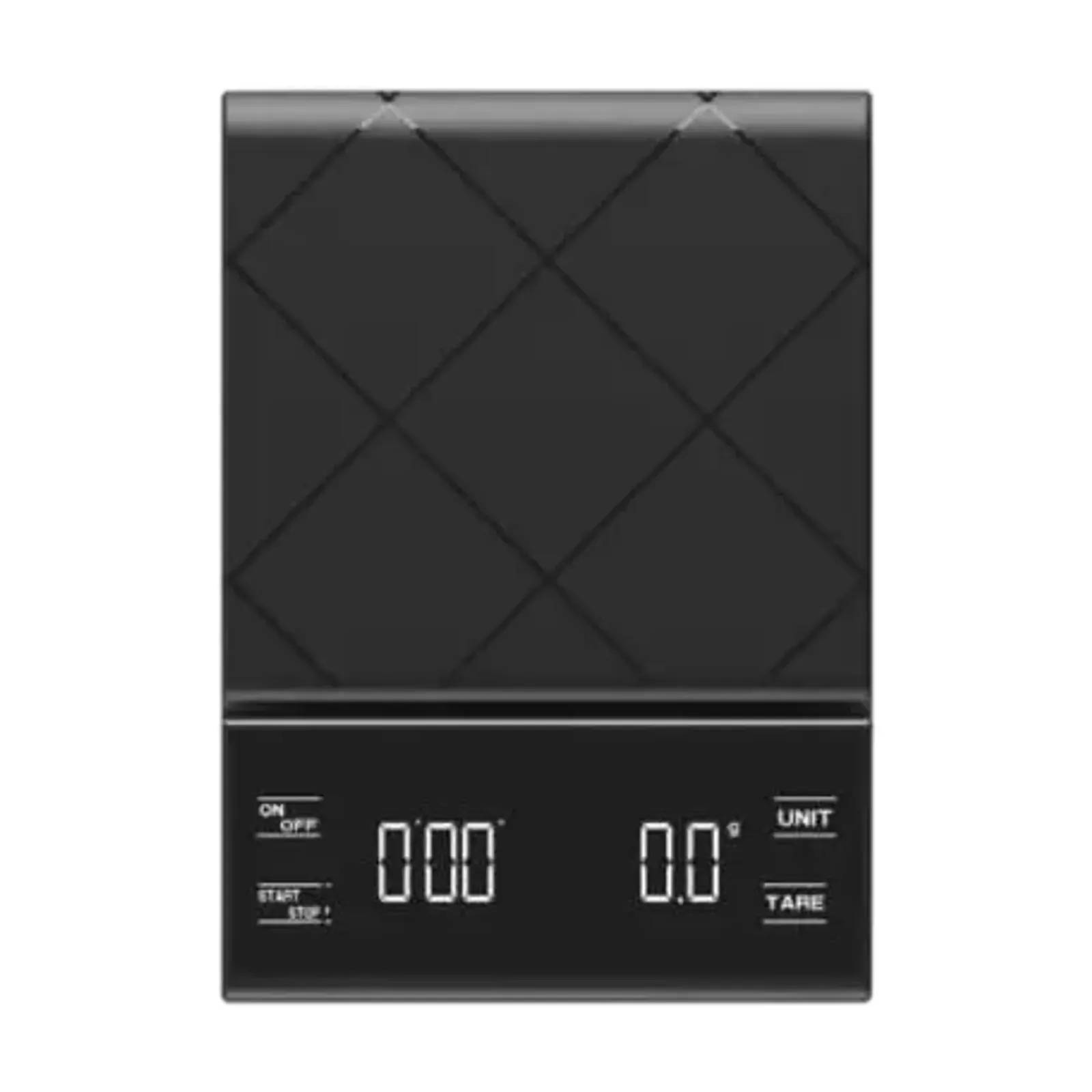
A 1:10 ratio only means something when both sides are weighed. A scoop holds a different weight of coffee depending on the grind and the roast, so two scoops today and two tomorrow can brew different strengths. On a scale, 100 g of coffee and 1,000 g of water give the same strength every time. Set the jar on the scale, press tare, add the coffee, tare again and pour in the water. Hoffen coffee scales from Omace Brands Private Limited read in 0.1 g steps up to 3 kg, enough for a one-litre jar with its water, and the coffee scale range lists them. The coffee to water ratio chart gives starting ratios for hot brewing methods.
Getting your first batch right
Start with a medium roast, a coarse grind, 100 g of coffee to a litre of water and an overnight steep in the fridge. Taste it diluted half and half the next morning. If it is too strong, add more water to the glass; if it is flat or weak, steep the next batch a few hours longer or grind a little finer. Keep notes of the weights and hours, because small changes in those two numbers decide the cup.