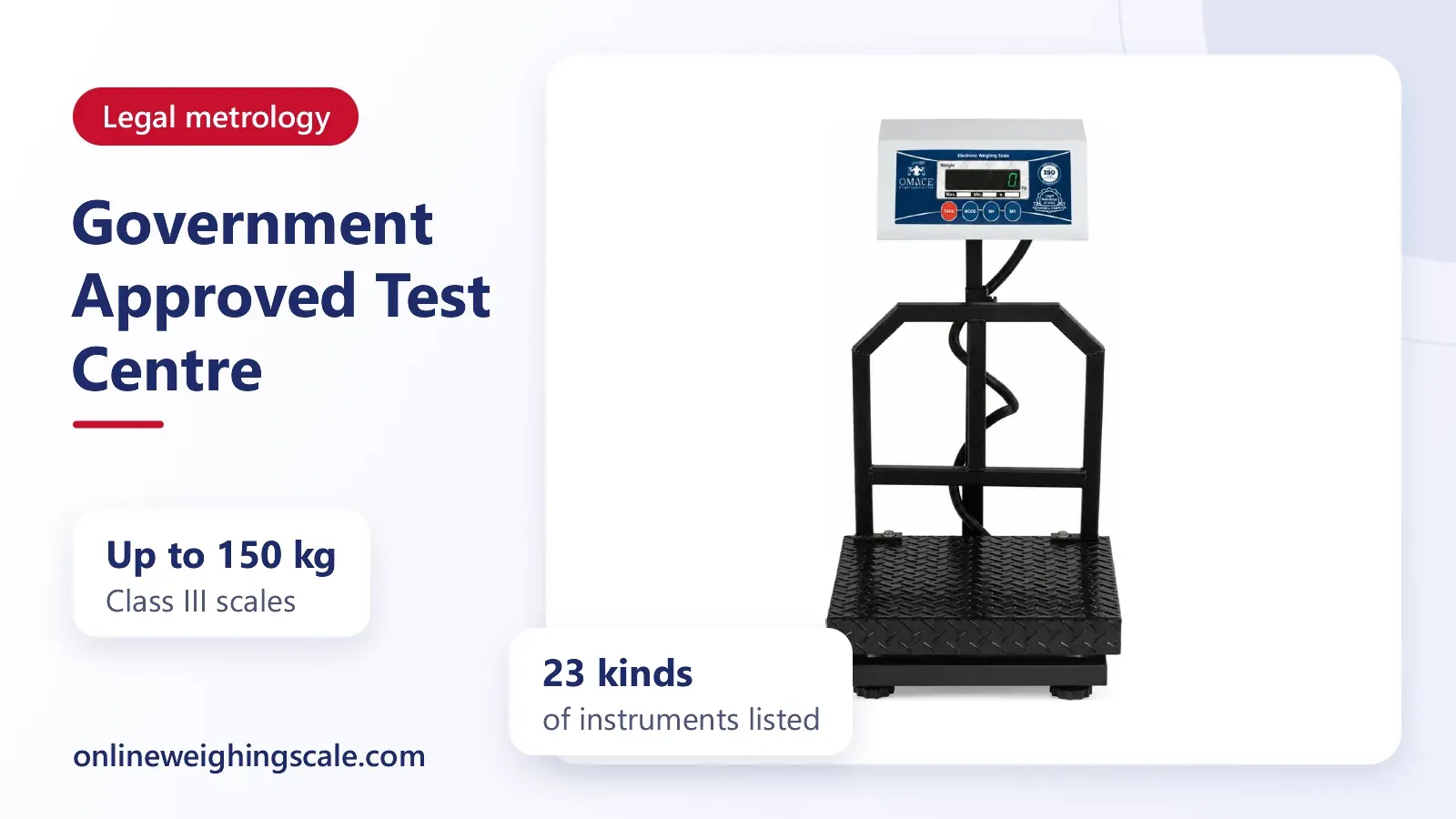
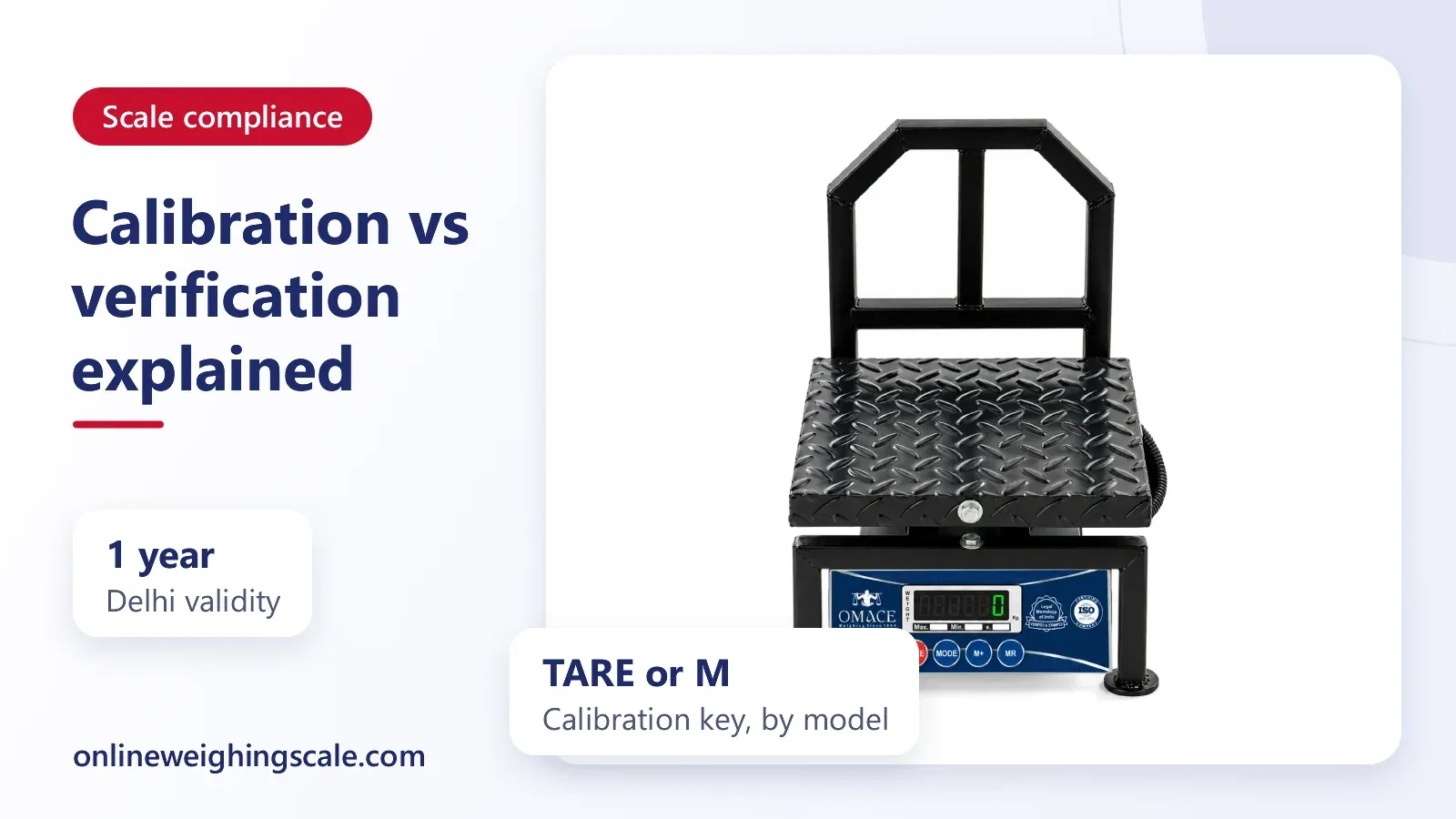
Calibration vs verification is the difference between measuring how wrong a scale is and confirming that it stays inside legal limits. Calibration compares the scale with reference weights and records the error. Verification is done by the Legal Metrology department, and it ends with a stamp that lets the scale be used for trade.
Shopkeepers in Jaipur and elsewhere often use the two words for the same visit. They are two different jobs, done by different people, and they leave different paper behind. This post explains each term, what certificate comes out, which one the law asks for, and where adjustment and stamping fit in.
Calibration: what the word means
The International Vocabulary of Metrology, published by the BIPM and its partner bodies, defines calibration as an operation in two steps. First it relates values given by measurement standards, with their uncertainties, to what the instrument indicates. Second it uses that relation to get a measurement result from an indication.
In plain words, someone puts known test weights on the scale and writes down what the display says. The list of differences is the calibration result. Nothing on the scale changes at this stage. A calibration only tells you how the scale behaves.
The same vocabulary adds a warning. Calibration should not be mixed up with adjusting a measuring system, and it is also different from verifying a calibration. Most confusion in the market comes from using one word for all three. The full meaning, with steps and certificate contents, is in the post What Is Calibration?
Adjustment: the step people call calibration
Adjustment means changing the scale so that it reads the known weight correctly. This is what happens when you press keys, put a 20 kg or 200 g weight on the pan and the display is set to match. Many people call this calibration, and many scale makers do too, but in the vocabulary it is adjustment.
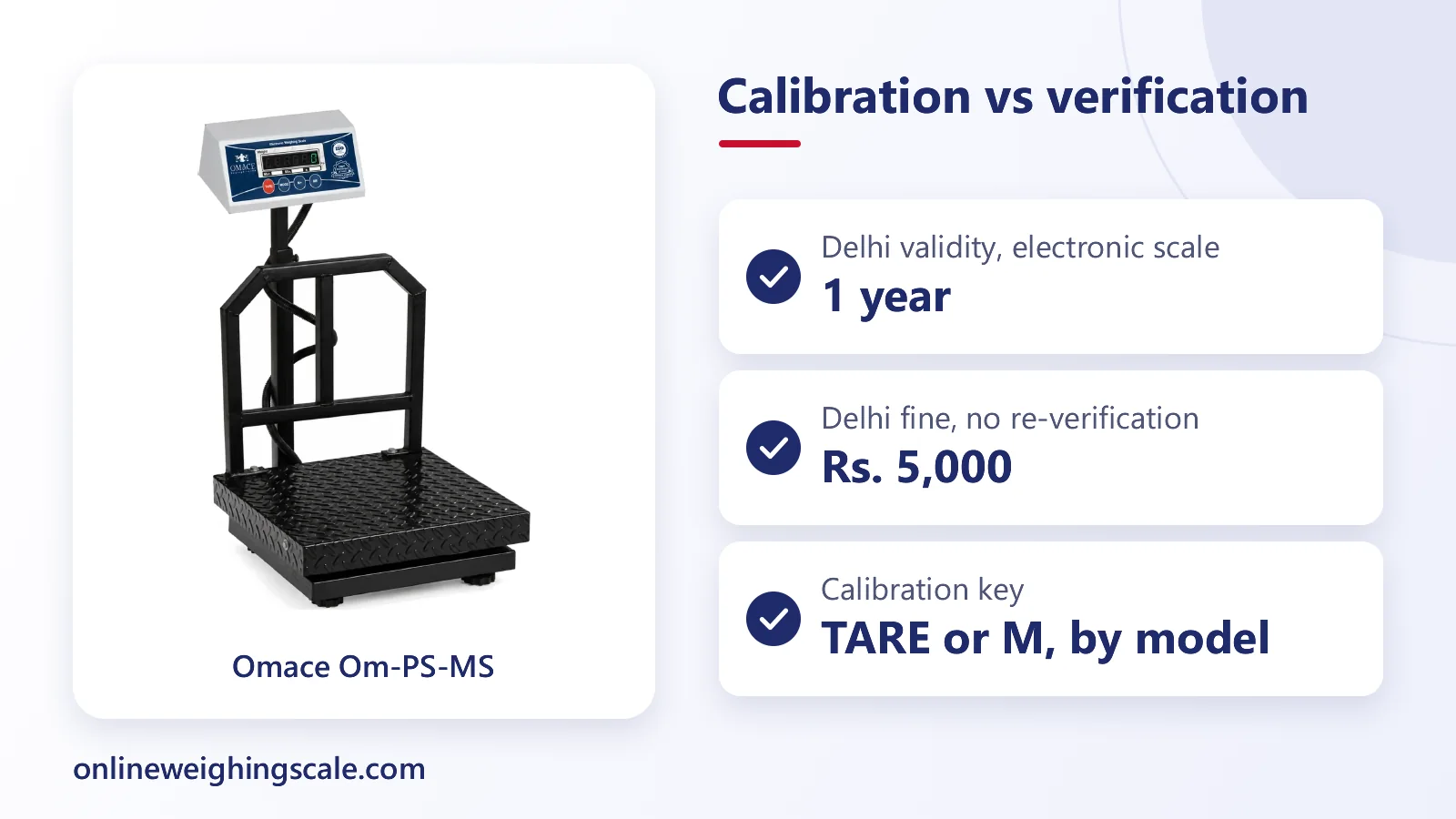
On Omace digital scales a long press of TARE opens calibration mode on some models and a long press of the M key on others, and the manual for each model shows which. Stamped trade scales are sealed, so only a registered repairer opens and recalibrates them. That seal exists to protect the buyer: nobody can quietly shift the reading after the stamp is on.
Verification: the legal check
Verification confirms that a scale meets specified requirements. For trade scales the requirement is the maximum permissible error the law allows for that class and capacity. The BIPM vocabulary describes verification in the same way, as confirming that requirements, often maximum permissible errors, are met. It does not say how big the error is. It only says whether the scale passes or fails.
In India this is a government job. The Legal Metrology department of the state, through its inspectors, checks the instrument against standard weights and puts a stamp on it if it passes. The Delhi Weights and Measures department explains that items are stamped after due verification, and that the stamp carries a seal identifying the officer and the quarter of the year. Other states have their own marks, but the idea is the same.
Verification therefore has legal weight that a lab certificate does not have. A shop that weighs goods and charges money by that weight needs the stamp. The wider rules, who must comply and what happens if you do not, are in Legal Metrology in India and Legal for Trade Weighing Scale.
Verification, re-verification and stamping
Stamping is the physical result of a successful verification. Verification is the check and the stamp is the mark that proves it was done.
The first check, before the scale is sold or used, is called verification. A later check after the validity period ends is called re-verification. The validity period depends on the type of instrument and is set by the Legal Metrology (General) Rules, 2011 and the state department. The Delhi department lists a validity of one year for electronic scales and platform machines. That is one state's practice, so ask your own Legal Metrology office for the period that applies to your instrument and your state.
Delhi also divides the year into four quarters. A scale verified in January can be presented again up to the end of the January to March quarter without penalty. The same FAQ says that failing to present an item for verification or re-verification without reasonable cause carries a fine of Rs. 5,000, and that the item can be seized. Fees and approved test centres are covered in Weighing Scale Stamping Charges.
Who does each job and what paper comes out
Calibration is done by a laboratory, a manufacturer or a service company that owns reference weights. When the work must be accepted by auditors, it is done by a laboratory accredited by the National Accreditation Board for Testing and Calibration Laboratories, called NABL. NABL accredits calibration laboratories under ISO/IEC 17025 for specific parameters and stated measurement capabilities. Its site has a tool that checks a certificate by number, and it also tells you to match the parameter, method, site and validity date to what you need.
The paper from an accredited lab is a calibration certificate. It lists the test weights used, the readings of your scale and the uncertainty. It says nothing about whether the scale is allowed in a shop.
The paper from verification is the stamp, and for some instruments a verification certificate. The Delhi department says a verification certificate is issued for dispensing units and weighbridges, and that it must be displayed in a conspicuous place. A small shop scale usually carries only the stamp.
| Point | Calibration | Verification |
|---|---|---|
| Question answered | How far is the reading from the true value? | Is the scale within the legal error limit? |
| Done by | Laboratory or manufacturer with reference weights | Legal Metrology inspector of the state |
| Paper or mark | Calibration certificate with readings and uncertainty | Stamp and seal, sometimes a certificate |
| Changes the scale? | No, it records errors only | No, it passes or rejects |
| Legal for trade? | No, it is not a licence to sell by weight | Yes, this is what trade use needs |
| Repeats | When the lab, auditor or your own rule says | On the validity period of the instrument |
Which one does the law ask for
For a scale used to sell goods, charge freight or pay by weight, the law asks for verification and stamping. A calibration certificate, even from the best laboratory, does not replace the stamp. A stamp also does not tell you the error of your scale on a given day. It tells you that on the day of verification the error was inside the legal limit.
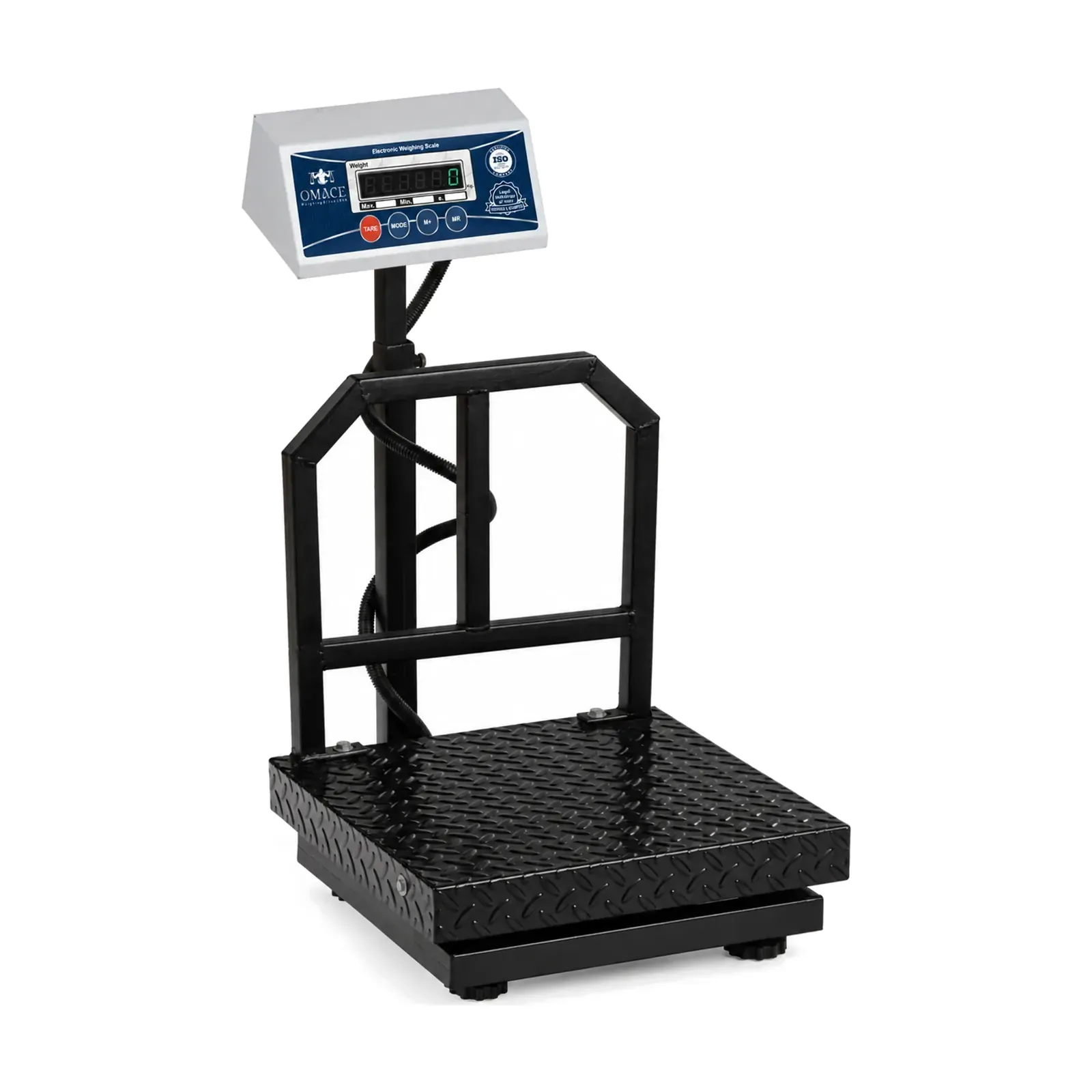
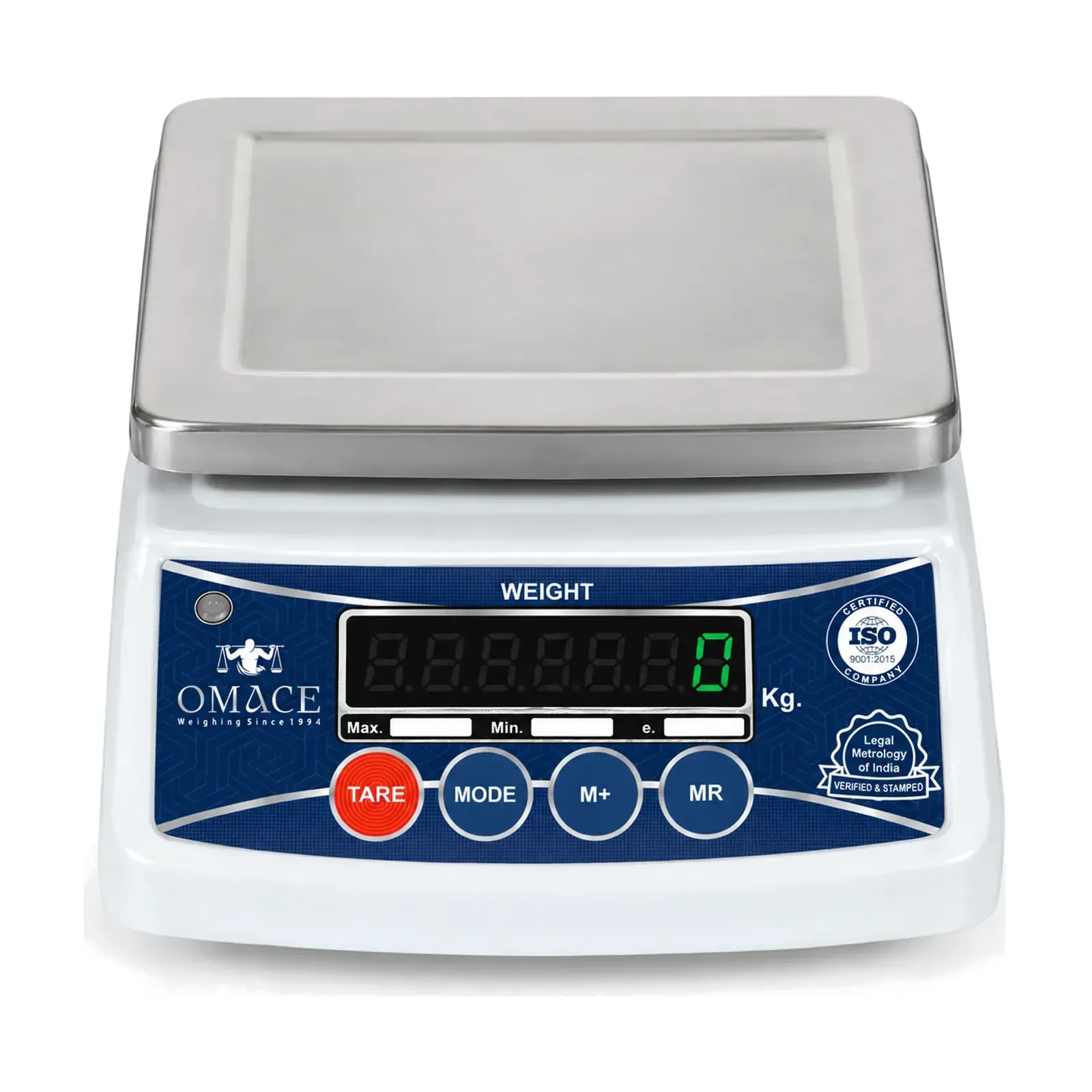
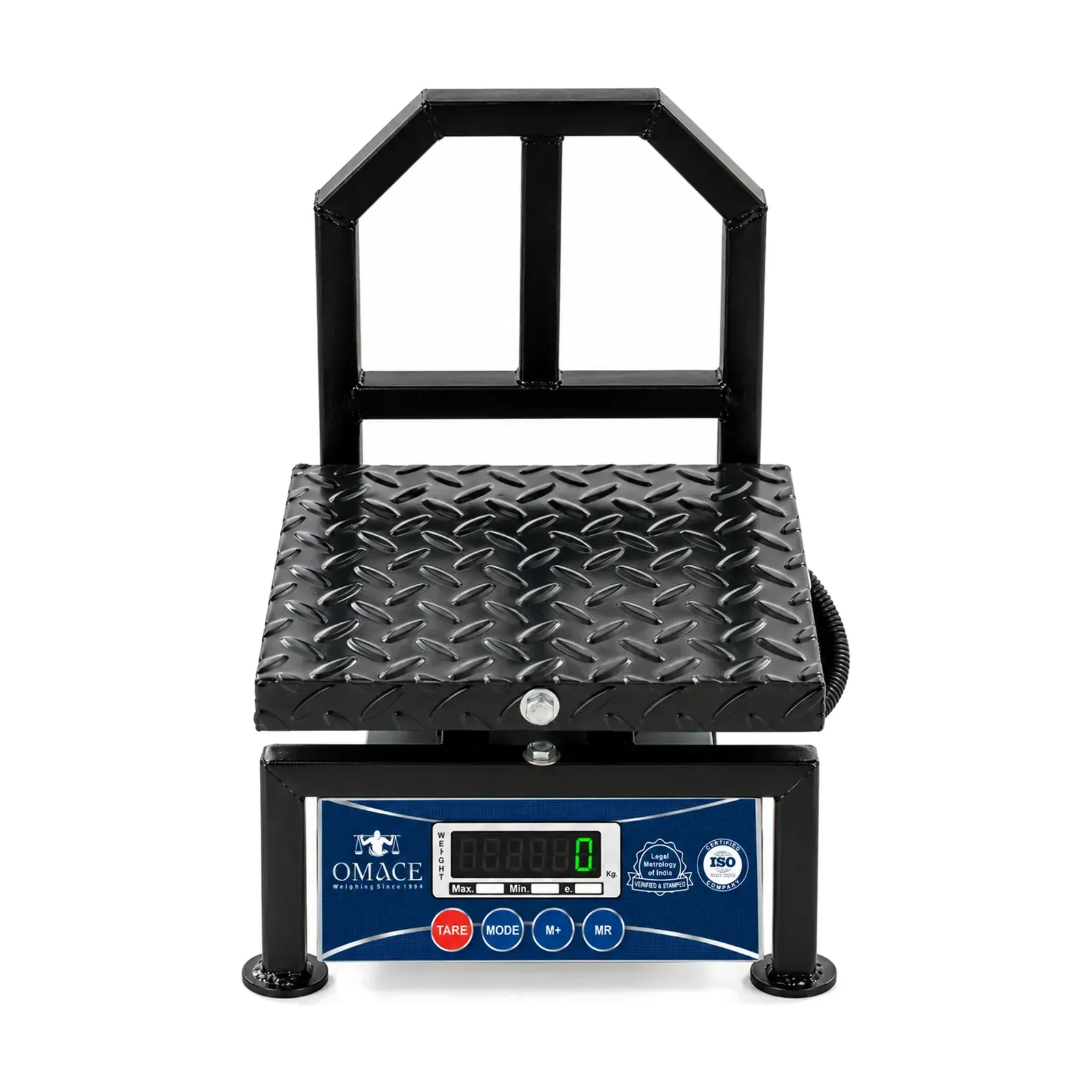
Omace shop, platform, chicken and crane scales leave the Bagru factory verified and stamped by Legal Metrology, and the stamp is valid across India. Stamping is compulsory on platform and crane scales. Omace Brands Private Limited checks every scale with certified test weights before dispatch, which is described on the tested before dispatch page.
A home bathroom or kitchen scale is not used for trade, so it has no stamping duty. For those, a calibration check with a known weight is enough, and the posts on kitchen and bathroom scale calibration show how.
When a factory needs calibration as well
A manufacturer working under ISO 9001 has to keep its own measuring equipment under control. In practice that means the test weights and scales used in production are calibrated at set intervals, and the records are kept for the auditor. This is a quality system matter, not a legal one, and it is a second reason why a business can need a calibration certificate even when the stamp is already in place.
Omace Brands Private Limited holds ISO 9001:2015 and other company certificates, and has been in the weighing trade since 1994 (see about us). The company repairs its commercial scales when the buyer asks, with the buyer paying shipping both ways and the repair cost. Spare parts depend on availability, so ask first through the contact page. A repaired and re-adjusted scale needs verification again before trade use.
A simple routine for a shop owner
- Buy a scale that already carries the stamp of your state's Legal Metrology department, such as a platform kanta or a kirana weighing machine.
- Write the stamp quarter and year on a calendar, and present the scale again before the validity period ends.
- Check the scale yourself each week with a known weight, so that drift is caught early.
- Ask a registered repairer, not a roadside mechanic, for any adjustment on a sealed scale.
- Take a calibration certificate from an accredited laboratory only when a customer, an auditor or your own quality system asks for one.
This is general information. Rules differ between states and change with notifications, so confirm periods and fees with your Legal Metrology office (checked November 2026).
Which word to use when you call for service
If you ask a service person to calibrate a scale, you will probably get an adjustment, and you may get neither a certificate nor a stamp. If you want the legal stamp, say verification and stamping and go to the department or its approved centre. If you want a record of the errors for an auditor, say calibration certificate and name NABL. If the scale reads wrongly and you want it right, say adjustment, and then get the scale verified again.