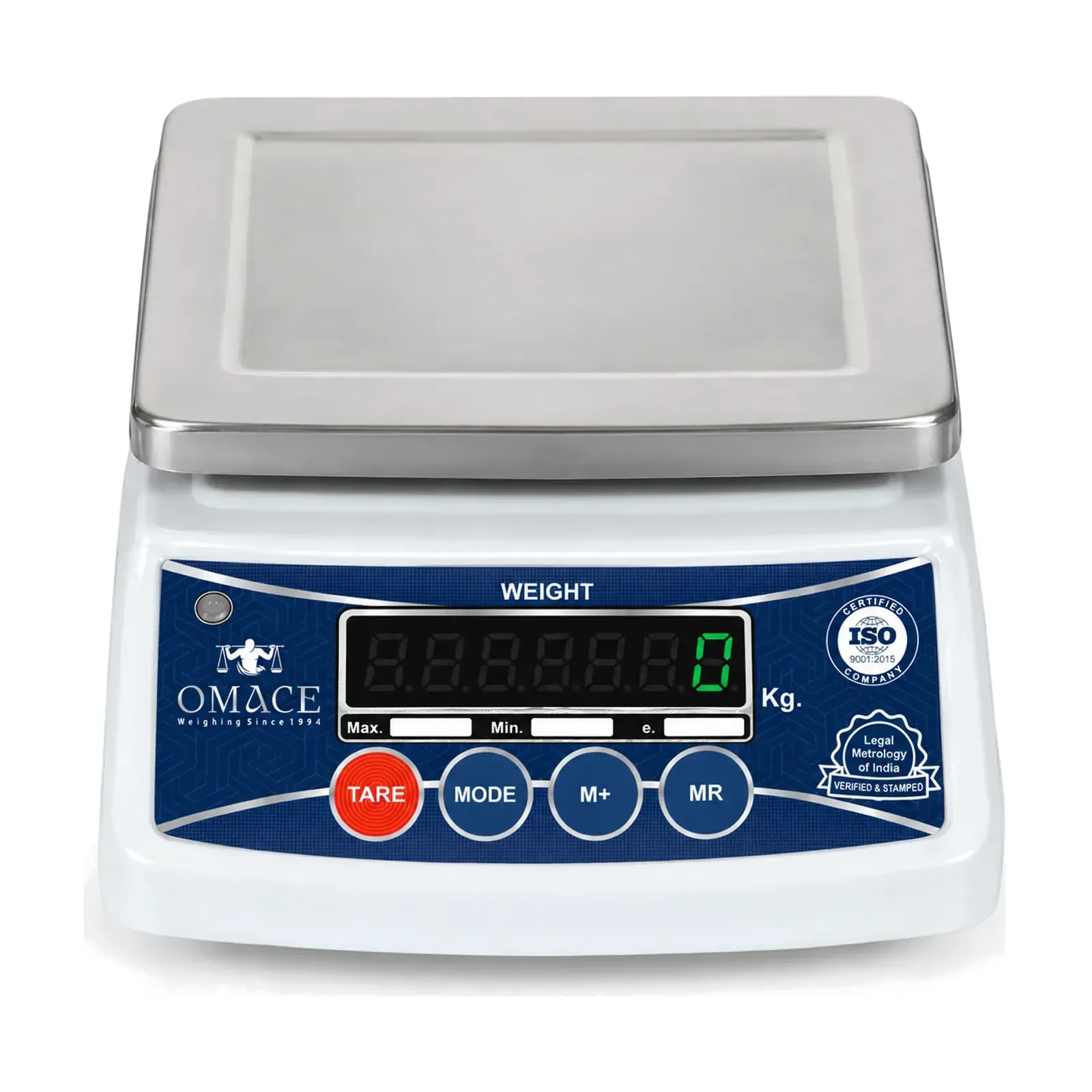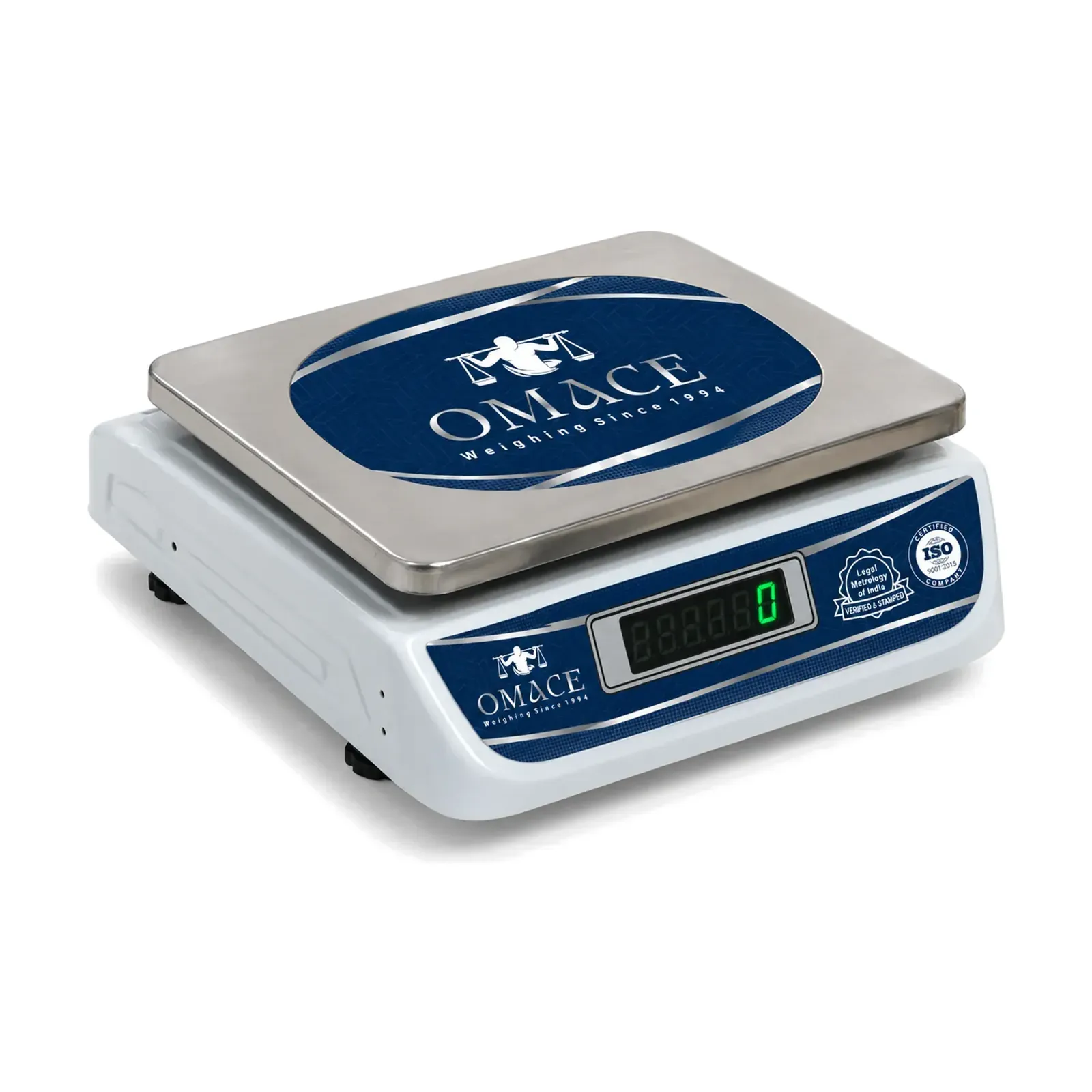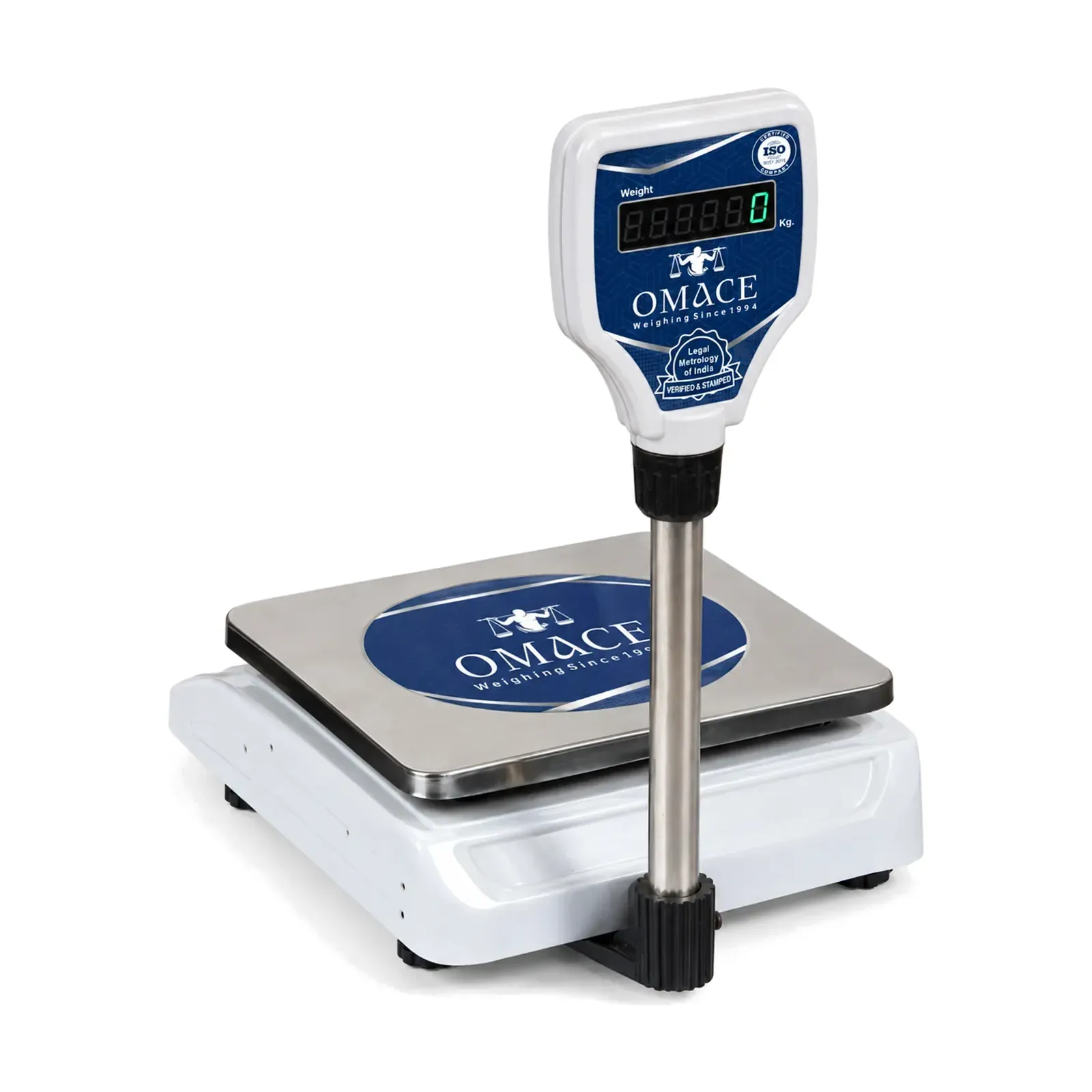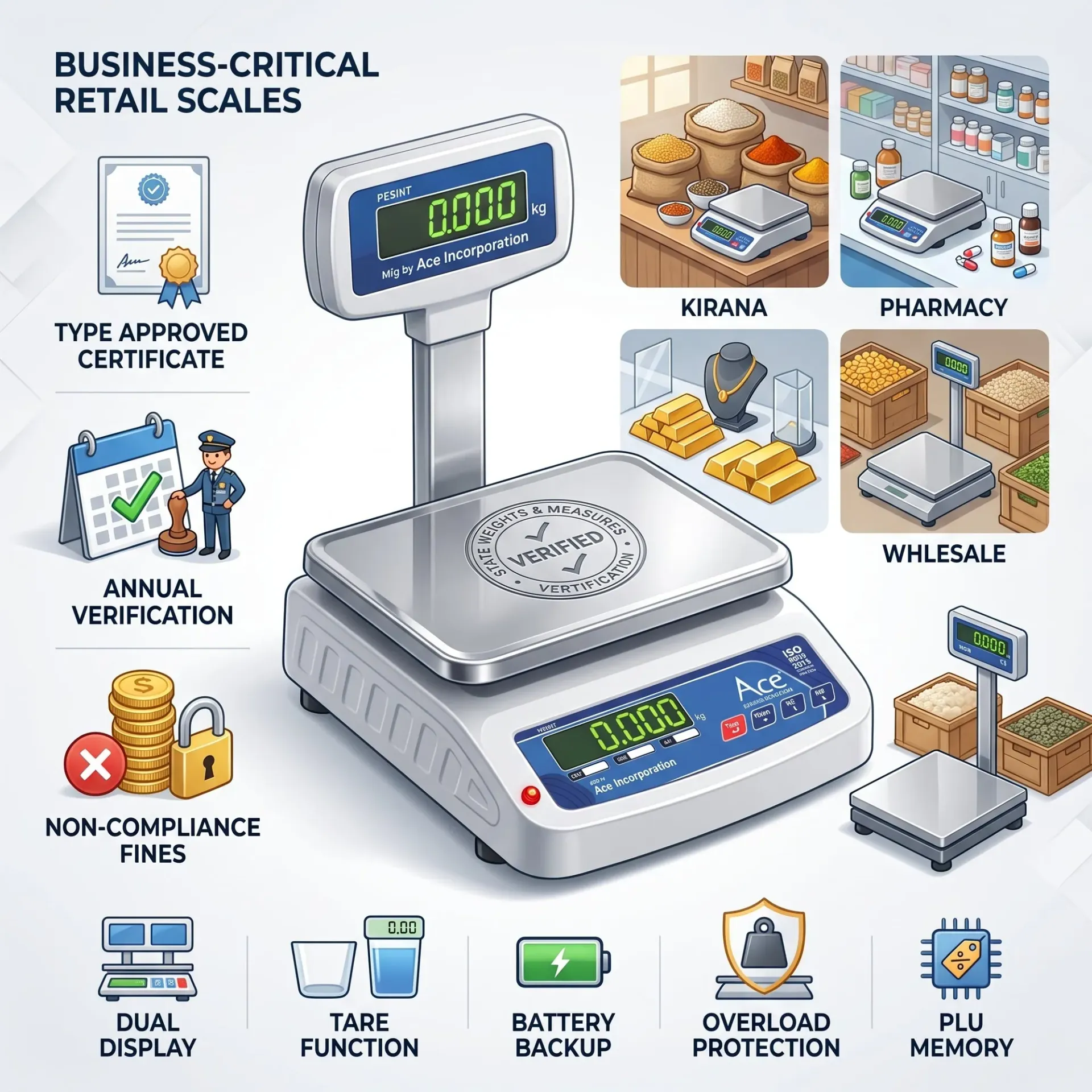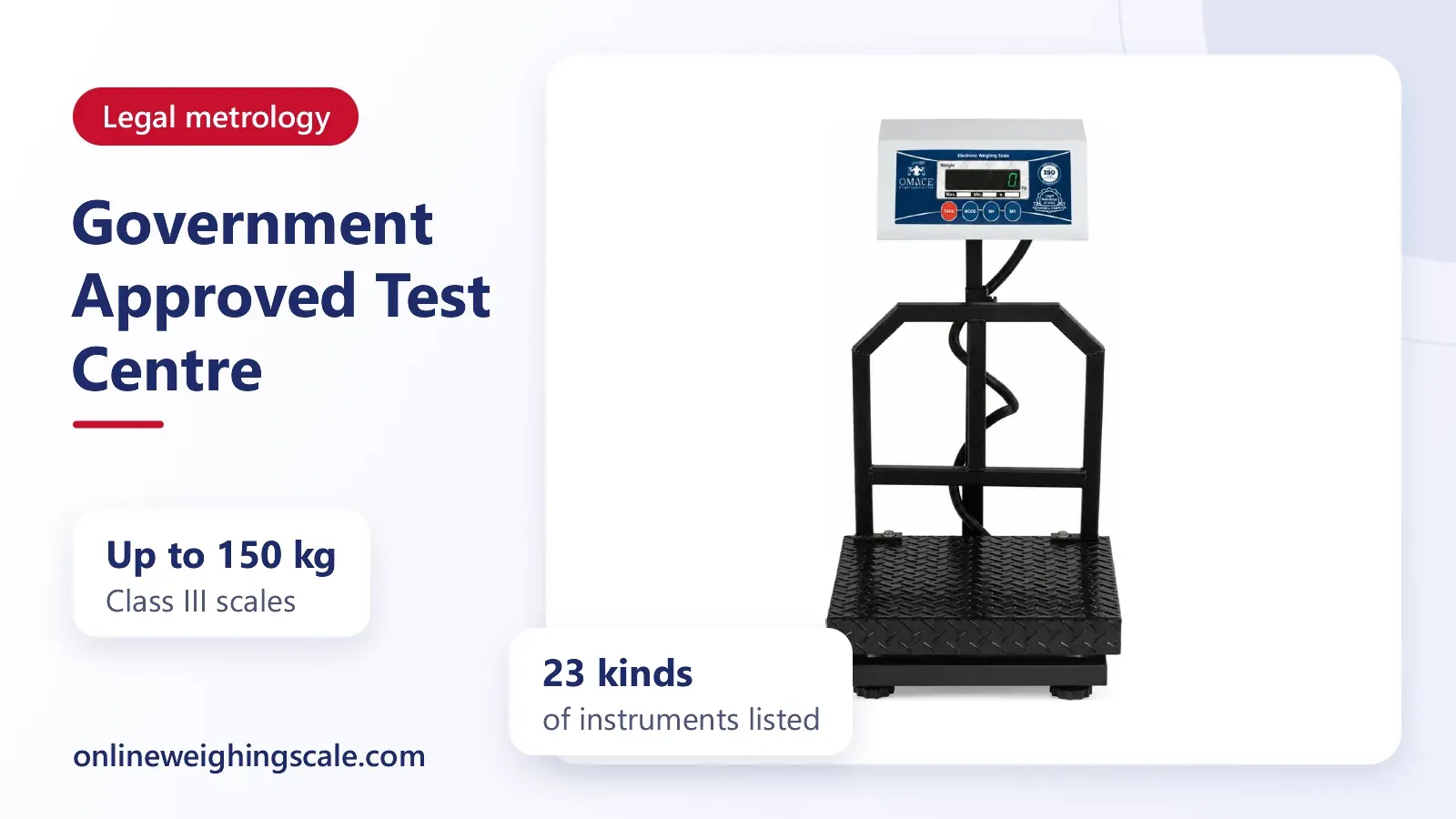
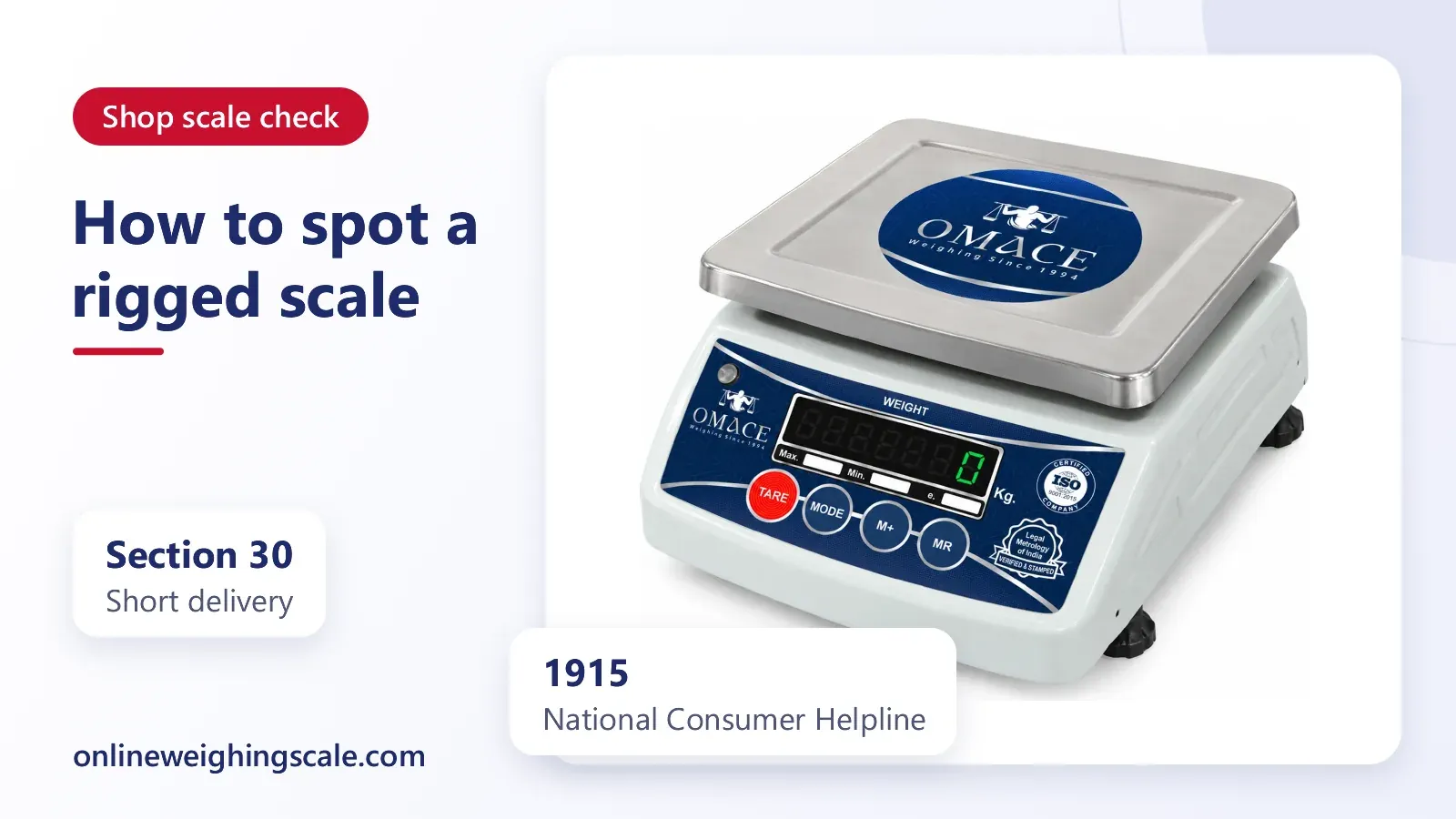
Weighing scale cheating, meaning a shop scale that gives less than you paid for, is an offence under the Legal Metrology Act, 2009. A customer can notice warning signs without any tools: a missing stamp, a display that does not start at zero, or a reading that disagrees with a weight you already know. This guide covers those checks, the legal duties of a trader and where to complain.
What the law asks of a shopkeeper
The Legal Metrology Act, 2009 sets the rules for every scale used to sell goods by weight in India. The Act as first passed is hosted by the Food and Agriculture Organization of the United Nations in its FAOLEX legal database, and the sections below are taken from that copy. The penalty sections were amended by the Jan Vishwas Acts of 2023 and 2026, so the penalty wording below follows those texts, which the Department of Consumer Affairs publishes on its Legal Metrology Act page.
| Duty or offence | What the Act says |
|---|---|
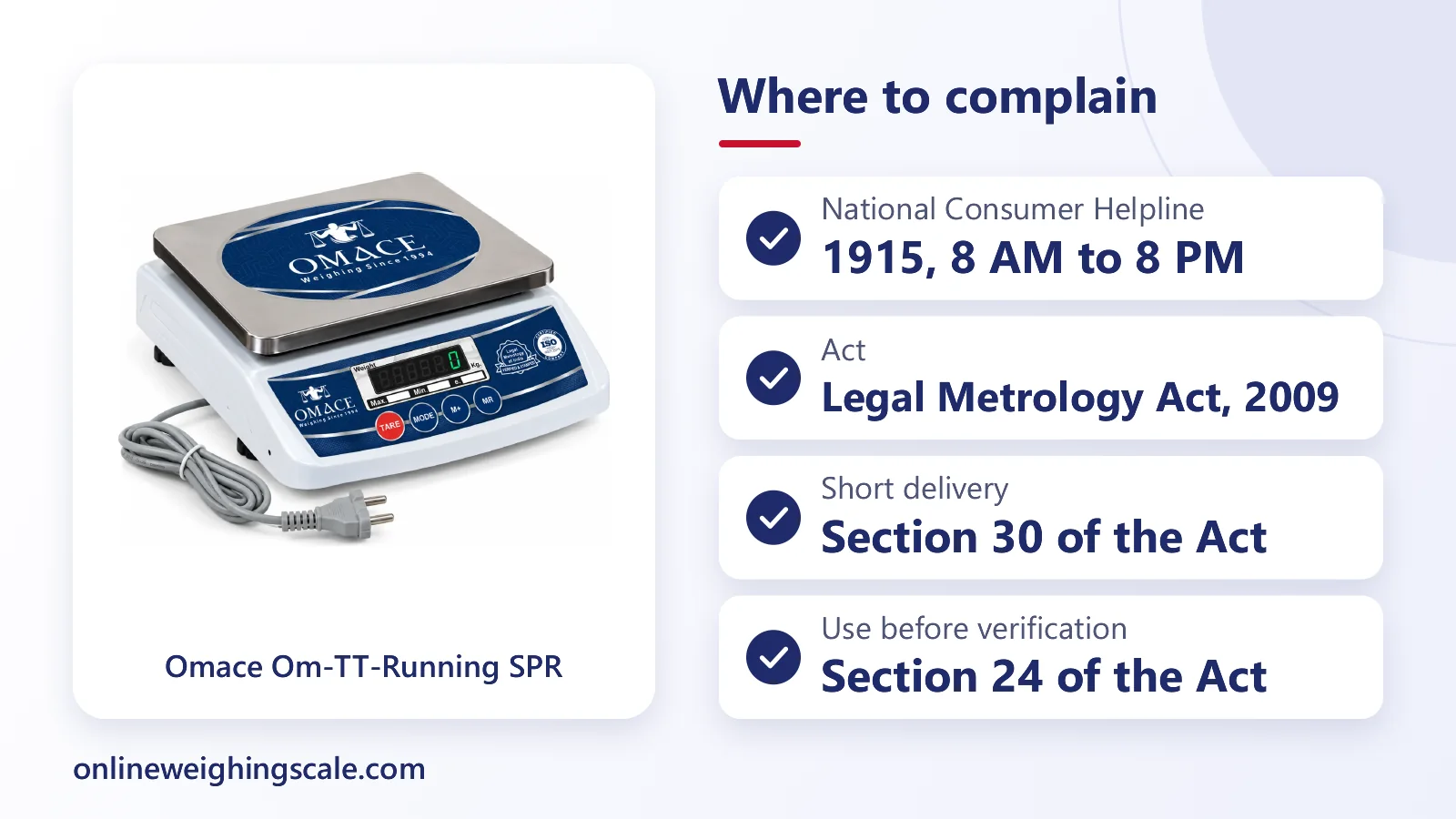
| Verify before use (section 24) | A person who holds a weight or measure for use in trade must have it verified before using it. |
| Unverified instrument (section 33) | Selling, delivering or using an unverified weight or measure is an offence. |
| Non-standard weight (section 25) | Using a weight or measure that does not meet the prescribed standards is an offence. |
| Alteration (section 26) | Increasing, decreasing or altering a weight or measure to deceive a person is an offence. Correcting an error found on verification is excepted. |
| Short delivery (section 30) | Delivering less than the quantity contracted for or paid for is an offence. |
The wider framework, with the department and the rules, is explained in the Omace guide to Legal Metrology in India. A shopkeeper who keeps a stamped scale, uses it as stamped and gives the weight paid for is following the law.
Signs you can notice at the counter
Most honest shops have nothing to hide, so a few calm observations are enough. None of these proves wrongdoing alone. Several together are a reason to ask questions.
- The display faces you. You should be able to read the number while your goods sit on the pan. A scale turned away from the customer is worth a polite request to turn it.
- It starts at zero. Before anything goes on, the display should read 0. A reading such as 20 g on an empty pan adds that much to everything weighed, and it is the buyer who pays for it.
- The reading settles. A digital scale should show a steady number within a moment or two. A number that keeps drifting, jumps when nobody touches the pan or changes when the scale is nudged deserves a second look.
- Nothing rests on the pan or touches it. A hand, a bag corner or a scoop leaning on the platform changes the reading. Watch where the goods and the seller's hands are.
- The stamp is there. A verified scale carries a stamp or sticker from the Legal Metrology department. A scale with no stamp, a painted-over stamp or a very old one is a question for the shopkeeper.
- The body looks untouched. A broken seal, a loose cover, fresh screws or tape on the base of a scale that should be sealed point to someone having opened it. Do not open or test anything yourself.
- Packaging is not counted as goods. Ask that wrapping paper, a bag or a box is not weighed along with the item you are paying for. Where a rule applies to a particular product, the shop must follow it.
A tampered weighing machine is a matter for the Legal Metrology officer. Customers do not need to know how it was done, and this guide does not explain it. Noticing and reporting is the whole job.
A simple check with a weight you already know
The most useful check needs no equipment. Carry something whose weight you trust and ask the shopkeeper to weigh it on the same scale, with the display toward you.
- A sealed packet of sugar, salt or flour with the net weight printed on it. A 1 kg packet should read close to 1 kg.
- A 1 litre bottle of water. Water is close to a kilogram per litre, and the empty bottle adds a little, so treat this as a rough check.
- Your own purchases. If the shop sells packaged goods, weigh one packet and compare it with the label.
Packed goods can carry a small allowed variation, and a shop scale also has its own permitted error, so a gap of a few grams on a small reading is not proof of cheating. A clear gap that repeats on a second weighing is a real reason to complain. The difference between a reading that is close and one that is repeatable is explained in accuracy vs precision.
Do the check politely and early. Many shopkeepers will agree to it, and a shop that refuses to let you weigh a known packet on its own scale has told you something useful. Keep the receipt or take a photo of the display with the date visible.
What the verification stamp and seal mean
Verification means a Legal Metrology officer, or an approved test centre, has tested the scale against reference weights and found it within the permitted error. The officer then puts a stamp on the instrument. A seal, often a lead or wire seal or a tamper sticker, stops the setting from being changed without breaking it.
The stamp is not a lifetime pass. The Act provides for re-verification at periods set by the rules, and a repair or a change in how the scale is used can mean verification again. The cost of this depends on the type and capacity of the scale, and it is covered in weighing scale stamping charges. For what a scale must meet to be sold or used for trade, read legal for trade weighing scale.
When you ask to see the stamp, you are not accusing anyone. You are asking for the one visible sign that an independent officer has tested the scale.
What happens to a shop that is found cheating
The penalties differ by section. Since 1 May 2026 (Gazette notification of 27 April 2026), a Legal Metrology officer who believes a trader has not complied can serve an improvement notice that states the fault and the steps to fix it within a reasonable period. If the trader ignores the notice, the registration or approval is suspended or revoked (section 15 as amended by the 2026 Act).
For using a non-standard weight or measure (section 25), a first offence now draws an improvement notice, a second offence a penalty of up to ₹1 lakh, and later offences a fine of ₹2 lakh to ₹5 lakh. Altering a weight or measure to deceive (section 26) and delivering less than paid for (section 30) are not covered by the improvement notice, and fines apply from the first offence. Using an unverified weight or measure (section 33) is unchanged: a fine of ₹2,000 to ₹10,000, and for a second or later offence imprisonment of up to one year as well as a fine.
In practice a first lapse such as a non-standard weight may begin with a notice, and deliberate cheating does not.
How to complain
Complain with facts: the shop name and address, the date, what you bought and what the scale showed. Keep the bill and any photo.
- National Consumer Helpline. The National Consumer Helpline, run by the Department of Consumer Affairs, takes complaints on the toll-free number 1915 from 8 AM to 8 PM. The page also lists a WhatsApp number, the web portal, a mobile app and UMANG as ways to register. The Helpline passes the grievance to the organisation concerned, and you can track its status online.
- State Legal Metrology department. Weights and measures are enforced by each state's department. The department's officers inspect shops and can act on a scale. Rajasthan's department publishes its contacts on its website, and every state has an equivalent. Search for your state's Legal Metrology department and use the district office.
- Consumer commission. If you want compensation for what you lost, a consumer commission is the route. The Department of Consumer Affairs runs the e-Jagriti portal for consumer matters. Check the portal for current steps and fees.
A complaint about a few rupees of short weight is still worth making when it points to a scale that cheats every customer. The officer can test the instrument itself.
Why a stamped scale helps honest shopkeepers too
Most traders do not cheat, and a stamped scale protects them. A customer who doubts a weight can be shown the stamp and the seal. An officer who visits finds a scale in order. A shopkeeper with a verified scale has an answer to a complaint.
Omace Brands Private Limited makes shop, platform, chicken and crane scales at Bagru, Jaipur. Omace shop, platform, chicken and crane scales leave the factory verified and stamped by Legal Metrology, and the stamp is valid across India. Every scale is checked with certified test weights before dispatch, as described on the Tested Before Dispatch page. Shopkeepers can see the range under weighing scales for shops, for example the Om-TT-ECO kirana weighing machine, the Om-TT-Running SPR 30 kg weight machine and the Om-TT-Running SPD vegetable weighing machine.
When a commercial scale starts to read wrong, Omace Brands Private Limited repairs its commercial scales when the buyer asks. The buyer pays the shipping both ways and the repair cost, and spare parts depend on availability, so it is best to ask first through Contact Us. A scale that has been repaired may need verification again.
Quick checklist before you pay
- The display faces you and starts at zero.
- The reading is steady and nothing presses on the pan.
- A verification stamp is visible and the seal looks whole.
- A known packet reads close to its label.
- You hold the bill and know the shop's name.
If any of these fails twice, call 1915 and the state department. The scale is the shopkeeper's tool, and the number on it is yours to check.