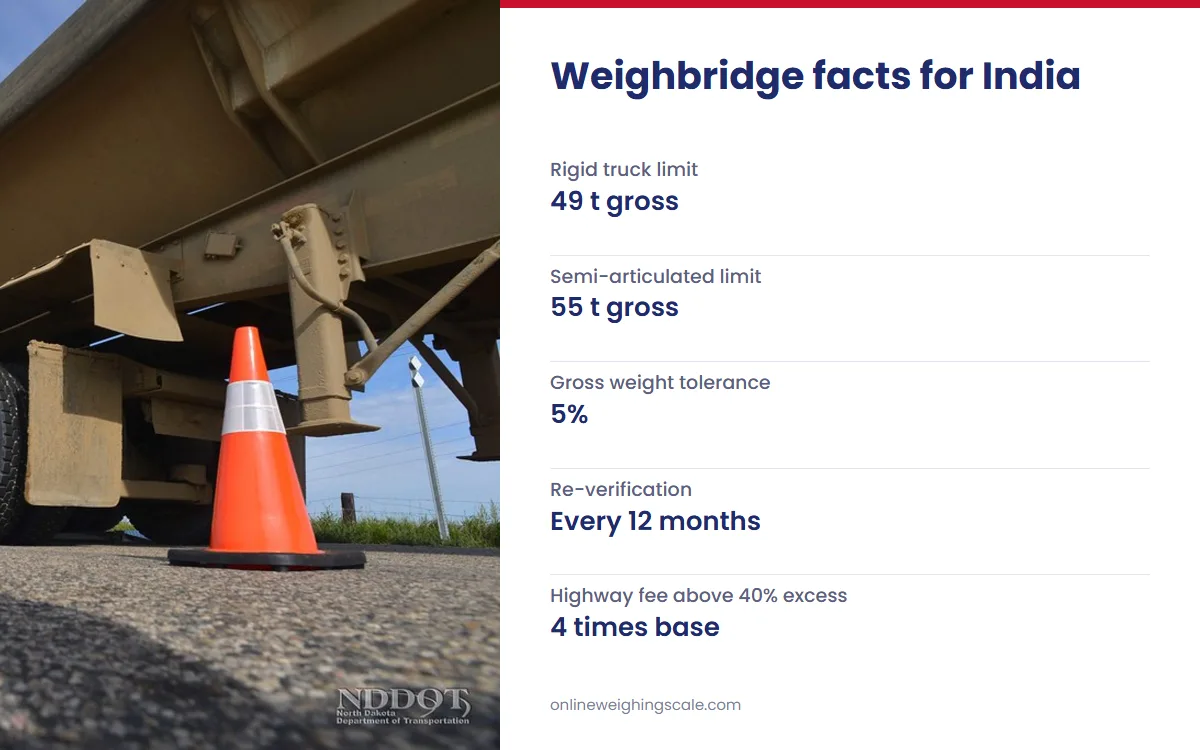
A weighbridge, called dharam kanta in Hindi, is a large platform scale that weighs a whole truck with its load. India's legal limit for a semi-articulated truck is 55 tonnes gross. A 5% tolerance takes it to 57.75 tonnes, so a 60 t weighbridge covers ordinary road trucks at the limit. Net load is loaded weight minus empty weight.
What a weighbridge is and what the word means
The name joins weigh and bridge: a truck drives onto a deck that spans its supports much as a road bridge spans a gap. In Hindi the usual word is dharam kanta, and the Rajasthan Legal Metrology FAQ uses it for the static weighbridge. Truck scale, lorry weighbridge and vehicle weighing machine all mean the same instrument.
IS 1436, the Indian Standard for mechanical weigh-bridges, describes a lever instrument for loads of one tonne and over. An electronic weighbridge swaps the levers for load cells and does the same job.
A weighment takes two passes. The truck crosses once empty for its tare weight and once loaded for its gross weight, in whichever order the trade needs. A truck that reads 46,000 kg loaded and 16,500 kg empty is carrying 29,500 kg.
Public bodies show how wide the use is. Cochin Port asked for offers on a 100 t transportable unit in March 2026, and NTPC tendered four 100 t pitless units for the ash dyke at its Sipat power station.
How an electronic weighbridge works
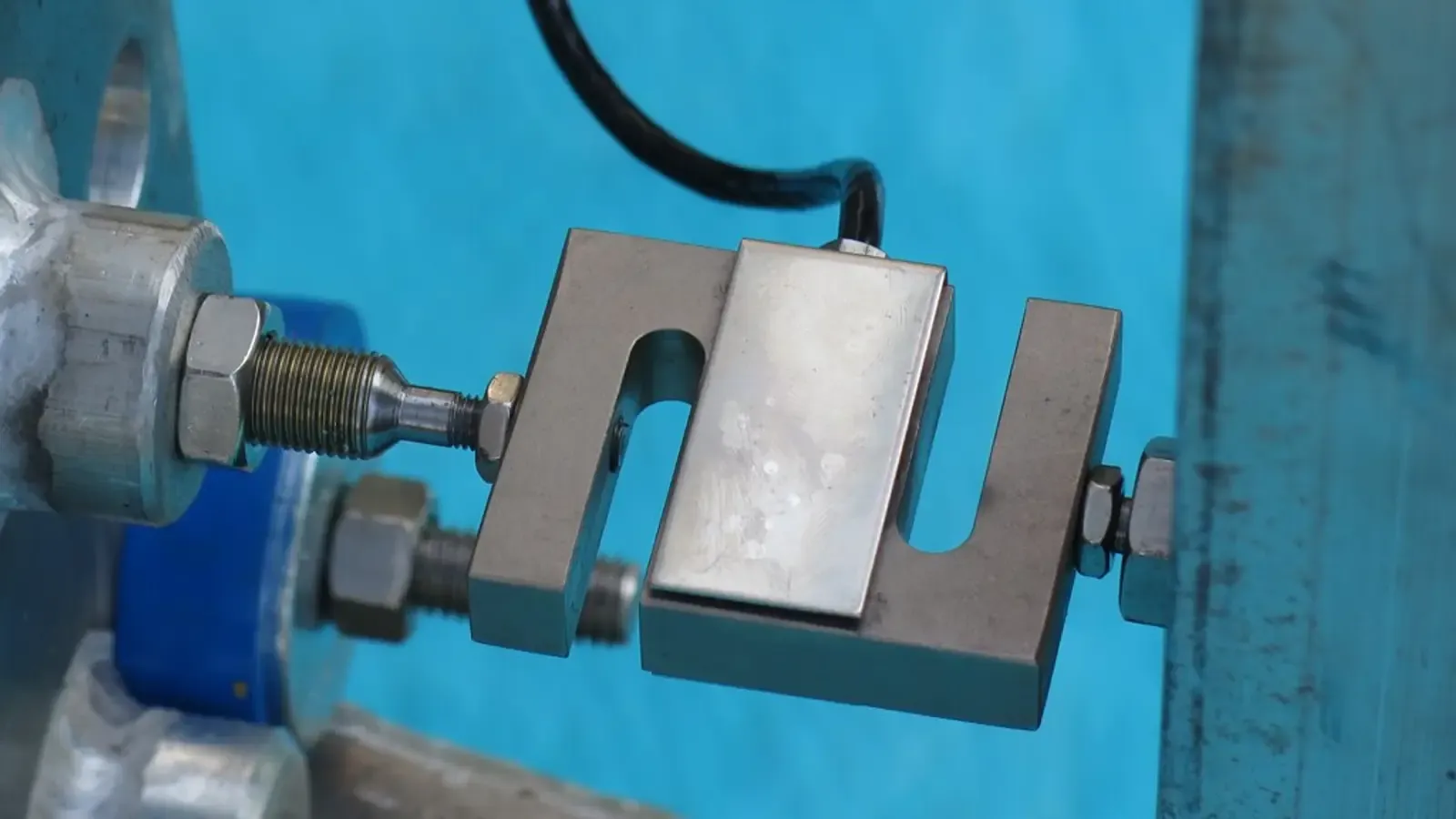
The deck rests on a set of load cells. Each cell carries strain gauges whose electrical signal changes as the metal flexes under weight, and the strain gauge load cell guide explains that step. A junction box joins the signals, and the indicator in the control room shows one figure. Software then stores the weighment and prints the ticket. Cochin Port's specification asks for storage of 5,000 transactions.
Accuracy depends on the step size, known as the verification scale interval or e. OIML R 76, the international recommendation for non-automatic scales, requires 500 to 10,000 intervals in its medium accuracy class III when e is 5 g or more. A 60 t weighbridge that reads in 20 kg steps has 3,000 intervals, which fits. Error limits at each load, and how inspectors test them, are in the weighbridge calibration guide, so they are not repeated here.
Buyers also specify how much abuse the structure must take. Cochin Port's specification calls for 120% overload capacity, 150% ultimate overload capacity and a fully welded deck of 8 mm chequered plate.
Types of weighbridge
Two choices shape a static weighbridge: how it is mounted and what the deck is made of. Systems that weigh a moving vehicle form a separate group.
Pit-mounted weighbridge
The deck sits in a concrete pit, level with the yard, so trucks drive on without a ramp. That suits a tight site with little run-up. The pit needs good drainage, because water and silt gather around the load cells in the monsoon, and cleaning means climbing down into it.
Pitless or surface-mounted weighbridge
The deck stands above ground on a foundation, with a ramp at each end. Cochin Port's 100 t specification asks for entry and exit roads about 4 m wide and about 10 m long on each side, which shows how much yard length this layout uses. Load cells are easier to reach, and rainwater drains away by itself.
Transportable weighbridge
A transportable unit is a steel pitless deck built to be shifted between sites. Cochin Port's notice describes one in hot-dip galvanised mild steel, about 12 x 3 m and rated 100 t. The Assam Legal Metrology department says an instrument dismantled and installed elsewhere may not be used until it is re-verified and stamped, so each move brings a fresh test.
RCC deck and steel deck
Deck material is a separate choice from mounting. An RCC deck is reinforced concrete cast into a steel frame, and it has no top plate to rust. A steel deck arrives ready-made, goes in faster and can be moved later, though a wet or salty yard calls for good paint or galvanising.
Weigh-in-motion systems
A weigh-in-motion system reads a vehicle while it rolls. OIML R 134 gives six accuracy classes for vehicle mass, from 0.2 to 10. Class 0.2 allows ±0.10% at initial verification, and class 2 allows ±1.00%. Speed is the gain, and a static deck gives the tighter limits of OIML R 76.
Rail weighbridges
The same idea serves wagons. OIML R 106 covers automatic rail-weighbridges, which weigh rail vehicles as they roll across.
Weighbridge comparison: quick reference
| Type | Mounting | Site work | Suits | Watch for |
|---|---|---|---|---|
| Pit | Deck level with the yard | Concrete pit and drainage | Tight yards with no ramp space | Water and silt around load cells |
| Pitless | Above ground, ramp at each end | Foundation and approach ramps | Wet sites and easy cleaning | Yard length for the ramps |
| Transportable | Steel deck on a prepared base | Base and approach roads | Sites that shift over time | Re-verification after each move |
| Weigh-in-motion | Set into the roadway | Road works and electronics | Screening vehicles at speed | Accuracy classes 0.2 to 10 |
| Rail | Set into the track | Track works | Wagons at sidings | Separate rules under OIML R 106 |
Weighbridge capacity and deck size
IS 1436 lists standard capacities of 30 t, 40 t, 50 t, 60 t, 80 t, 100 t, 150 t and 200 t, with smaller and larger sizes around them. Start from the heaviest loaded vehicle that will cross. For road trucks, that figure is capped by the Ministry of Road Transport and Highways notification S.O. 3467(E) of July 2018.
| Limit in the notification | Maximum |
|---|---|
| Single axle, four tyres | 11.5 t |
| Tandem axle under 1.8 m apart, rigid vehicle or trailer | 21 t |
| Tri-axle with outer axles under 3 m apart | 27 t |
| Rigid vehicle, gross | 49 t |
| Semi-articulated trailer or truck-trailer, gross | 55 t |
Pneumatic suspension adds 1 t per axle on the three axle lines above, and the gross caps still apply. The notification allows a 5% tolerance on gross vehicle weight. Modular hydraulic trailers carrying indivisible loads sit outside the caps, subject to regulatory approval. Vehicles that stay inside a plant or mine can run heavier, which is one reason NTPC and Cochin Port both specified 100 t.
Length matters as much as tonnes, because all the axles must sit on the deck together. Measure the longest vehicle you expect, then add room to stop. Cochin Port's unit is about 12 m long, so a long articulated rig would overhang it. Ask the supplier for the axle load rating too, since a heavy tandem axle bears on a small part of the deck at one moment.
Legal Metrology and road rules for weighbridges
A weighbridge used for trade has to be verified and stamped, and the inspector does it where the instrument stands. The Rajasthan FAQ lists the static weighbridge among instruments verified in situ, and it requires the certificate to be displayed at the premises. Cochin Port's specification asks the Weights and Measures inspector to check with standard weights and issue a stamping certificate valid for one year.
The Assam department's page sets out the cycle. Re-verification falls due every 12 months. An owner reports to the Legal Metrology officer at least 30 days ahead when the instrument cannot be moved. A repaired instrument stays out of use until it is re-verified and stamped.
A Gazette amendment of 3 July 2026 rewrote the rule on test loads at the place of use. Standard weights must make up at least half of maximum capacity, and any constant load can supply the rest. That share falls to one third when the repeatability error stays within 0.3e, and to one fifth within 0.2e. A 60 t weighbridge that repeats well can therefore be tested with 12 t of standard weights.
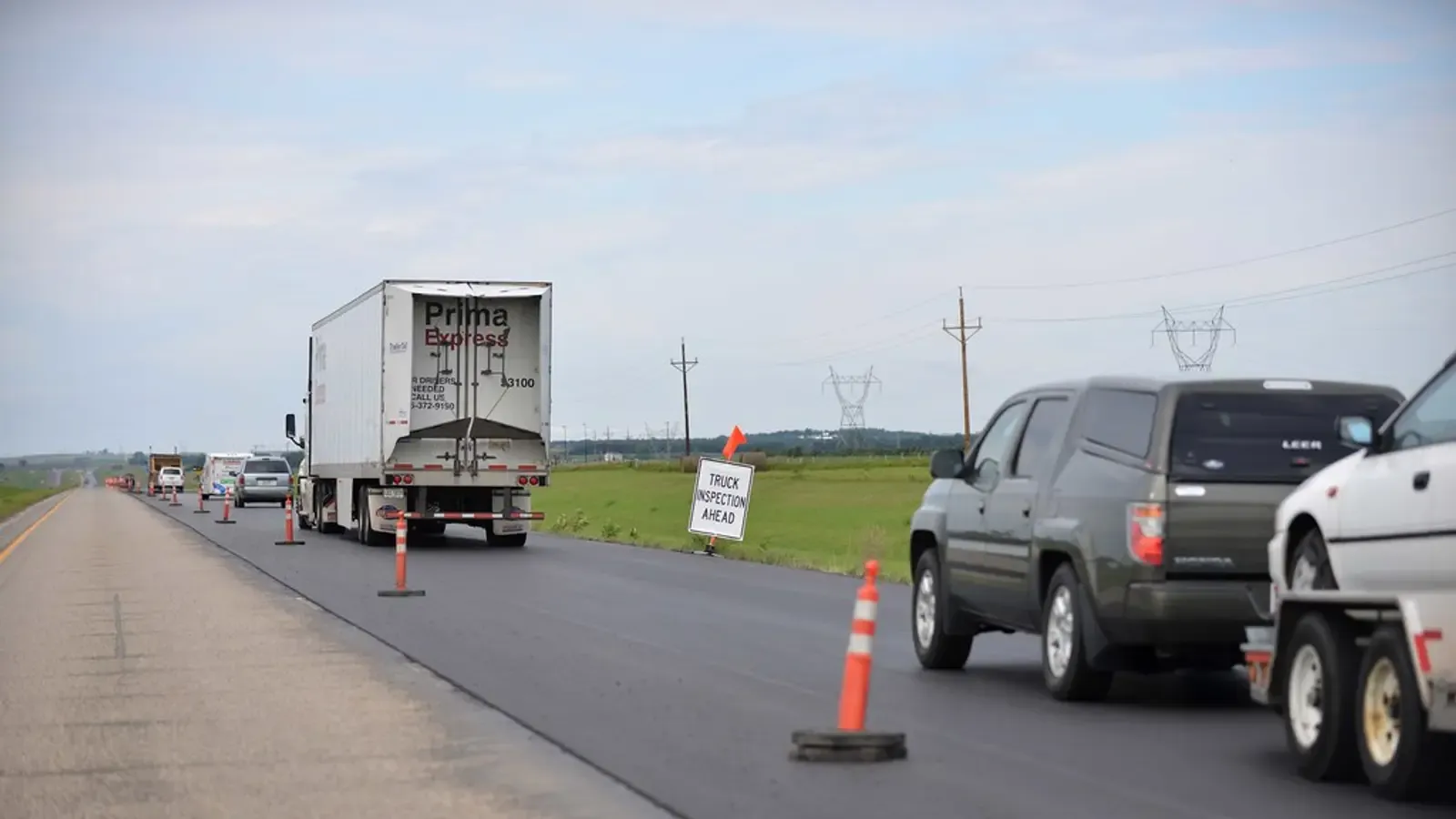
Road law supplies the other reason to weigh. Section 113 of the Motor Vehicles Act, 1988 bars a laden weight above the gross vehicle weight in the registration certificate. Section 114 lets an authorised officer send a goods vehicle to a weighing device within 10 km on its forward route, or within 20 km of its destination. The officer can then order the excess off-loaded. The 2019 amendment set the overloading fine at ₹20,000 plus ₹2,000 per extra tonne.
National Highways added its own fee rule from 15 April 2026, checked November 2026. The Press Information Bureau release sets no overload fee up to 10% excess, twice the base rate above 10% and up to 40%, and four times the base rate above 40%. Certified devices at the fee plaza decide the excess, and a plaza without one levies no overload fee. Payment runs through FASTag, and details go to the national vehicle register.
What a weighbridge costs and why quotes differ
No neutral body publishes a price list, so this post gives what drives a quote in place of a rupee range. A 100 t pitless deck on good ground and a 100 t pit in a wet yard can differ widely once civil work is counted. Tender scopes show what to ask about.
- Capacity and deck length: more tonnes and more metres mean more steel and more load cells.
- Mounting: a pit needs deep civil work, and a pitless deck needs ramps and yard length.
- Approach roads: Cochin Port's scope includes site preparation and entry and exit roads.
- Control room: NTPC's scope includes building one at the site.
- Stamping and upkeep: Cochin Port asks for maintenance rates for years two and three, including stamping and statutory fees.
Operating a weighbridge without disputes
A ticket holds up better when the truck stood on the deck the right way. These habits are ordinary good practice at any dharam kanta.
- Zero first: check the indicator reads zero with the deck empty before each vehicle.
- Whole vehicle on the deck: every axle stays on, with no wheel on the approach.
- Stop fully: apply the handbrake and wait for a stable reading.
- Clean deck: mud and spilled load add weight, and debris in the gap around the deck can spoil the reading.
- Same bridge for both passes: tare on one bridge and gross on another adds two sets of error.
- Full ticket: record vehicle number, material, both weights, date and time.
Where a weighbridge stops and smaller scales take over
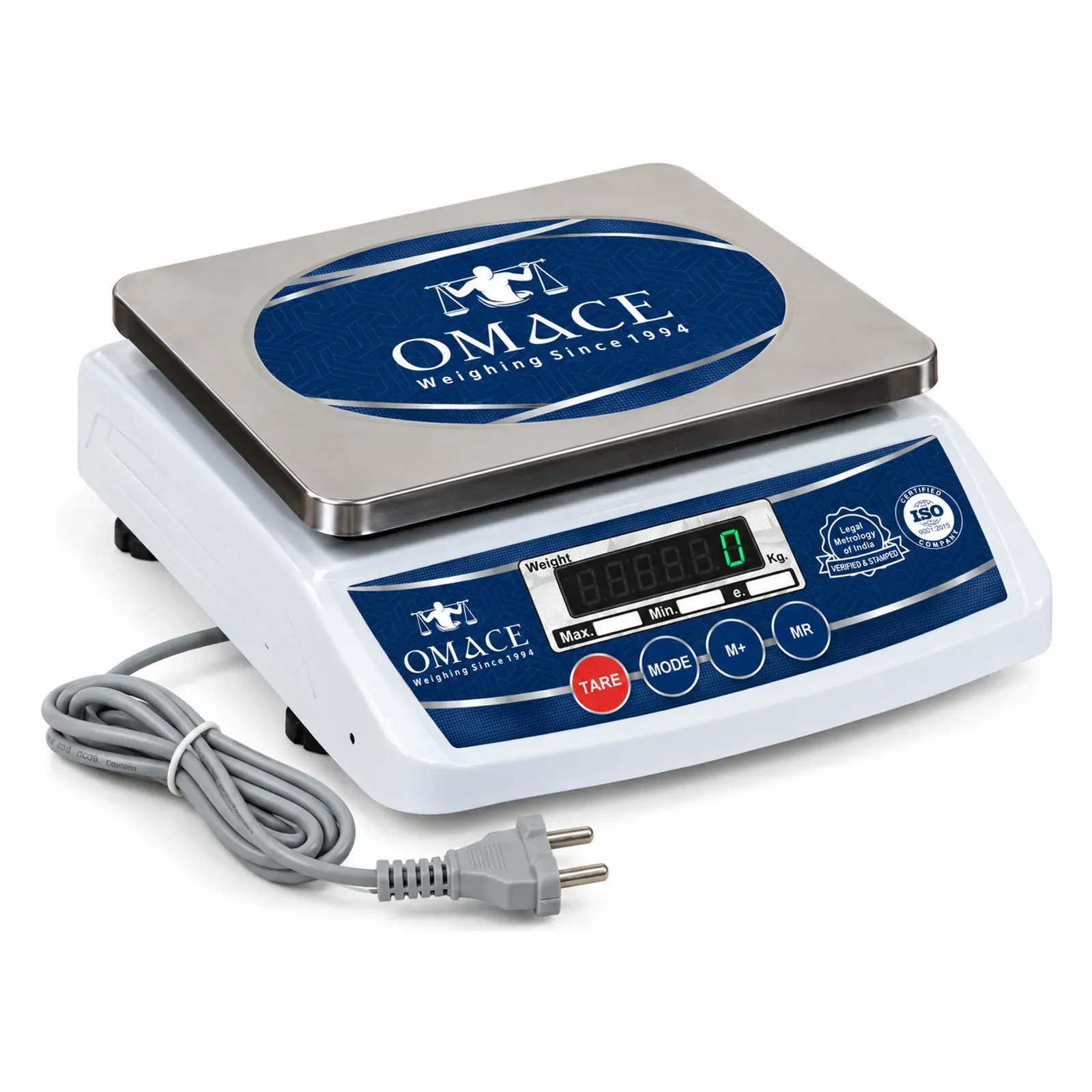
A weighbridge tells you what the whole truck carries. It cannot tell you what each sack, crate or coil weighs, and a dispute over one sack needs a smaller scale. Omace Brands Private Limited does not make or list weighbridges. Its range covers the loads below truck level. A platform weighing scale goes up to 1,000 kg, and OCS crane scales read a hook load from 1 to 50 tonnes, with 40 and 50 t on buyer request. Omace platform and crane scales leave Bagru verified and stamped by Legal Metrology. Weighing a part-load on one before it goes on the truck gives you a second figure to compare with the ticket.
Before you choose or use a weighbridge
Start with the heaviest vehicle and the longest one, then look at the ground. Water close to the surface points toward a pitless deck, and a short yard points toward a pit. Put first verification, stamping and the yearly service contract in the purchase scope, and keep the certificate on display. Overloading rules and Legal Metrology fees change, so recheck both with the fee plaza operator and your state department before you budget.