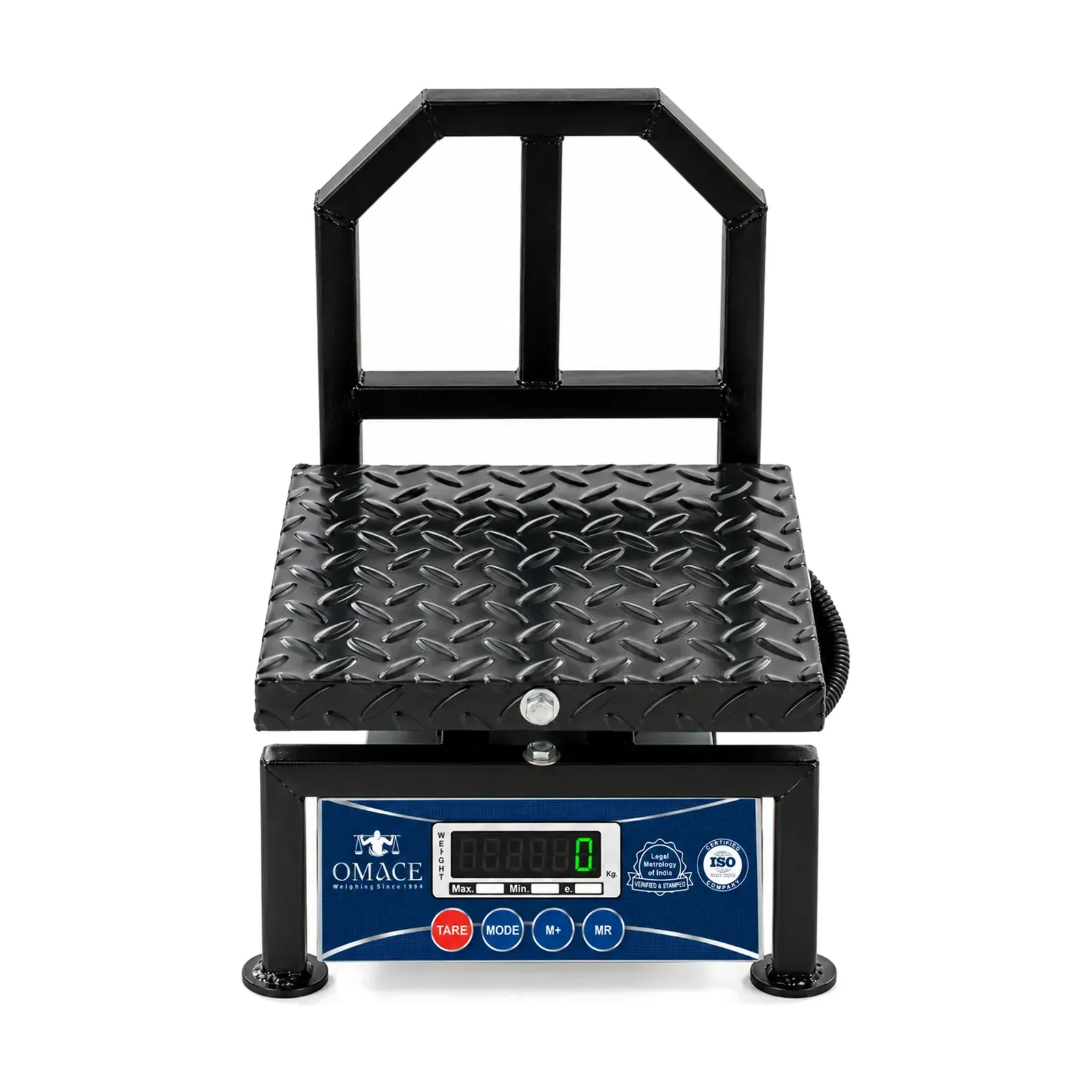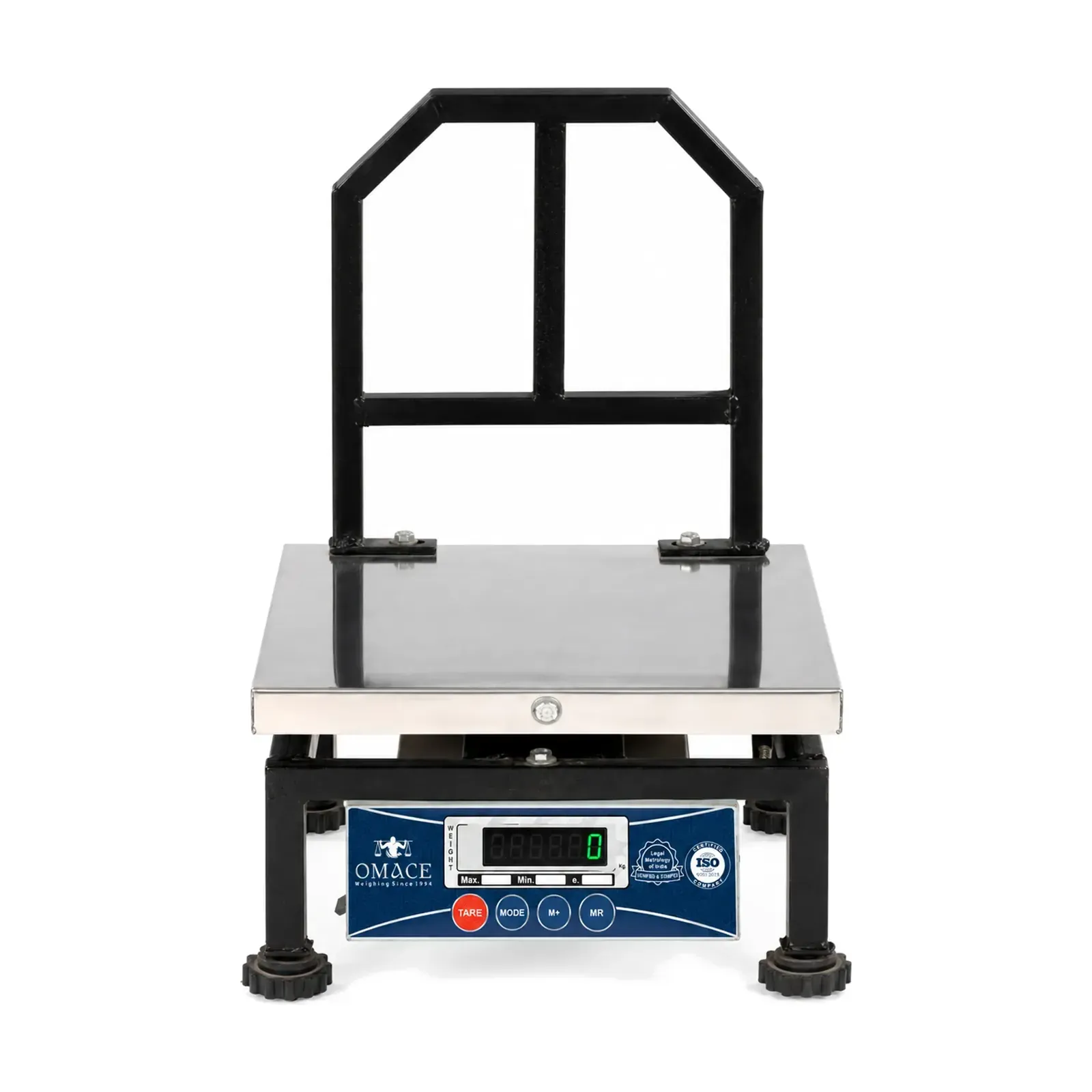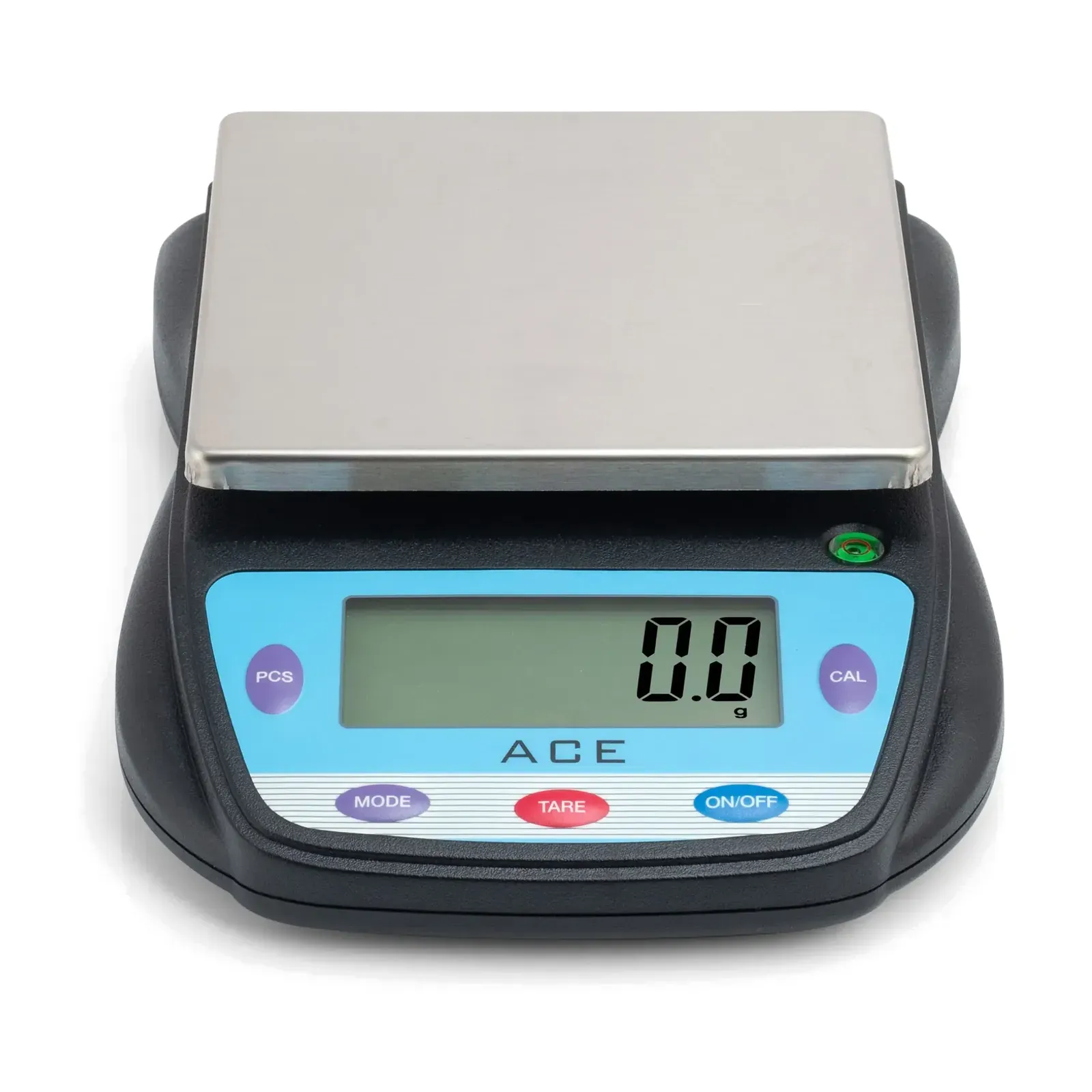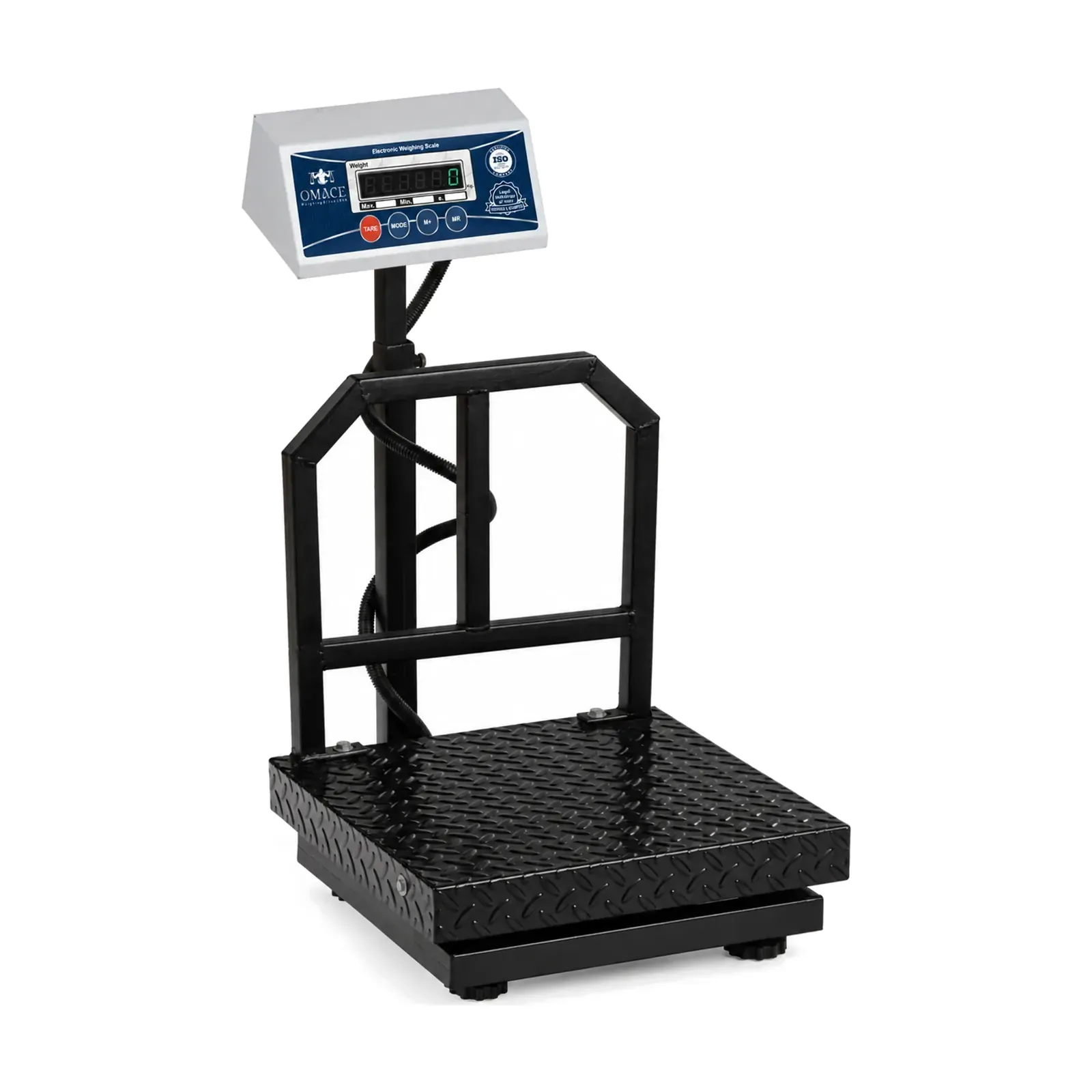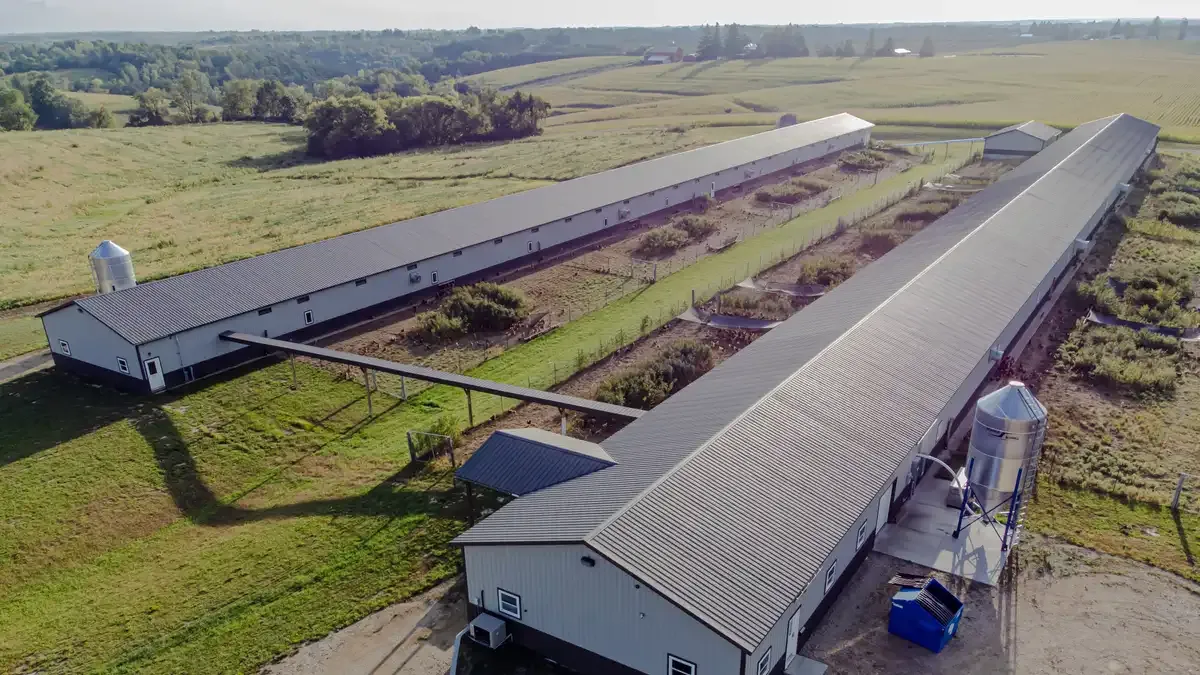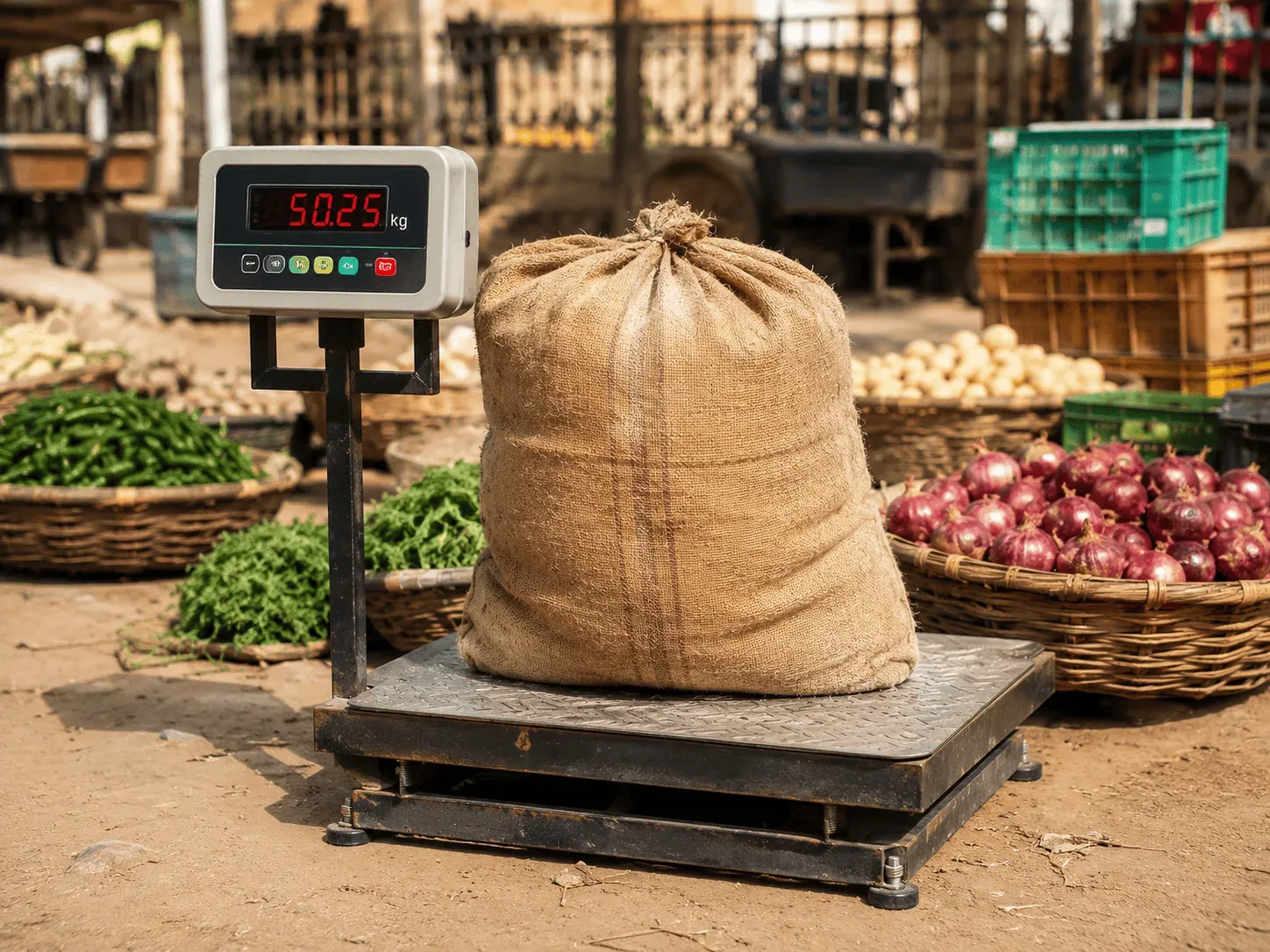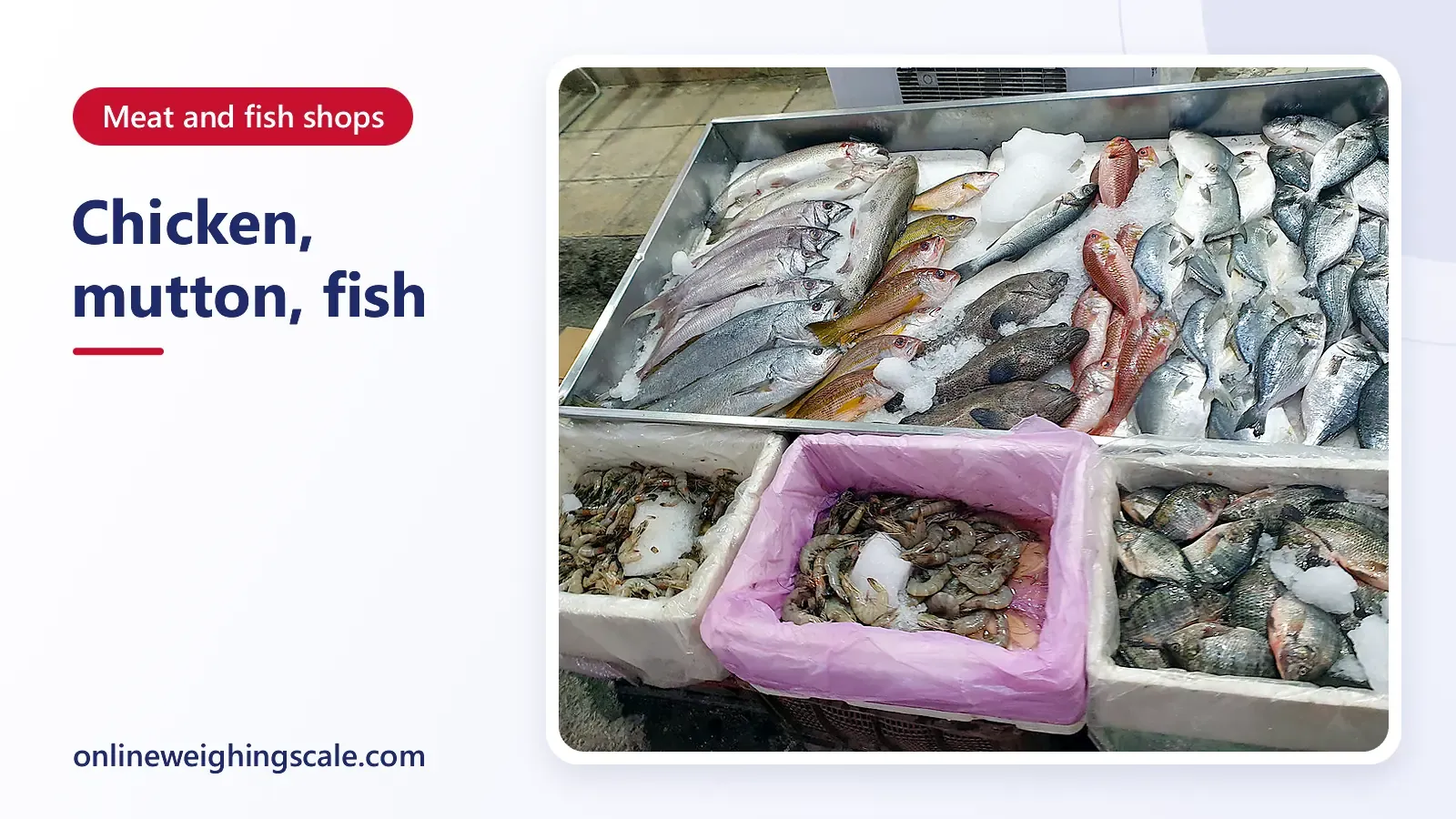
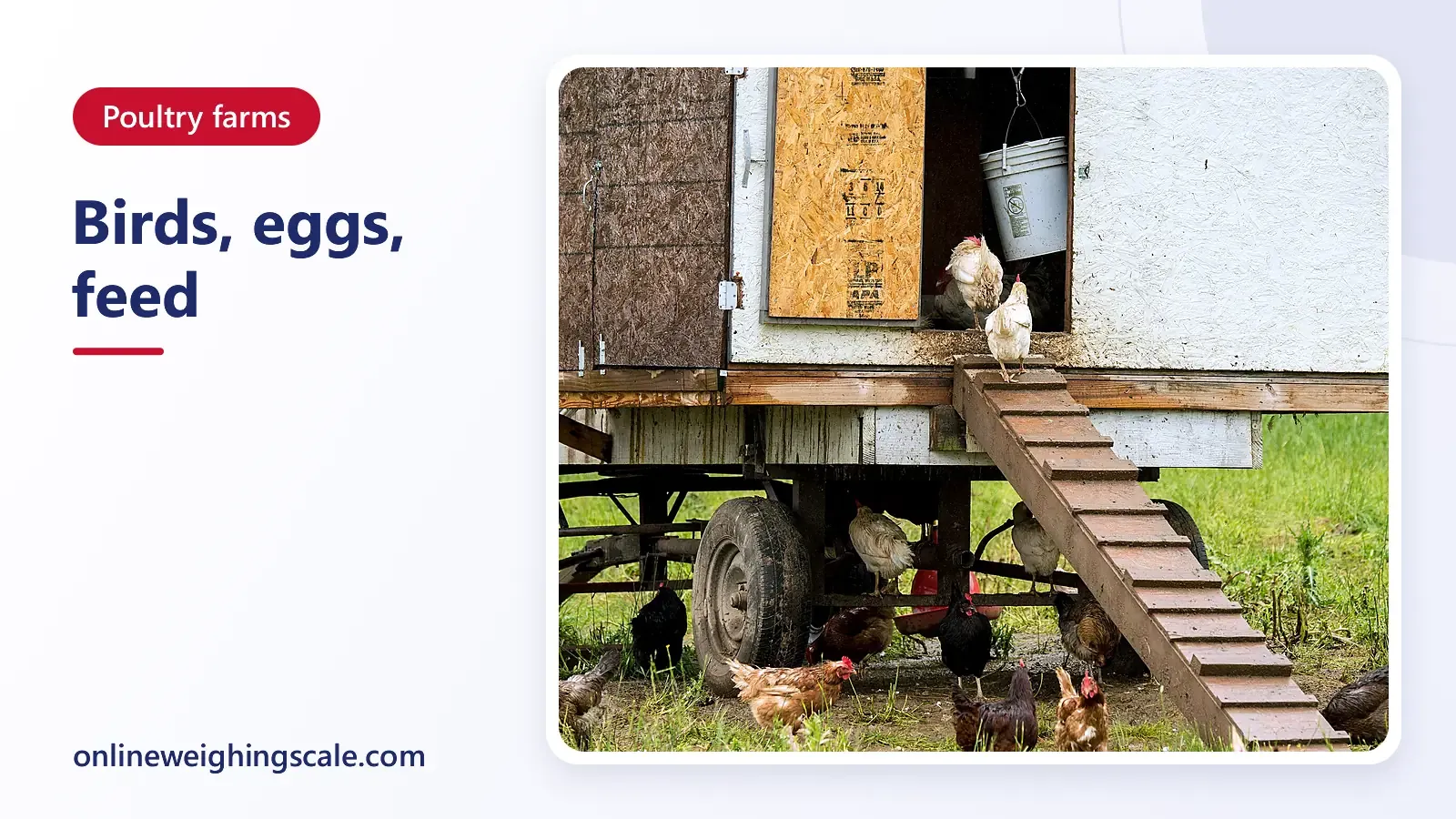
A weighing scale for poultry farm work does four different jobs: sample birds for growth, feed bags, eggs and live birds at sale. Each job needs a different capacity and a different step size, so one scale rarely does all four well.
The sections below take the jobs in the order a flock meets them. Where Omace Brands Private Limited makes a suitable scale, the model and price are named. Where a number comes from a university or a government page, the page is linked.
The four jobs and the scale each one needs
| Job | Typical load | What to look for |
|---|---|---|
| Growth sampling of chicks and birds | Grams to a few kilograms | Small steps, tare, a crate or cone |
| Feed bags and medicine drums | 25 to 100 kg | Platform scale, stable base |
| Eggs by tray or by grade | 40 to 70 g each | 0.1 g or finer steps |
| Live birds sold by weight | Many birds in a crate | Stamped scale, 60 kg or more |
The step size is the smallest change the display shows. A scale that moves in 50 g steps is fine for a sack of feed and useless for an egg. Match the step to the load before you look at price.
Weighing sample birds to track growth
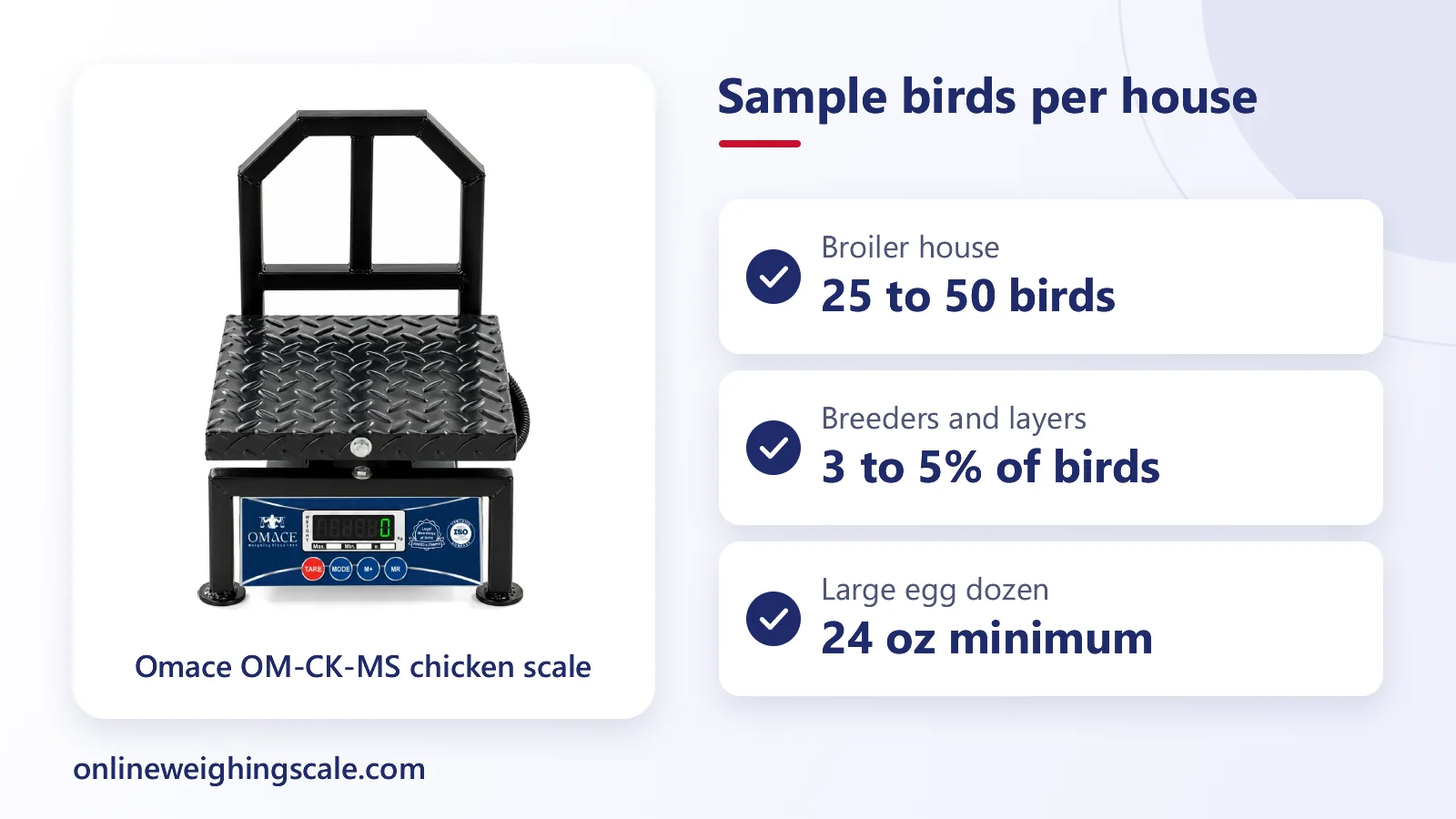
The University of Florida extension service advises weighing 25 to 50 birds in a broiler house, depending on the size of the house, and 3 to 5 percent of the birds in breeders and layers (University of Florida IFAS Extension, data collection for poultry integrations). The same page tells farmers to catch birds from various parts of the house and to weigh every bird caught.
That last point is the one most farms miss. The extension note says farmers tend to weigh the better-looking birds and let the runts escape, and that this slants the result. If you weigh only the birds that walk toward you, your average comes out too high and you will think the flock is ahead of its target.
For the first three to four weeks the same page suggests digital scales and gram-based readings, not scales marked in pounds. Chicks are light, so a coarse scale hides a day's gain. A scale that reads in 0.1 g steps up to 6 kg is the right class of instrument for a tray of chicks.
A practical routine looks like this:
- Weigh on the same day of the week and at the same hour, before feeding, so crop fill does not change the number.
- Place an empty crate or cone on the pan and press TARE so the display shows zero.
- Put the birds in one at a time, or in small batches of a known count, and note the weight each time.
- Divide the total by the number of birds to get the average, and write it in the same notebook every week.
For this work, Omace Brands Private Limited lists the Ace KB-6000 weighing scale at ₹2729. It reads 6 kg in 0.1 g steps, or 600 g in 0.01 g steps. The Ace KN 10 kg weighing scale at ₹4199 reads 10 kg in 0.5 g steps, or 6 kg in 0.1 g steps, which suits a larger crate of grown birds. Both have a tare key and a backlit display, which helps in a dim shed.
Weighing feed bags and drums
Feed is the largest cost on most poultry farms, so a bag that is a kilogram short matters over a season. A platform scale with a digital indicator lets you check bags when they arrive and weigh out a measured batch for each shed.
The Omace Om-PS-MS platform kanta covers 100 kg to 500 kg and is priced from ₹6300 for the 100 kg model, which reads in 10 g steps on a 400 x 400 mm platform and has a built-in battery backup of about 2 days. It stands on the floor, so a loaded bag can be rolled on with a trolley and no one has to lift it. Platform scales are compulsory to stamp for trade use, and Omace platform scales leave Bagru verified and stamped by Legal Metrology. For the legal side of that, see Legal Metrology in India. The Jan Vishwas (Amendment of Provisions) Act, 2026 revised the penalty amounts under the Legal Metrology Act, 2009 and added improvement notices from 1 May 2026, so ask the state office for the current figure.
Weighing eggs: tray, dozen and grade
Eggs are sold by count, but they are sorted by weight. The United States Department of Agriculture grading manual sets its weight classes as a minimum net weight per dozen: 30 ounces for Jumbo, 27 for Extra Large, 24 for Large, 21 for Medium, 18 for Small and 15 for Peewee (USDA Egg-Grading Manual, Agricultural Handbook 75). In grams, a Large dozen must weigh at least about 680 g, or roughly 57 g an egg on average. That conversion is plain arithmetic at 28.35 g to the ounce.
The grams for an Indian egg grade are a different matter. Indian marketing rules grade eggs under the AGMARK mark, but the weight bands could not be confirmed on an official page for this post, so none are quoted here. If you sell graded eggs, take the current bands from the Directorate of Marketing and Inspection, not from a trader's chart.
What the USDA table does show is how a scale should be used. Weigh a dozen on a scale that reads to a gram, and compare the total with the class you are packing. A scale that reads in 0.1 g steps is better for single eggs when you want to see how the flock's egg size drifts with age.
- Weigh a sample of 30 eggs from each shed on the same day each week.
- Wipe the pan between trays, because a smear of shell dust adds to the reading.
- Keep the scale out of fans and open doors, since air movement makes the last digit jump.
Selling live birds by weight
When birds are sold by the kilogram, the scale is a trade instrument and the buyer has a right to a correct reading. The Omace chicken scale line, part of the weighing machine for shop range, is built for this: a platform with a double-side indicator, so the farmer and the buyer both see the number. The Omace Om-CK-MS chicken weighing scale has a mild steel chequered platform and covers 60 kg to 300 kg at ₹4095. The Om-CK-SS poultry weighing scale has a stainless steel platform in the same range, also at ₹4095, and is easier to wash down. Both read in 5 g steps at 60 kg on the 250 and 300 mm platforms, 10 g steps at 100 kg and 200 kg, and 20 g steps at 300 kg on the 600 mm platform, with six platform sizes from 250 x 250 mm to 600 x 600 mm. A built-in battery gives about 2 days of backup, and the smallest weight is 100 g, so these scales are for live birds and crates and not for chicks or eggs.
Both leave Bagru verified and stamped by Legal Metrology, and the stamp is valid across India. A cage or crate on a platform scale is weighed twice, once with birds and once empty, or the empty crate is set to zero with the tare key. Check the empty-crate reading each morning, because wet droppings dried on the platform add weight.
Calibration for these scales has its own post, Chicken scale calibration for shops, farms and mandis, so the steps are not repeated here. In short, a stamped trade scale is sealed, and a registered repairer recalibrates it.
Hanging scales and the wrong tool for chicks
A hanging scale looks handy for a poultry shed, since a cone or sling can hang from the hook. The catch is capacity. Most hanging scales are made for loads of 25 kg and above, and the steps are coarse. The Venus CHS mechanical hanging scale at ₹939 is rated 25 to 200 kg, which suits a sack or a calf, not a chick. For birds under a few kilograms, choose a bench scale with fine steps instead. The hanging scale range is the better fit for feed sacks, culled stock and heavier livestock.
Keeping a farm scale accurate
A poultry shed is hard on a scale. Dust, damp, ammonia and heat all affect a load cell over time. A few habits keep the readings honest:
- Keep the scale on a flat, firm surface, not on a wooden crate that flexes.
- Cover the display when the shed is washed.
- Check against a known weight, such as a sealed 1 kg pack, once a month.
- On Omace digital scales a long press of TARE opens calibration mode on some models and a long press of the M key on others, and the manual for each model shows which, so a home-grade check can be done at the farm.
Omace Brands Private Limited repairs its commercial scales when the buyer asks. The buyer pays the shipping both ways and the repair cost, and spare parts depend on availability, so write to Contact Us before you send the scale.
If you are still planning the farm itself, see Poultry farming in India and Poultry farm business plan for housing, costs and break-even.
Which scale to buy first
A new farm can start with two scales. A bench scale with 0.1 g steps handles chicks, eggs and medicine. A stamped platform or chicken scale handles feed and live-bird sales. A third scale is worth adding only when two people need to weigh at once.
Omace Brands Private Limited has made scales at Bagru, Jaipur since 1994, and every scale is checked with certified test weights before dispatch. See About Omace for the company and Omace certificates for its ISO and compliance papers.