A weighing scale for a meat shop works in wet, salty and greasy conditions all day. The right one has a washable pan, a capacity above your heaviest lot and a Legal Metrology stamp. Omace Brands Private Limited makes two chicken scales for this work, each listed at ₹4095, in 60 kg to 300 kg floor sizes.
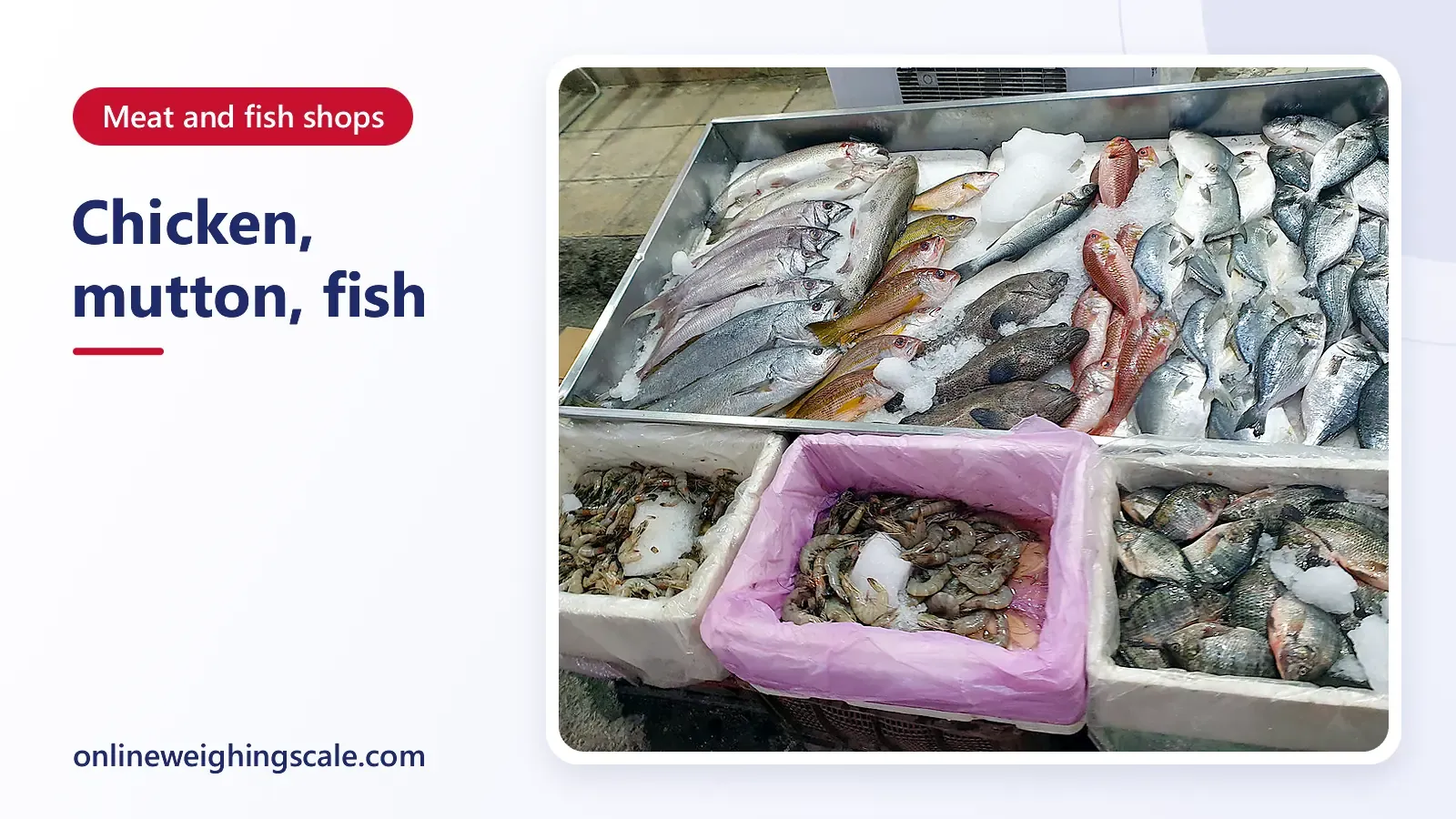
The same checklist suits a mutton counter and a fish stall, with a few changes for each. This guide goes through the choices in the order a shop owner meets them: the pan material, capacity, how the scale is mounted, live birds, cleaning, the verification stamp and the hygiene rules around the counter.
Why a meat shop scale is different from a kirana scale
A kirana scale weighs dry rice and dal. A meat or fish scale weighs wet, heavy and sticky goods, and gets washed with water several times a day. Blood, brine and fish scales drip into the pan and the edges. Salt is the worst part, because it slowly eats mild steel and works into the joints around the pan.
Three things follow from this. The pan should be easy to wipe and hose down. The display and electronics should stay clear of the splash zone. And the scale should hold its zero after being cleaned, so that the first customer of the morning is not weighed on a drifted reading.
Pan material: stainless steel or mild steel
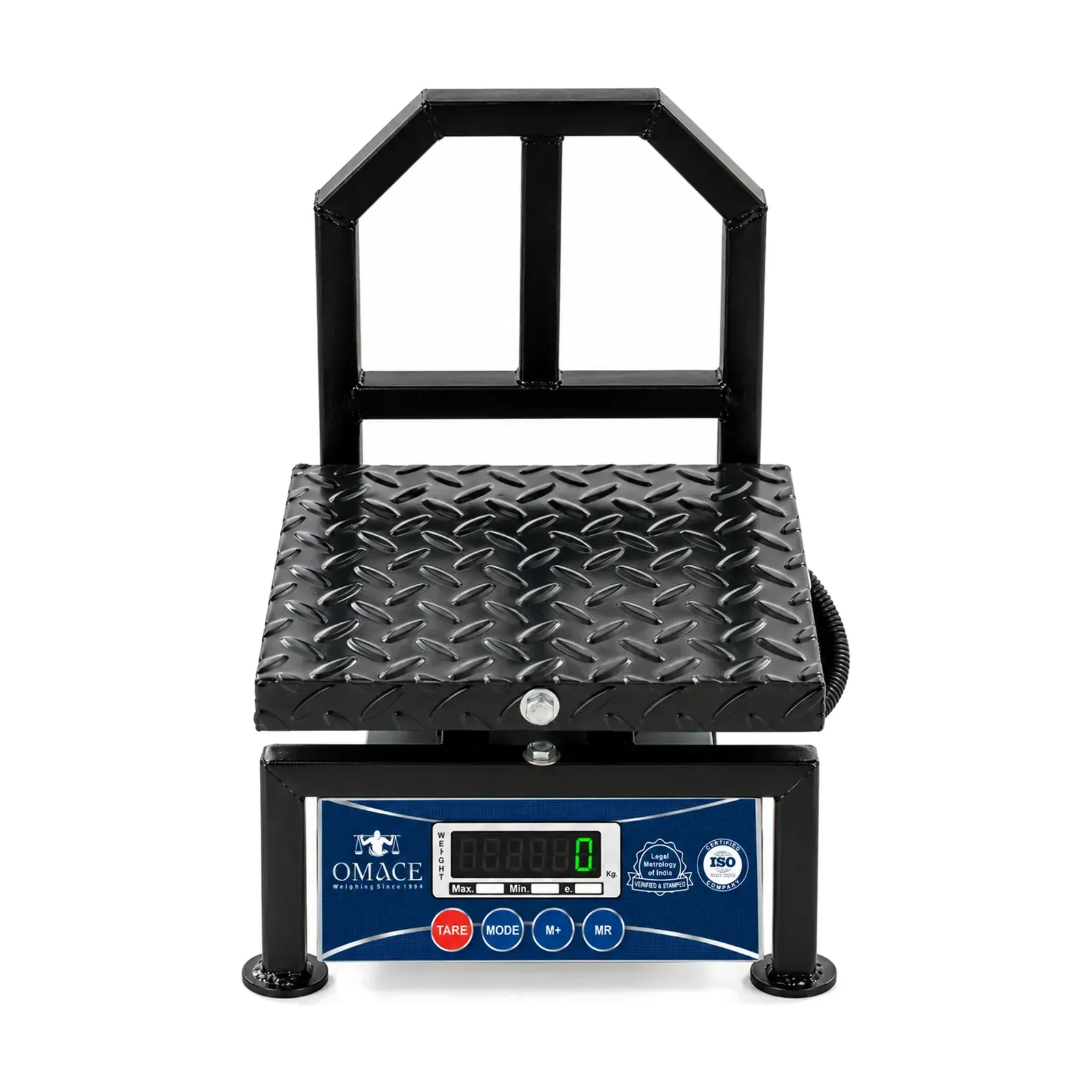
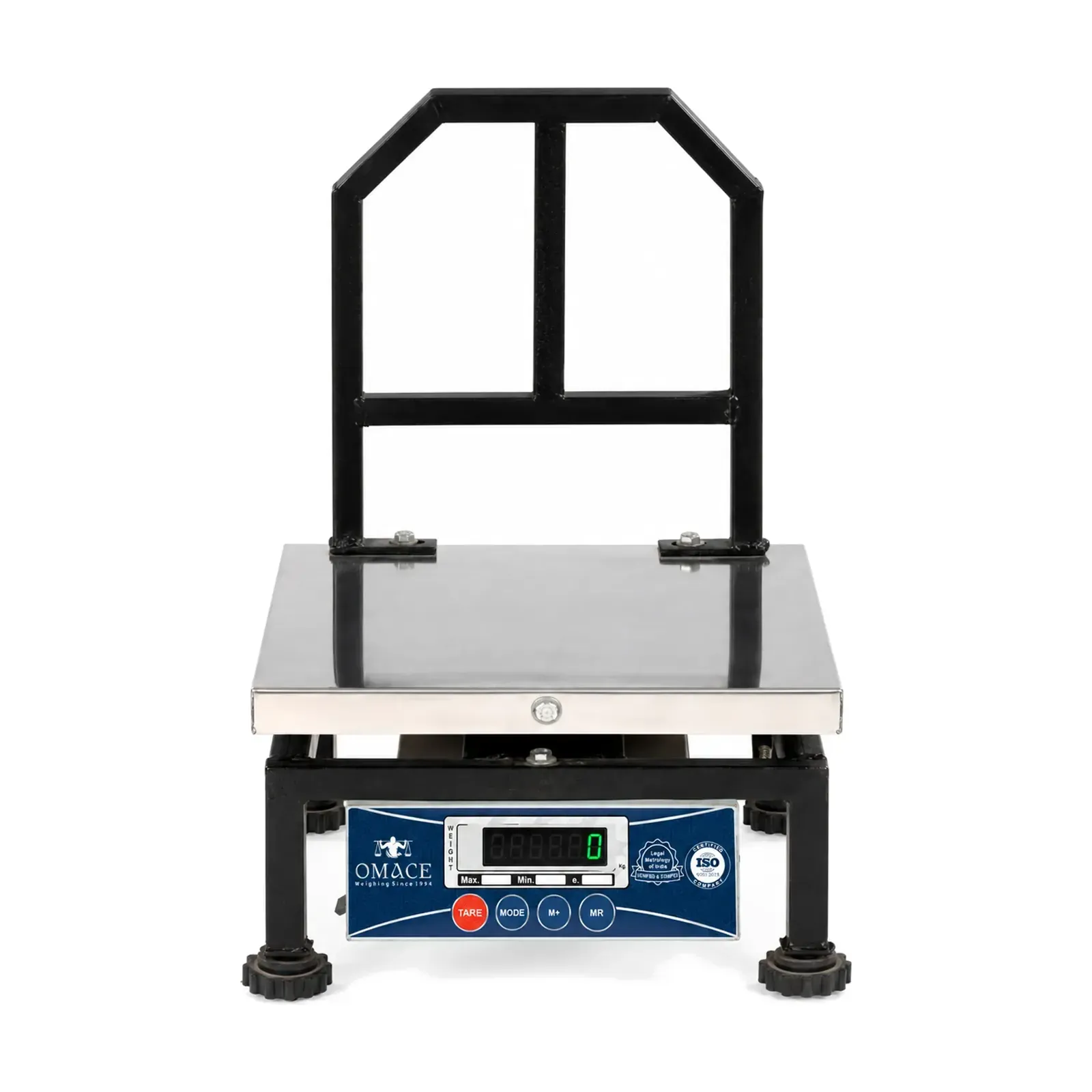
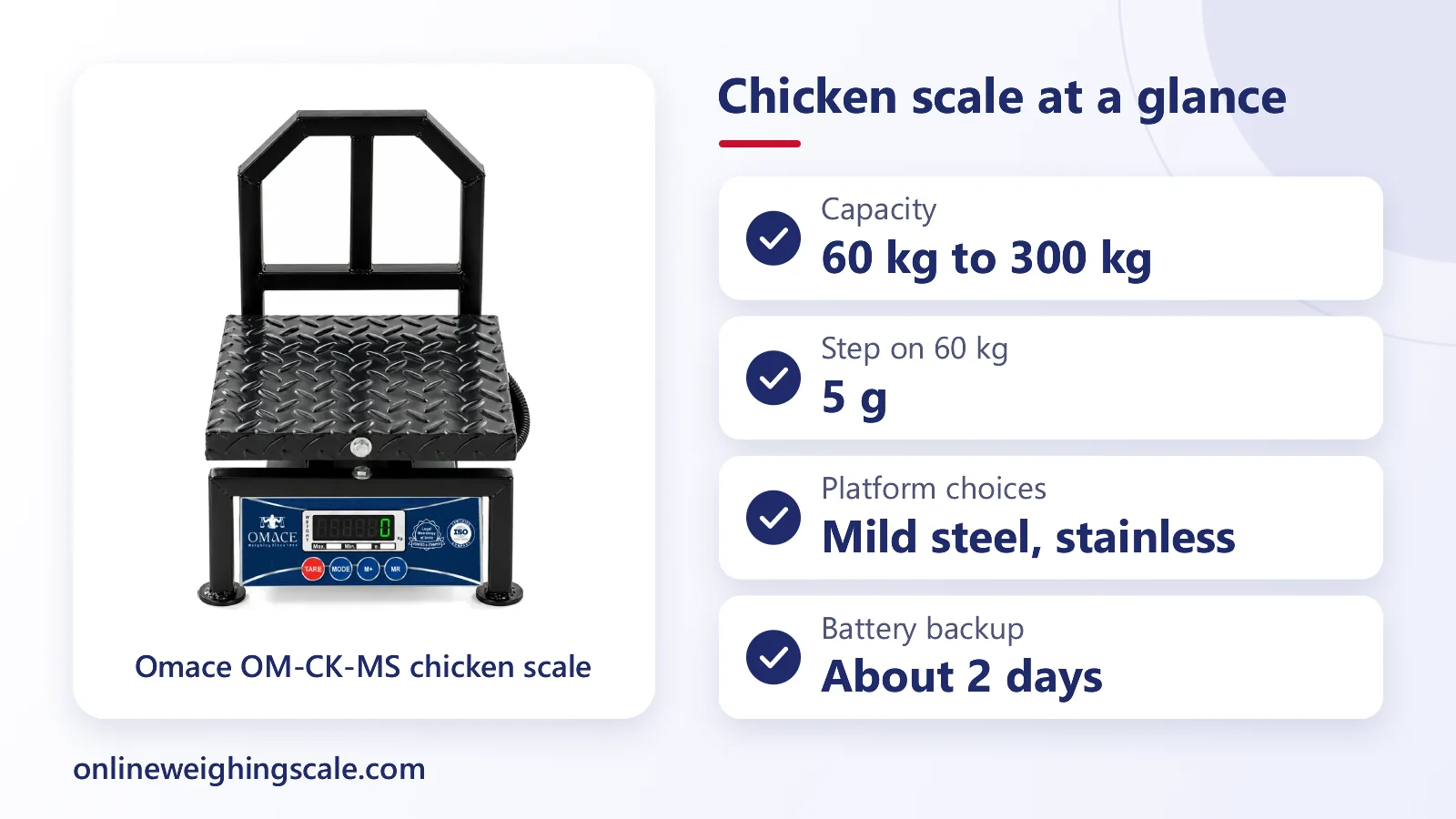
Omace Brands Private Limited sells the same 60 kg to 300 kg chicken scale with two platform choices. The Omace Om-CK-MS chicken weighing scale has a mild steel chequered platform. The Omace Om-CK-SS poultry weighing scale has a stainless steel platform. Each is listed at ₹4095, so the choice is about the work, not the price. Both read in 5 g steps at 60 kg on the smaller 250 and 300 mm platforms, 10 g steps at 100 kg and 200 kg, and 20 g steps at 300 kg on the 600 mm platform, with six platform sizes from 250 x 250 mm to 600 x 600 mm. A built-in battery gives about 2 days of backup through power cuts, and the smallest weight is 100 g.
Stainless steel suits fish stalls, mutton counters where meat is weighed directly on the pan, and any shop that washes the platform with water and salt-laden cuts every day. A chequered mild steel platform grips a crate or cage well and takes knocks from heavy lots, which suits a wholesale chicken shop where birds come in cages. Mild steel needs a dry wipe after washing and a look at the edges once a week, because rust starts where paint or coating wears off.
Meat that touches the pan directly is better weighed in a tray or on a food-safe sheet in any case. That keeps the pan clean and lets you tare the tray's weight away.
Capacity and division: pick for your heaviest lot
Capacity is the most the scale can weigh. Division is the smallest step it shows. A 60 kg to 300 kg chicken scale is built for crates and cages, not for 250 g of fish. Work out your heaviest single lot, add a margin of about a fifth, and pick the capacity above that. A scale loaded to its limit every day wears faster and drifts sooner.
Here is an example that shows why division matters. If chicken sells at ₹200 a kilo and the scale rounds every sale by 20 g in the customer's favour, you give away ₹4 on each kilo. On 100 kg sold in a day that is ₹400, which is more than the price difference between a good scale and a poor one within a few weeks. The figures are an illustration, not a measured result.
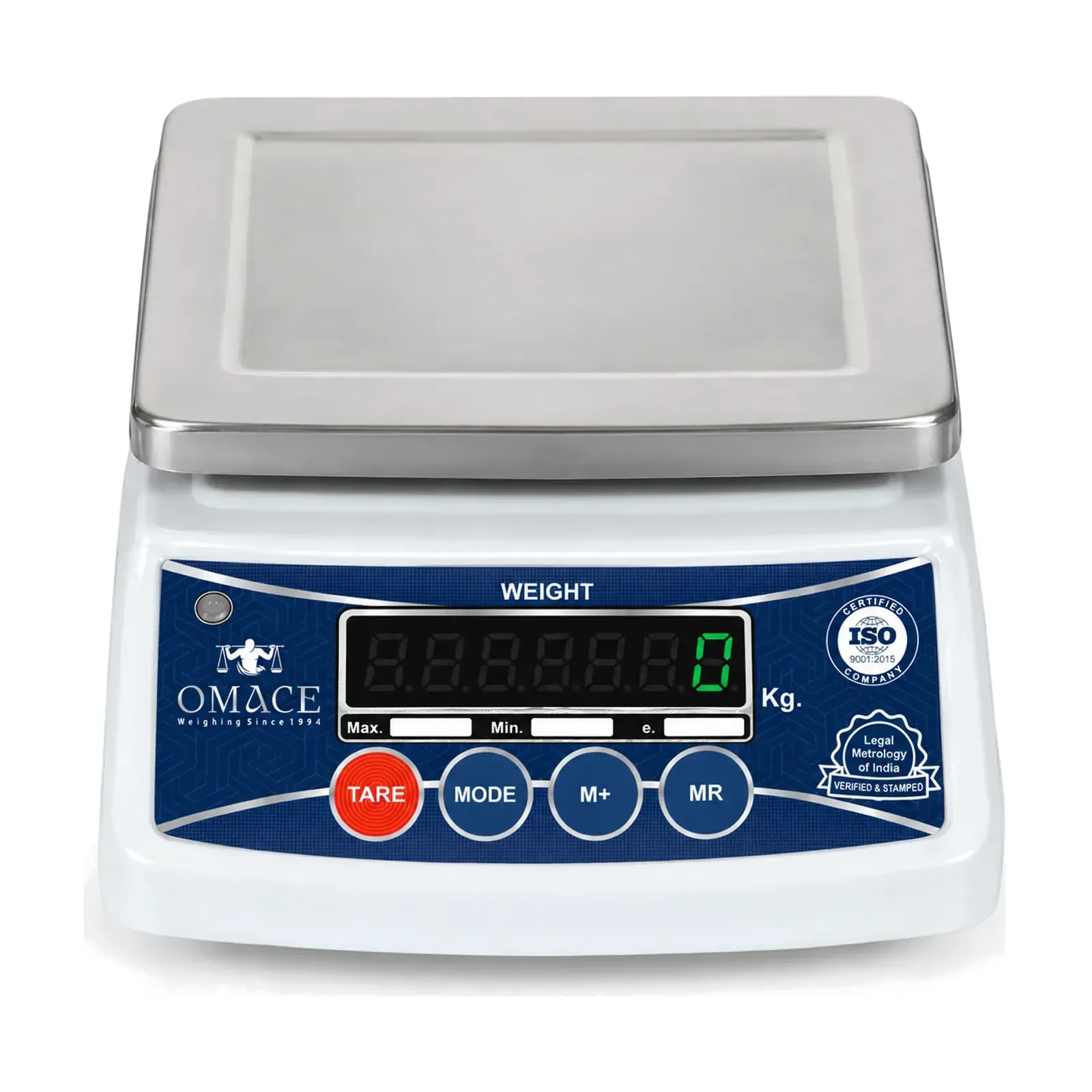
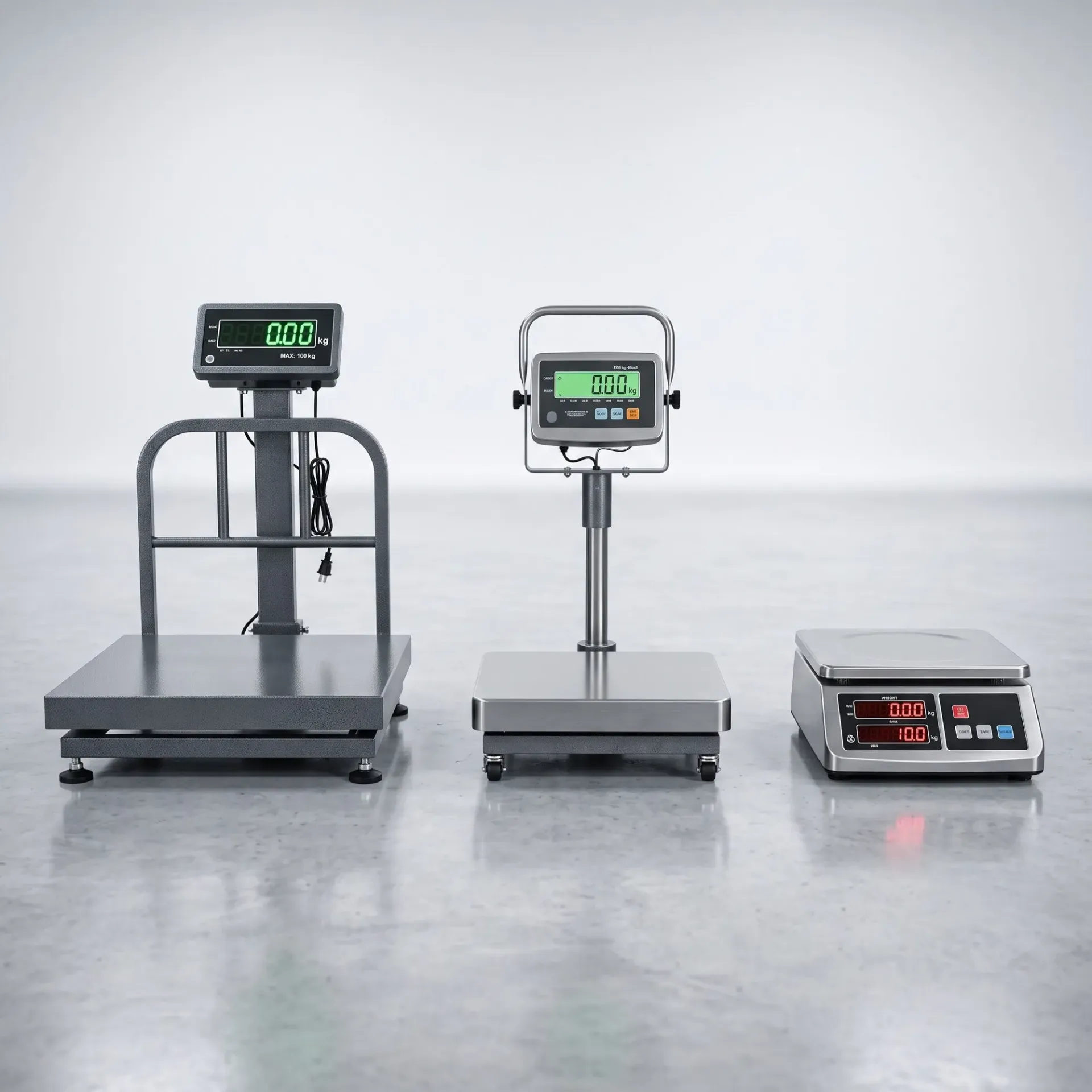
For small cuts, such as 250 g of mutton keema or a few pieces of pomfret, a small table-top scale is a better tool than a heavy platform. The Om-TT shop scales are made for counter work, with a display on both sides or a pole display so that the customer sees the weight. They are accuracy class III and weigh only: they do not compute price. The Om-TT-Running SPR, for example, reads 30 kg in 5 g steps on a 240 x 300 mm stainless steel pan with a battery backup of about 2 days. Many shops keep a platform scale at the back for bulk and a counter scale at the front for retail.
Table-top, platform or hanging
A table-top scale sits on the counter and weighs what you place on its pan. It is the natural choice for retail cuts, fish and packed items.
A platform scale sits on the floor. You roll or lift a crate, tub or cage onto it. Chicken scales of 60 kg to 300 kg belong here. They save your back, because a full cage never has to be lifted to a counter.
A hanging scale suspends the load from a hook. Some butchers hang a carcass or a side of goat on a hook and weigh it that way. Every hanging scale in the Omace range is listed under hanging weighing scales, and the choice between mechanical and digital is covered in the guide to choosing a hanging scale. A hanging scale suits whole carcasses, but a load that swings gives an unsteady reading, so let it settle before you note the figure. A hook near a wet floor also needs cleaning more often than a platform.
Weighing live birds with a cage and tare
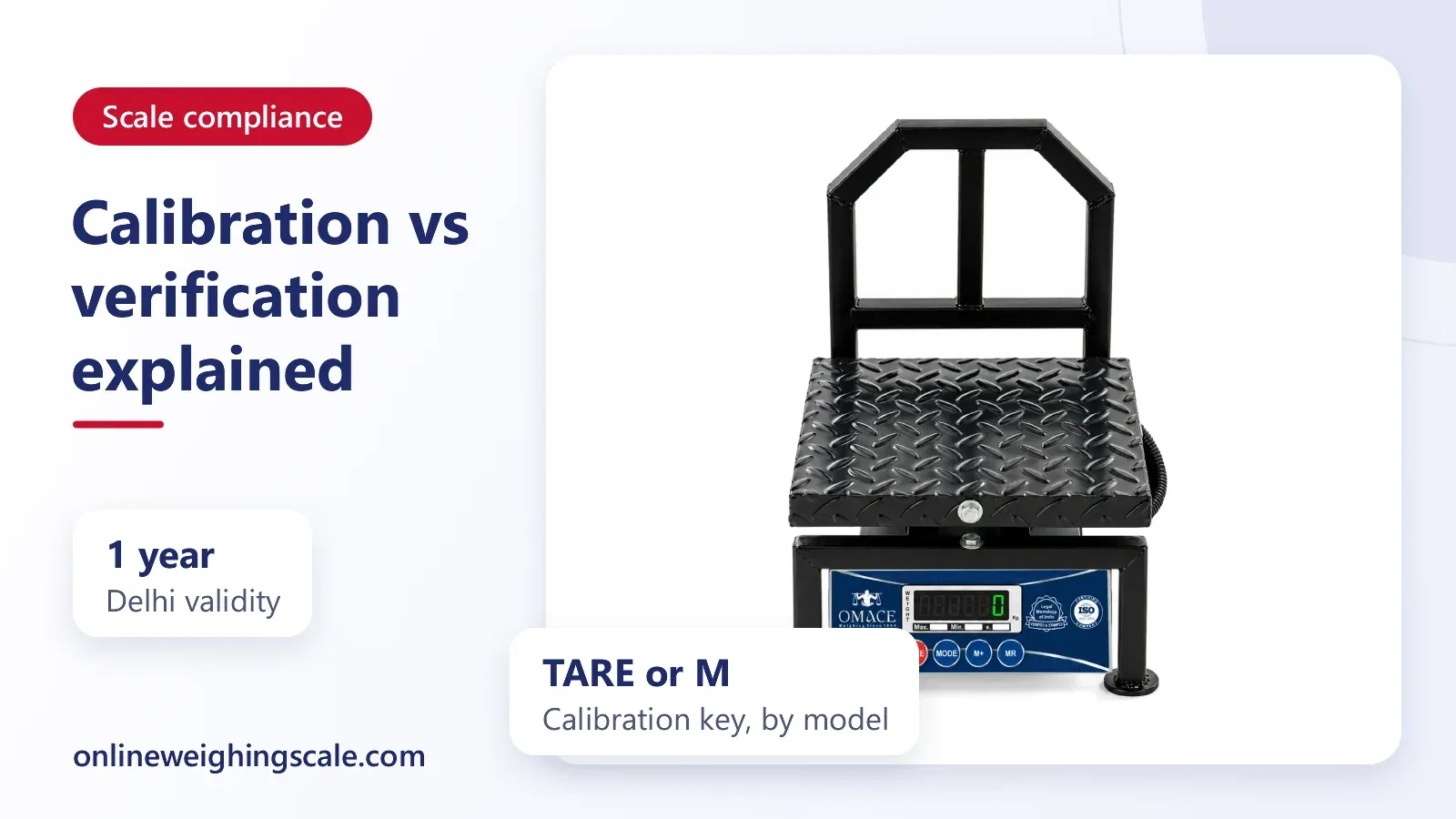
Live chickens move, and that makes the reading flicker. The usual method is to put an empty cage or crate on the platform, press TARE to bring the display to zero, then load the birds and wait for the number to settle. The scale then shows the weight of the birds alone.
Close the cage door before you read. Wait a few seconds, because wings and feet shift the load. Weigh each lot on the same spot of the platform, so that the reading does not depend on where the cage stood. If a reading keeps jumping, check that the platform sits level and that nothing is touching the frame. The post on chicken scale calibration for shops, farms and mandis explains how to test the scale with known weights.
Keeping the scale clean and working
Wipe the pan after every few customers, and wash it at the end of the day. Dry it before you switch the scale on again. Keep the display, the cable joints and the charging port out of direct water spray. Treat the electronics as splash-sensitive and keep water away from them. To learn what a protection rating on a scale means, and why you should ask any seller for it in writing, read the post on IP rating of a weighing scale.
A few habits extend the life of a wet-area scale:
- Keep the scale level. A scale resting on one wet, uneven corner reads differently.
- Do not stack crates and bones on the pan between sales.
- Charge the battery on a dry shelf, away from the wash area.
- Check the zero with an empty pan every morning. If it shows a number, press zero or TARE with nothing on it.
- Look under the pan for salt crust once a week and wipe it off.
If a scale reads wrong after wet-area use, the post on a weighing scale not working lists the common causes. Omace Brands Private Limited also repairs its commercial scales when the buyer asks. The buyer pays the shipping both ways and the repair cost, and spare parts depend on availability, so ask first through the contact page.
The verification stamp: why a shop scale needs it
A scale used to sell by weight is a trade instrument, and in India trade instruments are covered by the Legal Metrology Act, 2009. The Act deals with the verification and stamping of weighing instruments. The Jan Vishwas (Amendment of Provisions) Act, 2026 revised its penalty amounts and added improvement notices, and a notification of 27 April 2026 brought those changes into force on 1 May 2026. Ask your local Legal Metrology office for the current penalty before relying on a figure. The General Rules amendment of 18 December 2025 also sets a verification period of twenty-four months for weights, beam scales and counter machines, so ask the office which category your scale falls in.
Omace shop, platform and chicken scales leave the Bagru factory verified and stamped by Legal Metrology, and the stamp is valid across India. Every scale is also checked with certified test weights before dispatch. See how scales are tested before dispatch for the process. The stamp is checked again from time to time by an inspector, and a registered repairer has to reseal the scale after any repair that touches the calibration. If a stamped scale is calibrated by an unregistered person, the stamp stops meaning anything, so do not open the sealed settings yourself.
For the cost of stamping and the full legal picture, the posts on weighing scale stamping charges and legal metrology in India cover it in detail.
Hygiene rules at the meat counter
Meat and fish shops are food businesses, and food businesses fall under the Food Safety and Standards Authority of India. Schedule 4 of the FSSAI licensing and registration regulations sets hygiene and sanitary requirements for retail meat shops. One clause covers the scale: the weighing scales used shall be of a type that avoids unnecessary handling and contamination, and the pan of the scale shall be made of stainless steel or nickel coated. Ask your local FSSAI office which conditions apply to your shop.
For the scale, the practical point is simple. Because of that clause, stainless steel is the safer choice where meat or fish meets the pan, and a clean tray on any pan keeps the weighing hygienic. This section is general information about the rules and not legal advice, and the licence conditions for your shop are decided by FSSAI.
A buying checklist for a meat or fish shop
| Question | What to look for |
|---|---|
| What touches the pan? | Direct meat or fish: stainless steel pan or a tray. Crates and cages: chequered platform |
| Heaviest single lot? | Pick capacity about a fifth above it |
| Retail cuts? | Table-top scale with a front display for the customer |
| Live birds? | Platform scale, tare the cage, wait for a steady reading |
| Whole carcass on a hook? | Hanging scale, let the load settle |
| Stamp? | Verified and stamped by Legal Metrology before use |
| Repair? | Ask the maker first, since stamped scales are resealed by a registered repairer |
Which Omace scale fits which shop
A wholesale chicken shop that weighs cages and crates will find the mild steel chequered platform practical. A fish or mutton shop that wants the pan to stay cleaner will lean to the stainless steel poultry scale. Both are 60 kg to 300 kg floor scales. For small retail weights at the counter, the shop range linked above is the better fit. If you are unsure, write through the contact page with the heaviest lot you weigh and the cuts you sell.
The price of a chicken weight machine in India depends on capacity, platform material and display. The two Omace models above are listed at ₹4095 each today. Compare any scale you consider on the same points as the table: material, capacity, division, stamp and who repairs it.