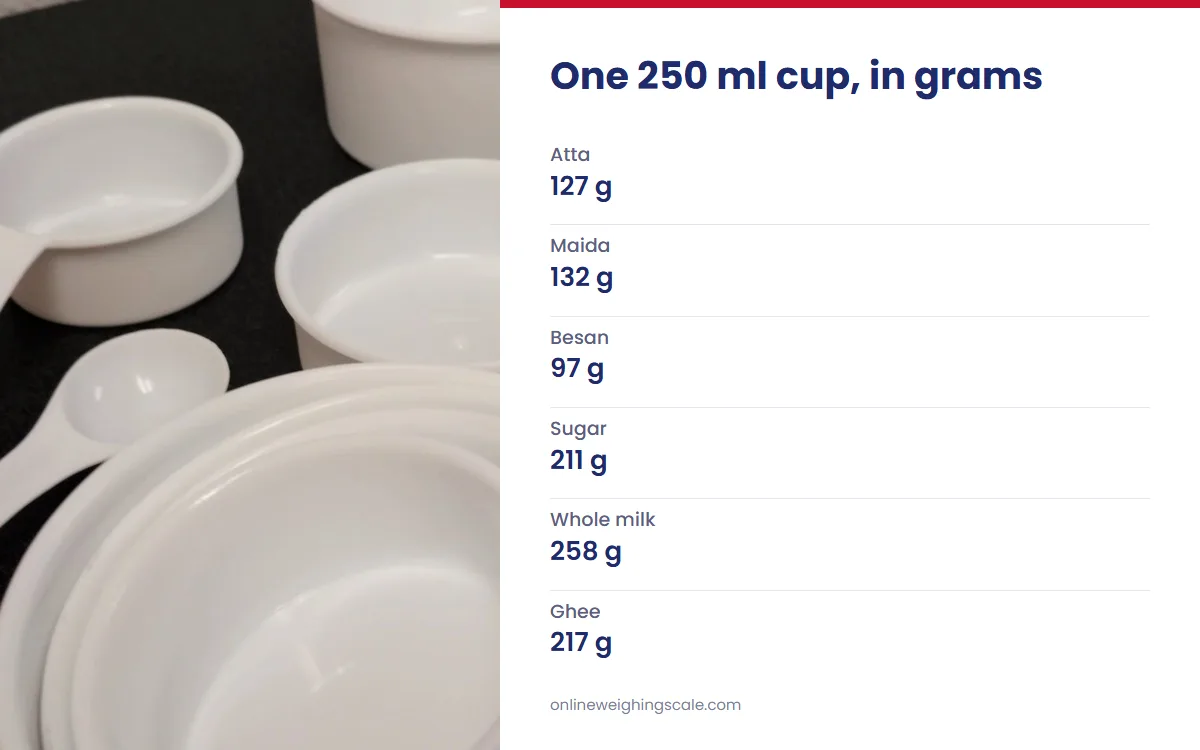
Converting cups to grams depends on the ingredient, because a cup measures volume while a gram measures mass. One 250 ml cup of atta weighs about 127 g, according to Health Canada's Canadian Nutrient File. The same cup holds about 132 g of maida and 211 g of sugar. US recipes use a 240 ml cup, and ICMR-NIN diet charts use a 200 ml katori.
Why one cup has no fixed weight in grams
A measuring cup tells you how much space an ingredient fills. A kitchen scale tells you how much of it there is. To move between the two you need the ingredient's density, its mass in each millilitre. The FAO/INFOODS Density Database defines density as mass divided by volume, and FAO built it so that researchers and professionals can convert volume into weight and back.
For powders the FAO uses bulk density, where the volume counts the grains themselves plus the air between and inside them. That air is the trouble with cups. Flour that is pressed down or tapped loses some of its air, so the same cup holds more grams. Flour spooned in loosely holds fewer.
The arithmetic itself is short: grams equal millilitres multiplied by density in grams per millilitre. Water at 20 °C has a density of 0.998 g per ml in the FAO table, so a 250 ml cup of water weighs about 250 g. Wheat flour is far lighter and far less predictable. The same database lists wheat flour between 0.48 and 0.67 g per ml across its sources. In a 240 ml cup that is anywhere from 115 g to 161 g, a spread of 46 g in one cupful. The guide to units of measurement explains how millilitres and grams sit in the metric system.
Which cup size is your recipe using?
Cup measures used in India come in three sizes, from 200 ml to 250 ml. The largest holds 25% more than the smallest, so find out which one a recipe means before converting anything.
| Measure | Volume | Where it is used | 15 ml tablespoons in it |
|---|---|---|---|
| US cup | 240 ml | US recipes and the NIST kitchen table | 16 |
| Metric cup | 250 ml | Health Canada and metric cup sets | 16 plus 2 teaspoons |
| Large katori | 360 ml | ICMR-NIN measuring set | 24 |
| Medium katori, or 1 cup | 200 ml | ICMR-NIN diet plans | 13 plus 1 teaspoon |
| Small katoris | 155 ml and 115 ml | ICMR-NIN measuring set | 10 plus 1 teaspoon, and 7 plus 2 teaspoons |
The US National Institute of Standards and Technology's metric kitchen table sets 1 cup at 240 ml, 1 tablespoon at 15 ml and 1 teaspoon at 5 ml. Health Canada's measuring guide uses 250 ml for 1 cup, with the same 15 ml tablespoon and 5 ml teaspoon.
India's own reference is different again. The ICMR-National Institute of Nutrition's Dietary Guidelines for Indians measure food with a 360 ml large katori, a 200 ml medium katori and small katoris of 155 ml and 115 ml. Its diet plans state that 1 cup or katori equals 200 ml. The same guidelines warn that home cups, spoons and katoris vary so much that food amounts measured with them are hard to pin down.
Most measuring cup sets print the capacity on the handle or the side. If yours is unmarked, set the empty cup on a kitchen scale, press tare and fill it to the brim with water. Water weighs very close to 1 g per ml, so a reading of about 250 g means a metric cup, and one near 240 g means a US cup.
Cups to grams chart for atta, maida, sugar and dal
The tables give grams for one level cup in each of the three sizes. Every figure starts from Health Canada's weight for 100 ml or 250 ml of the food and is scaled by volume, rounded to the nearest gram.
Flours, grains and dal
| Ingredient | 200 ml katori | 240 ml US cup | 250 ml metric cup |
|---|---|---|---|
| Atta (whole wheat flour) | 101 g | 122 g | 127 g |
| Maida (all-purpose flour) | 106 g | 127 g | 132 g |
| Besan (chickpea flour) | 78 g | 93 g | 97 g |
| Sooji or rava (semolina) | 141 g | 169 g | 176 g |
| Sugar (granulated) | 169 g | 203 g | 211 g |
| Rice, raw long grain | 156 g | 188 g | 195 g |
| Toor (pigeon peas), raw | 173 g | 208 g | 217 g |
Health Canada's Canadian Nutrient File gives 50.7 g per 100 ml for whole-wheat flour and 52.8 g for all-purpose flour. It lists chickpea flour (besan) at 38.9 g, semolina at 70.6 g and granulated sugar at 84.5 g. Raw long-grain rice comes to 78.2 g and raw pigeon peas to 86.6 g per 100 ml.
Besan is the lightest flour in the table. A 250 ml cup of it weighs 97 g, about 30 g less than the same cup of atta. Sooji weighs 176 g in the same cup, about 80 g more than besan. The toor figure is for whole raw pigeon peas. Split dal may settle a little differently in a cup, so weigh your own packet once and note the number.
Milk, ghee, oil and water
| Ingredient | 200 ml katori | 240 ml US cup | 250 ml metric cup |
|---|---|---|---|
| Water | 200 g | 240 g | 250 g |
| Milk, whole | 206 g | 248 g | 258 g |
| Ghee (butter oil) | 173 g | 208 g | 217 g |
| Sunflower oil | 184 g | 221 g | 230 g |
Health Canada lists whole milk at 103.1 g per 100 ml, so milk is a little heavier than water. Its nearest entry to ghee is anhydrous butter oil, at 86.6 g per 100 ml. Sunflower oil weighs 92.1 g per 100 ml. Counting 1 ml of oil as 1 g puts you off by about 8%, since 100 g of sunflower oil fills about 109 ml. A 500 ml packet of whole milk, by the same figure, weighs about 516 g.
Half, a third and three quarters of a cup in grams
Recipes written for US cups split the cup into fractions. The NIST table puts 1/4 cup at 60 ml, 1/3 cup at 80 ml, 1/2 cup at 120 ml and 3/4 cup at 180 ml. These are the grams for each fraction of a 240 ml cup.
| Ingredient | 1/4 cup | 1/3 cup | 1/2 cup | 3/4 cup | 1 cup |
|---|---|---|---|---|---|
| Atta | 30 g | 41 g | 61 g | 91 g | 122 g |
| Maida | 32 g | 42 g | 63 g | 95 g | 127 g |
| Besan | 23 g | 31 g | 47 g | 70 g | 93 g |
| Sugar | 51 g | 68 g | 101 g | 152 g | 203 g |
| Milk | 62 g | 83 g | 124 g | 186 g | 248 g |
| Ghee | 52 g | 69 g | 104 g | 156 g | 208 g |
For a 250 ml metric cup, multiply any figure in this table by 1.04. For the 200 ml katori, multiply by 0.83. Three quarters of a metric cup of sugar, for example, comes to about 158 g, and half a metric cup of maida to about 66 g.
Tablespoons and teaspoons in grams
A 240 ml US cup holds 16 tablespoons, because 240 divided by 15 is 16. A quarter cup is therefore 4 tablespoons, or 12 teaspoons. A 250 ml metric cup holds 16 tablespoons plus 2 teaspoons, so every metric cup carries 2 teaspoons more than a US cup.
ICMR-NIN rounds spoons to weights for meal planning. Its measuring annexure counts a teaspoon as 5 g and a tablespoon as 15 g, and the guidelines describe 5 g of salt as one teaspoon. Real spoonfuls vary with the ingredient, as Health Canada's figures show.
| Ingredient | 1 teaspoon (5 ml) | 1 tablespoon (15 ml) |
|---|---|---|
| Sugar | 4.2 g | 12.7 g |
| Ghee | 4.3 g | 13.0 g |
| Sunflower oil | 4.6 g | 14.2 g |
| Atta | 2.5 g | 7.6 g |
| Besan | 1.9 g | 5.8 g |
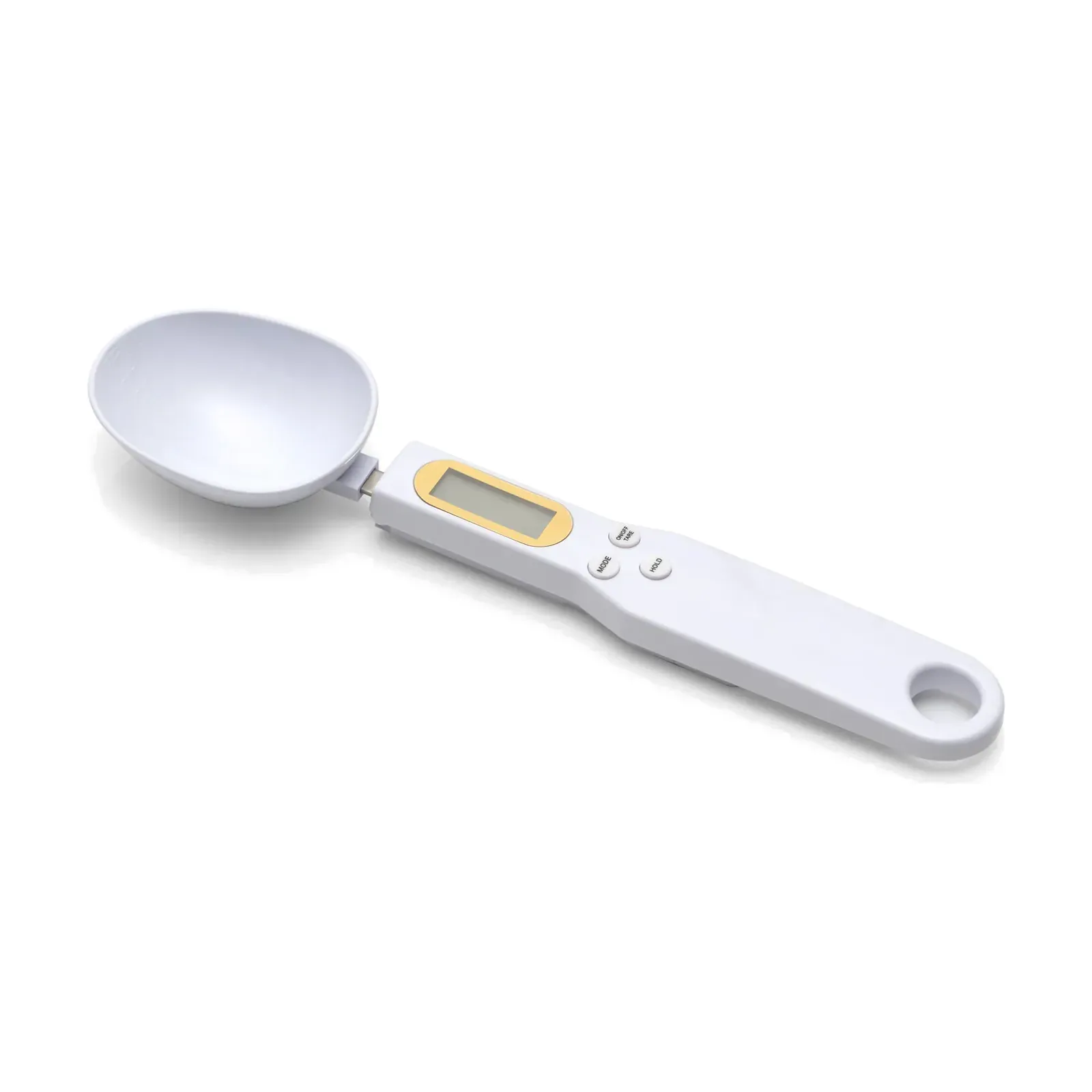
The sugar, ghee and oil spoonfuls are stated by Health Canada; the atta and besan figures follow from its weight per 100 ml. A level teaspoon of besan weighs less than half the 5 g that a rounded rule assumes. For small amounts such as baking soda, yeast or a spice blend, a few tenths of a gram matter. The Hoffen digital spoon scale weighs up to 500 g in 0.1 g steps in the spoon itself, at ₹939 on the Omace store.
How to convert any ingredient yourself
- Find the cup size. Check the marking, or tare the empty cup and weigh it full of water: 240 g means a US cup and 250 g a metric cup.
- Find the weight of 100 ml. Use the tables above, or look the food up in Health Canada's Canadian Nutrient File.
- Work out grams per cup. Multiply the cup volume by the weight of 100 ml, then divide by 100.
- Convert. Divide the grams in the recipe by the grams per cup to get cups. Multiply cups by grams per cup to get grams.
Three worked examples show the method. A recipe that needs 500 g of atta, measured in a 250 ml cup, takes 500 ÷ 127, which is 3.9 cups, so just under 4 level cups. One kilogram of sugar in US cups is 1,000 ÷ 203, or about 4.9 cups. Going the other way, 2 US cups of maida weigh 2 × 127 = 254 g.
Liquids are the easy case. Milk is within 4% of its volume in grams, so 1 cup of milk is close enough to its millilitres for most cooking. Ghee and oil are 8% to 13% lighter than water, which starts to matter in a large batch of laddoos or a deep pan of oil.
Getting closer when you only have cups
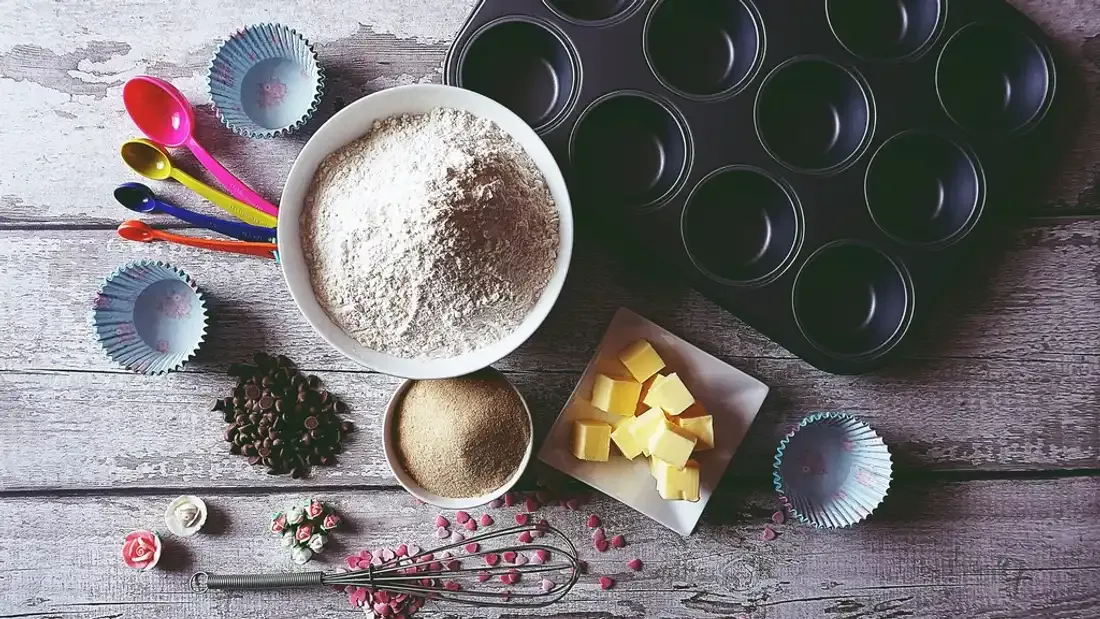
Health Canada's measuring guide gives a method for each kind of ingredient. For dry ingredients such as atta or sugar, spoon them into the measuring cup until it is full. Then smooth the top with a knife or spatula so no mound is left above the brim. For liquids, set the cup on the counter, bend down until your eyes are level with the marking, and pour to the line.
- Do not scoop flour straight from the bag. Scooping presses flour into the cup, so it weighs more than a spooned cup.
- Do not tap or shake the cup. Tapping settles powder, and a settled cup weighs more.
- Use the same cup for every ingredient. A recipe built on one cup stays in proportion even if that cup is not a standard size.
- Loosen settled flour first. Stir flour that has sat in the tin before you spoon it into the cup.
Why a kitchen scale settles the question
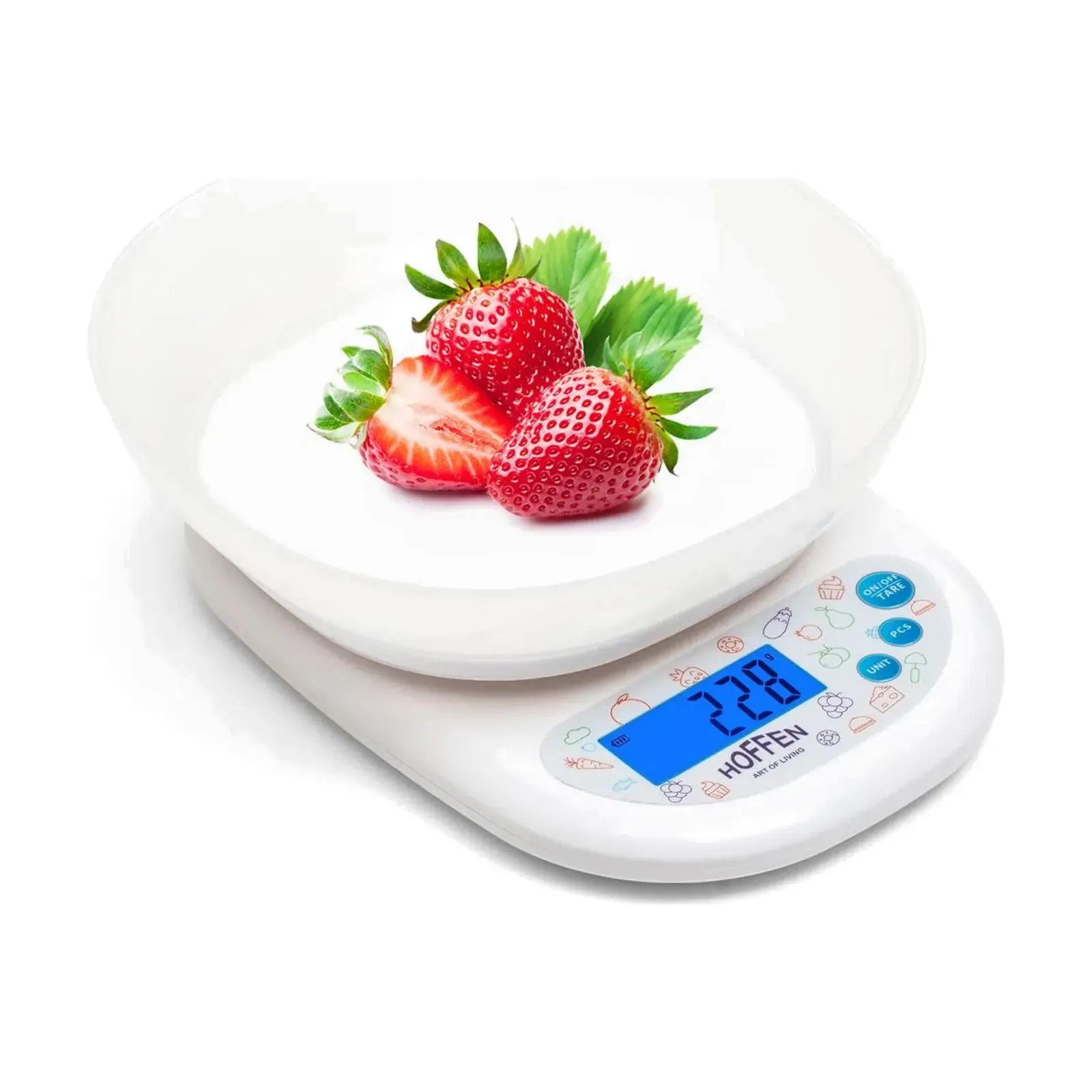
A kitchen scale skips density altogether. It reads grams directly, so 500 g of atta is 500 g whether the flour is fluffy or packed, and the cup size never enters the sum. Put the bowl on the scale and press the tare key to zero it. Add the first ingredient, tare again, and add the next one into the same bowl.
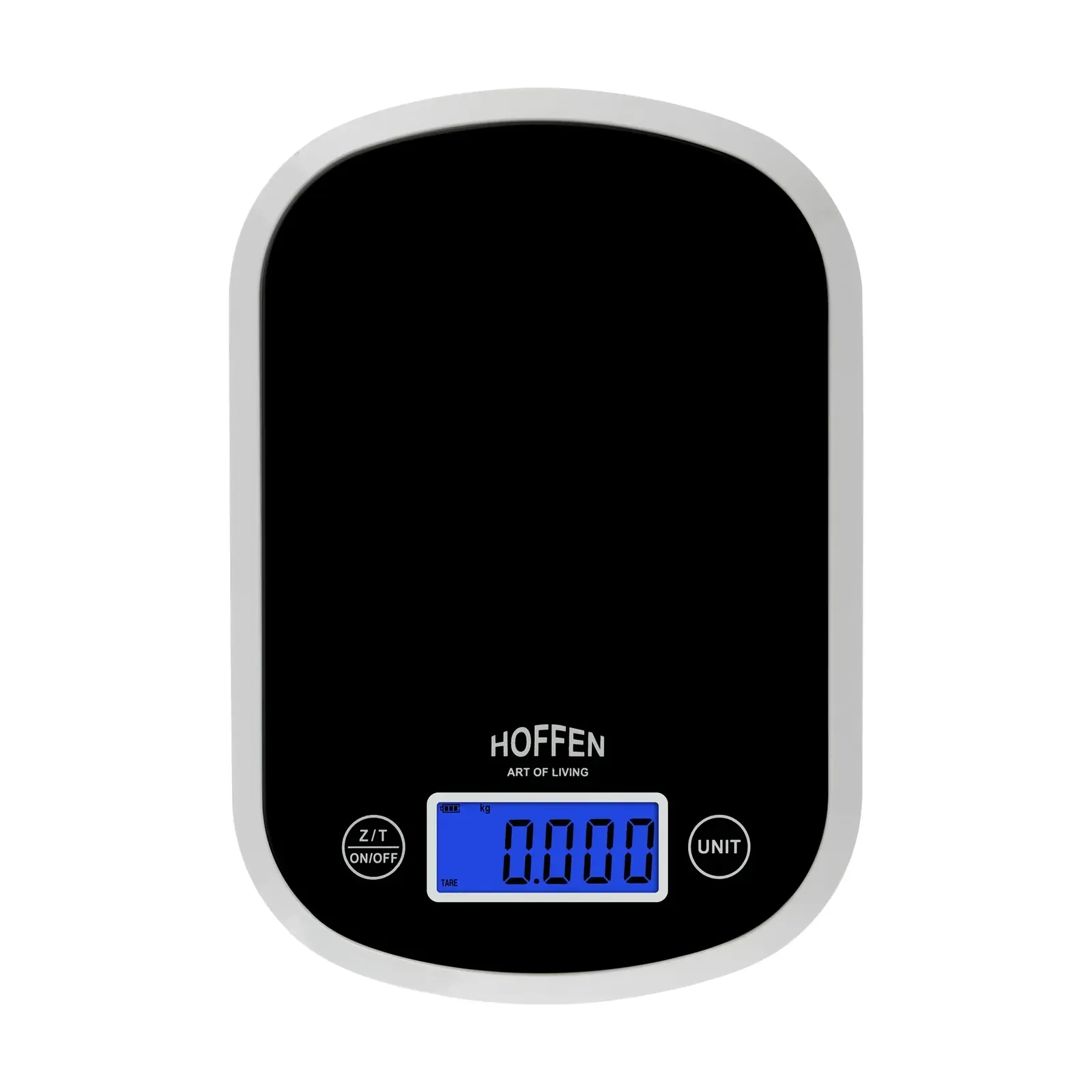
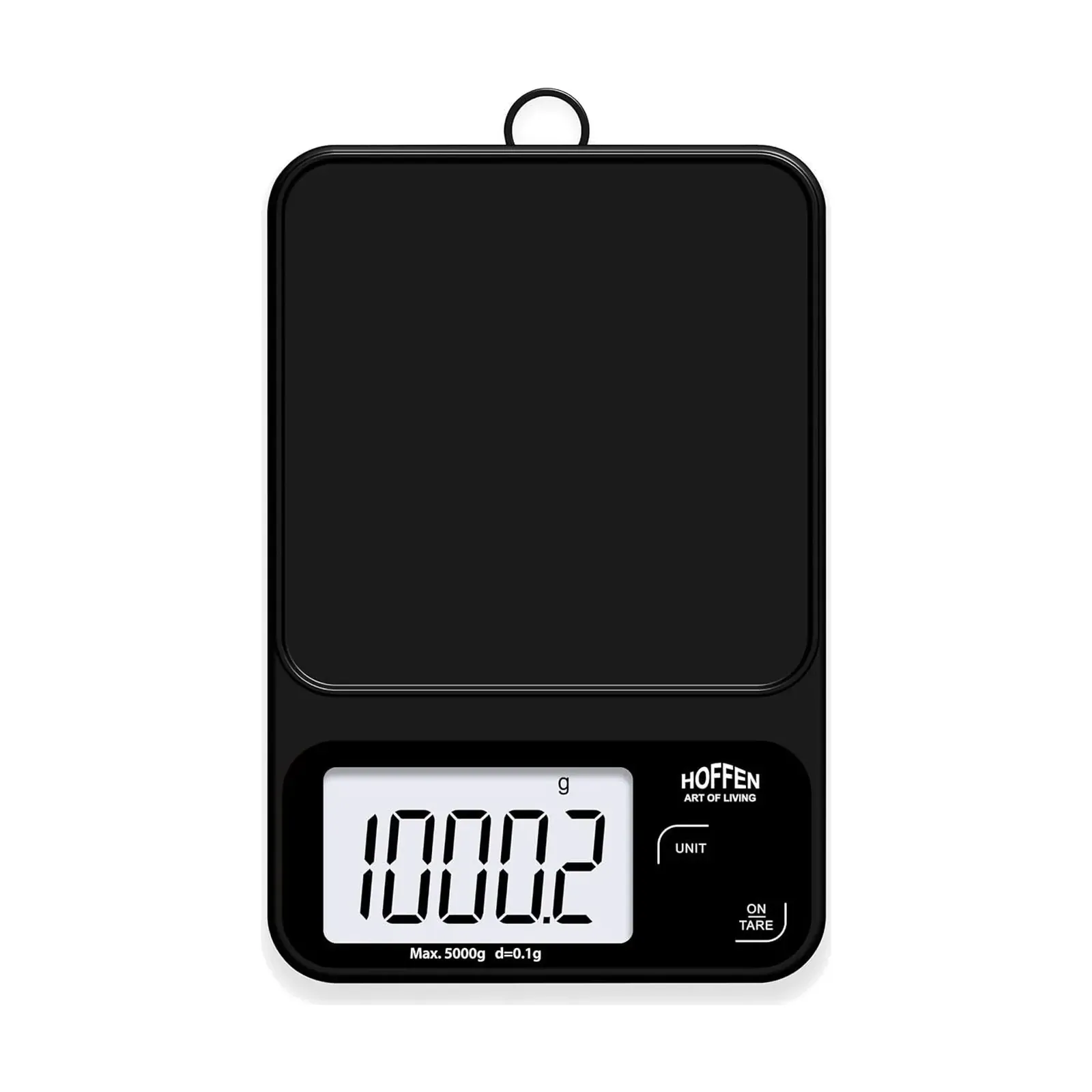
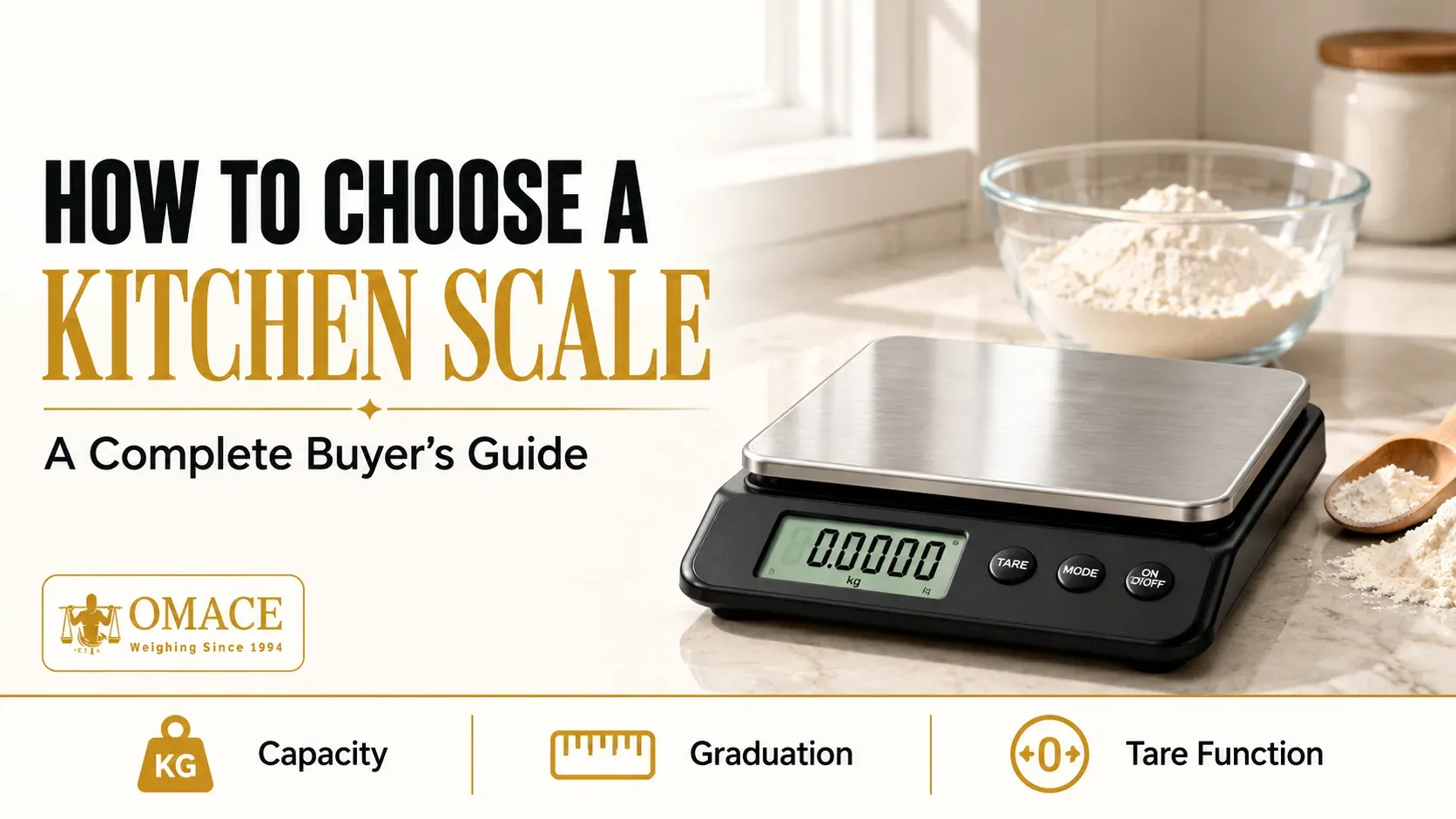
The Hoffen KS-601 digital kitchen scale weighs up to 5 kg in 1 g steps and costs ₹629 on the Omace store. A 1 g step is fine enough for every cup figure above, since none of them needs a decimal. For capacity, display and bowl options across models, read how to choose a kitchen scale for Indian cooking.
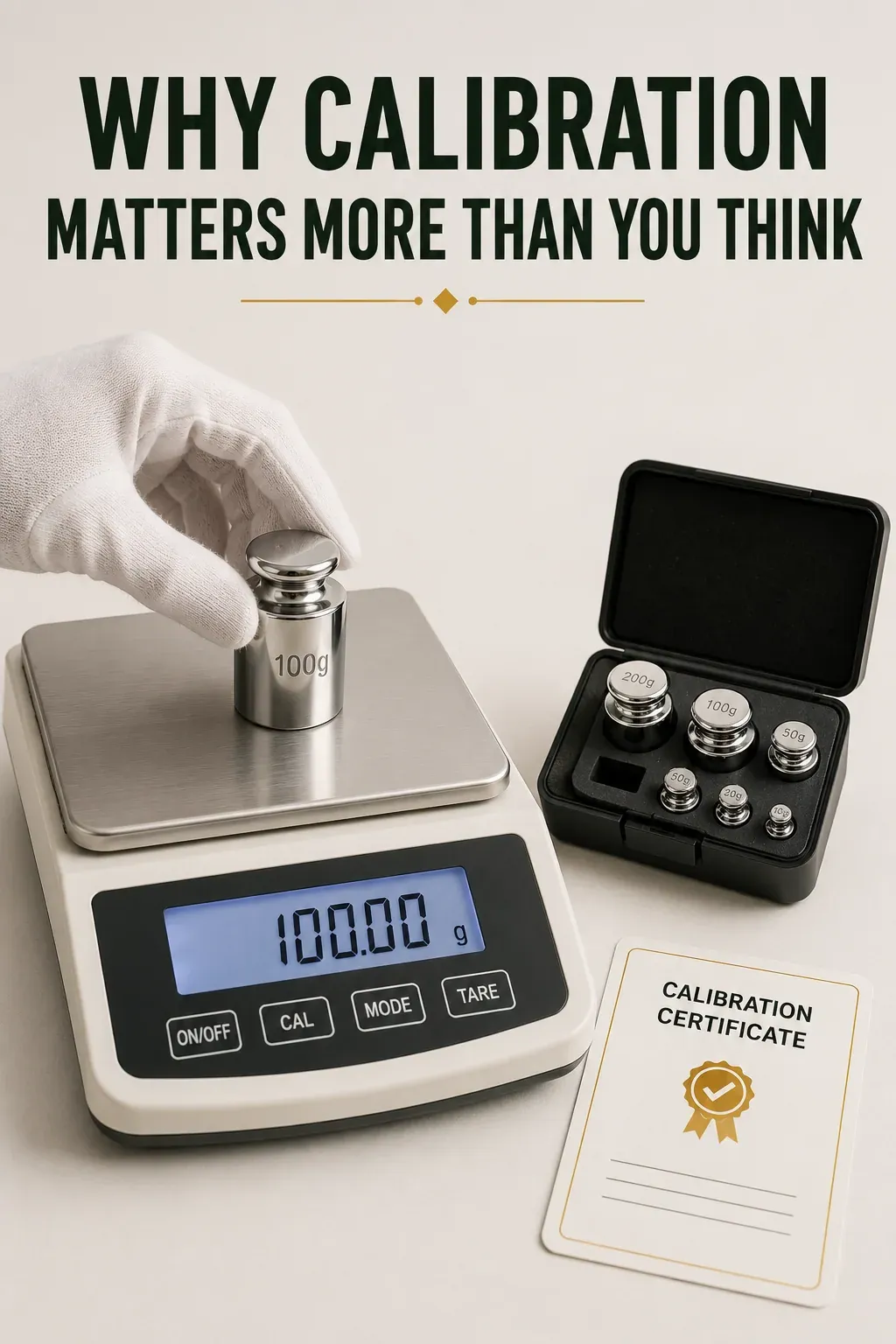
Omace's digital kitchen scales open calibration mode when the TARE key is held for about 5 seconds. For a check at home, the guide on how to calibrate a kitchen scale without weights walks through it with everyday items. Once your scale reads true, weigh your own cup of atta once and keep that number for your recipes.
About Omace Brands Private Limited
Omace Brands Private Limited has made weighing scales in India since 1994. Its factory is at G-29 RIICO Industrial Area, Bagru, Jaipur. Hoffen and Venus kitchen scales are Omace brands, and every Omace product is made in India. At Bagru, every scale is checked with certified test weights before dispatch. As a manufacturer, the company holds ISO 9001:2015, ISO 13485:2016 and EU MDR quality certificates, plus CE and US FDA compliance certificates, all listed on the Omace certificates page. Scales are factory calibrated, and a scale that reads wrong is replaced under warranty. Scales bought from the Omace store carry a 2-year warranty on manufacturing defects.
Converting your next recipe
Start with the cup: find out whether the recipe means 200 ml, 240 ml or 250 ml. Then read the weight from the tables above, or work it out from Health Canada's figure for 100 ml. For flour, remember that a pressed cup and a loose cup can differ by tens of grams. If you cook from Indian and foreign recipes alike, a scale that reads in grams lets one number work for both. Omace's kitchen weighing scales run from compact 5 kg models to 10 kg scales with a bowl for dough.