Units of measurement are agreed quantities, such as the metre or the kilogram, used to state how much of something there is. The International System of Units (SI) has 7 base units, and Section 5 of India's Legal Metrology Act, 2009 makes the same 7 the country's legal base units. Older Indian units such as the tola and the maund now survive mostly in everyday speech.
What a unit of measurement is
A unit is a fixed amount of a quantity that everyone agrees to use as a reference. Every measurement is a number multiplied by a unit, so 5 kg means five times the kilogram. Change the unit and the number changes with it, while the amount stays the same: 5 kg and 5,000 g describe one sack of atta.
Some units are base units and the rest are built from them. The NCERT Class 11 physics textbook calls the full set of base and derived units a system of units. It names three older systems: CGS (centimetre, gram, second), FPS (foot, pound, second) and MKS (metre, kilogram, second). The SI is the system now accepted internationally.
Standard and non-standard units
A standard unit means the same amount for everyone. A non-standard unit changes from person to person. The Press Information Bureau notes that ancient India used body-based measures such as cubits and hand spans, and seed-based weights such as the rati. A hand span on a tall buyer and on a short seller gives two different lengths, which is why trade moved to fixed standards.
The SI system and its 7 base units
The SI gives one base unit to each of 7 basic quantities. Since 20 May 2019, all SI units have been defined by fixing the values of 7 constants of nature, according to the International Bureau of Weights and Measures (BIPM). This lets measuring methods improve while the units stay as they are.
| Quantity | SI unit | Symbol | Fixed through | Where you meet it |
|---|---|---|---|---|
| Length | metre | m | Speed of light | Cloth, pipe, height |
| Mass | kilogram | kg | Planck constant | Atta, cement, body weight |
| Time | second | s | Caesium-133 frequency | Clocks, stopwatches |
| Electric current | ampere | A | Elementary charge | Fuses, chargers |
| Temperature | kelvin | K | Boltzmann constant | Science work; °C in daily life |
| Amount of substance | mole | mol | Avogadro constant | Chemistry |
| Luminous intensity | candela | cd | Luminous efficacy constant | Lamps |
Every other unit is derived from these seven. NIST, the US national standards body, counts 22 derived units with special names, such as the newton for force and the watt for power. It also recognises 24 prefixes, from 1030 down to 10-30. In daily use, kilo means 1,000, centi means one hundredth and milli means one thousandth.
Metric system and SI: the difference
The metric system is the decimal family of units that began in France soon after the 1789 Revolution, as the Puducherry government's gazetteer records. The SI is its current, formally defined version. Every SI unit is metric, while some metric units, such as the litre and the tonne, are used alongside the SI without being base units.
Units of measurement for length, mass and volume
Daily life mostly needs these three quantities, and each has a few units worth knowing by heart.
Length
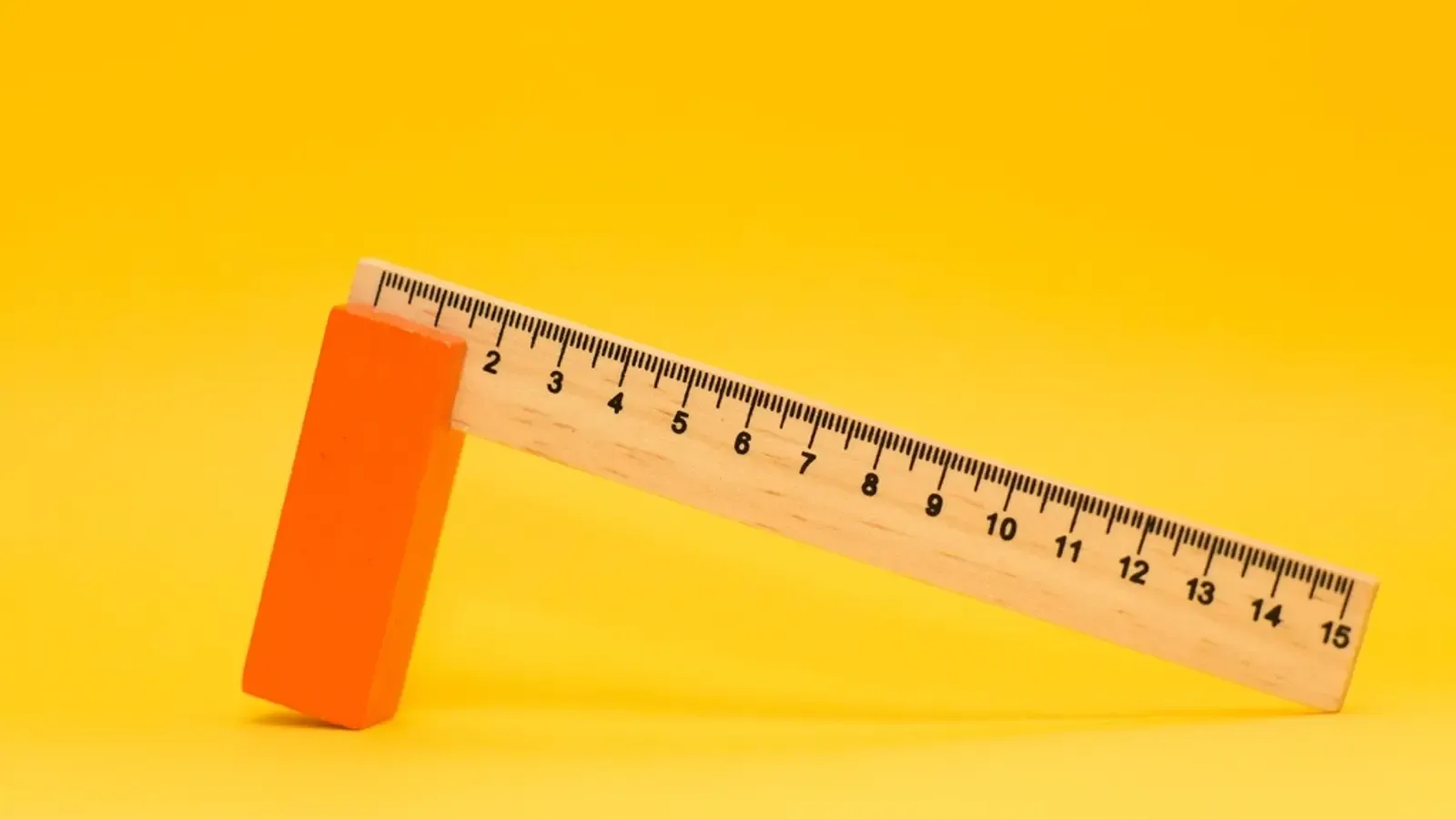
The metre is the base unit of length. It has been defined since 1983 as the distance light travels in a vacuum in 1/299,792,458 of a second, as the Kerala Legal Metrology Department explains. One kilometre is 1,000 m, one metre is 100 cm and one centimetre is 10 mm. An inch is exactly 2.54 cm, so the feet-and-inches heights still common in India convert cleanly.
Mass and weight
The kilogram is the SI unit of mass. One kilogram is 1,000 g, and one gram is 1,000 mg. In physics, weight is a force measured in newtons, while vajan in a Jaipur market simply means mass in kilograms. The post on mass vs weight explains why a scale senses force and shows mass.
Volume
The SI unit of volume is the cubic metre, which is too large for a kitchen or a fuel pump. The litre is the working unit, and one litre is exactly 0.001 m³, or 1,000 mL. Gallons differ by country: the US gallon is 3.785 L and the imperial gallon is 4.546 L.
Units of measurement chart: conversions at a glance
The factors below come from NIST Special Publication 811, which marks the ones that are exact by definition.
| Unit | Quantity | Value | Status |
|---|---|---|---|
| Inch | Length | 2.54 cm | Exact |
| Foot | Length | 30.48 cm | Exact |
| Yard | Length | 0.9144 m | Exact |
| Mile | Length | 1.609344 km | Exact |
| Hectare | Area | 10,000 m² | Exact |
| Acre | Area | 4,046.873 m² | Rounded |
| Metric carat | Mass | 0.2 g | Exact |
| Ounce | Mass | 28.34952 g | Rounded |
| Pound | Mass | 0.4535924 kg | Rounded |
| Tonne | Mass | 1,000 kg | Exact |
| Litre | Volume | 0.001 m³ | Exact |
| US gallon | Volume | 3.785412 L | Rounded |
| Degree Celsius | Temperature | K = °C + 273.15 | Exact |
Units of measurement in India: what the law says
Section 4 of the Legal Metrology Act, 2009 says every unit of weight or measure shall follow the metric system based on the SI. Section 5 lists the 7 base units by name. Section 6 requires decimal numbering, in the international form of Indian numerals. The Act took effect on 1 April 2011, according to the Press Information Bureau.
Section 11 carries the most practical weight. It bars anyone from quoting a price, by word of mouth or otherwise, or issuing an invoice, or stating a packed quantity, in anything other than a standard unit. Exports are exempt. The post on Legal Metrology in India covers the department and its rules.
How India moved to metric
Parliament passed the Standards of Weights and Measures Act in December 1956, and India signed the Metre Convention in 1957, according to an OIML Bulletin article on India's metrology. The same article dates formal metrication to 1 October 1958 and calls 1 October 1960 a landmark, as seers and mann changed to kilograms.
India's copy of the international kilogram, number 57, is kept at CSIR-National Physical Laboratory. The BIPM last recalibrated it in 2022, three years after the kilogram was redefined through the Planck constant.
Old Indian units: tola, seer, maund and quintal
The Standards of Weights Act, 1939 put the old trade units on one base. It set the standard tola at 180 grains, the seer at 80 tolas and the maund at 40 seers. NIST fixes the grain at exactly 64.79891 mg, which gives 11.6638 g for the tola, 933.10 g for the seer and 37.3242 kg for the maund. The Nagaland government's conversion table prints the same maund and rounds the tola to 11.664 g.
| Unit | Defined as | Metric value | Still heard in |
|---|---|---|---|
| Tola | 180 grains | 11.664 g | Gold talk |
| Chhatak | 5 tolas | 58.32 g | Old recipes |
| Seer | 80 tolas | 933.1 g | Old recipes and family records |
| Maund (mann) | 40 seers | 37.32 kg | Grain and farm talk |
| Quintal | 100 kg | 100 kg | Mandi rates |
| Metric tonne | 10 quintals | 1,000 kg | Freight and bulk goods |
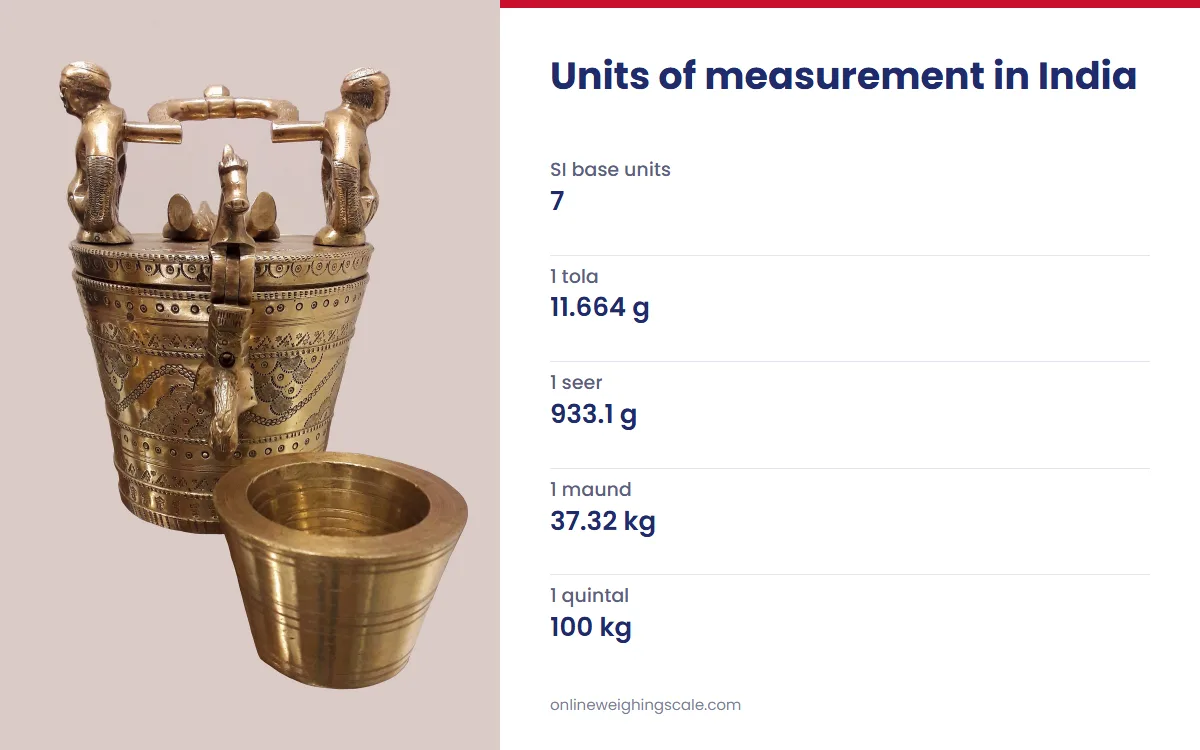
A silver rupee weighed 180 grains under the Indian Coinage Act, 1906, the Reserve Bank of India's museum records, which matches the tola's definition. The quintal stands apart from this family. It is a plain metric unit, and the Nagaland table counts 10 quintals to the metric ton.
Treat older records with care, because local weights differed. The Puducherry gazetteer lists a French-era maund and other local units of its own. The Press Information Bureau describes the rati and the masha as small units for gold and gems without fixing a modern value, so this chart leaves them out. Land units such as the bigha also differ by state, and the local land record is the place to check one.
How to convert between units
Every conversion is one multiplication or division by a factor from the charts above. Round only at the end, because a rounded factor used twice adds its error twice.
- Height: 5 feet 6 inches is 66 inches, and 66 × 2.54 gives 167.64 cm.
- Gold: 10 tolas at 11.6638 g gives 116.64 g.
- Grain: 2 maunds at 37.3242 kg gives 74.65 kg, just under three-quarters of a quintal.
- Body weight: 70 kg divided by 0.4535924 gives 154.3 lb.
For height and body weight, the Omace height and weight converter does the arithmetic between centimetres, feet, kilograms and pounds.
Why a scale can show more than one unit
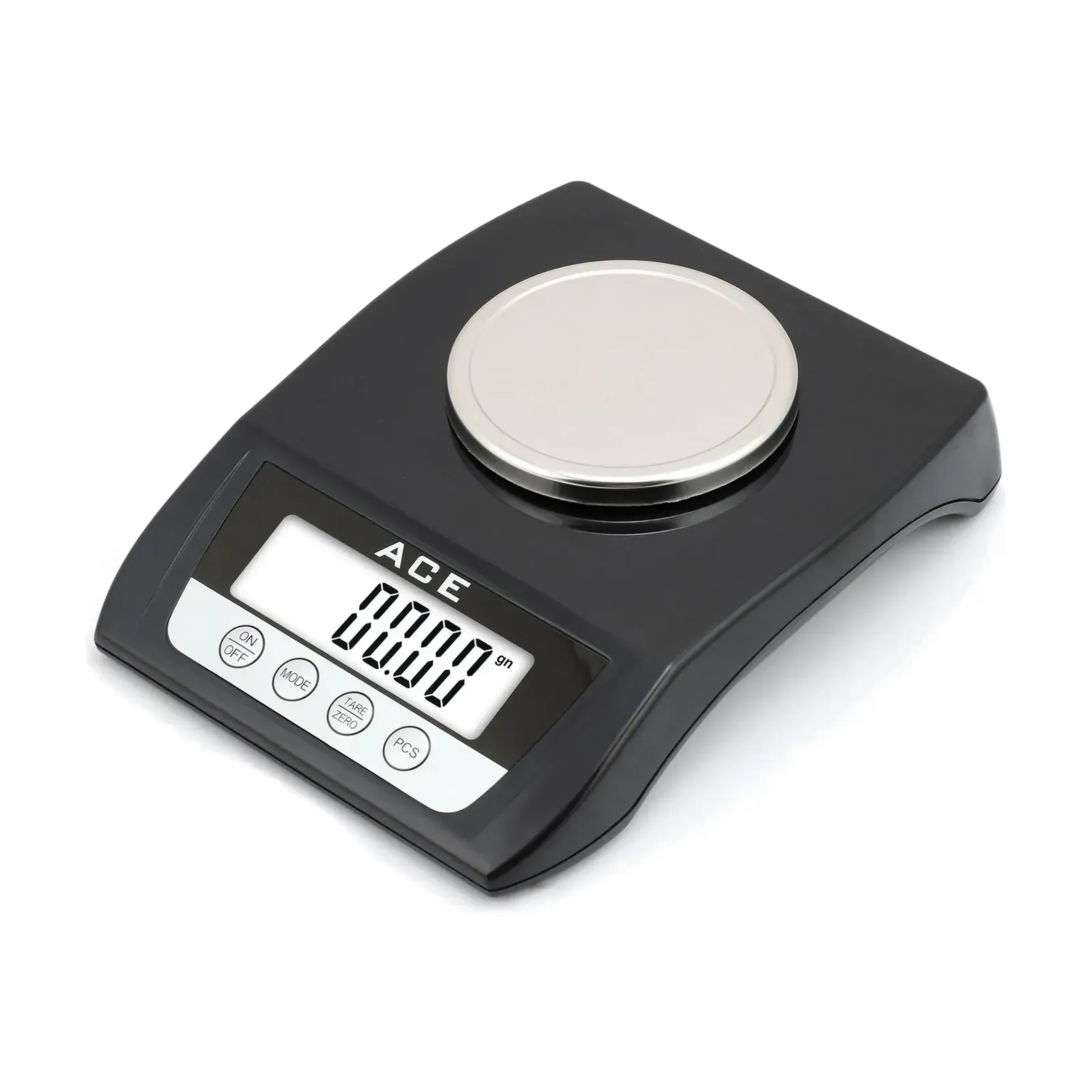
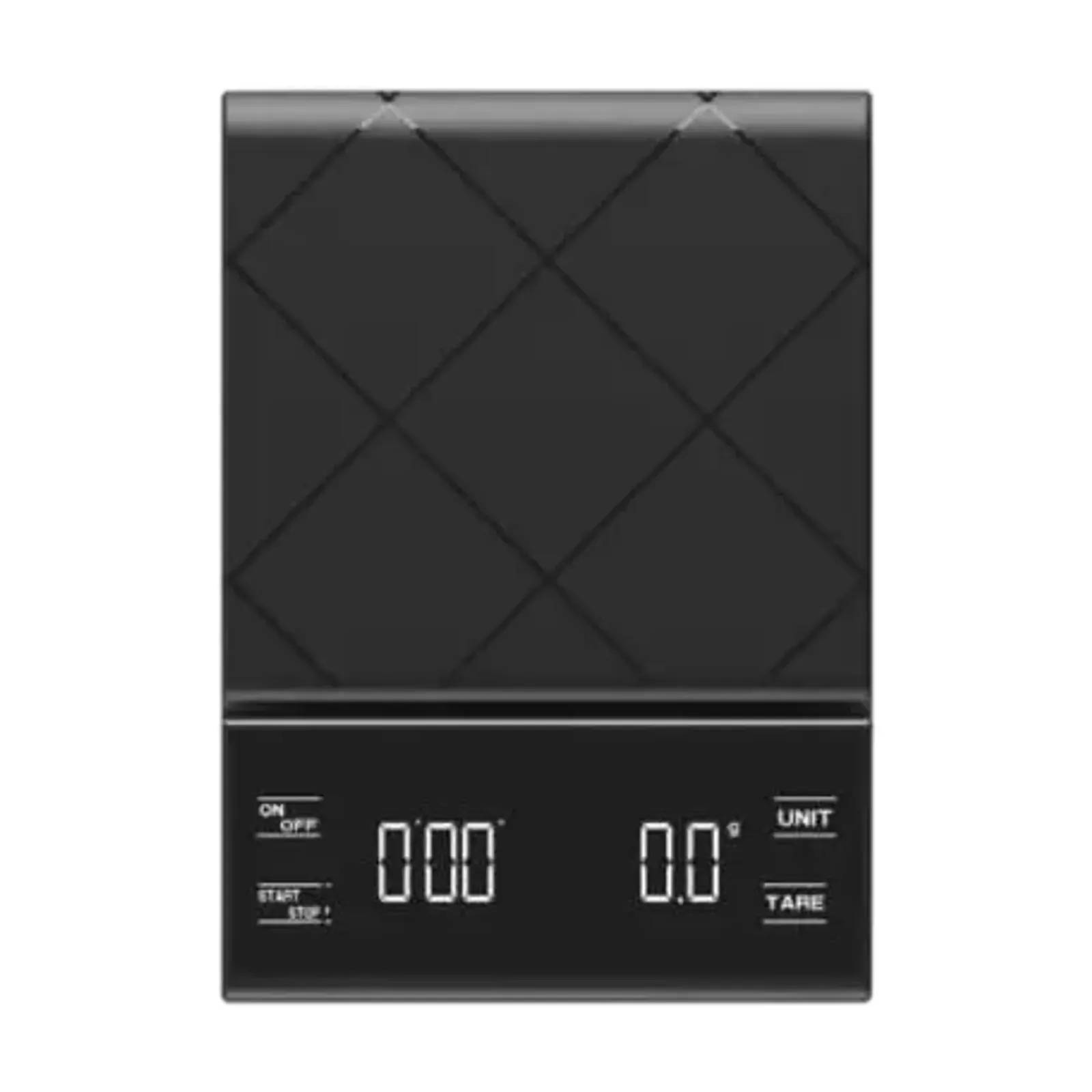
A digital scale senses the load once, then shows that one result in the unit you pick. The UNIT key on the Hoffen KS-301 coffee scale, for example, switches between g, oz and ml. Changing the unit changes the figure on the screen and leaves the measurement as it was.
Trade leaves less choice, because Section 11 asks for standard units. Omace shop, platform, chicken and crane scales leave Bagru verified and stamped by Legal Metrology, and the stamp is valid across India. At the Bagru factory, Omace Brands Private Limited checks every scale with certified test weights before dispatch.
Which unit to use
Use metric units for anything sold, billed, labelled or reported in India, with kilograms and grams for goods and millimetres for workshop drawings. Use degrees Celsius for weather and kelvin in a physics paper. Write symbols exactly as the SI gives them, because case carries meaning: kg has a small k, and a capital K alone means kelvin.
Old units are useful for reading a grandmother's recipe or an old land paper. Convert them once with the factors above, then keep the metric figure for anything written down.