The easiest way to weigh luggage at home is a hanging luggage scale: hook it to the bag handle, lift the bag clear of the floor, hold still and read the number. The Hoffen luggage scales on the Omace store read up to 50 kg and cost between ₹369 and ₹629. A bathroom scale also works if you subtract your own weight, and a shop scale works if the bag fits on its pan.
This guide covers each method step by step, how much error to expect from it, and how to check your scale with something of known weight. Baggage limits change from airline to airline and fare to fare, so this post quotes none. The limits are in the airline baggage allowance guide and the cabin baggage size guide, and your own ticket has the final say.
What to do before you weigh anything
Weigh the bag only when it is fully packed. Put in the shoes, the chargers, the toiletry pouch, the gifts and anything you plan to buy on the way. A suitcase weighed half empty tells you very little, because the last items you add are usually the heavy ones.
Keep each bag separate. The check-in suitcase, the cabin trolley and the laptop bag are all weighed one by one, so write down three numbers instead of one. Tags, locks and the strap around the suitcase belong on the bag while you weigh it, since they travel with it.
Look up your limit first. The trolley bag size chart helps if you are still choosing a bag, and the allowance posts above explain how check-in and cabin limits work. With the limit in hand, the weighing is only a matter of reading one number.
Method 1: weigh luggage with a hanging luggage scale
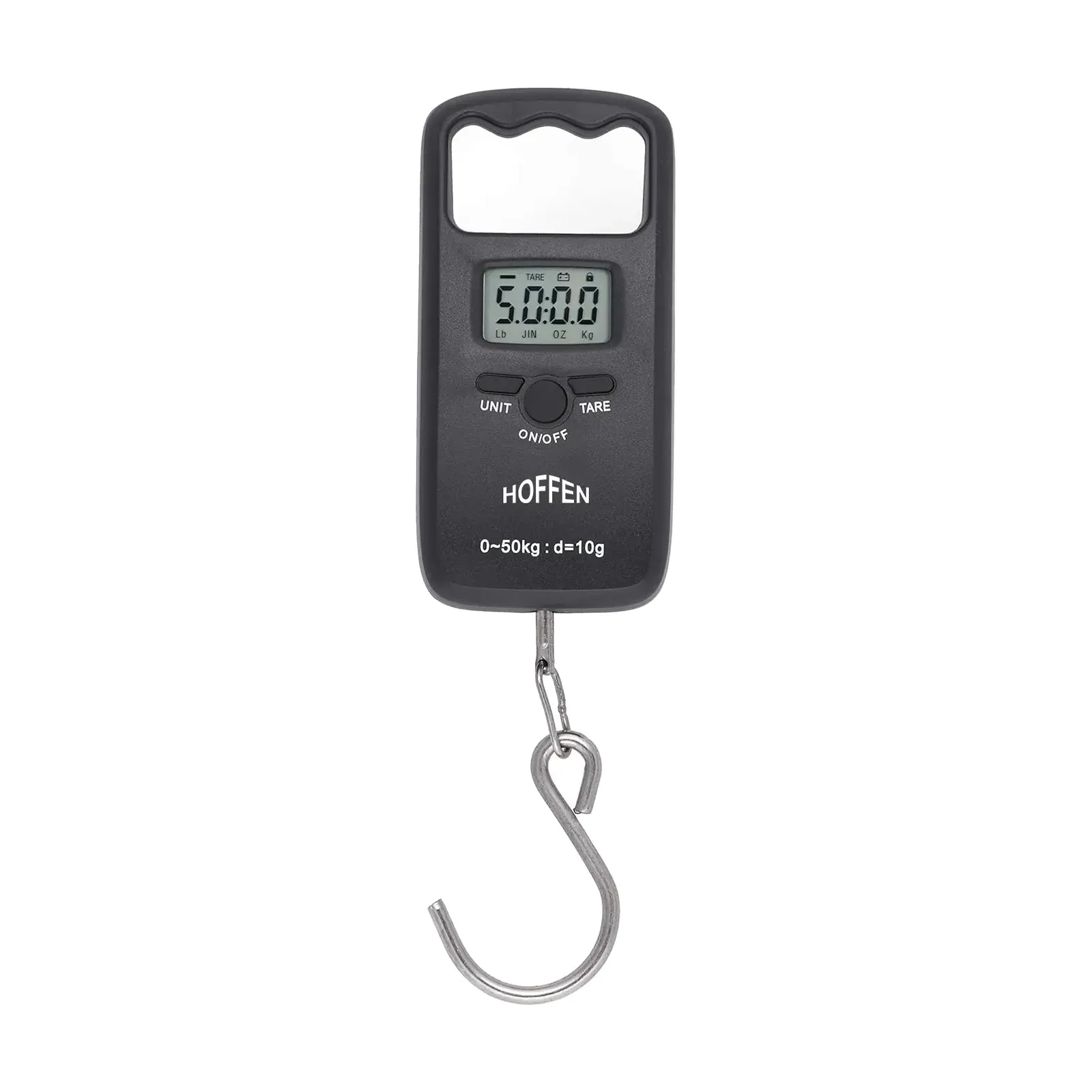
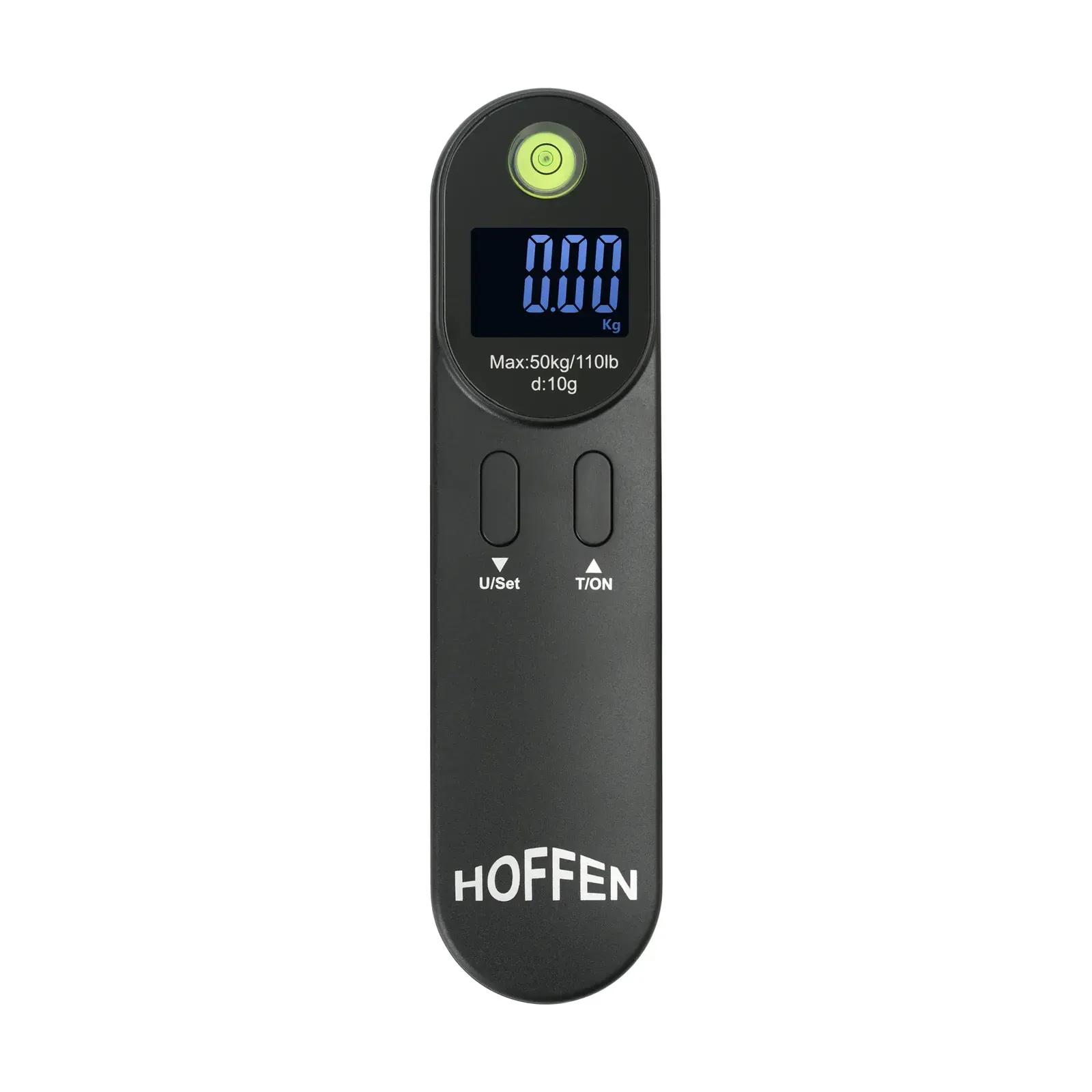
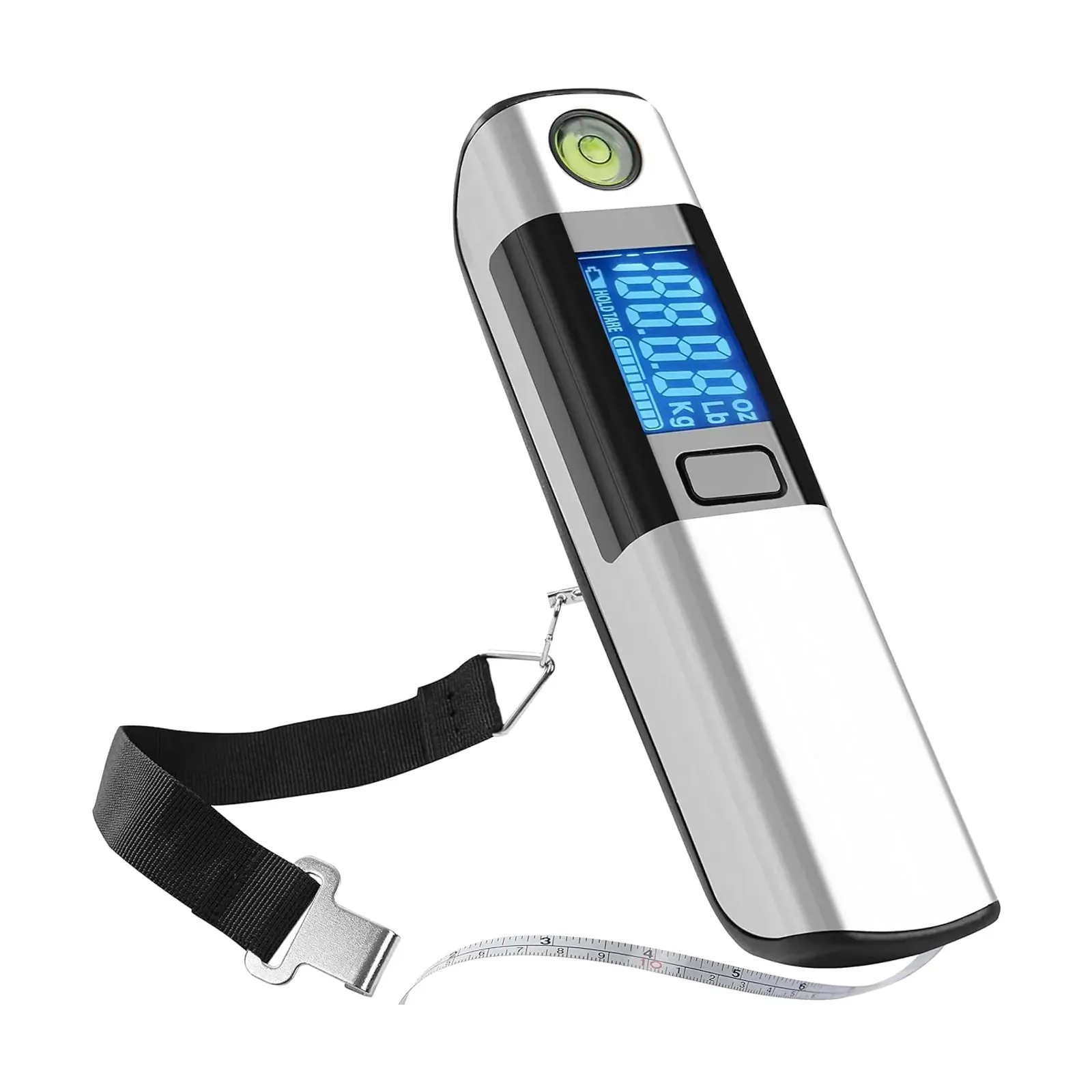
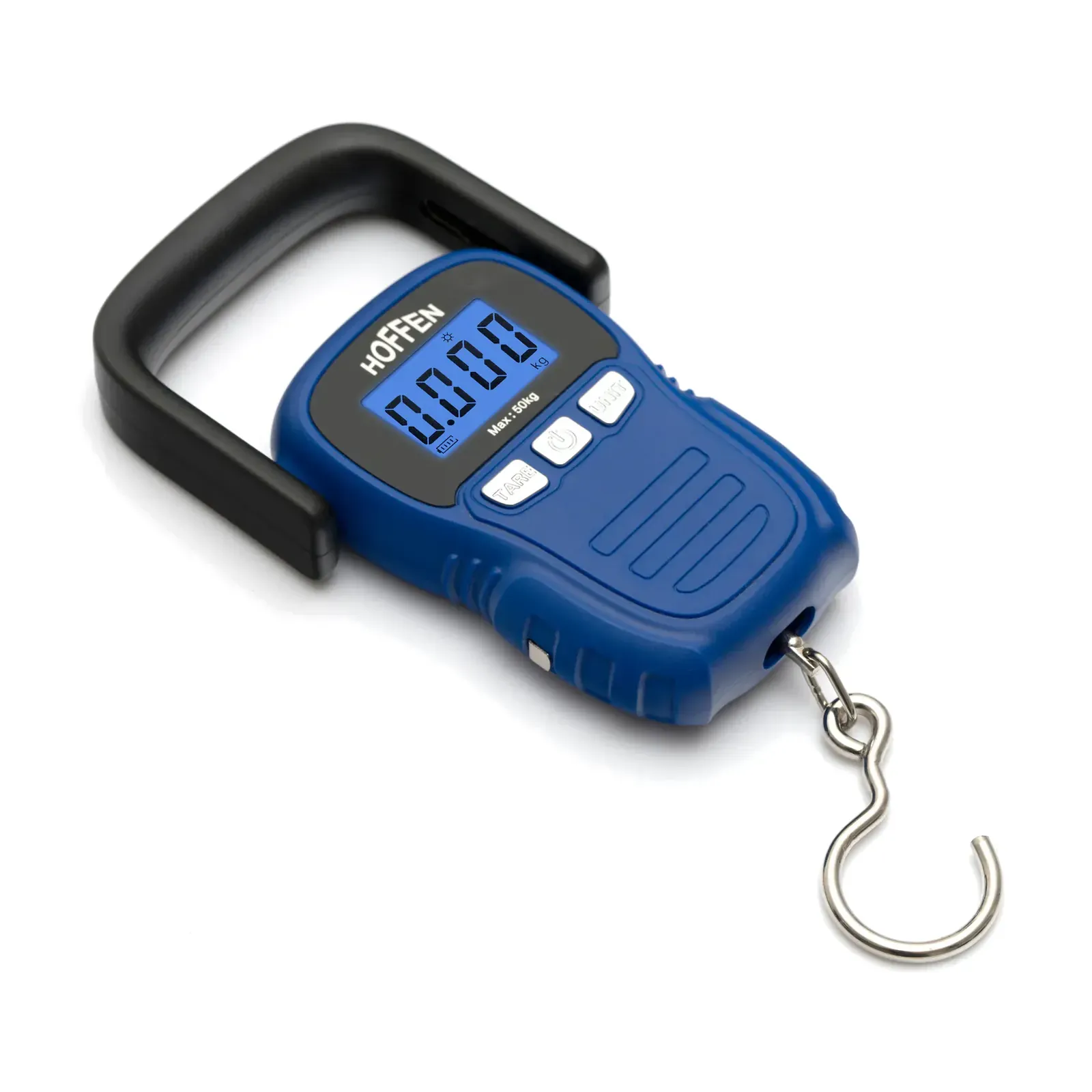
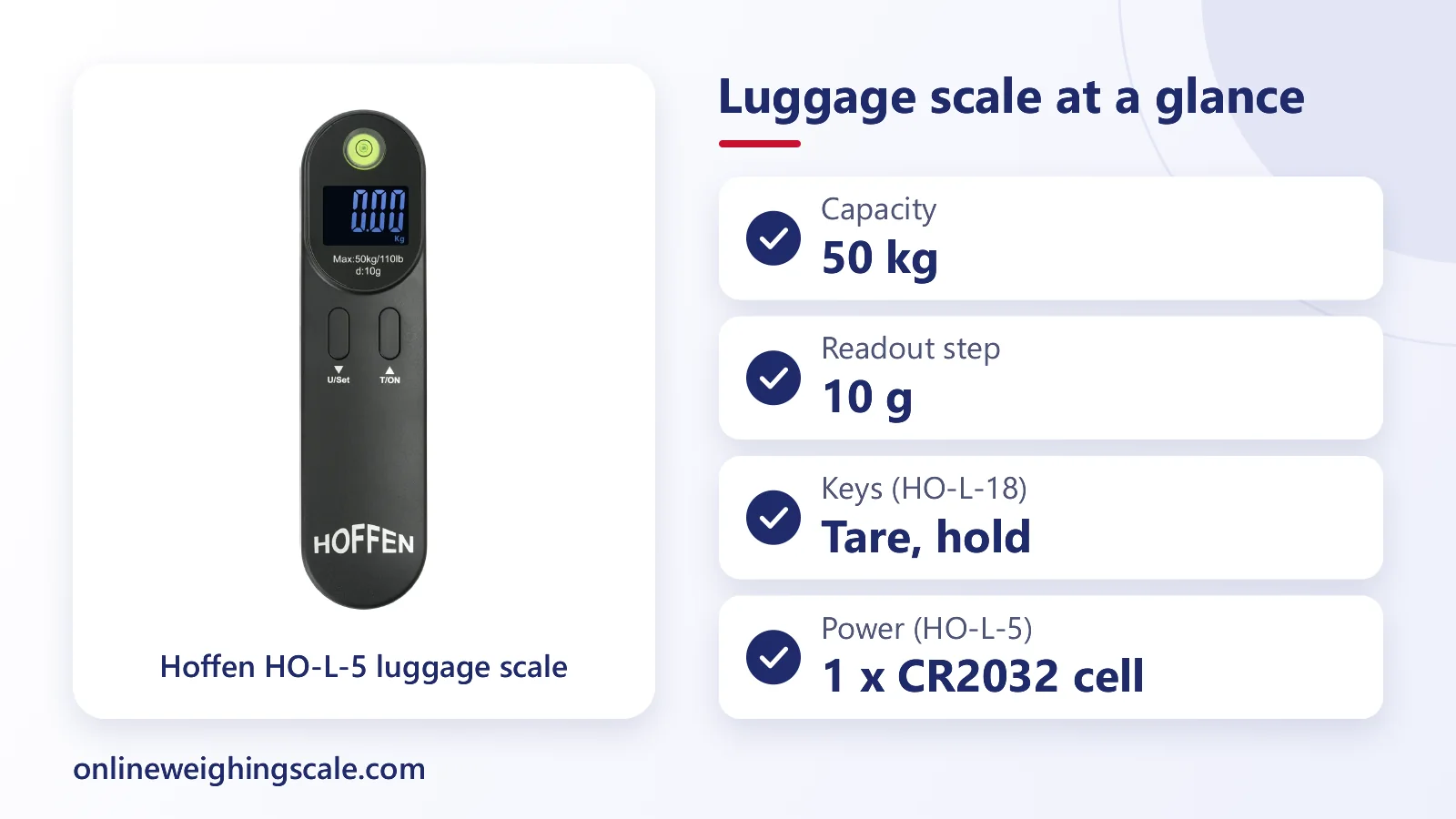
A hanging luggage scale is built for this one job, and it is the most direct answer to how to use a luggage scale. The Omace store lists five Hoffen models, all rated to 50 kg: HO-L-8 with a hook at ₹369, HO-L-9 in stainless steel at ₹469, HO-L-5 with a strap at ₹579, HO-L-7 with a 1 m tape at ₹604 and HO-L-18 with a tape at ₹629. Prices are as listed on 20 November 2026. The full range sits under luggage scales.
- Switch the scale on and let it settle on zero before the bag is attached.
- Loop the strap or hook through the bag's top carry handle. Use the handle that is stitched to the frame, not a zip pull or a thin side loop.
- Take the scale by its own handle or ring. With a heavy bag, ask a second person to steady the bag while you lift.
- Lift slowly until the bag hangs clear of the floor and the sides of the wardrobe. Keep your arm bent and your back straight.
- Stop moving. A swinging bag makes the number jump, so wait until it stops and the display stays the same for a couple of seconds. The HO-L-7 and HO-L-18 have a hold function, and the HO-L-8 and HO-L-9 lock the weight on the screen, so on those you can put the bag down and then read the number.
- Write the reading down, then repeat once. Two readings that agree mean you can trust the number.
The tape on the HO-L-7 and HO-L-18 models can also measure the length of a bag, which is useful if the airline also asks for bag dimensions.
All five read in 10 g steps, the scale interval that OIML R 76-1 defines for a digital scale as the difference between two consecutive indicated values. The HO-L-5 shows kg, lb and oz and its backlight turns red when overloaded. The HO-L-7 shows kg, lb and oz, the HO-L-8 adds jin, the HO-L-9 shows kg, g, lb and oz with a long press on the unit key, and the HO-L-18 shows g and kg. The HO-L-8 takes two AAA batteries, the HO-L-18 two AA, and the HO-L-5, HO-L-7 and HO-L-9 one CR2032 coin cell each. All have tare and an overload warning, and they switch off on their own to save the battery.
Method 2: weigh a suitcase with a bathroom scale
If you do not own a luggage scale, you can weigh a suitcase with a bathroom scale by subtraction. The scale shows your weight with and without the bag, and the difference is the bag.
- Place the scale on a hard, flat floor, not on a mat or carpet.
- Step on and note your weight, for example 62.4 kg.
- Step off, pick up the bag, and step on again with the bag held close to your body. Say it reads 83.9 kg.
- Subtract: 83.9 minus 62.4 gives a bag weight of 21.5 kg.
This method carries more error than a hanging scale. You take two readings. A scale rounds each reading to the nearest division, an error of up to half a division per weighing, and NIST notes that with two weighings the potential rounding error is the sum of both (NIST, Using Reference Scales). If your bathroom scale steps by 100 g, the bag figure can be off by 0.1 kg from rounding alone, before any wobble. Standing differently, with your weight shifted to a heel or leaning on the bag, adds more.
To keep the error small, wear the same clothes both times, stand in the same spot, stay still until the number stops changing, and weigh yourself again at the end. Also check the maximum capacity printed on your scale: your weight plus the bag must stay under it. The Venus personal scales on the store, such as the EPS-6399 digital bathroom scale at ₹579, are listed to 180 kg, which covers most people with a packed bag. See the personal weighing scale range for the others.
Leave a bigger margin when you use this method, because the answer is only as good as the two readings behind it.
Method 3: use a kitchen, bench or platform scale
A scale with a flat pan works when the whole bag can sit on it. A kitchen scale handles small items and a cabin pouch, but a trolley bag will not fit on it. A bench scale such as the Ace PS-30 30 kg weighing scale at ₹1,889 has a steel pan, so check the pan size on the product page against your bag before you decide.
A platform scale is the right shape for a full suitcase. Omace Brands Private Limited makes platform scales from 100 kg upward, for example the Om-PS-MS platform kanta at ₹6,300. That is far more than a home needs for luggage, but a shop owner or warehouse worker who already has one can use it. Put the bag in the middle of the platform, switch to zero first, and read the number once the display holds steady.
Method 4: weigh luggage without a scale
If no scale is at hand, you can still plan the weight of a bag. Weigh the items one by one on a kitchen scale, write each weight down and add them up. Include the empty bag, which you can weigh once with the bathroom scale method. It takes ten minutes and gives a number close enough to pack by, though the total of many small readings carries the error of all of them.
Your last option is the check-in counter. The airline weighs the bag there, and you can move items between bags on the spot if it is over. The cost of being wrong is higher at the counter, because you repack in a queue. Ask your airline how it charges excess baggage, and read its own baggage page before you travel.
Check the scale with a known weight
A luggage scale that reads 2 kg wrong can leave you over the limit at the counter. Hang something of known weight on it before the trip. A sealed 5 kg pack of atta or rice is close enough for a home check. If the scale shows 5.0 kg or very near it, it is fine for the trip. If it is off, note by how much and add that difference to your margin when you read the bag.
For a full check with certified test weights, and what to do if the scale reads wrong, see the luggage scale calibration guide. If a battery scale shows odd numbers or no number, the weighing scale not working guide lists the usual causes, and the first one to try is a fresh battery.
Leave a margin under the limit
Your scale and the airport scale are two different instruments, and they can disagree a little. Aim to be 1 to 2 kg under your limit at home. That gap absorbs the difference between scales and gives room for a last bottle, a pair of chappals or a gift.
Weigh again on the day you leave. A bag packed on Tuesday often gains weight by Friday, and the second weighing takes a minute.
Which method suits which situation
| Method | Best for | Watch out for |
|---|---|---|
| Hanging luggage scale | Any suitcase or duffel with a handle | Swinging bag, weak handle |
| Bathroom scale and subtraction | One-off check with no luggage scale | Two readings add up two errors |
| Kitchen or bench scale | Small bags and loose items | Bag larger than the pan |
| Platform scale | Heavy suitcases and cartons | Zero it first, centre the bag |
| Airport counter | Final confirmation only | Excess charges and repacking in a queue |
Common mistakes that throw the reading off
- Weighing the bag before the last items go in.
- Reading the number while the bag still swings.
- Hooking a zip pull or a loose strap that gives way under load.
- Resting part of the bag on the floor or against your leg during the lift.
- Forgetting the laptop bag, which counts as a separate item on many tickets.
- Trusting a scale that was never checked against a known weight.
Weigh once more before you leave for the airport
Pack, weigh, move things between bags until each bag sits under its limit with a kilo or two to spare, and weigh once more on the morning of the flight. Omace Brands Private Limited has made weighing scales in Bagru, Jaipur, since 1994, and its luggage scales are in the luggage scale range for anyone who travels often enough to want one.