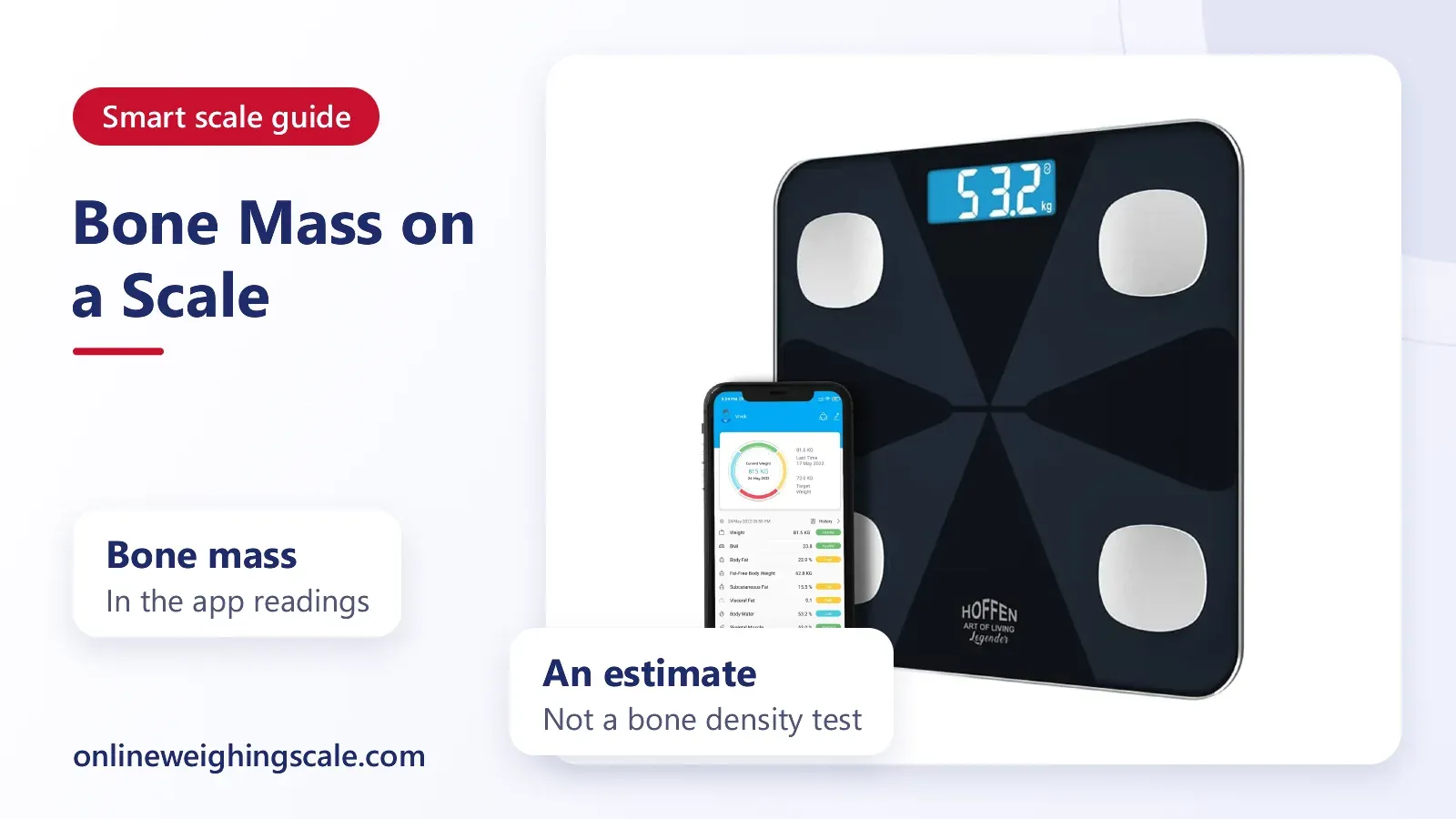
Bone mass on a body composition scale is an estimate of the weight of the mineral part of your skeleton, shown in kg, and it is not a bone density test. A home scale cannot tell you whether your bones are strong, and a doctor uses a different scan for that.
Many people open the app after a weigh-in, see a bone mass of 2.5 kg or 3 kg, and wonder if that is good or bad. This guide explains what that figure is, how bone density is really measured, and what you can do for your bones in everyday life. This is general information. Ask your doctor about your own readings.
What bone mass means on a weighing scale
On a smart body scale, bone mass is a calculated number for the bone mineral in your body, mostly calcium and phosphorus, expressed as a weight. It sits in the same list as body fat, muscle and water. Because it is a weight, it moves a little with your body size. A taller, heavier person usually has a larger skeleton, so the figure is usually higher.
The scale does not look inside you. It works the figure out from your weight, the height, age and sex you entered and a formula built by the maker, so the result is a model of a typical body like yours. Bone is a small part of that calculation. So the bone figure is an indirect estimate, and different scales can give different values for the same person on the same morning. Our guide on how accurate smart scales are explains why weight is dependable but the body-fat style readings are less so, and the same reasoning holds for bone mass.
Omace Brands Private Limited does not describe how its smart scales work inside, and this post makes no claim that any one model gives a particular bone reading. What follows is about what the number can and cannot mean for any scale.
Bone mass vs bone density
Bone mass and bone density are different things. Bone mass is how much bone mineral you have in total, as a weight. Bone density is how much mineral sits in a given area of a particular bone, such as the hip or spine, measured by a scan.
The National Institute of Arthritis and Musculoskeletal and Skin Diseases (NIAMS) in the United States says that osteoporosis develops when bone mineral density and bone mass decrease, which makes bones weaker and raises the chance of a fracture. A scale reading gives you neither the density of your hip nor the density of your spine. Those are the places where weak bones most often break, and a home scale does not reach them.
| Point | Bone mass on a scale | Bone density test (DEXA) |
|---|---|---|
| What it gives | An estimate of total bone mineral, in kg | Density of specific bones, usually hip and spine |
| How it is found | A maker's formula | Low dose X-rays |
| Can it diagnose osteoporosis | No | Used by doctors with other checks |
| Where it is done | At home | A hospital or scan centre, on a doctor's advice |
How bone density is really measured
Bone density is measured with a DEXA scan, also written DXA. The NHS explains that a bone density scan uses low dose X-rays to see how dense your bones are, and that the dose is much lower than a standard X-ray. NIAMS adds that DXA measures how much calcium and other minerals are in a specific area of bone, usually the hip and spine.
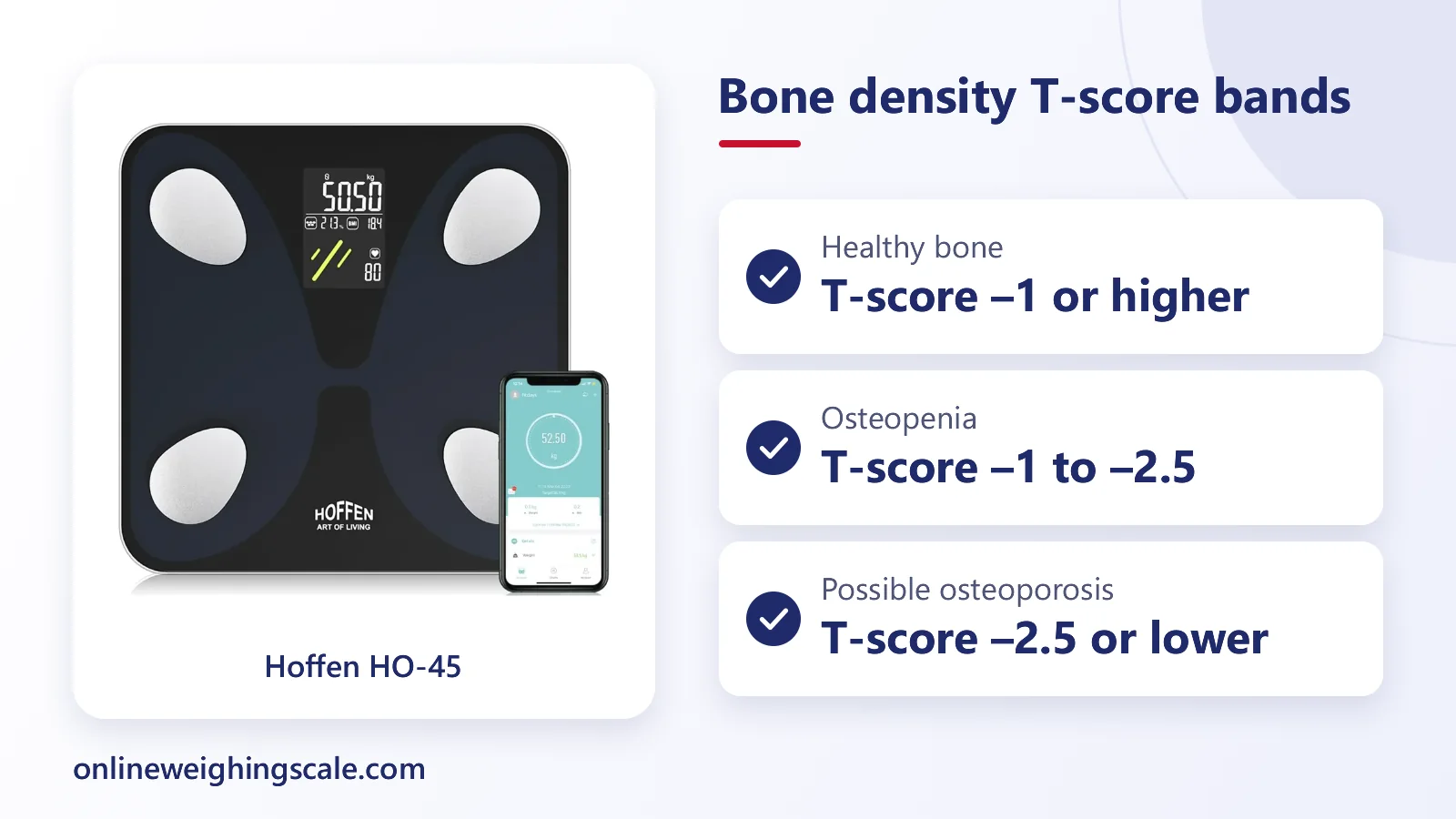
The result is given as a T-score, which compares your bone density with that of a healthy young adult. NIAMS lists the bands: a T-score of –1 or higher is healthy bone, –1 to –2.5 is osteopenia, a less severe form of low bone mineral density, and –2.5 or lower may be osteoporosis. NIAMS notes that T-scores apply to postmenopausal women and men aged 50 or older. A second figure, the Z-score, compares you with people of your own age, sex and ethnicity, and the NHS says results are usually read together with a fracture risk assessment.
These numbers are references. One score does not decide anything alone, and a doctor reads them along with your age, history and other tests.
Is there a normal range for bone mass on a scale
Many apps show a green band or a suggested range by weight. These ranges are set by the scale maker, not by WHO, ICMR, the NHS or any health body, and no medical guideline defines a healthy bone mass in kg for home use. Since no official range exists, this post does not give one.
A figure below the app's band does not mean you have weak bones. A figure inside the band does not mean your bones are fine. Two people of the same weight can have very different bone strength, and the scale cannot see it.
Why a scale cannot screen for osteoporosis
There are three plain reasons. First, the number is calculated, not measured at the hip or spine. Second, bone is a small part of the signal, and things like how much water you drank or whether you just exercised can shift the result. Third, osteoporosis is judged by density against a reference group, and a scale gives no such comparison.
The NHS also points out that osteoporosis often has no symptoms and that the first sign is often a broken bone after a minor fall or injury. That is why a reassuring number on a bathroom scale is risky: it can delay a proper check for someone who needs one.
Use the figure only as a rough trend on the same scale, at the same time of day, in the same conditions. If the number swings from week to week, that is the scale and the conditions, not your skeleton. The same habit helps with lean body mass and the other readings.
Who should think about a bone density scan
The NHS says a bone density scan may be offered to people over 50 with a risk of developing osteoporosis, and to people under 50 with other risk factors, such as smoking or a previous broken bone. In the United States, NIAMS reports that the U.S. Preventive Services Task Force recommends a bone mineral density test for women over 65, and for postmenopausal women under 65 who have a higher risk of fracture. Rules in India differ by doctor and hospital, so ask your own physician.
Risk factors listed by NIAMS include older age, a slender frame, low calcium or vitamin D intake, family history, low oestrogen after menopause, long use of steroid tablets, smoking, heavy drinking and inactivity. See a doctor if you notice back pain that does not ease, a change in posture or loss of height, as the NHS advises.
What helps bones in everyday life
The NHS and NIAMS give similar advice, and none of it needs a scale.
- Eat a nutritious diet with enough calcium. Dairy, ragi, sesame (til), green leafy vegetables and small fish with bones are common Indian sources.
- Get vitamin D. The NHS suggests sunlight and says a doctor may advise a supplement, so ask before you start one.
- Do weight-bearing exercise such as walking, along with strengthening and balance work. NIAMS gives walking as its example.
- Do not smoke and keep alcohol low.
- Reduce the chance of falls at home: good light, no loose mats, steady footwear.
Eating too little to lose weight can work against your bones, and NIAMS lists excessive dieting among the risk factors. A steady weight and regular movement serve bones better than chasing a number.
Getting more from a smart scale without over-reading it
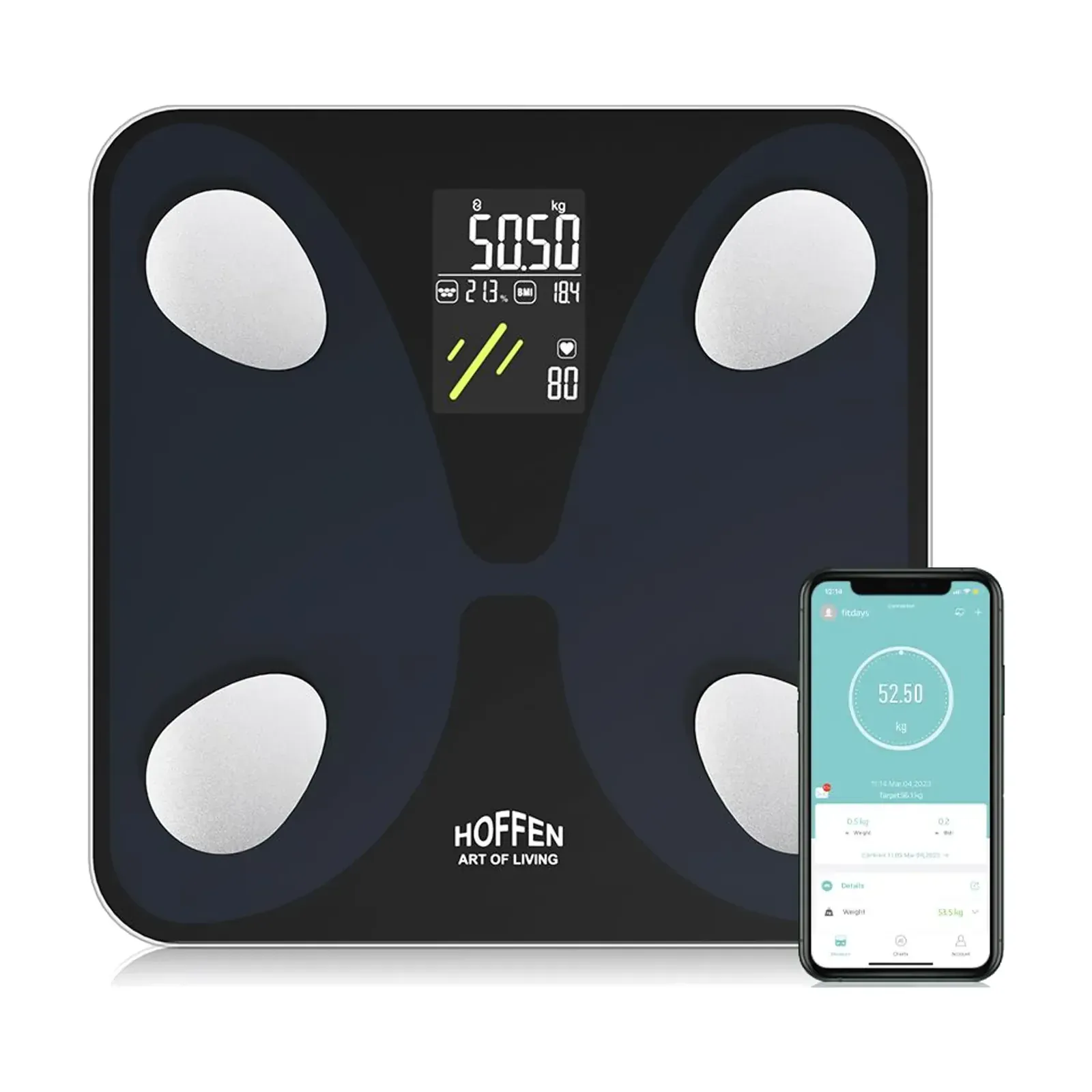
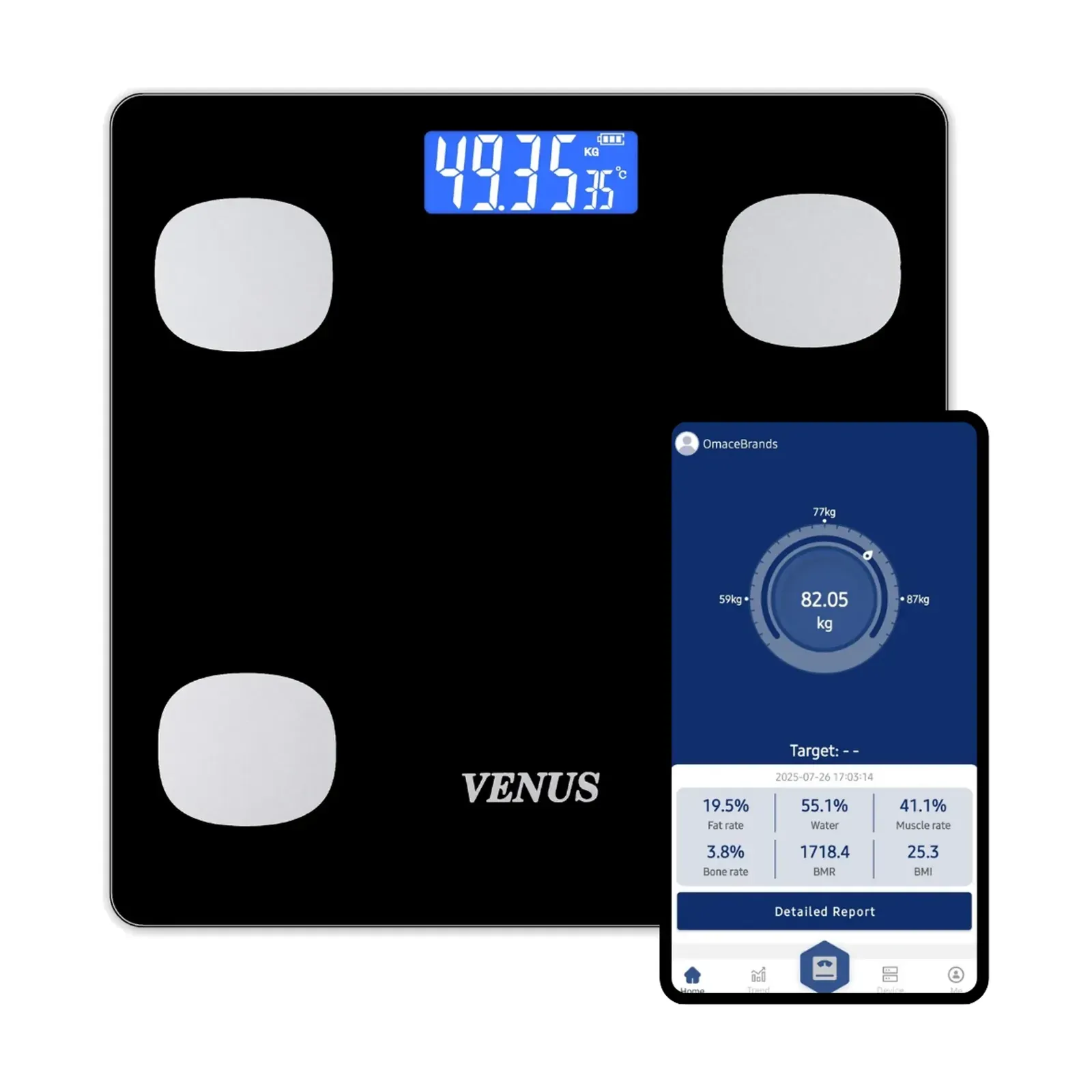
Weigh at the same hour, on a hard flat floor, with bare dry feet, and compare only with your own earlier readings. Treat weight as the solid number and the bone figure as a rough guide. Omace Brands Private Limited, which has been in the weighing trade since 1994 and makes scales at Bagru, Jaipur, offers the Hoffen HO-45 Smart Body Composition Scale at ₹2619 and the Venus EPS-6399 Body Fat Weighing Machine at ₹729 for people who want body readings in an app; the other models are under smart weighing scale. Neither replaces a scan or a doctor's advice. If you only need weight and a BMI idea, the BMI calculator is free.
Body composition figures are estimates, and a scale does not diagnose anything. A doctor decides what your readings mean.