Under section 23 of the Legal Metrology Act, 2009, nobody may manufacture, repair or sell a weighing scale in India without a licence from the state Controller. Since 1 May 2026 the Act calls that licence a registration certificate. This guide is for OEM buyers, dealers and founders starting a scale brand, and it states only what the official texts say.
What section 23 requires
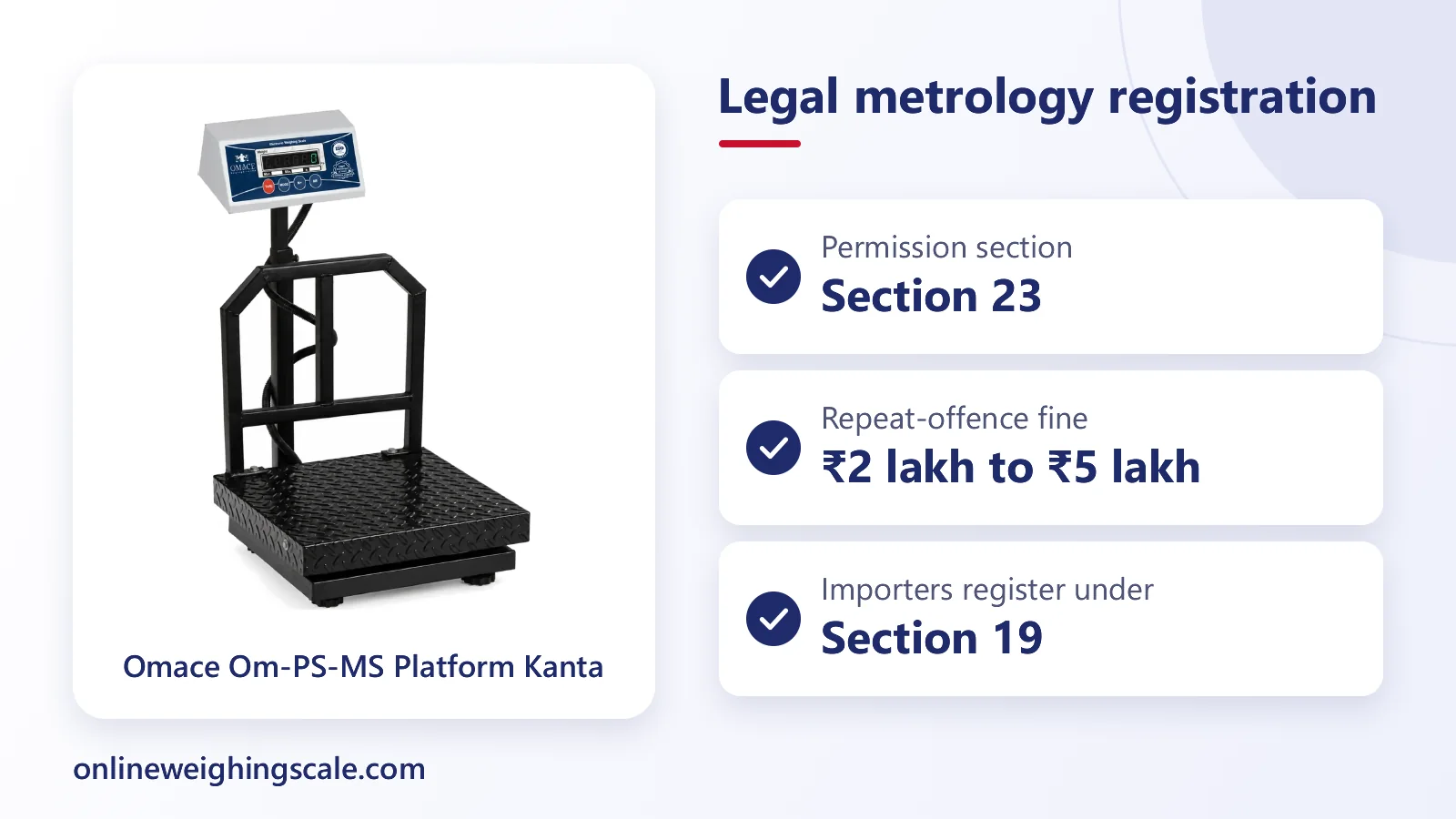
Section 23(1) of the Legal Metrology Act, 2009 forbids any person to manufacture, repair or sell a weight or measure, or to offer, expose or possess one for repair or sale, without the permission the Controller issues. The Act defines a weight or measure to include a weighing or measuring instrument, so every kanta and taraju sold for trade is covered.
A proviso in the same section exempts a manufacturer from taking a repair licence to repair its own scales in a State other than the one where they were made. Section 23(2) says the Controller issues the permission in the form, manner, period and area, on the conditions and for the fee, that are prescribed. Those details are therefore not in the Act. They sit in each state's rules.
The Controller is a state officer. Section 14 lets the State Government appoint a Controller of Legal Metrology for intra-state trade and commerce, so a shop in Jaipur and a workshop in Pune deal with two different offices.
Licence or registration certificate: the change of 1 May 2026
The Jan Vishwas (Amendment of Provisions) Act, 2026 replaced the word "licence" with "registration certificate" in the heading and both sub-sections of section 23. It made the same swap in sections 45, 46 and 47, which carry the penalties. The Department of Consumer Affairs notified on 27 April 2026 that these changes, listed at serial number 66 of the Schedule, apply from 1 May 2026.
The duty itself did not disappear. A person who makes, repairs or sells scales still needs the Controller's permission. The same Act also lets an inspecting officer serve an improvement notice, which is covered further down.
State portals and forms may still say "licence" for some time. The Rajasthan Legal Metrology department's own FAQ sheet is dated February 2021 and uses the older word throughout. Read the form your state shows today, and ask the Controller's office what validity and renewal terms apply to a certificate issued after 1 May 2026. No central text read for this guide fixes those terms (checked November 2026).
Who needs a legal metrology licence for scales
The Act defines the three roles in section 2. The table gives each role in plain words, with the importer added because section 19 treats it separately.
| Role | What the Act's definition covers | Where the permission comes from |
|---|---|---|
| Manufacturer | Makes a scale, or assembles bought parts and claims the end product as its own, or puts its own mark on a complete scale made by another person and claims it as its own | Controller of the state, section 23 |
| Dealer | Buys, sells, supplies or distributes scales for cash, credit or commission; includes a commission agent and an importer | Controller of the state, section 23 |
| Repairer | Repairs a scale, and also adjusts, cleans, lubricates, paints or services it so that it keeps to the standards | Controller of the state, section 23 |
| Importer | Brings a scale into India from outside | Registration with the Director, section 19 |
Section 19 says nobody may import a weight or measure unless registered with the Director, in the prescribed manner and on payment of the prescribed fee. Section 22 adds that every person must seek approval of the model before manufacturing or importing a weight or measure. Model approval and the section 23 permission are two separate steps.
What an OEM buyer or new brand owner should ask
Many founders order scales from a factory and sell them under their own name. The definition of a manufacturer in section 2(i) reaches a person who puts its own mark on a complete scale made by someone else and claims it as its own. A brand owner can therefore be treated as a manufacturer, even without a factory, and the factory's own permission may not cover the brand owner.
Omace Brands Private Limited does not give legal advice, so the safe step is to put that exact question to your state Controller before the first order. Omace Brands Private Limited explains how its OEM work runs on the private label manufacturing page, and the post on how to start a weighing scale brand in India covers the business side.
Weighing scale dealer licence: what a shop needs
A trader who buys scales from makers and sells them on is a dealer under section 2(b), and selling needs the Controller's permission as much as making does. A shop that only uses a scale to weigh goods for customers is a different matter. That is a question of verification and stamping, which the post on legal metrology in India explains.
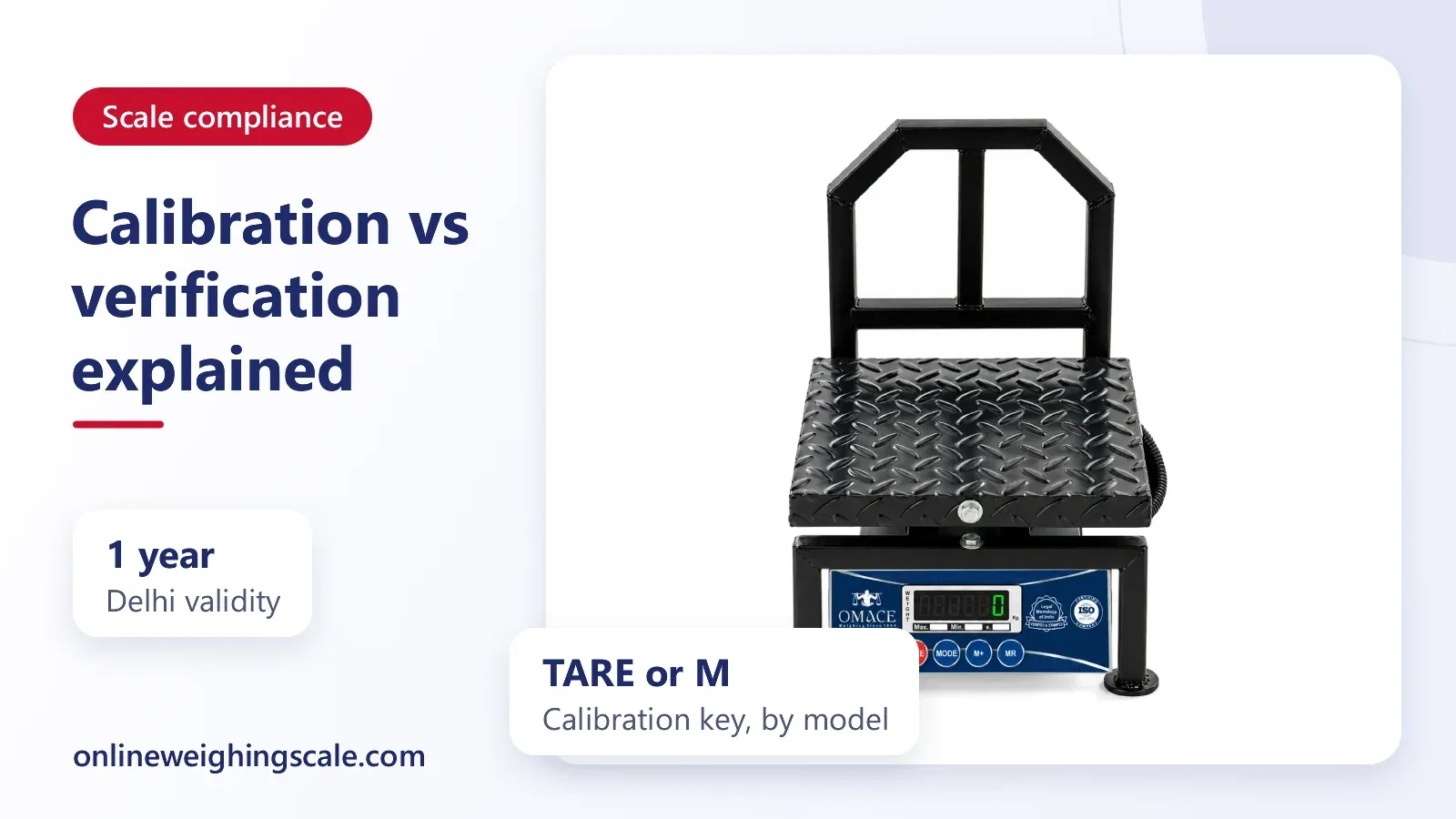
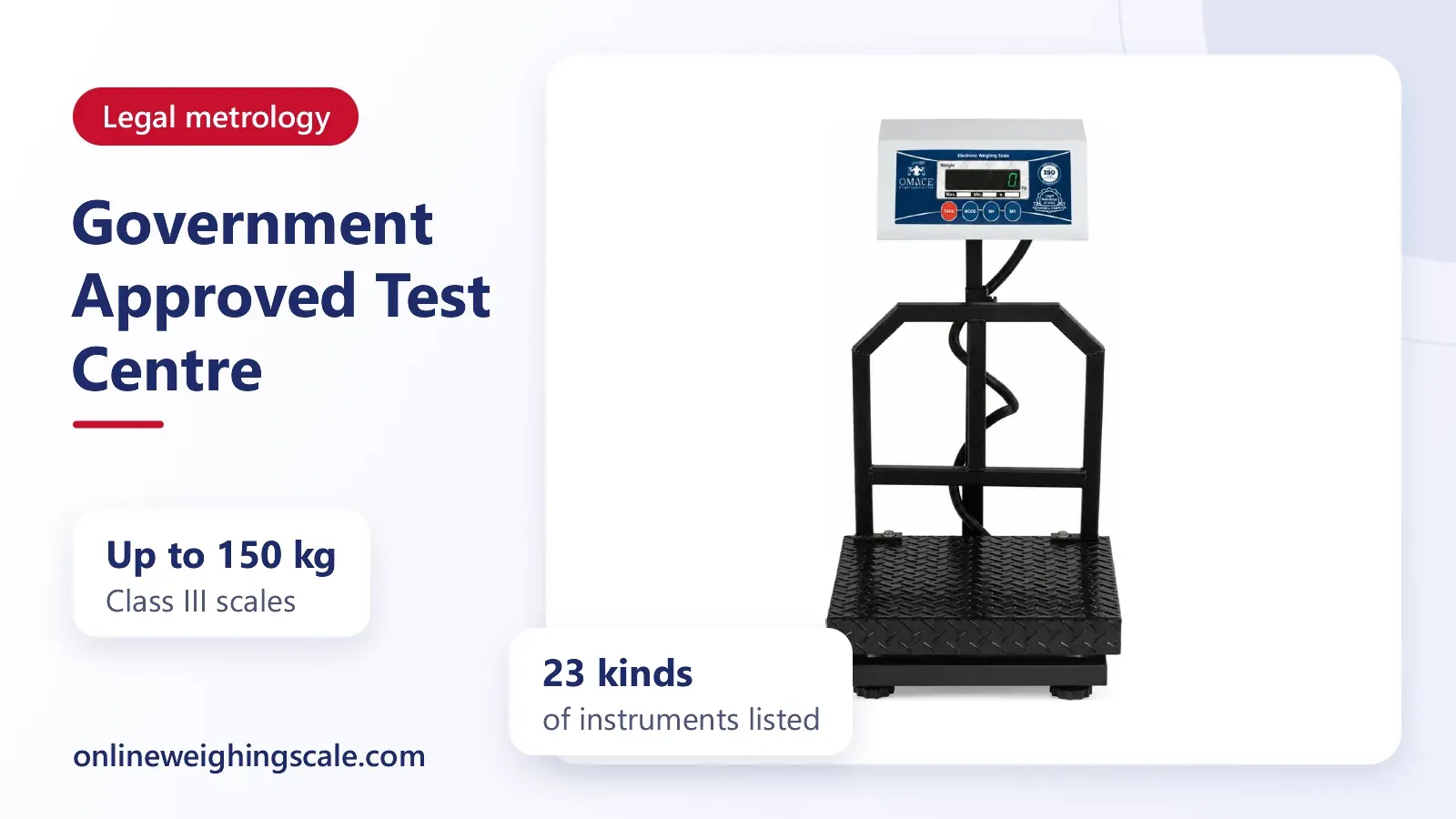
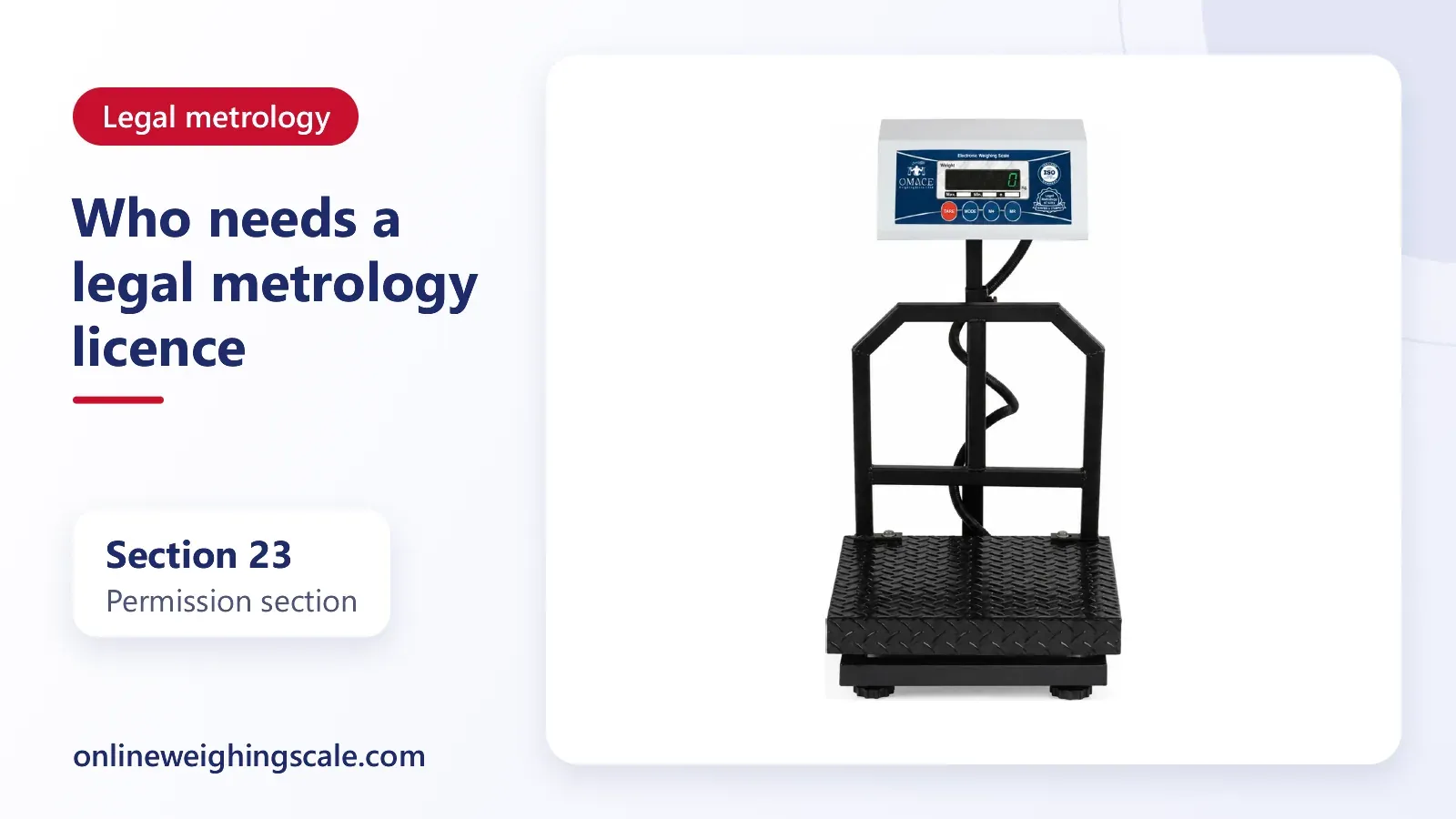
Omace Brands Private Limited makes shop, platform, chicken and crane scales at G-29 RIICO Industrial Area, Bagru, Jaipur. These scales leave Bagru verified and stamped by Legal Metrology, and the stamp is valid across India. Stamping is compulsory on platform and crane scales. The post on weighing scale stamping charges covers the fees, and legal for trade weighing scale explains what the term means. A dealer who wants stock on a regular basis can start at the dealer page.
Legal metrology repairer licence
The definition in section 2(p) is wide. A person who only adjusts or cleans a scale to keep it within the standards is a repairer. A workshop that opens a sealed trade scale to recalibrate it therefore needs its own permission, and stamped trade scales are recalibrated by a registered repairer, not by the shop owner.
Omace Brands Private Limited repairs its commercial scales when the buyer asks. The buyer pays the shipping both ways and the cost of the repair. Spare parts depend on availability, so ask first through the contact page. For calibration basics, see what calibration is.
How to get a legal metrology licence in your state
The applicant goes to the Controller of the state where the shop, workshop or factory stands. The Rajasthan department's FAQ sheet shows one working example. It lists separate online applications for a manufacturer, dealer and repairer of weights and measures. Applicants register on the state's single sign-on portal, fill in the form, upload documents and pay online, and the Controller grants the licence. The sheet adds that a licence is not saleable or transferable.
The same sheet says licence fees follow Schedule IV of the Rajasthan Legal Metrology (Enforcement) Rules, 2011, with a separate fee for each role. Fees, validity and document lists differ from state to state, and states change them. Omace Brands Private Limited therefore quotes no fee here. Open your state department's website, find the Enforcement Rules, and read the current schedule and the form for your role.
A practical order of work:
- Decide which of the roles above you play, remembering that a brand owner may count as a manufacturer.
- Find your state's Legal Metrology (Enforcement) Rules and the department's online application.
- Ask the Controller's office how the 1 May 2026 change to "registration certificate" affects the form, the validity and renewal.
- Apply before you stock, repair or sell, not after.
- Keep the certificate where inspectors can see it, because altering or tampering with it is itself an offence under section 47.
Penalties for working without registration, as amended
The Jan Vishwas Act, 2026 rewrote the penalties from 1 May 2026. A first offence now earns a warning in the form of an improvement notice. The table shows the amounts the amended sections give for later offences.
| Offence | Section | First offence | Second offence | Later offences |
|---|---|---|---|---|
| Making a scale without registration | 45 | Improvement notice | Penalty up to ₹20,000 | ₹2 lakh to ₹5 lakh |
| Repairing or selling without registration | 46 | Improvement notice | Penalty up to ₹5,000 | ₹2 lakh to ₹5 lakh |
| Importing without registration | 38 | Improvement notice | Penalty up to ₹25,000 | ₹2 lakh to ₹5 lakh |
| Tampering with the certificate | 47 | Improvement notice | Penalty up to ₹20,000 | ₹2 lakh to ₹5 lakh |
Before the amendment, the original text of the Act set a fine of up to ₹20,000 for making a scale without a licence, with up to one year in prison for a repeat offence, and a fine of up to ₹5,000 for repairing or selling without one. The change is a softer first step and a heavier fine for repeat offenders.
An improvement notice is served by the Director, the Controller or a legal metrology officer who has reasonable ground to believe the Act or rules were not followed. It states the grounds, the failure and the measures to take, and gives a reasonable period. If the person does not comply, the registration or approval is suspended or revoked. The officer may do so only after hearing the person and recording reasons. Section 48, as substituted, lets offences under sections 45 to 47 be compounded on payment of a prescribed sum (checked November 2026).
Where the licence fits with the rest of the rules
The permission to make, repair or sell is the first gate. Model approval, verification and stamping, and the periods and fees set in the rules come after it, and a dealer or OEM buyer meets all of them. Omace Brands Private Limited publishes its company certificates, including ISO 9001:2015 and CE compliance, on the certificates page; those are quality certificates and are separate from a state's Legal Metrology registration.