Weight changes with location because gravity changes from place to place, while mass stays exactly the same. The National Oceanic and Atmospheric Administration (NOAA) says gravity gets about half a percent stronger when you go from the equator to the poles.
That is a small shift, and nobody feels it while walking around. A digital scale does respond to it, and so does the way scales are built, checked and sold. This post explains what changes, what does not, and what it means for the kanta on your counter.
Mass stays put, weight does not
Mass is the amount of matter in an object. Weight is the pull of gravity on that mass, a force. Move a 1 kg bag of rice from Jaipur to Chennai and the rice is the same rice. The pull on it differs by a tiny amount, so its weight in the strict physics sense differs too. The full difference between the two ideas, with units and the formula, is in our post on mass vs weight.
Everyday talk blurs the two. When a shopkeeper says a bag "weighs 5 kg", he means it has a mass of 5 kg. The scale shows that number because it was set up to convert a pull into kilograms at a particular gravity. The whole question of location comes from that conversion.
Why gravity is not the same everywhere
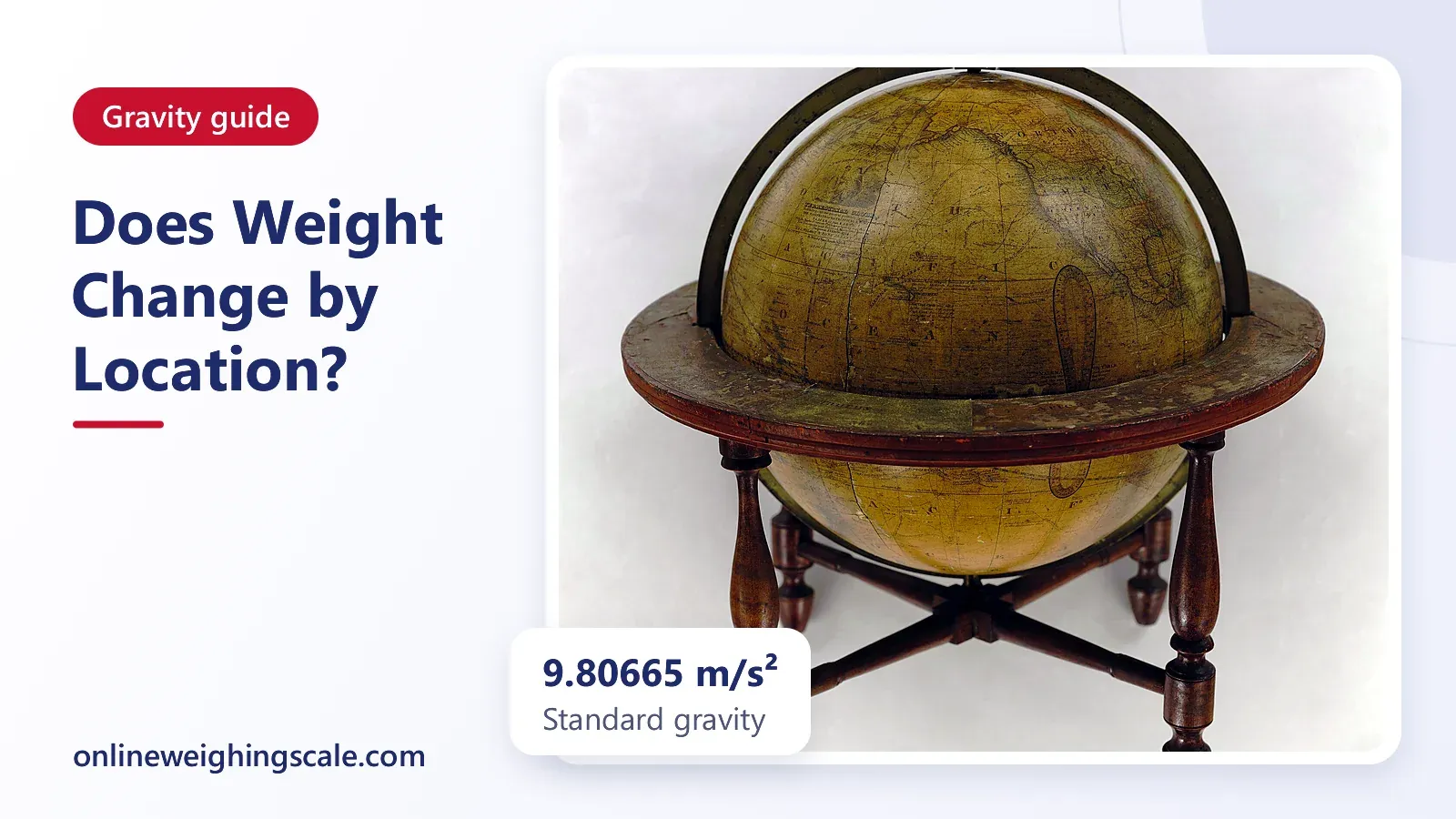
The standard value of gravity is fixed by agreement. The National Institute of Standards and Technology (NIST) lists the standard acceleration of gravity as 9.80665 m/s², an exact figure used as a reference. Real places differ from it for three reasons.
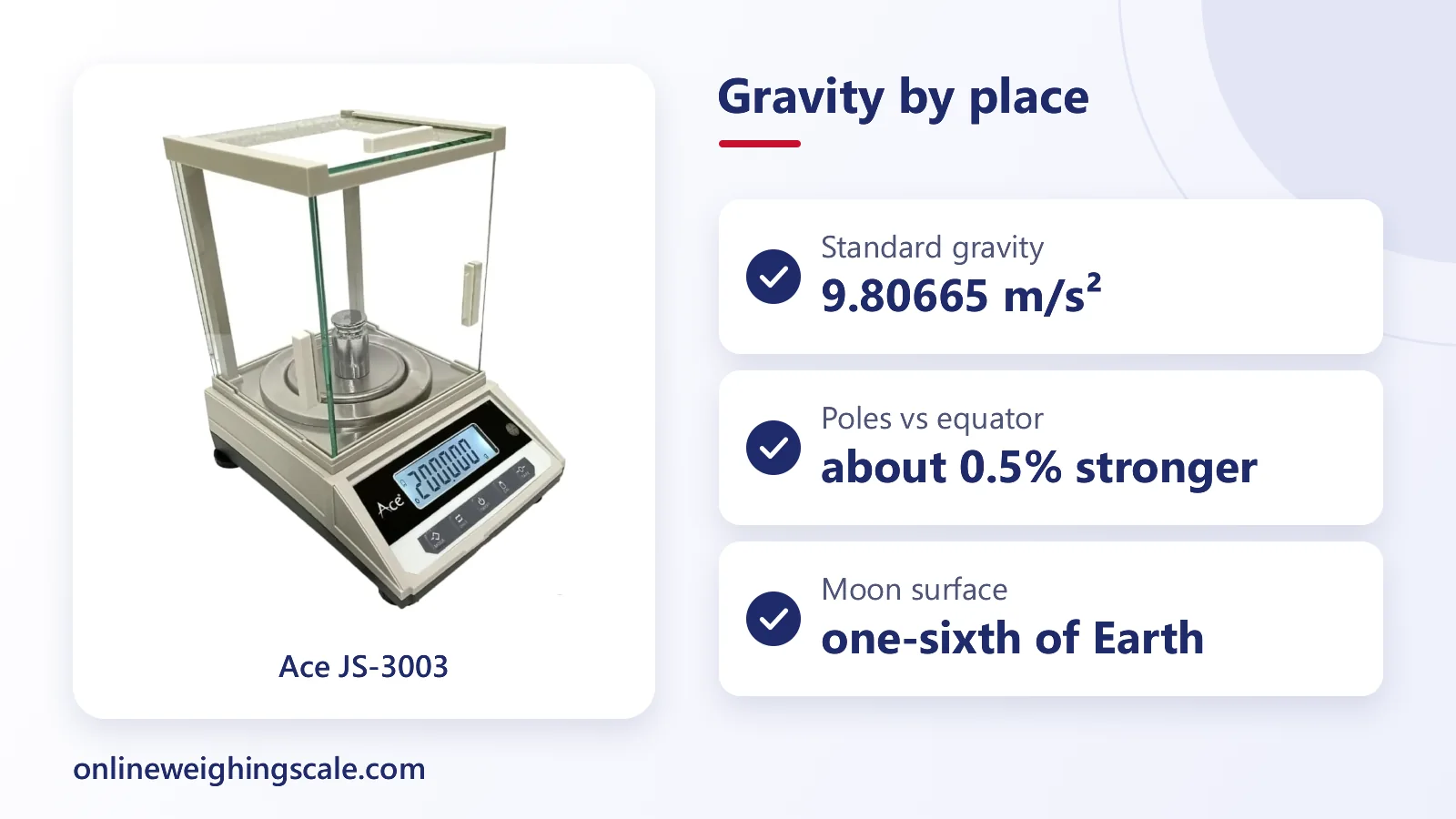
- Latitude. The Earth bulges at the equator, so the poles sit closer to its centre. NOAA's National Ocean Service explains that gravity is about half a percent stronger from the equator to the poles. The spin of the Earth adds to this, because it works against gravity most at the equator.
- Altitude. The same NOAA page says gravity gets weaker as you move farther from the centre of the Earth, which is why a gravity meter reads lower when it is lifted.
- What lies underneath. Dense rock, mountains and sediment change the local pull slightly. Surveyors map this carefully, but it is far smaller than the latitude effect for ordinary weighing.
NOAA also notes that these changes are not noticeable in daily life, since things still feel like the usual 9.8 m/s². The effect is real but tiny, and only an instrument that measures force can show it.
Poles, equator and the Moon in numbers
Half a percent is easy to turn into grams. The table below uses NOAA's half-percent figure, so the results are rough estimates and not measured values.
| Object (mass) | Extra pull at the poles compared with the equator | What a force-measuring scale would drift by |
|---|---|---|
| 1 kg | about 0.5% | about 5 g |
| 10 kg | about 0.5% | about 50 g |
| 100 kg | about 0.5% | about 500 g |
India spans a much smaller range of latitude than equator to pole, so the gap between two Indian cities is far smaller than these figures. Nobody needs to worry about a home kitchen scale when a family moves from Jaipur to Kochi.
The Moon shows the other extreme. NASA states that the gravity on the surface of the Moon is one-sixth of Earth's. A 60 kg person would still have a mass of 60 kg there, and a spring balance would show about a sixth of the usual reading.
What this does to a digital scale
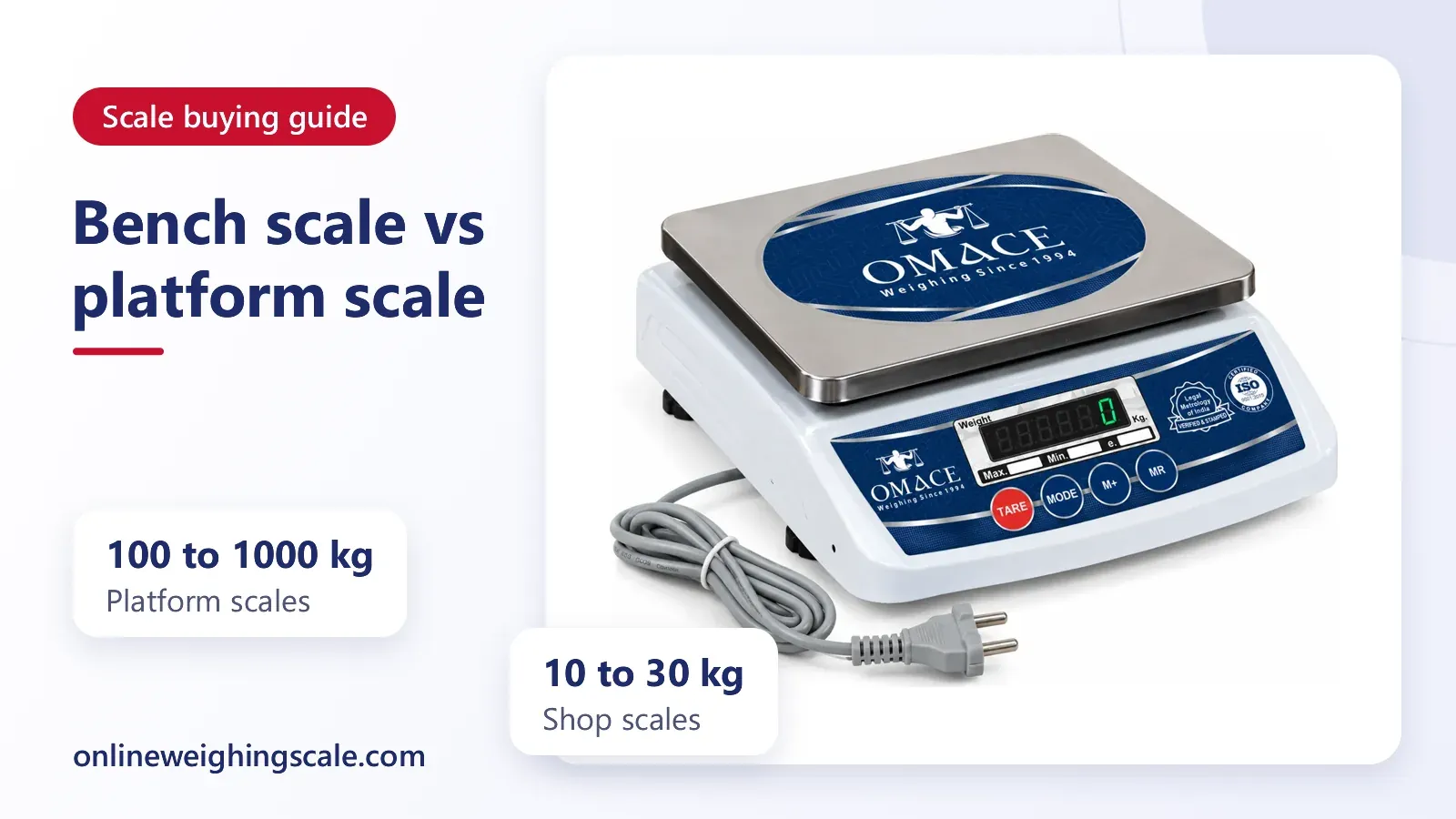
Most digital scales, from a pocket scale to a platform scale, use a load cell. A load cell does not measure mass directly. It senses the force of the load pressing down, then the electronics convert that force into kilograms using the gravity present when the scale was calibrated. Calibration means checking the reading against certified test weights and adjusting it. Our guide on what calibration is covers the steps.
If the scale then moves to a place with a different gravity, the same load presses with a slightly different force and the reading shifts by the same proportion. The possible shift across the whole Earth is about the half percent NOAA gives. For a 30 kg load on a bench scale, half a percent would be about 150 g at the extreme. Between two Indian cities the shift is a small fraction of that, usually well below what a shop needs, but it can matter for a high-resolution instrument.
Why a beam balance does not care
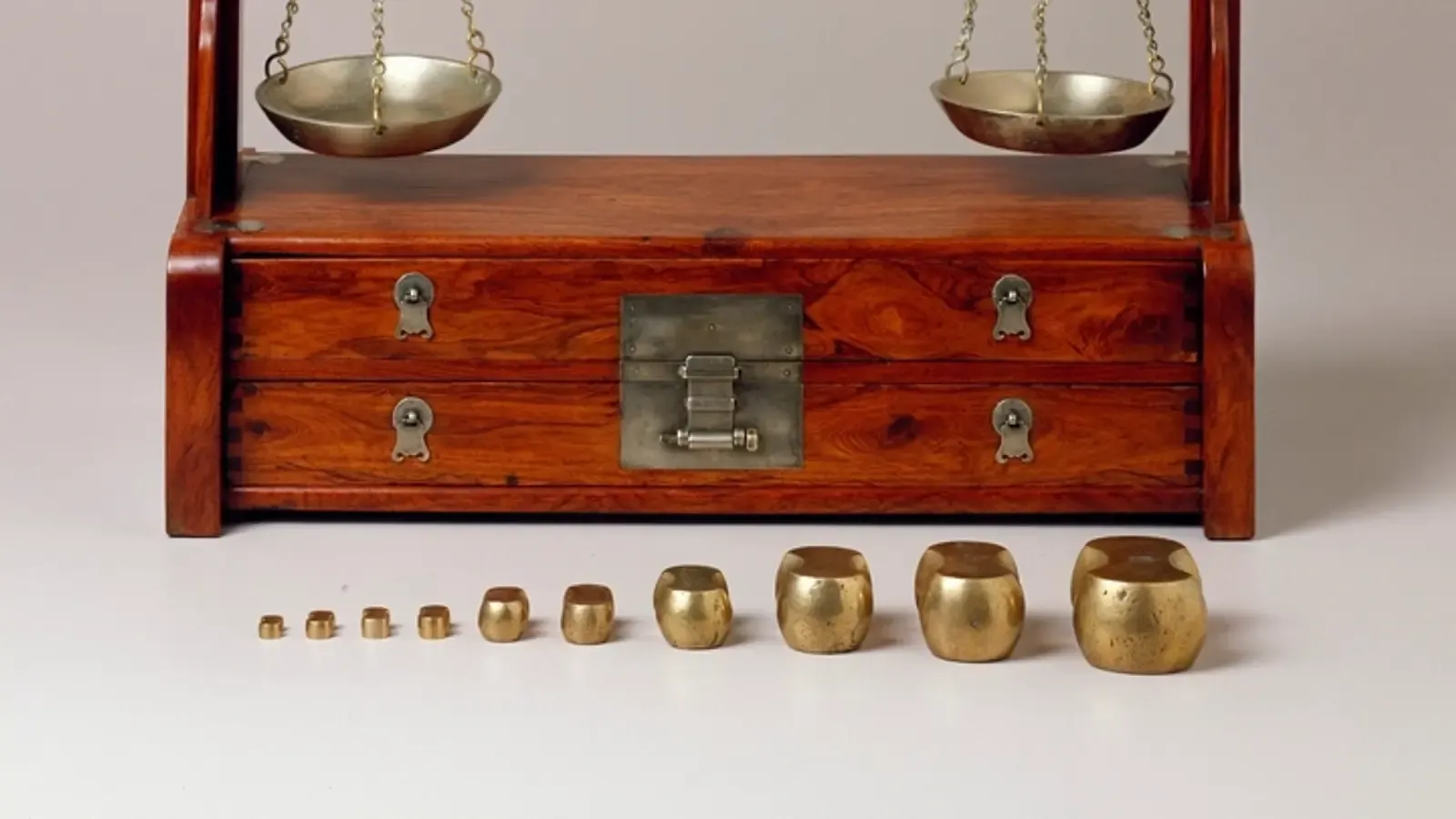
A beam balance, the old two-pan taraju, compares your object against known masses. Gravity pulls on both pans together, so the effect cancels. NIST's Handbook 44 appendix on units makes the same point: the acceleration of gravity differs from location to location, yet two equal masses still balance wherever they sit. This is the reason a beam balance can be carried anywhere without adjustment, while a spring or load cell scale reads a force.
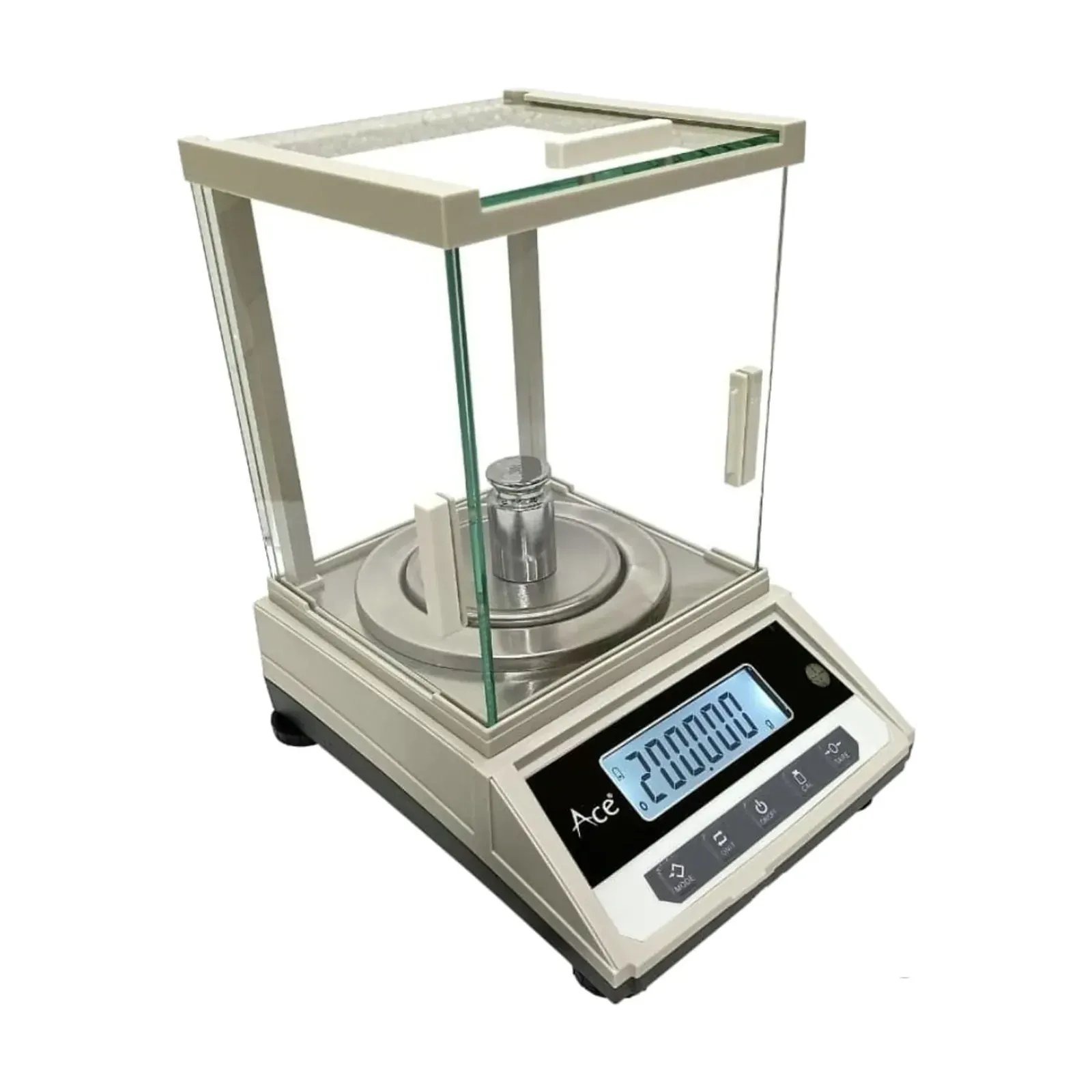
The sensitivity is also why precision balances are calibrated where they will be used. A balance that reads to 0.001 g resolves one part in several hundred thousand on a 300 g load. A gravity difference of even a few hundredths of a percent would then show up in the last digits. Calibrating on site with test weights removes the issue, because the weights feel exactly the same gravity as the sample. Omace Brands Private Limited makes balances that read to 0.001 g, such as the Ace JS-3003 Precision Weighing Balance (300 g x 0.001 g), and they ship with calibration weights for exactly this reason.
How countries handle gravity in legal weighing
Some regulators write gravity into the rules. WELMEC, the European cooperation body for legal metrology, publishes a gravity information page that shows how its members treat this. Austria, for instance, divides its territory into three zones for certain instruments, with g values of 9.8073, 9.8065 and 9.8051 m/s². Iceland uses a single reference value of 9.82308 m/s².
These numbers give a worked example. The gap between 9.82308 and 9.8051 m/s² is about 0.18%. A scale set for the Austrian value and used in Iceland would therefore read about 180 g too high on a 100 kg load, if nothing were corrected. Many other countries on the same page have no zones at all, and rely on the instrument meeting its permitted error at the place of use. The page also shows that practice differs between countries.
For India, this post does not state a gravity zone rule, because no official Indian text on this point was confirmed during research. How Indian rules treat weighing instruments in trade is covered in Legal Metrology in India.
What to do with your own scale
For most buyers the practical steps are short.
- For a kitchen, bathroom or pocket scale, check it with a known mass after you move to another city, and recalibrate only if it is off by more than you can accept.
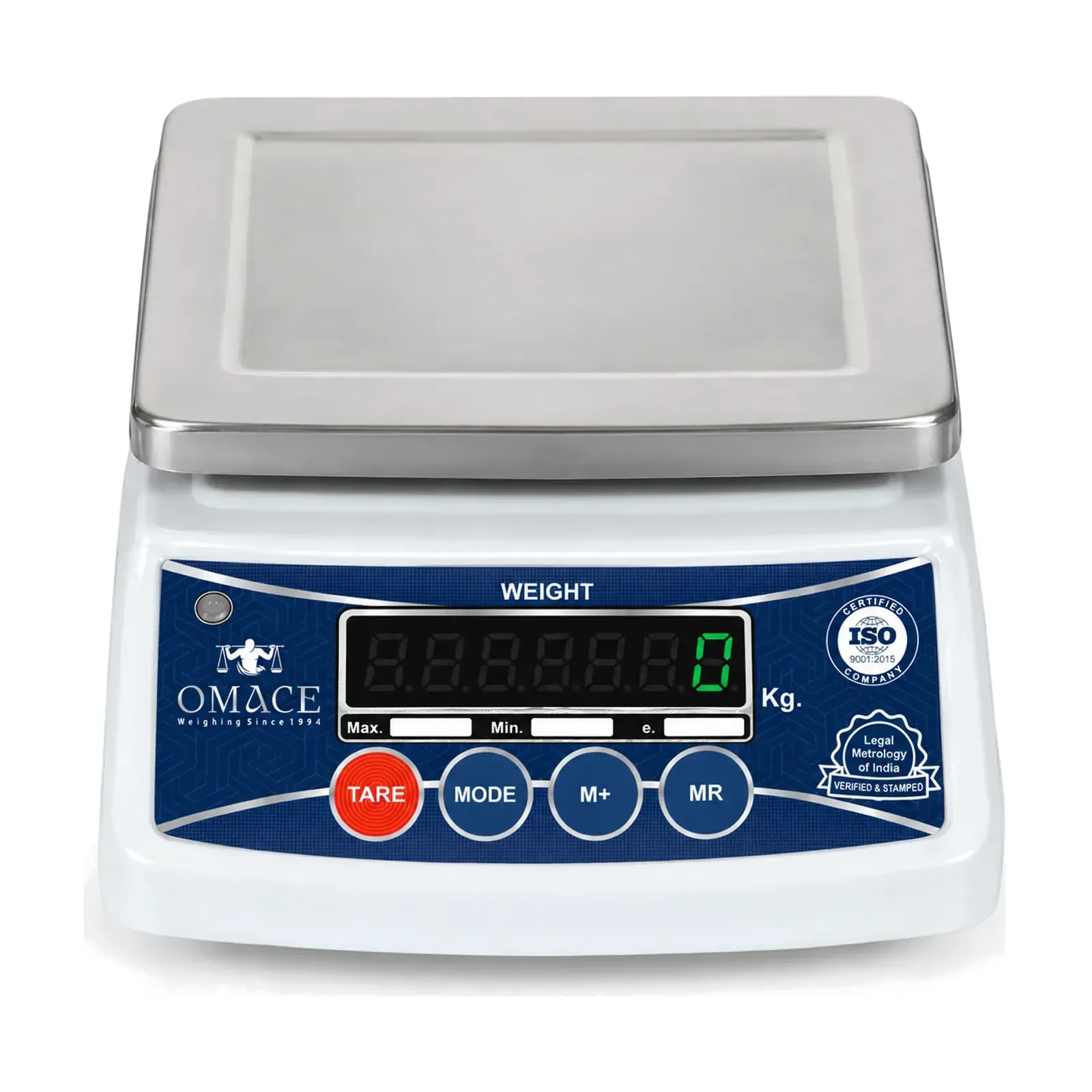
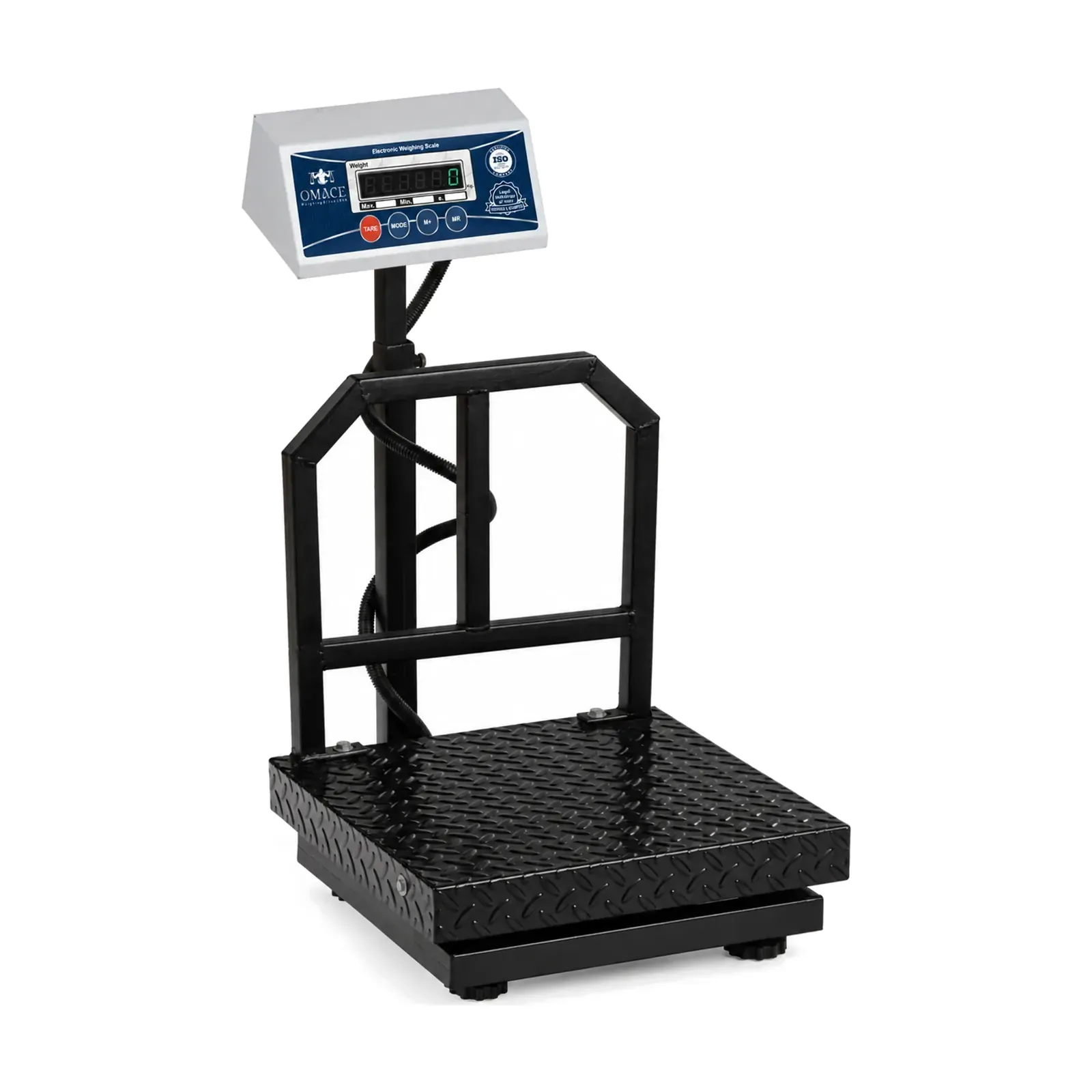
- For a bench or platform scale used for selling, have it checked with certified test weights after any long move, whether it is a counter scale such as the Om-TT-ECO kirana weighing machine or a floor scale such as the Om-PS-MS platform kanta. Omace shop, platform, chicken and crane scales leave Bagru verified and stamped by Legal Metrology, and the stamp is valid across India. A stamped trade scale is sealed, so a registered repairer does the recalibration.
- For a high-resolution balance, calibrate at the bench where it will stay, with the test weight on the pan and the windshield closed.
On Omace digital scales a long press of TARE opens calibration mode on some models and a long press of the M key on others, and the manual for each model shows which. The steps for a home unit are in how to calibrate a digital weighing scale at home. Omace Brands Private Limited has made scales in Bagru, Jaipur since 1994 and every scale is checked with certified test weights before dispatch. Questions about a specific model can go through Contact Us.
Where gravity differences stop mattering
For daily use, location is not the thing that makes a scale read wrong. Worn load cells, uneven surfaces, low batteries and overloading cause far larger errors than a move between Indian cities. Fix those first, and treat gravity as a detail that matters when resolution is high or when a trade scale crosses a long distance. The mass of your goods stays the same, whichever kanta you put it on.