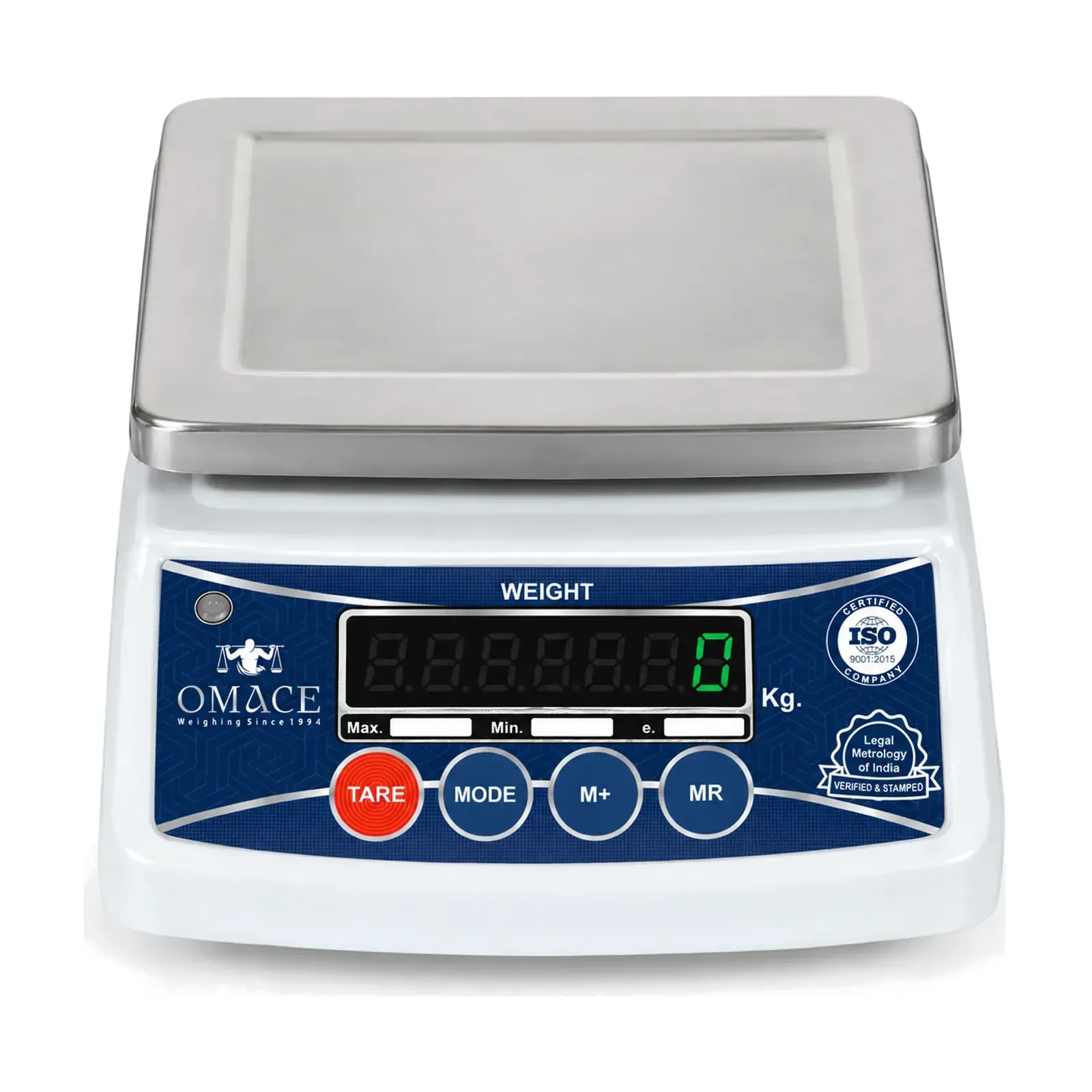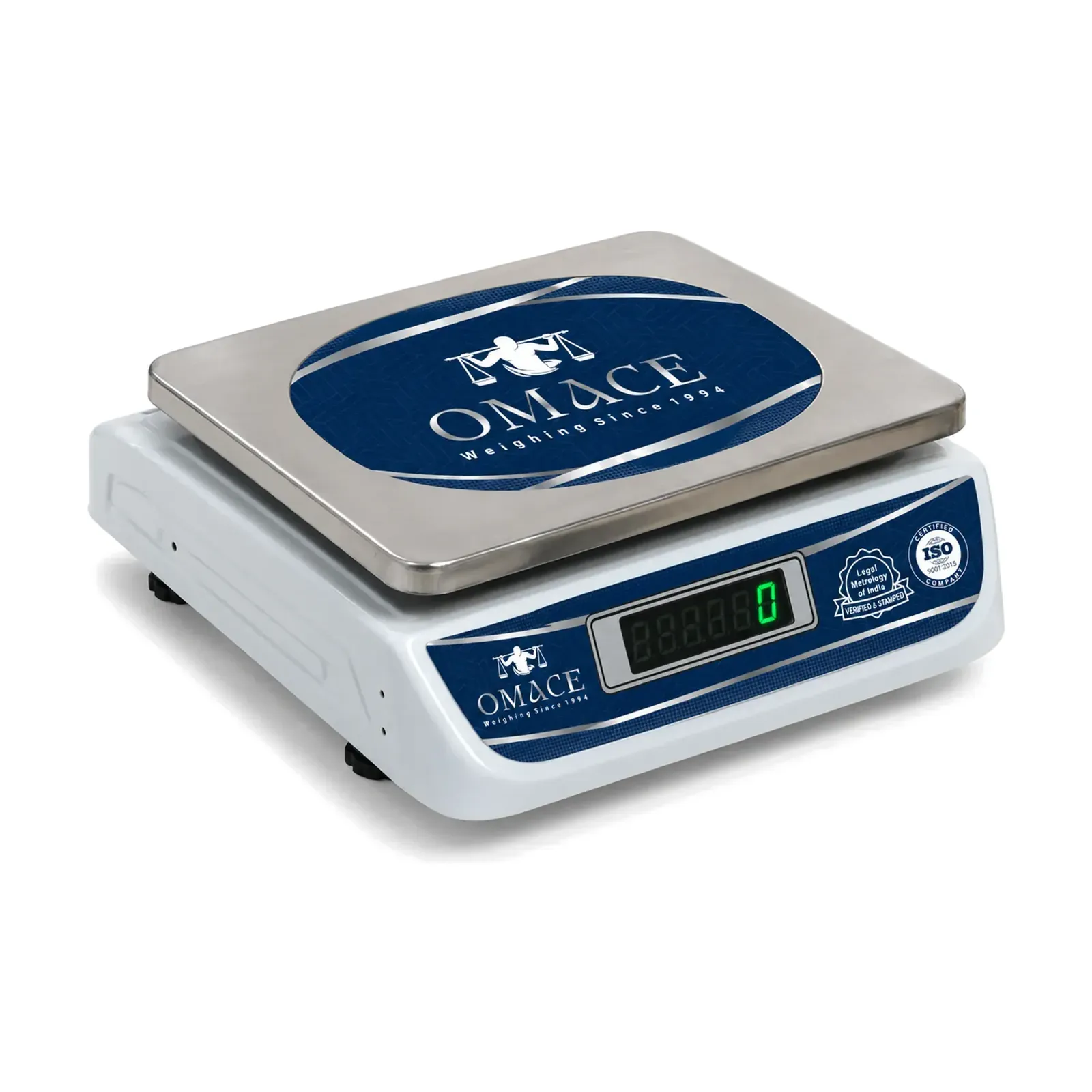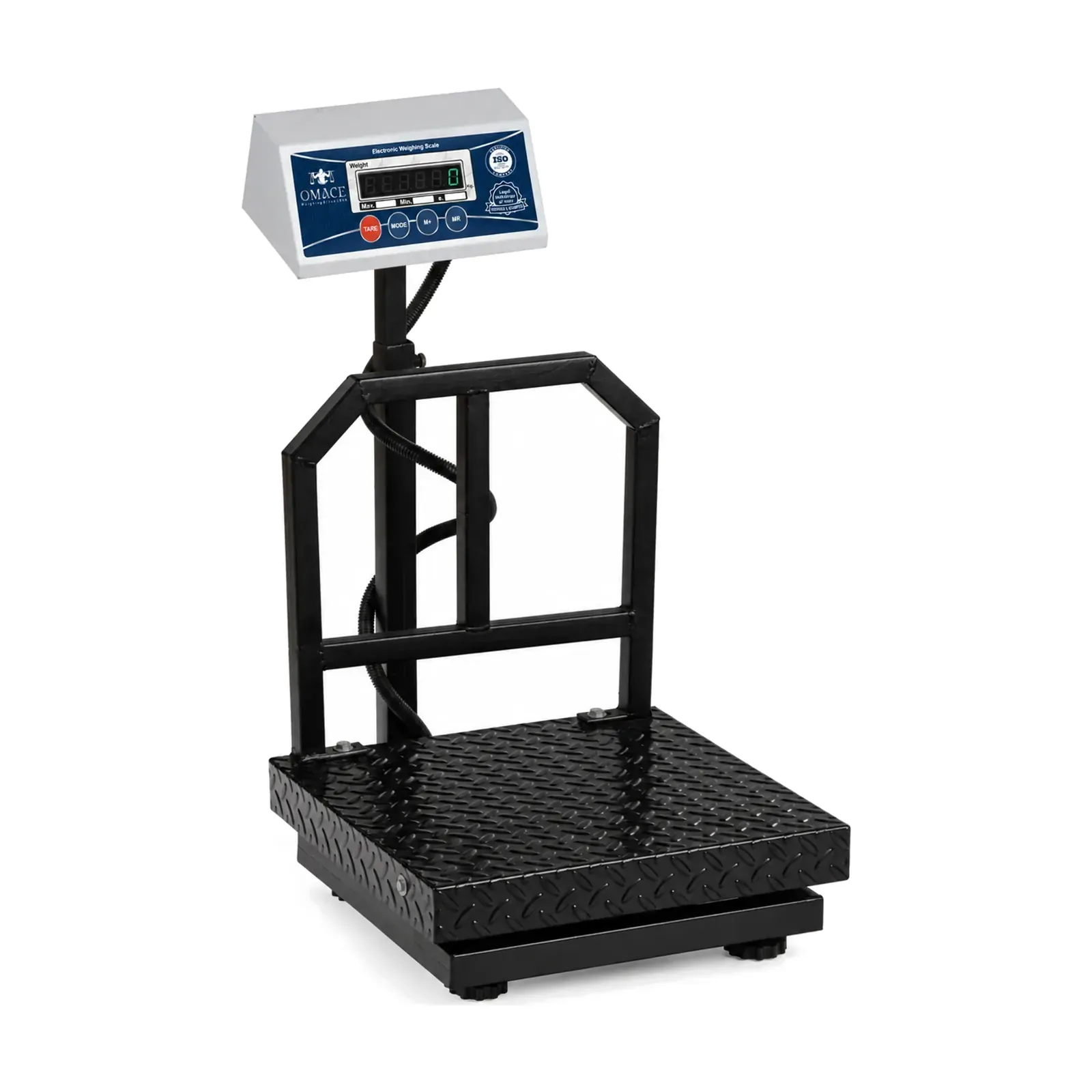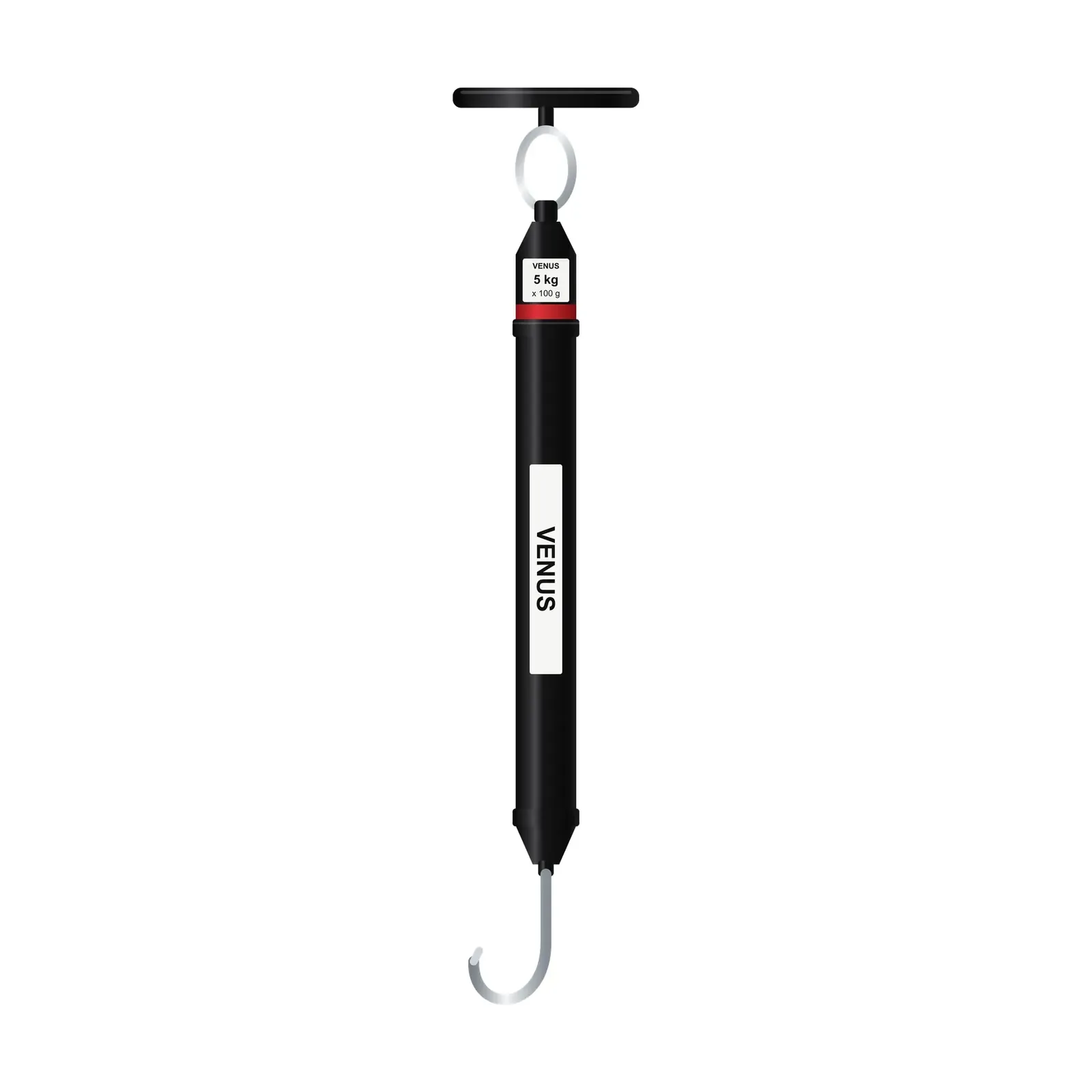
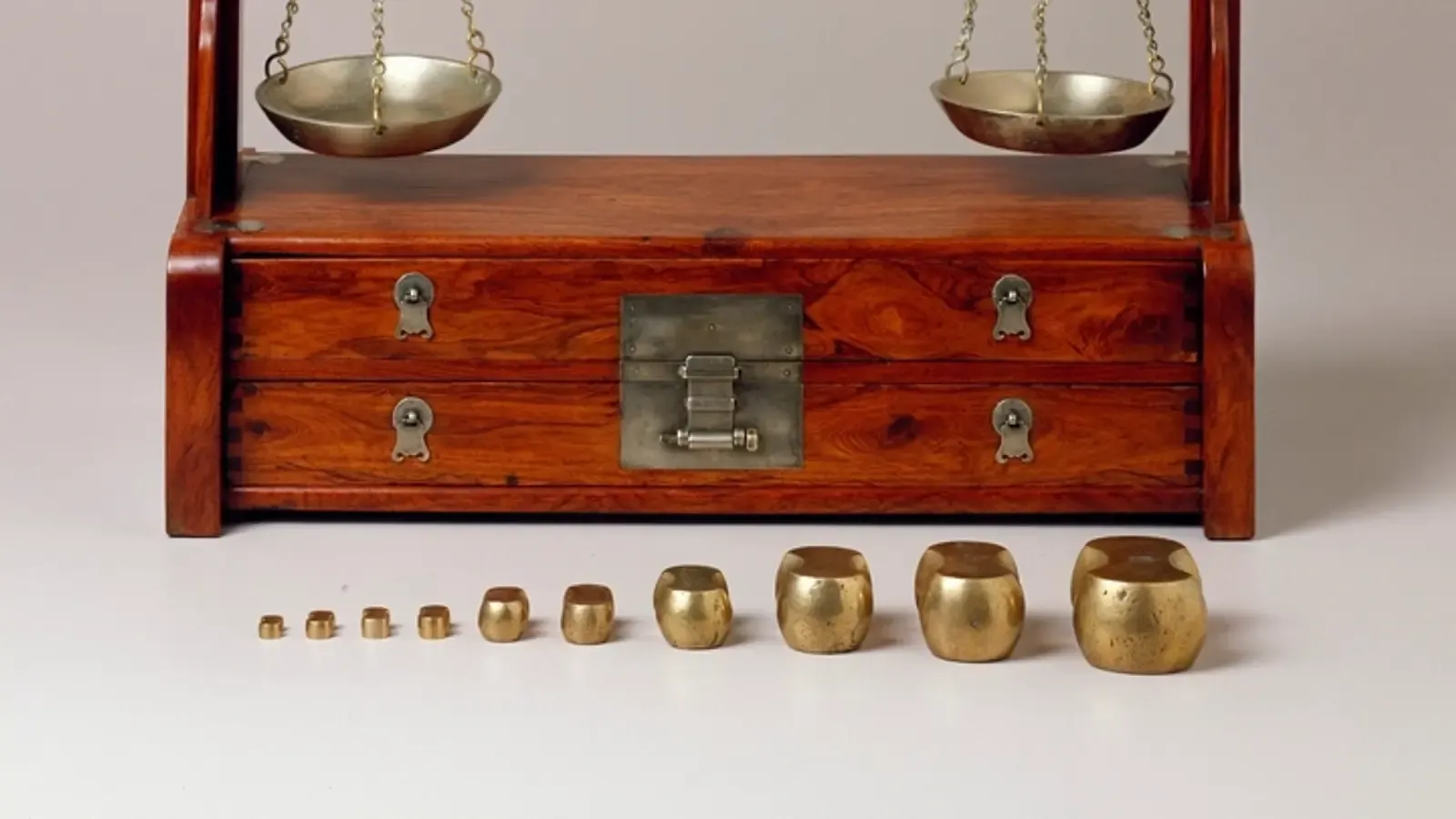
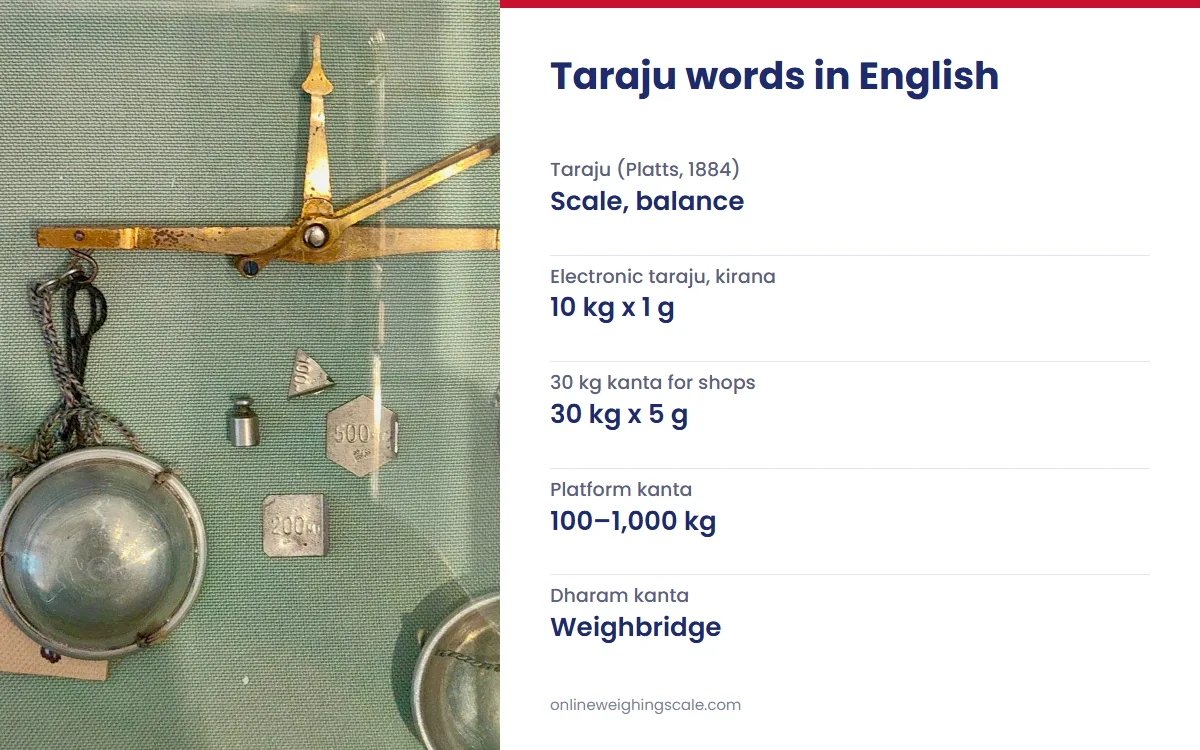
In English, a taraju (also spelt tarazu) is a weighing scale or a balance. The classic two-pan taraju is a beam balance, also called a pair of scales. Platts' 1884 Dictionary of Urdu, Classical Hindi and English lists tarāzū as a Persian word meaning scale, balance or pair of scales. The digital taraju on a kirana counter is an electronic shop scale.
What taraju means in English
Taraju is the everyday Hindi and Urdu name for anything that weighs, from a brass two-pan balance to a digital counter scale. The word came into Hindi from Persian, and Platts also records the idiom tarāzū honā, to be evenly balanced. Tarazu keeps the Persian z sound and taraju is how many Hindi speakers say it, so both spellings name the same instrument. The table in the next section gives taraju in Hindi script, along with the other words for a scale.
English uses three words for what a shopkeeper calls a taraju. A balance finds mass by comparing a load with known weights, which is exactly what the two-pan taraju does. A scale is the wider word for any weighing instrument, spring and electronic ones included. A pair of scales is the older English name for the two-pan kind and is still heard today.
The right English word therefore depends on the taraju in front of you. A two-pan taraju with weights is a beam balance. A hanging one with a spring inside is a spring balance. Anything with a display is a weighing scale or weighing machine, and the whole family is set out in the types of weighing scale guide.
Hindi words for a scale and its parts
Most Hindi scale words are older than electronic scales, and several of them name one part of the old two-pan taraju. Platts gives an English meaning for each.
Kāṅṭā, the kanta of shop boards, has many senses in Platts, from a thorn to a fork. Two of them matter here: the tongue, or pointer, of a balance, and small scales of the kind goldsmiths use. A kanta can therefore mean the pointer or the whole scale, and shop boards spell it kanta, kata or kaanta. Vajan kata and weight kanta both mean a weighing scale.
Wazn, the source of vajan, is Arabic for weighing and for weight. Ḍanḍī is the beam of a pair of scales, and palṛā, the palda, is one of its two pans. Bāṭ is a weight, the standard piece that goes in the other pan, and bāṭ-tarāzū means weights and scales together. Kamānī is the Persian word for a spring, so a spring balance is a kamani kanta. Tulā is the Sanskrit word for a balance or pair of scales, and it is also the zodiac sign Libra.
| Hindi word | Hindi script | English meaning | Origin in Platts |
|---|---|---|---|
| Taraju, tarazu | तराजू | Scale, balance, pair of scales | Persian |
| Tula | तुला | Balance; the sign Libra | Sanskrit |
| Kanta, kata | कांटा | Scale; the tongue (pointer) of a balance | Hindi |
| Vajan | वज़न | Weight, weighing | Arabic |
| Dandi | डंडी | Beam of a pair of scales | Hindi |
| Palda | पलड़ा | One pan of a pair of scales | Hindi |
| Baat | बाट | A weight | Hindi |
| Kamani | कमानी | Spring | Persian |
Kinds of taraju and their English names
Each kind of taraju has its own English name, and using that name tells a seller what you need. Six kinds cover the scales seen in Indian shops, mandis, godowns and jewellers.
Do palde wala taraju: beam balance
The do palde wala taraju, the taraju with two pans, is a beam balance or a pair of scales in English. A beam rests on a pivot at its middle, a pan hangs from each end, and the kanta stands upright when both pans carry equal mass. You put the goods in one palda and baat in the other until the beam levels. The small version that a vendor lifts by a cord tied to the middle of the dandi is a hand-held beam scale. The beam balance guide explains the principle, the school physical balance and how to test a false balance.
Kamani kanta: spring balance
A kamani kanta is a spring balance in English, and the version with a round dial is usually called a hanging scale. The load hangs from a hook and stretches a spring, and a pointer reads the stretch against marks in kilograms. Because it reads the pull of gravity on the load, a spring balance measures weight, while a two-pan taraju compares mass. It needs no battery and no baat, and it hangs wherever the load is. Omace makes Venus tubular spring balances for 5 kg and 25 kg, and Venus CHS dial hanging scales from 25 kg to 200 kg.
Electronic taraju: electronic shop scale
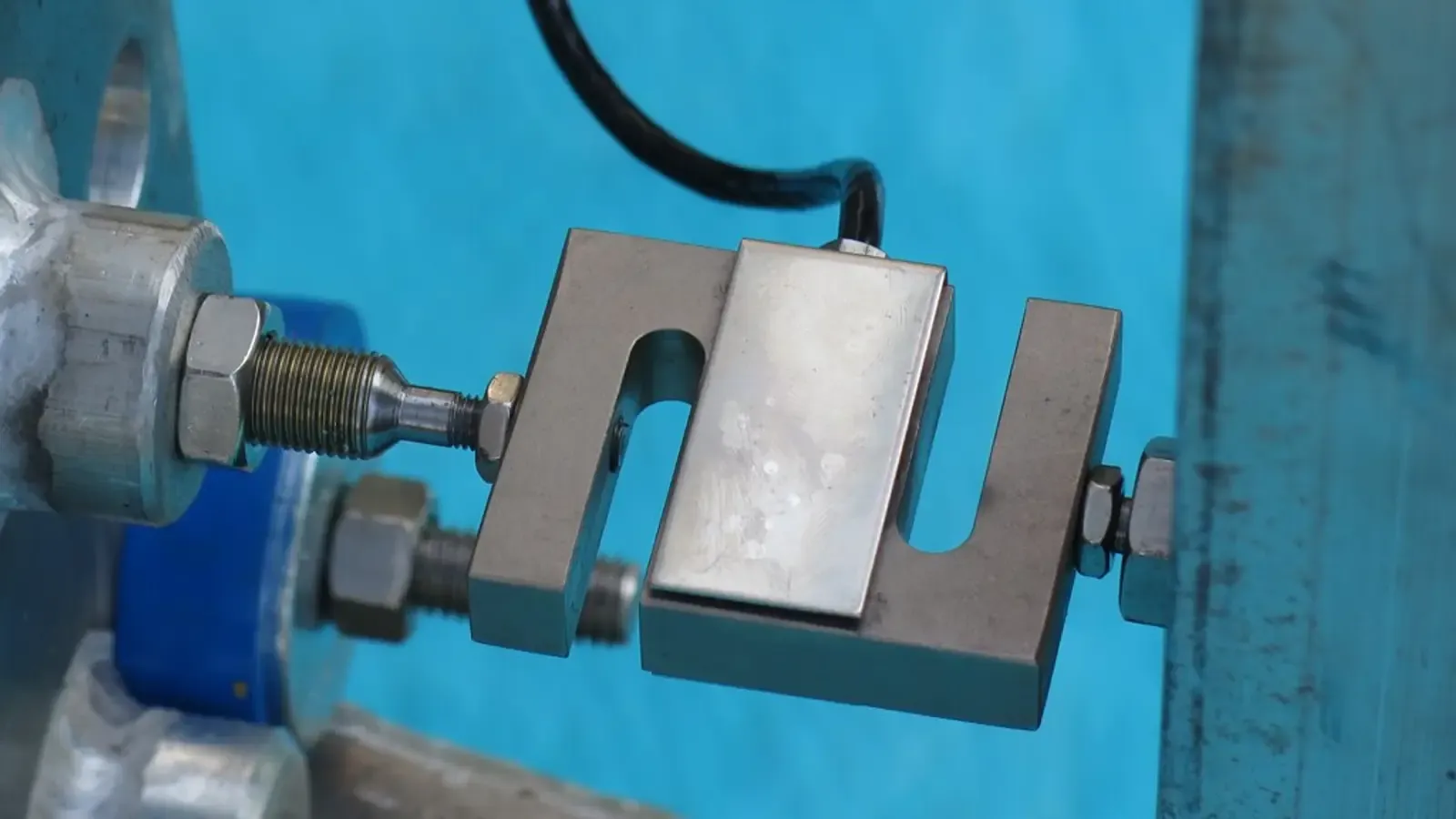
An electronic taraju, which people also call a digital taraju or an electric taraju, is an electronic scale in English. On a shop counter it is called a tabletop scale or counter scale. Under the steel pan sits a load cell, a metal block whose strain gauges turn the load into a small electrical signal, and the display shows that signal as weight. It needs no baat, and double-display models let the customer read the weight too. The Omace Om-TT-ECO 10 kg kanta for kirana shops weighs 10 kg in 1 g steps, has green LED displays on both sides, runs on a rechargeable battery and costs ₹2,310.
Platform kanta: platform scale
A platform kanta is a platform scale in English, sometimes called a floor scale. It has a flat steel deck close to the ground for sacks, cartons and drums, with load cells under the deck and the reading on a separate indicator. Mandis, godowns, flour mills and courier counters rely on them. Omace's Om-PS-MS platform weighing scales weigh 100 kg to 1,000 kg on decks from 400 mm to 900 mm.
Dharam kanta: weighbridge
Dharam kanta, written धर्म कांटा, is a weighbridge in English, also called a truck scale. Its deck is large enough to take a loaded truck or tractor trolley, so a whole load is weighed in one go. Rekhta's Urdu and Hindi dictionary glosses dharm kanta as a large weighing instrument, a panchayati taraju and a true scale that shows the correct weight. Official papers use the same word: the Rajasthan Legal Metrology department's FAQ lists the static weighbridge (dharam kanta) among instruments it verifies in place at their site. Someone asking for a dharam kanta weight machine means this kind of scale. Omace Brands Private Limited does not make weighbridges, and the weighbridge guide covers their types, capacity and working.
Sone ka taraju: jewellery scale
Sone ka taraju, the sunar's kanta, is a jewellery scale or gold weighing scale in English, and the most precise ones are called precision balances. Platts' entry for kanta already mentions the small scales goldsmiths use. Rules for weighing gold are stricter than for groceries. Delhi's Legal Metrology (Enforcement) Rules, 2011 allow only a class A or class B beam scale, or a non-automatic weighing instrument of accuracy class II or class I, for trade in bullion, ornaments and precious stones. Omace's Ace jewellery scales read gold to 0.01 g, and its finest balances read 0.001 g.
Hindi to English scale names: quick reference
The table matches each Hindi name that buyers use with the English name a manufacturer or dealer will recognise.
| Hindi name | English name | How it weighs | Typical use |
|---|---|---|---|
| Do palde wala taraju | Beam balance, pair of scales | Load against baat on two equal arms | Grain, spices, school labs |
| Dandi taraju | Hand-held beam scale | Beam lifted by a cord at its middle | Street vendors, small loads |
| Kamani kanta | Spring balance, hanging scale | Stretch of a spring on a dial or tube | Bags, parcels, hanging loads |
| Electronic, digital or electric taraju | Electronic scale, tabletop scale | Load cell and digital display | Kirana, sabzi and sweet shops |
| Platform kanta | Platform scale, floor scale | Load cells under a steel deck | Sacks, cartons, godowns |
| Dharam kanta | Weighbridge, truck scale | Load cells under a deck sized for vehicles | Trucks and tractor trolleys |
| Sone ka taraju | Jewellery scale, precision balance | Fine sensor or beam, 0.01 g steps or finer | Gold, silver, gems |
Why a shop taraju has to be stamped
Short weight is an old worry in Indian markets. Platts lists ḍanḍī mārnā, pressing down the weight arm with a twist of the finger to give short weight. The same dictionary lists bāṭ-chhāp, the stamping of weights and measures to guarantee that they are genuine.
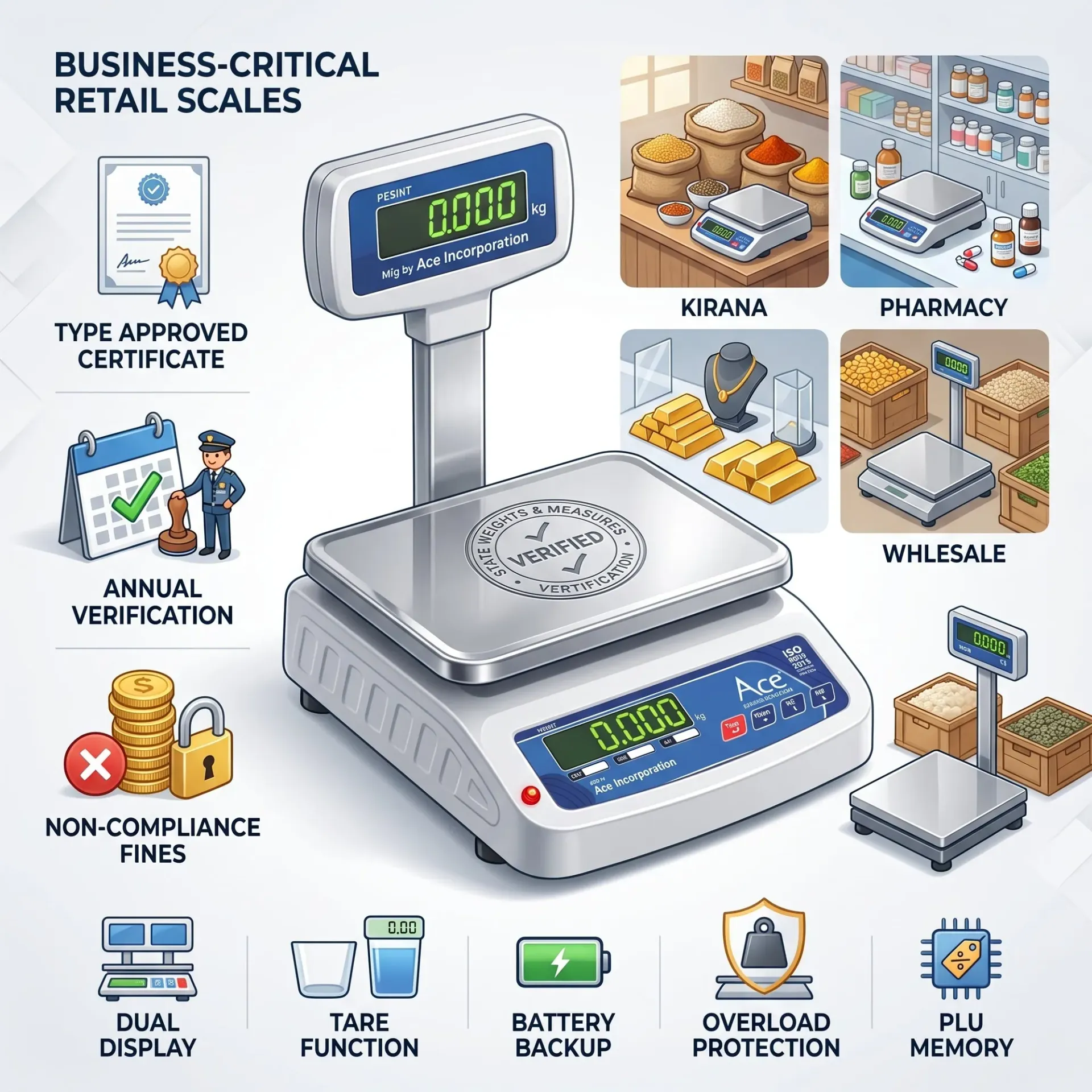
Today the rule sits in the Legal Metrology Act, 2009. Section 24 says anyone holding a weight or measure for use in a transaction must have it verified before putting it into use. Rajasthan's FAQ adds that unstamped weights and measures may not be sold or used in any transaction, and its online application for verification is called etulaman. A stamped trade scale is sealed, so the shopkeeper cannot recalibrate it; a registered repairer does that. The Legal Metrology guide covers the Act, re-verification, fees and penalties.
Omace shop, platform, chicken and crane scales leave the Bagru factory verified and stamped by Legal Metrology, and the stamp is valid across India. Stamping is compulsory on platform and crane scales. A kitchen or bathroom scale used only at home is not used in a transaction, so Section 24 does not reach it.
How to ask for the right scale in English
- Name what you weigh. Gold and silver need a jewellery scale, groceries and vegetables an electronic tabletop scale, sacks a platform scale and trucks a weighbridge.
- Give the capacity. Capacity is the heaviest load the scale accepts, so choose one with a margin above your largest sack, crate or tray.
- Give the step. The step, or readability, is the smallest change the display shows. The Omace Om-TT-Running SPR 30 kg kanta reads in 5 g steps on front and back displays and costs ₹3,150, while a gold scale reads 0.01 g.
- Say whether you will sell by weight. A trade scale must be verified and stamped. Rajasthan's FAQ says the certificate of verification must be displayed at a conspicuous place where the scale is used.
- Choose counter or hook. A tabletop scale sits on the counter, while a spring balance or digital hanging scale hangs from a hook, a beam or a tripod.
- Check display and power. A display facing the customer avoids arguments over the reading, and a rechargeable battery keeps a shop scale working through power cuts.
Who makes Omace kantas
Omace Brands Private Limited manufactures weighing scales at G-29 RIICO Industrial Area, Bagru, Jaipur, and has been in the weighing trade since 1994. Every scale is checked with certified test weights at the Bagru bench before dispatch. Omace scales are factory calibrated, and a scale that reads wrong is replaced under warranty. As a manufacturer, the company holds ISO 9001:2015, ISO 13485:2016, an EU MDR quality certificate, a CE certificate of compliance and a US FDA compliance certificate, all listed on its certificates page. Every Omace product is made in India, and retail scales carry a 2-year warranty on manufacturing defects. Every Omace digital scale opens calibration mode when TARE is held for about 5 seconds, while stamped trade scales stay sealed.
Finding the right kanta for your counter
Knowing the English name makes buying easier, because a seller who hears "electronic tabletop scale, 30 kg, 5 g steps" knows the scale you mean. For a kirana, sabzi or sweet counter, the counter models among Omace's electronic weighing scales for shops weigh 10 kg to 30 kg and leave Bagru stamped for trade. For gold, sacks or trucks, the sections above point to the jewellery scale, the platform scale and the weighbridge. Whatever the board says, taraju, kanta or vajan kata, the two questions to settle first are the heaviest load and the smallest step you need.