Weighing machine repair splits into two lists. An owner can fix six common faults alone: flat batteries, a bad adaptor, an uneven floor, dirt under the pan, transit screws and stuck keys. A load cell, display, mainboard, transformer, battery pack or keypad needs a repairer, and a stamped trade scale also needs the Legal Metrology department.
Start with the checks that cost nothing
Most scales sent for repair have nothing wrong inside. The kanta shows a strange number because of the place it stands on, the power feeding it or a small thing under the pan. Spend ten minutes on the list below before you call anyone.
For the symptoms themselves (blank screen, error codes, drifting zero), the guide on why a weighing scale is not working goes through them one by one. This post begins where that one ends: you know something is wrong and you must decide who fixes it.
Six faults an owner can fix
- Batteries and charging. Fit fresh cells, or leave a rechargeable scale on charge for a full session. A scale that dies the moment the pan is loaded often has a tired battery, not a broken board.
- The adaptor. Check that the plug matches the scale's rating and that the pin is sitting well in the socket. A loose or wrong adaptor gives a flickering display and jumping readings.
- Level and feet. A scale on a wobbly table or a tilted counter reads differently each time. Move it to a hard, flat surface and adjust the feet until it stands without rocking.
- Dirt under the pan. Grain, sugar, masala or a stray coin can lodge between the pan and the body. Lift the pan, clean the gap with a dry cloth and put it back square.
- Transit screws and packing. Some scales ship with a screw or foam block that locks the sensor. If a new scale shows nothing or one fixed number, read the manual for any such lock.
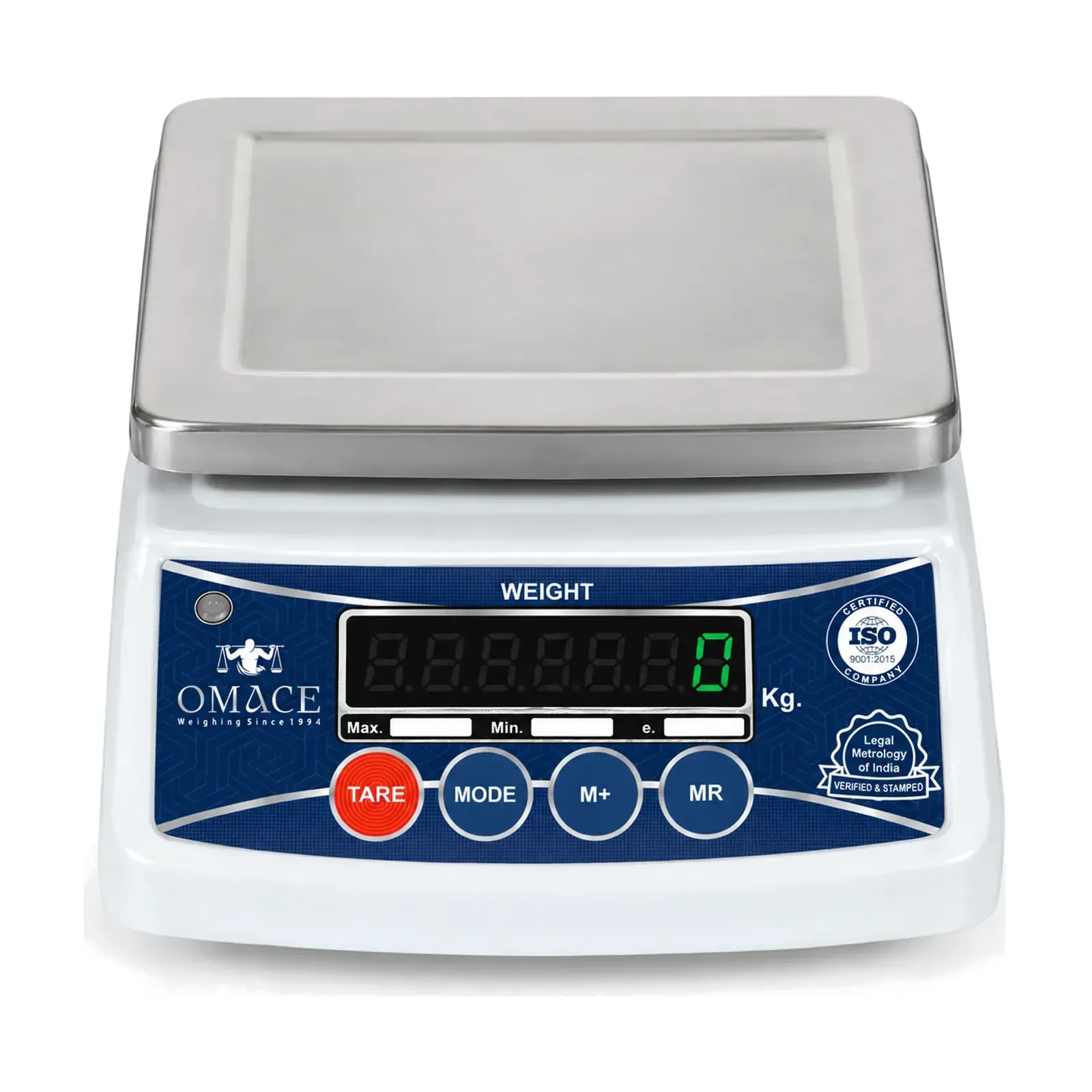
- Keys. A key that does not respond may only be dirty. Wipe the keypad with a barely damp cloth, never pour water on it.
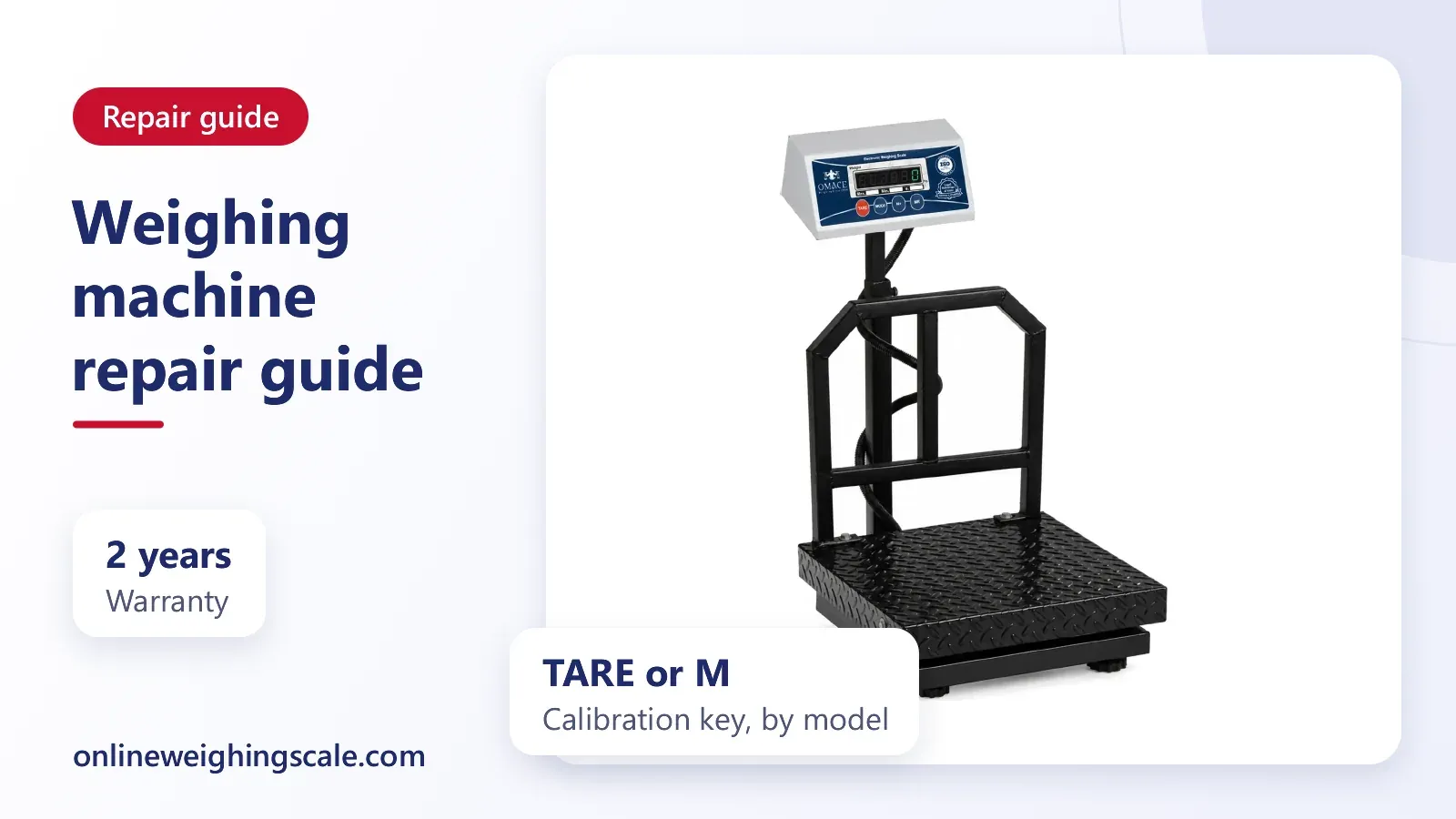
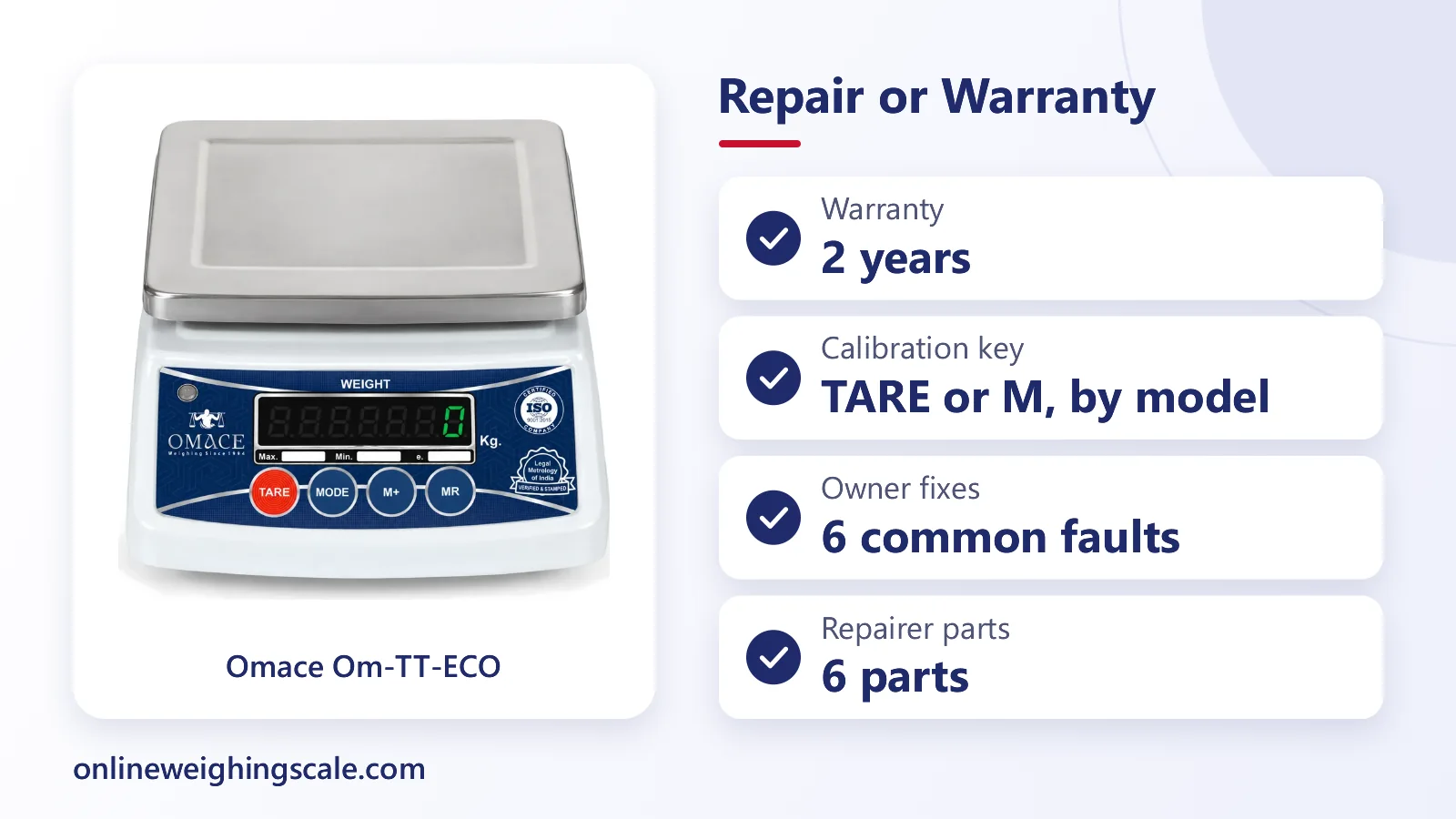
If the reading still looks wrong after these checks, the fault may be calibration and not hardware. On Omace digital scales a long press of TARE opens calibration mode on some models and a long press of the M key on others, and the manual for each model shows which, and the steps for a bench kanta are in the guide on how to calibrate a 30 kg kanta. Stamped trade scales are sealed, so they are not recalibrated at home.
Six parts that need a repairer
The parts below need a meter, a soldering iron or a matched replacement. Opening the scale yourself usually makes the repair harder.
| Part | Sign of failure | Who fixes it |
|---|---|---|
| Load cell | Reading drifts, jumps or stays fixed after a heavy knock or overload | Repairer, then calibration |
| Display | Missing segments, a dim or blank screen with power present | Repairer |
| Mainboard (PCB) | Dead scale, random readings, keys with no effect | Repairer |
| Transformer or power section | No power on mains, a burning smell, adaptor gets very hot | Repairer |
| Battery pack | Scale runs only for a few minutes off the charger | Replace the pack, ask the maker for the right one |
| Keypad | Keys dead even after cleaning | Repairer |
The load cell is the sensing part and the one most worth understanding. It is a force transducer: strain gauges are fastened to an elastic metal body, and the cell turns the force of whatever sits on the pan into an electrical signal (peer-reviewed paper in the journal Sensors, 2022). The post on what a load cell is explains how it works. A hard drop, a heavy load beyond the rated capacity or water reaching the cell can damage it. After a load cell is replaced, the scale must be calibrated again, because the new cell will not read like the old one.
Repair or replace: how to decide
A repair makes sense when the part is common and the scale is otherwise sound. Replace the scale when several of these hold:
- The scale is old and has already been repaired more than once.
- The fault is in the load cell or mainboard and the part is hard to find for that model.
- The repair and the carrying to and from the repairer would come close to the cost of a new scale of the same capacity.
- The scale is a cheap personal or kitchen model, where the whole unit costs little.
Spare parts for any model depend on availability. A repairer who cannot match the load cell or board of an older or imported model will tell you so. Ask for the diagnosis before you agree to the work, and ask what the repairer will test after it.
Repairing a digital weighing scale: the shop and trade side
A shop scale, platform kanta or crane scale that is stamped by Legal Metrology is a measuring instrument used in trade, and the rules are stricter than for a home scale. Do not break the seal or have an unlicensed person open the scale. Section 23 of the Legal Metrology Act, 2009 bars anyone from repairing a weight or measure without a licence from the Controller, and the Jan Vishwas Act 2026 renames that licence a registration certificate, in force from 1 May 2026. The state department's inspectors verify the instrument and stamp it. The background is in the guide on Legal Metrology in India, and the cost side is in weighing scale stamping charges.
After any repair that touches a stamped scale, ask your district Legal Metrology office whether the scale needs to be verified and stamped again before you use it for trade. The answer depends on your state and on what was repaired, so the office is the right place to ask. Do not start billing customers by the scale until you have that answer.
How to find a licensed repairer near you
People search for weight machine repair near me when a scale stops in the middle of a working day. A listing on a map shows who is close, but it does not show who is licensed. Use the state department instead.
- Open the website of your state Legal Metrology department. The Legal Metrology Department of Rajasthan is one example of how a state publishes its services.
- Look for the list of licensed or registered repairers for your district, or ask the district Legal Metrology office for it.
- Ask the repairer for the licence or registration number and the date it is valid until.
- Ask which instruments the licence or registration covers, and whether electronic weighing machines are included.
- Get the diagnosis, the work done and the parts replaced in writing.
Names of shops are not listed here on purpose. The licence lists change, and the department's own list is the one that stays current.
What Omace offers
Omace Brands Private Limited repairs its commercial scales when the buyer asks; the buyer pays the shipping both ways and the repair cost. Spare parts depend on availability, so the buyer should ask Omace first through Contact Us.
Retail scales carry a warranty on manufacturing defects for 2 years, and a scale that reads wrong is replaced under warranty. The terms are on the warranty policy page. Keep the invoice and a photo of the fault before you write in.
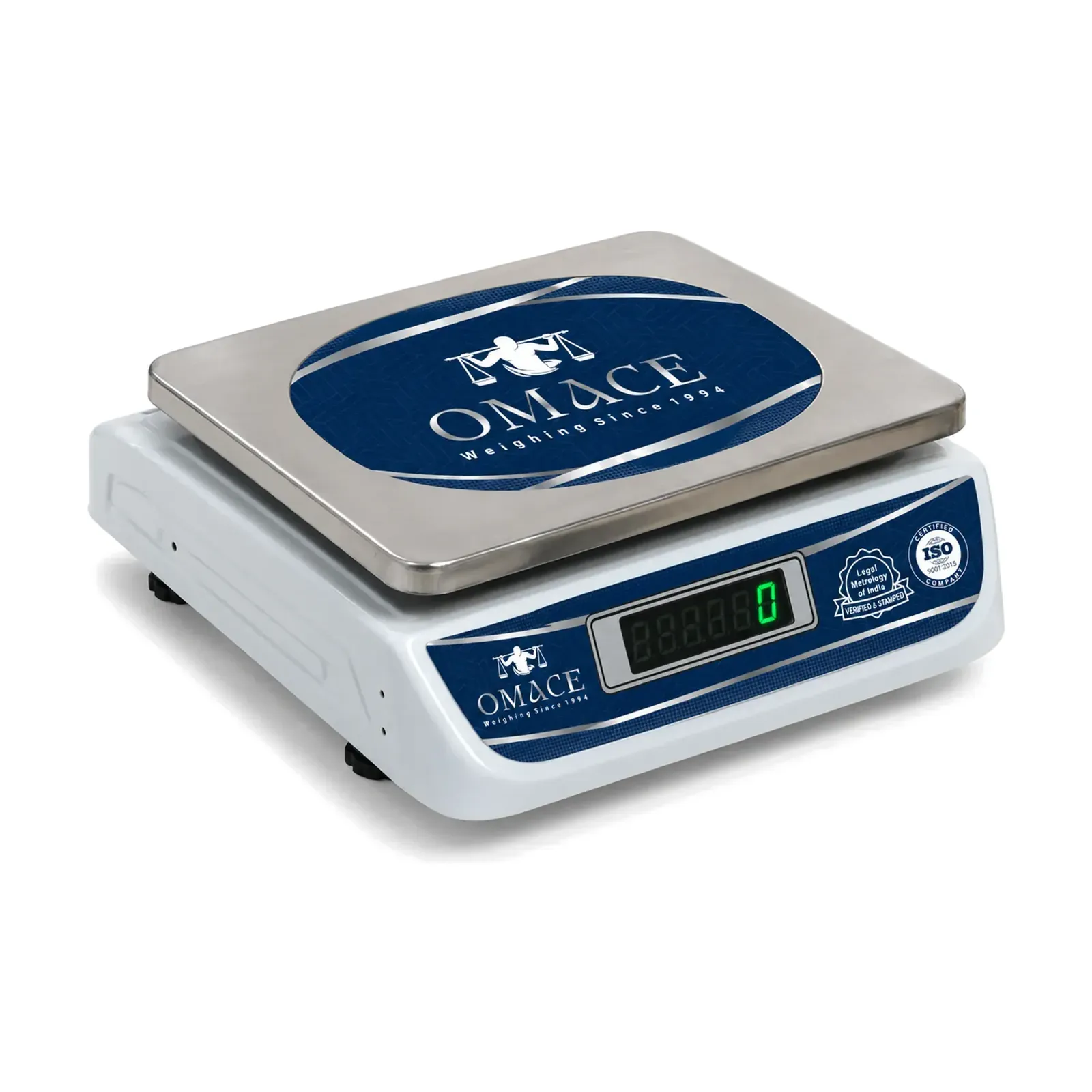
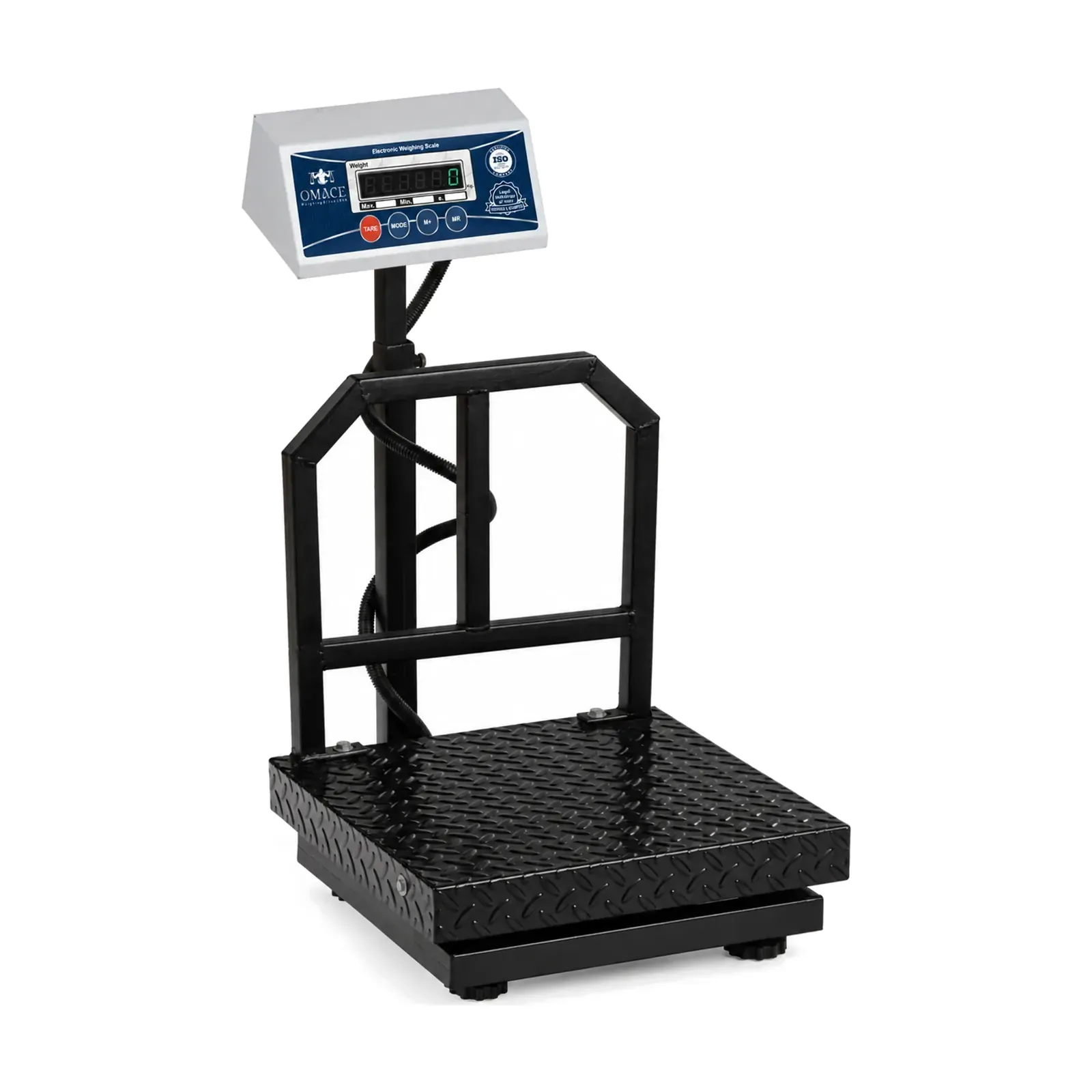
Omace shop, platform and chicken scales leave the Bagru unit verified and stamped by Legal Metrology, with the stamp valid across India. Every scale is checked with certified test weights before dispatch. If you run a kirana or sabzi counter, the Om-TT-ECO kirana weighing machine and the 30 kg shop weight machine are the models that sit in this group.
How to keep a scale from needing repair
- Never load a scale beyond its stated capacity, even for a moment.
- Put goods on the pan gently instead of dropping them.
- Keep it dry. Wipe spills at once and keep the scale away from water on the floor.
- Charge rechargeable models on a regular routine and do not leave them discharged for weeks.
- Move the scale by its body or base, never by the pan or display.
- Check the reading against a known weight now and then. The post on how to calibrate a digital weighing scale shows the method.
A scale that is looked after, kept level and checked often is less likely to land on a repairer's bench in the first place.