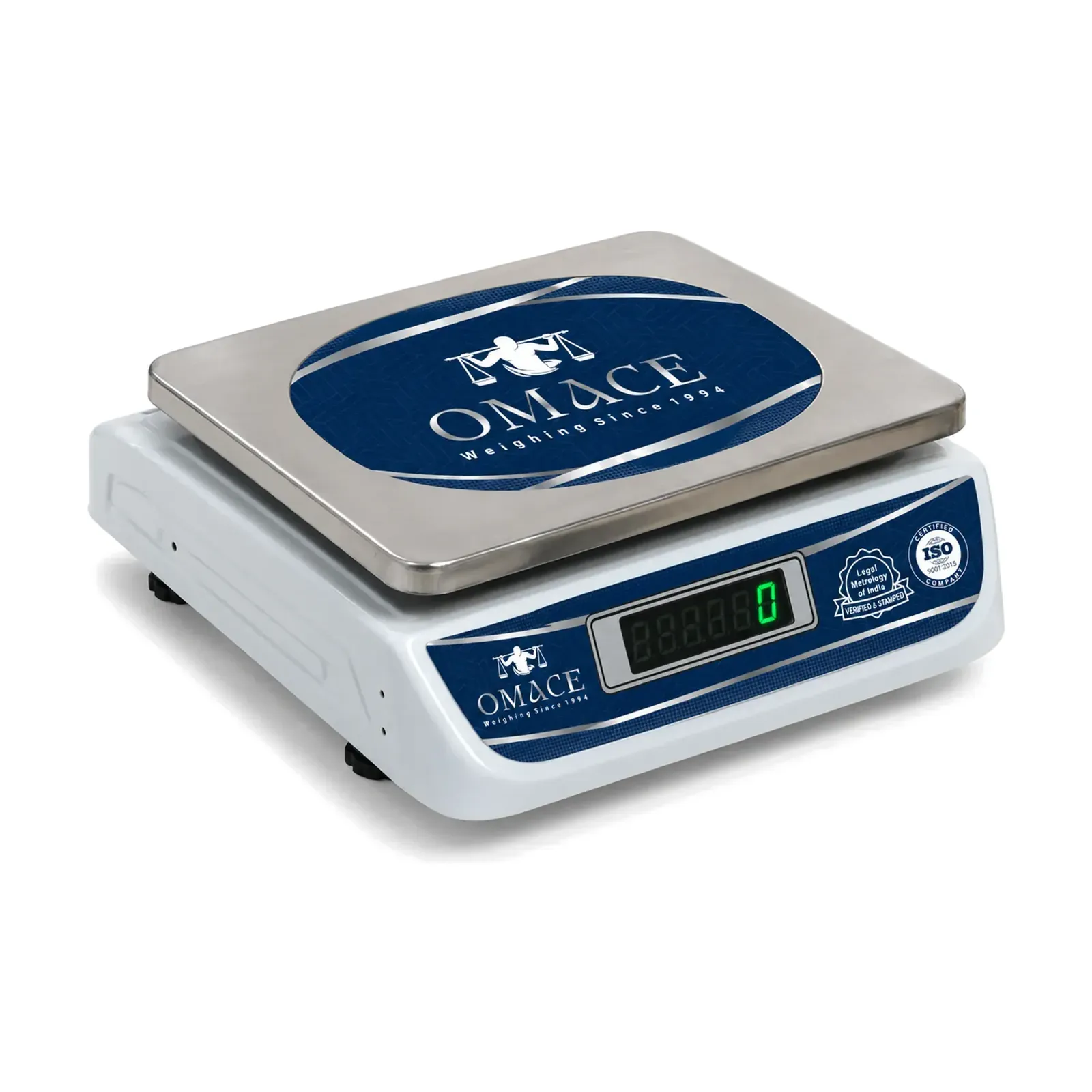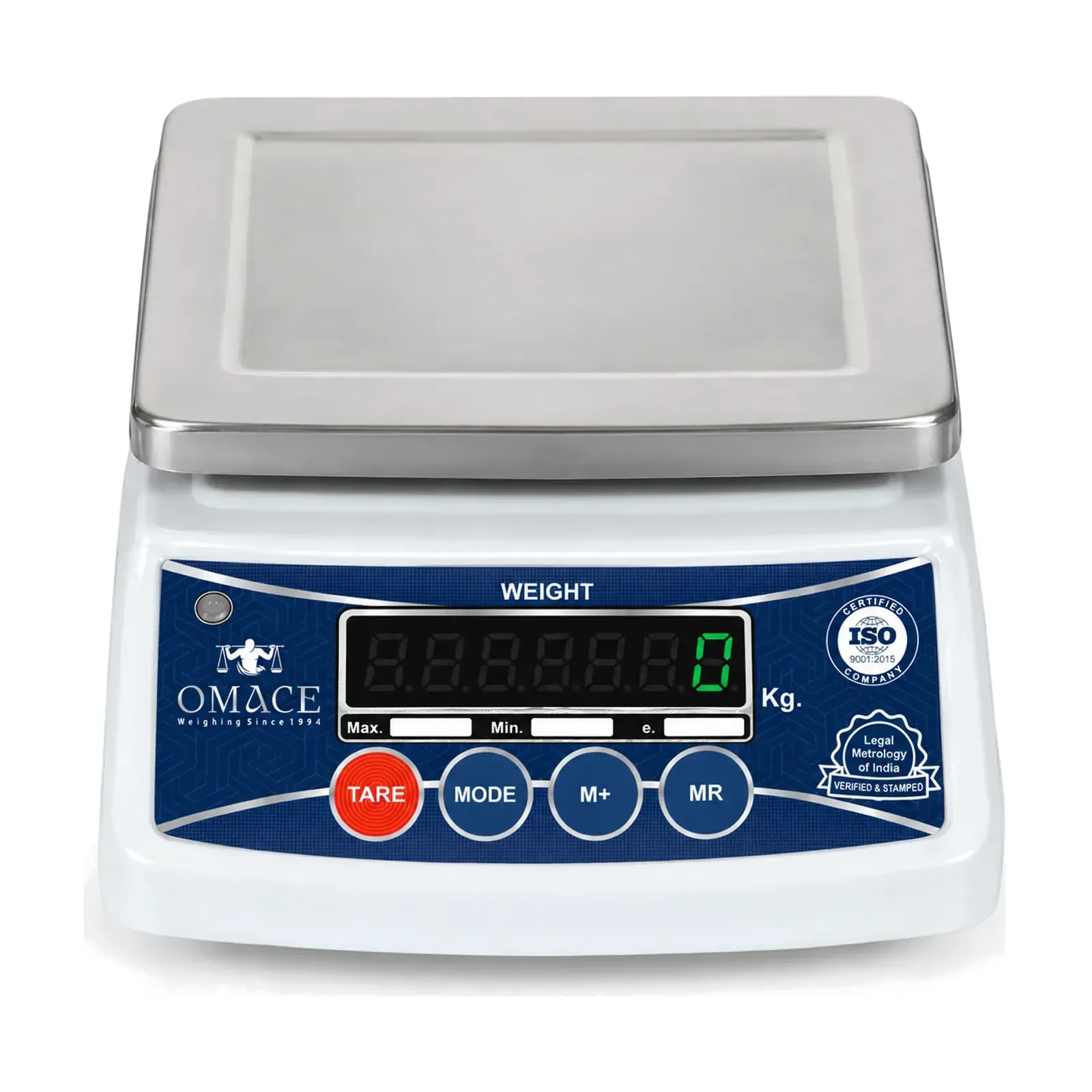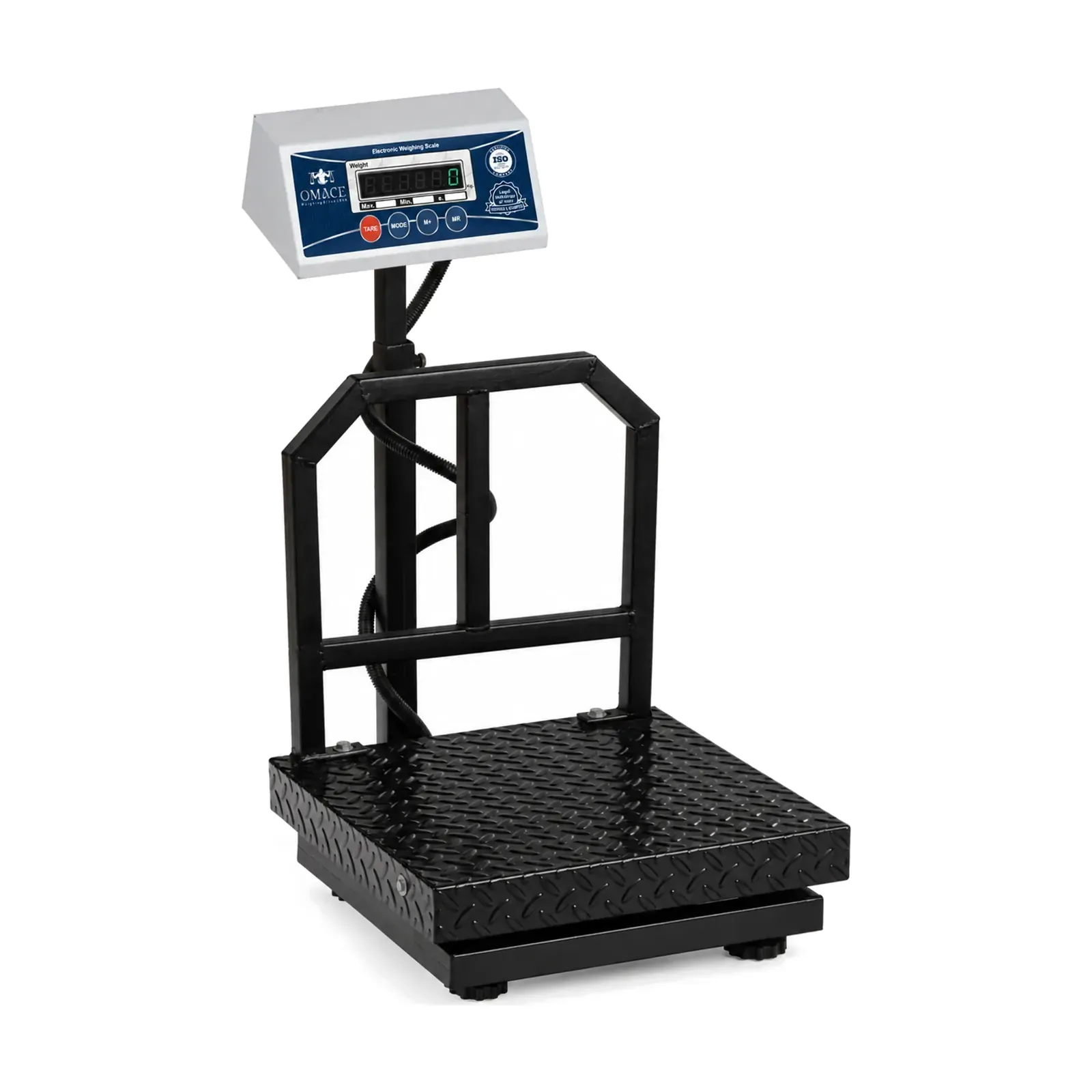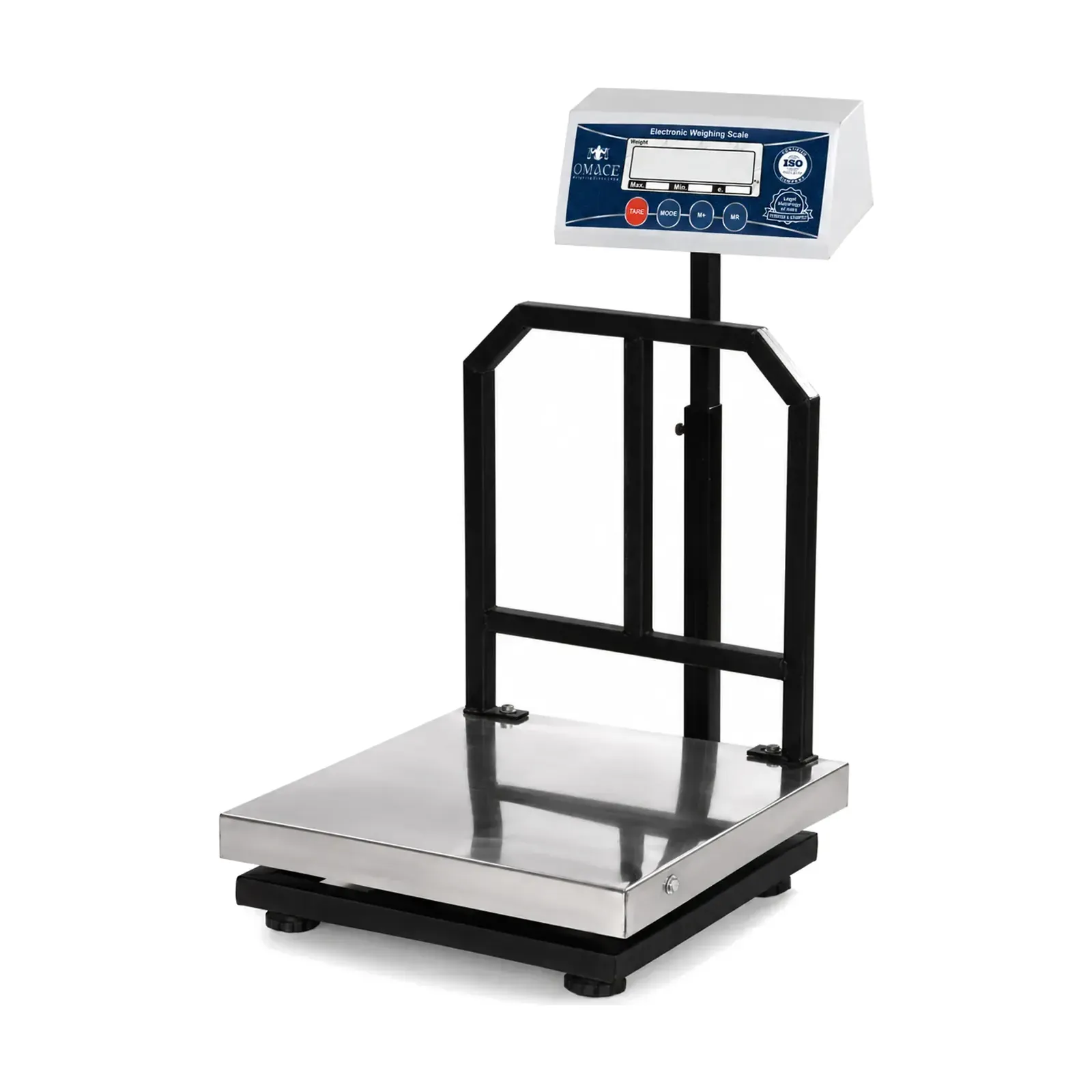
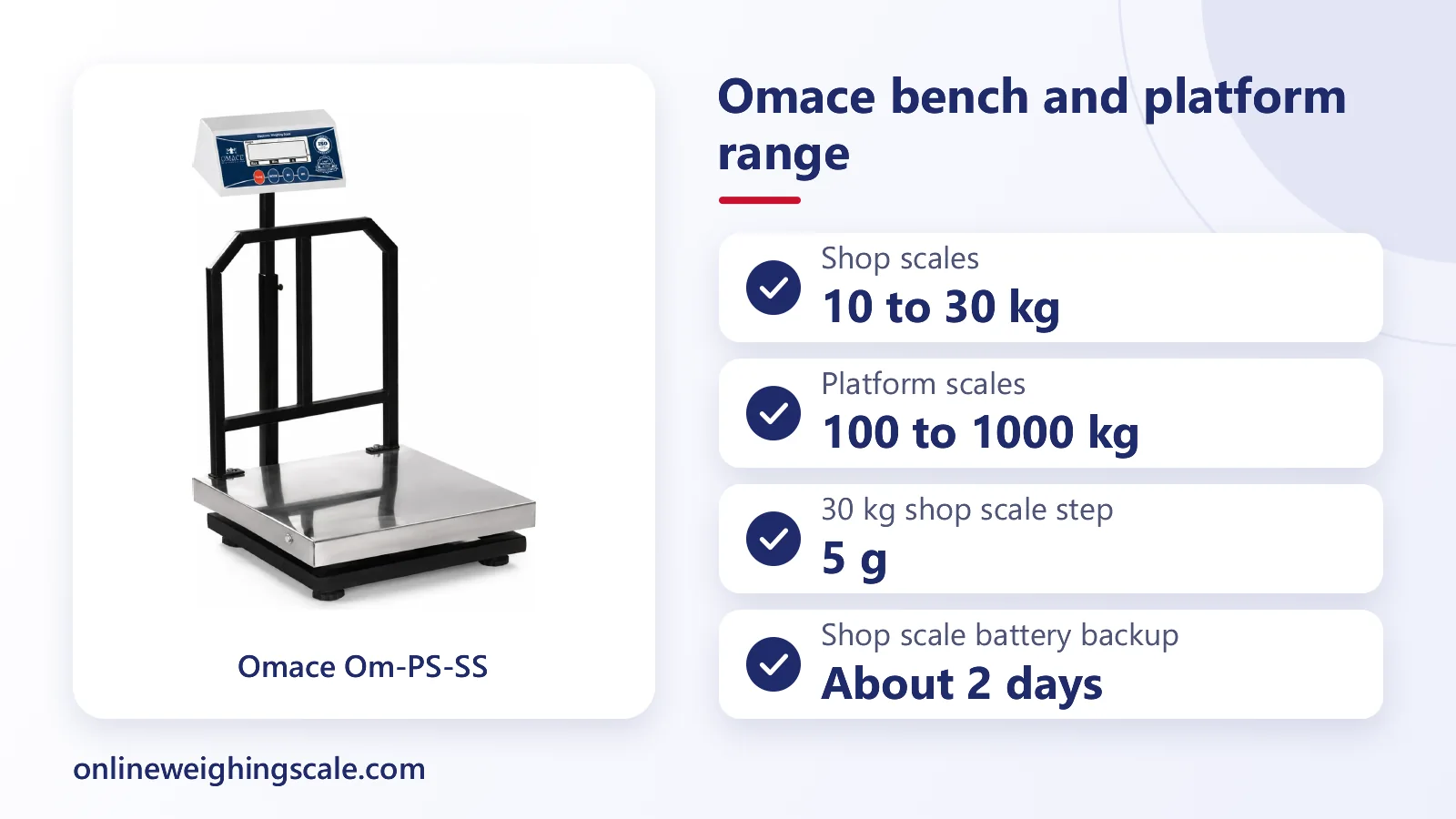
A bench scale is a small digital scale that sits on a table or counter, and a platform scale is a larger scale with a flat steel deck that stands on the floor. Omace Brands Private Limited makes both: its shop scales weigh 10 to 30 kg, and its platform scales weigh 100 kg to 1 tonne.
The two names are used loosely. A shopkeeper in Jaipur says kanta, a factory store keeper says platform, and a catalogue from abroad says floor scale or pallet scale. This post sorts the names into three plain groups, shows which Omace models sit in each, and explains how to choose by load, deck size, division and place of use.
The names and what each usually means
No single rulebook fixes the size of each name, so the meaning below is the way the trade uses the words. A bench scale and a table top scale are the same thing. A platform scale and a floor scale are close cousins. A pallet scale is a floor scale made large enough to take a pallet.
| Name | Where it sits | Usual load | Typical use |
|---|---|---|---|
| Bench scale, table top scale, counter scale | On a table or shop counter | Up to about 30 kg | Kirana, vegetables, packing tables |
| Platform scale, floor scale, platform kanta | On the floor, deck at ground level or a short step up | About 100 kg to 1 tonne | Godowns, workshops, poultry shops, dispatch |
| Pallet scale | On the floor, deck wide enough for a pallet | Often 1 tonne and above | Warehouses and loading bays |
The load figures in the table are common trade ranges, not limits set by a standard. Check the capacity printed on the model you plan to buy.
Omace Brands Private Limited does not list a pallet scale. Its largest platform model is a 1 tonne scale, covered below. A buyer who needs a pallet deck can ask through the contact page or look at the OEM and private label route for custom sizes.
What a bench scale is
A bench scale is built to be read from arm's length. It has a small steel pan, a digital display, and a load cell under the pan. The load cell is a force transducer that turns the force of the goods into an electrical signal (peer-reviewed paper in the journal Sensors, 2022), and it sits inside every digital scale. Bench scales read in small steps, which suits goods sold by the kilo.
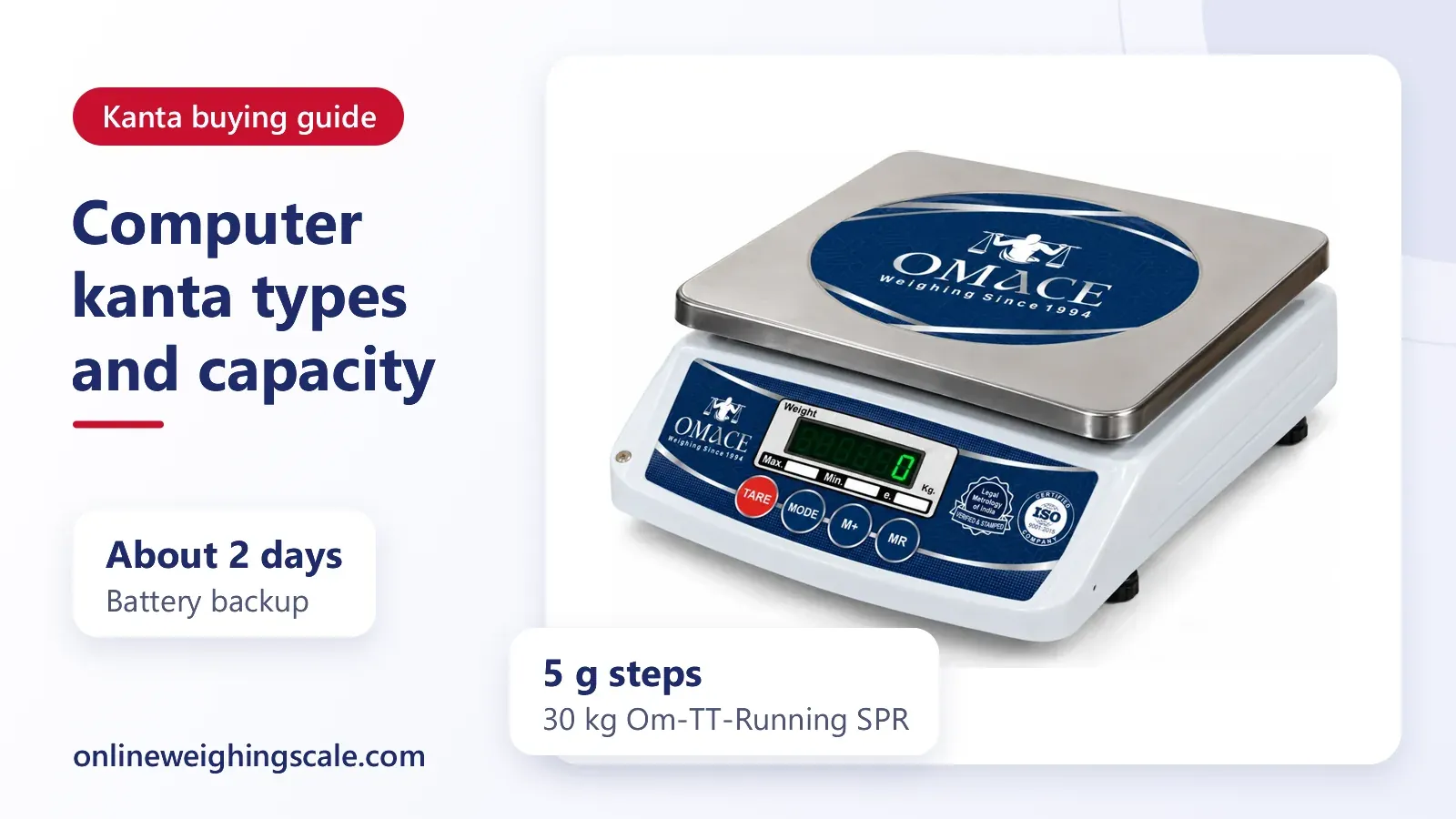
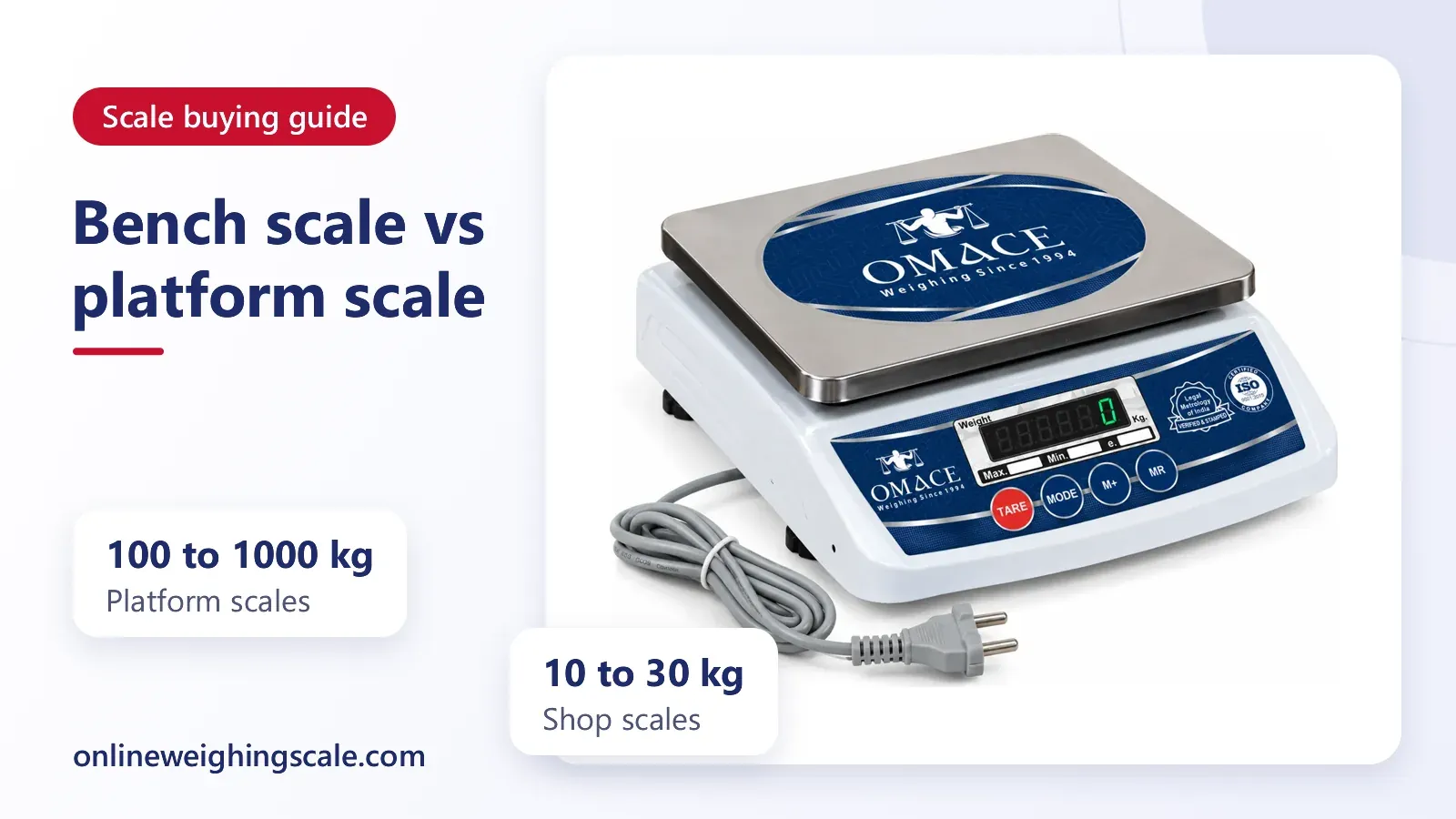
Omace Brands Private Limited sells these as shop scales. The range runs from the 10 kg Om-TT-Micro mini machine to 20 and 30 kg models with one display facing the customer and one facing you.
- Om-TT-ECO Kirana Weighing Machine, 10 kg and 20 kg, ₹2310.
- Om-TT-Mini SPR Double Display Weight Machine, 20 kg and 30 kg, ₹2625.
- Om-TT-Running SPR 30 kg Weight Machine, 5 g steps, ₹3150.
All three are listed under weighing machines for shops. The step between two readings is called the division. On a 30 kg model with 5 g steps, a 1 kg bag of sugar shows a number that moves in jumps of 5 g, which is fine for groceries and too coarse for jewellery or medicine.
What a platform scale is
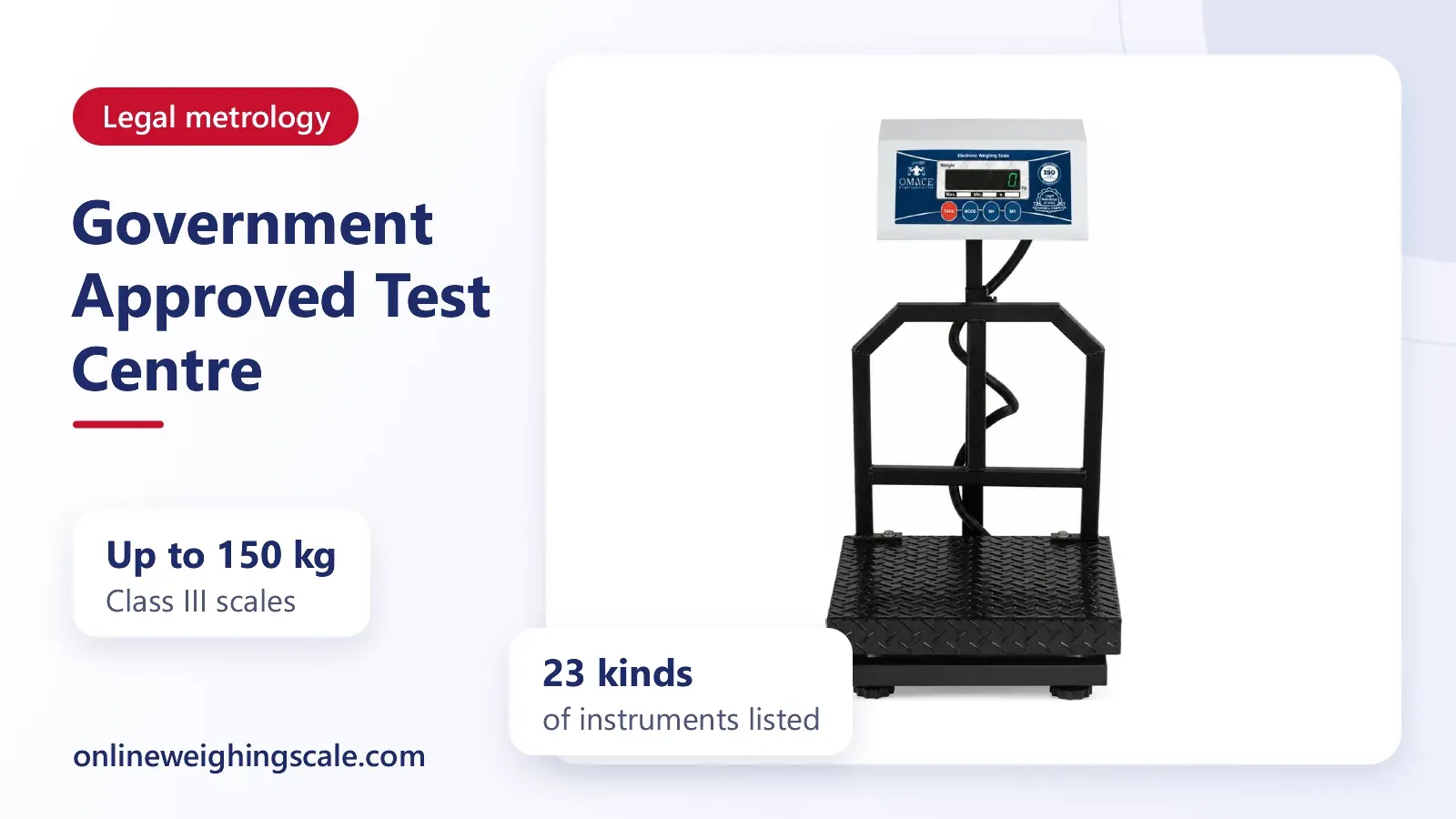
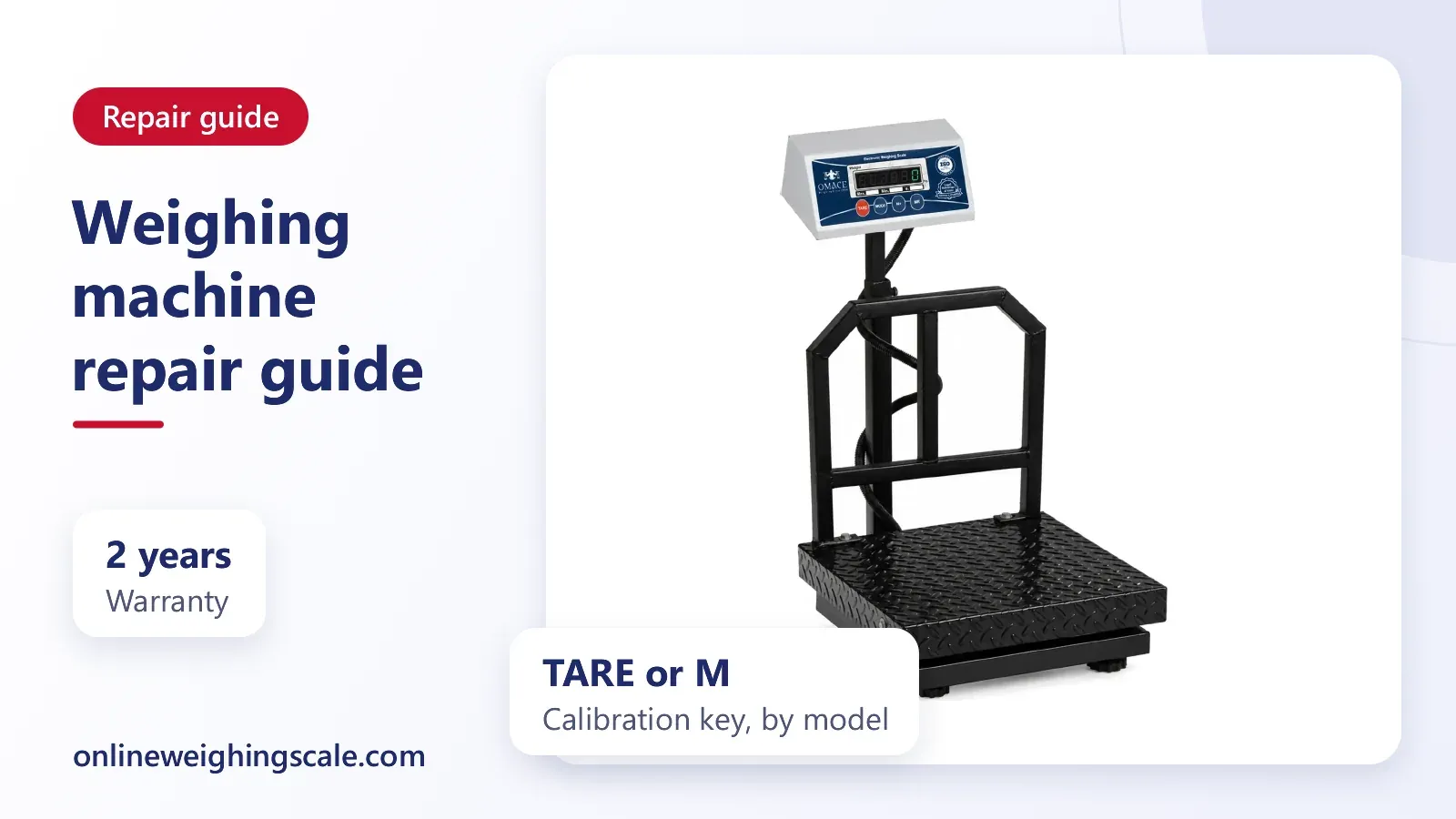
A platform scale has a flat deck, usually mild steel with a chequered top or stainless steel, resting on load cells. A separate digital indicator on a short stand or a wall bracket shows the reading. The deck lets you set a drum, a sack or a crate on it, which a bench pan cannot take.
Omace Brands Private Limited makes platform scales in two deck materials and several capacities.
- Om-PS-MS Platform Kanta, mild steel, 100 kg to 500 kg, ₹6300.
- Om-PS-SS Stainless Steel Platform Scale, 100 kg to 300 kg, ₹6300. Stainless suits wet, salty or food areas.
- Om-PS-MS 1000 kg Platform Scale, 1 tonne, ₹28349.
The mild steel and stainless models share deck sizes: 400 × 400 mm at 100 kg, 500 × 500 mm at 200 kg and 600 × 600 mm at 300 kg, and the 1000 kg scale comes with a 750 × 750 mm or 900 × 900 mm deck. The full set sits on the platform weighing scale page. Chicken and poultry shops use a similar scale with a chequered or stainless platform, sold as the Om-CK range from 60 kg to 300 kg.
Bench scale vs platform scale side by side
| Question | Bench scale | Platform scale |
|---|---|---|
| Load range at Omace | 10 to 30 kg | 100 kg to 1 tonne |
| Weighs best | Goods in a pan or bowl | Sacks, drums, crates |
| Can one person carry it | Yes | No, it is usually fixed in place |
| Display | Built into the body, sometimes on a pole | Separate indicator on a stand |
| Stamping | Needed when goods are sold by weight | Compulsory on Omace platform scales |
The phrase industrial bench scale shows up in searches. It describes a heavier counter scale with a stronger frame and a larger pan, used on a workshop bench. Omace Brands Private Limited does not sell a model under that name, and a 30 kg Om-TT machine is the nearest fit for small parts and packed goods.
Accuracy class and why it matters less than you think
The international standard for non-automatic weighing instruments is OIML R 76-1, published by the International Organization of Legal Metrology. It defines four accuracy classes: I (special), II (high), III (medium) and IIII (ordinary). Omace states that its Om-TT shop scales are accuracy class III.
You do not choose a class on a shop floor. You choose a capacity and a division, and the maker builds the scale to the right class. The practical point is the number of steps across the range: a scale needs enough of them to read a small load sensibly. A 300 kg platform scale cannot show a 100 g packet with any meaning.
How to choose: load, deck, division, place
Start with the heaviest single load you will put on the scale. Pick a capacity at least a quarter above it, so the deck is never loaded to its limit. If your heaviest drum is 220 kg, a 300 kg scale is a better choice than a 250 kg one.
Then look at the lightest thing you will weigh. A platform scale struggles with small loads, because its division is large. If you weigh both a 500 g packet and a 150 kg sack, you need two scales: a bench scale for the packet and a platform scale for the sack.
Next, measure the deck against the item. The goods should sit fully on the deck, since an overhang gives a wrong reading. Check the floor too. A platform scale must stand on a flat, hard surface with all four feet in contact, or the corner load cells will share the weight unevenly.
- The heaviest load decides capacity.
- The lightest load decides division.
- Deck size decides whether the goods fit.
- The place decides material: stainless for wet and food use, mild steel for dry godown use.
The mistake that costs money is using one scale for everything, so match each job to its own scale.
Legal stamping and calibration
Section 24 of the Legal Metrology Act, 2009 requires a weight or measure used in a transaction to be verified before use. Omace shop, platform, chicken and crane scales leave Bagru verified and stamped by Legal Metrology, and the stamp is valid across India. Stamping is compulsory on platform and crane scales. For the full meaning, read Legal for Trade Weighing Scale: What It Means in India, and for fees see Weighing Scale Stamping Charges.
On Omace digital scales a long press of TARE opens calibration mode on some models and a long press of the M key on others, and the manual for each model shows which. Stamped trade scales are sealed, so a registered repairer recalibrates them. Steps for a bench model are in How to Calibrate a 30 kg Kanta.
Repair and spare parts
Omace Brands Private Limited repairs its commercial scales when the buyer asks. The buyer pays the shipping both ways and the repair cost. Spare parts depend on availability, so ask first through the contact page.
Which one to pick for your work
A kirana, sweet shop or vegetable stall needs a bench scale. A godown, a workshop, a poultry shop or a dispatch room needs a platform scale. If your counter goods are small and delicate, pocket scale vs bench scale is the comparison to read next, and the broader types of weighing scale guide places both among the other families.