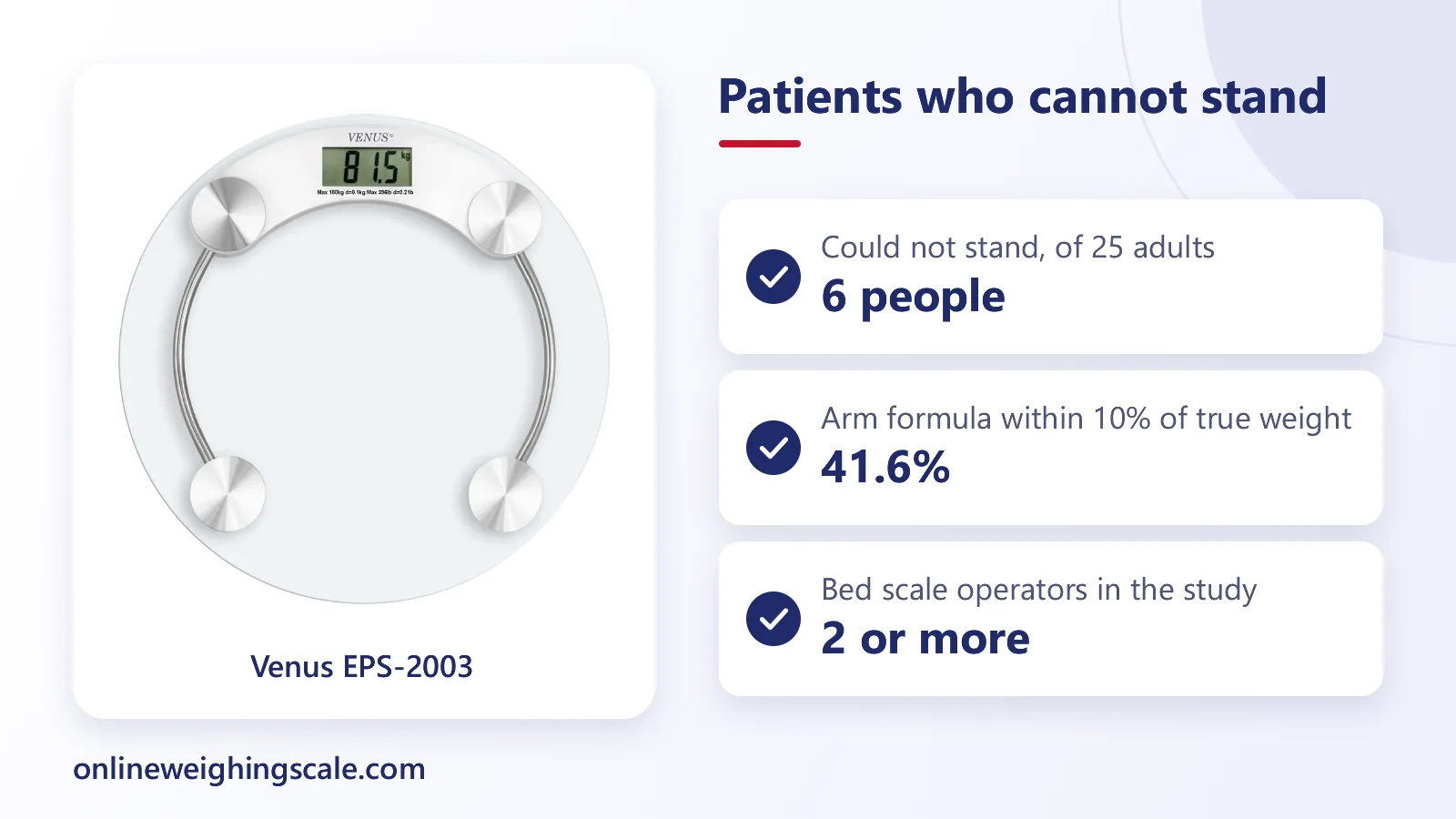
A patient who cannot stand is weighed on a chair scale, a wheelchair platform, a bed scale or a hoist scale, because an ordinary standing scale cannot be used safely. In one community study of 25 adults with severe obesity, 6 could not stand, and each needed a different kind of equipment or an old hospital record. This guide is for family carers and small clinics. It explains what each scale type does, how the wheelchair subtraction method works, why a weight matters for medicine and food, and what to do when no scale fits.
Omace Brands Private Limited makes personal, baby and height measuring scales at Bagru, Jaipur. It does not make chair scales, wheelchair scales or bed scales, so this post describes the types and the method, and recommends no product for them.
Why a patient who cannot stand still needs a weight
A weight is the starting point for several clinical decisions. A study of 25 adults with severe obesity, most of them housebound, by Williamson, Blane and Lean, published in the Scandinavian Journal of Public Health, lists them. Prescribers need a valid weight for some drug doses, dietitians need it to plan food, and hoists, hospital beds and rise-recline chairs have safe working loads that depend on a current weight (Williamson et al., PMC10350700).
Weight also shows change over time. The NICE guideline on nutrition support in adults says screening should assess body mass index and percentage unintentional weight loss, and that hospital inpatients should be screened on admission and again weekly (NICE CG32). A carer at home does not run a hospital protocol, but the same idea holds: one weight is useful, and the same scale used again in the same way every week is more useful.
This is general information. Ask your doctor about your own readings.
The four kinds of scale for a patient who cannot stand
Each type solves a different problem. The right one depends on whether the person can sit upright, can be lifted, or must stay in bed.
| Scale type | How the weight is taken | Suits | Limit |
|---|---|---|---|
| Chair scale | The person sits on a seat that has a load cell under it. | People who can be transferred and can sit upright. | Not for those who cannot hold their trunk up. |
| Wheelchair platform | The wheelchair is rolled onto a ramped platform with the person in it. | Regular wheelchair users, clinic or ward use. | The chair weight must be removed from the total. |
| Bed scale | The bed or a sheet under the person is weighed, and the bed is tared out. | Bedridden people who should not be moved. | Needs space and often two operators. |
| Hoist scale | A scale sits between the hoist and the sling and weighs during a lift. | People who are already moved by hoist. | Sling weight must be removed. |
A load cell is the sensor inside any of these scales. The Omace post on what a load cell is explains how it turns force into a reading.
How the wheelchair subtraction method works
A wheelchair scale only needs one number to be removed, which is the weight of the chair. The steps are the same on a ward platform, in a clinic or on a floor scale that is large enough for the chair.
- Weigh the empty wheelchair on the platform. Include the cushion, footrests and any bag that always travels with it. Write the number down.
- Help the person into the same chair with the same cushion. Take off blankets, shoes and heavy items, and remove drip stands or oxygen bottles from the chair.
- Roll the chair onto the platform and apply the brakes. Wait until the display stops changing.
- Subtract the empty-chair weight from the total. The result is the person's weight.
Many wheelchair scales have a tare key that does the subtraction. Press it with the empty chair on the platform, and the display then shows only the person. Both ways give the same figure, and writing the empty-chair weight on the chair frame saves time at the next visit.
The same chair, the same cushion and the same clothing make each weight comparable with the last. A different cushion changes the total, which can look like weight loss or gain when none has happened.
Weighing a person in bed
A bed scale is used when moving the person is painful or risky. Some systems place weighing pads under the bed wheels, others have the scale built into the bed frame. The bed is weighed once with the person in it and the empty bed weight is tared out.
The study above shows how demanding this can be at home. Two participants were weighed on bed scales with a capacity of 1000 kg, and the paper lists that bed scale as needing two or more operators. One bed-bound participant had no room for equipment at all, so the team used a hospital weight recorded two months earlier (Williamson et al., PMC10350700).
Keep the bed set up the same on each day. Pillows, a pressure-relieving mattress, bed rails and a drip bag all add weight. Remove what can be removed, and note what stays.
Hoist and sling weighing
A hoist scale attaches between the hoist and the sling. The reading is taken while the person hangs clear of the bed or chair for a moment. The sling weight is tared or subtracted, and the hoist must stay still, because swinging makes the number jump.
In the same study, two care home residents already had routine weights taken on hoist or chair scales. Care homes that move people by hoist every day can build weighing into that transfer without an extra lift.
Weighing a child or a light adult by holding
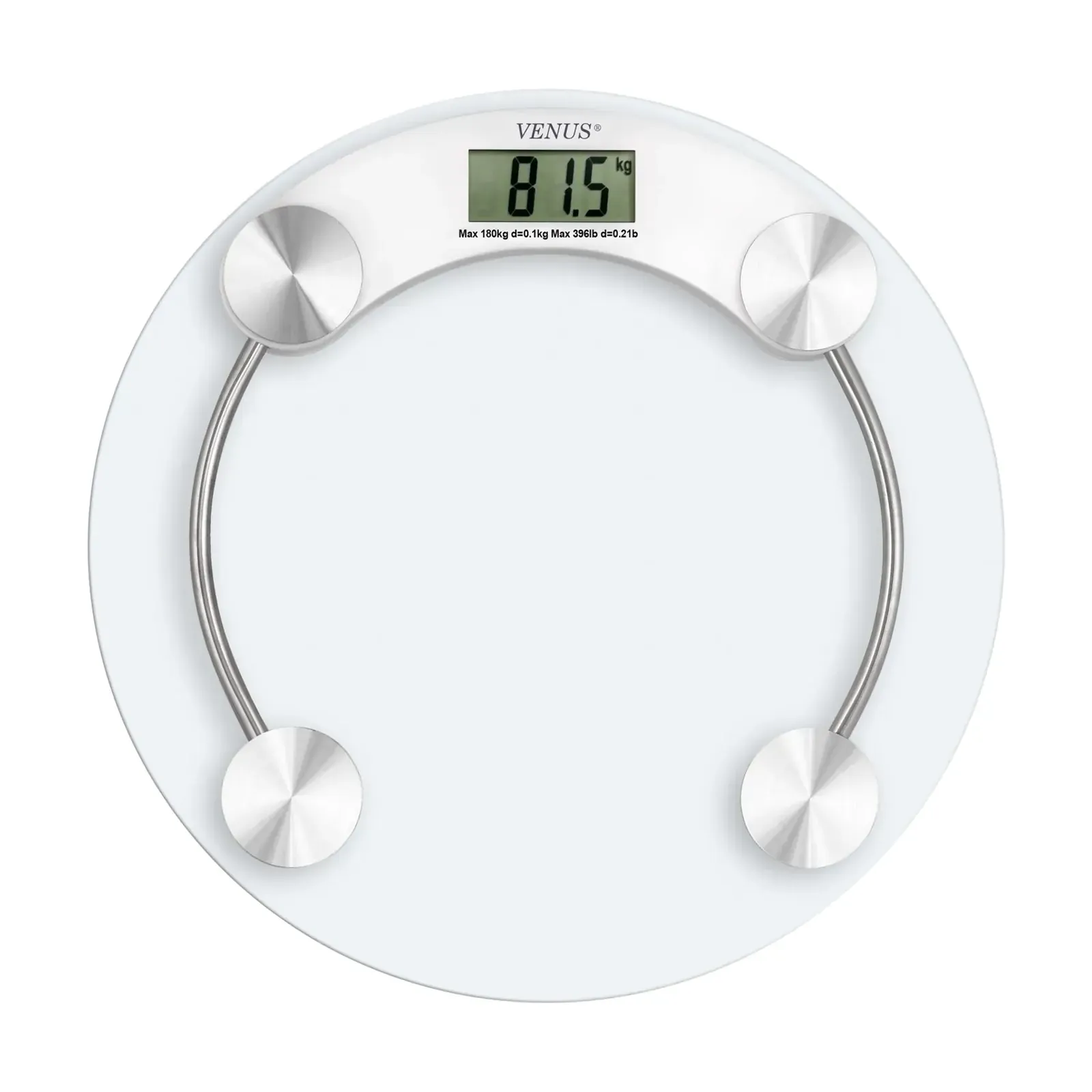
For a small child, or a light adult who can be carried safely, the carer can use a personal scale such as the Venus EPS-2001 digital weighing machine, which weighs up to 180 kg in 100 g steps. The Venus EPS-05 mother and child weighing scale and the Venus EPS-09 (M) mother and baby weight machine list an auto tare for baby weight on their product pages, which does the carer-alone subtraction for you. The carer first stands on the scale alone and notes the weight. The carer then picks up the person, stands still and notes the weight again. The difference is the person's weight.
This method suits only a carer who can lift the person without strain and without risk to either of them. A person with a painful hip, a fracture, an unstable neck or a risk of falling must not be lifted for a weight. Wait for a clinic with proper equipment. The reading is also only as fine as the scale, so a scale with a clear 100 g step gives a more usable figure than one that moves in half-kilogram jumps.
What to do when no scale fits
Sometimes the person cannot be weighed at all. In that case, clinicians use estimates, and they should say so in the notes. The Malnutrition Universal Screening Tool, published by BAPEN, includes alternative measurements for when height or weight cannot be taken. These are ulna length to estimate height, mid upper arm circumference to estimate the BMI category, and subjective criteria to estimate risk (BAPEN, The MUST itself).
Estimates for drug doses carry more risk. A Dutch study of 723 adults aged 70 and over tested an arm-circumference formula for estimating body weight. Only 41.6 percent of the estimates fell within 10 percent of the real weight, and the authors concluded that the formula is not applicable to Dutch emergency departments. They also noted that actual weight is essential for accurate drug dosing and that direct measurement is often troublesome (Medicine (Baltimore) 2019, PMC6709104).
The same study notes that, unlike acute paediatric care, no universally accepted and validated weight-estimation tool is available to clinicians treating adults. A carer should therefore never work out a drug dose from an estimated weight. Weigh the person, or ask the doctor or pharmacist what to use.
Height is also hard to measure
The same community study found that a standard portable stadiometer could be used for only one of its 25 participants. People with poor balance cannot be stood against it safely. Half arm span and knee height were the usual replacements, and they often disagreed with each other. Fourteen participants had a difference of 8 cm or more between the two methods (Williamson et al., PMC10350700).
Height errors matter because height is squared in the BMI formula. A small height error becomes a larger BMI error. Omace Brands Private Limited makes wall-mounted and portable height measuring instruments, and the Omace post on anthropometry covers body measurements in general. A person who cannot stand can be measured lying down only with a proper length board and a trained person, so a family carer should leave this to a clinic.
What Omace makes, and what it does not
Omace Brands Private Limited has made weighing scales since 1994. Its range for people covers personal weighing scales for people who can stand, and baby weighing scales for infants. The company does not make chair scales, wheelchair scales or bed scales, and it does not make hoist scales.
A personal scale is the right tool in two cases. It suits the person who can stand for a few seconds, which includes many people who cannot walk far. It also suits the carer-holding method for a child, where the scale only needs to be steady and read in clear steps.
A hospital, nursing home or physiotherapy clinic that needs a chair, wheelchair or bed scale should buy from a specialist medical equipment supplier and ask for a calibration certificate. The Omace post on medical scale calibration explains how often a clinical scale should be checked and how the check is done.
Small habits that make every weight more useful
- Weigh at the same time of day, ideally before a meal and after the bladder is emptied.
- Use the same scale and the same method each time. Chair, bed and hoist readings are not interchangeable.
- Remove shoes, heavy clothing, splints that can be taken off safely and any bags from the chair.
- Record the weight, the date, the scale used and any equipment left on. A note such as "wheelchair 14.2 kg removed" is worth keeping.
- Check the scale reads zero before use, and keep it on firm, flat ground.
- Never lift or transfer a person to weigh them if a doctor, nurse or physiotherapist has said not to.
A weight is a measurement. A scale does not diagnose anything, and the figure needs a doctor or dietitian to read it alongside the person's condition and medicines. Weight loss or gain that you did not plan is worth reporting, and this is general information, so ask your doctor about your own readings.
Planning weights for a person who is bedridden
Families and small clinics often ask how often to weigh. There is no single answer for every person, and the doctor or dietitian looking after the patient sets the schedule. As a guide, the NICE guideline cited above asks for weekly screening of hospital inpatients. At home, a regular day each week and the same method keeps the numbers comparable.
If the person is on a hoist, add the weight to the transfer. If the person is in a wheelchair for clinic visits, ask the clinic to weigh the chair first and write the figure on a card that stays with the chair.