
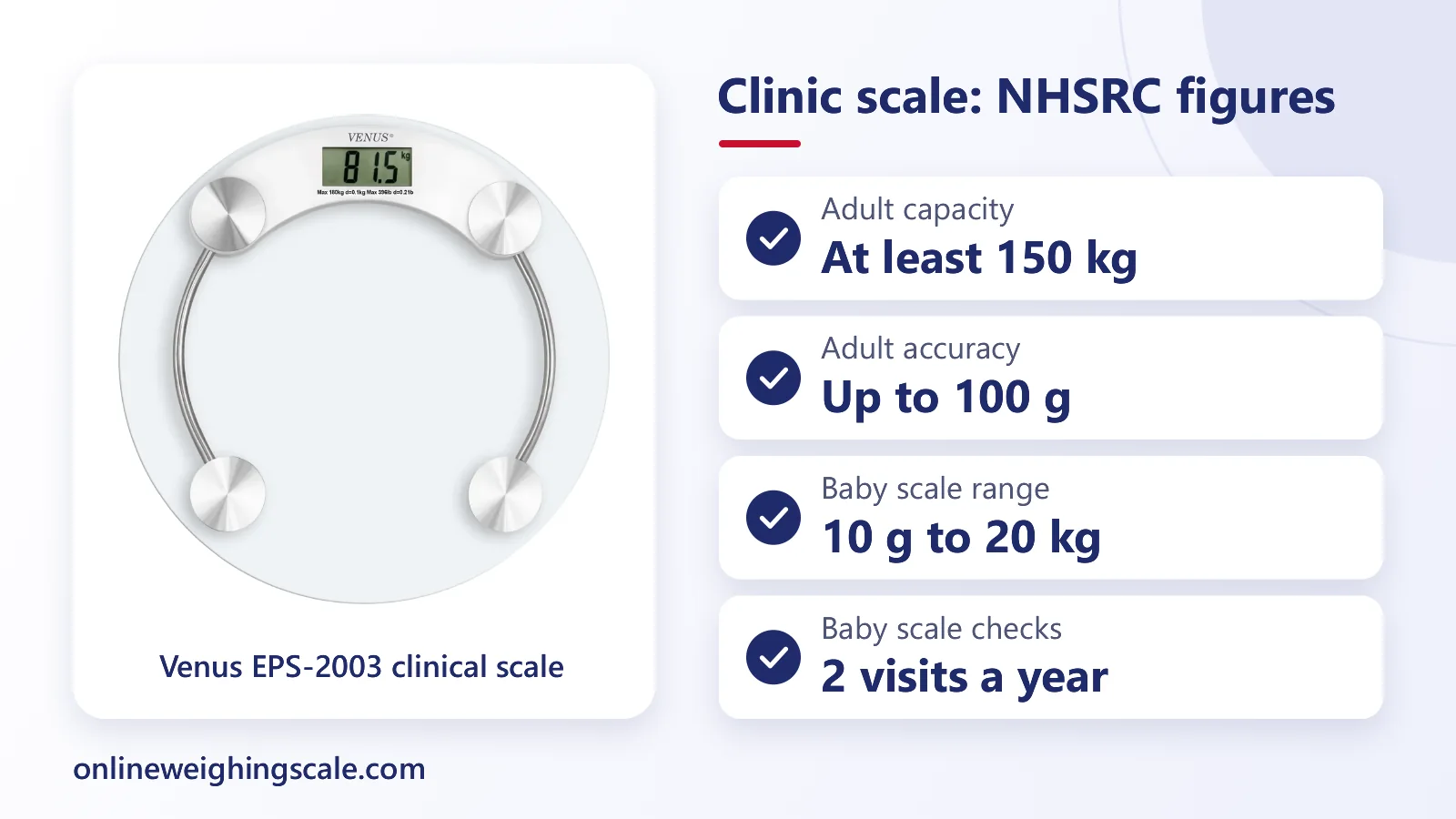
A clinic weighing scale should carry at least 150 kg and read to 100 g, as the NHSRC specifies for public health centres. That figure is a sound starting point for a private doctor's room, a nursing home or a diagnostic centre as well.
This guide covers the adult scale, the baby scale and the height tools a clinic needs. It also covers why a repeatable reading matters when a dose depends on weight, how to check a scale with a known weight, and how to clean it between patients. Where India has no specific rule that could be confirmed, the post says so.
What the NHSRC asks of an adult scale
The National Health Systems Resource Centre (NHSRC) published technical specifications for community health centre equipment, with the weighing scale entry dated August 2023. The adult scale entry sets these points for use in an OPD:
- Capacity of at least 150 kg, with accuracy up to 100 g.
- Platform of 350 x 350 mm, with a tolerance of 10 percent either way.
- A four-digit LCD or LED display, with digits at least 24 mm high.
- A reading that locks automatically at a stable weight and shows an indication that it has locked.
- Readings in kilograms and grams, with an auto-off feature.
- A weight recorded in under 5 seconds, and a built-in rechargeable battery.
These are purchase specifications for public facilities. A private clinic is not bound by them, but they are a written, official checklist, which is rare for weighing equipment. The sections below use them as the yardstick.
Capacity and division for a clinic
Capacity is the heaviest patient the scale can take. Division is the smallest step the display shows. A 150 kg capacity with 100 g steps covers most adults who walk into an OPD. A clinic that sees many heavier patients should look at 200 kg, because a scale read near its limit loses margin.
The 100 g step matters for follow-up visits. If a patient on a diet plan or a heart-failure review is weighed every fortnight, a scale that jumps in 500 g or 1 kg steps hides small changes that the doctor wants to see. Whatever the step, the same scale should be used for the same patient each time, because two scales can differ by a few hundred grams even when both are working.
Platform size is the other number to read. The NHSRC platform of 350 x 350 mm gives room for two feet without the heels hanging over the edge. A small round glass scale of 30 cm is fine at home, but a patient in a hurry or in a heavy coat is harder to place on it.
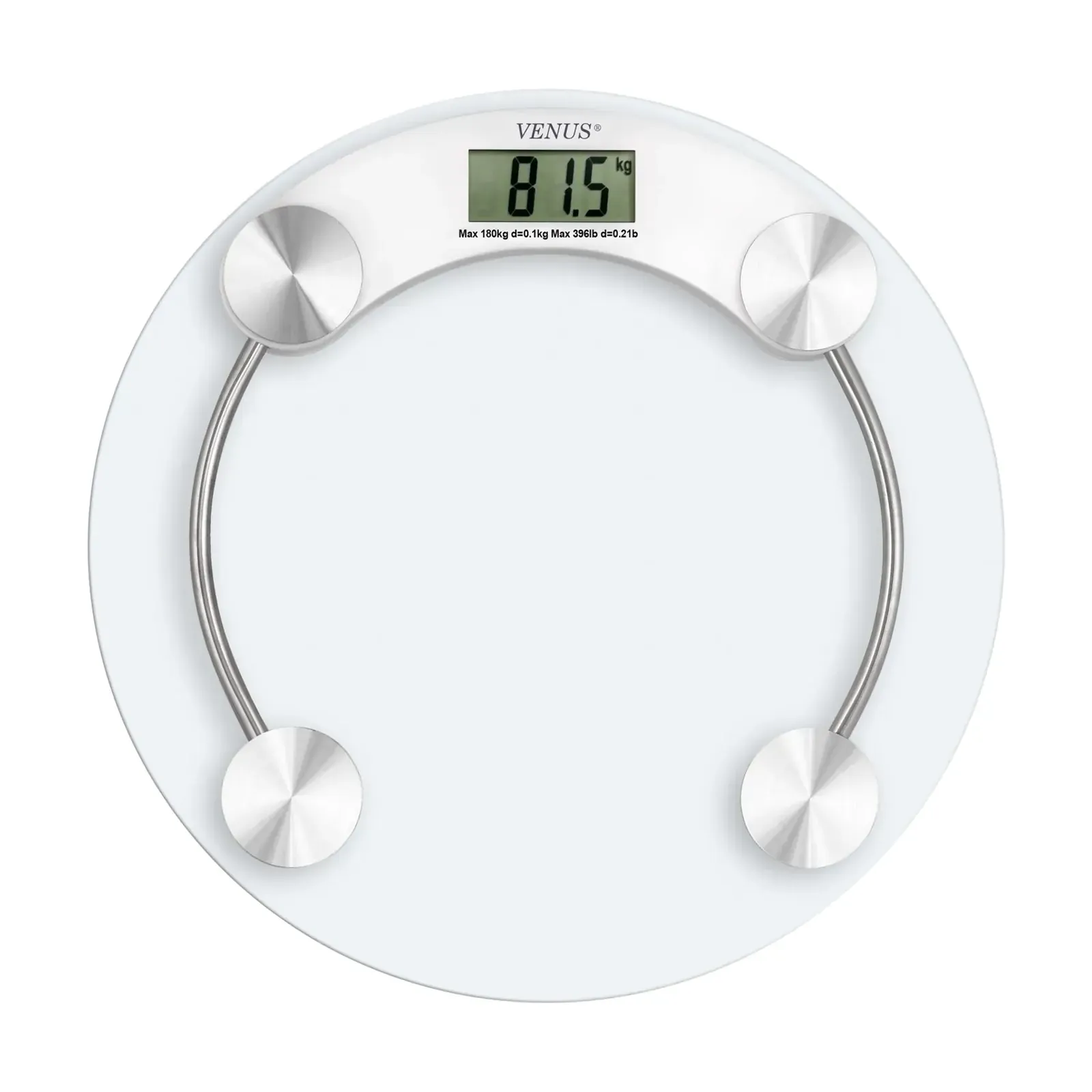
Omace Brands Private Limited lists the Venus EPS-2003 Clinical Weighing Scale at ₹729. It is a 180 kg digital scale with a 30 cm round glass top, so it suits a low-traffic consulting room where speed and platform size are not the main worry. For a clinic that also weighs infants on the same counter, the OM-PS-200 Baby and Adult Weighing Scale is a 3-in-1 unit with a 200 kg capacity, priced at ₹15,749. Neither is described by Omace as a medical device approval, and a doctor should read the product page before choosing. Other adult models are in the personal weighing scale range.
The baby scale in a clinic
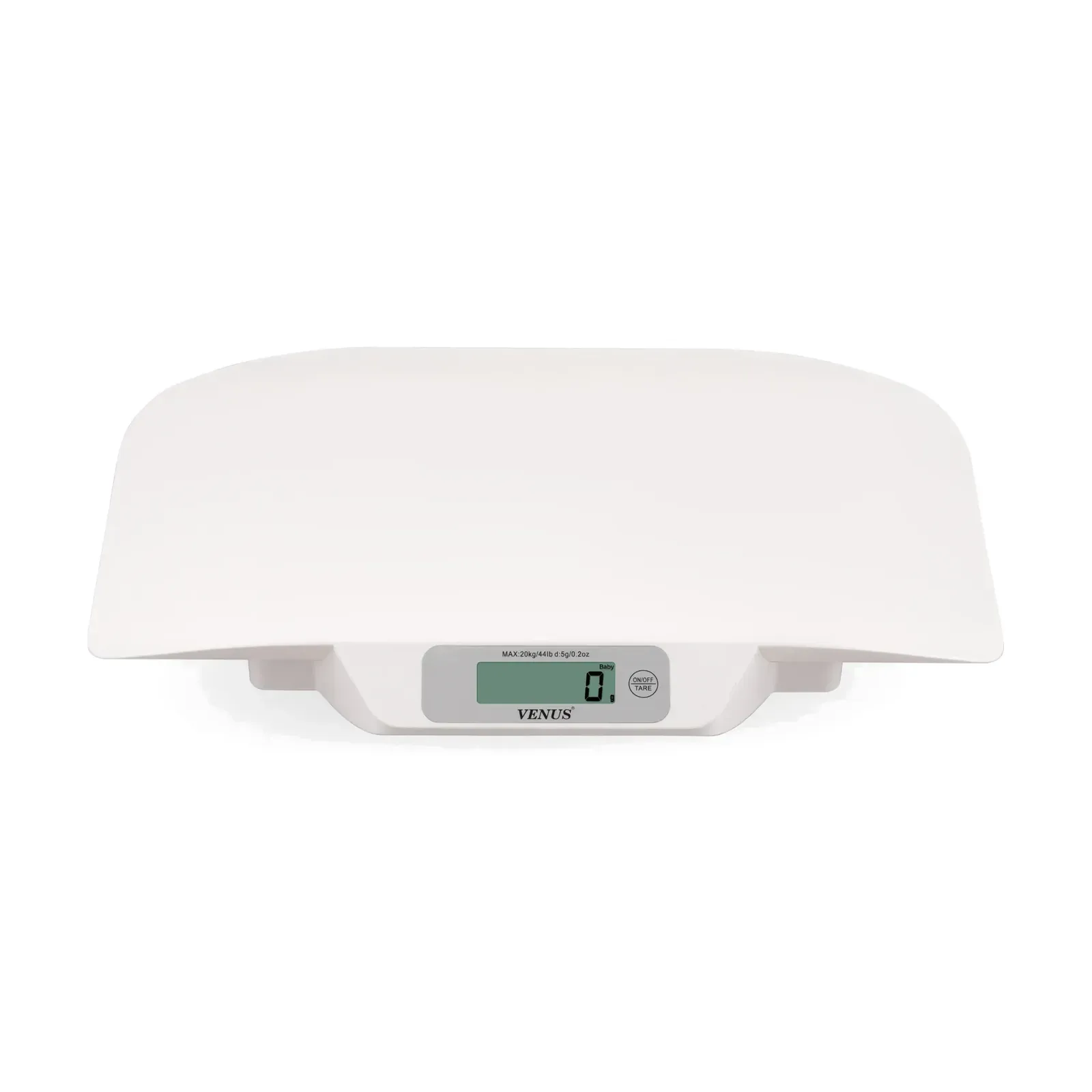
A baby scale is a separate instrument, not a smaller adult scale. The NHSRC entry for the baby weighing scale describes a tabletop, portable, digital scale with these features:
- A backlit display that shows weight to two decimal places in kg.
- A tray made of a skin-friendly, non-toxic material, built so the baby cannot slip, with no sharp edges.
- A tray that is easy to clean, and a zero adjustment.
- A reading that does not change with the position of the baby on the pan.
- A measuring limit from 10 g to 20 kg.
The same document includes a provision to measure the length of the baby lying down. In practice, that is a separate board, covered below.
Omace lists the Venus EBS-KS-9090 Infant Weighing Scale at ₹2,619, with a 20 kg capacity, 5 g steps and a curved safety tray. For a clinic that wants weights logged to an app, the EBS-812 Bluetooth Baby Scale costs ₹5,249. For how to read a baby scale and test it, see How to Read a Baby Scale and Check It Is Accurate.
Height: stadiometer and infantometer
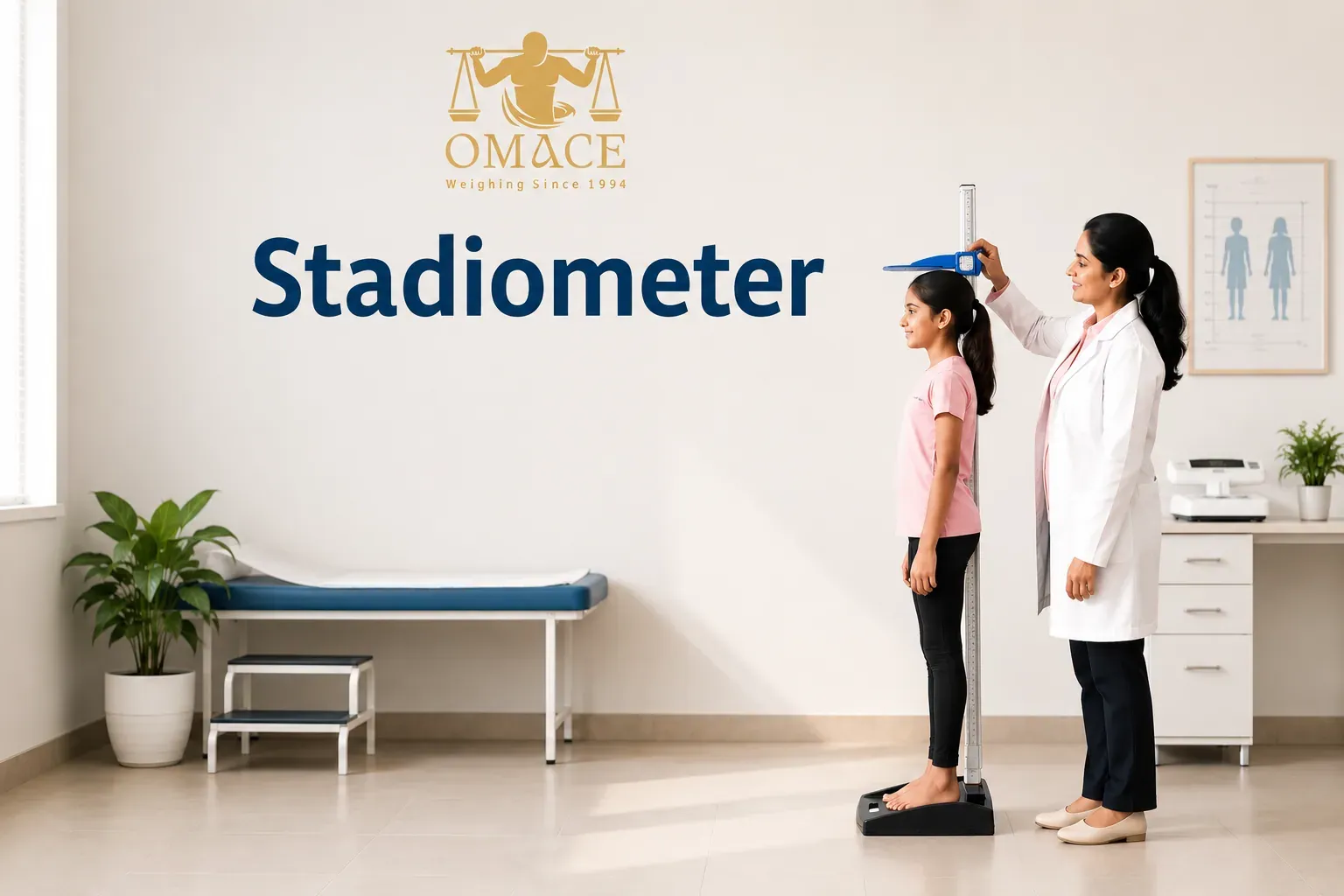
Weight alone says little about a child or an adult. Height goes beside it. The NHSRC lists a stadiometer for standing height and an infantometer for babies who cannot stand.
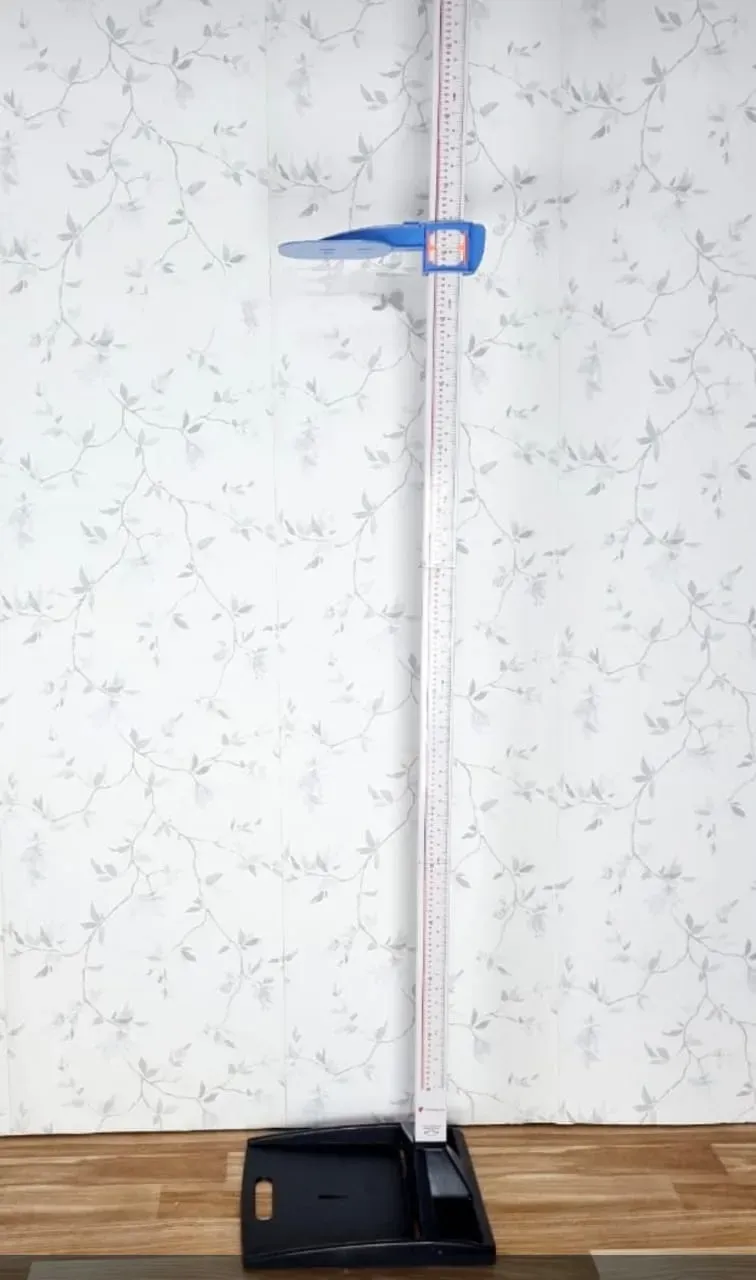
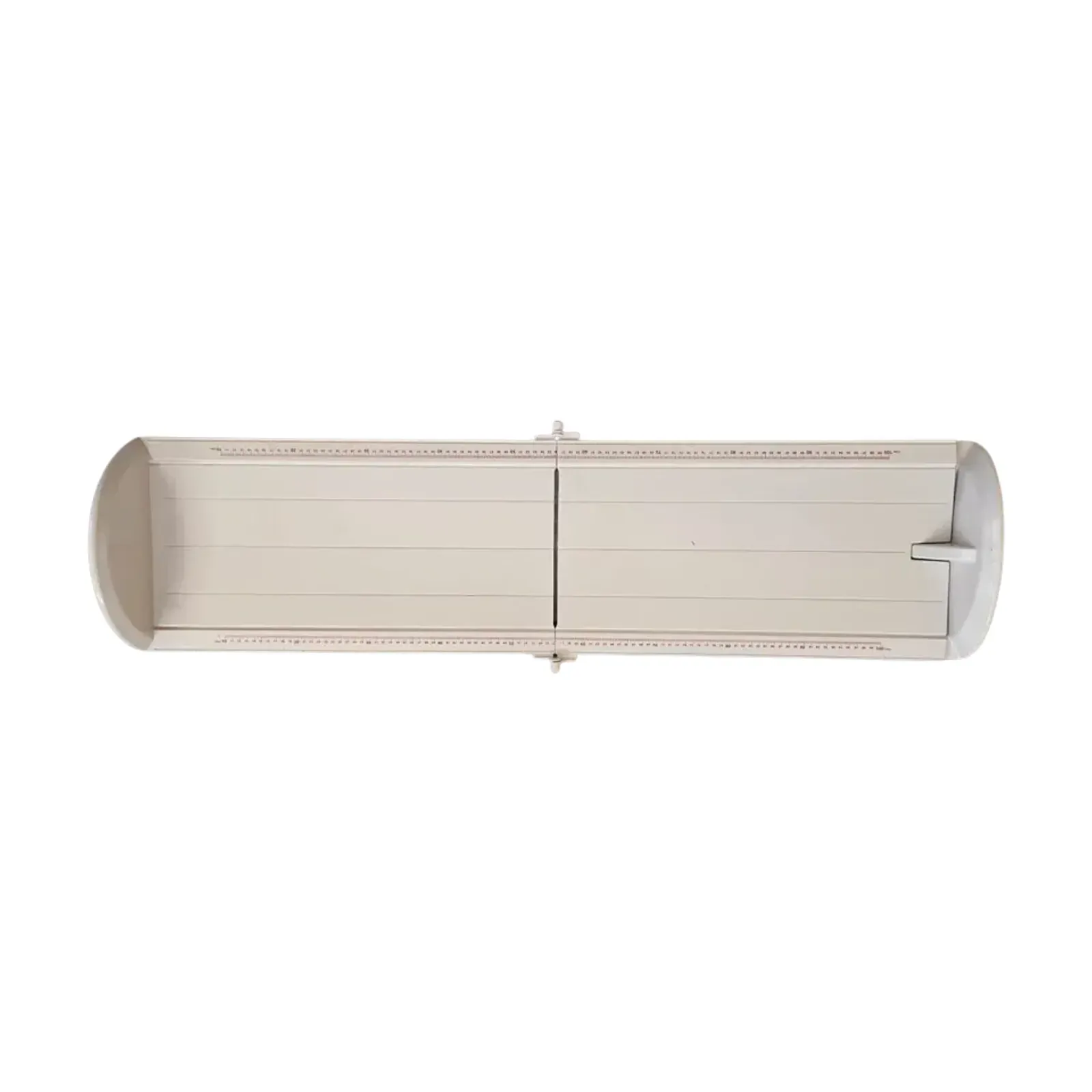
The stadiometer entry asks for an adjustable range of at least 200 cm, graduation marks on both sides in cm and mm and in inches and feet, and a base that carries up to 200 kg. The infantometer entry asks for graduation in both mm and cm, an integrated head positioner, a leg positioner that moves easily, and a range of 100 cm or more.
Omace lists the ICDS-SDM Portable Stadiometer for heights up to 2 m at ₹1,569, and the ICDS-IFM Infantometer, a 0–100 cm baby length board, also at ₹1,569. Both guides explain the method: What Is a Stadiometer? and How to Use an Infantometer.
Why repeatable readings matter for doses
Many children's medicines are dosed by weight, so the number on the scale feeds directly into the prescription. NHS Resolution, the body that handles clinical negligence claims for the NHS in England, notes in its paediatric medication error briefing that dosing errors may follow from a failure to consider the weight of the child, which can fluctuate. It advises that the weight of the patient is checked regularly for accurate dosing.
This is a UK source, and it is about prescribing, not scales. The lesson that carries over is simple. A weight that is old, estimated or read from the wrong scale is a weak base for a dose. A clinic gains most from a scale that gives the same number every time the same person steps on it.
A scale or machine does not diagnose anything. It gives a number, and the doctor decides what the number means. This is general information. Ask your doctor about your own readings.
For patients who cannot stand, see How to Weigh a Patient Who Cannot Stand.
Routine checks with a known weight
A check with a known weight takes a minute and tells the clinic whether the scale still reads true. Put a test weight on the centre of the platform and compare the display with the stamped value. A reading that has moved is a reason to recalibrate or to call a repairer.
Two official documents give a sense of how often. The NHSRC guidelines on equipment maintenance, calibration and testing list the digital baby weighing scale among IPHS 2022 equipment with 2 preventive maintenance and calibration visits a year. The same guidelines name reference weights of high accuracy as the reference for testing both weighing scales and baby weighing scales. The guidelines also call the calibration interval something that varies with the instrument and the maker.
For a worked routine, the US CDC's NHANES anthropometry manual describes how a national survey checks its equipment. Each day, before the first examination, the digital scale is checked with five 10 kg weights, and the total must fall between 49.70 and 50.30 kg. The stadiometer is checked each day with a 100 cm rod, and the infantometer by closing the foot piece against the headboard, which must read 0.0 cm. That is a research survey, not a legal requirement for a clinic, but it shows how simple the habit can be.
On Omace digital scales a long press of TARE opens calibration mode on some models and a long press of the M key on others, and the manual for each model shows which. Omace Brands Private Limited factory calibrates its scales, and each is checked with certified test weights before dispatch. The steps are in Medical Scale Calibration: How Often and How It Is Done, and the general method is in What Is Calibration?.
When a commercial scale needs repair, Omace Brands Private Limited repairs its commercial scales on request. The buyer pays the shipping both ways and the repair cost, and spare parts depend on availability, so ask first through the contact page. Home scales are not part of this service.
Cleaning between patients
No Indian rule on how a clinic scale should be cleaned was found in the sources read for this post. The practical approach is to follow the clinic's own infection-control policy and the maker's manual. Wipe the platform or tray and the display between patients, and let it dry before the next one steps on. A baby scale tray gets a fresh disposable cover or a wipe before each infant. Do not pour liquid over the scale, since water in the electronics is a common reason a scale stops working. The NHSRC baby scale entry asks for an easy-to-clean tray, which tells you what to look for when buying.
When the display drifts, shows errors or goes blank, see Weighing Scale Not Working.
What India's rules say
The NHSRC documents above are specifications for public facilities. In the sources read for this post, no specific Indian rule was found that sets the accuracy a private clinic's scale must meet. Rules on weighing instruments used in trade sit under the Legal Metrology Act, and the Legal Metrology guide explains that law. Whether a clinic scale falls under it is a question for the Legal Metrology department of your state.
Omace Brands Private Limited holds ISO 13485:2016 and ISO 9001:2015 certificates as a manufacturer, listed on the certificates page. These are company quality certificates, not an approval of any single scale.
A short list for a clinic counter
| Need | What to look for | Omace model, price today |
|---|---|---|
| Adult weight, light use | At least 150 kg, 100 g steps, clear display | Venus EPS-2003, ₹729 |
| Infant weight | Curved tray, small steps, 20 kg range | Venus EBS-KS-9090, ₹2,619 |
| Baby and adult on one unit | 200 kg capacity | OM-PS-200, ₹15,749 |
| Standing height | Range to 200 cm | ICDS-SDM Stadiometer, ₹1,569 |
| Baby length | 0–100 cm board | ICDS-IFM Infantometer, ₹1,569 |
Setting up the weighing corner
Put the adult scale on a hard, flat floor, not on a mat or a carpet. Keep it in one place so patients stand on the same surface each visit. Set the baby scale on a firm table and zero it with the tray in place. Write the weight, the date and the scale used in the patient's record. If a clinic changes its scale, note the switch, so a jump in a patient's weight is not read as a clinical change. A kanta that is checked on a fixed day each month, and written in a log, serves the doctor better than the most expensive scale left unchecked.