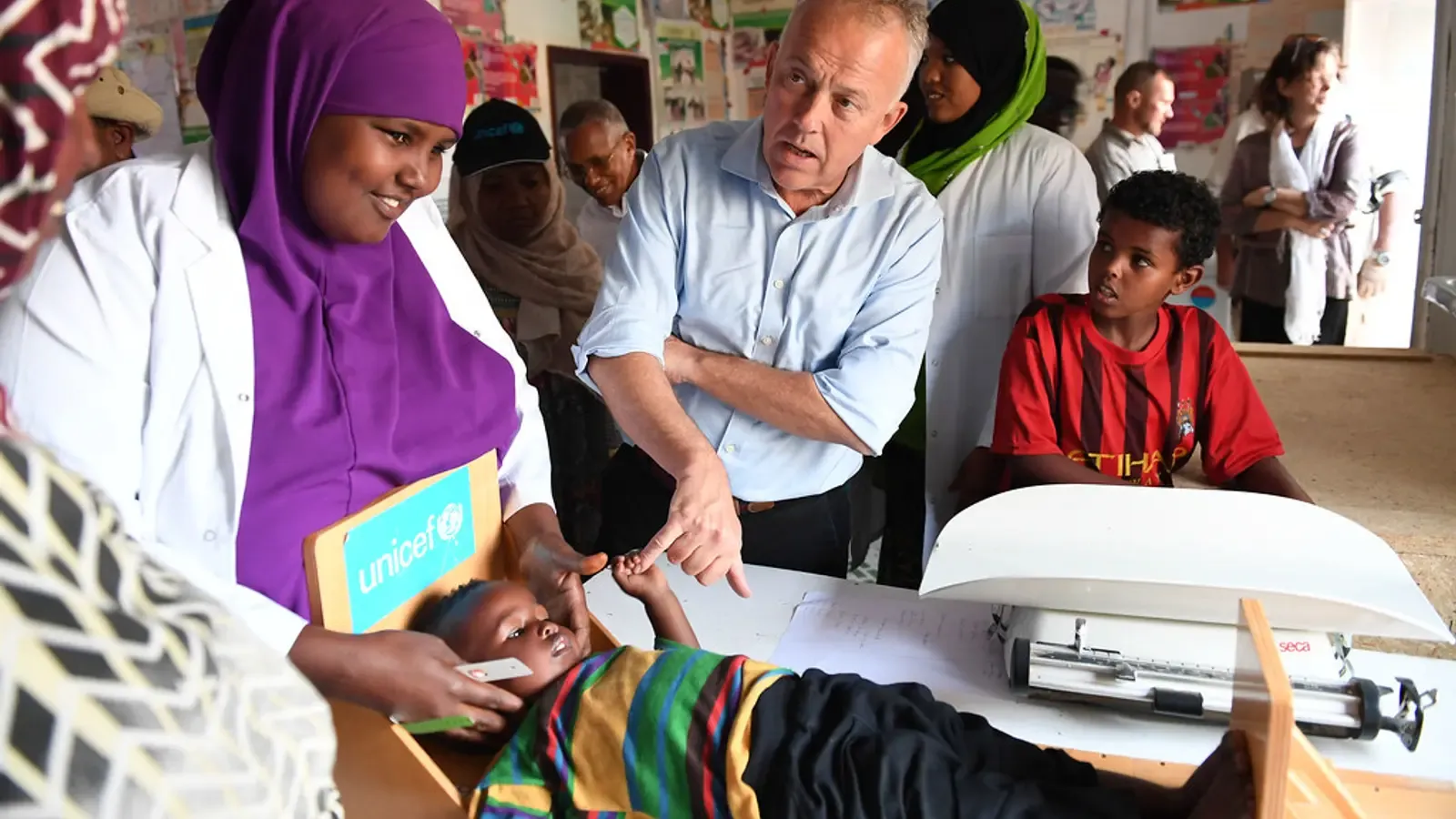
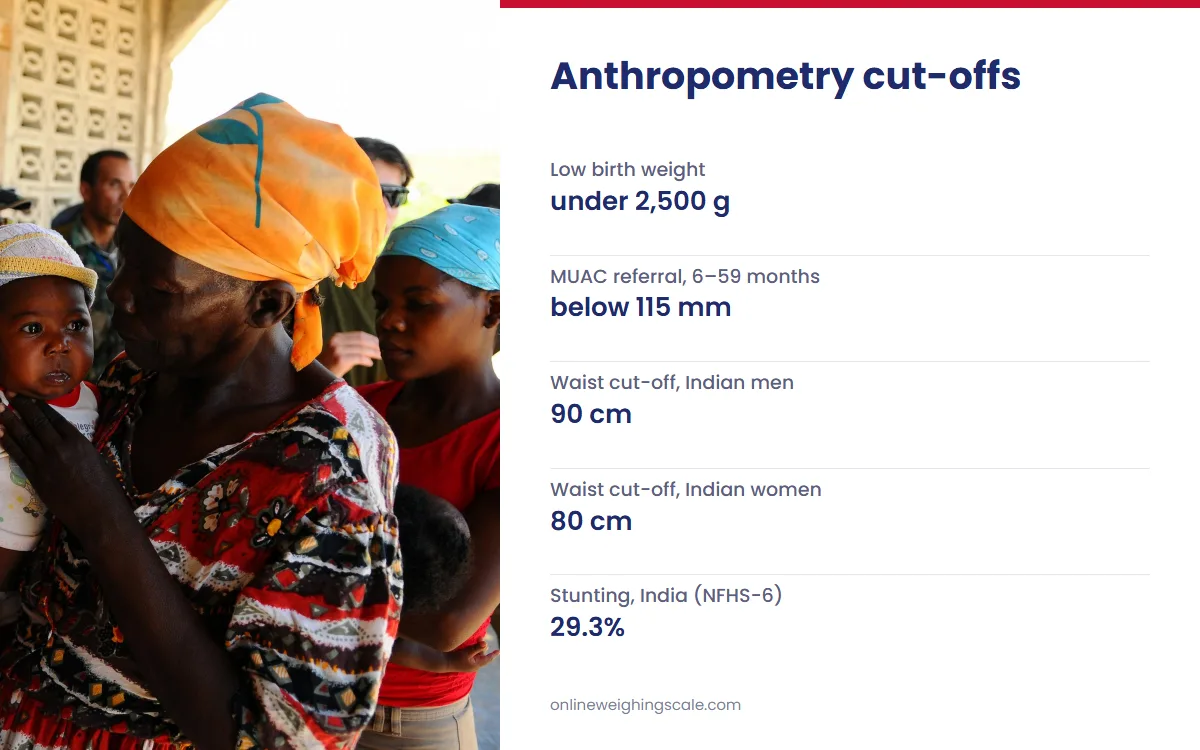
Anthropometry is the measurement of the human body's size and proportions. Its basic readings are weight, length or height, head circumference, mid-upper arm circumference (MUAC), waist and skinfold thickness. A reading means something only when it is compared with a reference for the same age and sex. The WHO refers any child aged 6–59 months with a MUAC below 115 mm for assessment of severe acute malnutrition.
What anthropometry means
The word joins the Greek anthropos, human, and metron, measure. In practice it means taking a few body measurements with simple instruments and comparing them with a growth standard or a population reference. Paediatricians use it to follow a child's growth. Nutrition programmes use it to find children who are not getting enough to eat. Adult clinics use it to judge health risk from weight and from fat carried around the waist.
Designers use the same kind of numbers. ISO 7250-1 describes the basic body measurements that ergonomists use to design the places where people work and live. That branch, often called anthropometrics or anthropometry in ergonomics, works from large tables of adult body dimensions such as sitting height and shoulder width, so that a chair, a desk or a doorway fits most of the people who will use it.
The main anthropometric measurements
Most health checks need only a handful of readings. The WHO Eastern Mediterranean office's child growth monitoring guide sets out which ones apply at which age. Weight applies from birth onwards. Length applies up to 2 years and standing height after that. Head circumference is taken up to 2 years, and MUAC from 3 months.
Weight
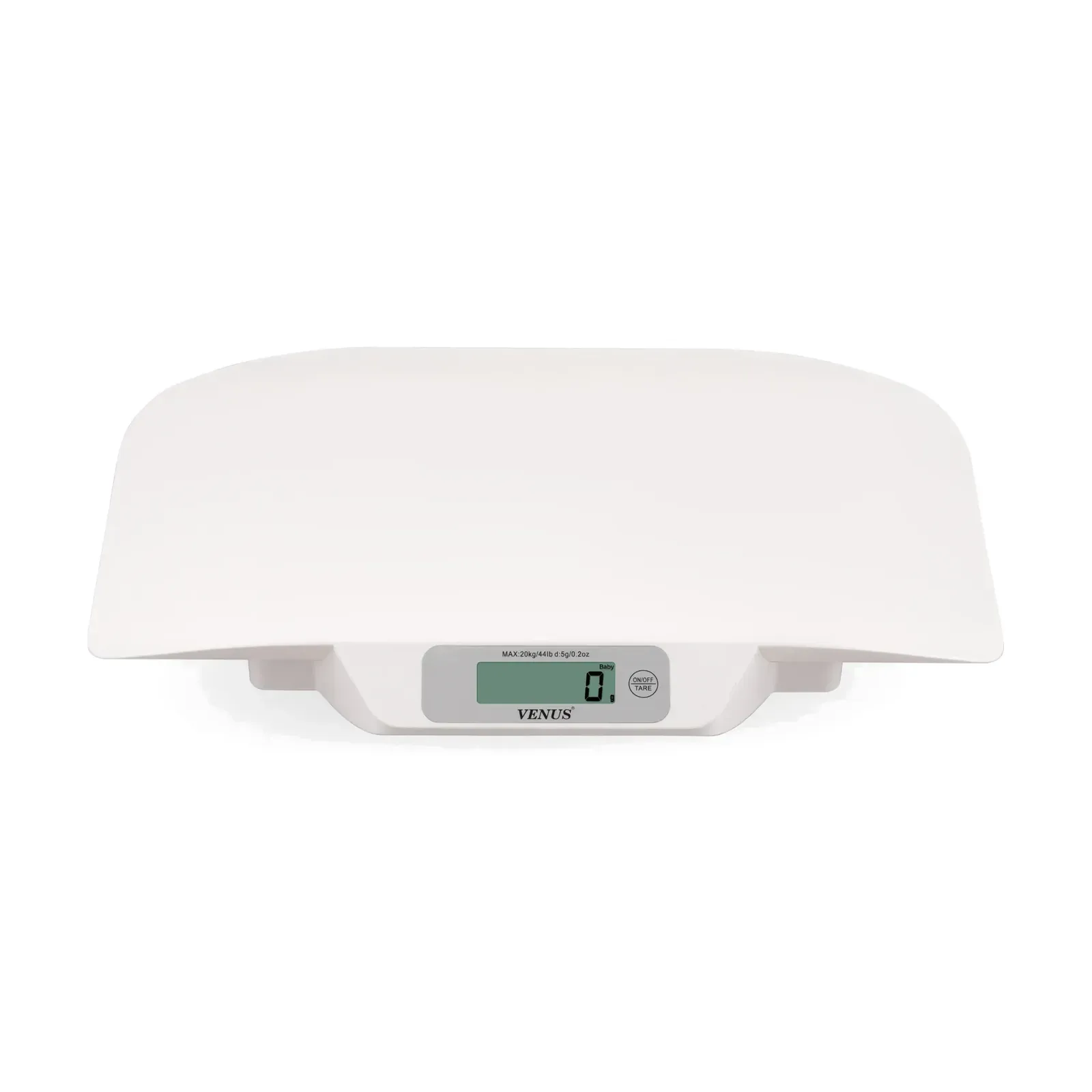
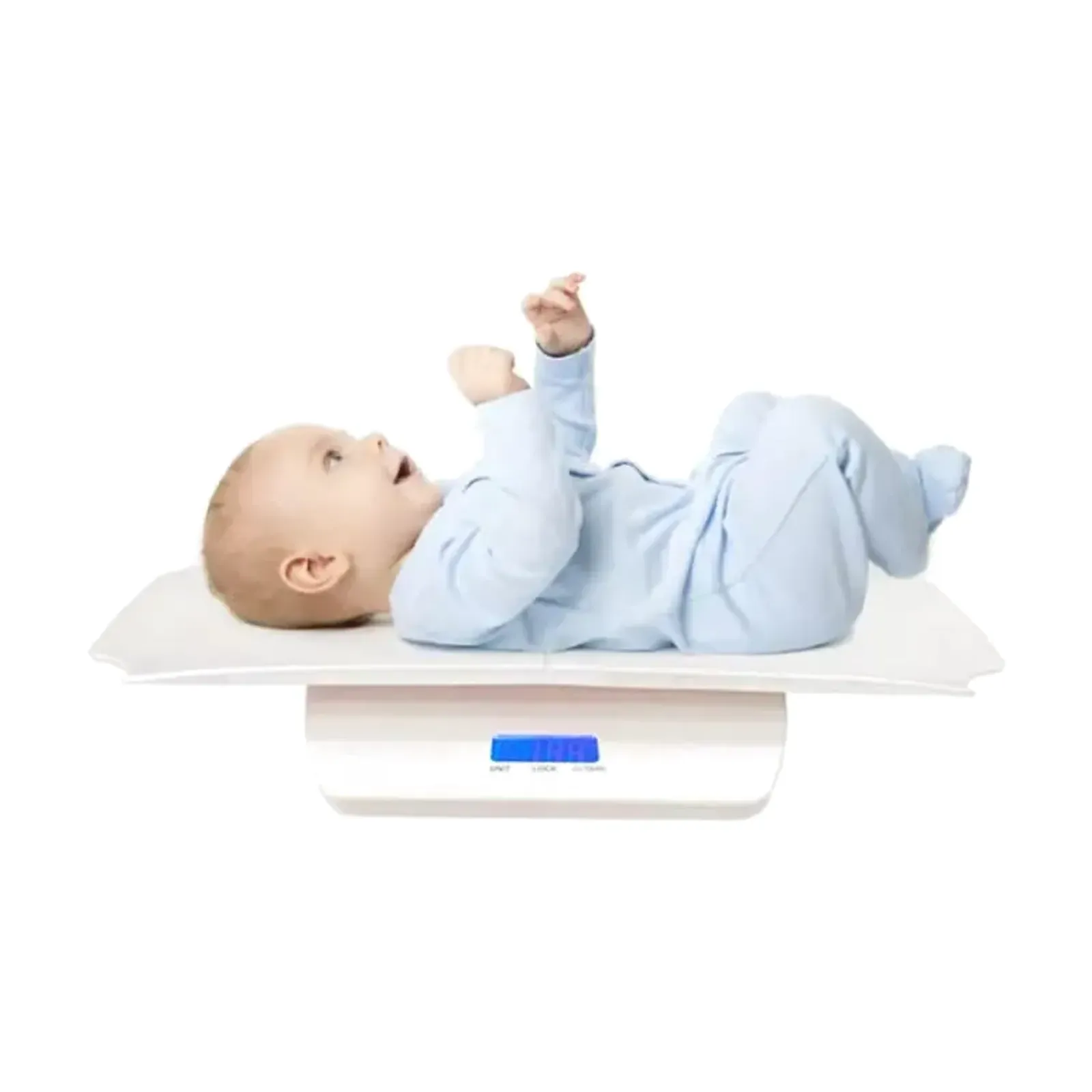
Weight is the first measurement and the most frequent one. An infant lies on an infant scale with a curved tray, or a parent holds the baby on an adult scale after pressing tare. The same guide asks for an infant's weight to the nearest gram. An older child stands still in the middle of a floor scale in light clothing. Weight on its own says little about growth; it becomes useful next to age or height. A newborn under 2,500 g has low birth weight by the WHO definition, and the newborn weight chart follows the first months.
Length and height
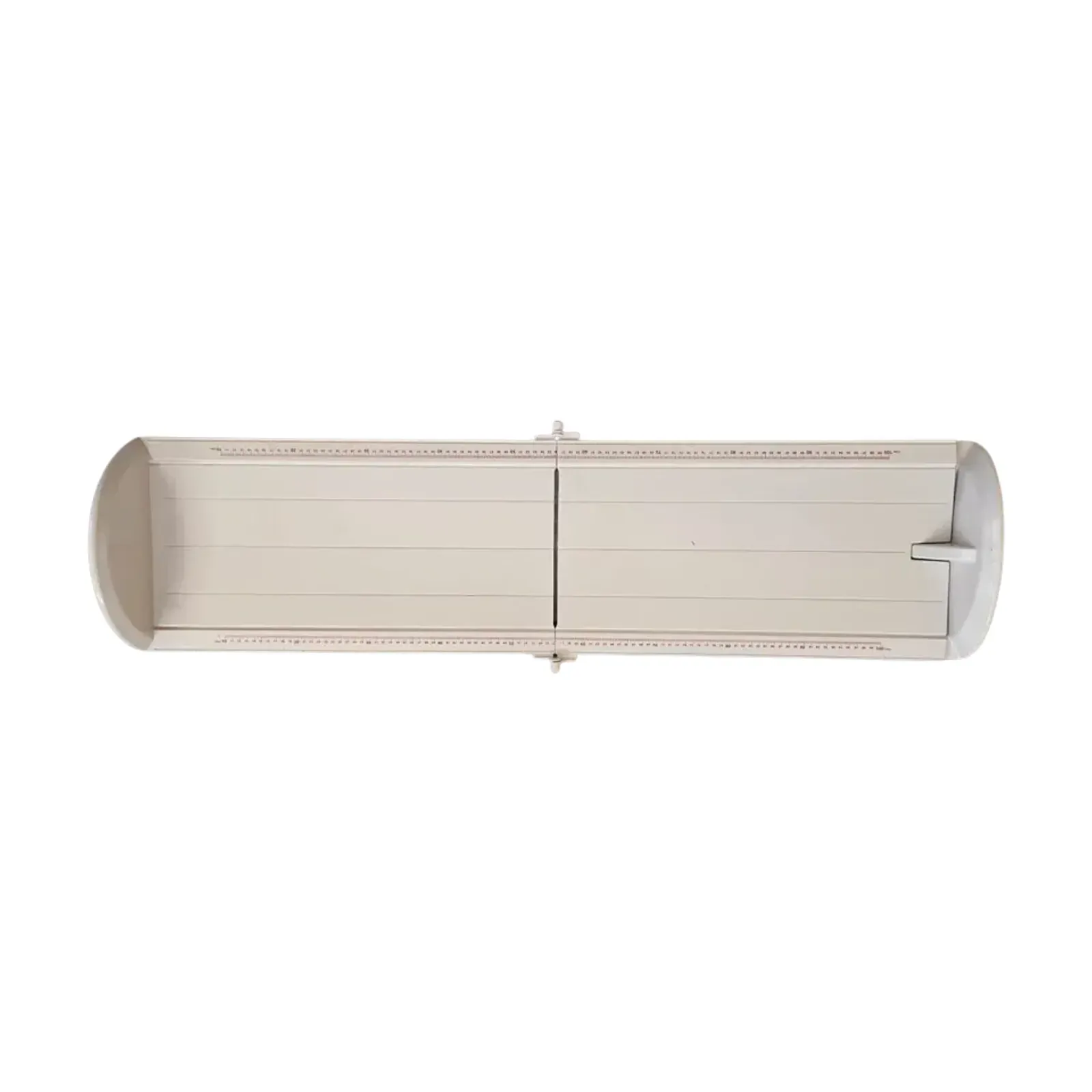
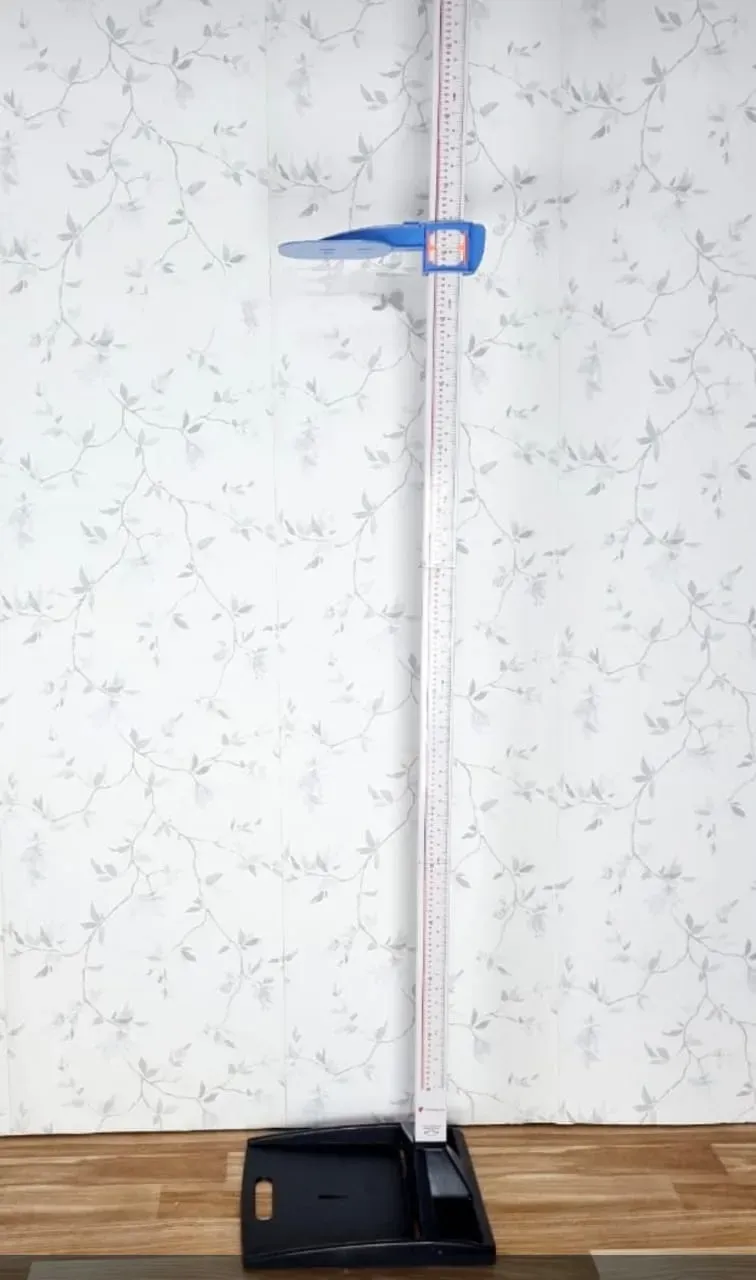
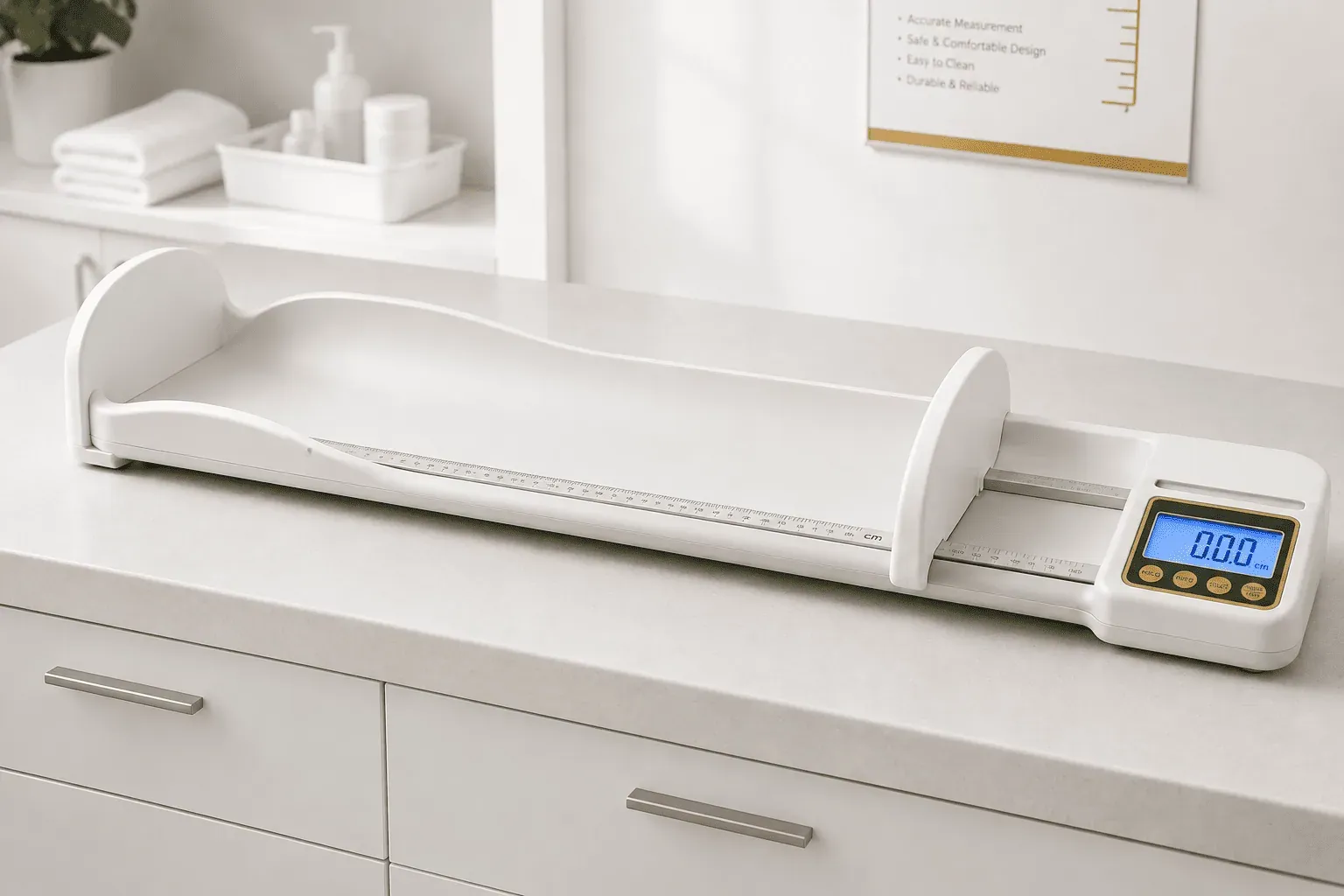
Children under 2 are measured lying down. This recumbent length is taken on an infantometer or length board: one person holds the head against the fixed headboard while the other straightens the legs and slides the footboard to the heels. From 2 years, a child stands on a stadiometer without footwear, with heels, buttocks, back and head in line against the board. Height is read to the nearest 0.1 cm. The full steps are in the guide on how to measure height accurately.
Head circumference
A non-stretch tape goes around the widest part of the head: above the eyebrows, above the ears and over the most prominent point at the back. All hair clips come out first. The Indian Academy of Pediatrics (IAP) growth monitoring guidelines ask for head circumference, height and weight to be measured up to 3 years of age. Normal ranges by month are in the head circumference chart.
Mid-upper arm circumference (MUAC)
MUAC is taken with a non-stretch tape around the upper arm, halfway between the shoulder tip and the point of the elbow, with the arm hanging relaxed. It needs no scale, so the WHO asks trained community health workers and community members to use it for screening. The WHO refers a child aged 6–59 months for severe acute malnutrition care in three situations. The first is a MUAC below 115 mm. The second is a weight-for-height below −3 z-scores. The third is swelling with pitting in both feet, called bilateral pitting oedema.
Waist circumference
Waist size shows fat stored around the abdomen. The tape sits midway between the lowest rib and the top of the hip bone, directly on the skin or over light clothing. A risk factor survey run by ICMR for the Health Ministry notes that developed countries use cut-offs of 102 cm for men and 88 cm for women. The same report says lower cut-offs of 90 cm for men and 80 cm for women suit Indians. It also notes that fat around the waist is linked more strongly with coronary heart disease than BMI is.
Skinfold thickness
Skinfold callipers pinch a double fold of skin with the fat beneath it and read the thickness in millimetres. The usual sites are the back of the upper arm (triceps) and just below the shoulder blade (subscapular). The WHO Child Growth Standards include skinfold-for-age tables for both sites in young children. In adults, equations turn several skinfold readings into a body fat percentage. Treat that percentage as an estimate.
Anthropometric measurements at a glance
| Measurement | Age | Instrument | Reference or cut-off |
|---|---|---|---|
| Weight | From birth | Infant scale, mother-and-child scale, floor scale | Low birth weight: under 2,500 g |
| Length | Under 2 years | Infantometer or length board | WHO length-for-age standards |
| Height | 2 years and older | Stadiometer or wall stature meter | WHO standards to 5 years, IAP 2015 charts for 5–18 years |
| Head circumference | Up to 2–3 years | Non-stretch tape | WHO head circumference-for-age |
| MUAC | From 3 months | Non-stretch MUAC tape | Below 115 mm at 6–59 months: refer |
| Waist circumference | Adults | Non-stretch tape | 90 cm men, 80 cm women (Indian cut-offs) |
How readings become stunting, wasting and underweight
A single reading turns into an index once it is compared with a reference for the child's age and sex. The WHO calls low height-for-age stunting, low weight-for-height wasting and low weight-for-age underweight. Programmes express each index as a z-score, the number of standard deviations a child sits above or below the median of the standard.
The WHO Child Growth Standards, released in April 2006, cover children up to 5 years. They include length or height-for-age, weight-for-age, weight-for-length or height, and BMI-for-age. For older children the IAP's 2015 growth charts are the Indian reference, and the IAP recommends the WHO standards below age 5. The height and weight chart by age for 5 to 18 years lists the IAP figures year by year.
India's national figures come from the National Family Health Survey. NFHS-6, carried out in 2023-24, was released by the Health Ministry on 29 May 2026. It found stunting in 29.3% of children under five, down from 35.5% in NFHS-5. Severe wasting fell from 7.7% to 5.2%. Underweight edged down from 32.1% to 31.8%.
Growth monitoring in India: Anganwadi and Poshan Tracker
Growth monitoring is anthropometry repeated over time. Under Mission Poshan 2.0, every Anganwadi centre has a provision for a set of four growth monitoring devices, according to a Ministry of Women and Child Development release. The set holds an infantometer and a stadiometer for length and height, an infant weighing scale, and a mother-and-child weighing scale. Anganwadi workers enter each measurement in the Poshan Tracker app on their phones.
The app's Poshan calculator applies the WHO Child Growth Standards to each child's height, weight, age and sex. It flags stunting, underweight, wasting and overweight. Growth monitoring reached over 6.3 crore children aged 0 to 5 by May 2026, nearly 94% of those registered, according to a PIB factsheet.
Paediatricians follow the IAP schedule. In the first year and a half, the immunisation visits double as growth checks. After 18 months, the IAP guidelines ask for measurements every six months, which continues to age 8. From 9 to 18 years, height, weight and BMI are checked once a year.
Anthropometry in adults
Adult checks lean on weight, height, BMI and waist. The WHO classes a BMI of 25 or more as overweight and a BMI of 30 or more as obesity. BMI cannot show where fat sits. A waist reading against the 90 cm and 80 cm cut-offs fills that gap. Body measurements such as chest, hip and arm size are also used to track fitness progress, alongside a regular reading on a home scale.
How to take accurate measurements
- Check the scale first. Stand it on a hard, level floor, switch it on and wait for zero before anyone steps on.
- Weigh with minimal clothing. Shoes and heavy clothes come off. For a baby, put the towel or nappy on the scale and press tare first.
- Match the height tool to the age. Use lying length on an infantometer below 2 years and a stadiometer after that.
- Use a non-stretch tape. Old cloth tapes stretch with use, which spoils head, arm and waist readings.
- Measure twice. Take two readings and repeat if they disagree; record the one you trust or the average.
- Record and plot. Write the date and reading on the child's card or chart, because the trend matters more than any single visit.
Measuring instruments from an Indian manufacturer
Omace Brands Private Limited has made weighing and measuring instruments in Bagru, Jaipur since 1994 (about Omace). Its range covers the four instrument types used for growth monitoring. The ICDS-IFM infantometer measures baby length from 0 to 100 cm and costs ₹1,569. The ICDS-SDM portable stadiometer measures height up to 2 m, also for ₹1,569. The Venus EBS-KS-9090 infant weighing scale weighs up to 20 kg in 5 g steps for ₹2,619. The ICDS-MBS-KS-810 is a 2-in-1 mother and baby scale with a curved tray, at ₹3,459. As a manufacturer, Omace Brands Private Limited holds ISO 13485:2016, ISO 9001:2015, EU MDR, CE and US FDA compliance certificates, listed on the certificates page. Every scale is checked with certified test weights before dispatch. Store purchases carry a 2-year warranty on manufacturing defects, and every Omace product is made in India.
Where to read the numbers next
The readings only become useful on a chart. For babies and toddlers, the WHO boys growth chart from birth to 5 years and the head circumference chart give the normal ranges month by month. For school-age children, the IAP year-by-year chart linked above does the same job. A paediatrician reads the trend across visits and decides whether anything needs follow-up. This is general information. Ask your doctor about your child's own readings.