Measuring instruments are devices that compare a quantity such as length, mass, volume, temperature, pressure or time with a standard unit. A common steel rule reads to 1 mm, while a screw gauge reads to 0.01 mm, according to NCERT's Class 11 physics manual. In India, a weight or measure used in a transaction or for protection must be verified before use under the Legal Metrology Act, 2009.
What a measuring instrument is
The International Vocabulary of Metrology, kept by the Joint Committee for Guides in Metrology at the BIPM, defines a measuring instrument as a device used for making measurements, alone or with supplementary devices. In everyday speech the same thing goes by measuring device, measuring tool or gauge.
The vocabulary splits instruments into two kinds. An indicating instrument shows a reading that follows the thing being measured, as a digital scale or a thermometer does. A material measure holds a fixed value while you use it; the vocabulary's own examples include a standard weight, a volume measure and a line scale, which is a ruler.
Each instrument reads one kind of quantity in a unit. The International System of Units has seven base units: the metre for length, the kilogram for mass, the second for time, the ampere for electric current, the kelvin for temperature, the mole for amount of substance and the candela for luminous intensity. Most everyday instruments read one of the first five, or a unit built from them such as the litre or the pascal.
Four properties describe any instrument: its unit, its range, its least count and its accuracy. The least count is the smallest step it can show. NCERT gives 1 mm for a common scale and explains that a vernier is added because a 1 mm scale is hard to subdivide further. A finer least count shows smaller steps, though it does not by itself make the reading true.
Types of measuring instruments by what they measure
Sorting instruments by the quantity they read shows the whole family at once. Each group below names the common tools, the unit they read and, where it applies, how Indian law treats them.
Length: rules, tapes, calipers and gauges
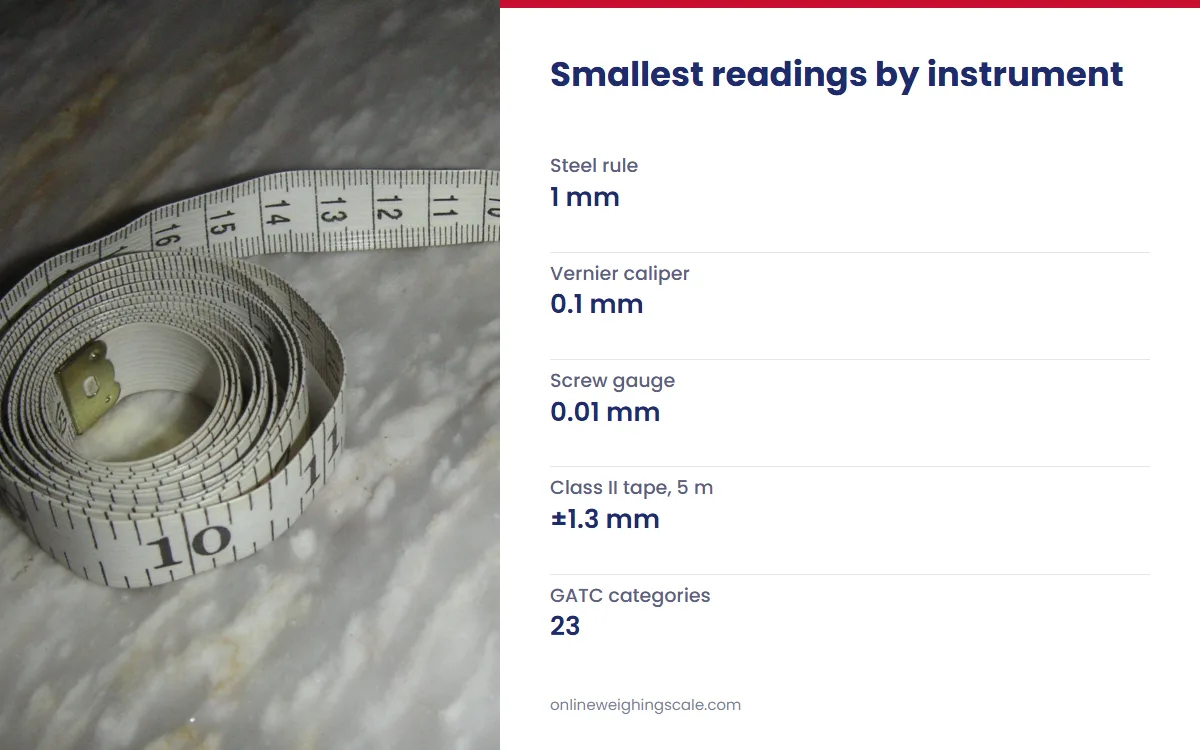
A steel rule or a metre scale reads to 1 mm. A tape measure covers longer runs, coiled in a case or wound on a reel. A vernier caliper adds a sliding scale that reads 0.1 mm, and a micrometer screw gauge reads 0.01 mm, with some models down to 0.001 mm, as the NCERT manual notes. Workshops use a height gauge, which puts the same vernier, dial or digital scale on a vertical column over a flat surface plate. The vernier caliper guide works through least count, zero error and a reading step by step. Digital tape measures and laser distance meters show the length on a display, which removes misreading but still needs an occasional check against a steel rule.
Mass: scales and balances
Weighing instruments measure mass in grams, kilograms or tonnes. A beam balance compares the load with known weights. Most digital scales turn the load's force into an electrical signal through a load cell and show the result as a number. The range runs from milligram balances in laboratories and jewellery shops to crane scales that lift several tonnes. The guide to types of weighing scale covers each kind, from kitchen and personal scales to platform and crane models.
Volume and flow
Volume is read in litres and millilitres. Laboratories use measuring cylinders, pipettes and burettes, and kitchens use measuring cups and spoons. Larger volumes pass through meters: water meters at homes, flow meters in plants and dispensers at fuel stations. Petrol and diesel, CNG, LPG, LNG and hydrogen dispensers joined the instruments that government approved test centres may verify in May 2026, according to the Department of Consumer Affairs.
Temperature
Thermometers show temperature in degrees Celsius in daily life, while the SI base unit is the kelvin. Liquid-in-glass and digital clinical thermometers read body temperature. Infrared thermometers read a surface without touching it, and thermocouples and resistance sensors work inside ovens, furnaces and cold rooms. Clinical thermometers are one of the 18 instrument categories that government approved test centres may verify, as the Department of Consumer Affairs listed in October 2025.
Pressure
Pressure is force spread over an area. Barometers read air pressure, manometers and Bourdon-tube gauges read gas and liquid lines, and tyre gauges read inflation. Dials still carry older units, and NIST's conversion tables convert them to the pascal: one pound-force per square inch is 6.895 kPa, one bar is 100 kPa and one millimetre of mercury is 133.3 Pa. The sphygmomanometer, or blood pressure meter, is on the same verification list as the clinical thermometer. A reading taken at home is information for your doctor, who decides what it means.
Time
Clocks, watches and stopwatches measure time in seconds, minutes and hours. India's reference time comes from CSIR-NPL, which generates Indian Standard Time from an ensemble of atomic clocks and keeps it within a few nanoseconds of Coordinated Universal Time, according to the Press Information Bureau. The Legal Metrology (Indian Standard Time) Rules, 2026 were published in the Gazette on 29 August 2026 and take effect 180 days later (checked November 2026).
Electrical and other quantities
A multimeter reads voltage in volts, current in amperes and resistance in ohms. Beyond the workbench, many meters touch daily life. Energy meters, gas meters, moisture meters for grain, speed meters for vehicles and breath analysers all appear among the 18 categories in the 2025 amendment to the Legal Metrology (Government Approved Test Centre) Rules. So do multi-dimensional measuring instruments.
Which instruments Indian law controls
The Legal Metrology Act, 2009 treats weighing and measuring instruments as weights and measures. Section 24 requires anyone who uses a weight or measure in a transaction or for protection to have it verified before putting it into use. The Act defines protection as using a reading to safeguard the well-being of a person or an animal, or to protect a commodity, vegetation or thing. That brings readings taken for health and safety under the Act, alongside readings taken for a sale.
Verification is done by the state Legal Metrology department or, for listed kinds, by a government approved test centre. Since October 2025, those centres may verify 18 categories of instruments. Five fuel dispenser types added in May 2026 bring the total to 23 categories (checked November 2026). The October 2025 list includes water meters, tape measures, weighing instruments of accuracy class III up to 150 kg and of class IIII, load cells, beam scales, counter machines and weights of every category.
The duty follows the use. A cloth seller's tape and a kirana shop's kanta are used in transactions, so they need verification and a stamp. A ruler in a school geometry box or a vernier caliper in a college lab is used for neither trade nor protection.
Quick reference: instruments compared
| Instrument | Quantity | SI unit | Key figure | On India's GATC list |
|---|---|---|---|---|
| Steel rule | Length | metre | 1 mm least count | No |
| Vernier caliper | Length | metre | 0.1 mm least count | No |
| Screw gauge | Length | metre | 0.01 mm least count | No |
| Tape measure, class II | Length | metre | ±1.3 mm allowed at 5 m when new | Yes |
| Weighing instrument, class III | Mass | kilogram | GATC scope up to 150 kg | Yes |
| Sphygmomanometer | Pressure | pascal | 1 mmHg = 133.3 Pa | Yes |
The least counts come from NCERT's laboratory manual, the tape allowance from OIML R 35-1 and the pressure conversion from NIST. The last column follows the Department of Consumer Affairs list of instruments that government approved test centres may verify.
How to read a tape measure, a ruler and an online ruler
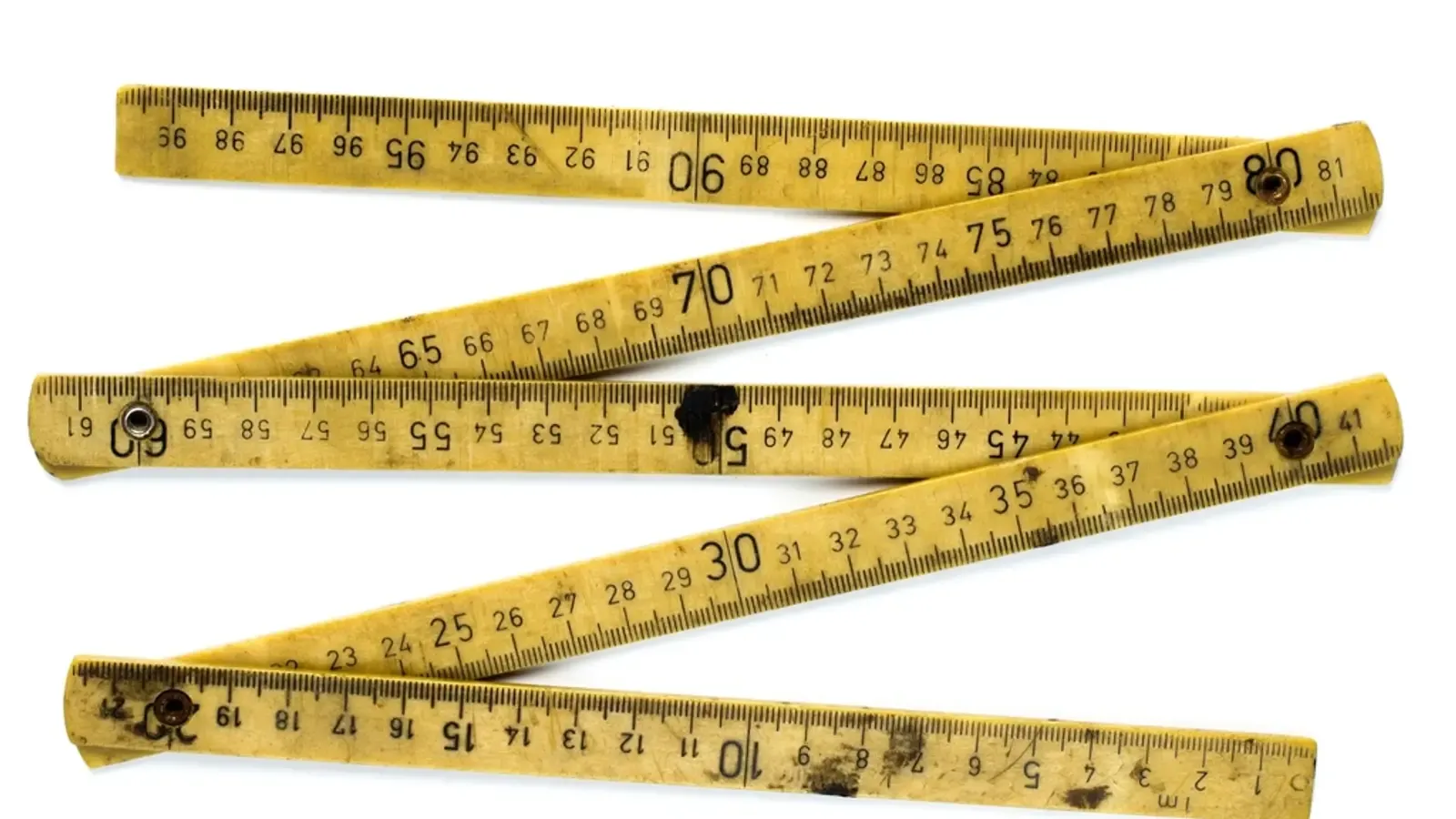
On a metric tape, the numbered lines mark centimetres, and nine short lines between them split each centimetre into 10 millimetres. Read the last whole centimetre, then count the millimetre lines past it. A reading of 47 cm and 6 lines is 47.6 cm, or 476 mm.
On the inch side, NIST's tables set one inch at 2.54 cm and one foot at 0.3048 m, so 12 inches make 30.48 cm. When each inch is split into 16 parts, the smallest gap is 1/16 inch, about 1.6 mm. The longest line inside an inch marks the half, the next pair the quarters, then the eighths, and the shortest lines the sixteenths.
Look straight down at the mark you are reading. NCERT warns that reading a scale at a slant causes parallax error. OIML R 35-1, the international recommendation for length measures, allows a tape to end in a fixed or a sliding hook, so a little play in the end hook can be part of the design.
Tapes also come in accuracy classes. Under OIML R 35-1, the error allowed at first verification is 0.1 mm plus 0.1 mm per metre for class I, 0.3 mm plus 0.2 mm per metre for class II and 0.6 mm plus 0.4 mm per metre for class III, with the length rounded up to whole metres. A new 5 m class II tape may therefore read up to 1.3 mm long or short. Once the tape is in service the allowance doubles, to 2.6 mm.
An online ruler draws centimetres from the screen's pixels, so its true size depends on the device and the zoom level. Hold a steel rule against the screen before trusting one, and never use it for anything you sell by length.
Keeping an instrument accurate
- Check zero first. Close the jaws of a caliper or rest the tape's hook on a flat edge, and note any zero error before you measure.
- Read square on. Keep your eye in line with the mark to avoid parallax.
- Look after it. Wipe off dust and oil, keep tapes from kinking and store precise tools dry and flat.
- Calibrate against a traceable reference. CSIR-NPL is India's National Metrology Institute, with the mandate to set up primary national standards and pass them on, as the Press Information Bureau notes.
- Re-verify trade instruments. The Legal Metrology Act lets the government fix the period of re-verification, and a stamp only counts while it is valid.
Where weighing and height instruments fit
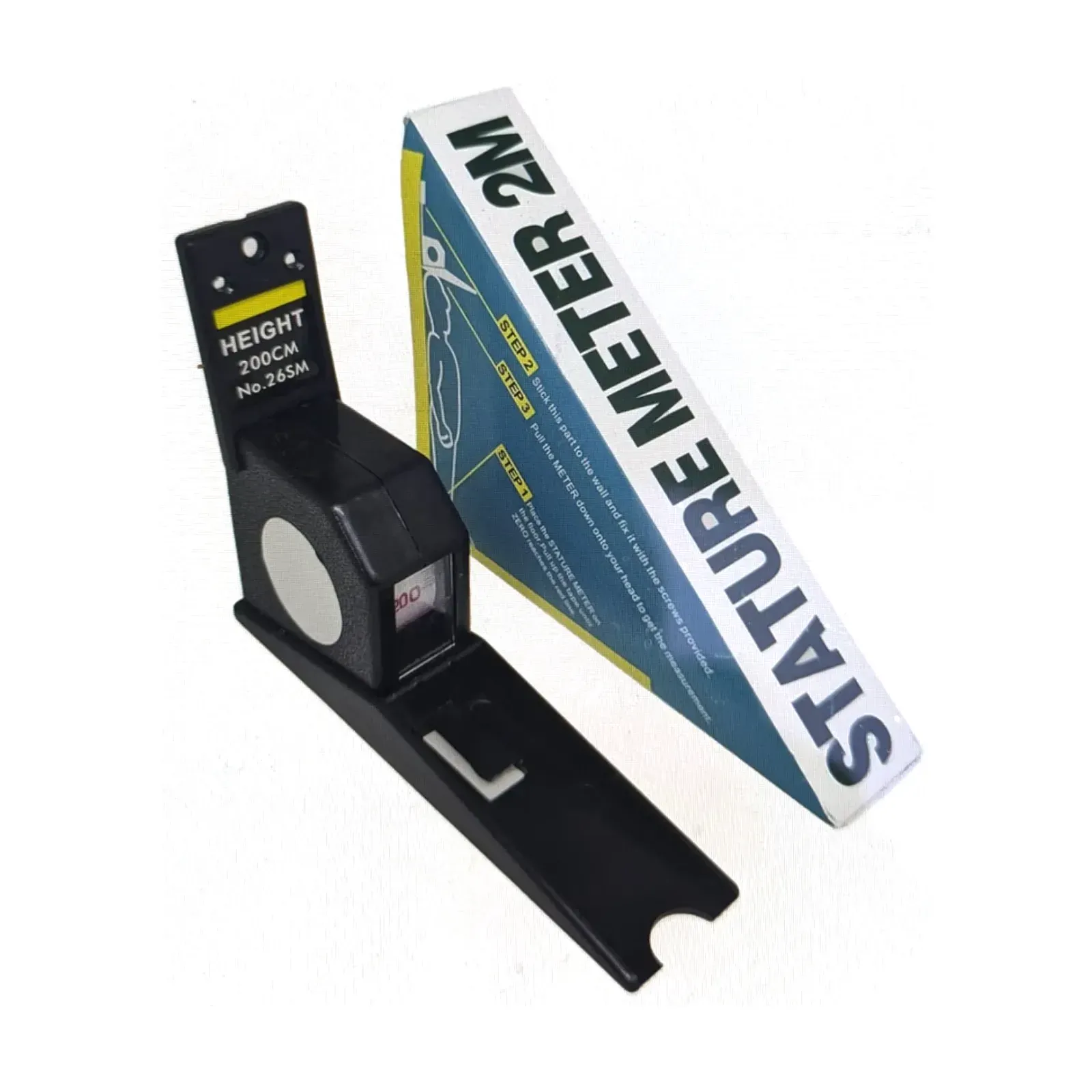
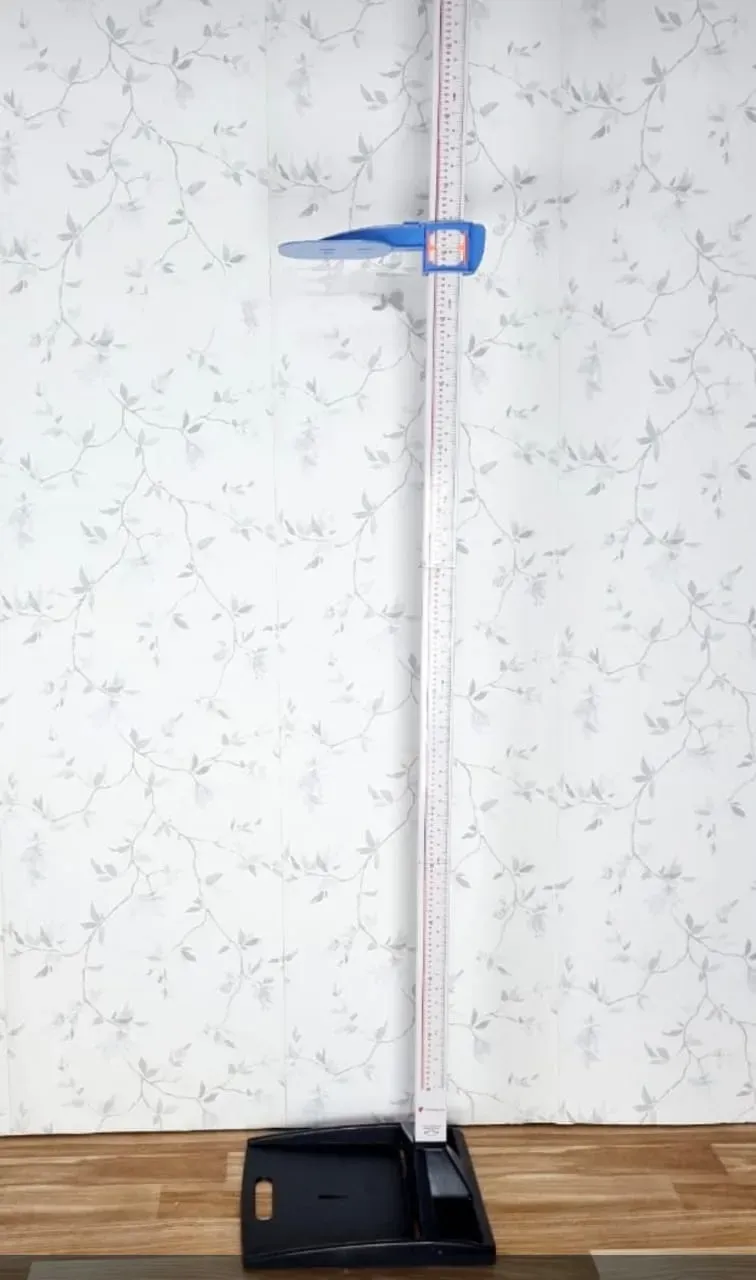
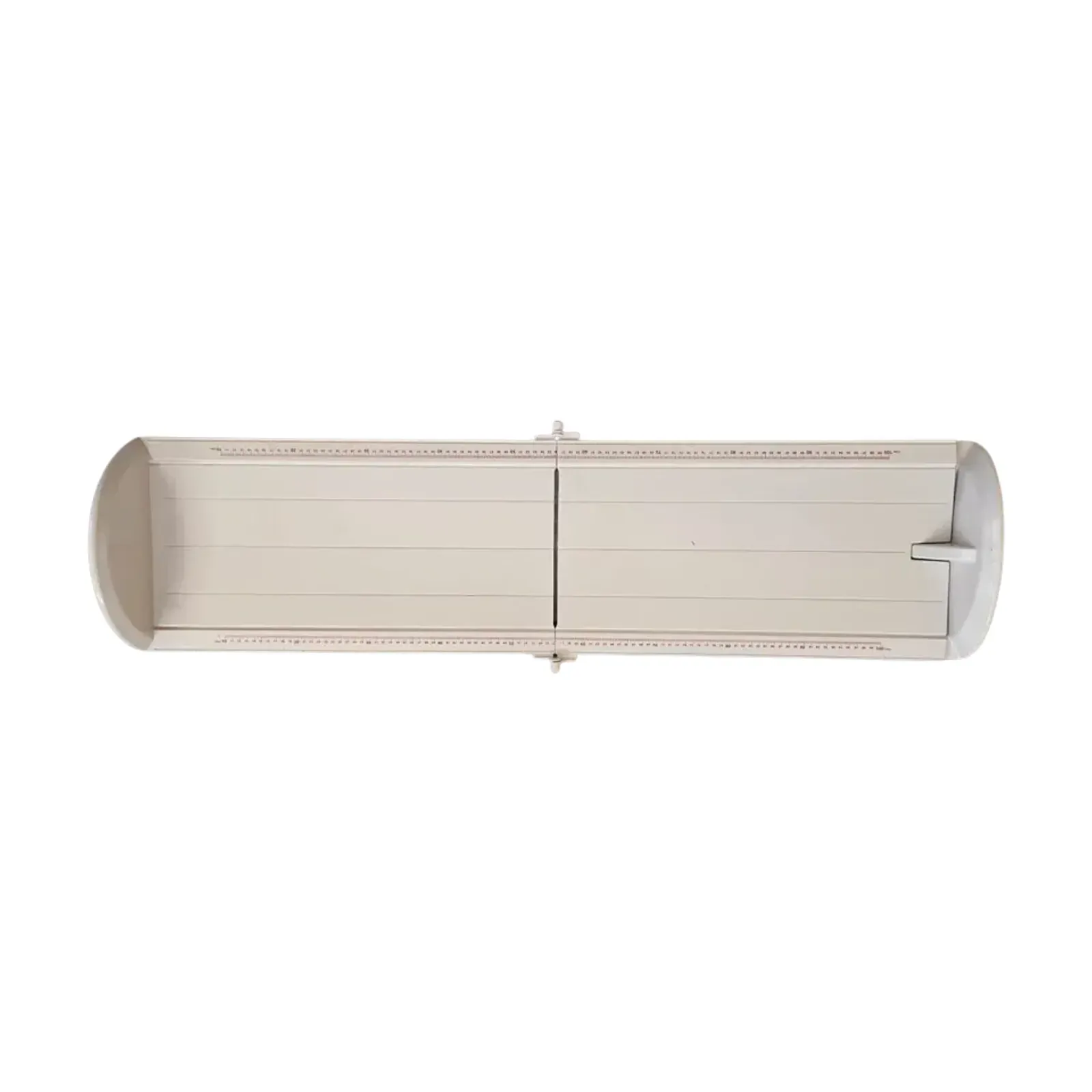
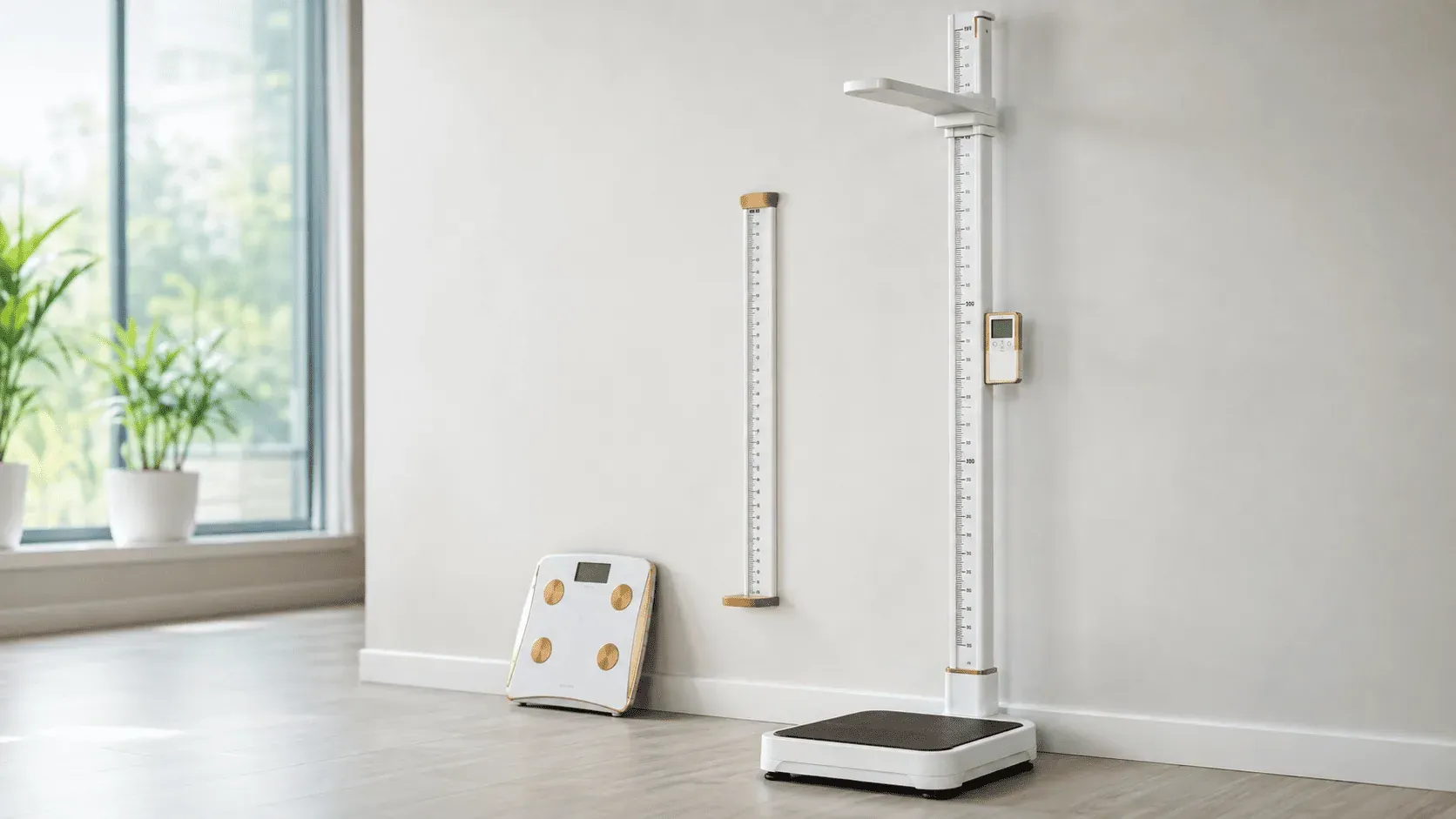
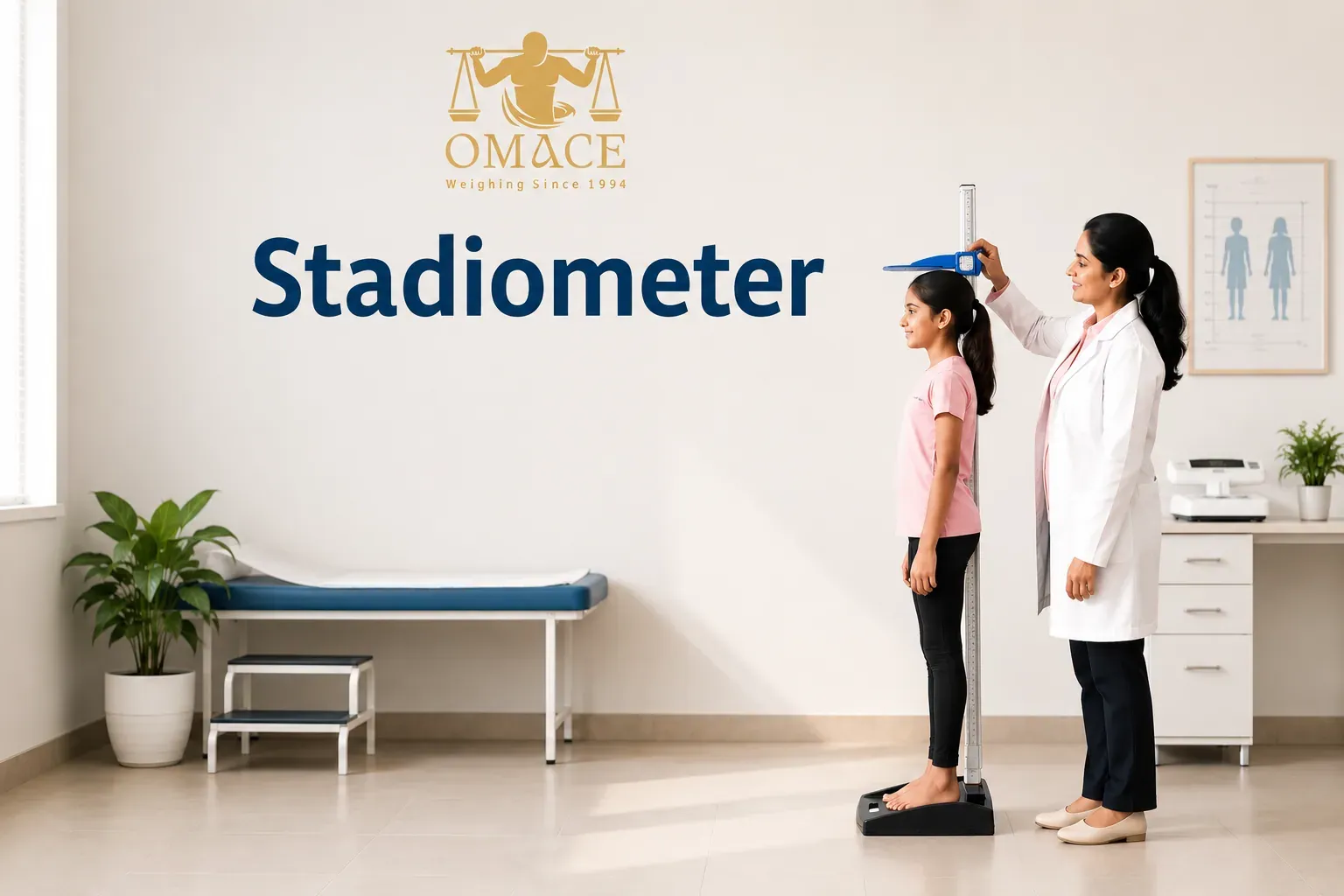
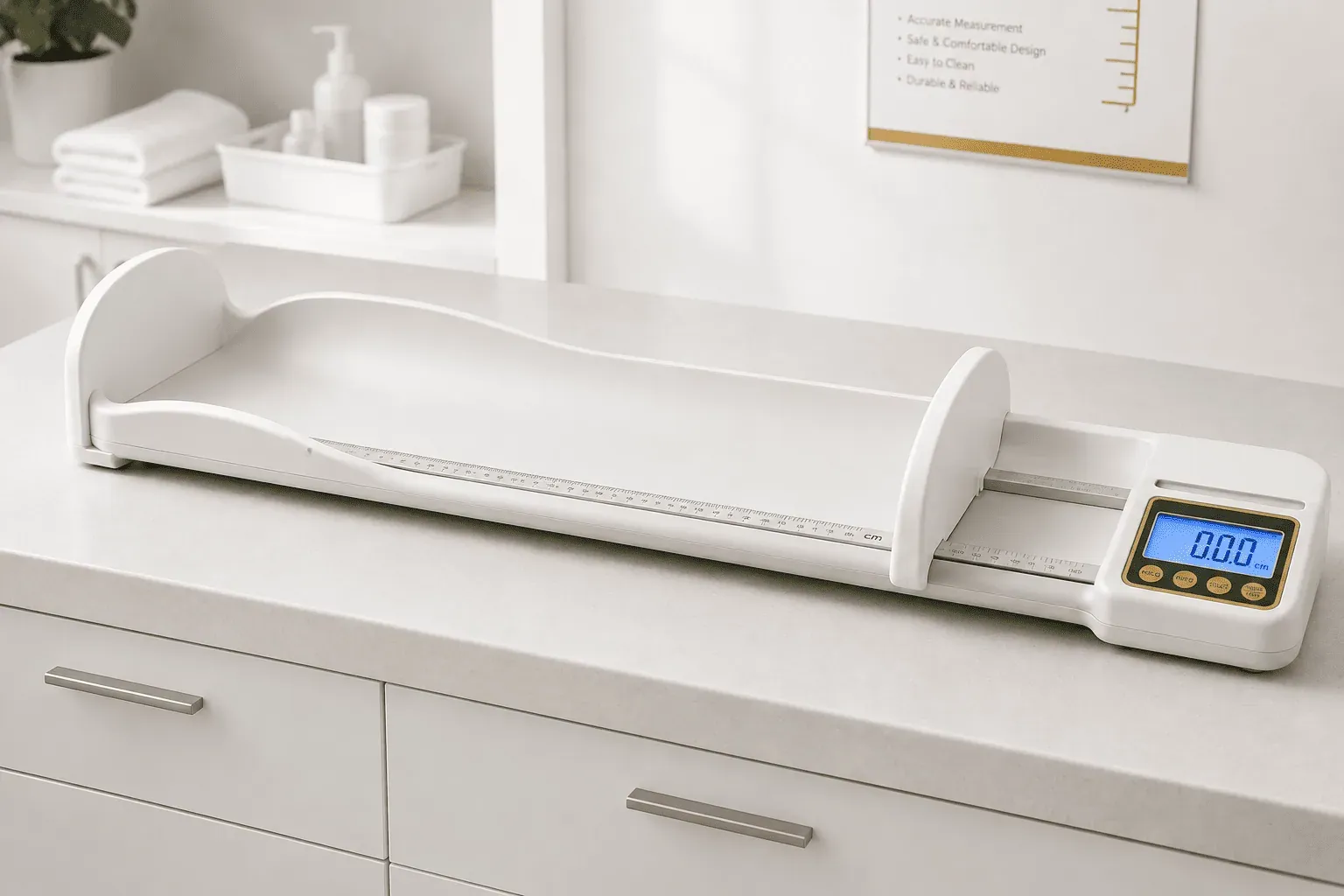
Omace Brands Private Limited works in two of these families. It manufactures weighing scales at Bagru, Jaipur, and its range also includes height measuring instruments. Its shop, platform, chicken and crane scales leave the factory verified and stamped by Legal Metrology, and the stamp is valid across India. Stamping is compulsory on platform and crane scales. At Bagru, every scale is checked with certified test weights before dispatch. For height, the company's wall-mounted stature meter reads standing height from 0 to 200 cm.
Choosing the right instrument for the job
Start with the quantity, then the smallest step you need to see. A carpenter's tape that reads 1 mm cannot settle a bearing fit that needs 0.01 mm, and a screw gauge cannot measure a room. If the reading will price a sale or guide a decision about health or safety, check whether the instrument falls under Legal Metrology; if it does, it needs a valid stamp. For everything else, check zero before you start and compare the tool now and then with one you trust.