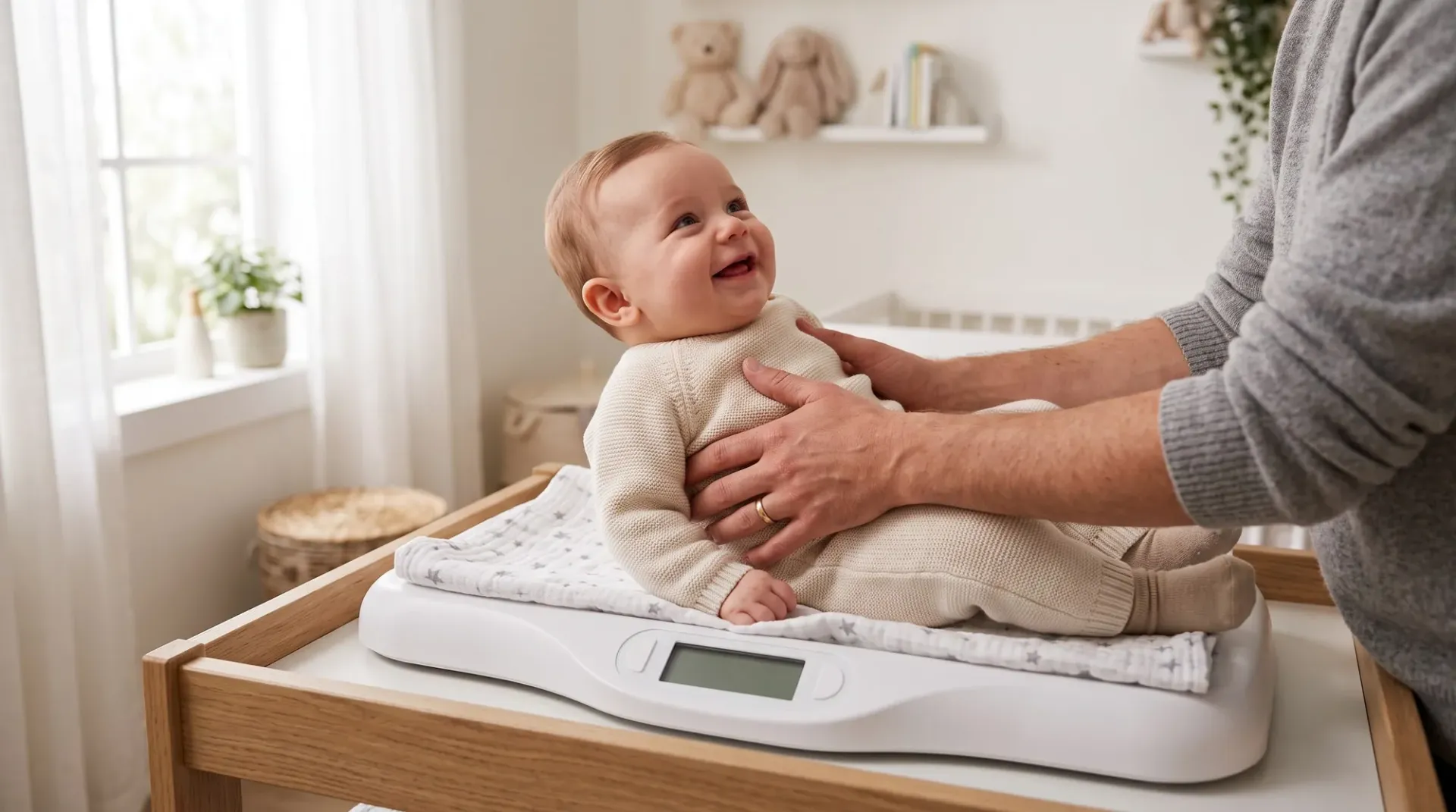
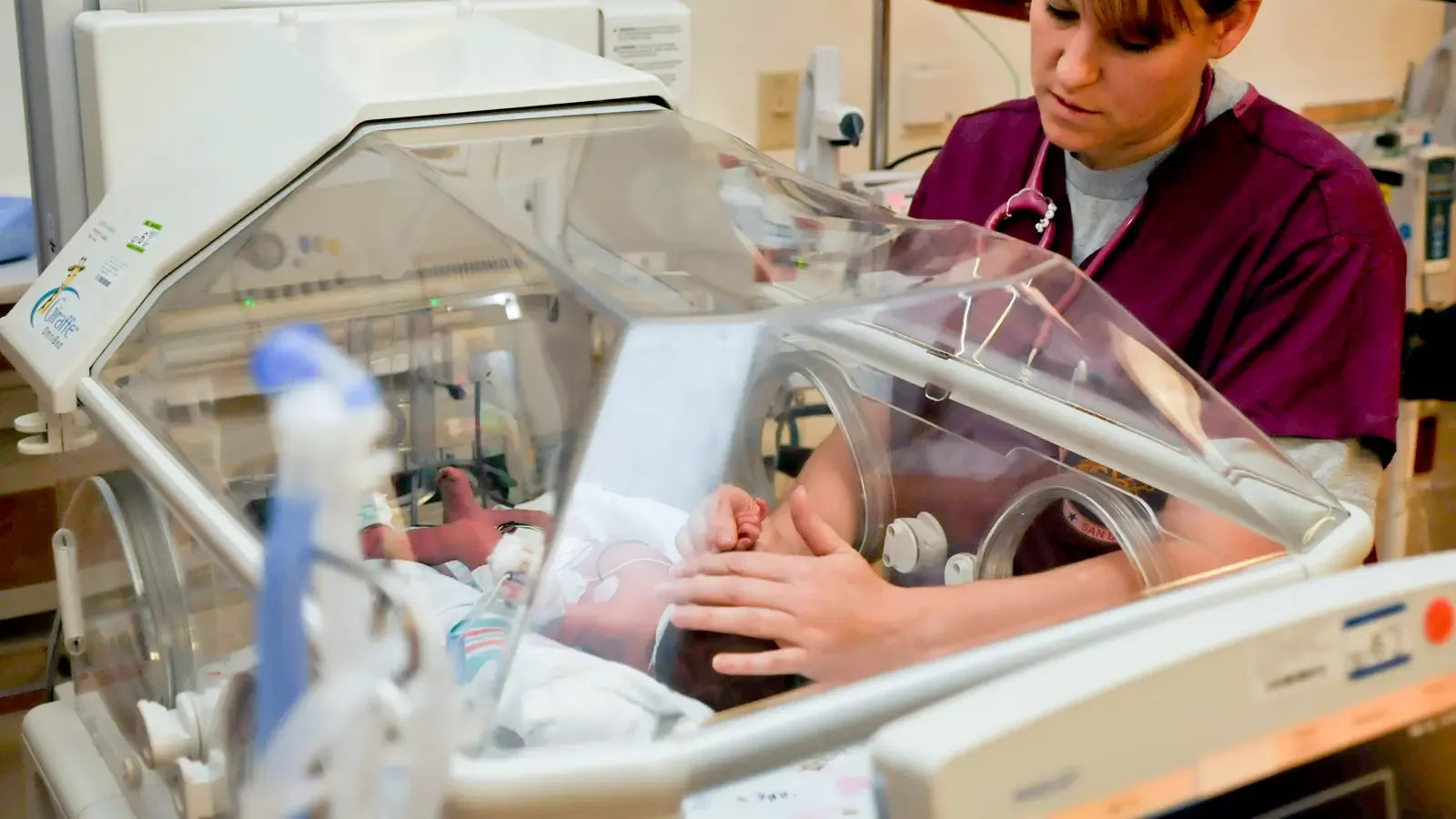
A newborn's vital signs are the breathing rate, heart rate and temperature, checked within minutes of birth and at every visit after. India's NSSK newborn care manual puts normal breathing at 40 to 60 breaths a minute and normal temperature at 36.5 to 37.5 °C. A doctor, nurse or ASHA reads these numbers together with feeding, colour and weight.
What counts as a vital sign in a neonate
A neonate is a baby in the first 28 days of life, the period WHO calls the newborn period. WHO's newborn mortality fact sheet says 2.3 million children died in their first 28 days in 2022. It adds that 75% of these deaths happen in the first week, and about 1 million in the first 24 hours. That is why the first checks come early and often.
Three readings make up the core of a newborn assessment: breathing rate, heart rate and temperature. Staff also look at colour, muscle tone, feeding, urine and stools, and they weigh the baby. The NSSK manual, published by the Ministry of Health and Family Welfare in 2020 for the Navjaat Shishu Suraksha Karyakram, trains doctors and nurses in these checks.
Normal newborn vital signs at a glance
The table brings together India's NSSK manual, a 2019 postnatal care guideline from York and Scarborough NHS hospitals and WHO's 2022 postnatal guideline. Each number is a reference point for trained staff. A single reading outside a range calls for a recheck and a doctor's view.
| Vital sign | Normal for a newborn | Warning threshold | Reference |
|---|---|---|---|
| Breathing rate | 40–60 breaths a minute | 60 or more on two counts | NSSK manual, WHO 2022 |
| Heart rate | 100–160 beats a minute | Below 100 at birth with poor breathing | NHS guideline, NSSK manual |
| Temperature (armpit) | 36.5–37.5 °C | Above 37.5 °C or below 35.5 °C | NSSK manual, WHO 2022 |
| Birth weight | 2,500 g or more | Under 2,500 g | WHO |
| Weight in week one | Back above birth weight by day 7–10 | Loss beyond 8–10% by day 3–4 | NSSK manual |
The two references differ on breathing. The NSSK manual gives 40 to 60 breaths a minute, while the York and Scarborough guideline gives 30 to 60. Both use 60 as the upper line, and WHO's danger sign for fast breathing is a rate above 60 a minute.
How each vital sign is checked
Breathing rate
Breaths are counted for one full minute. The NSSK manual explains why: a newborn's breathing is irregular, and the baby may stop for a few seconds before a burst of faster breaths. If the first count is 60 or more, staff count again, and only a second count of 60 or more is recorded as fast breathing.
Watch the chest or belly rise while the baby is calm and uncovered enough to see it. Mild chest indrawing is normal in a newborn because the chest wall is soft, the manual notes. Severe indrawing, deep and easy to see, is a danger sign, and so are breathing difficulty, pauses in breathing and a blue colour of the skin.
Most babies start breathing with little or no help. The NSSK manual says about 10% of newborns need some assistance to begin breathing at birth, and only about 1% need extensive resuscitation.
Heart rate
A newborn's heart beats far faster than an adult's. The York and Scarborough guideline gives a normal baby heart rate of 100 to 160 beats per minute. Staff listen with a stethoscope, because the pulse at the base of the cord is only a rough guide: even in a healthy baby the cord does not always pulsate.
The figure of 100 matters most in the first minutes. The NSSK manual counts the heart rate for 6 seconds with a stethoscope and multiplies by 10. A baby above 100 a minute who is breathing well stays with the mother for observation. Below 100 with poor breathing, staff continue bag and mask ventilation, and below 60 they start chest compressions. The ASHA's home kit holds no stethoscope, so heart rate stays a check for the hospital and the clinic.
Temperature
A newborn's normal temperature is 36.5 to 37.5 °C, according to the NSSK manual. The manual lists prevention of hypothermia first among the aims of care after birth, because a wet baby on wet linen cools quickly. Drying the baby and keeping the baby skin to skin with the mother come first.
Use a digital thermometer in the armpit. The NHS advises the armpit for every child under 5, never an old glass thermometer containing mercury, and says forehead strips are not an accurate way to take a temperature. The NSSK steps are short:
- Wash your hands and keep the baby warm throughout.
- Make sure the armpit is clean and dry.
- Switch the thermometer on and place the tip in the centre of the armpit.
- Hold the baby's arm gently against the body until the beep.
- Note the reading as shown, without adding or subtracting anything.
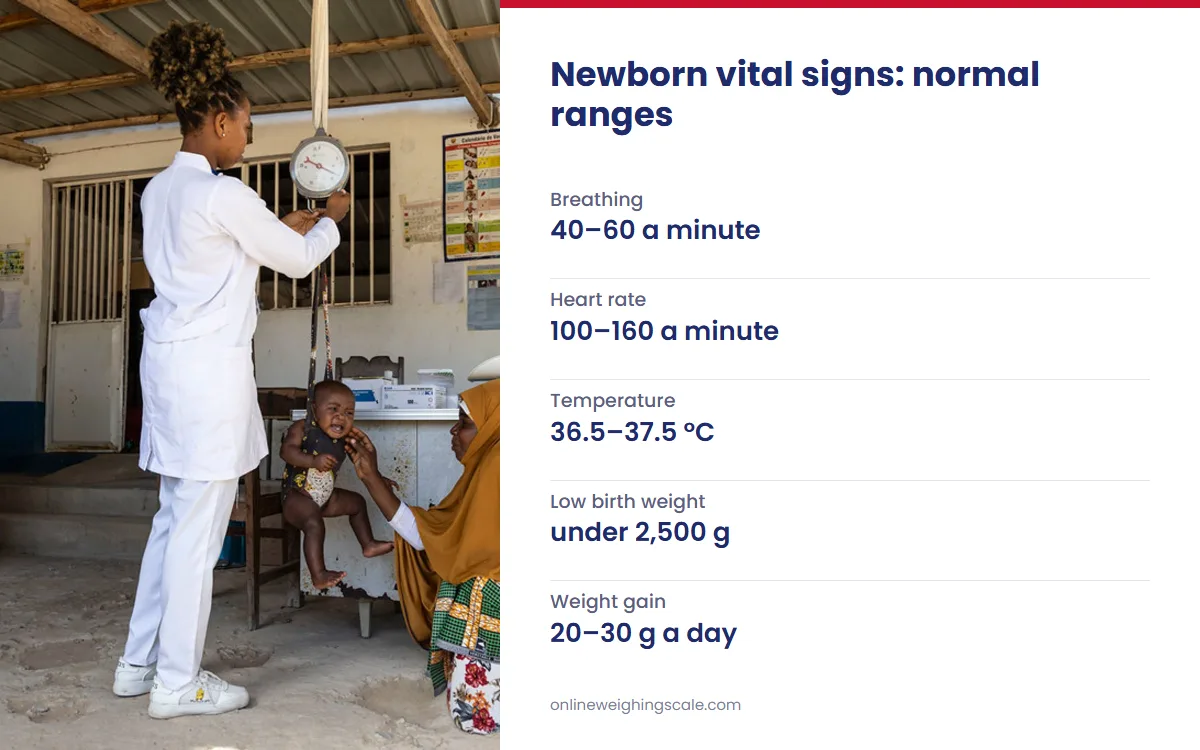
Touch gives a first clue. In the NSSK manual, cold feet with a warm abdomen mean the baby is under cold stress, and cold feet with a cold abdomen mean hypothermia. In summer the opposite can happen: the manual says a hot room can overheat a newborn, and the fix is a cooler place and loose, light clothes.
On the high side, WHO counts a temperature above 37.5 °C as a newborn danger sign. The NHS sets a high temperature at 38 °C or more, and its fever page asks for urgent advice for any baby under 3 months at 38 °C or higher. In India, take that baby to a doctor straight away.
The Apgar score in the first minutes
The Apgar score is a quick check of a baby's condition straight after birth. The NHS Wales data dictionary describes it as points of 2, 1 or 0 for heart rate, breathing effort, muscle tone, response to stimulation and skin colour, so 10 is the best possible score. The NHS pregnancy guide says the baby is checked within a minute of birth and rechecked at 5 minutes.
| Apgar sign | What staff look at | Points |
|---|---|---|
| Heart rate | Rate heard with a stethoscope | 0, 1 or 2 |
| Breathing effort | Rate and pattern of breaths | 0, 1 or 2 |
| Muscle tone | Whether the baby is well flexed | 0, 1 or 2 |
| Response to stimulation | How the baby reacts when touched | 0, 1 or 2 |
| Skin colour | Colour of the trunk, lips and tongue | 0, 1 or 2 |
The York and Scarborough guideline uses the score as one test for early discharge: a baby goes home early only with an Apgar of at least 7 at 1 minute and at least 9 at 5 minutes.
Birth weight and the first checks
Weighing waits for the first hour. The NSSK manual asks staff to weigh the baby and give vitamin K only after one hour, once skin-to-skin care and breastfeeding have begun. The vitamin K1 dose is 1.0 mg by injection in the thigh, or 0.5 mg for a baby under 1,000 g.
WHO defines low birth weight as under 2,500 g. The newborn weight chart gives the WHO median weights by month for boys and girls, so they are not repeated here.
Before a baby goes home, the NSSK manual lists three vaccines: BCG, OPV and hepatitis B. It sets discharge after 48 hours, once the baby is free of illness, including significant jaundice, has been immunised and is feeding well, and the mother has been shown the MCP card. WHO's 2022 postnatal guideline asks for at least 24 hours of care in the facility after birth. It then asks for at least three more postnatal contacts: at 48 to 72 hours, at 7 to 14 days and in week six.
Neonatal vital signs at home: the ASHA's HBNC visits
India's Home Based Newborn Care programme sends the ASHA to the home on fixed days. The HBNC operational guidelines set six visits after a hospital birth, on days 3, 7, 14, 21, 28 and 42, and seven after a home birth, adding day 1. At these visits she weighs the baby, measures the temperature, checks warmth and breastfeeding, and refers any baby who shows signs of illness.
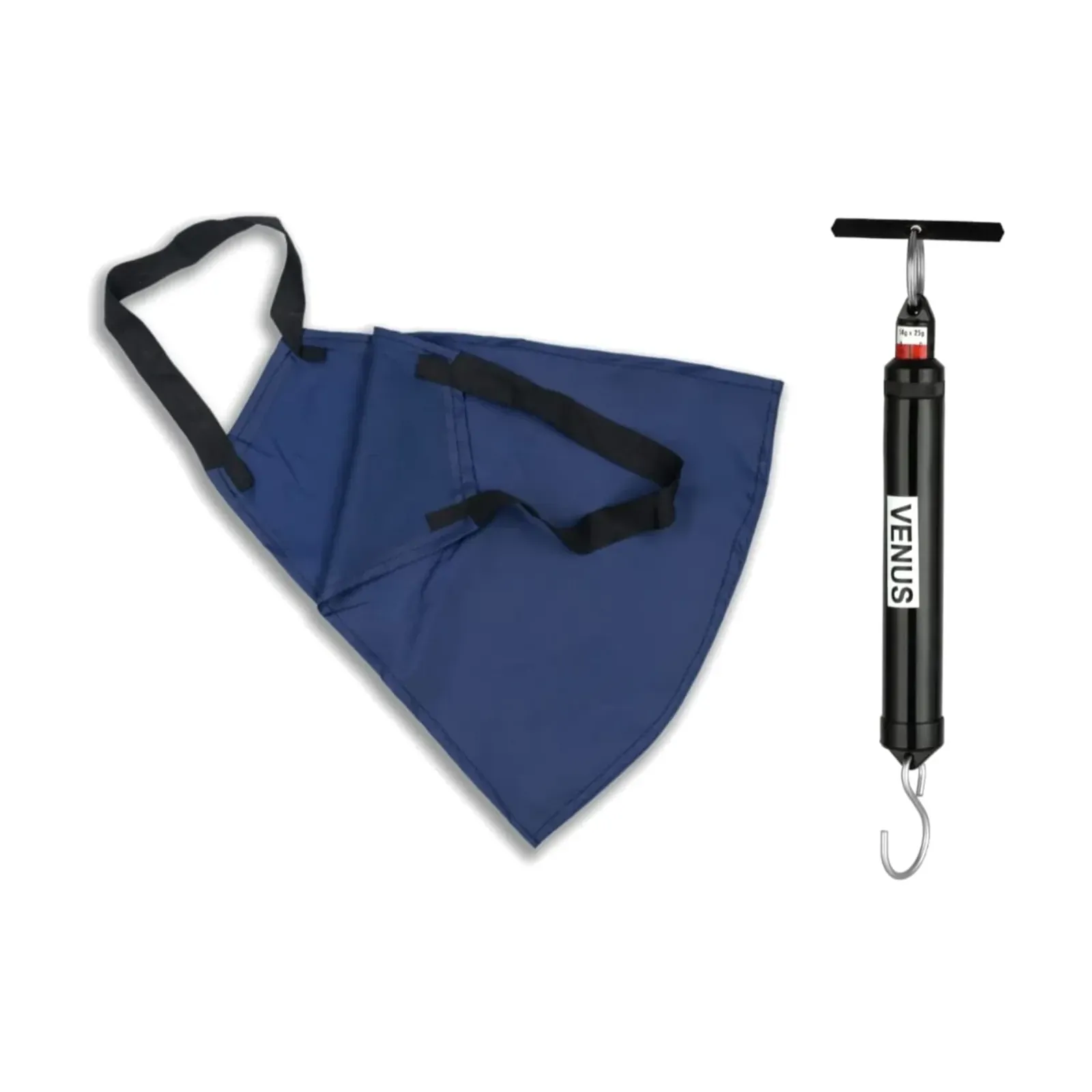
Her kit is simple. The guidelines list a digital watch, a digital thermometer that reads from 32 °C to 42 °C, and a tubular spring scale with a sling that weighs up to at least 5,000 g. Its panel is colour-coded: green above 2,500 g, yellow from 2,000 to 2,500 g and red below 2,000 g, so a low weight shows at a glance.
Between visits, the NSSK manual gives parents signs that feeding is going well: urine 6 to 8 times in 24 hours, sleep of 2 to 3 hours after feeds, and a gain of 20 to 30 g a day in a term baby. A loss of up to 8 to 10% of birth weight by day 3 or 4 is normal in the manual, and a term baby is back above birth weight by 7 to 10 days.
Newborn danger signs that need a doctor at once
WHO's 2022 postnatal guideline lists eight signs to check at every postnatal contact. The baby should be referred if any of them is present:
- Not feeding well
- Convulsions, now or in the past
- Fast breathing, above 60 breaths a minute
- Severe chest indrawing
- No spontaneous movement
- Fever, a temperature above 37.5 °C
- Low body temperature, below 35.5 °C
- Any jaundice in the first 24 hours, or yellow palms and soles at any age
The NSSK manual adds signs that need the hospital: no meconium within 24 hours or no urine within 48 hours, persistent vomiting, choking during feeds, undue lethargy, excessive crying and bleeding from any site. WHO asks families to seek care early when they see a danger sign between visits, so go to the nearest hospital or call the ASHA straight away. The newborn essentials checklist lists what to keep ready at home for these moments.
Weighing a newborn at home: what to look for in a scale
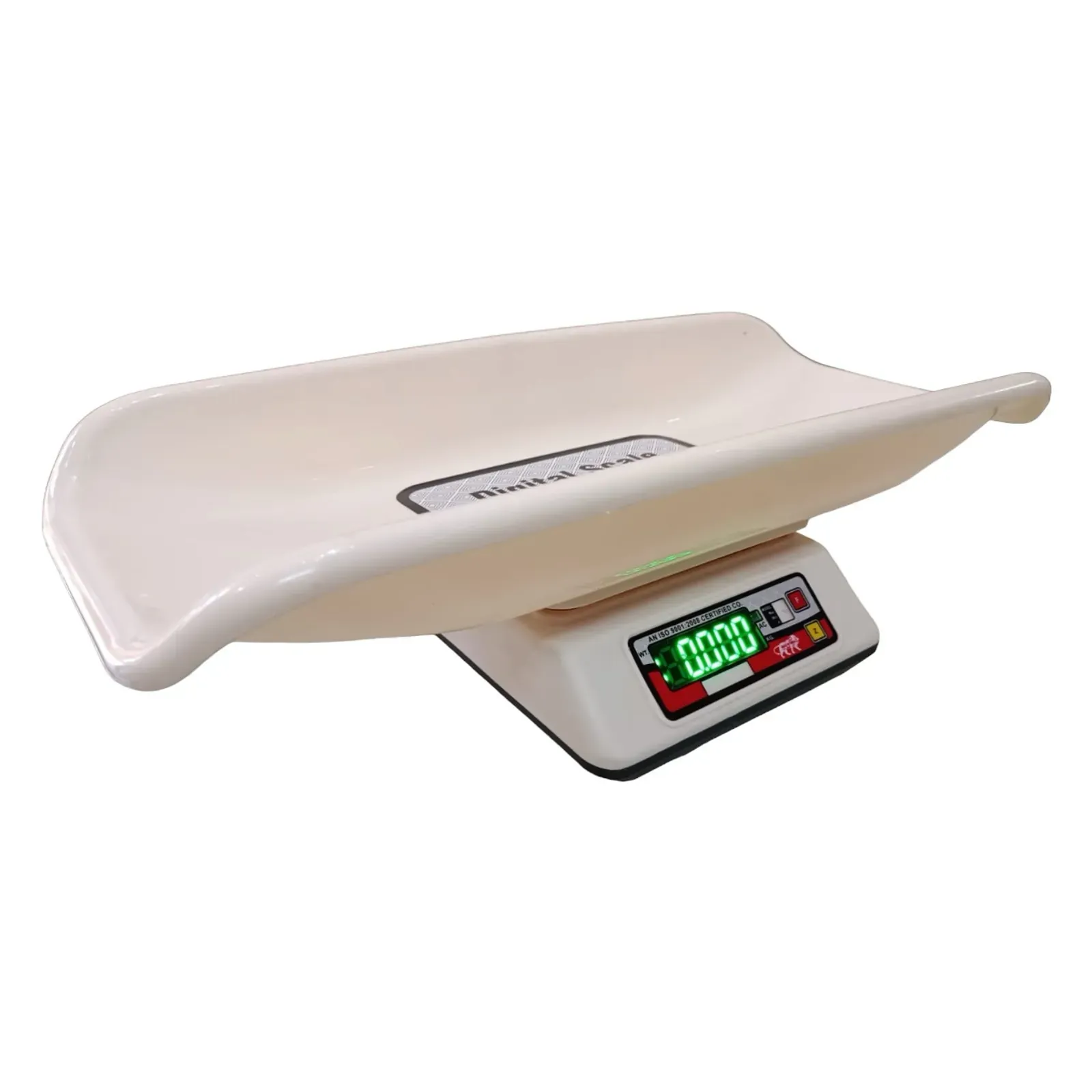
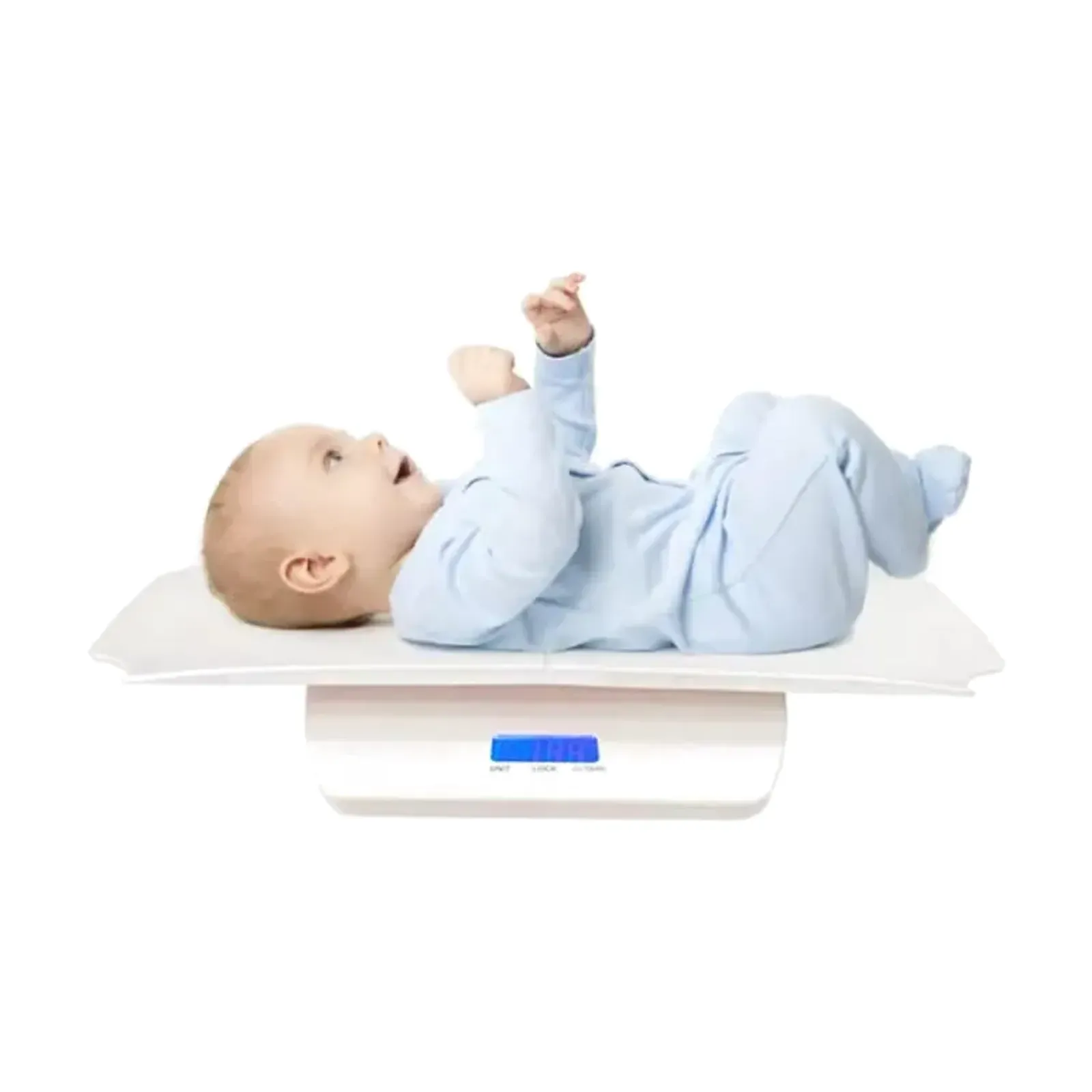
Weight is the one newborn measurement a family can track as well as a clinic. The NSSK manual sets the method: a flat, firm surface, zero checked and adjusted, calibration with a known weight, a clean towel on the pan with its weight subtracted, a warm room, and a reading taken only when the display is steady. It asks hospitals to calibrate their baby scales at least weekly.
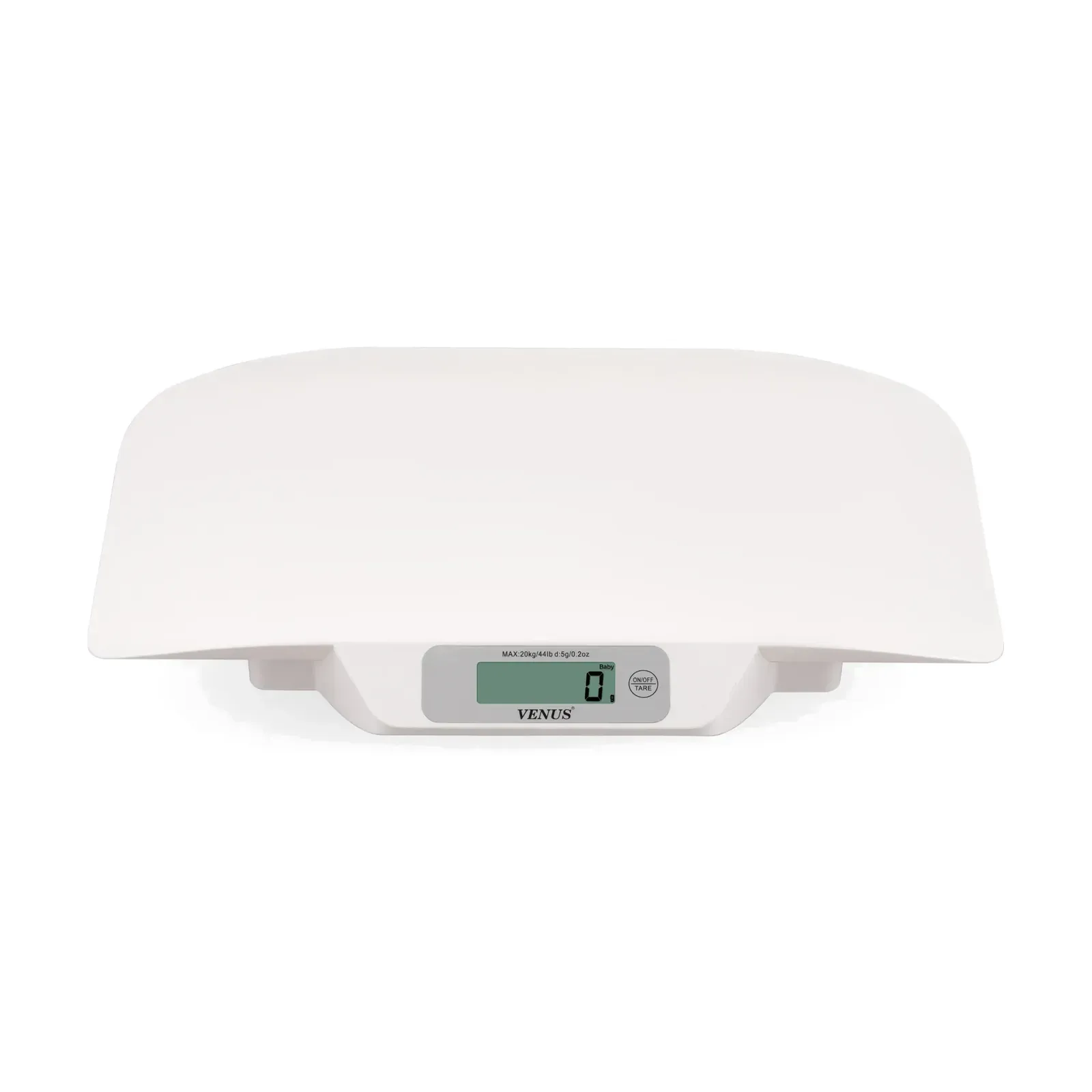
- Readability: a term baby gains about 20 to 30 g a day, so a scale that reads in 5 g steps shows a week's progress clearly. The Venus EBS-KS-9090 infant weighing scale reads up to 20 kg in 5 g steps on a curved safety tray, at ₹2,619.
- Power: the Venus EBS-KS-811 rechargeable baby weighing scale runs on its battery or an AC adaptor and weighs up to 30 kg in 5 g steps, also at ₹2,619.
- No power at all: the Venus HSTB-5 spring balance for newborn is a 5 kg tubular spring scale with a baby sling, the type the HBNC kit specifies, at ₹419.
- A calibration check: every Omace digital scale opens calibration mode when TARE is held for about 5 seconds, ready for a known weight as the NSSK method asks.
- The same scale every time: the NSSK manual reweighs a baby on the scale used at birth when it checks feeding, and the same habit works at home.
The guide on how to read a baby scale and check its accuracy walks through the reading itself.
Why buy a baby scale from a certified Indian manufacturer
Omace Brands Private Limited has made and supplied weighing scales in India since 1994, from its factory at G-29 RIICO Industrial Area, Bagru, Jaipur, as the About Omace page sets out. As a manufacturer, the company holds ISO 13485:2016 and ISO 9001:2015 quality certificates and an EU MDR quality certificate. It also holds a CE certificate of compliance and a US FDA compliance certificate, all listed on the certificates page. At the Bagru factory, every scale is checked with certified test weights before dispatch. Each scale is factory calibrated and is replaced under warranty if it reads wrong. Omace baby scales are made in India and carry a 2-year warranty on manufacturing defects when bought from the Omace store. A scale measures weight and nothing more: a doctor or ASHA reads what that weight means for your baby.
Reading your baby's numbers with the doctor
Infant vital signs change as a baby grows, so ask the doctor which range applies after the first month. Keep the MCP card with every reading: birth weight, home weights with their dates, and any temperature or breathing count taken when the baby seemed unwell. A thermometer, a watch and a scale give numbers, and none of them diagnoses anything. The doctor or ASHA decides what the numbers mean. When you are ready to weigh at home, the range of baby weighing scales covers trays, slings and mother-and-baby models. This is general information. Ask your doctor about your own baby's readings.