Muscle mass is the weight of the muscle in your body, and from about age 30 the body loses 3–5% of it every decade, according to the US Office on Women's Health. Skeletal muscle mass counts only the muscles that move your bones, and a home scale can estimate it but cannot measure it. This is general information. Ask your doctor about your own readings.
Omace Brands Private Limited makes weighing scales in Bagru, Jaipur, and customers often ask what the "muscle mass" line on a body scale app means. This guide explains the term in plain words, how doctors measure it, what a home scale can and cannot tell you, and why one reading means little.
What muscle mass means
Your body has three kinds of muscle: skeletal muscle that moves your bones, cardiac muscle in the heart, and smooth muscle in the gut and blood vessels. When a scale or a doctor says "muscle mass", the number almost always refers to skeletal muscle, the muscle you can train. A review in Frontiers in Nutrition defines skeletal muscle mass as the total weight of all skeletal muscles in the body. The same paper warns that researchers sometimes use it as a synonym for lean body mass when the two are different.
Lean body mass is the total weight of all non-fat parts of the body, per the same paper. Water is the largest part of it, followed by protein and minerals. Lean mass therefore includes muscle, organs, bone mineral and body water. Our guide to lean body mass shows the calculation and the body fat chart, so this post stays with muscle.
The weight on a bathroom scale (your taraju reading) adds up everything: muscle, fat, bone, water and organs. Two people of the same height and the same weight can carry very different amounts of muscle. A plain weight number cannot say how much of you is muscle. The BMI calculator has the same limit, because it uses only height and weight.
Skeletal muscle mass, lean body mass and muscle percentage
| Term | What it counts | Where you see it |
|---|---|---|
| Skeletal muscle mass | Weight of all skeletal muscles in the body | Research papers, clinic reports, some apps |
| Appendicular skeletal muscle mass | Muscle in the arms and legs only | Sarcopenia screening |
| Lean body mass | Everything that is not fat, including water and bone mineral | Body composition reports |
| Muscle percentage | Muscle weight divided by body weight | Scale apps |
Appendicular muscle mass is the arm and leg muscle. The European sarcopenia consensus group (EWGSOP2) gives its cut-off points for muscle quantity in this form. A scale app may show muscle in kilograms or as a percentage of body weight, and each app sets its own bands for what it calls low, normal or high. Those bands are the maker's choice, so the same body can read "normal" in one app and "low" in another.
Why muscle matters as you age
The US Office on Women's Health describes sarcopenia as the gradual loss of muscle and strength that can occur with aging. It says the loss is usually more noticeable by age 60, and that the condition affects around 10–20% of older adults and may be underdiagnosed. Lower strength can lead to falls and other injuries, and the page names inactivity as a major contributor.
The 2019 EWGSOP2 consensus paper gives the definition doctors in many countries now follow. It treats low muscle strength as the primary parameter of sarcopenia. Low strength makes sarcopenia probable, and low muscle quantity or quality confirms it. When low quantity, low strength and low physical performance all appear together, the paper calls it severe. A grip test or a timed sit-to-stand therefore tells a doctor more than a scale number does.
Cut-offs doctors use for low muscle mass
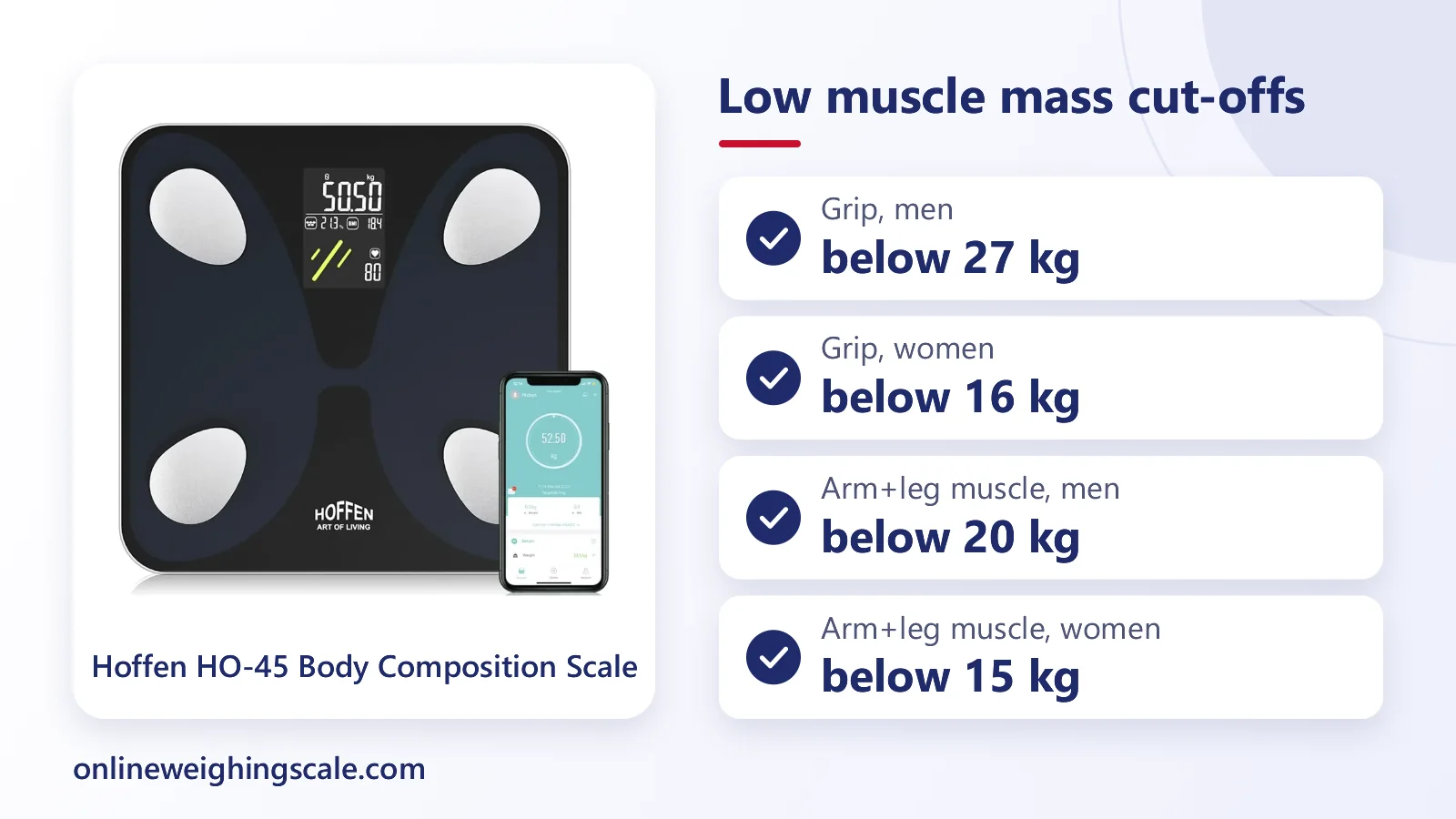
The question "what is the normal muscle mass range" has no single answer for a home user. Clinical papers define low muscle mass, and they do not give a healthy band to aim for. The EWGSOP2 paper lists these cut-off points in its tables of sarcopenia cut-offs:
| Measure | Men | Women |
|---|---|---|
| Grip strength below | 27 kg | 16 kg |
| Appendicular skeletal muscle mass below | 20 kg | 15 kg |
| Appendicular muscle mass divided by height squared, below | 7.0 kg/m² | 5.5 kg/m² |
The paper also sets a gait speed of 0.8 m/s or slower as an indicator of severe sarcopenia, and a Short Physical Performance Battery score of 8 points or less as poor physical performance. These cut-offs come from a European group, and a doctor decides which reference suits you. A body scale reading is an estimate, so it cannot be compared with a clinical cut-off. Use the table to understand how clinicians think, and leave the judgement to your doctor.
How muscle mass is measured
The EWGSOP2 paper names MRI and CT as the gold standards for non-invasive assessment of muscle quantity, though it notes that cut-off points for them are not well defined yet. DXA, a low-dose scan that separates fat, bone mineral and lean tissue, is favoured by some clinicians and researchers. The paper adds that different DXA machine brands do not give consistent results. Bioelectrical impedance equipment estimates muscle from a conversion equation, and the paper states that it does not measure muscle mass directly.
A study of body composition methods in Frontiers in Nutrition used DXA as the reference. It concluded that there is a lack of agreement between the methods and formulas it tested, including bioimpedance, and that sex was a significant factor. A scale gives an estimate of muscle, and a hospital scan measures it with a method that has its own limits.
What a body composition scale tells you
A body composition scale reports muscle mass as one of several estimated figures next to weight. Treat that figure as an estimate. The guide to smart scale accuracy explains why weight is dependable and body fat or muscle figures are softer. The same limits apply to muscle: the number moves with water, food and time of day.
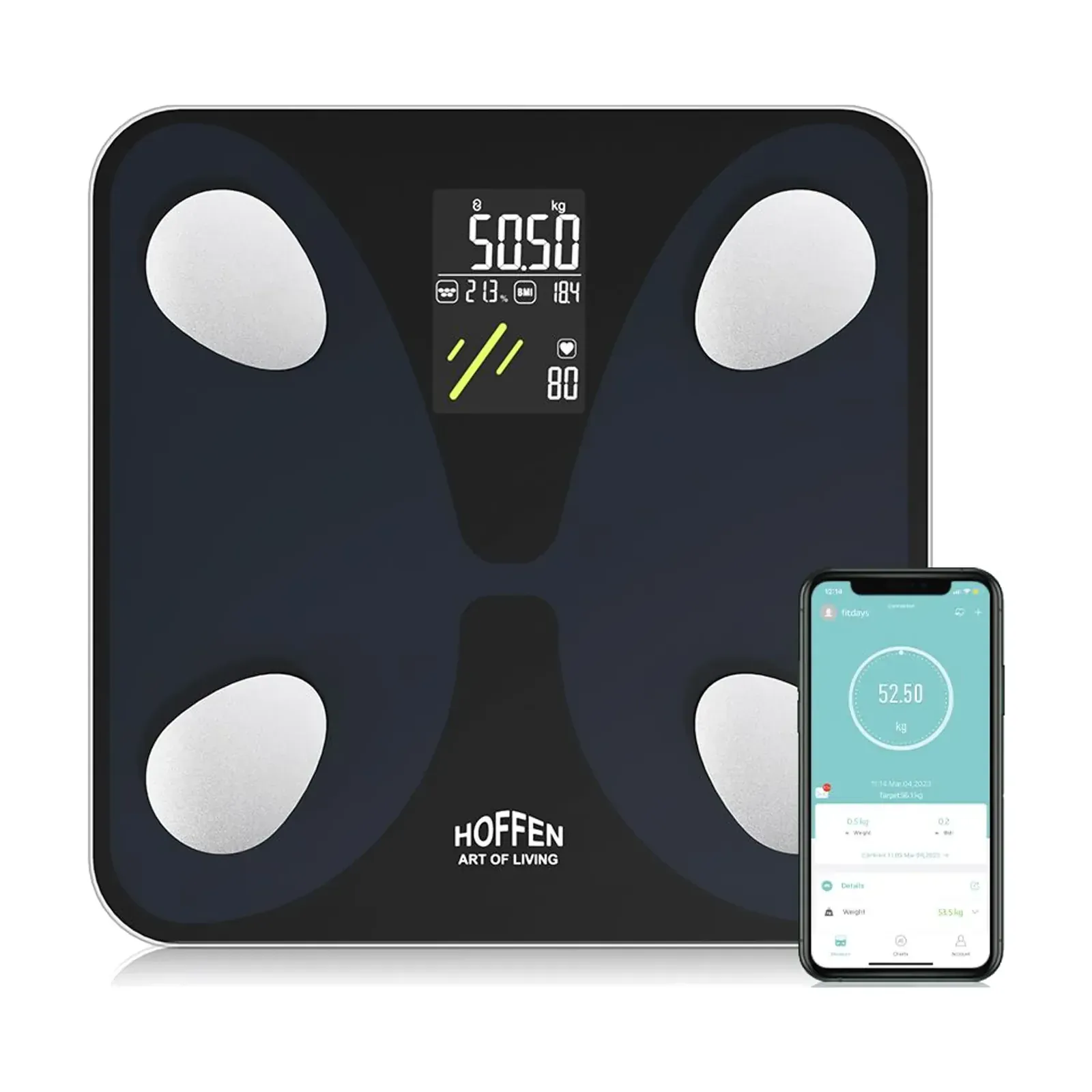
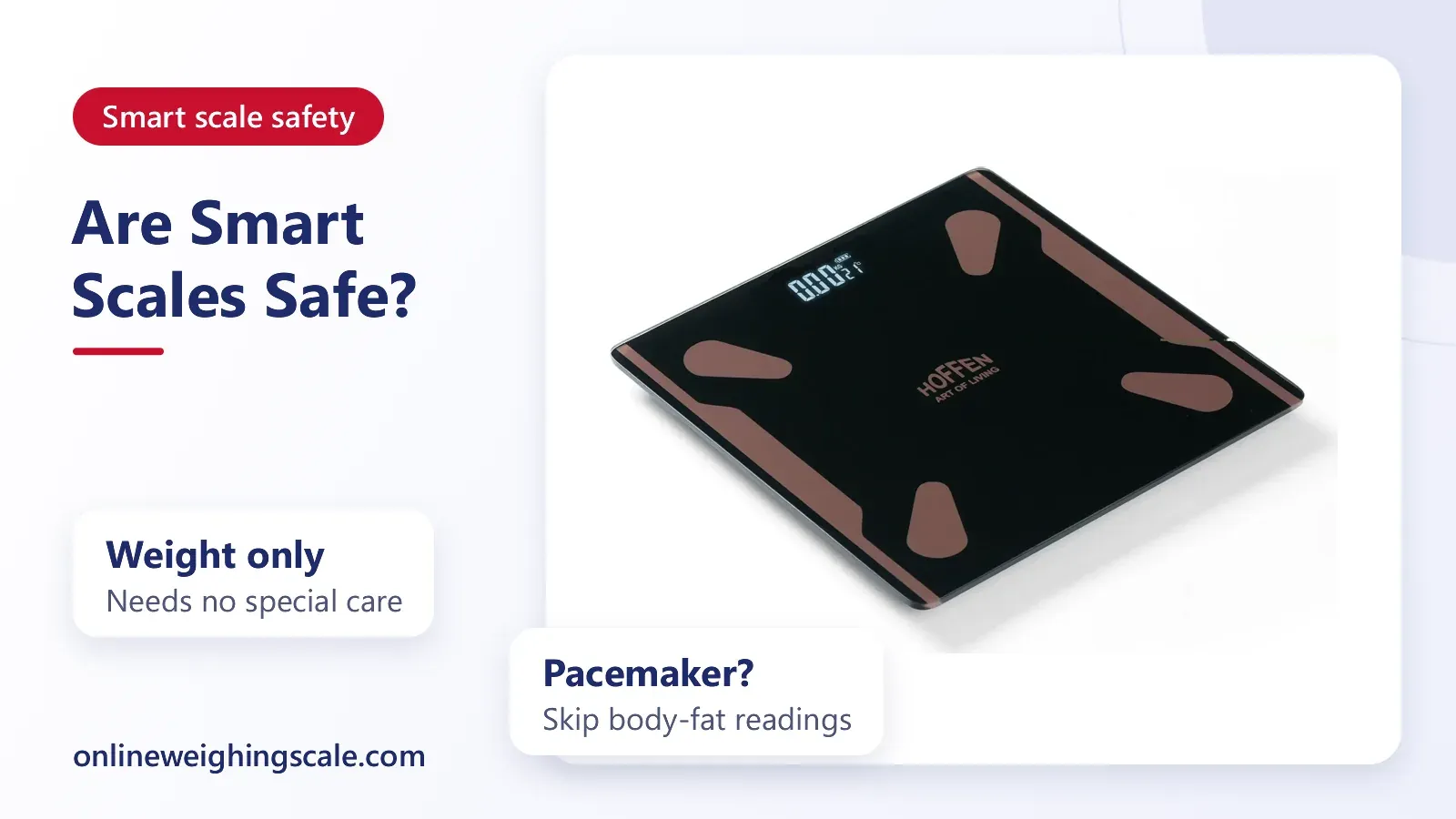
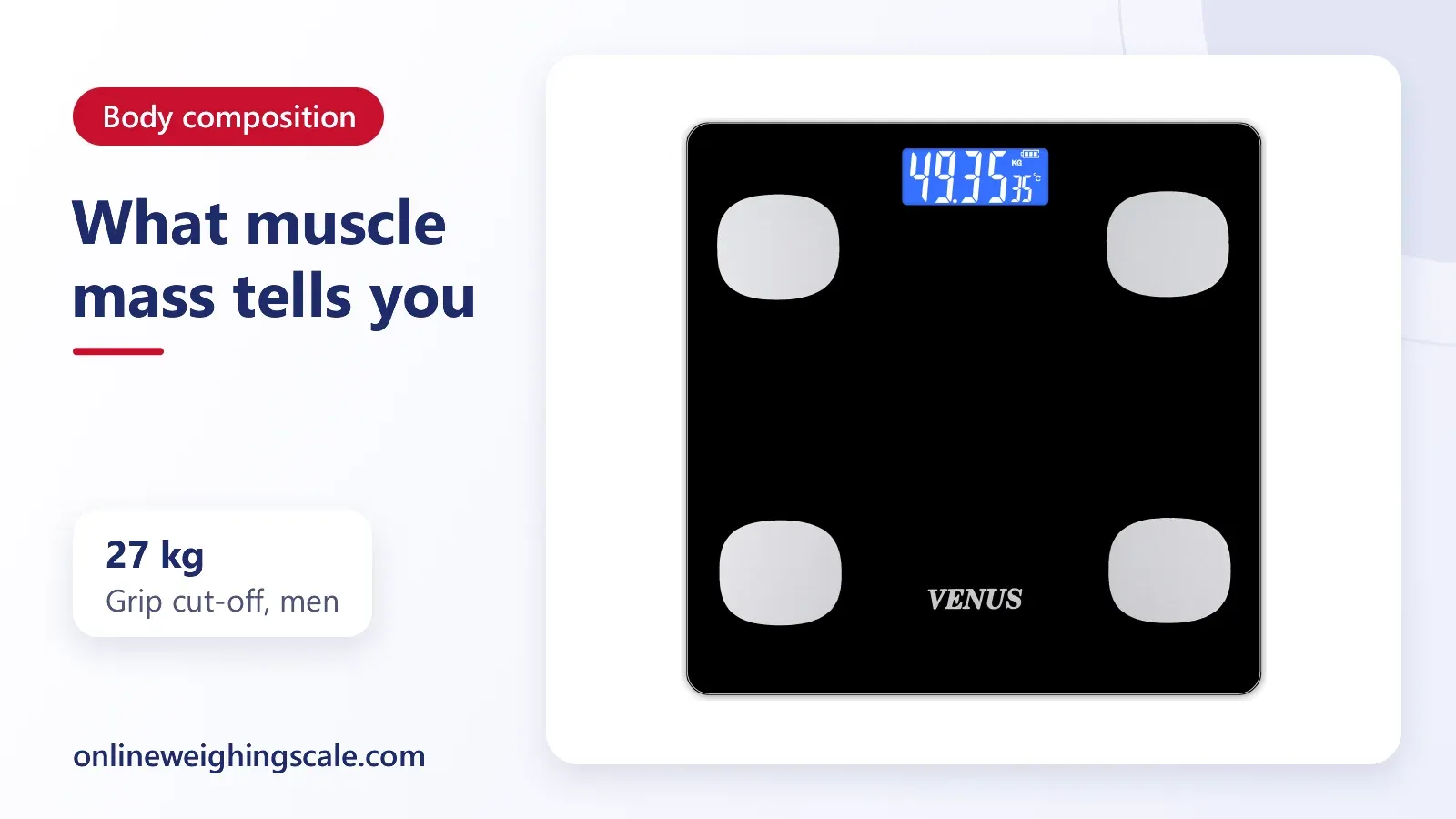
Omace Brands Private Limited lists muscle mass among the readings on the product pages of the Venus EPS-6399 body fat weighing machine, the Hoffen HO-19, HO-36, HO-9, HO-45 and HO-18 app scales, and the ultrasonic height and weight machine. The other models in the smart body scales range show different readings, so check the page of the model you want. On every one of them, muscle mass is an estimate. A plain glass scale from the personal weighing scales range reports weight only.
How to read your own reading sensibly
- Weigh at the same time each day, such as first thing in the morning after the toilet, on the same hard flat floor.
- Compare the average of one week with the average of the week before, because a single day swings with water.
- Look at the direction over two to three months, since a slow rise or fall means more than any one figure.
- Match the number to something you can feel, such as stairs, carrying shopping or lifting a bucket.
- Skip comparing your figure with a friend on a different scale, because each device and app uses its own method.
A scale cannot tell you whether you are healthy. A sudden drop in strength, unplanned weight loss or trouble getting up from a chair is a reason to see a doctor, whatever the scale says.
Keeping muscle through the years
The WHO fact sheet says adults should do muscle-strengthening activities at moderate or greater intensity that involve all major muscle groups, on 2 or more days a week. The NHS advises strength exercises at least twice a week, built up slowly, and describes gentle moves such as sit-to-stands, mini-squats, calf raises, wall press-ups and biceps curls that can be done at home. The US Office on Women's Health says strength and resistance exercises are especially helpful for improving muscle mass and reducing the impact of sarcopenia, and advises talking to a health care provider before starting a new routine, especially with an existing condition.
Food matters too, though one meal plan does not suit everyone. If you are older, unwell or planning a big change in diet, ask a doctor or a dietitian rather than following a number from an app.
Muscle mass in short
Muscle mass is the weight of your skeletal muscle, and strength is the better first sign of how well it works. Clinical cut-offs flag low muscle in older adults. Home scales give an estimate that varies with water and conditions. Use it as a trend, build strength twice a week, and take any worry to your doctor.