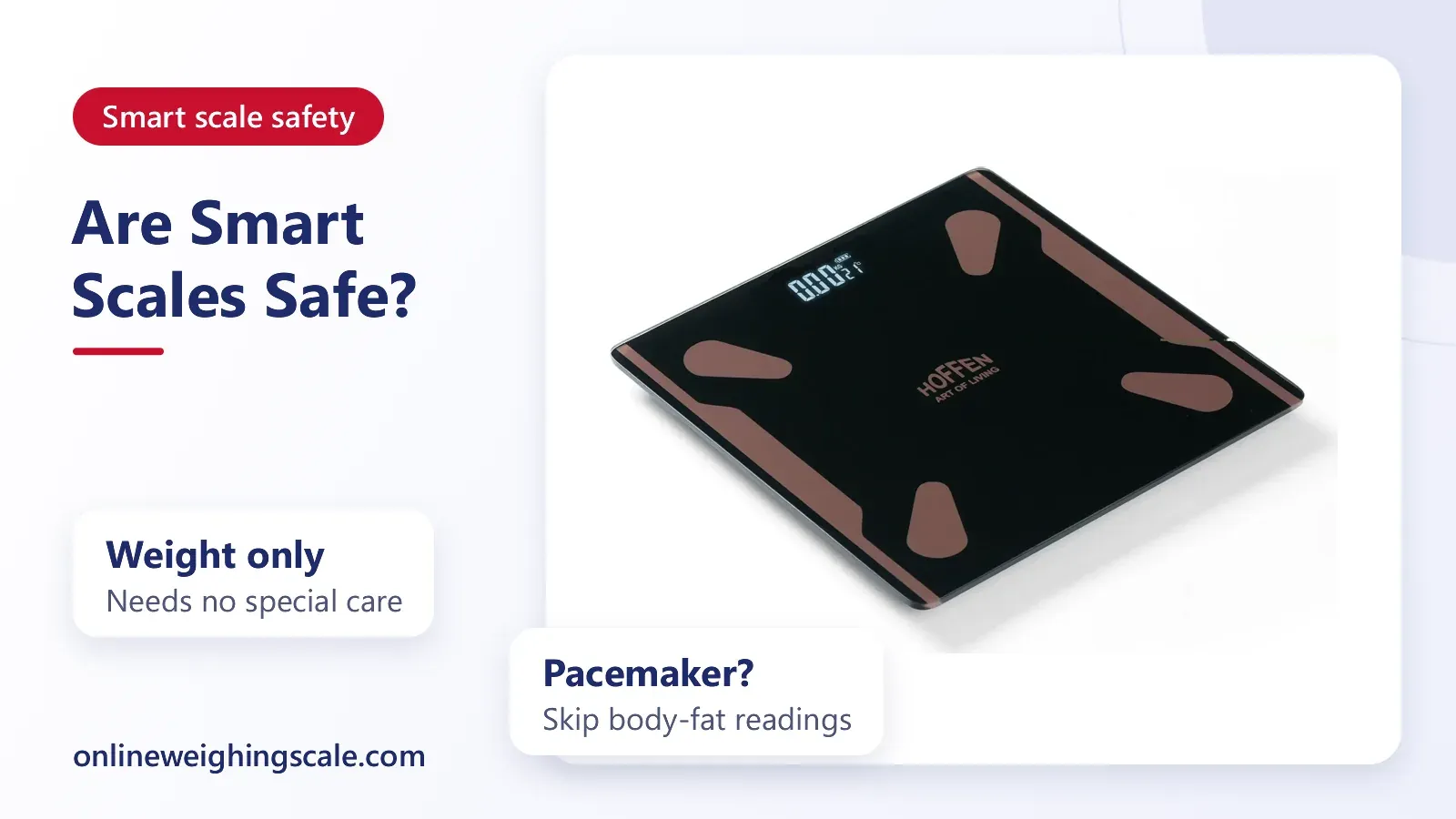
Smart scales are safe for most healthy adults, but people with a pacemaker should skip the body-fat function. A 2023 University of Utah bench study tested three implanted heart devices and found that bioimpedance signals from consumer gadgets disturbed them. Omace Brands Private Limited, a weighing scale maker in Bagru, Jaipur, wrote this guide to say who should avoid the body-fat reading, who can use it with care, and why weight-only use needs none of this.
This is general information. Ask your doctor about your own readings. A scale shows an estimate and diagnoses nothing, so a doctor decides what any number means for you.
What a smart scale does, and what is safe about it
A smart scale is a bathroom scale that shares readings with a phone app. Its main job is the same as any other kanta or taraju: it shows your weight. Many models add a body-fat percentage and other body measures, and those extra figures are estimates. The live post on how a smart scale measures body fat explains the method in plain words, and are smart scales accurate covers how far to trust the figures.
Reading your weight does nothing to your body. Every safety question here concerns the body-fat and body-water readings, the ones that need bare feet on the scale.
Smart scale and pacemaker: why the answer is no for now
Anyone with a pacemaker, an implanted defibrillator or another implanted electronic heart device should not step on a body-fat scale until a cardiologist says so. The reason is a research finding that is still being tested.
In February 2023 the University of Utah described a study in the journal Heart Rhythm. Researchers ran simulations and bench tests on three implanted cardiac devices from three manufacturers, following test guidelines accepted by the US Food and Drug Administration. The release says the weak electrical signals used by wearable gadgets, a smart scale among them, could interfere with the devices and sometimes confuse them into operating incorrectly. For a pacemaker, the researchers said, it could stop working while it is confused, and for a defibrillator it could trigger a shock it should not give, according to the University of Utah press release.
The same release states the limits of that work. It was done in simulations and on the bench, in no patients, and the researchers said it does not show an immediate or clear risk to people using these gadgets. They called for clinical studies in patients with implants. So the sensible reading is caution without alarm: the risk is unproven in daily life, and the safe choice is to avoid the body-fat function until a doctor who knows your device approves it.
Standing on the scale for weight alone is a different matter. The pacemaker guidance of the US National Heart, Lung, and Blood Institute, part of the National Institutes of Health, says to keep a pacemaker at least 6 inches from electrical or magnetic devices or use them only briefly, and to ask the care team about anything you are unsure of. That NHLBI page on living with a pacemaker also advises showing your device ID card to any doctor or dentist. Ask the pacemaker clinic whether a bathroom scale with a body-fat function is fine for you, and use a weight-only reading until you hear back.
If you feel dizzy, faint or short of breath near any equipment, step away and call your doctor. The NHLBI page lists those as reasons to call.
Body composition scale during pregnancy
Weight alone is the usual, ordinary use of a scale in pregnancy, and many families track it on a home scale as their midwife or gynaecologist suggests. The body-fat percentage is another matter. A body-fat figure is an estimate, weight and body water change through pregnancy, and no source we read says what such a figure means then. Ask your doctor before using the body-fat function, and read the manual of your own scale. The live post on the pregnancy weight chart explains how clinics look at weight gain, and your doctor sets any weight plan for you, never a chart or an app.
Children and teenagers
A body-fat reading on a home scale is only an estimate. A growing child has a changing body, and the percentage on the screen can mislead a parent or upset a young person who sees it. Weight on a child's own scale is fine. A paediatrician should read growth on proper charts, and the post on the height and weight chart by age for kids shows the idea.
Keep the body-fat feature away from children and teenagers unless a doctor has advised it. A fat percentage invites comparison and self-criticism, and that is a poor thing for a young person to see every morning. For babies, use a baby weighing scale made for the purpose and leave the bathroom scale with an app alone.
Wet glass and slipping
Most injuries with a bathroom scale are falls. Tempered glass and smooth plastic become slippery with water, soap, oil or talc. Dry your feet before stepping on, keep the scale on a flat dry floor and away from the shower tray, and place it on a hard surface instead of a bath mat, because a soft base makes it tilt and gives wrong readings.
Older people and anyone unsteady should stand near a wall or a rail. A scale with a non-slip ribbed top suits such a house. If the glass is chipped or cracked, stop using it, because the edge can cut and the glass can break under load.
Button cells and small children
Some smart scales and many small scales use coin or button cells. A swallowed button battery is an emergency. Great Ormond Street Hospital, a children's hospital in the NHS, advises urgent hospital care straight away if a child may have swallowed one, and says not to try to make the child vomit; see its page on button batteries and using them safely.
At home, keep the battery cover closed, check that the compartment is secure, and keep spare cells in a high cupboard. Dispose of flat cells at once, since a used cell is still dangerous. Check which battery type your scale uses.
App data and privacy
A scale that connects to a phone app sends your weight and body figures to that app, so read what the app asks permission for before you create an account. Share as little as you need to, such as weight only, and know how to delete your data from the app if you stop using it.
Who can use what: a quick guide
| Situation | Weight reading | Body-fat reading |
|---|---|---|
| Healthy adult | Fine | Fine, treat it as an estimate |
| Pacemaker or implanted defibrillator | Ask the cardiologist | Avoid until a doctor approves |
| Pregnancy | Fine, as your doctor advises | Ask your doctor first |
| Child or teenager | Fine | Skip unless a doctor advises |
| Wet feet or wet floor | Dry first | Dry first |
Weight-only use needs none of this
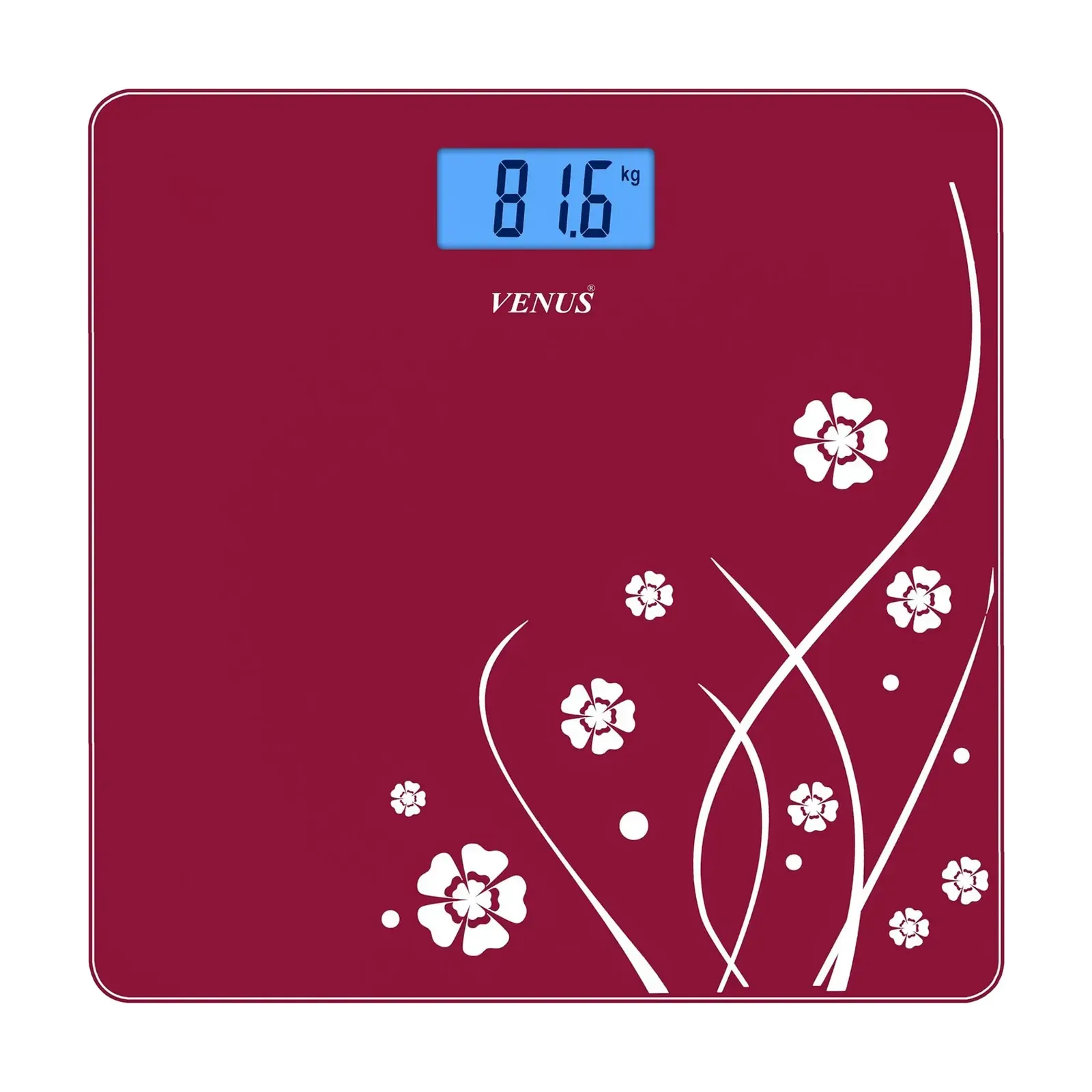
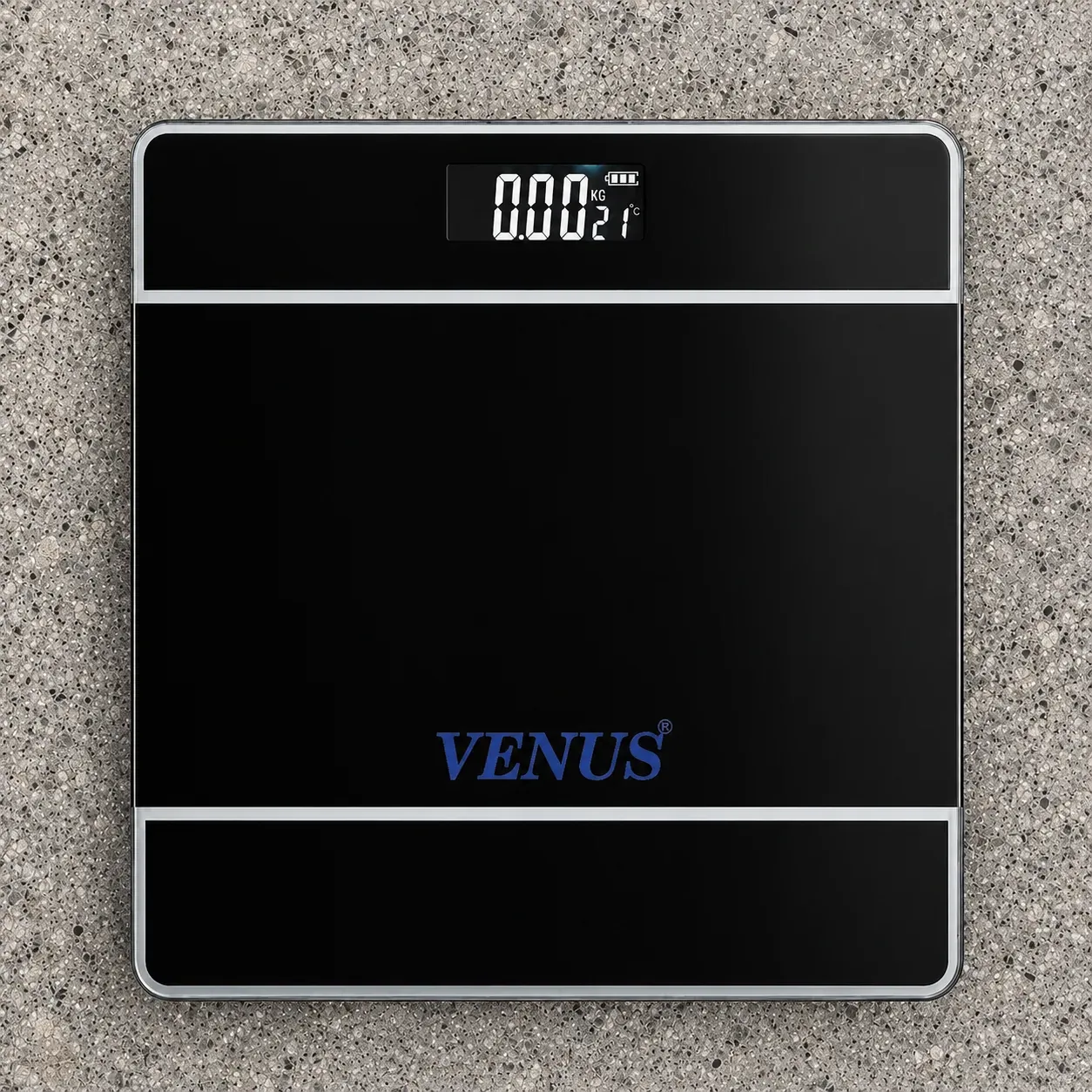
A plain digital scale carries none of the heart-device or pregnancy questions above. The Venus EPS-6399 digital bathroom scale, priced at ₹579, shows weight and nothing else. A household where one member has an implant can keep such a scale for everyone.
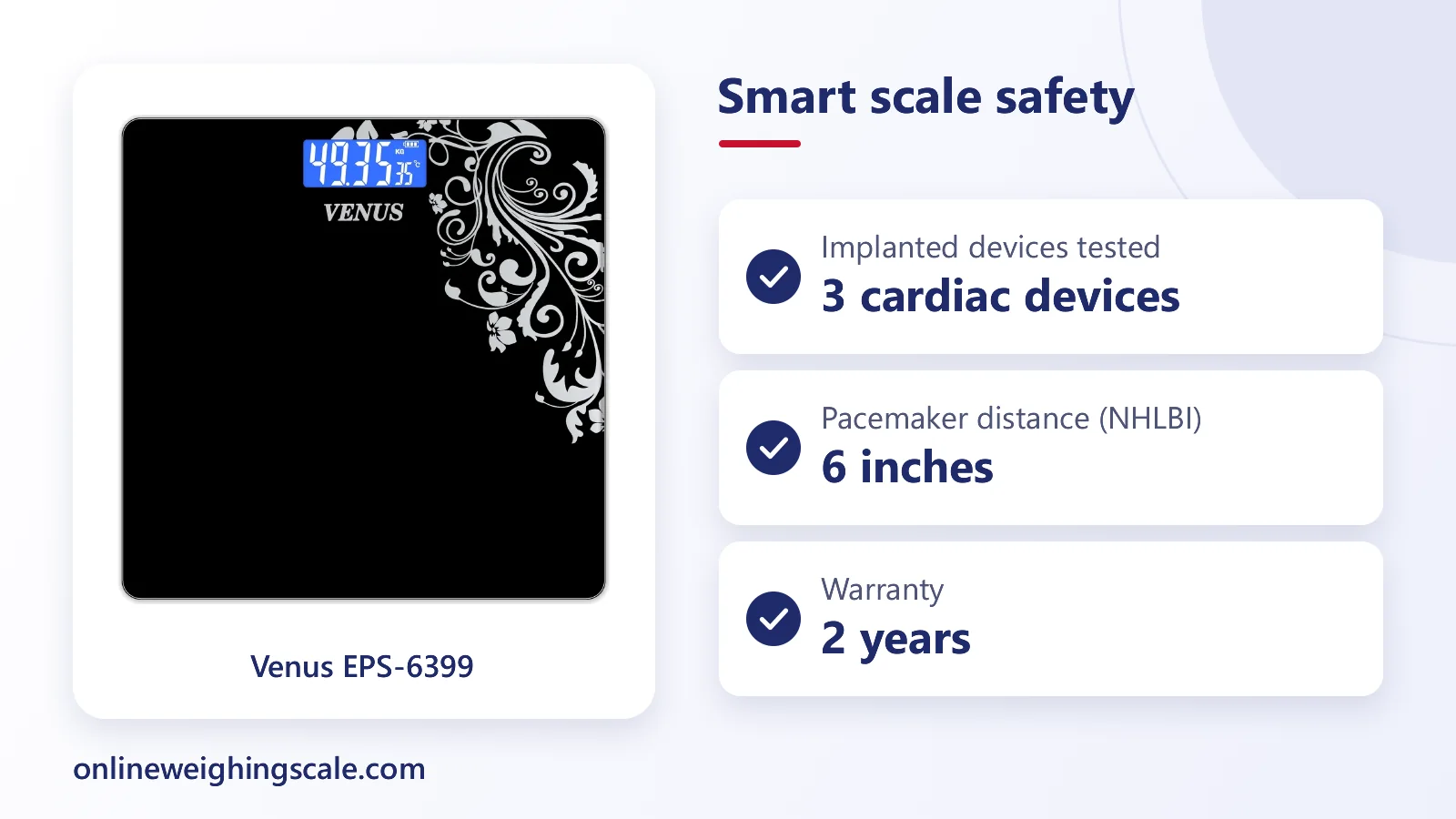
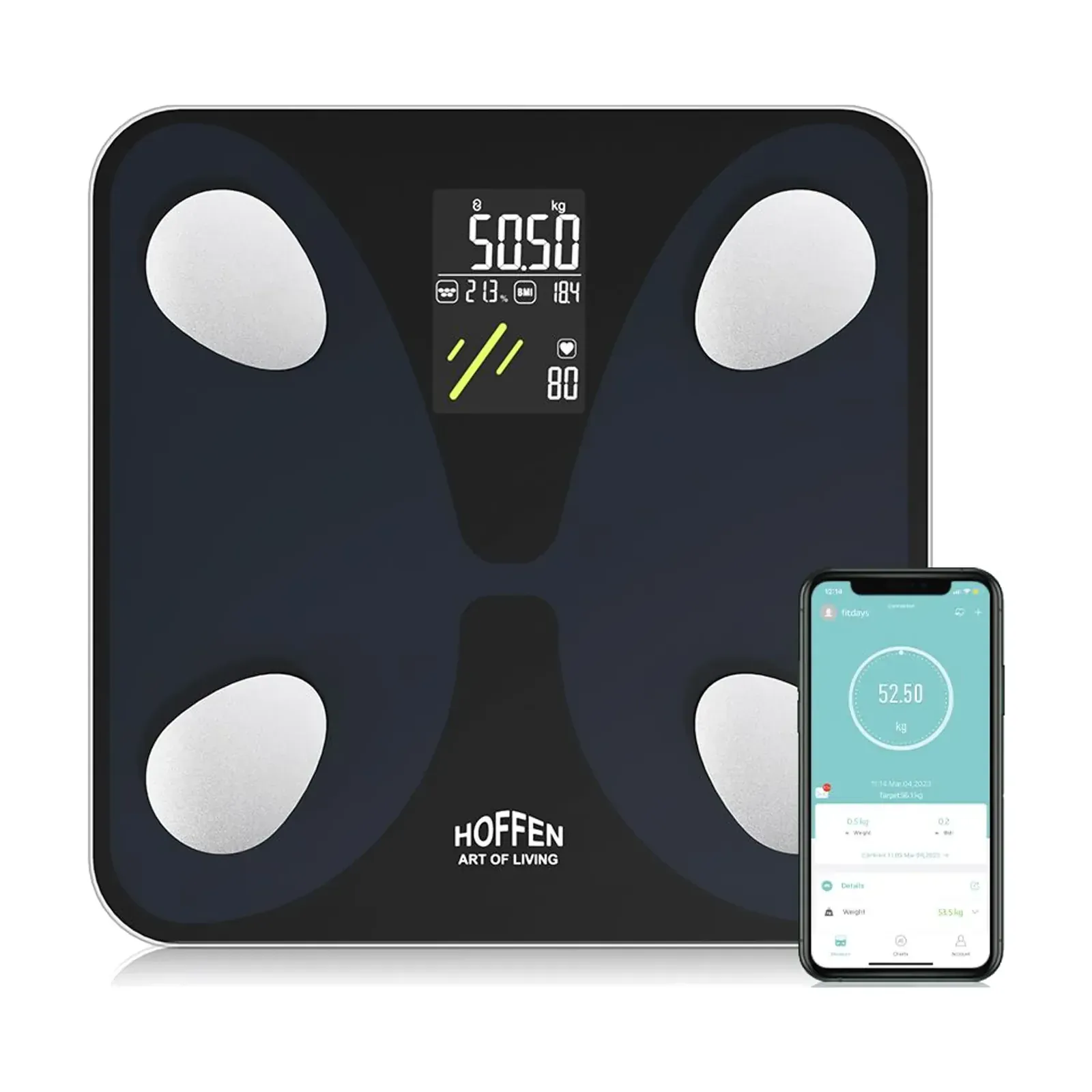
For households that do want body figures, the Venus EPS-6399 body fat weighing machine at ₹729 and the Hoffen HO-45 smart body composition scale list them on their product pages, and more models are under smart weighing scale. Treat the percentage as an estimate that moves with water, food and time of day, and see the post on lean body mass for what the terms mean. Omace Brands Private Limited gives a warranty on manufacturing defects for 2 years.
Using a smart scale sensibly at home
Weigh at the same time of day on the same flat spot, and look at trends over weeks instead of a single reading. Never let a figure on the screen set a target for how you eat or exercise. The right person to ask about a weight goal is a doctor or a registered dietitian. If a reading worries you, take it to the doctor with the scale, and change nothing on your own.
Omace Brands Private Limited has been in the weighing trade since 1994, makes scales in Bagru, Jaipur, and holds ISO 9001:2015 among the company certificates listed on the certificates page. For a question about a particular scale, write via Contact Us.