Subcutaneous fat is the layer of body fat that lies directly under the skin, and it is the fat you can pinch between two fingers. The fat that sits deeper, around the organs inside the belly, is called visceral fat, and the two behave differently in the body.
Omace Brands Private Limited makes weighing scales in Bagru, Jaipur, and body fat is one of the most common questions buyers of smart scales ask. This guide explains what subcutaneous fat is, how it differs from visceral fat, how it is measured, and what a number on a scale can and cannot tell you. This is general information. Ask your doctor about your own readings.
What subcutaneous fat means
The word comes from the Latin for under the skin. Subcutaneous fat is adipose tissue stored in the layer between the skin and the muscle, over the belly, hips, thighs, arms and the rest of the body. Everyone has it, and it is a normal part of the body, not a fault.
Doctors compare it with visceral fat, which a peer-reviewed review in Obesity Reviews places mainly in the mesentery and omentum, the folds of tissue that hold the intestines, inside the abdominal cavity. The same review notes that blood from visceral fat drains directly through the portal circulation to the liver. Subcutaneous fat does not take that route.
On the ordinary kanta or bathroom scale you only see one number, your total weight. Fat under the skin, fat around the organs, muscle, bone and water are all inside it. That is why two people with the same weight can look and feel very different.
Subcutaneous vs visceral fat
The Obesity Reviews paper lists several differences between the two stores. Visceral fat is more cellular, has more blood vessels and nerves, and holds more inflammatory and immune cells than subcutaneous fat. Its cells are more sensitive to lipolysis, the release of fat into the blood, and more resistant to insulin. Subcutaneous fat is better at absorbing circulating free fatty acids and triglycerides. The review also states that visceral fat predicts death risk better than subcutaneous fat does.
| Feature | Subcutaneous fat | Visceral fat |
|---|---|---|
| Where it sits | Under the skin, all over the body | Inside the abdomen, around organs such as the liver |
| Can you pinch it | Yes | No |
| Blood drainage | General circulation | Directly to the liver through the portal vein |
| Metabolic activity (per the review) | Takes up fatty acids and triglycerides | More active, more insulin resistant |
A second paper, the abstract of a review in the British Journal of Radiology, describes visceral fat as hormonally active and links a high amount of it to metabolic syndrome and cardiovascular disease. Our full guide to visceral fat covers that side in detail.
None of this makes subcutaneous fat the villain. The same Obesity Reviews paper notes that abdominal obesity carries a greater risk of diabetes and future cardiovascular events than fat stored on the hips and thighs. Where fat sits matters as much as how much there is.
Is there a normal range for subcutaneous fat
There is no single normal range for subcutaneous fat alone that a home reading can settle. The figures doctors and public health bodies actually use are for total body fat, waist size and body mass index, and each of them has limits.
The Centers for Disease Control and Prevention says on its page on BMI that BMI does not directly measure body fat and does not distinguish between fat, muscle and bone mass. A person with more or less muscle than usual can get a misleading BMI, as the US National Library of Medicine notes in its MedlinePlus guide to BMI, which adds that providers may also look at waist circumference and waist-to-hip ratio.
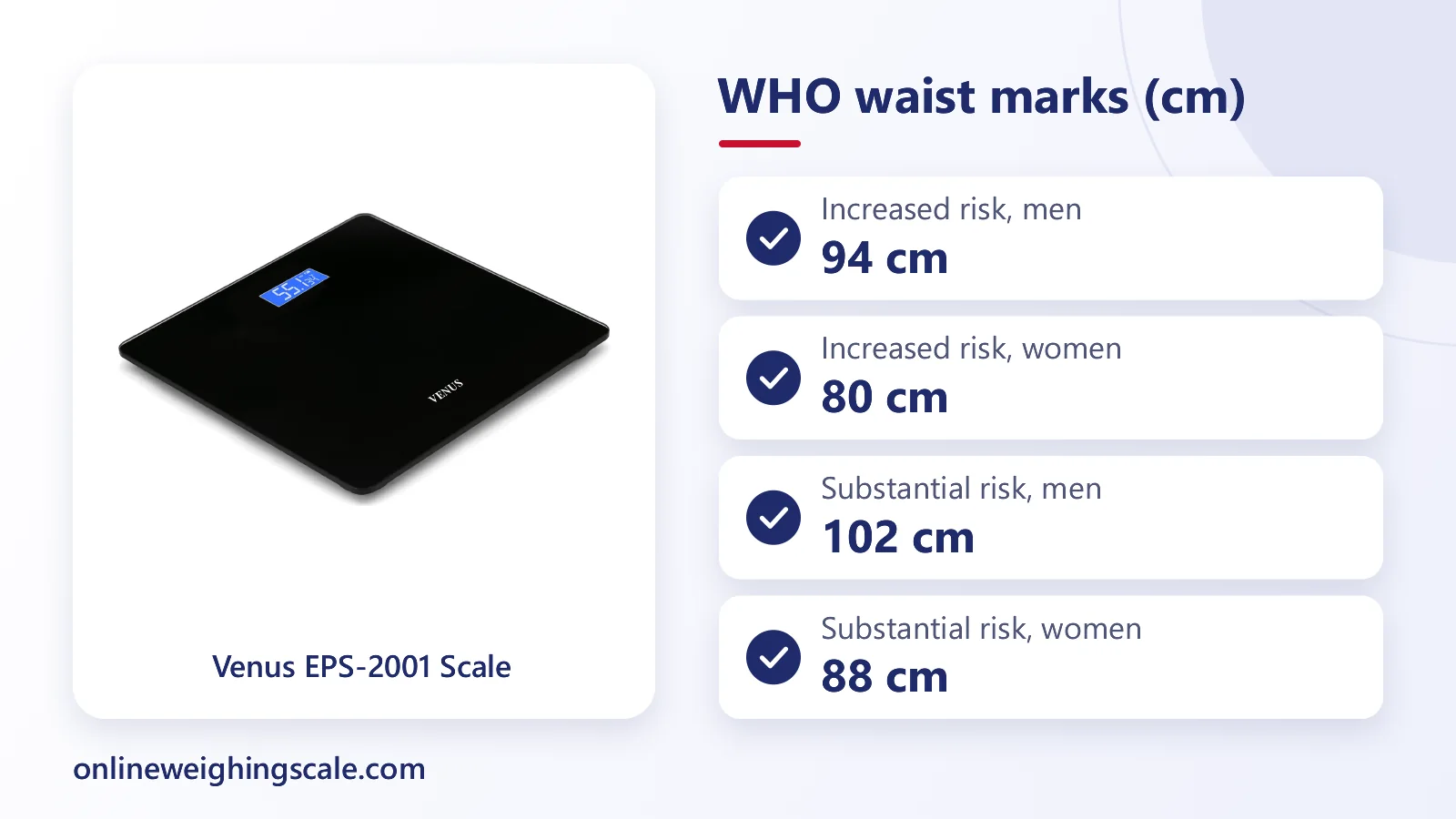
For waist size, the World Health Organization report on waist circumference and waist-hip ratio repeats the cut-offs from its 2000 obesity report. Those are 94 cm for men and 80 cm for women as increased risk, and 102 cm for men and 88 cm for women as substantially increased risk. The same report says those cut-offs came from a Dutch sample of European adults and that universal cut-offs for BMI and waist size are not appropriate worldwide.
That caution matters in India. The WHO report finds that Asian populations show a higher percentage of body fat at a lower BMI, and that Chinese and South Asian men and women carry more visceral fat for a given waist circumference than Europeans. The NHS reflects this in its page on diagnosing obesity, where people of South Asian and several other backgrounds are classed as overweight from a BMI of 23 and obese from 27.5, instead of 25 and 30. The NHS also advises keeping the waist to less than half your height. Our BMI calculator and the height and weight chart for India use the same idea of a reference, not a verdict.
How subcutaneous fat is measured
Each method looks at body fat in a different way, and none of them is perfect for every person.
- Skinfold calipers. A trained person pinches the fat layer at set points and reads its thickness. This looks at the subcutaneous layer directly.
- Waist and hip tape. The WHO report describes the correct method: measure the waist at the midpoint between the lowest palpable rib and the top of the hip bone (iliac crest), with a stretch-resistant tape. It adds that waist-hip ratio can be measured more precisely than skinfolds and reflects both subcutaneous and intra-abdominal fat, without telling the two apart.
- DEXA scan. The CDC states that DEXA precisely measures body composition and that these scans are expensive and not widely available.
- Bioelectrical impedance. A weak current passes through the body and the resistance is converted to an estimate by an equation. A 2025 review in Physiological Research found that these equations mostly estimate fat-free mass and total body water, and that they need updating for specific populations.
Skinfold readings track the layer under the skin, while the tape and scale-based estimates reflect fat overall. No home method splits the belly into a clean subcutaneous number and a clean visceral number.
What a smart scale can and cannot tell you
A smart scale or body fat weighing machine uses bioelectrical impedance to estimate body composition. It reports a body fat percentage and related figures as estimates. Some apps also show a subcutaneous fat figure, and that figure is the app's estimate from the same measurement, not a scan of the layer under the skin.
One reading tells you little. Taking it at the same time of day, on a hard flat floor, and comparing it with your own earlier readings tells you more. Our post on how a smart scale measures body fat explains the idea, and the post on how accurate smart scales are shows where the errors come from.
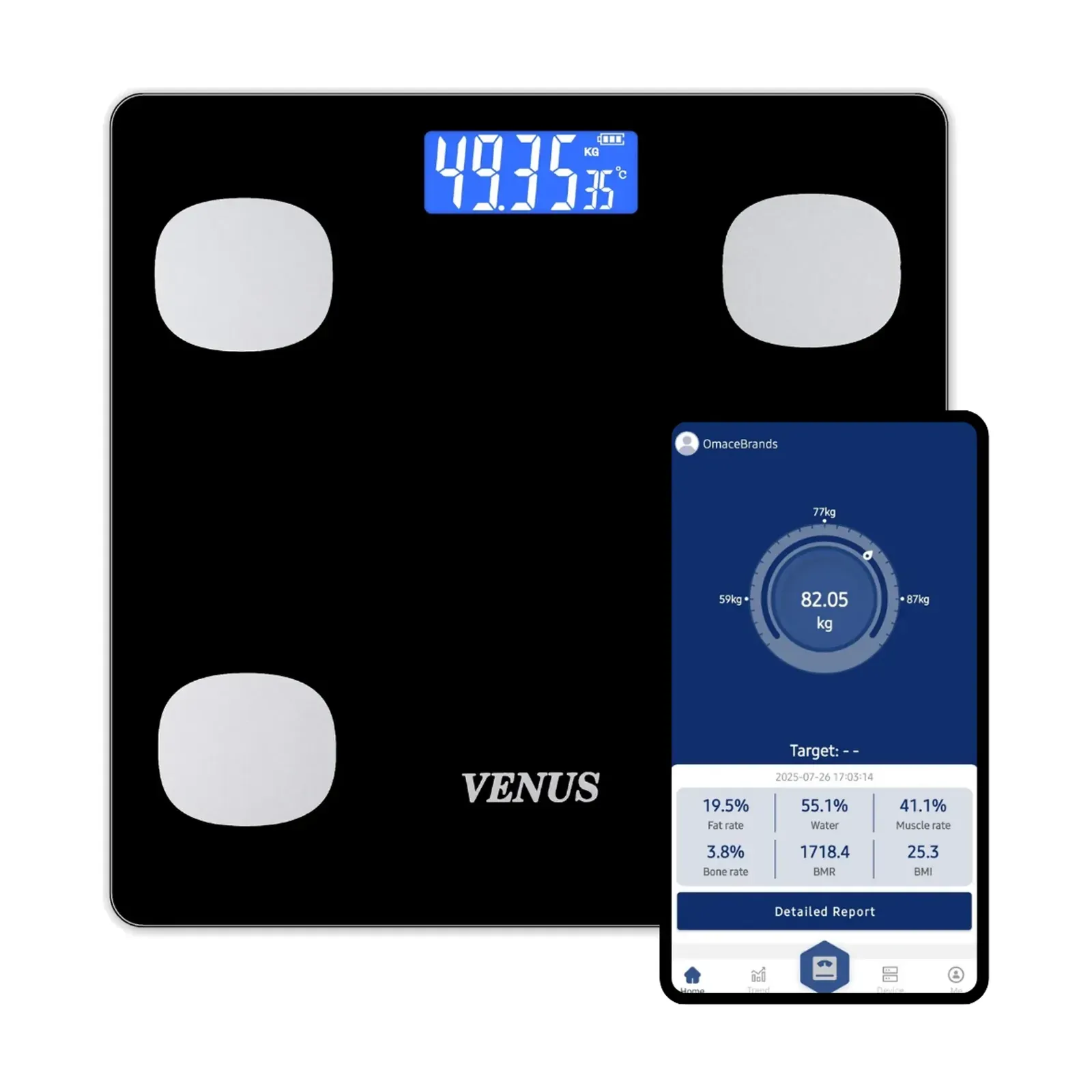
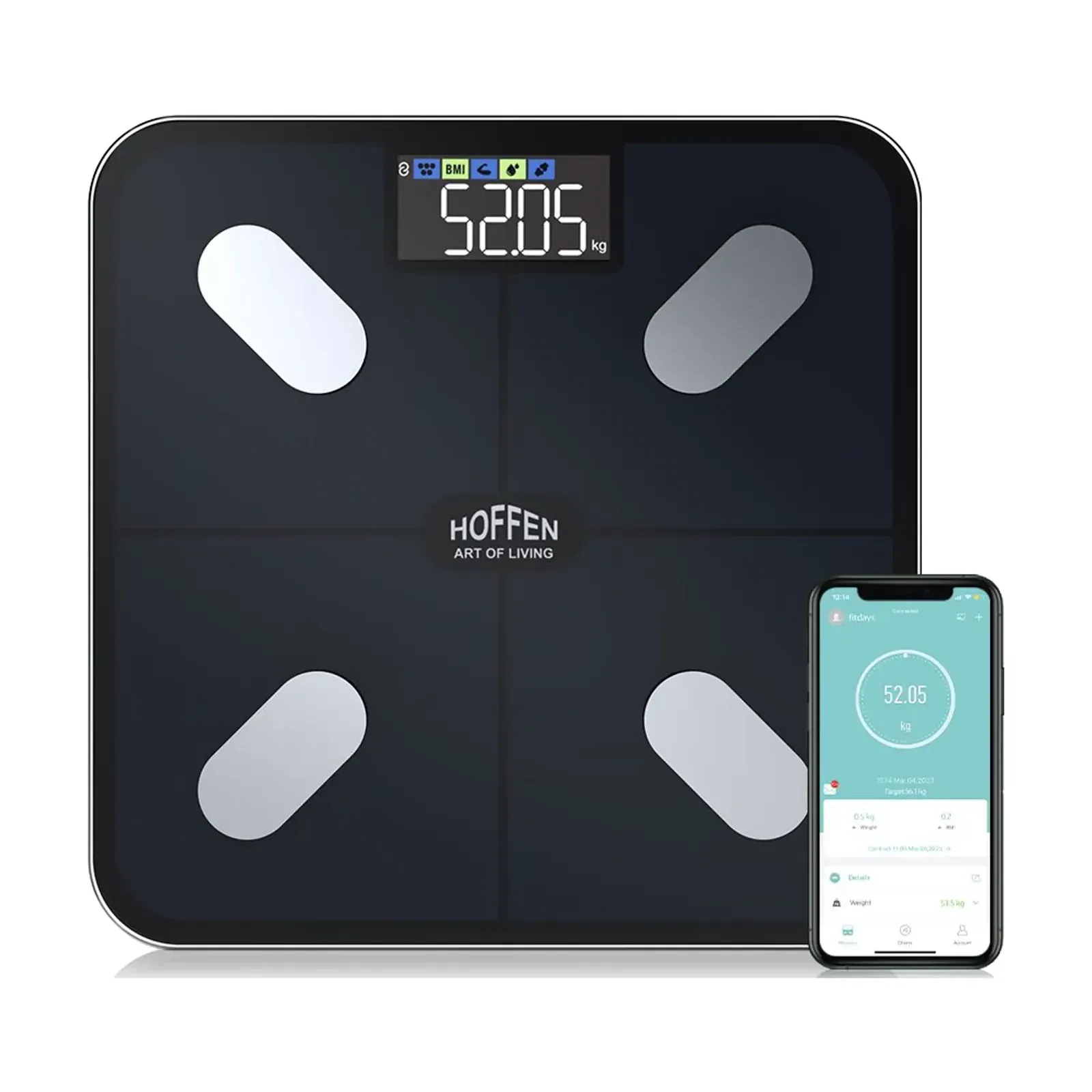
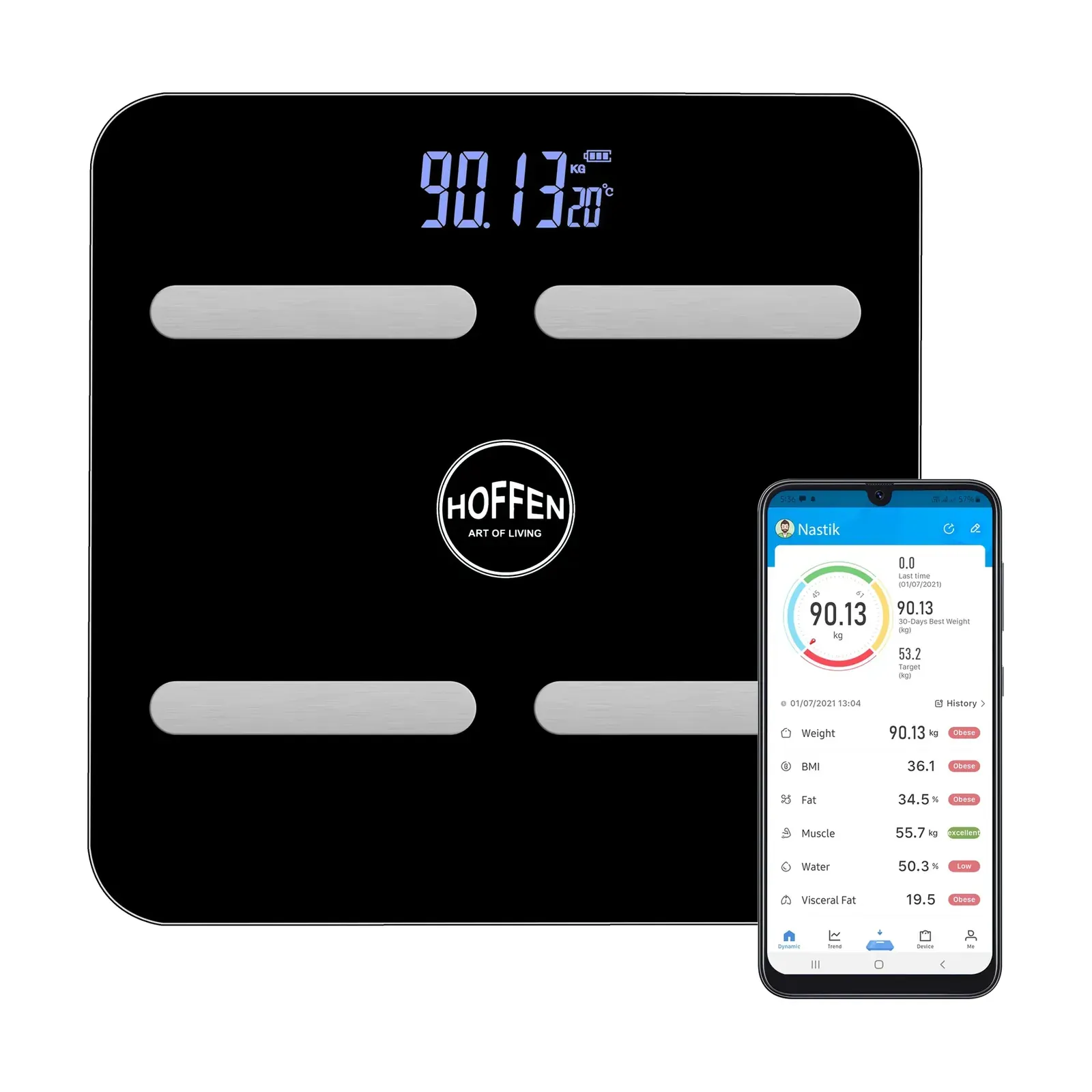
If you want to track body composition at home, the smart weighing scale range from Omace Brands Private Limited includes the Venus EPS-6399 Body Fat Weighing Machine and the Hoffen HO-36 Body Fat Analyzer Scale. The listed measurements for those products are on their own pages. They are tools for watching a trend, and a scale does not diagnose anything.
What changes where fat is stored
Fat is not stored in the same place for a lifetime. The WHO report notes that from late middle age until the 80s or later, the volume of subcutaneous fat declines and fat is redistributed from the subcutaneous to the visceral stores, along with a loss of lean body mass. That is one reason a waist measurement can grow in older adults even when the scale weight stays the same.
This is also why weight alone is a thin guide. Our post on lean body mass explains the muscle side of the picture, and anthropometry covers the body measurements doctors use.
Reading your own numbers sensibly
Use any fat reading as one piece of information. Weigh and measure the waist at the same time of day, note the number, and compare it with your last month, not with a stranger's chart. If your waist is above the WHO or NHS marks given above, or a reading worries you, take it to a doctor, who can look at blood pressure, blood sugar and your family history together.
Fat under the skin is part of a healthy body. A reading is a reference, a doctor decides what it means for you, and a scale or tape cannot make that judgement.