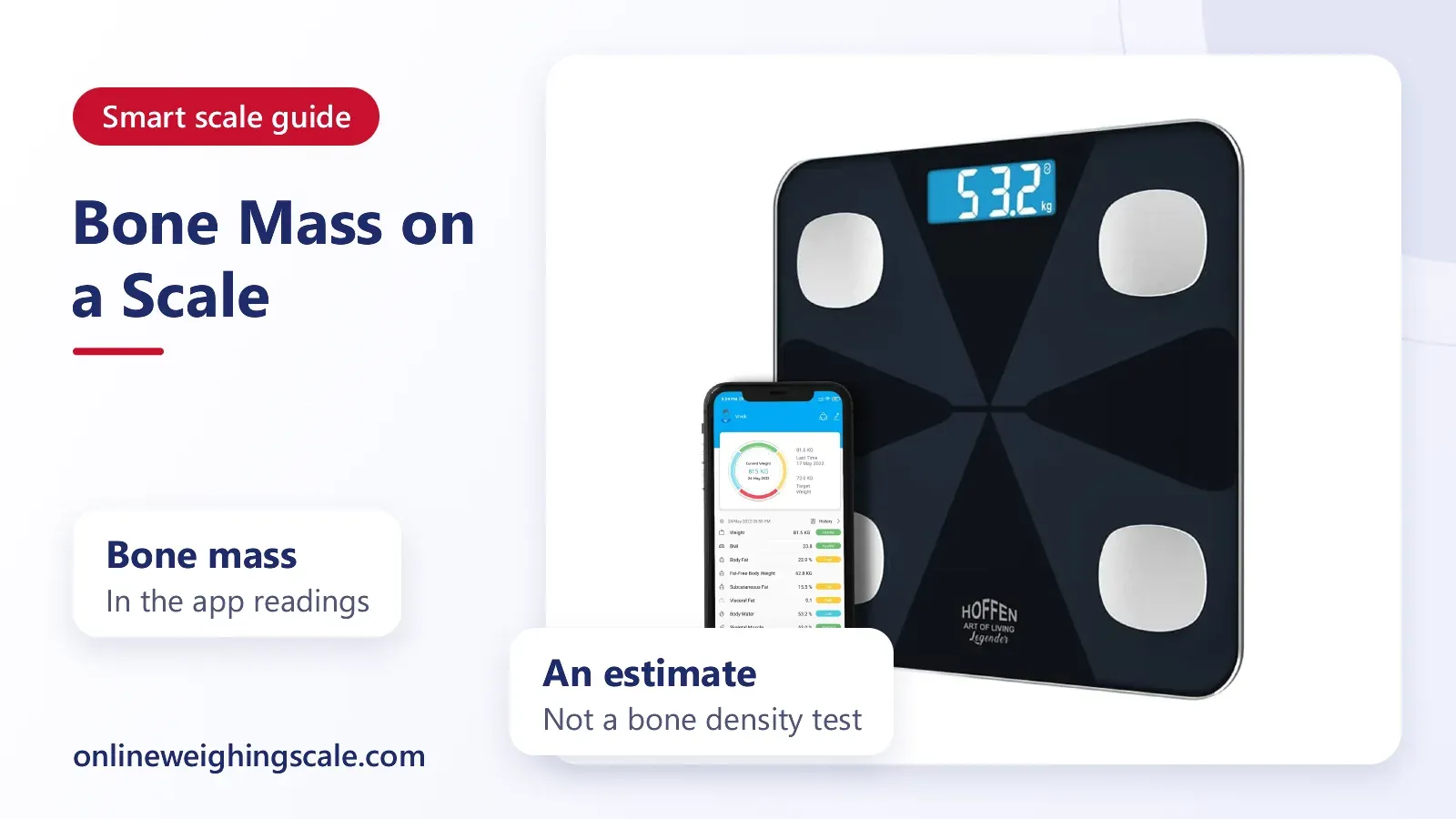
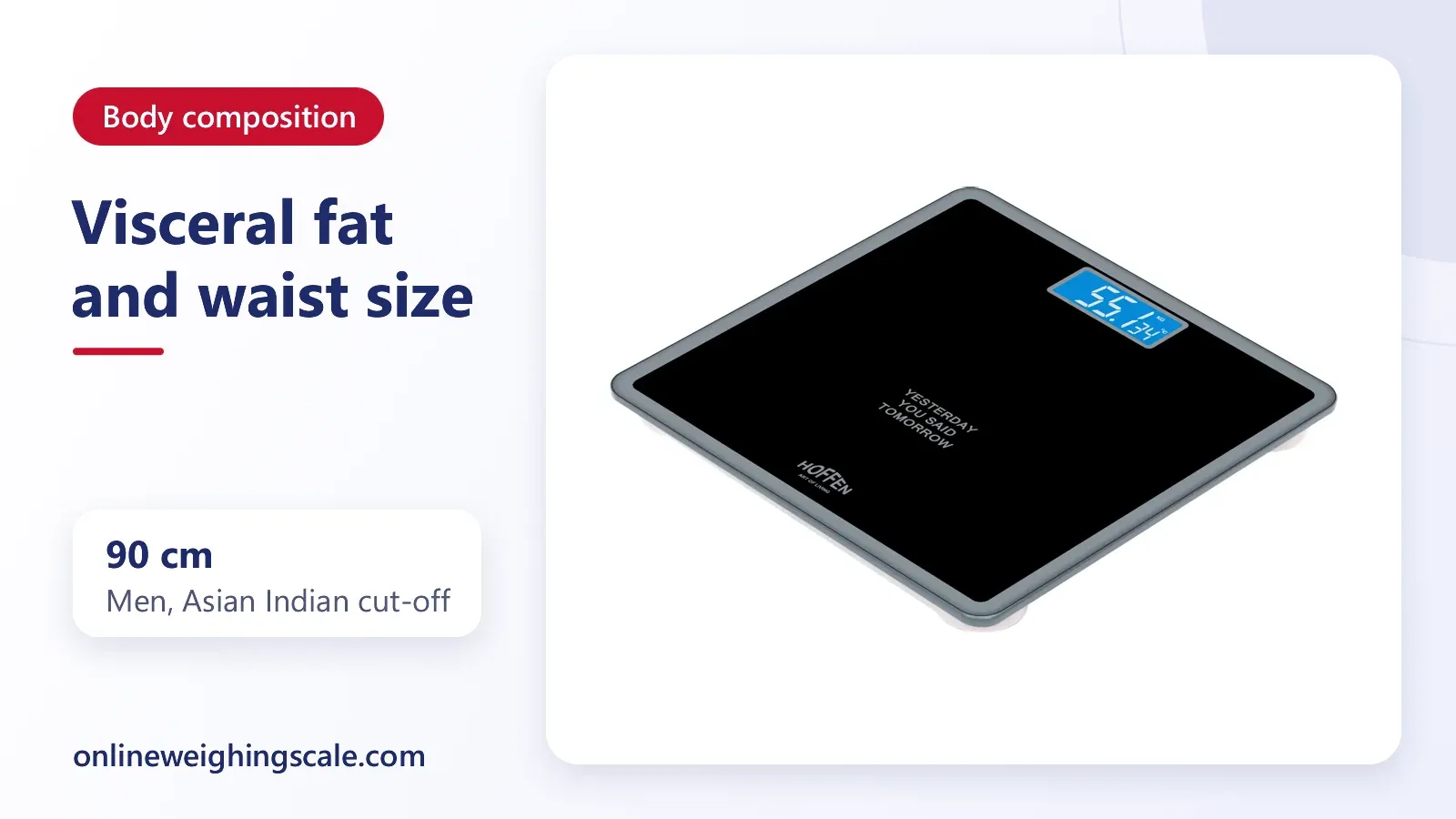
Visceral fat is the fat stored deep in the abdomen, around organs such as the liver, pancreas and intestines. The Asian Indian consensus cut-off for abdominal obesity is a waist of 90 cm or more in men and 80 cm or more in women. That tape reading is the simplest home clue to visceral fat. This is general information. Ask your doctor about your own readings.
What is visceral fat?
The body keeps fat in two main places. Subcutaneous fat sits just under the skin, and you can pinch it. Visceral fat lies behind the abdominal muscles, packed around the internal organs, and you cannot pinch it. Both are normal tissue. The concern is how much of the second kind a person carries.
Peer-reviewed reviews link extra visceral fat with higher cardiovascular risk. A systematic review of abdominal visceral fat and all-cause mortality found that a larger visceral fat area was linked with higher mortality in people aged 65 or younger, a link that was weaker and less consistent in older people, and its authors said a visceral fat cut-off for mortality still has to be defined. A systematic review of the visceral to subcutaneous fat ratio found that a higher ratio is associated with the development of cardiovascular disease. These are associations seen in groups of people. They do not say what will happen to one person.
Two people with the same weight and the same BMI can carry very different amounts of visceral fat. That is why a plain weight reading cannot answer the question, and why doctors look at the waist as well. The guide to body shape types shows how fat distribution differs between apple and pear shapes.
Why Indians are told to watch the waist
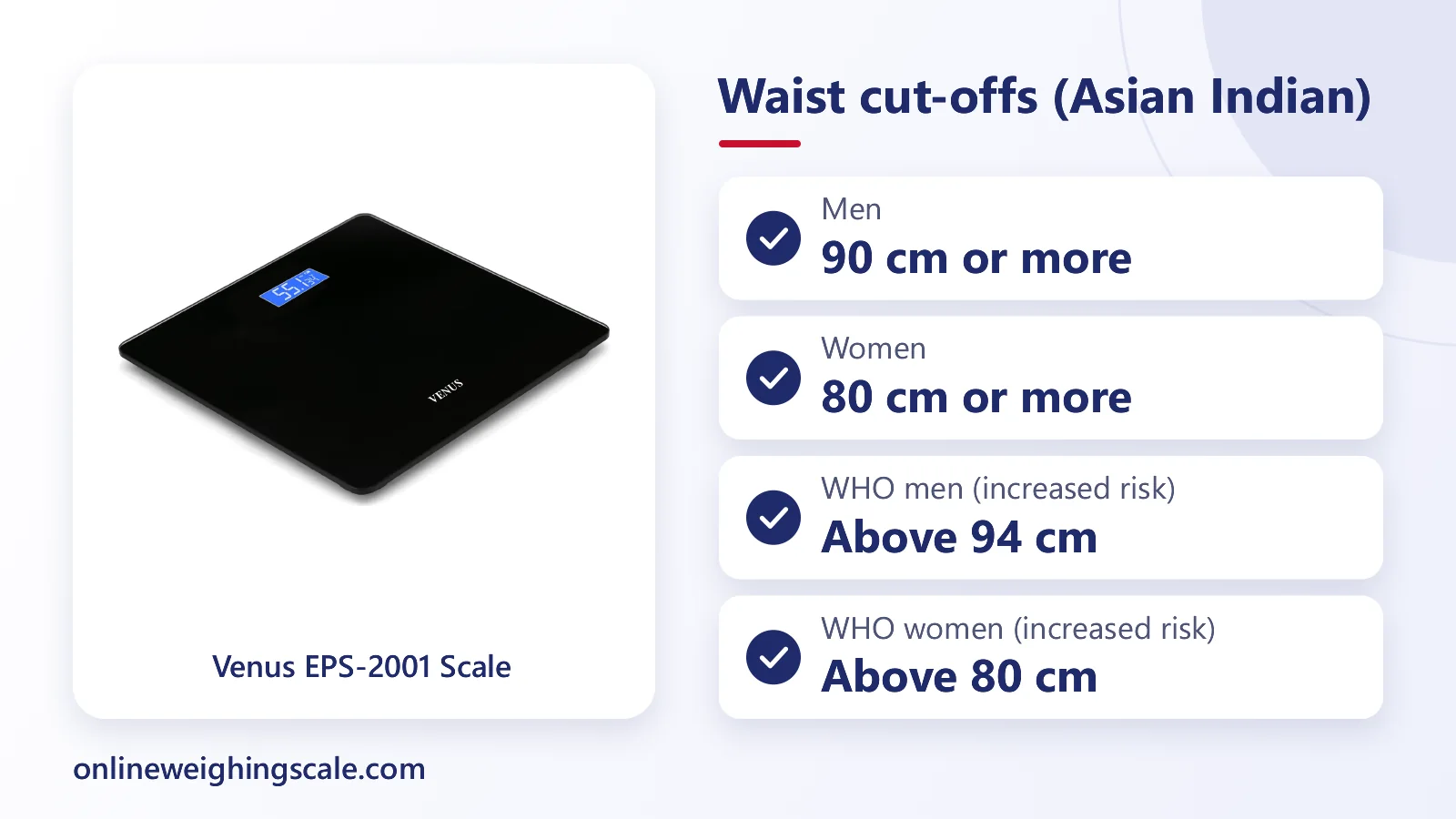
A review in the journal Nutrients on obesity and dyslipidemia in South Asians reports that Asian Indians tend to carry more intra-abdominal fat than white Caucasians. The same paper lists the Asian Indian consensus cut-offs for abdominal obesity as a waist of 90 cm or more in men and 80 cm or more in women. It also lists consensus BMI cut-offs of 23.0 to 24.9 kg/m² for overweight and 25 kg/m² or more for obesity.
The World Health Organization gives figures that were first worked out in European adults. Its report on waist circumference and waist-hip ratio lists a waist above 94 cm in men and above 80 cm in women as increased risk of metabolic complications, and above 102 cm in men and above 88 cm in women as substantially increased risk. The same report notes that these lines come from a study in the Netherlands and were an example, and it also lists the International Diabetes Federation cut-offs for South Asians, above 90 cm in men and above 80 cm in women. The Asian Indian figures are the ones to read first for a person living in India. A BMI figure can sit beside your waist reading, and the BMI calculator on this site does that sum.
| Source | Men | Women |
|---|---|---|
| Asian Indian consensus waist cut-off, abdominal obesity | 90 cm or more | 80 cm or more |
| WHO report, European-based waist line, increased risk | Above 94 cm | Above 80 cm |
| WHO report, European-based waist line, substantially increased risk | Above 102 cm | Above 88 cm |
These are screening lines, and a reference chart does not diagnose anything. A doctor reads them together with age, blood pressure, blood sugar and family history, and decides what, if anything, needs action. Nobody needs to chase a number or feel bad about a measurement.
How to measure your waist at home
A flexible tape and two minutes are enough. Stand upright and relaxed with your feet together. Find the bottom of your ribs and the top of your hip bone, and place the tape midway between them, level all the way round. Breathe out normally and read the tape without pulling it tight into the skin.
Measure on bare skin or over a thin shirt, at the same time of day, before a meal. A full stomach, a tight belt or holding the breath can change the number by a centimetre or two. The wider field of body measurements is called anthropometry, and the same rule applies there: one method, repeated the same way each time.
Write the figure in a notebook once a month. A single reading tells little. Several readings over months show whether the waist is staying where it is, rising or falling, and that trend is what a doctor finds useful.
How visceral fat is measured properly
Imaging scans such as MRI and CT are the reference methods used in research, because a scan shows a slice of the abdomen and lets a radiologist separate visceral fat from subcutaneous fat. Scans are costly and are not a routine check for a healthy person. That is why the waist tape is the common first step in a clinic.
The waist has limits. It counts both kinds of abdominal fat together, and it is affected by body shape, height and muscle. For a person with no health complaint, a waist reading plus a normal check-up with blood tests gives a more useful picture than any one number from a gadget.
Visceral fat on a body composition scale
Many smart scales show a visceral fat number or level. Omace Brands Private Limited makes body composition scales in Bagru, Jaipur, and states plainly what that reading is: an estimate. It is not a scan of your abdomen. Two brands can show two different visceral fat numbers for the same person on the same morning, and neither is a medical measurement.
Scales usually show the figure as a level with ranges marked normal, high and very high. The numbering and the bands differ from one maker to the next. A level of 9 on one scale cannot be compared with a level of 9 on another. The scale's app or manual explains its own bands, and it is worth reading them before reading the number.
The reading can also shift with the water in the body. Drinking a lot of water, exercise, sweating, a heavy meal or stepping on straight after a bath can move the figure. For that reason it helps to weigh at a similar time each day, barefoot and with dry feet. The posts on how a smart scale measures body fat and how accurate smart scales are cover the method and its limits, so this page does not repeat them. The post on lean body mass explains the other half of the picture, muscle and bone.
How to use the visceral fat number sensibly
The number is best used as a trend over weeks and months on the same scale. If the level stays flat or drifts slowly, that is the information. A jump of several levels in one day almost always points to water, a different time of day or a new spot on the floor. It does not mean the body changed overnight.
Keep the scale on a hard, flat floor, step on bare dry feet and weigh at the same time of day. Do not compare your figure with a friend's, because age, sex and height differ and each brand sets its own bands. If a family shares one scale, set up each person in the app so the readings do not get mixed.
The figure does not diagnose anything, whether it looks low or high. It cannot replace a waist tape, a blood test or a doctor. Anyone with a pacemaker or another implanted medical device, and anyone who is pregnant, should read the scale's manual and ask their doctor before using a body composition scale.
Which scale shows a visceral fat reading
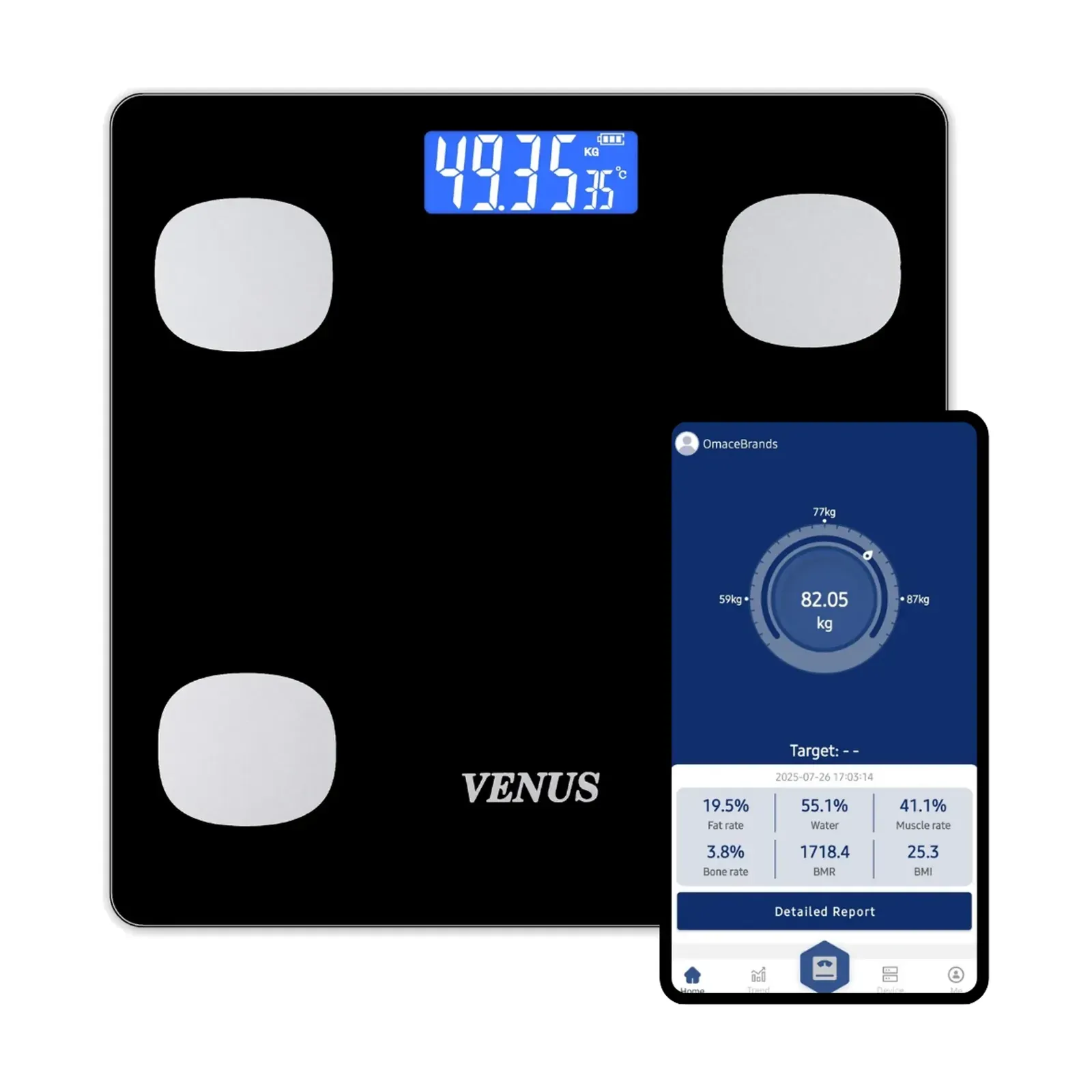
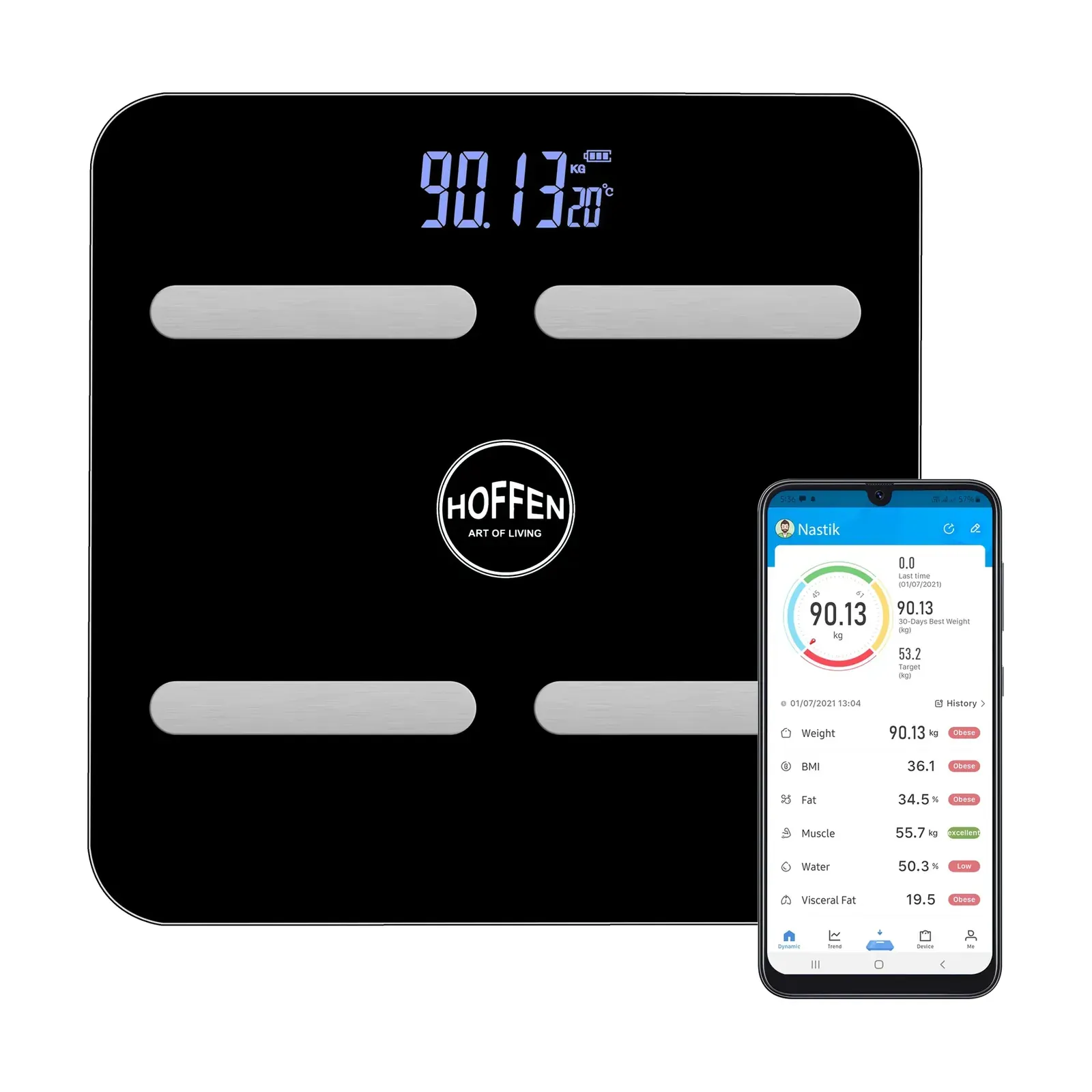
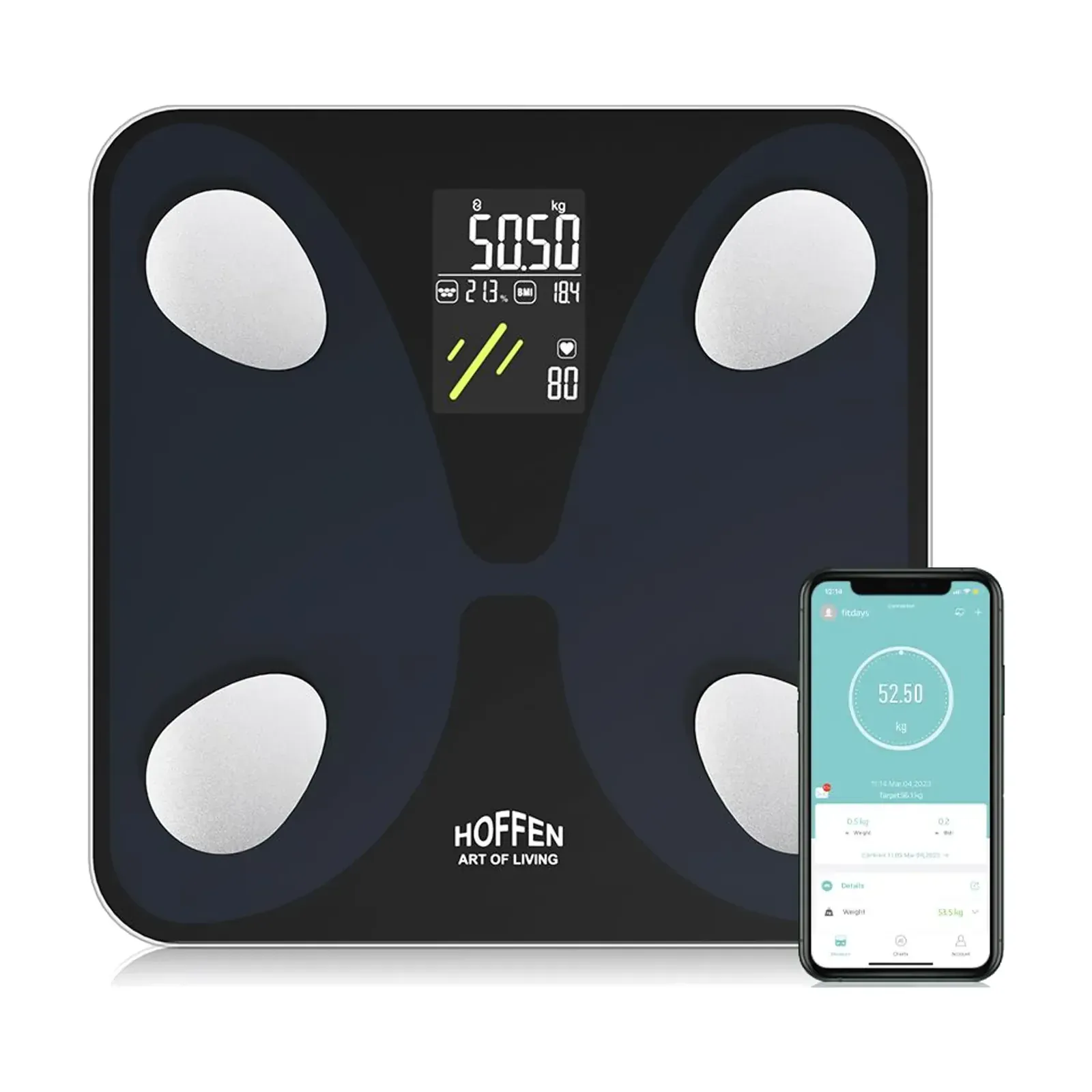
Several Omace models list visceral fat among their readings on the product page: the Venus EPS-6399 body fat weighing machine at ₹729, the Hoffen HO-19 Bluetooth weighing scale, the Hoffen HO-36 body fat analyzer and the Hoffen HO-45 body composition scale. The ultrasonic height and weight machine for gyms and clinics lists a visceral fat index as one of its 18 metrics. The other models in the smart weighing scale category show different readings, so check the page of the model you want. On every one of them the visceral fat figure is an estimate. Every Omace digital scale is factory calibrated and carries a warranty on manufacturing defects for 2 years. The company holds ISO 9001:2015 and ISO 13485:2016 certificates, listed on the certificates page.
A smart scale is a handy way to watch a trend. It does not replace a waist measurement or a medical check. If a reading worries you, take the waist tape figure and the scale readings to your doctor and ask what they mean for you.
Where to go from here
Doctors talk about food, sleep, activity and medical conditions when belly fat comes up. Those belong in the clinic and not on a scale page, so this post gives no diet or exercise targets. A family doctor, or a dietitian the doctor recommends, is the right person to decide what suits you.