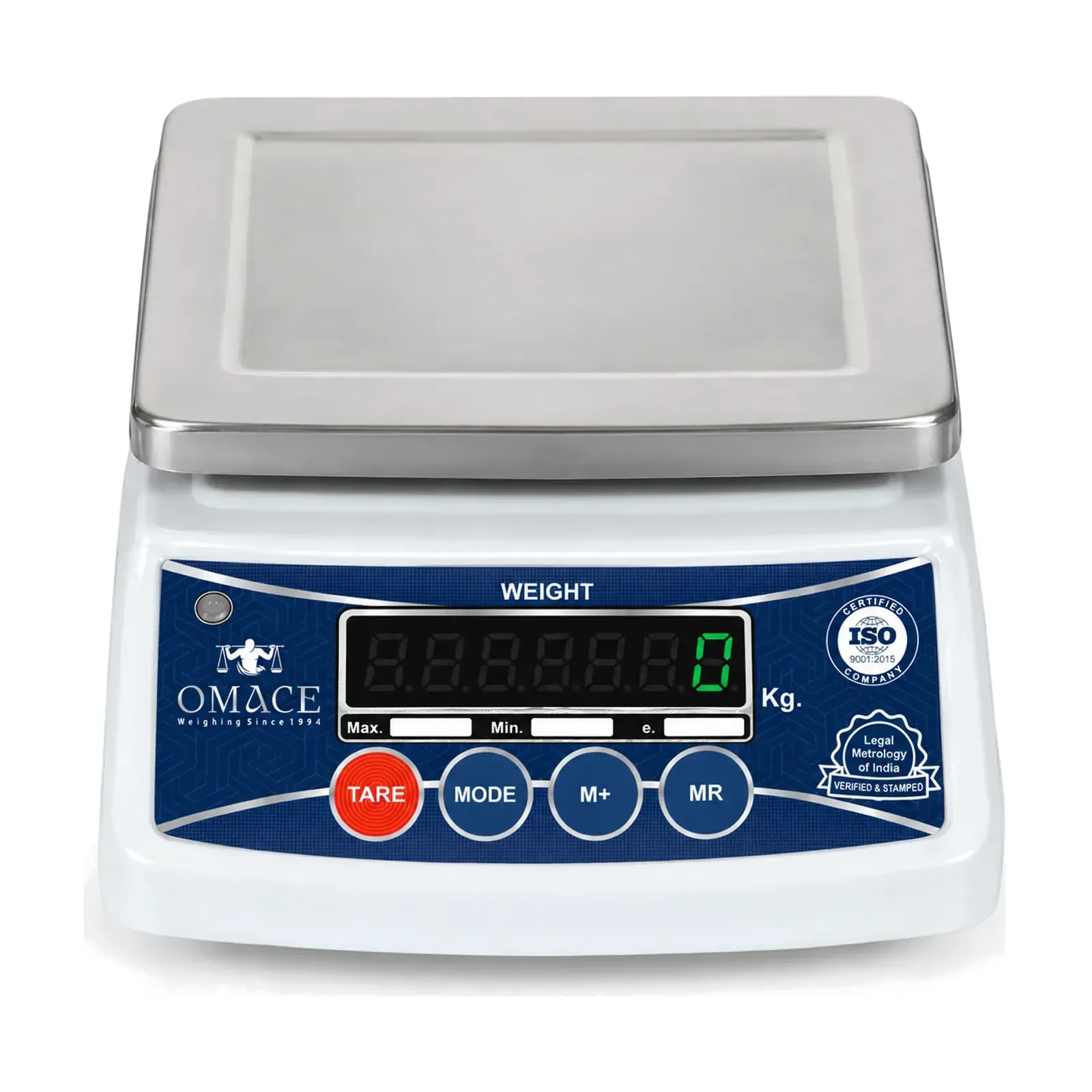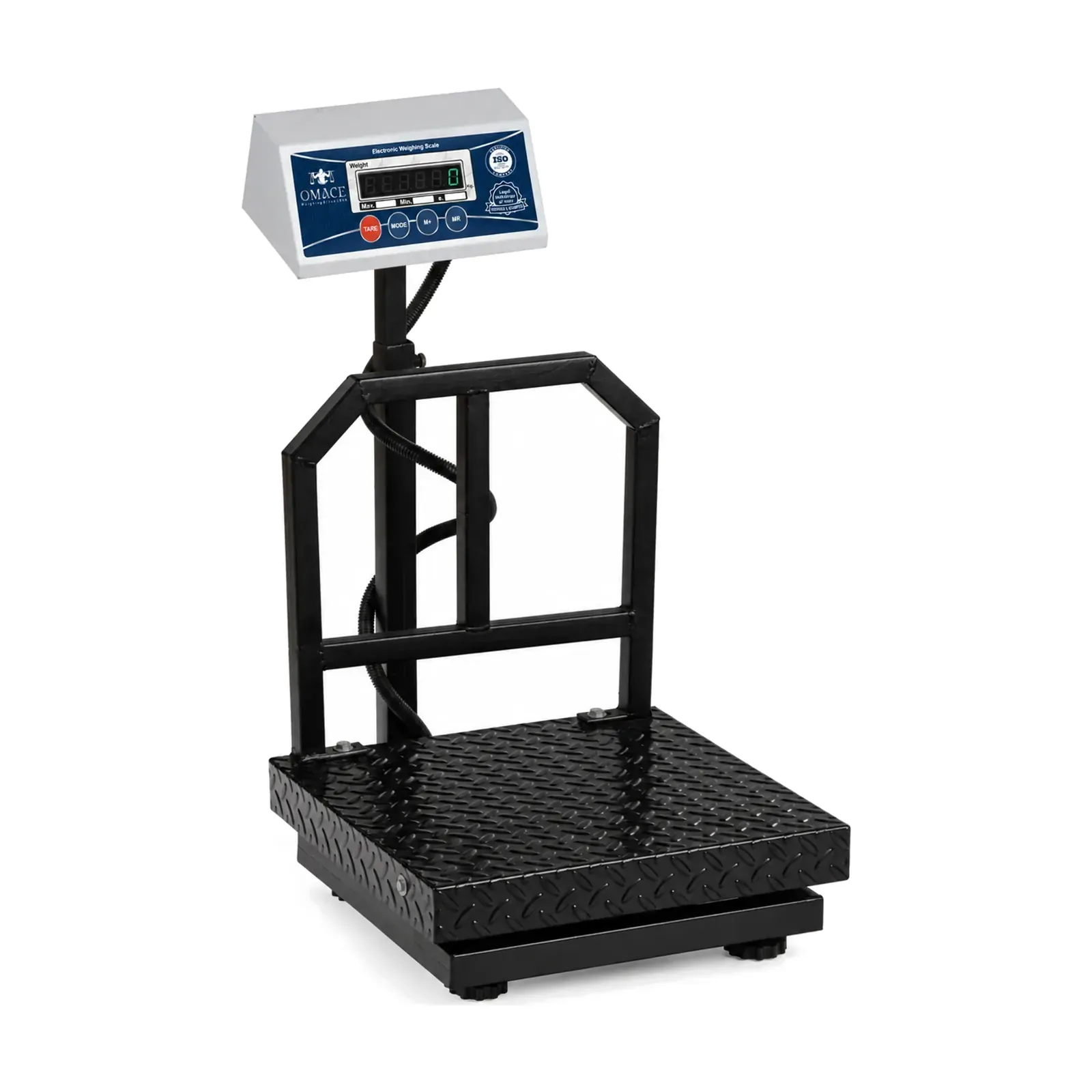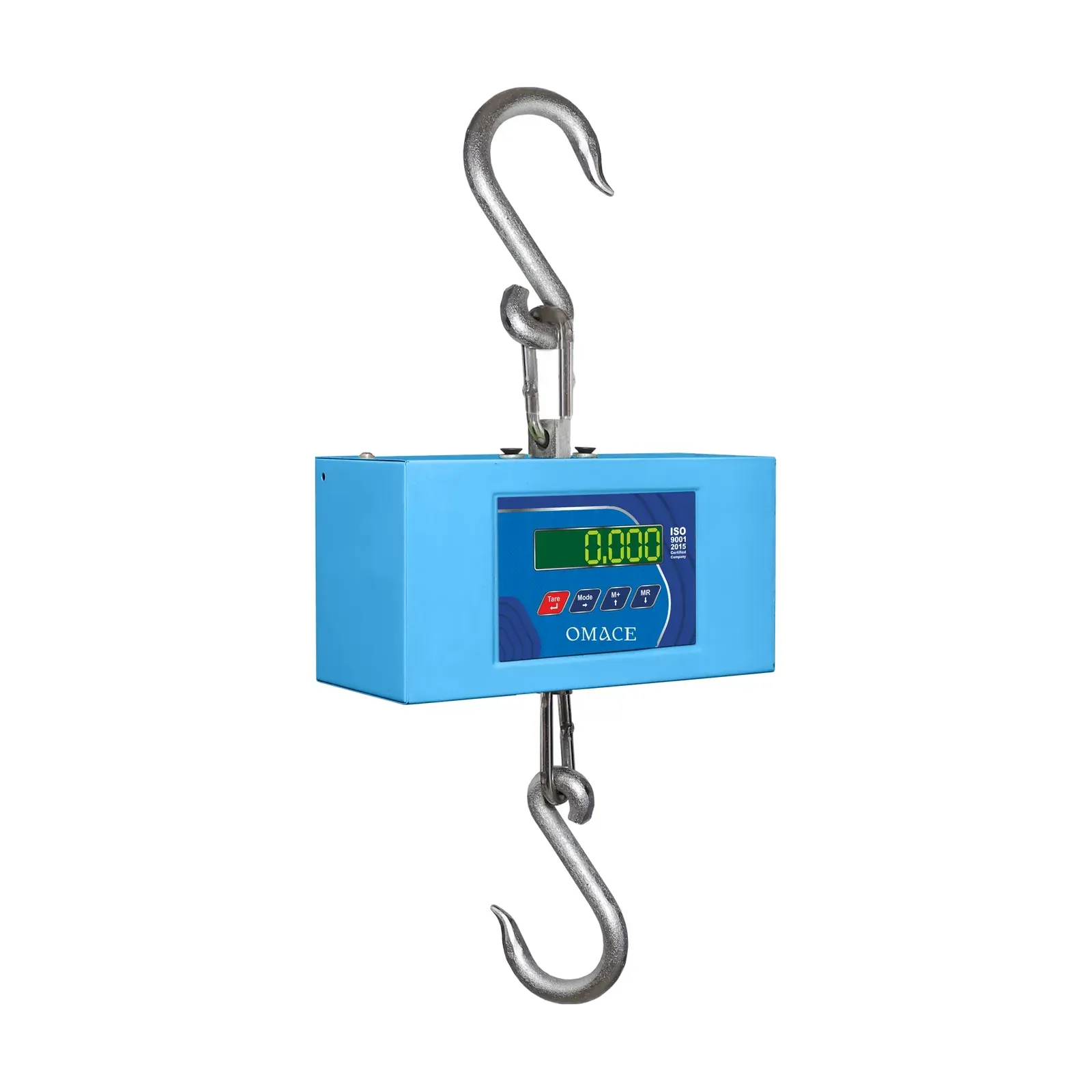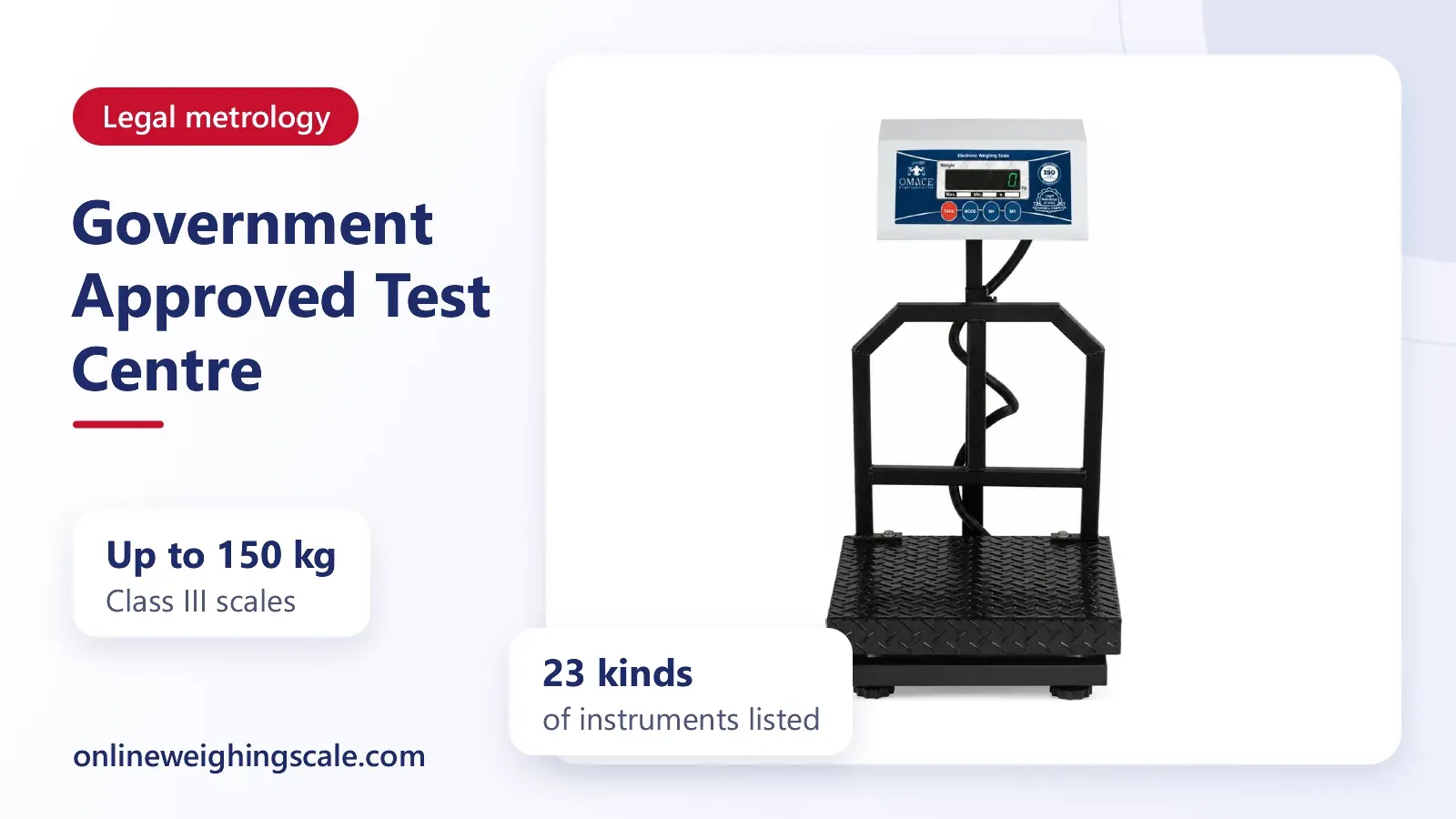
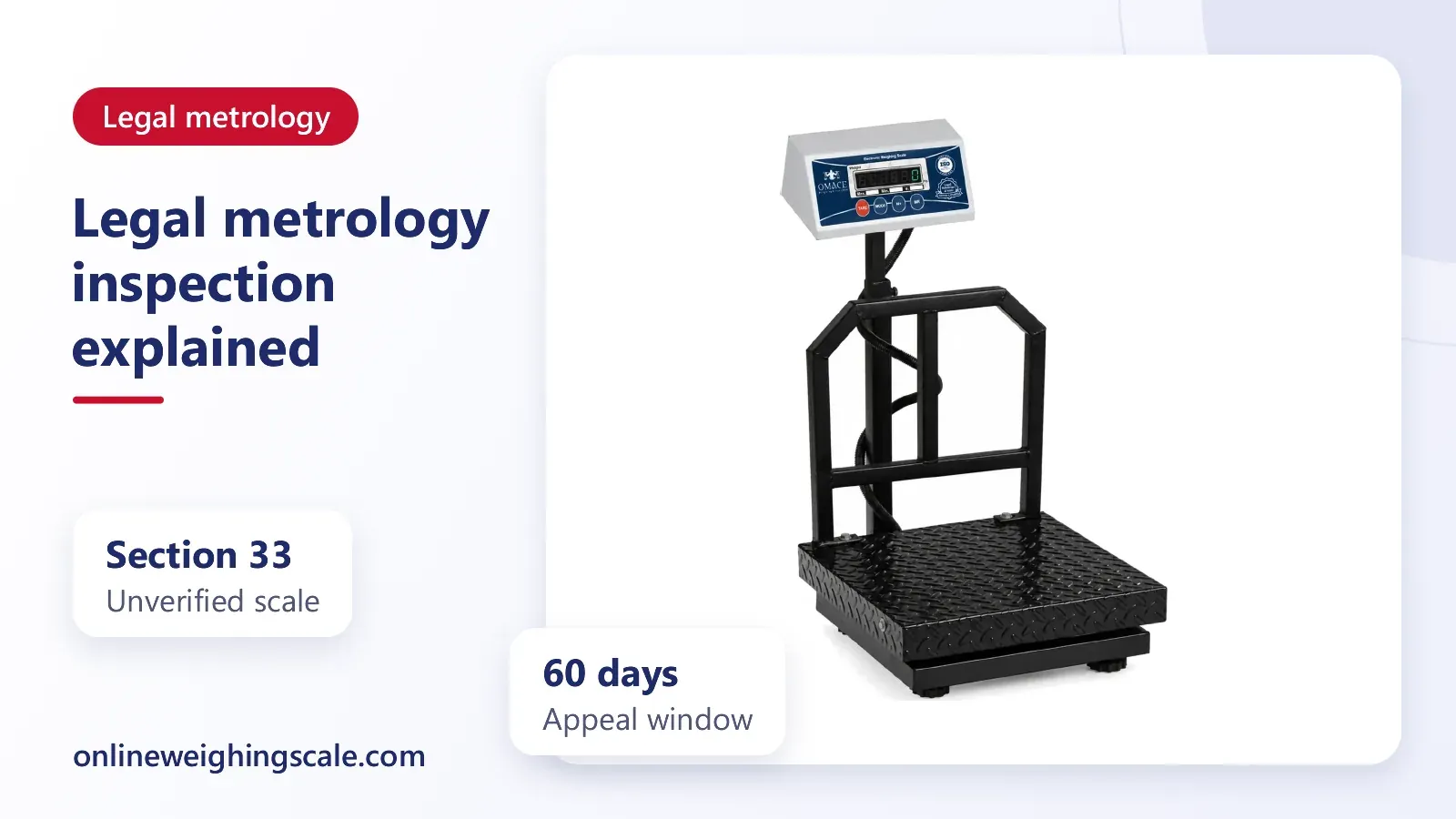
A legal metrology officer inspecting a shop under section 15 of the Legal Metrology Act, 2009 may enter the premises at a reasonable time, check any weight or measure used in trade, ask for the related records and seize what he believes is evidence of an offence. The Act as first passed gives the Director, the Controller and any legal metrology officer these powers. Since 1 May 2026 a first lapse under most penalty sections brings an improvement notice instead of a fine.
What an officer may do during an inspection
Section 15(1) of the Act lets the Director, Controller or a legal metrology officer act when he has reason to believe, from written information or personal knowledge, that a weight or measure used in trade is linked to an offence. He may enter any premises at a reasonable time, search and inspect the weight, measure or other goods, and inspect any record, register or document about them. He may also seize the weight or measure and any record or document that could be evidence.
Section 15(2) lets him require the person who has custody of the weight or measure to produce every document or record relating to it. Section 15(3) allows disposal of seized goods that decay fast. The Jan Vishwas (Amendment of Provisions) Act, 2026 added sub-section (5), which treats an inspection, search or seizure made on a written authorisation from the Director or Controller as made under a lawful warrant.
Obstructing an officer is an offence under section 40. The 2026 Act replaced the old prison terms in that section with a reference to the Bharatiya Nyaya Sanhita, 2023, so a shopkeeper who stands in the way of an inspection carries a risk that has nothing to do with the state of the scale.
The Act protects the shopkeeper too. Section 42 punishes an officer who searches a place or person, or seizes a weight, measure or other movable property, knowing that he has no reasonable grounds. The penalty is imprisonment up to one year, a fine up to ₹10,000, or both. Neither Jan Vishwas Act lists that section, so far as I could read their schedules.
What he checks on your scale
The Act does not print an inspection checklist, so what follows is the practical reading of the duties it sets. Section 24(1) requires every person who keeps a weight or measure for use in a transaction to have it verified before putting it to use. A verified instrument carries the stamp of the legal metrology office or of a Government Approved Test Centre. The officer looks for that stamp first, then for the verification certificate that matches the scale on the counter.
He will usually also look at the seal over the calibration point, because tampering with a stamp is a separate and serious offence. He will see whether the display is readable, whether the scale starts from zero with nothing on the pan, and whether it reads a test weight within limits. Any customer can make the same checks, and the post on how to spot a rigged weighing scale walks through them.
Verification does not last forever. The Legal Metrology (General) Seventh Amendment Rules, 2025, notified on 18 December 2025, substituted clause (a) of rule 27(2) so that it reads twenty-four months for all weights, capacity measures, length measures, tape, beam scale, counter machine and fuel dispensers (petrol and diesel). The principal rules are a scan I could not read, so I do not state the period for other instruments. The difference between calibrating and verifying is explained in calibration vs verification.
Seizure and forfeiture of scales
Section 16(1) says that every non-standard or unverified weight or measure used in trade and seized under section 15 is liable to be forfeited to the State Government. The same section protects an unverified scale if the person it was seized from gets it verified and stamped within the time prescribed. The Act leaves that time to the rules, and I did not find it in a text I could read, so ask the local office for the exact number of days.
The practical lesson is plain. A scale that is verified and stamped before it goes on the counter cannot be seized for lacking a stamp. A scale without one can be taken away, and getting it back depends on how quickly the stamp is obtained.
The improvement notice from 1 May 2026
The Jan Vishwas Act, 2026 inserted sub-sections (6) and (7) into section 15. Under sub-section (6), when the Director, Controller or officer has reasonable ground to believe that a person has failed to comply with the Act, rules or directions, he may serve an improvement notice. The notice must state the grounds, specify what the person failed to do, specify the measures required to comply, and require those measures within a reasonable period named in the notice.
Sub-section (7) adds that if the person does not comply, his registration or approval shall be suspended or revoked, after he has been heard and for reasons recorded in writing. The Department of Consumer Affairs notified through S.O. 2103(E) of 27 April 2026 that the 2026 Act's amendments to the Legal Metrology Act, 2009 came into force on 1 May 2026.
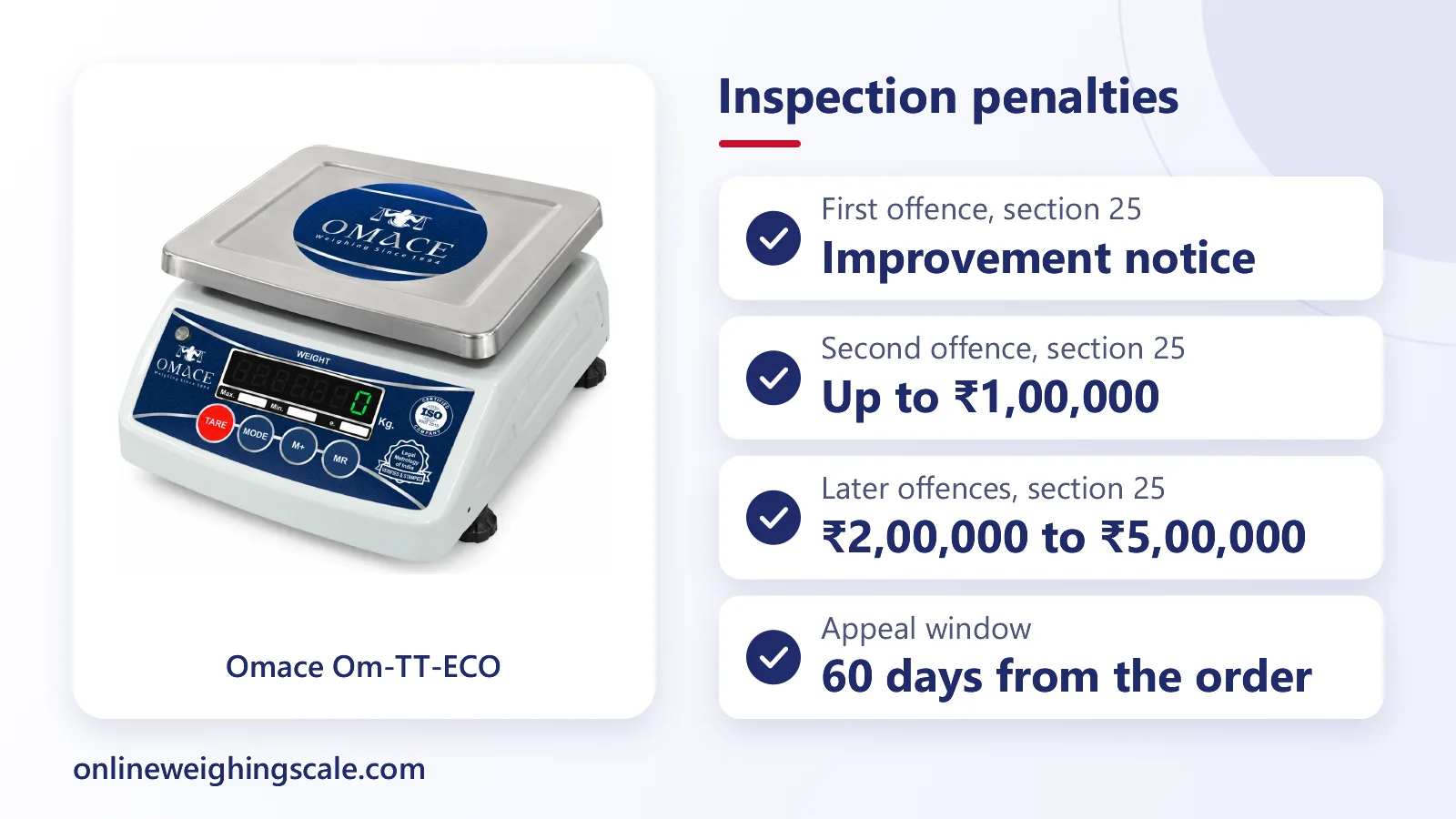
The notice also changes the penalty sections. Where the old text punished a first offence with a fine, the amended text for sections 25, 27 to 29, 31, 32, 34, 35, 38 and 39 says the person shall be warned with an improvement notice. Money comes into the picture from the second offence.
Penalties after the Jan Vishwas amendments
The Jan Vishwas Act, 2023 first raised the fines in sections 25, 27, 28, 29, 31, 34 and 35 and removed their prison terms. The 2026 Act then rewrote them again with the improvement notice. The table gives the position for the sections a shop owner meets most, checked November 2026 against the texts of both Acts and the original Act.
| Offence | First offence | Second offence | Later offences |
|---|---|---|---|
| Using or keeping a non-standard weight or measure (section 25) | Improvement notice | Penalty up to ₹1,00,000 | Fine of ₹2,00,000 to ₹5,00,000 |
| Not producing documents or the weight for inspection (section 31) | Improvement notice | Penalty up to ₹25,000 | Fine of ₹50,000 to ₹1,00,000 |
| Selling or delivering by non-standard weight or measure (section 34) | Improvement notice | Penalty up to ₹25,000 | Fine of ₹50,000 to ₹1,00,000 |
| Using an unverified weight or measure (section 33) | Fine of ₹2,000 to ₹10,000 | Imprisonment up to one year and fine | Same as second |
| Short delivery to a buyer (section 30) | Fine up to ₹10,000 | Fine up to ₹20,000 | Imprisonment up to one year, or fine, or both |
Section 33 deals with the unstamped scale directly. Neither Jan Vishwas Act lists section 33 among the sections it amends, so the figures above are those of the original Act, and the department's own page for the Act is the place to confirm whether a later notification altered them. Section 30 is read from the original Act with the 2026 wording for second and later offences.
Altering a weight to deceive someone falls under section 26. The fine is up to ₹50,000 for a first offence and up to ₹1,00,000 for a second one; from the third offence the section provides imprisonment of six months to one year, or a fine, or both. Counterfeiting or removing a stamp, or fixing a removed stamp on another scale, is punished under section 44 with imprisonment of at least six months, and that section is in neither amendment list.
Compounding and appeal
Section 48, substituted by the 2026 Act, allows offences under sections 25 to 39, section 41 and sections 45 to 47 to be compounded before or after prosecution, on payment of a sum prescribed by the rules. The sum cannot exceed the maximum fine for that offence. Once an offence is compounded, no proceeding follows for it. A court takes cognizance of an offence only on a written complaint by the Director, the Controller or an officer authorised by them.
The prescribed compounding sums sit in the rules. I could not read them, so I give no figure. An appeal against an officer's order lies to the next legal metrology authority named in section 50, and sub-section (2) sets sixty days from the order for filing, with a further sixty days if there was sufficient cause. The 2026 Act touched section 50 only in clause (c).
How to be ready before the officer arrives
Keep the verification certificate and the last stamping receipt where staff can find them. Check the stamp date against the period for your instrument, and take the scale for re-verification before it runs out; the fees and test centres are in the post on weighing scale stamping charges. Use only the scale that was verified, because a spare scale pulled out on a busy day has no stamp.
Never open the seal or peel off the stamp. Stamped trade scales are sealed, and a registered repairer recalibrates them. Section 23 requires a licence to repair or sell weights and measures, and the 2026 Act renamed that licence a registration certificate. Omace Brands Private Limited repairs its commercial scales when the buyer asks. The buyer pays shipping both ways and the repair cost, and spare parts depend on availability, so ask first through the contact page.
Let the officer in, answer politely and ask for his identity and the written authorisation. If an improvement notice arrives, read the measures and the period it names, fix each point and keep proof of the fix. A reply that arrives with a fresh stamp and a bill is a stronger answer than an argument.
Omace shop, platform, chicken and crane scales leave Bagru, Jaipur verified and stamped by Legal Metrology, and the stamp is valid across India. Stamping is compulsory on platform and crane scales. A shopkeeper choosing a counter scale can start from the shop scales range, such as the Om-TT-ECO kirana weighing machine. The Om-PS-MS platform kanta and the Om-CS-C digital crane scale come stamped too, and the wider rules are in Legal Metrology in India.
Where the figures come from
The powers in sections 15 and 16, and the penalties in sections 25 to 35 and 44, were read from the Act as first passed. The changes were read from the Jan Vishwas Acts of 2023 and 2026, and the commencement date from the Gazette notification of 27 April 2026. The Act's own copy on the Department of Consumer Affairs page is a scan that could not be read as text, so a readable copy of the original Act was used for the original wording. This is general information. A lawyer or the local legal metrology office can tell you how it applies to your shop.