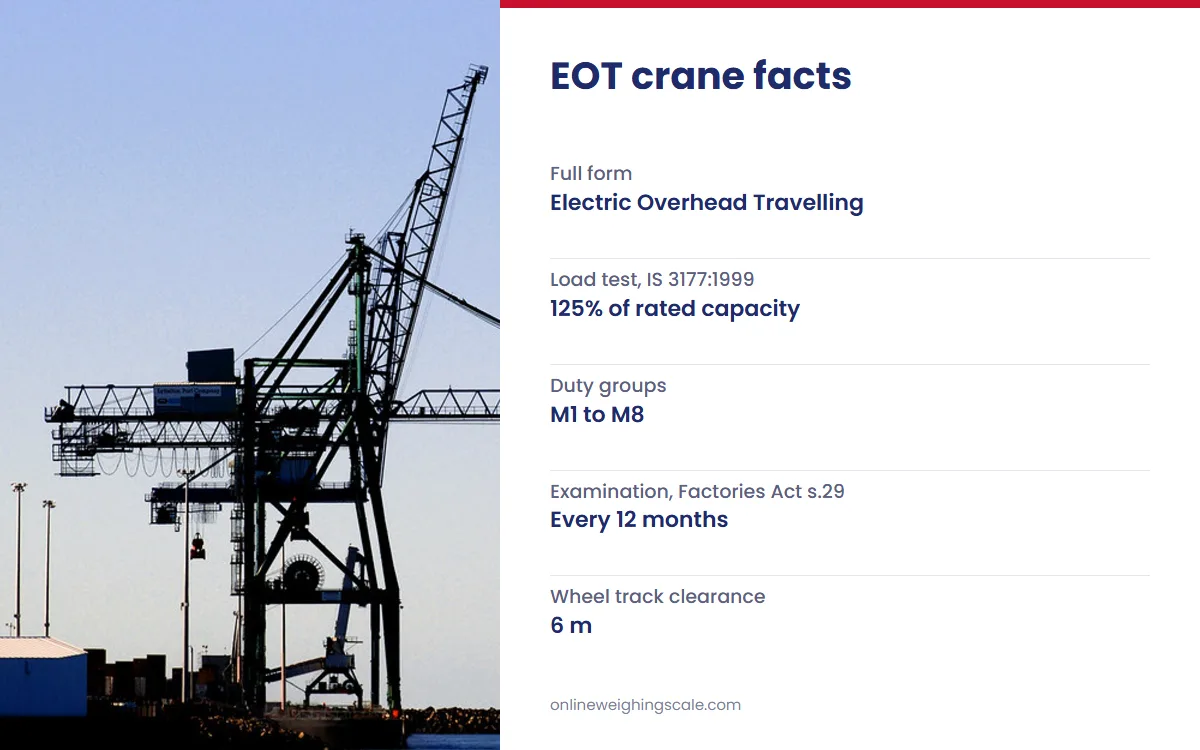
EOT crane stands for Electric Overhead Travelling crane, a bridge on overhead rails that carries a hoist across a factory bay. The 1999 edition of IS 3177, the Indian code, load tests the hoist at 125 percent of rated capacity. The crane lifts and lowers, crosses the bridge and travels along the rails, so it reaches almost any spot below.
What an EOT crane is
OSHA, the US workplace safety regulator, defines an overhead crane as one with a movable bridge that carries a hoist and runs on a fixed overhead runway. The word electric in the Indian name means motors drive the motions. Factories use these cranes because the hook can serve the whole floor while the floor itself stays clear.
IS 3177 names the motions plainly. Hoisting raises and lowers the load, cross traverse moves the trolley across the bridge, and long travel moves the whole bridge along the bay.
- Bridge girder: the main beam or beams spanning the bay.
- End carriages: the wheeled units at each end that ride the runway rails.
- Crab or trolley: the frame that carries the hoist along the girder.
- Hoist and hook block: the motor, drum, rope and hook that do the lifting.
- Runway: the rails and beams, usually carried on the building's columns.
- Controls: a cab, a radio remote or a pendant. OSHA calls a crane worked from the ground by pendant or rope floor-operated.
Types of EOT crane
IS 3177 covers single girder, double girder and mono-box cranes, along with portal and semi-portal types. Its first figure draws five typical forms: top running double girder, top running single girder, semi-goliath, goliath with a cantilever, and offset crab.
Single girder EOT crane
One girder spans the bay and the hoist usually hangs from it. The crane weighs less, so it asks less of the building and costs less to erect. The trade-off is hook height, because the hoist sits below the beam and takes up headroom. Light workshops and stores are its usual home.
Double girder EOT crane
Two girders carry a crab that runs on rails on top of them, so the hook can rise between the beams. That layout suits heavier loads and harder duty. The 1999 code shows both layouts and draws no fixed capacity line between them, so each maker's design decides where one gives way to the other.
Goliath and semi-goliath cranes
OSHA describes a gantry crane as an overhead crane whose bridge stands on legs running on fixed rails. Indian yards often call it a goliath, and IS 3177 uses both portal and goliath. A semi-goliath has a leg on one side and a building runway on the other. These work outdoors where no building exists to carry a runway, such as stockyards and precast yards.
Steel plant cranes
The 1999 code leaves out steel works, which fall under IS 4137, the code for heavy duty cranes in steel plants. BIS now lists the third revision as IS 3177:2020, titled for all applications, so ask a supplier which edition the design follows.
Duty classes: M1 to M8 explained
A duty class says how hard a crane will work over its life. IS 807:2006 builds it from two things: how many hoisting cycles the crane will do, and how often it lifts close to its safe working load. Its class of utilization runs from A at 63,000 cycles to D at 2,000,000 cycles. A crane that rarely sees full load and works occasionally lands in M1, and one at full load on more than one shift a day lands in M8.
| Group | Cycles per hour, IS 3177 | Example uses, IS 807 | Old class |
|---|---|---|---|
| M1, M2 | Up to 5 | Power station and repair shop cranes | None given |
| M3, M4 | 10 to 20 | Warehouse, stocking yard and assembly shop cranes | Class I is about M3 |
| M5, M6 | 21 to 40 | Store room and workshop cranes | Class II is about M5 |
| M7, M8 | 41 to 60 | Ladle, charging and forging cranes | Class III is about M7, class IV about M8 |
IS 807 places some uses across a range: general assembly cranes at M2 to M4, workshop cranes at M4 to M6, and grab and magnet cranes at M6 to M8. Choosing too low a class saves money at purchase and costs it later in worn gears, ropes and wheels. Old enquiries that say class II or class III still circulate, and the table above is the conversion IS 3177 gives.
Types of cranes: quick reference
People searching for a crane machine often mean something other than an EOT crane. This table sets the common types side by side, using the definitions in OSHA's construction crane rule where it has one.
| Crane type | How it moves | Where it works | Key limit |
|---|---|---|---|
| EOT crane | Bridge on an overhead runway | Factory bays | Span and hook height of the building |
| Gantry or goliath | Bridge on legs, rails at ground level | Stockyards and open yards | Length of the ground rails |
| Jib crane | Arm swings from a column or wall | One workstation | Reach of the arm |
| Tower crane | Vertical mast with a raised working boom | Tall buildings | Load falls as radius grows |
| Mobile crane or vehicle crane | Boom moved between sites by road | Short jobs at many sites | Ground and load chart |
| Crawler crane | Base on continuous tracks | Soft ground and heavy lifts | Slow to shift between sites |
The BIS crane committee's list shows these families classified separately, with IS 13834 parts for general, mobile, tower, jib and overhead travelling cranes. A hoist is the lifting unit alone. OSHA describes one as a device that winds a line onto a drum. The same list gives separate standards for electric wire rope hoists, IS 3938, and hand-operated chain pulley blocks, IS 3832. A hoist crane is any crane built around such a unit.
How to specify an EOT crane
IS 3177 expects the buyer to give the maker a set of particulars and a clearance diagram with the enquiry. Its normal service conditions are 0 to 40 °C and altitude up to 1,000 m, and it asks for derating outside those limits.
- Safe working load: the heaviest lift, plus anything fixed to the hook such as a magnet, grab or scale.
- Span and lift: distance between runway rails, and the height the hook must travel.
- Duty group: count the lifts per hour and how many are near full load.
- Speeds: slow speeds for placing a load, faster ones for covering the bay.
- Environment: outdoors, dust, heat or corrosive air all change the design.
- Load limiter: IS 3177 recommends load indicating and limiting devices where weights are not known accurately, and these must stop hoisting above the safe working load.
Crane price and crane service: what decides the cost
No neutral body publishes crane prices in India, and this post will not quote one. An EOT crane price follows capacity, span, lift, duty group, girder type, controls and erection. The runway matters too: a building whose columns cannot carry the load adds structural work to the bill.
Crane services hired by the day price mainly on capacity, distance and hours. Before hiring, ask for the load chart and the last examination report. OSHA defines rated capacity as the maximum working load the maker permits under stated conditions, so the figure on the crane's side is only true for a set boom length and radius. It also describes a load moment indicator, which warns the operator as the overturning moment nears the limit.
Testing and the law in India
For decades the rule was section 29 of the Factories Act, 1948. It required every lifting machine to be thoroughly examined by a competent person at least once in 12 months, with a register kept. The safe working load had to be plainly marked, and no one could load past it except for a test. A travelling crane could not come within six metres of a person working on or near its wheel track.
The law has since moved, checked November 2026. The Press Information Bureau announced that the Occupational Safety, Health and Working Conditions Code, 2020 took effect on 21 November 2025. A second release lists the Factories Act among the 13 Acts it absorbs. Section 143 of the Code repeals the Act, while rules made under it stay in force where they do not conflict with the Code, until replaced. Its Second Schedule keeps lifting machines, chains, ropes and lifting tackles among the matters for national safety standards. Central Rules followed on 8 May 2026, and states make rules for most other establishments, so check your own state's factory department before relying on the old intervals.
The acceptance test comes from the crane code. IS 3177 starts with about 5 percent of rated load to check the brakes, then loads the hoist to 125 percent of rated capacity. The test load travels across the full span and along the runway, deflection is measured at mid-girder and at the end, and the overload relays are checked. OSHA caps test loads at the same 125 percent unless the maker says otherwise.
Other countries give a useful comparison. The UK's Health and Safety Executive sets thorough examination every 12 months for lifting equipment and every 6 months for lifting accessories and equipment that lifts people. Slings and shackles wear faster than the crane, and that shorter interval is a sensible habit anywhere.
Reading the load on the hook with a crane scale
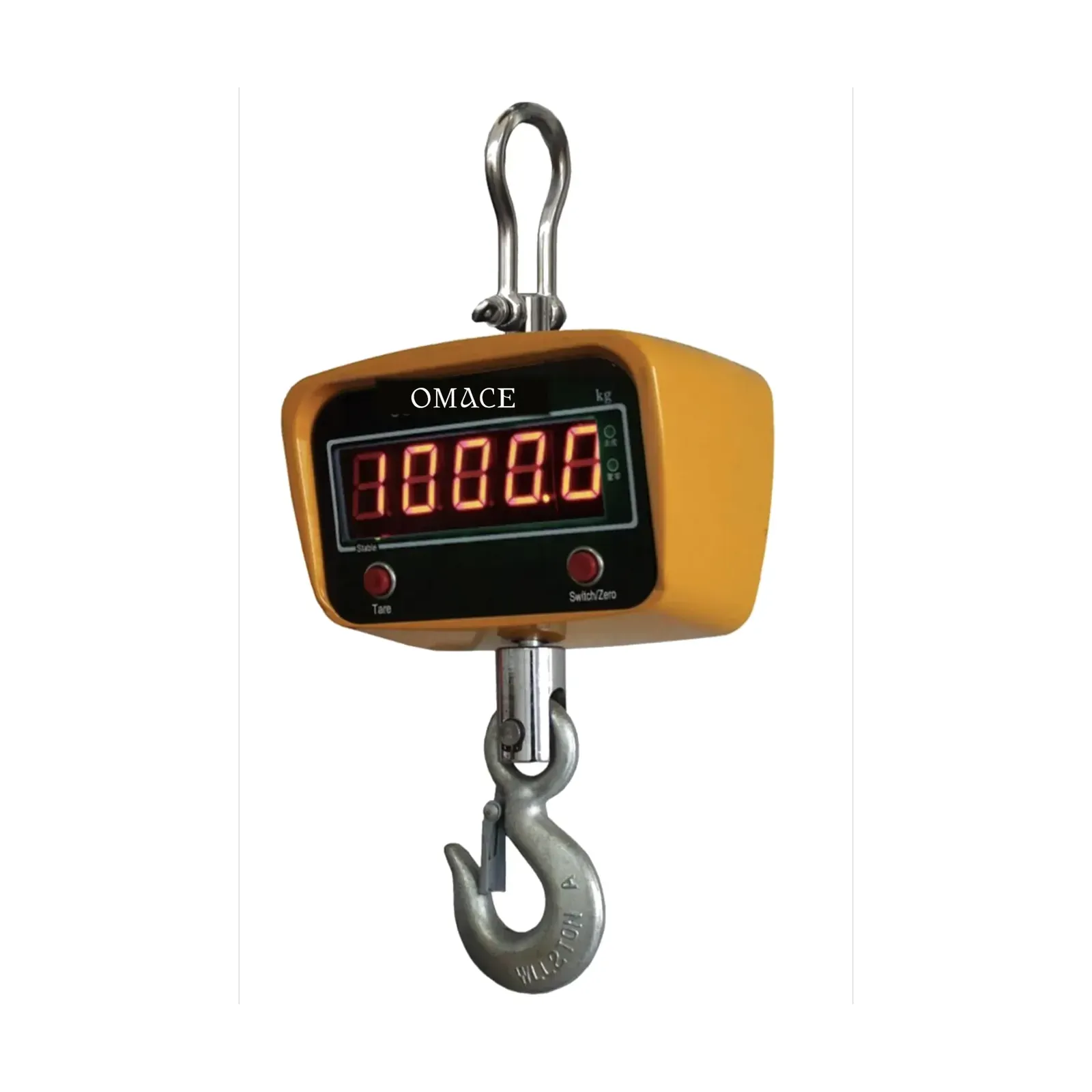
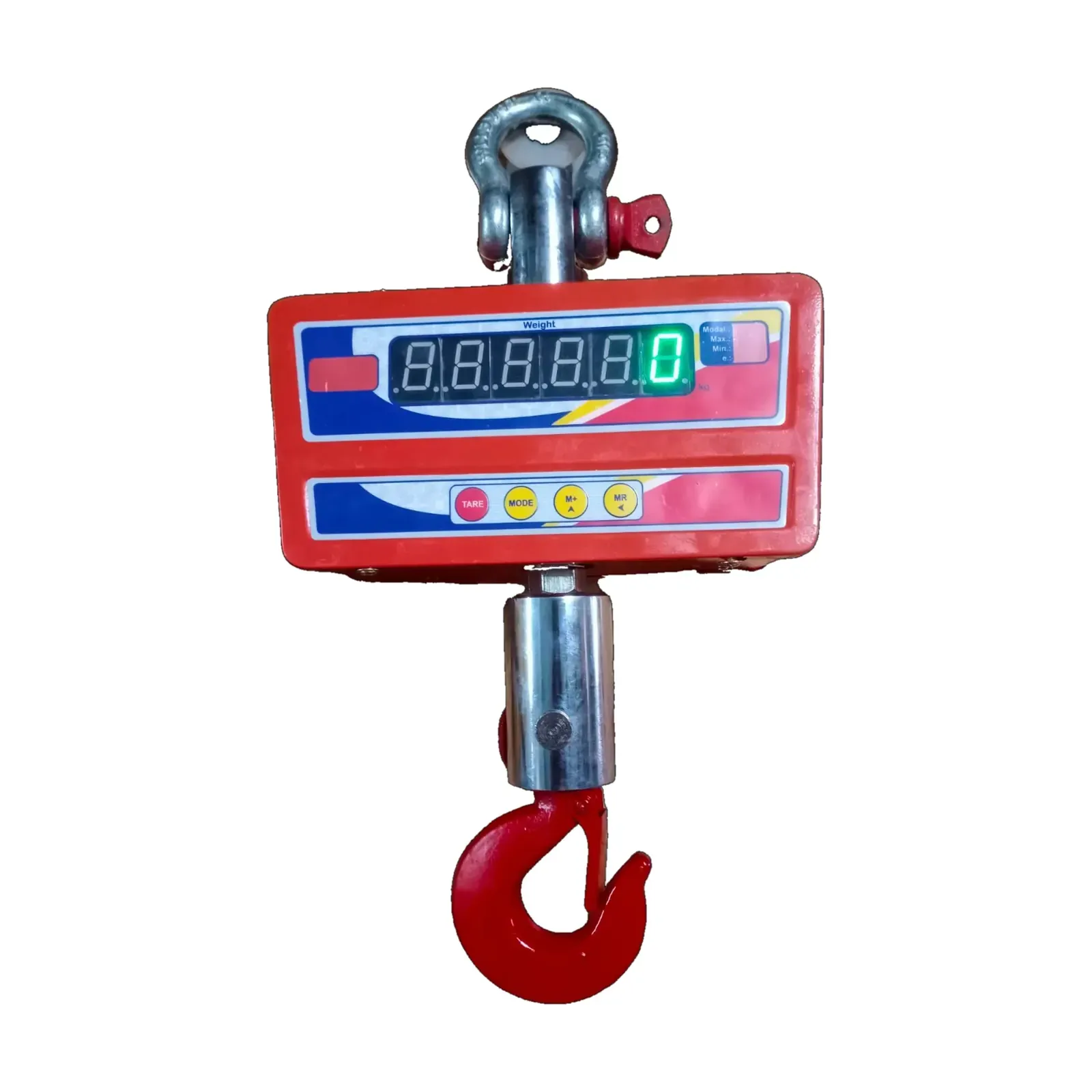
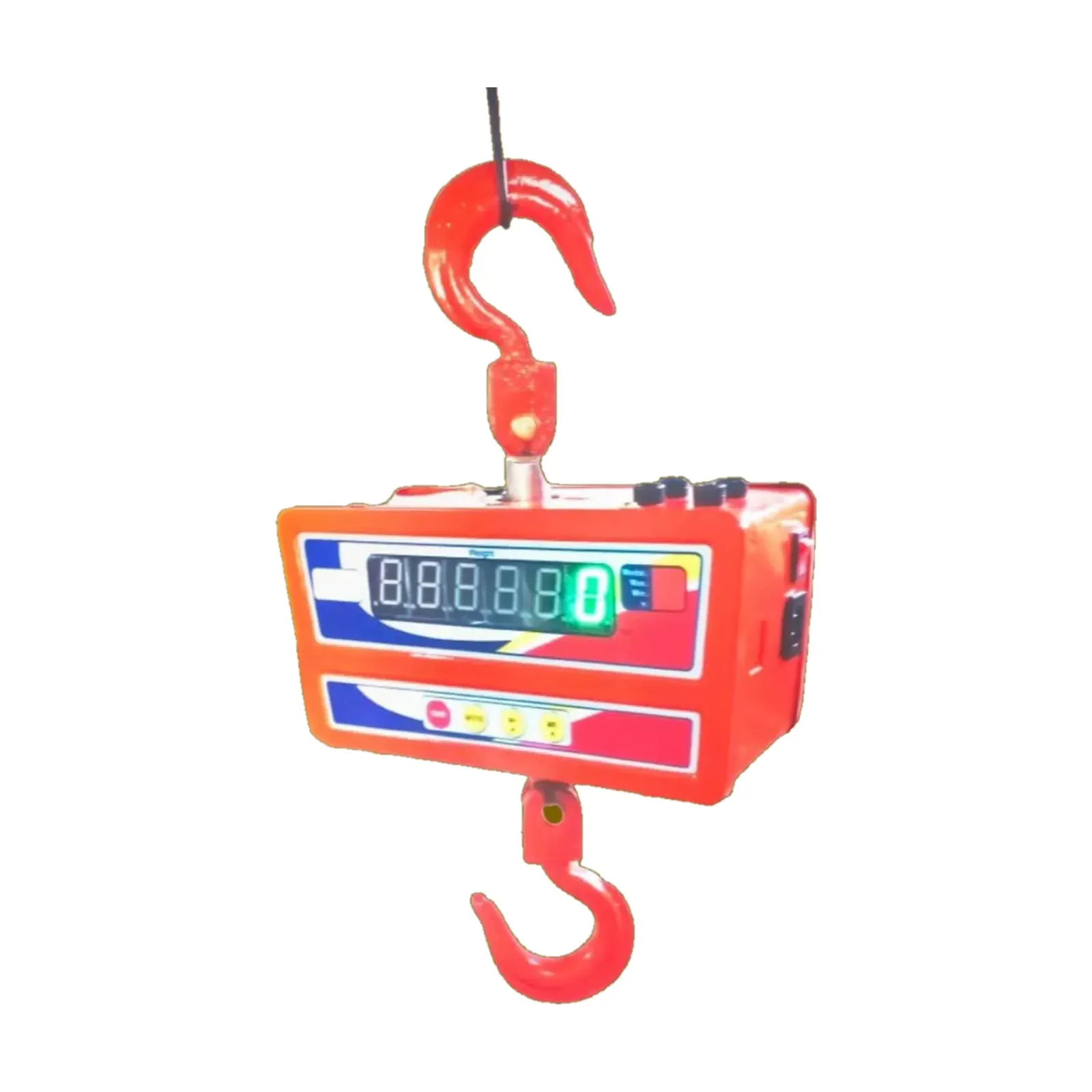
A marked safe working load tells you what the crane may lift. It does not tell you what is on the hook today. A crane scale hangs from the hook and shows the load in the air, so a shop can check a coil, casting or bale before moving it across the bay. Omace Brands Private Limited makes crane scales and does not make cranes. The OCS crane scale covers 1 to 50 tonnes, with 40 and 50 t on buyer request, and leaves Bagru verified and stamped by Legal Metrology. Remember that the scale, shackles and slings add to the hook load and use up headroom. Lift slowly and read only when the load is still; the crane scale calibration guide covers checks and test weights.
Getting the crane specification right
Write down the heaviest lift, the lifts per hour and the bay dimensions before you call anyone. Those three facts settle most of the choice between single and double girder and fix the duty group. Ask which edition of IS 3177 the design follows and who carries out the 125 percent load test at your site. Then settle who will examine the crane each year under your state's current rules.