How to clean a weighing scale comes down to one rule: wipe the outside with a barely damp cloth and keep liquid away from the sensor and the keys. A digital scale reads weight through a load cell under the pan, and water or grit near that part is what shifts a reading.
Most scales that stop reading properly in a kitchen or a shop were harmed by cleaning or by dirt, not by age. This guide covers a glass bathroom scale, a kitchen scale, a pocket scale, a shop platform scale and a stainless meat-shop scale, plus the habits that keep any kanta honest.
The rules that apply to every scale
A digital weighing machine has a metal sensing part, the load cell, joined to a circuit board and a display. Anything wet or sticky that reaches those parts causes drift, flickering digits or a dead key. Five habits protect them.
- Switch the scale off, and take out the battery or unplug the adaptor, before you clean it.
- Use a soft cloth wrung out until it is only slightly damp, then dry the surface with a second cloth.
- Never hold a scale under the tap, never dip it in a bucket and never pour water over the pan.
- Never spray cleaner straight onto the scale. Put a little on the cloth if you need it, and keep it away from the keys, the display window and the gap around the pan.
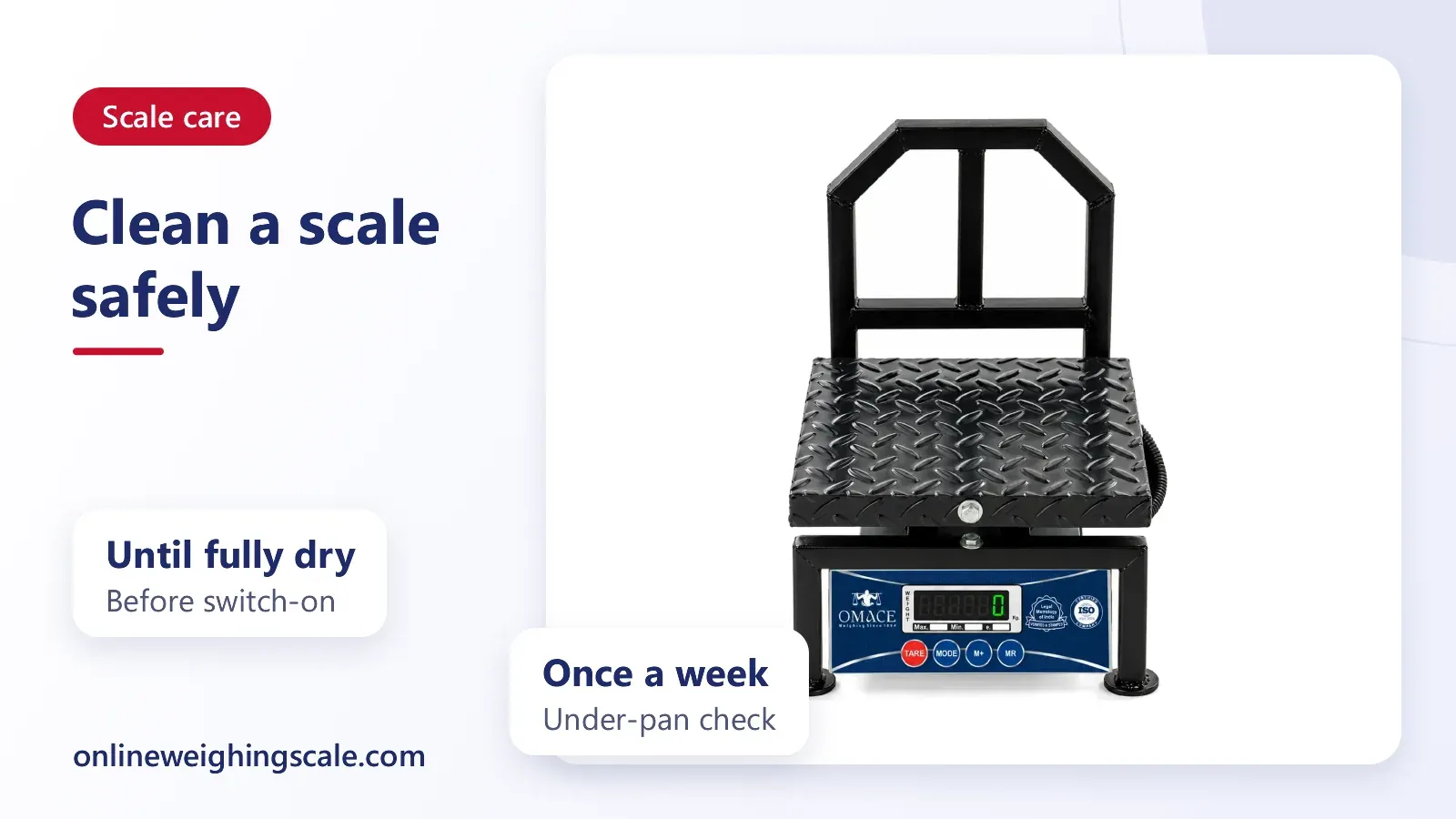
- Let the scale dry fully, in shade and in open air, before you switch it on again.
Treat every scale as something to wipe, not to wash. A common question is whether a kitchen scale can be washed. The answer is no for the base. Only a removable steel or plastic bowl or tray can be washed on its own.
How to clean a glass bathroom scale
A tempered glass platform shows every footprint and water mark. Wipe it with a cloth that is barely damp, then buff it dry. Pay attention to the four feet or foot pads, because bathroom water collects there and runs inwards.
The metal electrode strips on some models, and the rubber feet on all of them, should be wiped dry as well. Stand the scale on a hard, flat, dry floor afterwards. Tiles that are still wet make the scale slip, and a tilted floor changes the reading. The article on checking a bathroom scale's accuracy shows how to test it with a known weight once it is clean.
How to clean a digital kitchen scale
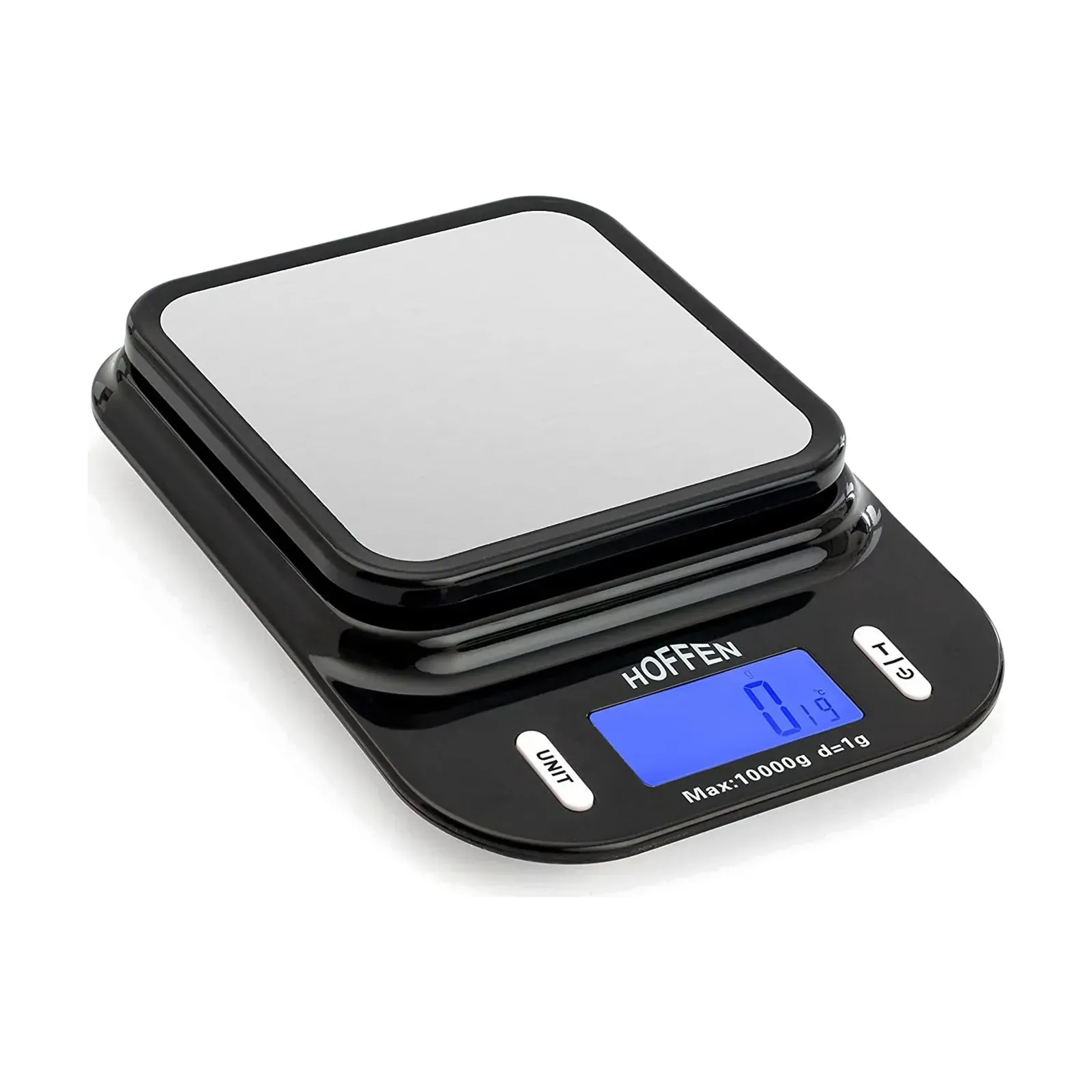
Kitchen scales meet flour, oil, sugar and spilled milk, so they need cleaning after any messy job. Take off the bowl or tray first. Wash a removable bowl in warm soapy water, rinse and dry it, and put it back only when it is dry.
- Turn the scale off and remove the battery if it is easy to reach.
- Wipe the platform with a slightly damp cloth, moving away from the display.
- For dried syrup or dough, rest the damp cloth on the spot for a minute, then wipe.
- Use a dry soft brush or a dry cloth to clear crumbs from the edge of the platform.
- Dry everything, then switch on and check that it returns to zero.
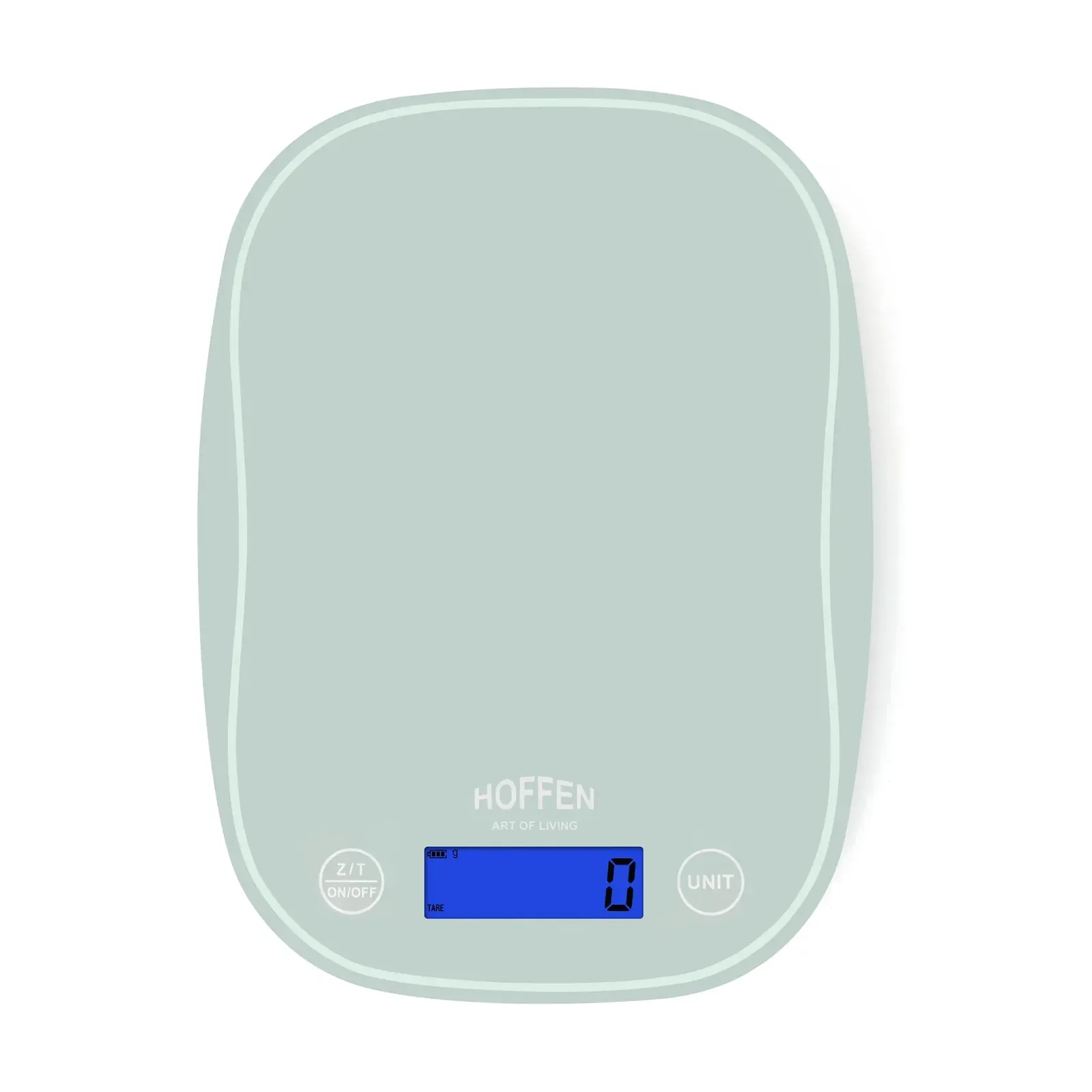
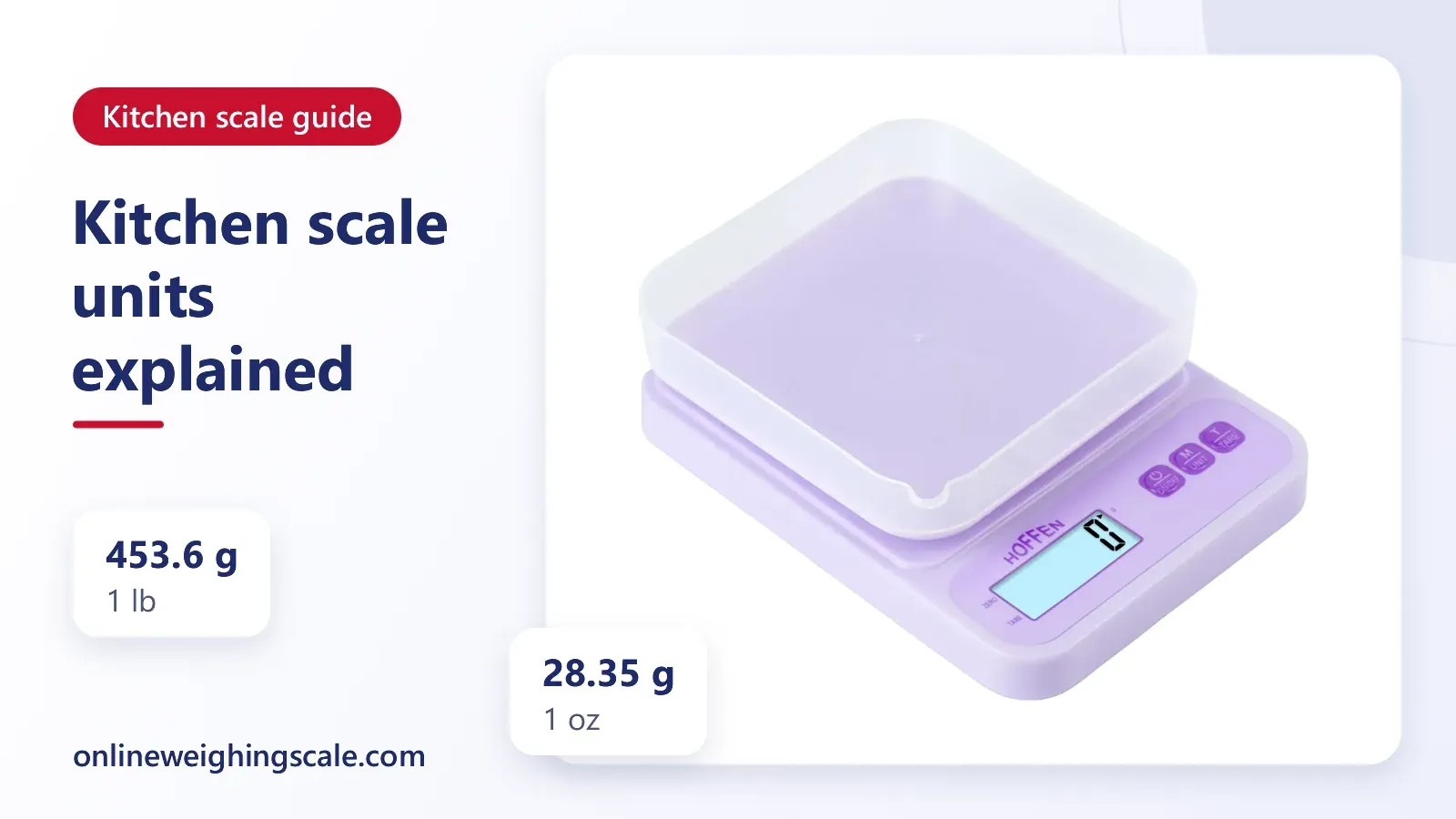
A flat glass or steel top, such as that on the Hoffen KS-501 glass kitchen scale (₹629), is the easiest kind to wipe because it has no seams around the pan. It weighs up to 5 kg in 1 g steps, takes two AAA batteries and shows an overload or low-battery sign. Touch keys on a flat panel need the lightest touch of the cloth. If a key stays dead after cleaning, read why a weighing scale stops working.
Put a thin sheet of cling film or a plate on the scale when you weigh sticky or oily food, then press tare to cancel its weight. Cleaning is then a matter of changing the film.
How to clean a pocket or jewellery scale
Pocket scales read down to 0.01 g, so a speck of dust is a real weight. Dust and powder on the pan are the main issue, and liquid is the main risk. Keep both away from the sensor.
- Lift off the pan or tray if the model allows it, and wipe it with a dry or lightly damp cloth.
- Remove dust from the gap round the pan with a soft paintbrush or a camera blower. Do not blow with your mouth, since moisture comes out with the breath.
- Do not push a pin, a toothpick or a cloth into the gap under the pan.
- Close the lid and store the scale flat, in its case, away from damp cupboards.
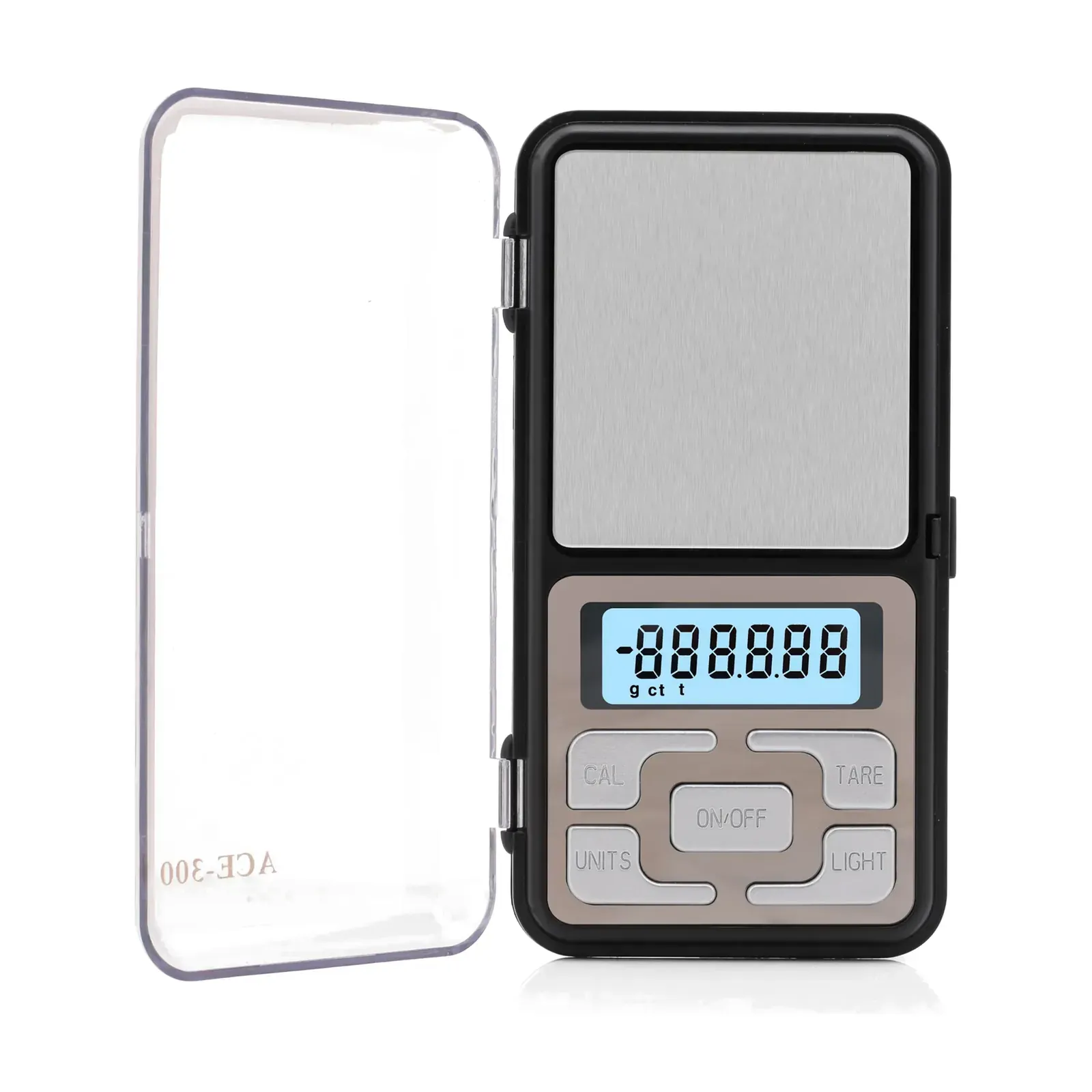
Gold dust, spice powder or powdered medicine can sit under the pan and press on the sensor, so the scale reads a few hundredths of a gram high. A scale that shows a small weight with an empty pan is the usual sign. Clean first, then use the steps in checking a pocket scale with coins. A model such as the Ace MH precision pocket scale (₹839) reads in 0.01 g steps, runs on two AAA batteries, has a 50 × 50 mm stainless steel pan and comes with a flip lid, and keeping that lid shut between uses does half the cleaning for you.
How to clean a shop or platform scale
A kirana, vegetable or sweet shop kanta works all day on a counter full of grit, onion skin and spilled liquid. Cleaning it takes a minute and saves the shopkeeper arguments over the reading.
- Switch off at the end of the day, and unplug the charger.
- Lift the steel pan off. Many shop scales have a loose pan that sits on pegs or a rubber seat.
- Look underneath. Clear rice grains, sand, plastic bits and dried liquid from the top plate, the corners and around the sensor, using a dry brush or a dry cloth.
- Wipe the pan with a damp cloth, dry it and lay it back flat on its seat.
- Wipe the display and keys with a cloth that is almost dry.
- Switch on and check that the display returns to zero with an empty pan.
Grit under a pan is the most common hidden fault in shop scales. It stops the pan resting on its own seat and makes the reading jump. Check the pan seat daily if you weigh loose grains or powders.
Stainless pans in meat, fish and chicken shops
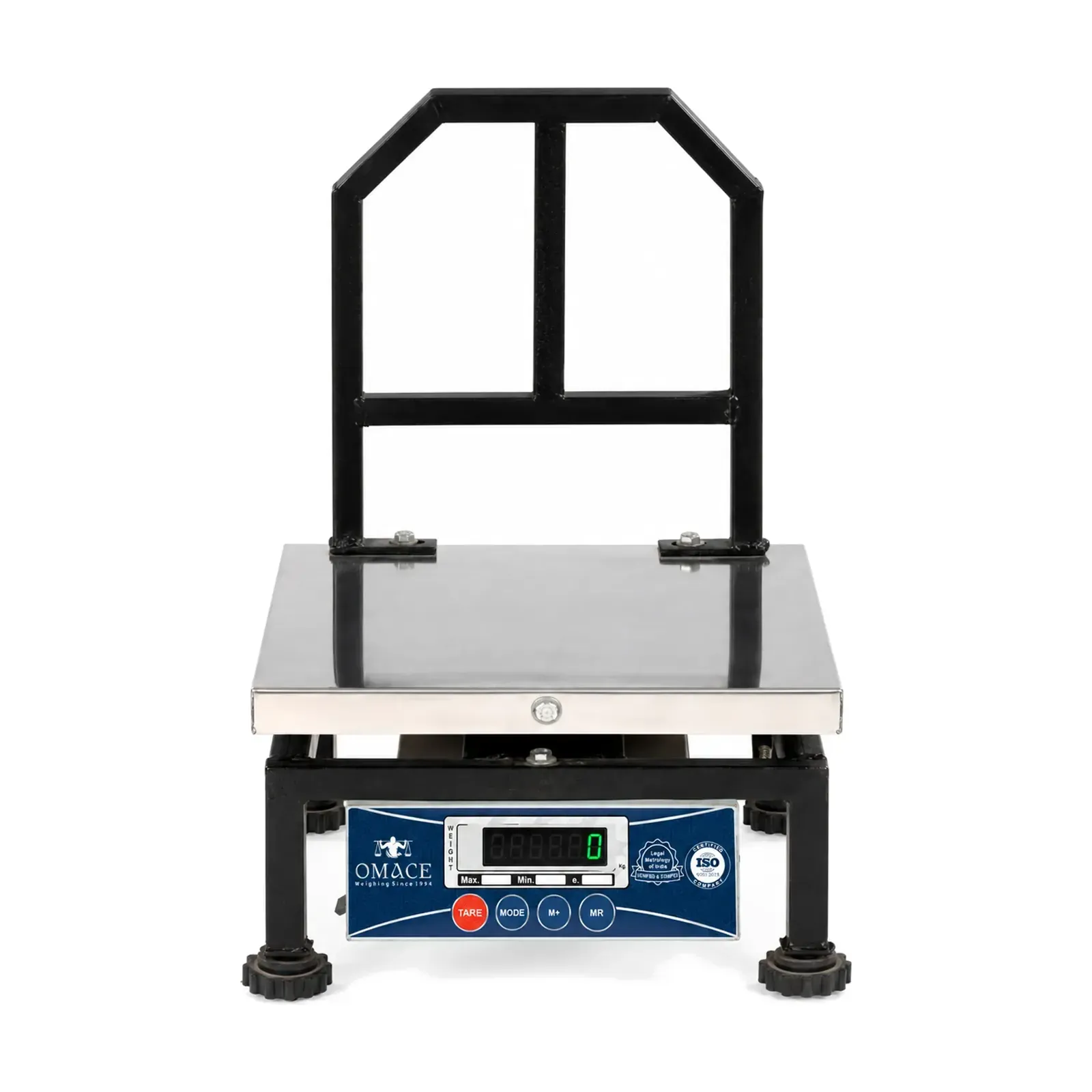
A stainless pan or platform stands up well to scraping and scrubbing, but the electronics underneath do not. The Omace Om-CK-SS poultry weighing scale has a stainless steel platform and reads 60 kg in 5 g steps on its smallest size. It runs on a 220 V power cord with a built-in battery backup of about 2 days, so switch it off and unplug it before cleaning, and the same care applies to any scale with a steel top.
- Remove loose fat, blood and scraps with a scraper or a dry cloth first.
- Wipe the steel with a cloth soaked in clean water and wrung out, never with a hose pointed at the scale.
- Keep water out of the display box, the cable entry and the gap between the platform and the frame.
- Dry the platform and leave it to air before the next customer.
Food shops have a hygiene reason to clean as well. Schedule 4 of the licensing and registration regulations, as the Food Safety and Standards Authority of India operationalised it in 2024, says that equipment and other food contact surfaces must be designed so they can be adequately cleaned, disinfected if necessary and maintained to avoid contamination of food. A scale pan touches the product directly, so it belongs on that cleaning round.
Shop scales that carry a Legal Metrology stamp are sealed. Do not open the box or touch the seal while cleaning, and if a stamped scale still reads wrong afterwards, see legal metrology in India for the rules on who may recalibrate it.
What damages a weighing scale
| Habit | What goes wrong |
|---|---|
| Water inside the case | Drifting digits, flickering display, corroded contacts |
| Spray cleaner on keys | Keys stick or stop responding, display window clouds |
| Pressing hard on the pan | Strains the load cell and shifts the zero |
| Storing a load on the scale | Strains the sensor over time, reading drifts |
| Dropping or knocking it | Shifts the sensor, reading changes between weighings |
| Leaving batteries in a damp store | Leaking cells damage the circuit board |
Never leave a sack, a box or a bag resting on a scale between uses. A scale carries a load only for the moment of weighing. A stored load is a different strain, and a load cell that has been under a heavy weight overnight may read off the next day.
Routine care that keeps a scale reading true
Cleaning keeps a scale working. A short routine keeps it honest, and each step takes under a minute.
- Wipe the pan and the top surface after each day of use.
- Look under the pan weekly, or daily in a shop that handles grain or powder.
- Check zero on an empty pan every time you switch on.
- Keep the scale on a flat, hard, level surface, away from fans, direct sun and wet floors.
- Charge a rechargeable scale properly and take the batteries out of a scale you will not use for weeks.
- Check the reading now and then with a known weight, such as a sealed packet marked in grams. The article on calibrating a digital weighing scale at home covers the steps.
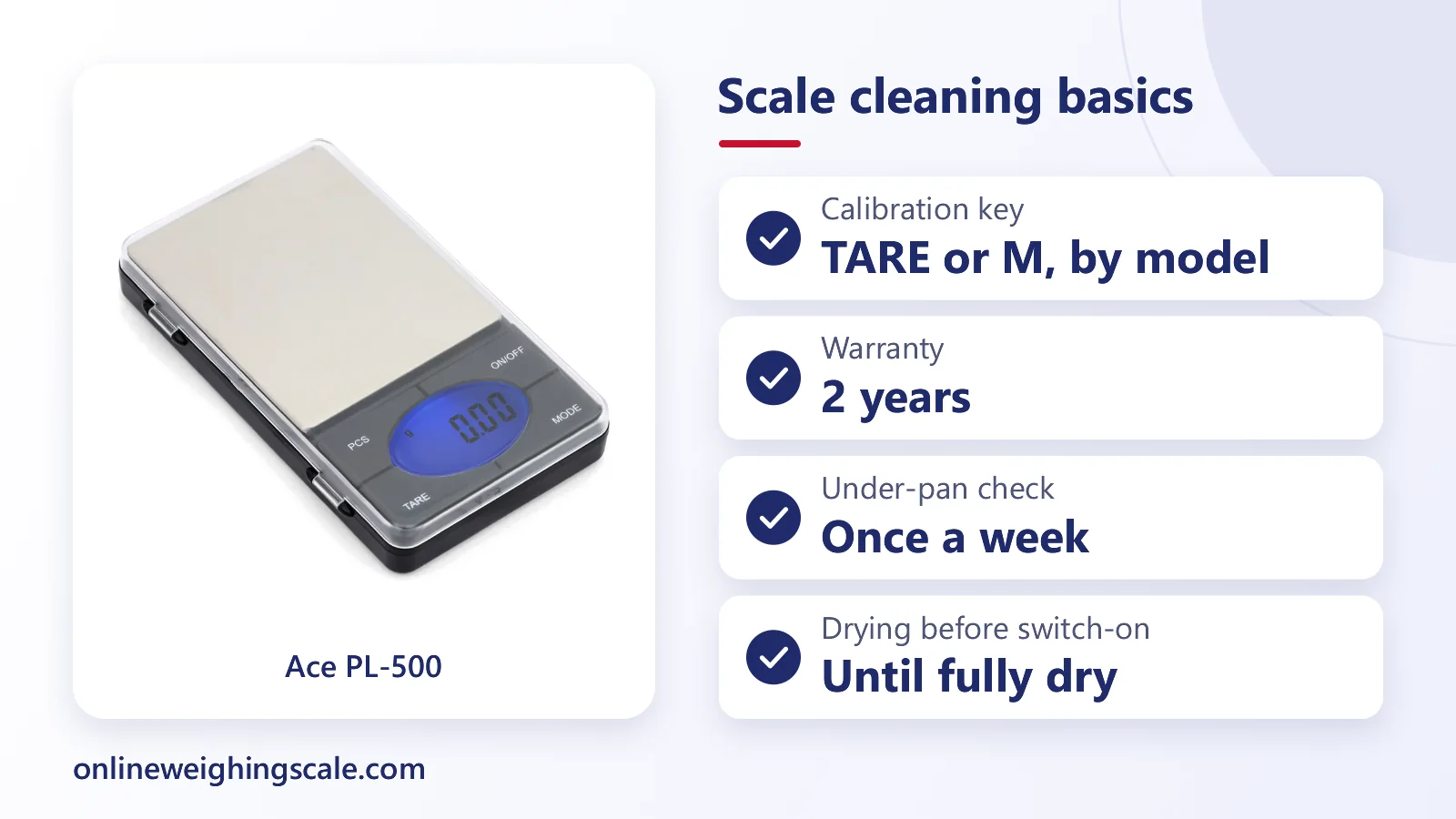
On Omace digital scales a long press of TARE opens calibration mode on some models and a long press of the M key on others, and the manual for each model shows which. Stamped trade scales are sealed, so a registered repairer recalibrates them.
When cleaning does not fix it
If a scale still shows a wrong reading, a drifting zero or a dead key after it has been cleaned and left to dry for a day, the fault is probably inside. Do not open a scale that is under warranty. Omace Brands Private Limited gives a warranty on manufacturing defects for 2 years, and the warranty policy explains what is covered.
Omace Brands Private Limited also repairs its commercial scales when the buyer asks. The buyer pays the shipping both ways and the repair cost, and spare parts depend on availability, so the buyer should first contact Omace and ask.
A cleaner scale is an easier scale to trust
Water, grit and heavy handling cause most scale faults, and a damp cloth, a dry brush and a few minutes each week prevent them. Wipe, never wash, and look under the pan before blaming the scale.