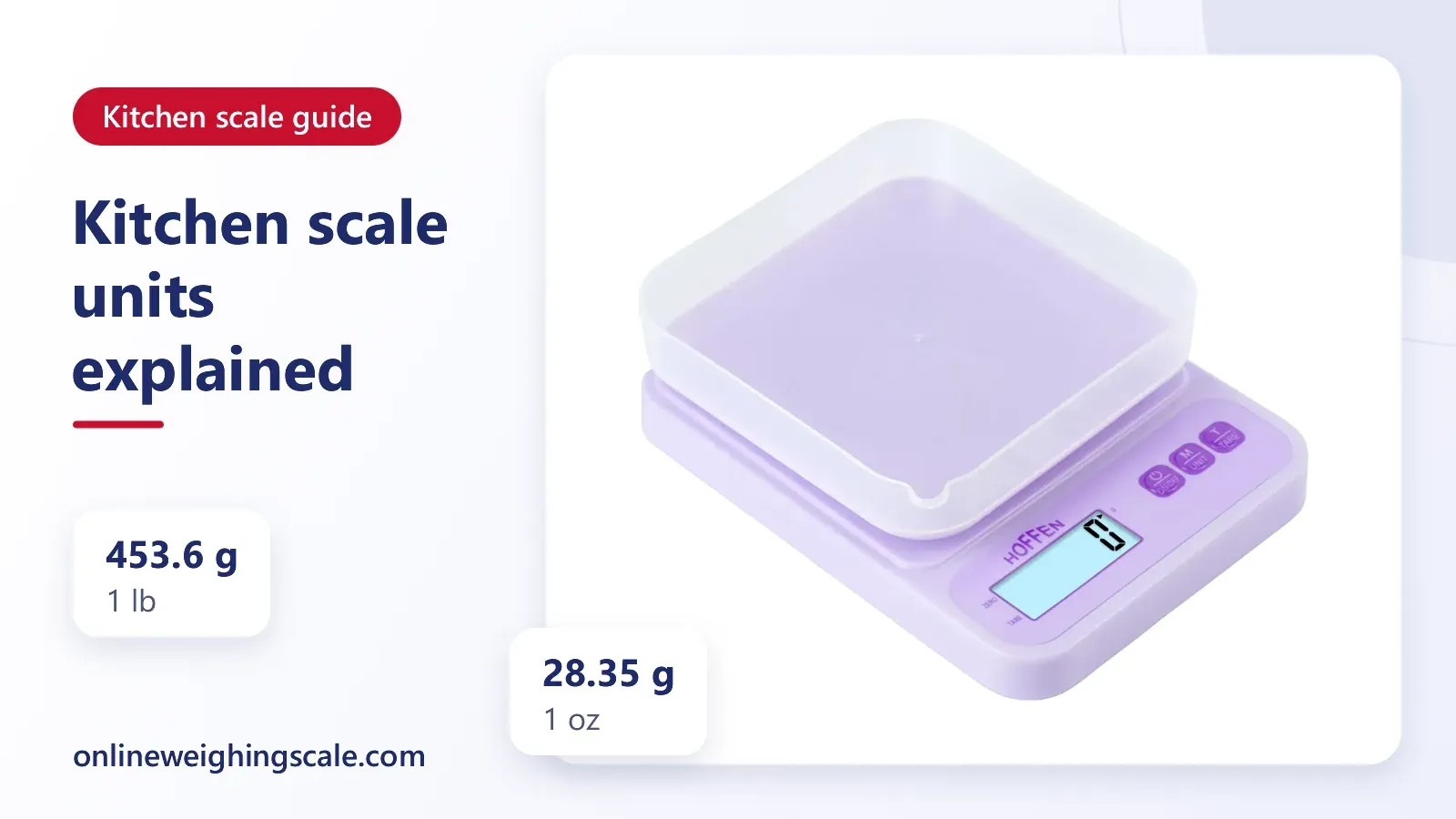
A kitchen scale can show grams, kilograms, ounces, pounds with ounces, millilitres and fluid ounces, and a press of the UNIT key moves between them. The US National Institute of Standards and Technology (NIST) lists one ounce as 28.34952 grams, which is why 8 oz reads as 226.8 g on the display.
This guide explains what each unit means, how to change it, which unit a recipe from each country expects, and why millilitres on a scale are right only for some liquids. It sits next to the existing guides on grams to cups and units of measurement.
The units a kitchen scale can show
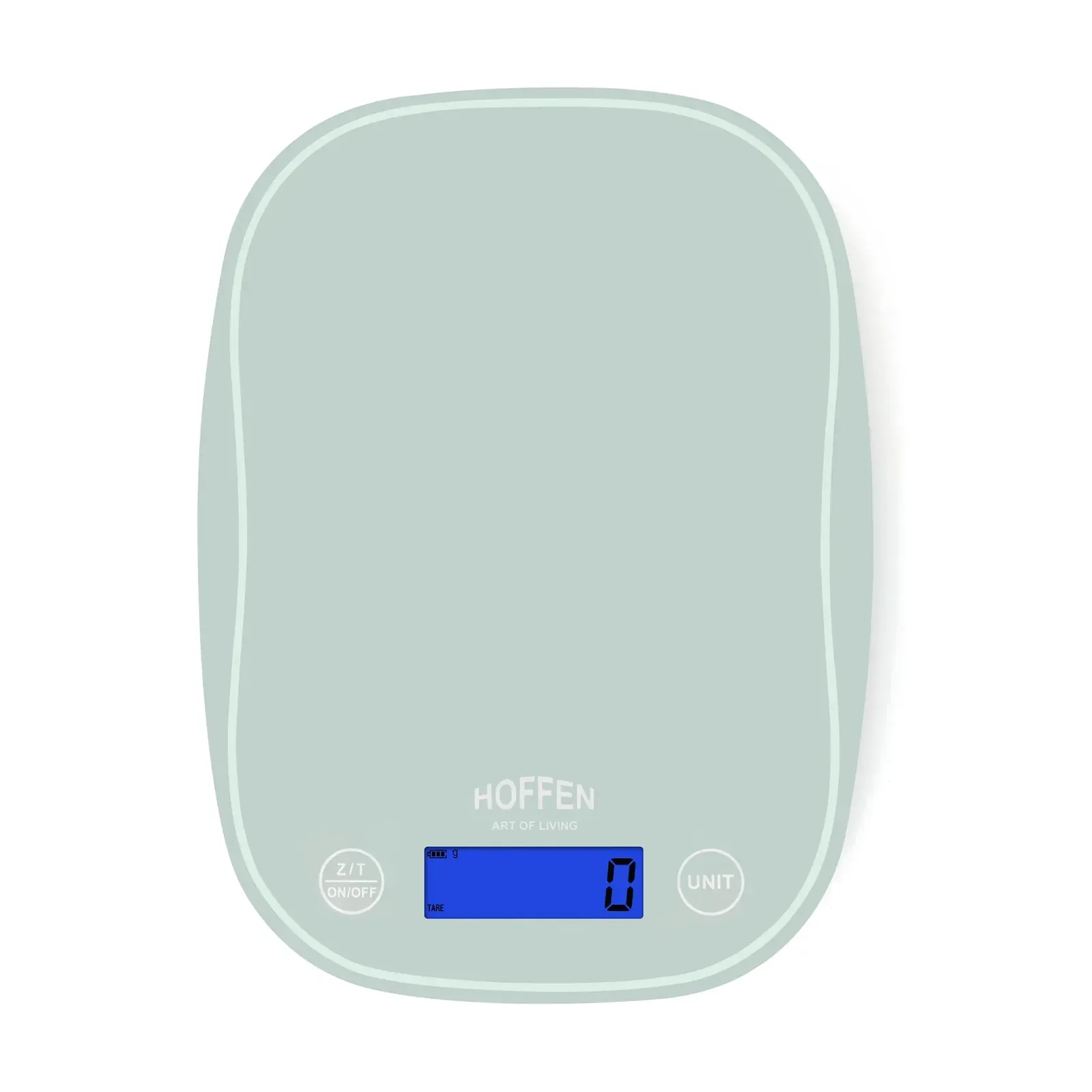
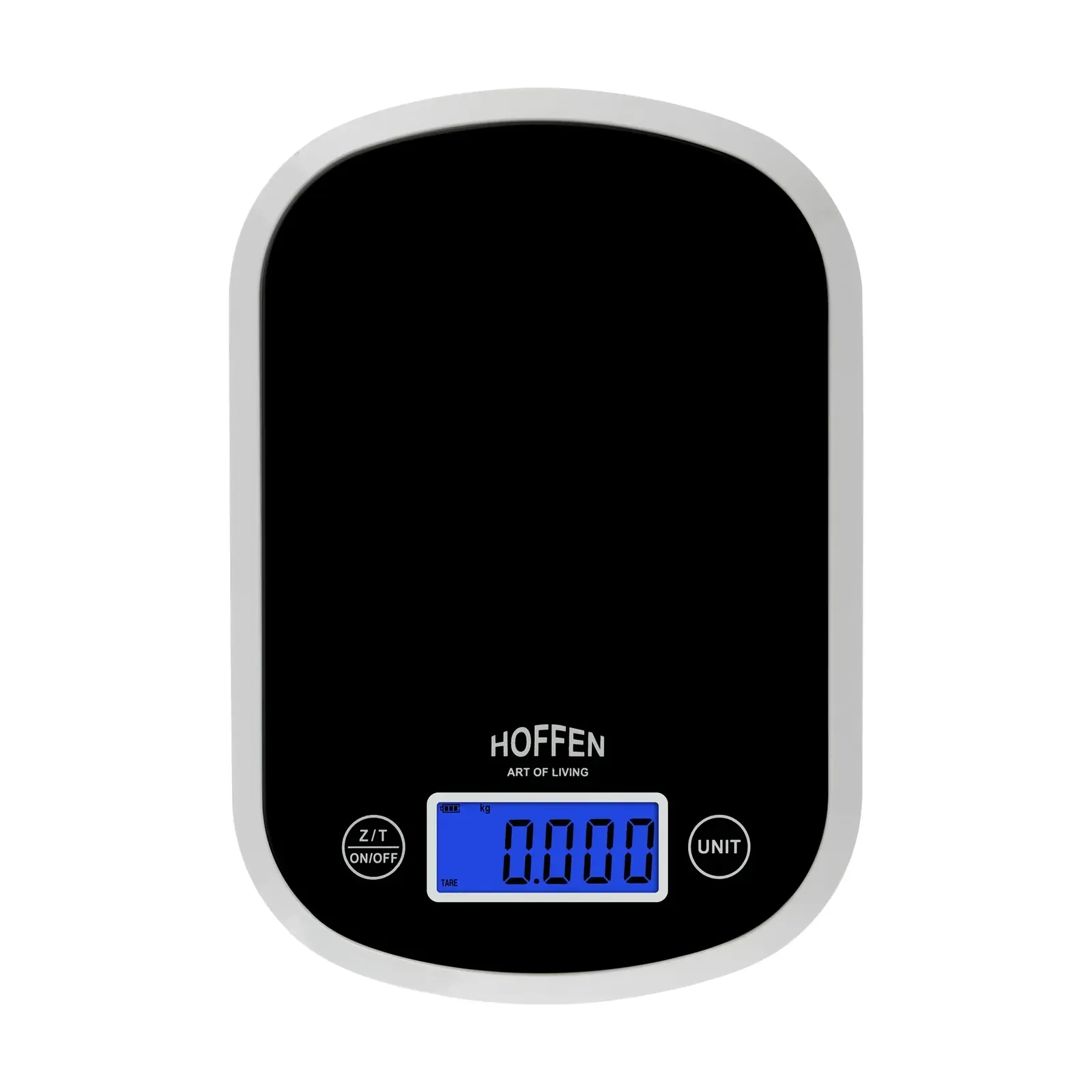
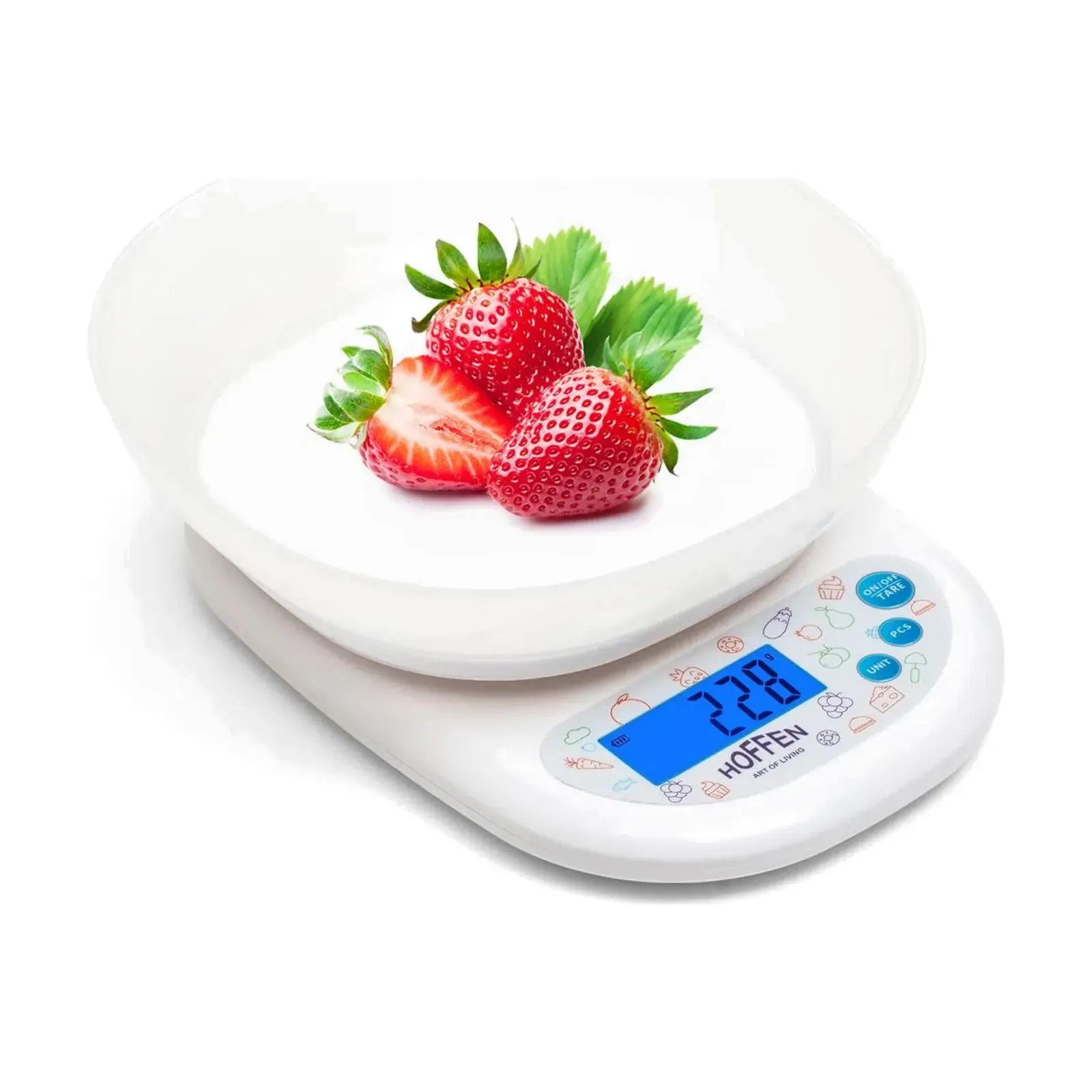
Digital kitchen scales offer anything from two to nine units, and the product page names them. The Hoffen KS-501 glass scale and the Hoffen KS-601 each list nine: g, kg, lb, oz, fl oz, milk, ml, tl and ct. The Venus KS-305 lists g, oz, ml and lb with touch keys marked ON/TARE and UNIT. The Hoffen KD-819 with bowl lists g, lb, oz and ml, and the Hoffen KS-201 smart scale lists g, ml, oz and lb:oz. The Venus SF-400 lists g and oz, and the Venus SF-400A g and kg. All of these run on AAA batteries and read in 1 g steps, except the KS-201, which reads in 0.1 g steps. The common units are below.
- g (gram): the everyday unit for flour, sugar, atta and spices. A scale with 1 g steps shows 250 g, 251 g, 252 g.
- kg (kilogram): 1,000 g. Some scales show kg for heavy loads, such as 1.250 kg for a bag of rice.
- oz (ounce): the avoirdupois ounce used in American and British recipes.
- lb:oz (pounds and ounces): the same weight split into whole pounds plus the remaining ounces, so 680 g shows as 1 lb 8.0 oz. Among the Omace models, the KS-201 lists this form.
- ml (millilitre): a volume figure the scale works out from the weight. It is right only for liquids that weigh about the same as water.
- fl oz (fluid ounce): the same idea in fluid ounces, again calculated from weight.
Only grams, kilograms, ounces and pounds are true weight units. Millilitres and fluid ounces measure volume, so a scale can only estimate them. That difference is explained in the guide to grams versus millilitres.
How to change the unit on a kitchen scale
The steps are nearly the same on every digital kitchen scale. Key names differ a little between models, so check the printed key labels first.
- Switch the scale on and let it show 0 on an empty platform.
- Press the key marked UNIT (some models print MODE or a small g/oz symbol). Each press moves to the next unit, so keep pressing until the one you want appears.
- Place the bowl or container on the platform and press TARE so the display returns to zero.
- Add the ingredient and read the figure. The unit symbol sits beside the number on the screen.
Change the unit before taring, not after, and tare again if the reading looks odd. Many scales also forget the chosen unit when they are switched off or the batteries are changed, and start in grams again.
If the unit key does nothing, weak batteries are a common cause. The guide on a weighing scale that is not working covers the others.
Conversion table: g, oz and lb
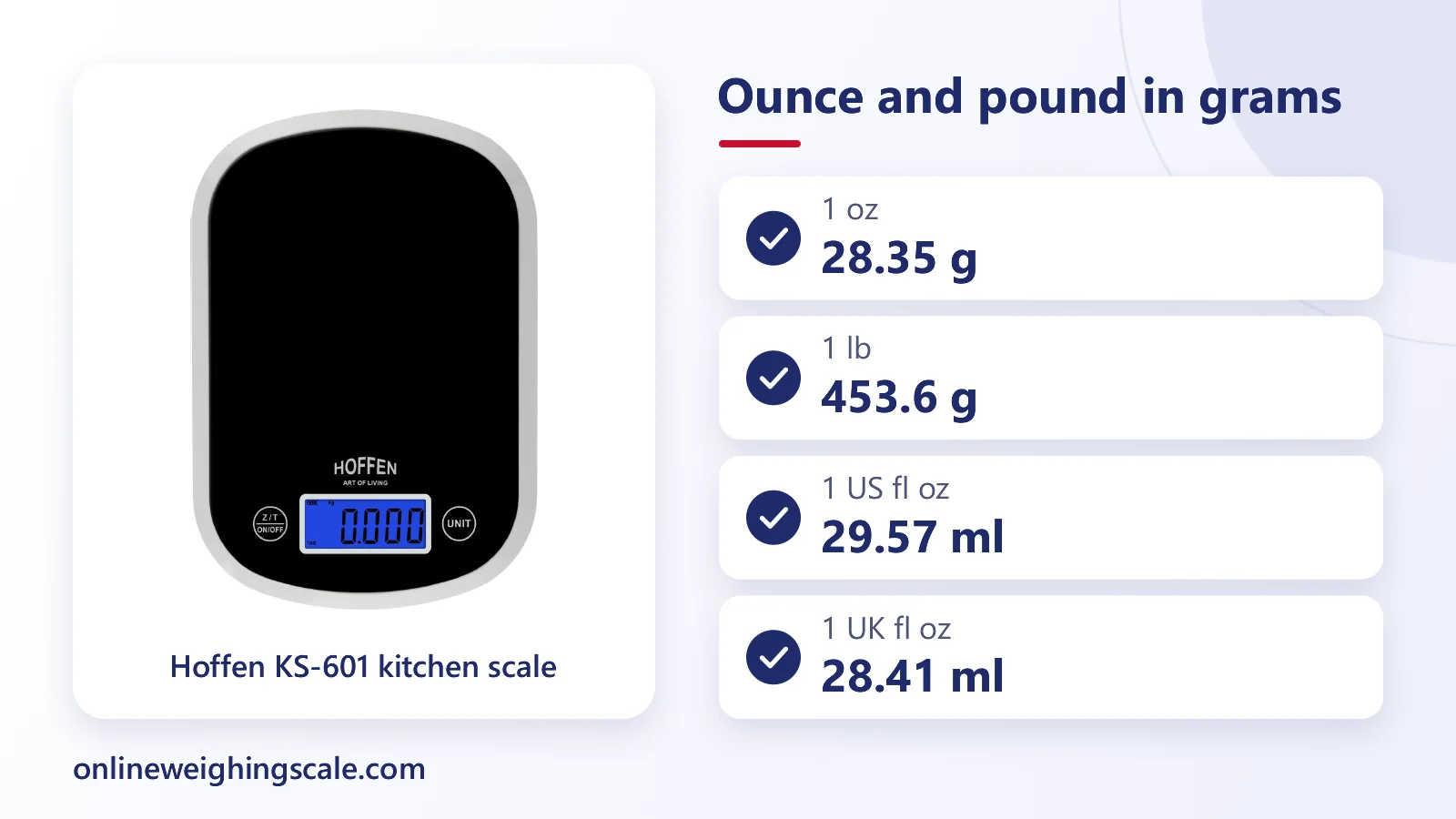
NIST's SI guide gives the ounce as 28.34952 grams and the avoirdupois pound as 0.4535924 kilogram. A fluid ounce is a volume, and the same NIST conversion table lists the US fluid ounce at 29.57353 millilitres and the Canadian and UK (Imperial) fluid ounce at 28.41306 millilitres. The weight rows below are worked out from the first two figures and rounded.
| Unit | Equals |
|---|---|
| 1 oz | 28.35 g |
| 4 oz | 113.4 g |
| 8 oz | 226.8 g |
| 16 oz = 1 lb | 453.6 g |
| 1 lb 8 oz | 680.4 g |
| 1 kg | about 2.205 lb |
| 1 US fl oz | 29.57 ml |
| 1 UK fl oz | 28.41 ml |
NIST's own kitchen page rounds these for home use: it gives 28 g for an ounce, 454 g for a pound and 30 mL for a fluid ounce, and marks them as approximate. Your scale does the exact sum, so one ounce will show as 28 g or 29 g depending on the scale's step, and that is normal.
Small amounts are better weighed in grams. A recipe that asks for 3 oz of butter is easier to follow at 85 g, because the ounce setting shows coarser steps than grams.
Worked examples: reading oz and lb:oz
Suppose a recipe asks for 12 oz of flour. Set the scale to oz and add flour until the display reads 12.0 oz, which is about 340 g by the NIST factor. If your scale shows only grams, multiply the ounces by 28.35: 12 x 28.35 gives 340.2 g.
For lb:oz, read the two numbers together. A display of 2 lb 4.0 oz means two pounds and four ounces, which is 36 oz in all, or about 1,021 g. To go the other way, divide grams by 453.6 for pounds, then multiply the leftover fraction by 16 for ounces. For 1,000 g that gives 2.2 lb, which is 2 lb 3.3 oz.
For fluid ounces, work from the recipe's country. A US recipe asking for 8 fl oz of water means about 236.6 mL (8 x 29.57353), and the same 8 fl oz in a British recipe means about 227.3 mL (8 x 28.41306). In ml mode on the scale, those readings would show as roughly 237 and 227 if the liquid is water.
Why ml mode is right only for water-like liquids
A scale cannot see volume. It weighs the liquid and then divides by a built-in density, which is the density of water. A millilitre of water, tea or thin stock weighs close to a gram, so the figure shown is close to true.
Honey, oil, milk, curd and syrup weigh a different amount per millilitre. The scale still divides by the density of water, so a heavy liquid such as honey reads as more millilitres than are really in the jug, and a light one such as oil reads as fewer. Use grams for these ingredients, or a measuring jug when the recipe truly needs volume. The full explanation, with examples from the Indian kitchen, is in grams vs millilitres.
The litre itself is a volume unit, which NIST's SI guide defines as 1 litre equal to 1 cubic decimetre. It has nothing to do with weight. Weight and volume are linked only through density, which is different for every food.
Which unit a recipe from each country uses
- India: most family recipes use grams and kilograms for dry goods, with spoons and katori for small amounts. Old recipes may say seer or chhatak; see the guide to old Indian units.
- United States: American recipes lean on cups, tablespoons, ounces and pounds. NIST's kitchen page takes a US cup as 240 mL and a pound as 454 g, both approximate.
- United Kingdom: British recipes may be in grams or in older ounces. An Imperial fluid ounce is 28.41306 mL, a little smaller than the US one.
- Most other countries: recipes are usually written in grams and millilitres, which suits a kitchen scale best.
The practical rule is simple. If a recipe gives weight, set the scale to that unit and follow it. If it gives cups, look up the weight in the grams to cups chart and weigh instead, because a cup of flour packed or fluffed can differ by many grams. Where a recipe prints both a metric and a customary figure, follow the metric one.
Mistakes people make with units
- Mixing oz and fl oz. An ounce measures weight and a fluid ounce measures volume. 8 fl oz of oil does not weigh 8 oz.
- Reading lb:oz as a decimal. 1 lb 8 oz is one and a half pounds, not 1.8 pounds. The part after the pound is in ounces out of 16.
- Forgetting to tare. A bowl left on the platform adds its own weight to the first reading.
- Using ml for thick liquids. Switch to grams for honey, ghee, curd and syrup.
- Mixing US and UK fluid ounces. A US recipe followed with a UK measure is about 4 percent short, from the two NIST figures above.
Does the unit setting change accuracy?
No. The scale measures the load on its sensor, and the unit setting only changes how the result is shown. A scale that reads correctly in grams reads correctly in ounces, apart from rounding. If the grams figure is wrong, the other units are wrong too. A scale that seems off can be checked at home; see how to calibrate a kitchen scale without weights. On Omace digital scales a long press of TARE opens calibration mode on some models and a long press of the M key on others, and the manual for each model shows which, and Omace Brands Private Limited replaces a scale under warranty if it reads wrong.
Choosing a scale with the units you need
For cooking from Indian and foreign recipes, check that the product page lists grams, ounces and pounds. The Hoffen KS-501 glass kitchen scale costs ₹629, reads 5 kg in 1 g steps and lists nine units. The Hoffen KS-601 digital kitchen scale is also ₹629 with a large display. The Hoffen KD-819 with bowl costs ₹519 and counts pieces. The other models are in the kitchen weighing scale range. The guide on choosing a kitchen scale compares capacity and step size, and baking by weight shows why grams give a steadier result.