To measure grams without a scale, start with the net weight printed on a packet, then use level cups and spoons whose weights are known for that food. One level US cup of all-purpose flour weighs 125 g, while a cup of sugar weighs 200 g. The same cup holds a different weight of every food.
Start with the weight printed on the packet
The most reliable gram you can get without a scale is already on your shelf. India's Legal Metrology (Packaged Commodities) Rules, 2011, as compiled by the Department of Consumer Affairs, require the net quantity to be declared on a pre-packed commodity, and they set the gram as the unit when the quantity is below one kilogram. Net quantity means the food inside, without the wrapper.
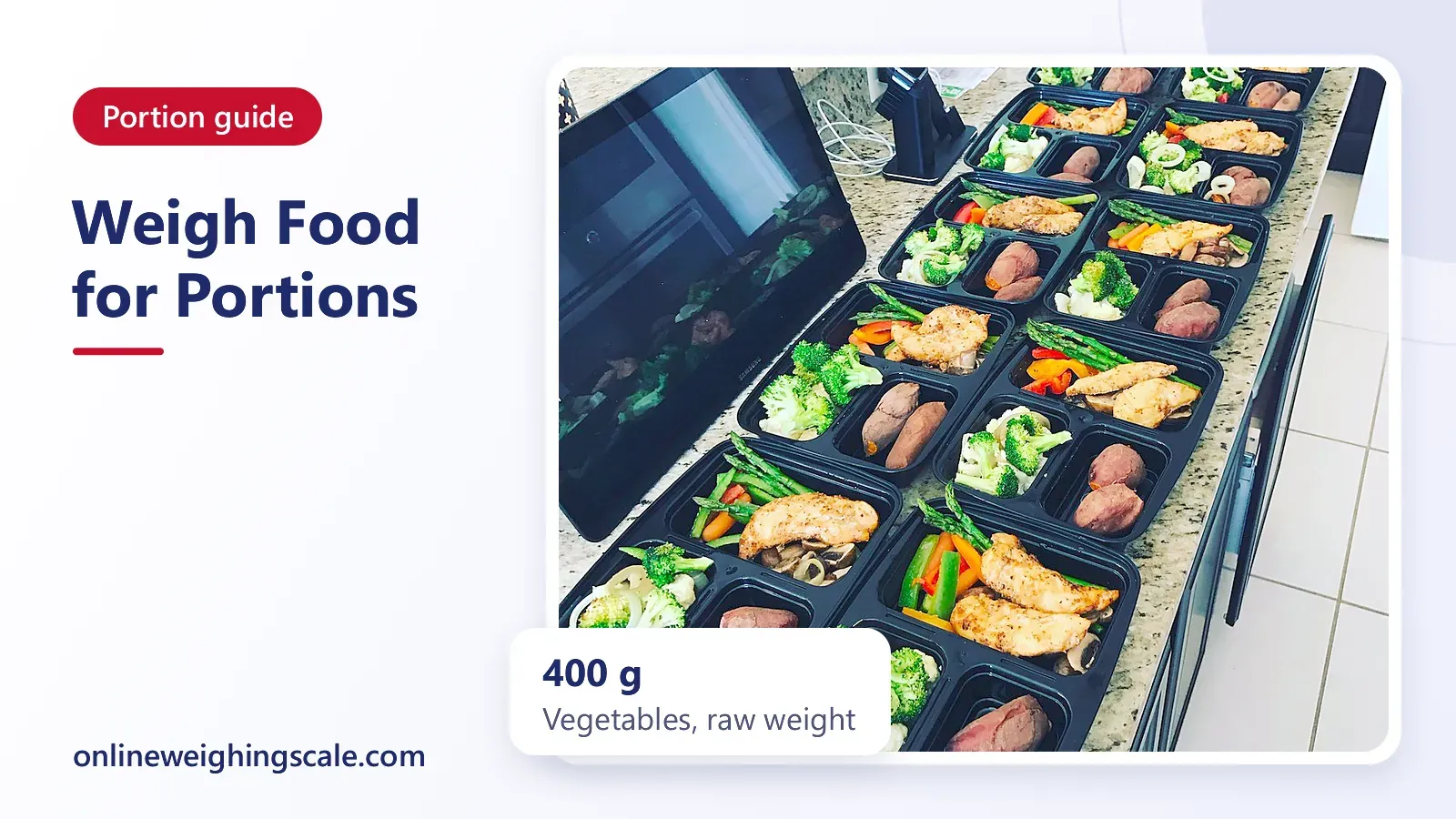
A sealed 500 g packet of dal therefore holds about 500 g of dal. Tip it onto a plate, divide the heap in half by eye, and each half is roughly 250 g. A quarter is roughly 125 g. The split will not be exact, but it is a better guide than a handful, and it costs nothing.
Use this trick for dry goods you buy often: flour, rice, sugar, pulses, a block of butter. Once you have seen what 100 g of rice looks like in your own steel katori, you can reuse that bowl.
Cups and spoons: the same measure weighs different amounts
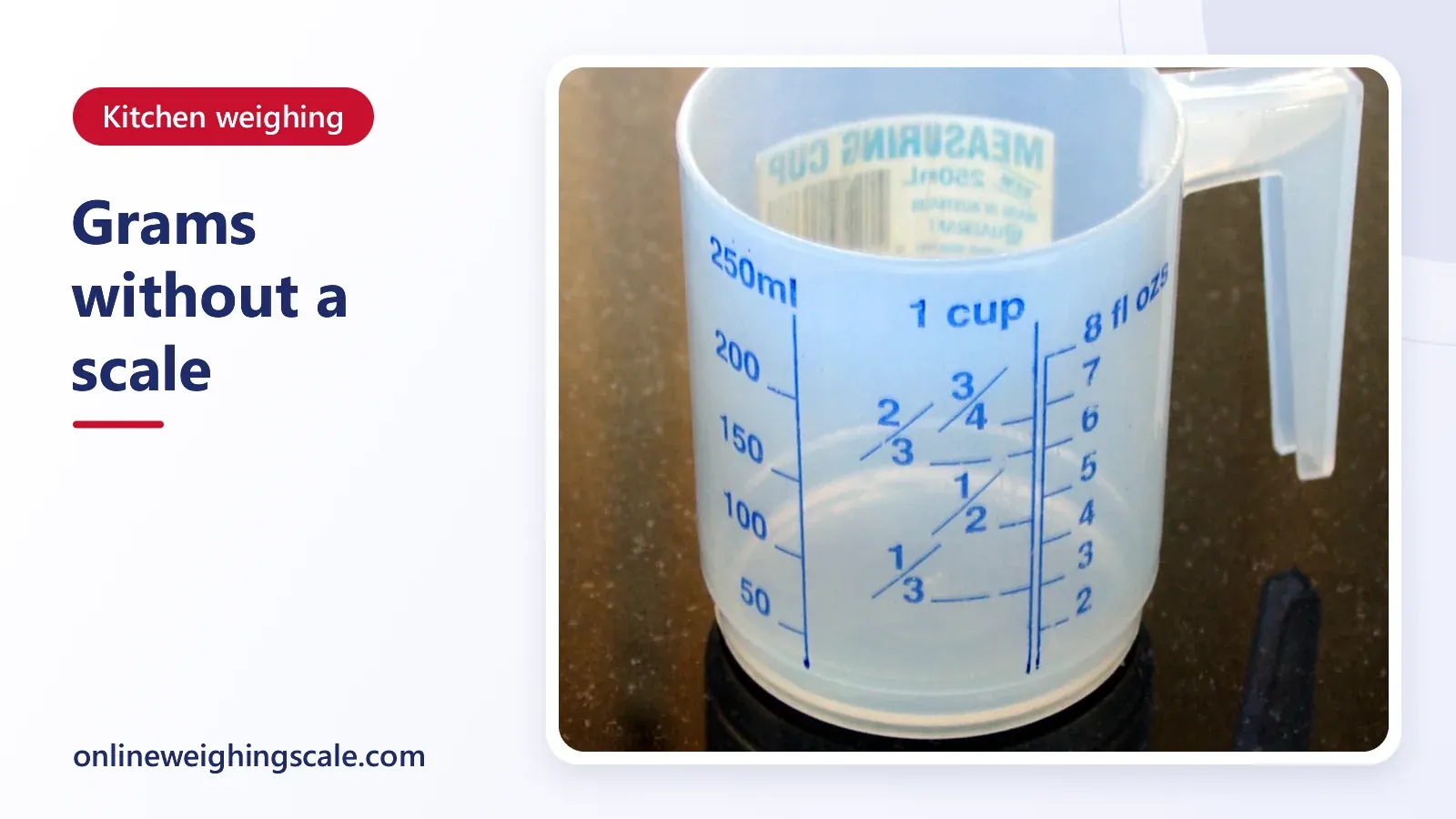
A cup measures space, not weight. Dense foods such as honey pack many grams into a cup, and lighter foods such as flour pack fewer. The United States Department of Agriculture records these weights in FoodData Central, and the figures below come from its entries for wheat flour, granulated sugar, raw white rice, butter, whole milk, honey, table salt and olive oil.
| Food | 1 cup | 1 tablespoon | 1 teaspoon |
|---|---|---|---|
| Wheat flour, all-purpose | 125 g | not listed | not listed |
| Sugar, granulated | 200 g | not listed | 4.2 g |
| Rice, white, raw | 185 g | not listed | not listed |
| Butter, unsalted | 227 g | 14.2 g | not listed |
| Whole milk | 244 g | 15 g | not listed |
| Honey | 339 g | 21 g | not listed |
| Table salt | 292 g | 18 g | 6 g |
| Olive oil | 216 g | 13.5 g | 4.5 g |
USDA gives these weights for its own US cup and US spoon, and they apply to a level measure. A tea cup, a katori or a steel glass in an Indian kitchen holds a different amount, so these figures only work with a proper measuring cup and spoon set. The grams to cups conversion chart for Indian ingredients carries a longer list. To convert grams to tablespoons, divide the grams you want by the gram weight of one tablespoon of that food.
How to measure 100 grams without a scale
Divide 100 by the weight of one cup or spoon from the table and you have the amount to scoop. The figures below are that arithmetic on the USDA weights, rounded.
| Food | About 100 g is |
|---|---|
| Wheat flour | 0.8 cup (four-fifths of a level cup) |
| Sugar | 0.5 cup, or about 24 teaspoons |
| Raw white rice | a little over half a cup (0.54) |
| Butter | 7 tablespoons |
| Whole milk | 0.41 cup, or about 6.7 tablespoons |
| Honey | 4.8 tablespoons |
| Olive oil | 7.4 tablespoons |
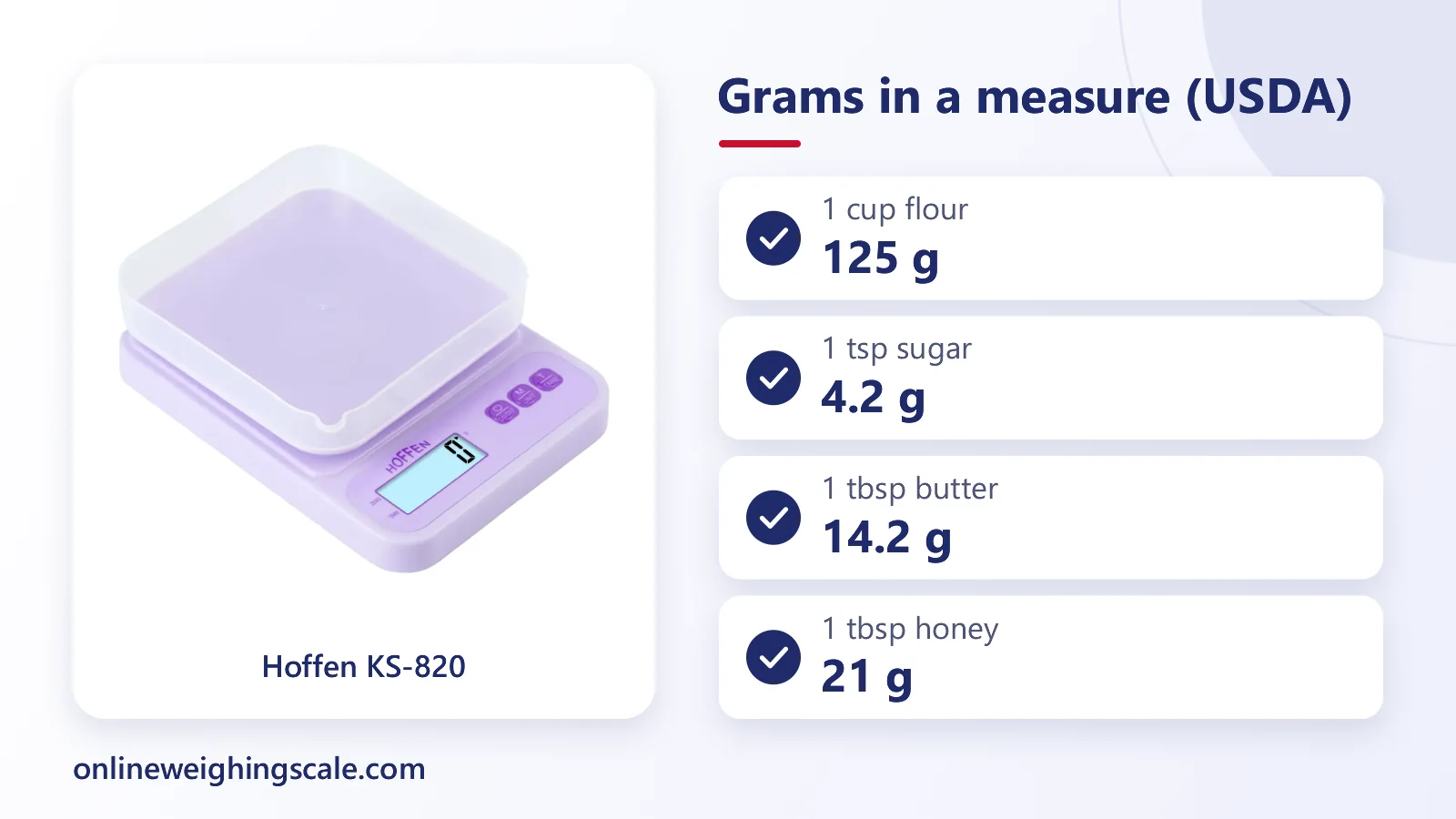
To measure flour without a scale, fill the cup in light spoonfuls and level the top with a knife. A cup pressed down firmly holds more flour than a cup filled loosely, and the USDA figure describes one level cup, not a packed one. Expect an error of several grams either way, which is fine for roti dough and too loose for a cake.
Worked examples with the USDA weights
A recipe asks for 250 g of flour. Divide 250 by 125 and you need 2 level cups. A recipe asks for 50 g of butter. Divide 50 by 14.2 and you need about 3.5 tablespoons. A recipe asks for 30 g of honey. Divide 30 by 21 and you need about 1.4 tablespoons, so a generous tablespoon plus a little.
Salt shows why spoons matter. A level teaspoon of table salt weighs 6 g, so a recipe calling for 12 g of salt needs 2 level teaspoons, and a heaped spoon would overshoot it. The same spoon of sugar weighs 4.2 g, which is why you cannot swap salt and sugar spoon for spoon.
Water and milk: how close is 1 ml to 1 g?
The gram was originally defined from water. The U.S. National Institute of Standards and Technology notes that the French republic defined the gram as the mass of 1 cubic centimetre of water at 4 degrees Celsius, and 1 cubic centimetre is the same volume as 1 millilitre. So 250 ml of water is close to 250 g, and a litre bottle of water is close to a kilogram. This is the easiest way to estimate grams for any watery liquid.
Other liquids are not the same. USDA lists a cup of whole milk at 244 g, and a tablespoon of honey at 21 g against 15 g for a tablespoon of milk. Treat 1 ml as 1 g for water, tea and thin stock, and use the table for milk, oil and honey. The difference between volume and weight is explained in the post on grams versus millilitres.
Other rough guides from things you already own
- A sealed packet of known weight, held in one hand, gives your wrist a feel for 100 g, 250 g and 500 g. Pour the same amount into a bowl and compare by eye.
- Small objects of a known weight, such as eggs and coins, help you judge small amounts. The post on the weight of everyday objects lists them, and a coin can also serve as a check weight on a pocket scale (see how to calibrate a pocket scale).
- A fixed container such as a steel katori works if you compare it once with a labelled packet and always fill it to the same level.
Why these methods are estimates
Every method above carries a margin of error that nobody has measured for your kitchen. Cups are filled loosely or tightly, spoons are heaped, flour takes up moisture in the monsoon, and rice varieties pack differently. USDA weights describe one sample of one food under its own conditions, so the grams in your own bowl will differ.
A few habits shrink the error. Level every cup and spoon with the back of a knife. Use the same cup each time, so mistakes repeat in the same direction and your recipes stay consistent. If you want your own katori calibrated, ask a neighbour with a kitchen scale to weigh one level katori of rice and flour, then write the grams on a sticky note inside the cupboard door.
For cooking by feel that is acceptable. A dal, a sabzi or a chai needs no exact gram. The estimates stop working when the quantity matters.
When you need a kitchen scale
A scale is worth having for baking, where a small shift in flour weight changes the crumb. It also helps with any recipe written in grams, with portion tracking in a diet plan, and with small amounts such as 5 g of yeast or 3 g of tea. The baking by weight post covers the baking case. For an infant's food or a medical diet, follow the measures your doctor or dietitian gives you. This is general information. Ask your doctor about your own diet.
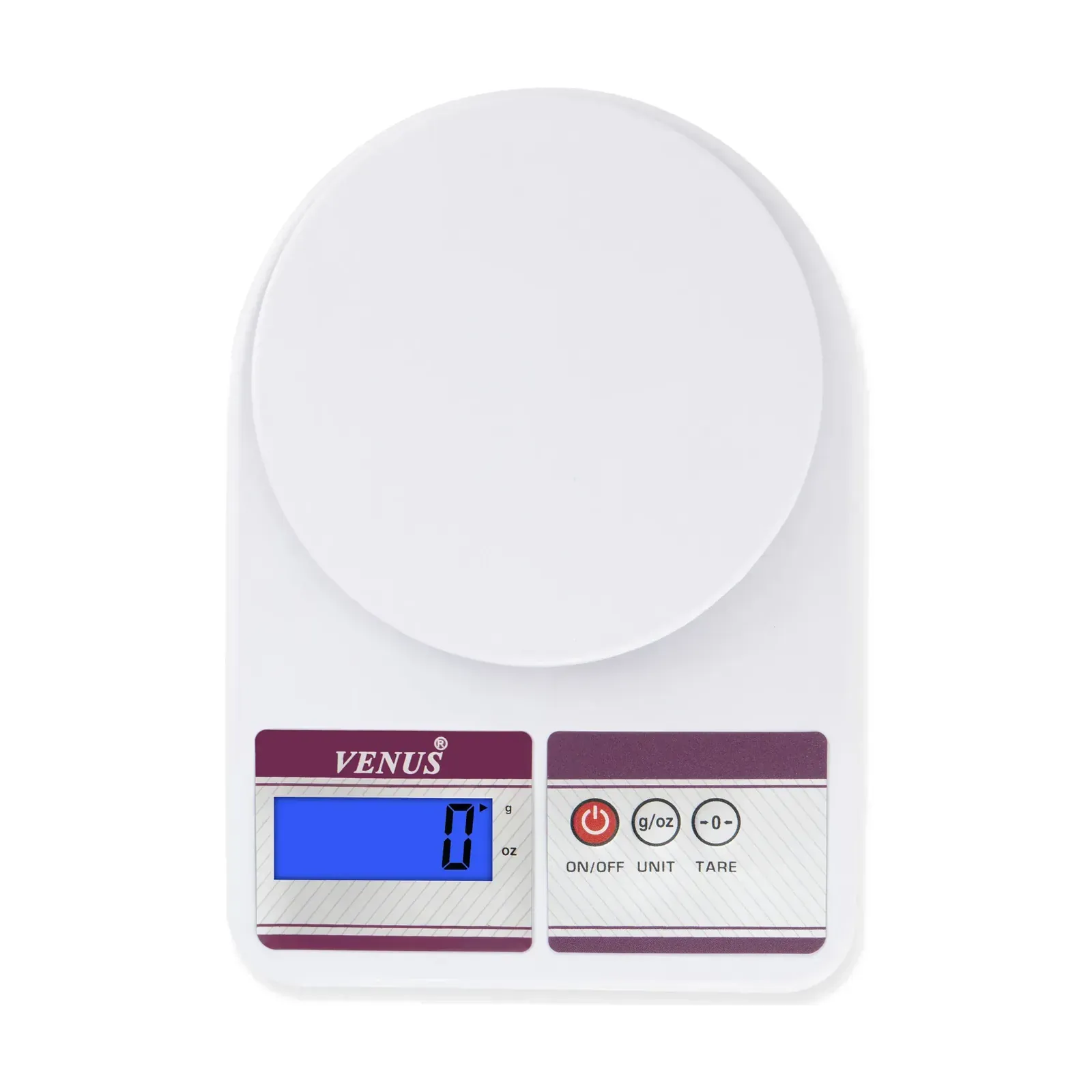
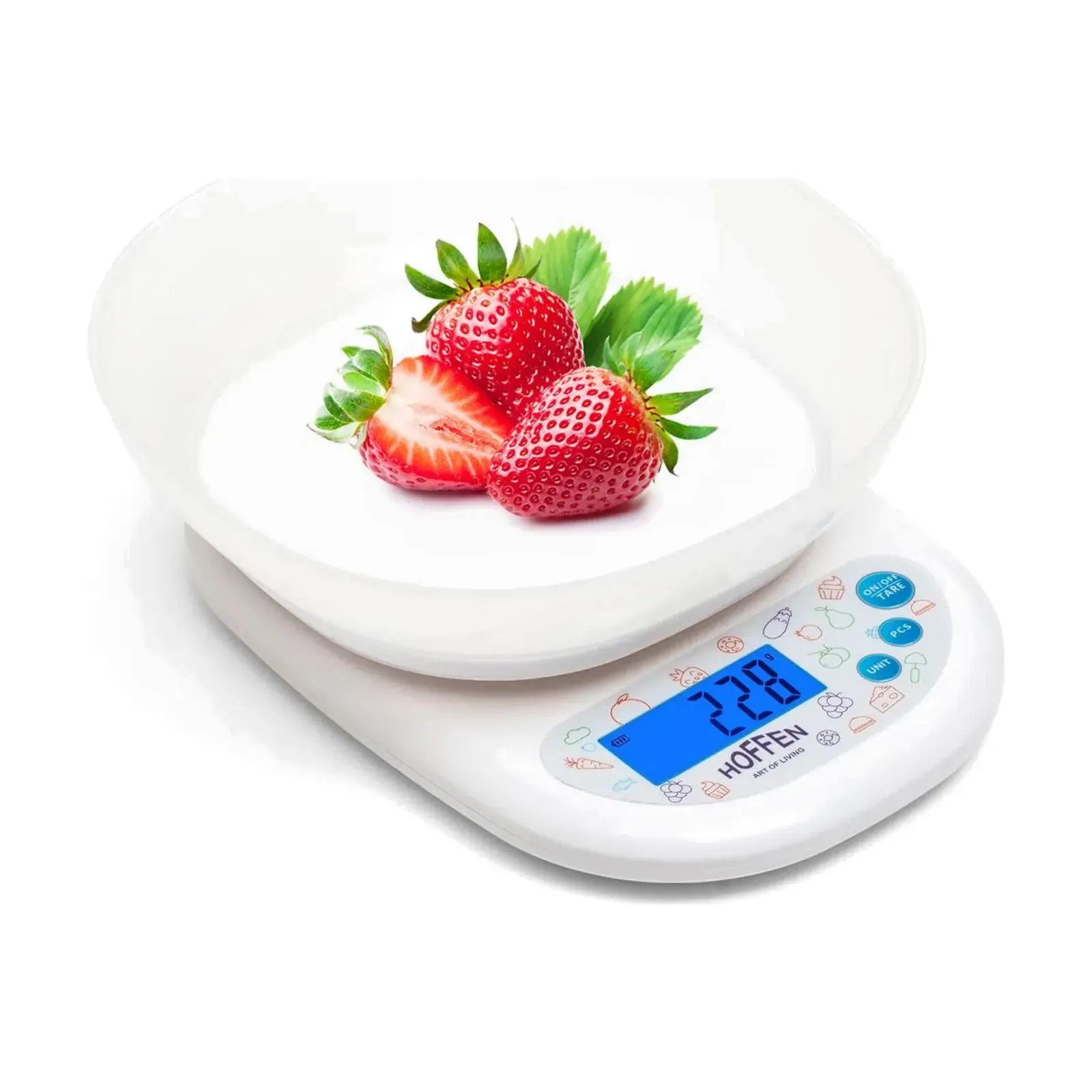
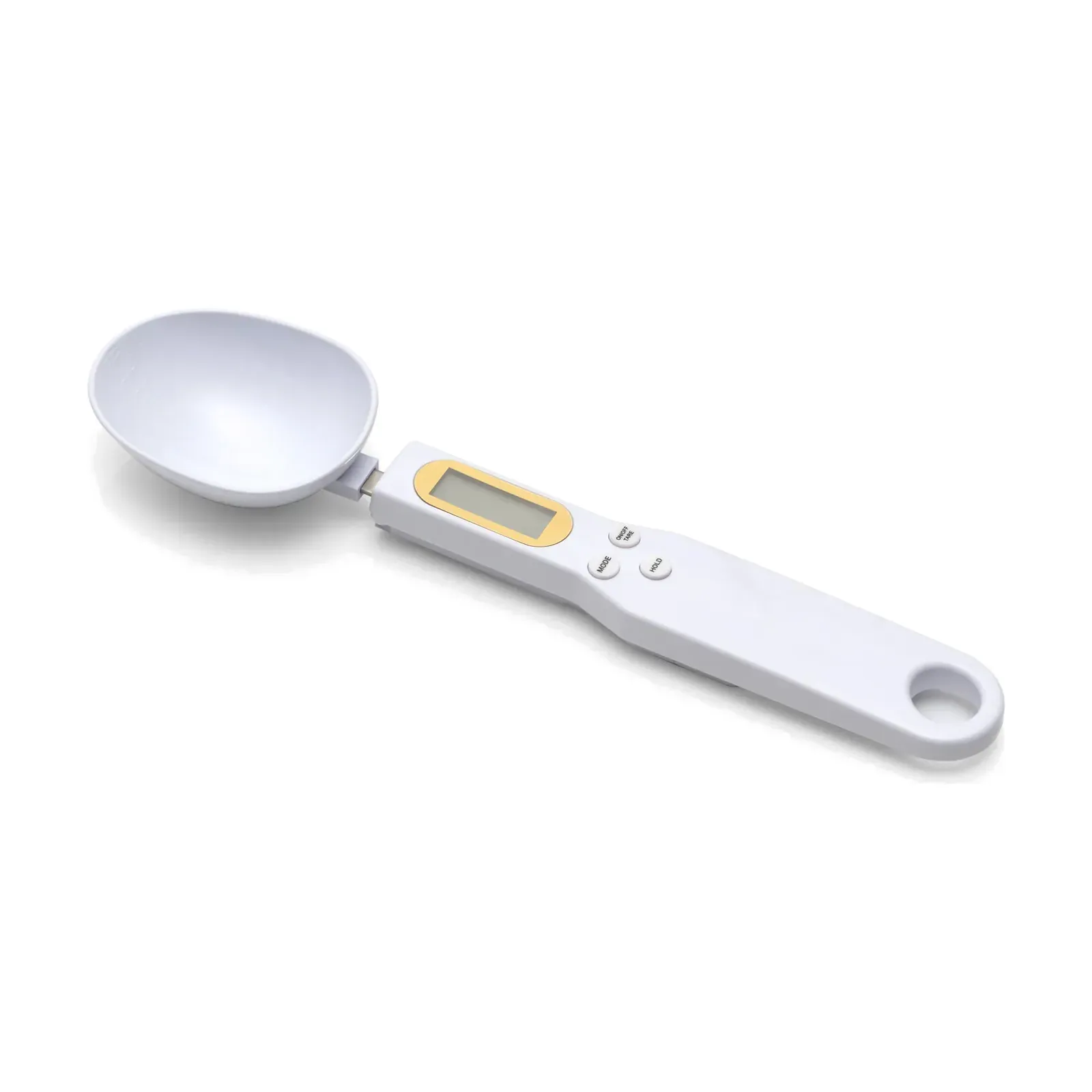
Omace Brands Private Limited makes kitchen scales at its factory in Bagru, Jaipur. The Venus SF-400 weighing scale reads 10 kg in 1 g steps and costs ₹289. The Hoffen KD-819 kitchen weighing scale with bowl reads 10 kg in 1 g steps with piece counting and costs ₹519. For very small amounts of spice or yeast, the Hoffen digital spoon scale reads 500 g in 0.1 g steps and costs ₹939. Browse all of them in the kitchen scale category, and read how to choose a kitchen scale for Indian cooking before you buy.
Use a packet to test your scale later
Once you own a scale, the net quantity printed on a sealed packet gives you a quick check of it. Weigh the packet and see whether the reading lands near the label, remembering that the wrapper adds a little. A large gap means you should read how to calibrate a kitchen scale without weights.