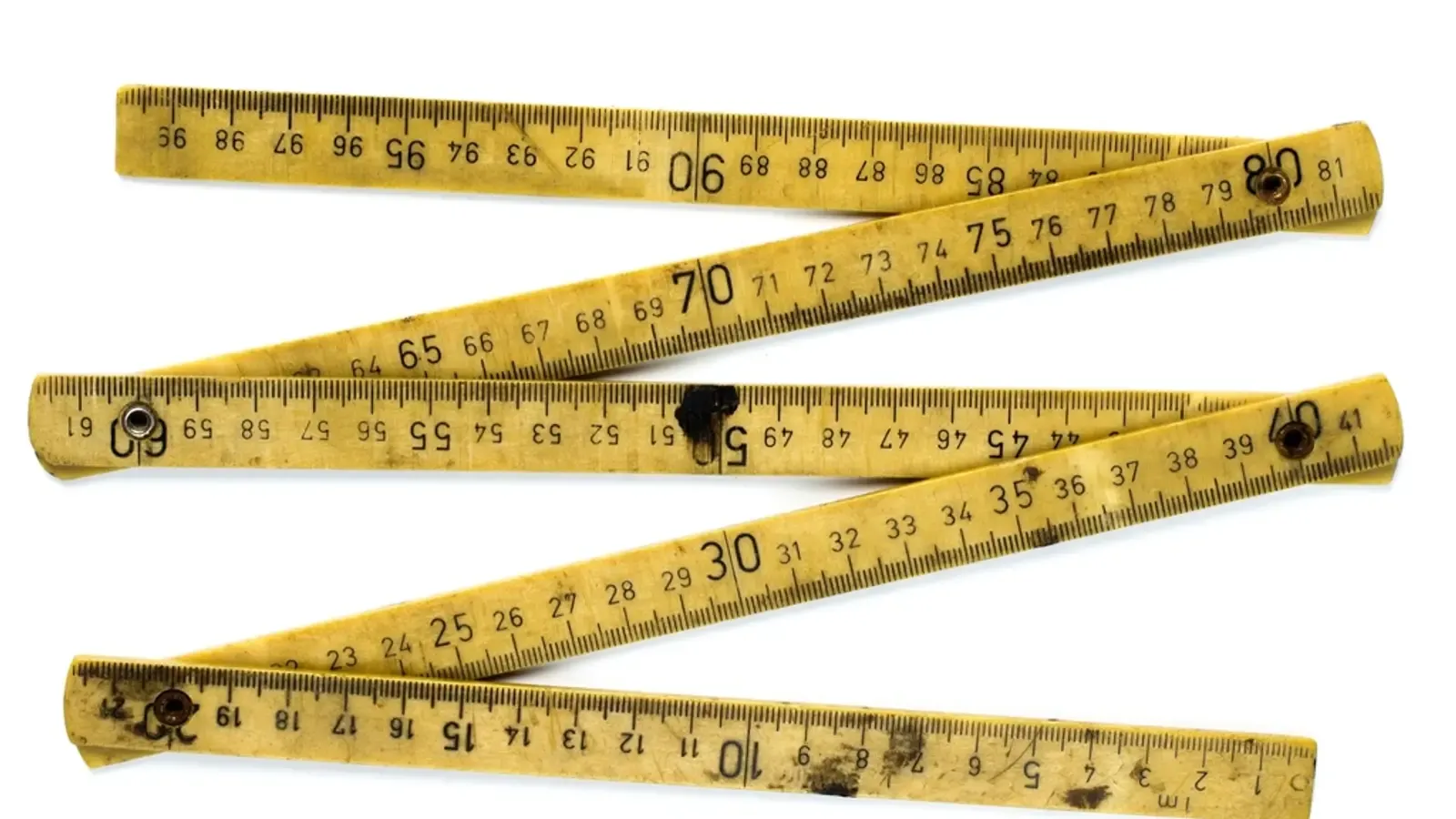
To read a measuring tape, find the last numbered mark before the end of the object, then count the small lines after it. On the metric side, each centimetre splits into 10 millimetres. On the inch side, NIST fixes one inch at exactly 25.4 mm, so an inch divided into 16 parts has marks about 1.6 mm apart.
Types of measuring tape and their parts
A steel tape and a tailor's tape are read the same way, but they are built for different jobs. OIML R 35-1, the international recommendation for material measures of length, sets out each type, its length range and the accuracy classes it may carry. The tape itself is an old tool: NIST's dimensional metrology team records that the first spring-loaded metal tape was patented in England in 1829.
Steel tape in a case
This is the inch tape sold in hardware shops, called inchi tape or simply fita in many Indian homes. OIML R 35-1 covers cased steel tapes from 0.5 m to 15 m long and allows them accuracy class I or II. The blade must be cambered, curved across its width, which is why it stays straight when you push it out. A blade lock, if fitted, must hold the blade at any length. The same face may carry two scales from one zero, such as centimetres on one edge and inches on the other.
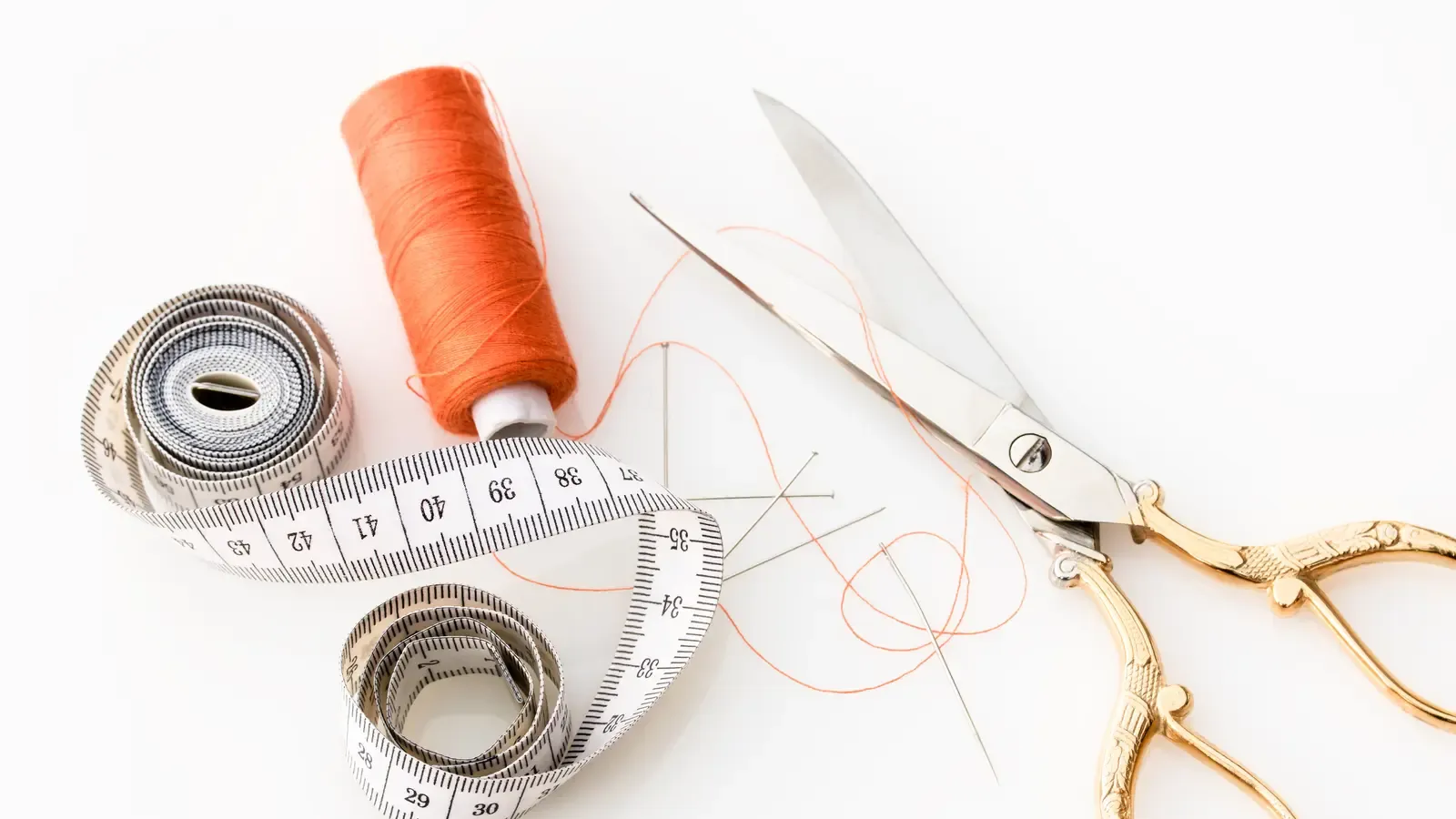
Cloth or fibreglass tailor's tape
A tailor's tape is soft, so it wraps around a waist, chest or sleeve. OIML R 35-1 groups fibreglass and plastic tapes from 0.5 m to 5 m and allows class I, II or III. Their free ends carry firmly fixed metal tips to resist wear. The standard expects a tension of about 10 to 20 newtons and asks for it to be printed on the tape, because a soft tape reads differently when pulled hard.
Long reel tape
For plots, roads and buildings, a long steel or fibreglass tape winds onto an open reel. OIML R 35-1 lists flexible steel tapes with a winding device and surveyor's tapes as separate types. They are read exactly like a short tape, but two people hold them, and a long span needs support so it does not sag.
Wall height tape
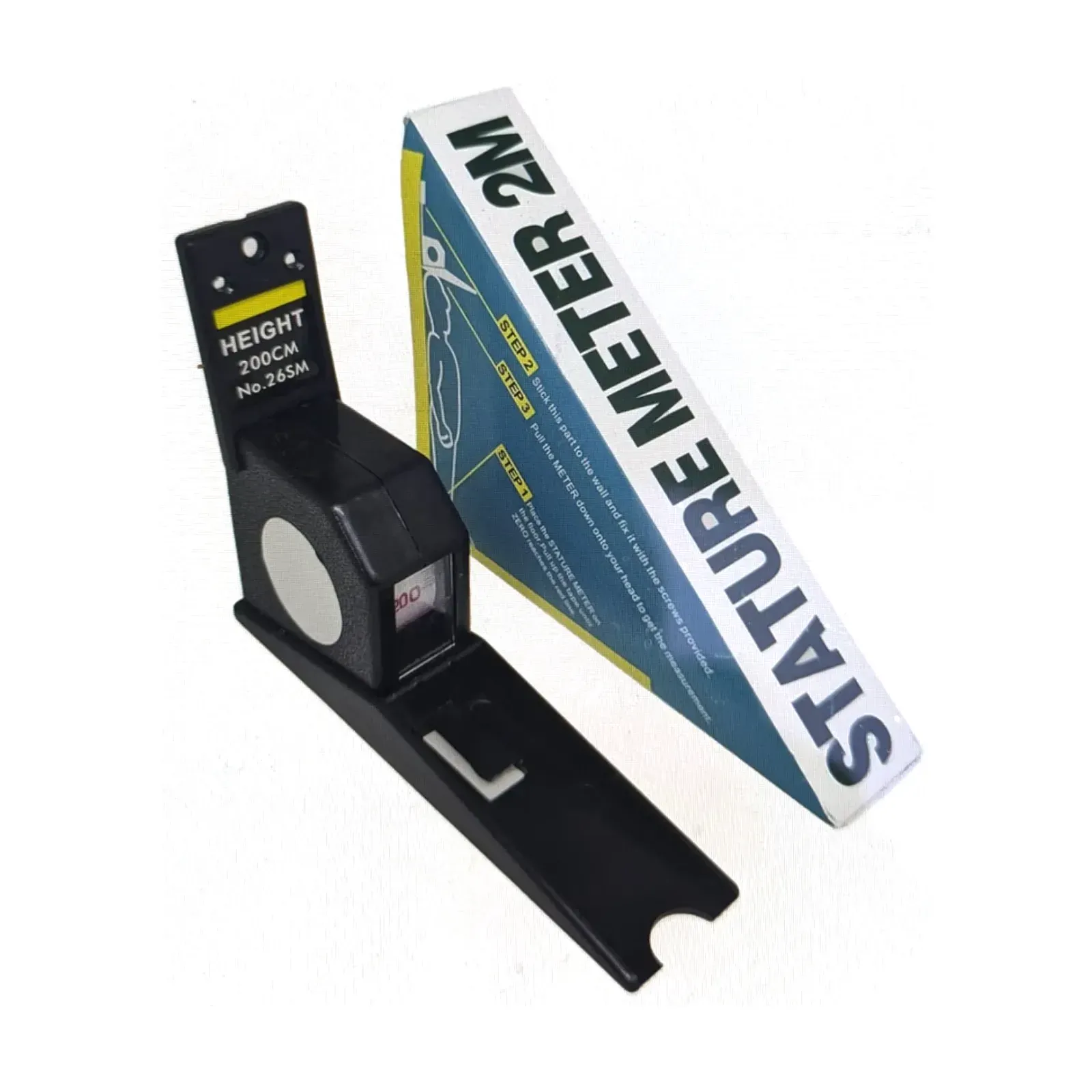
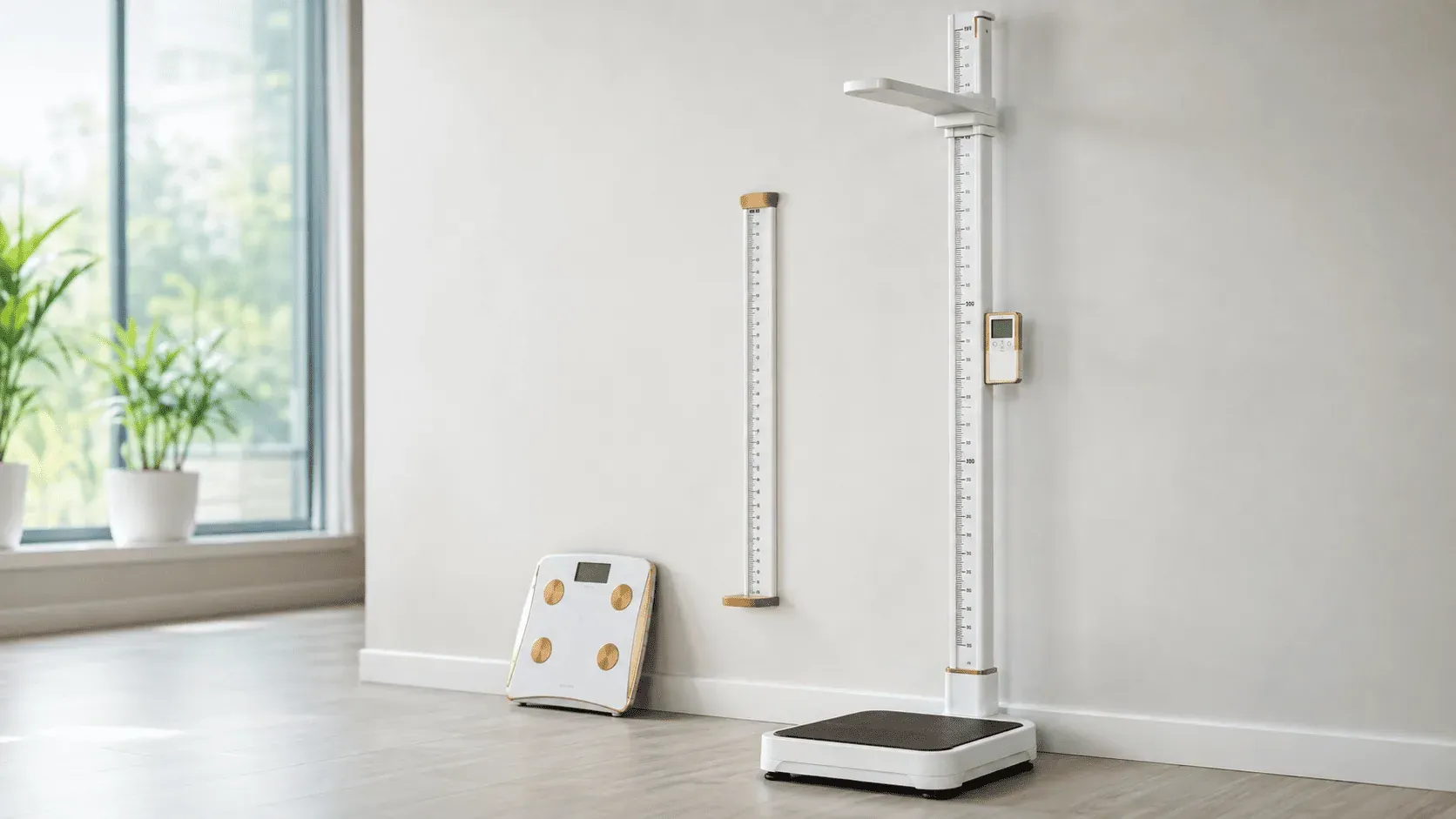
A stature meter is a measuring tape made to stay on a wall for height checks in clinics, schools and homes. The ICDS-SDM stature meter reads from 0 to 200 cm, at ₹1,049.
Reading centimetres and millimetres
The metric scale is the easier one to read. Each numbered line is a centimetre, and the nine short lines between two numbers split it into 10 millimetres. Where a tape draws a slightly longer line halfway between two numbers, that line marks 5 mm.
- Find the last whole centimetre number before the end of the object.
- Count the millimetre lines from that number to the end.
- Write the centimetres, a decimal point and the millimetres.
An edge that falls 7 lines past 23 reads 23.7 cm, which is 237 mm. An edge at 156 and 4 lines reads 156.4 cm, or 1.564 m. For anything finer than a millimetre, a tape is the wrong tool, and the vernier caliper guide shows the next step down.
Reading inches and fractions of an inch
The inch side looks busier because it halves and halves again. The longest line inside an inch marks the half. The next longest pair marks the quarters, then come the eighths, and the shortest lines mark sixteenths. Count sixteenths past the last whole inch, then reduce the fraction: 10/16 becomes 5/8, and 12/16 becomes 3/4.
| Mark on the tape | Fraction of an inch | Decimal inch | Millimetres |
|---|---|---|---|
| Shortest line | 1/16 | 0.0625 | 1.59 mm |
| Eighth line | 1/8 (2/16) | 0.125 | 3.18 mm |
| Quarter line | 1/4 (4/16) | 0.25 | 6.35 mm |
| Half-inch line | 1/2 (8/16) | 0.5 | 12.7 mm |
| Three-quarter line | 3/4 (12/16) | 0.75 | 19.05 mm |
| Numbered line | 1 inch (16/16) | 1.0 | 25.4 mm |
A worked example: an edge 11 short lines past the 5 reads 5 11/16 inches. That is 5.6875 inches, or 144.5 mm. Where a tape marks only eighths, count eighths the same way.
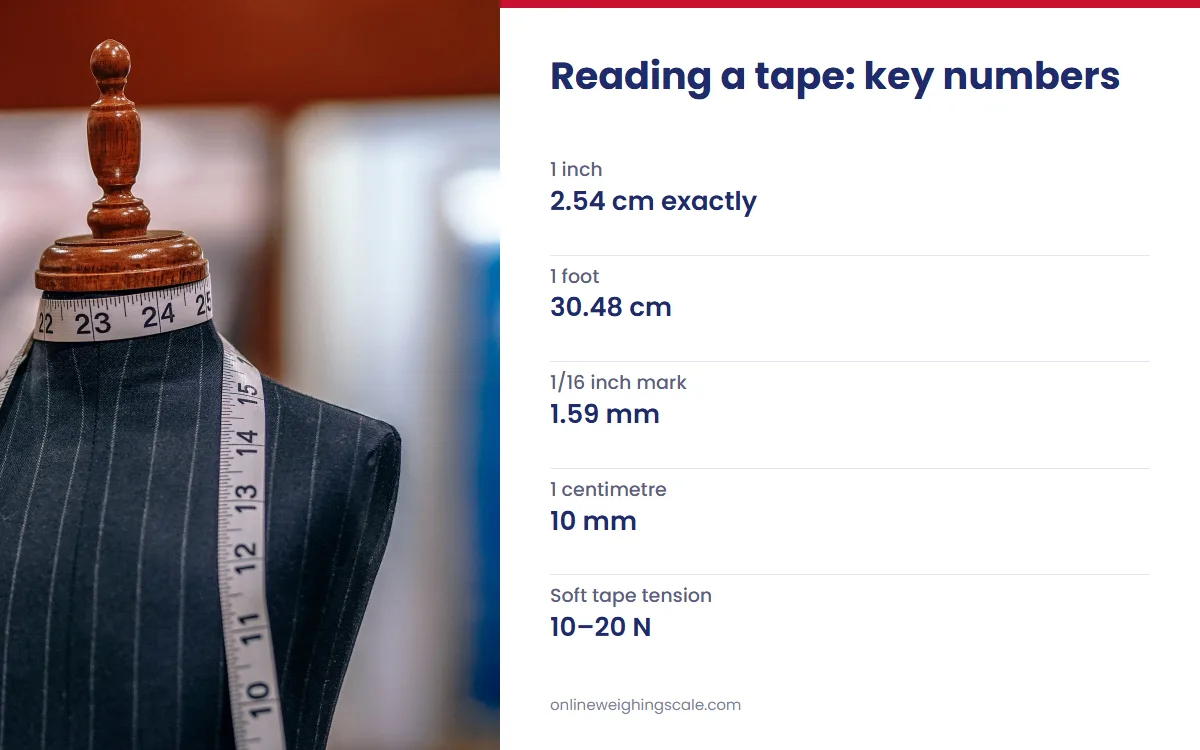
Inches, feet and centimetres: conversion chart
There are 12 inches in a foot and 3 feet in a yard. The inch has been exactly 25.4 mm since 1 July 1959, after English-speaking nations agreed to define the yard in metric terms, as NIST explains. So 1 inch is exactly 2.54 cm. NIST also retired the older US survey foot from 1 January 2023, and the international foot of exactly 0.3048 m now applies everywhere.
| Length | In inches | In centimetres |
|---|---|---|
| 1 inch | 1 | 2.54 cm |
| 1 foot | 12 | 30.48 cm |
| 1 yard | 36 | 91.44 cm |
| 1 metre | 39.37 | 100 cm |
| 5 ft 6 in | 66 | 167.64 cm |
To turn inches into centimetres, multiply by 2.54. To go the other way, divide by 2.54. For a height in feet and inches, the height and weight converter does the sum, and the guide to units of measurement covers the metric system and old Indian units.
The hook: getting a true zero
The metal hook at the end of a steel tape is meant to move. Pulled against the edge of a board, it slides out; pressed against a wall, it slides in. The travel equals the hook's own thickness, so an outside reading and an inside reading both start from the same zero. OIML R 35-1 allows the zero end of a cased tape to carry a fixed or a sliding hook.
Never bend the hook or squeeze its rivets to stop the play, because that moves the zero. A hook that is bent or loose beyond its slide makes every reading wrong by the same amount. Check it against a steel rule, and replace the tape if the two disagree. OIML R 35-1 also limits how much of the scale the end fitting may cover: no marks at all on tapes under 5 m, the first 15 mm on tapes from 5 to 10 m, and the first 30 mm on longer ones.
For an inside measurement, such as the width of a window opening, push the case against one side and read the blade where it enters the case. Then add the case length. OIML R 35-1 requires that length to be printed on the case of any tape whose case forms part of the measurement. For the most exact work, start from the 10 cm mark and subtract 10 cm from the reading, which takes the hook out of the measurement altogether.
How to measure height, waist and a room
Height
Stand barefoot with your heels, back and the back of your head against a flat wall, and look straight ahead. Hold a hardback book flat on top of the head, square to the wall, and mark its lower edge. Measure from the floor to the mark with a steel tape held straight up the wall. The full method, including the head position WHO uses, is in the guide on how to measure height accurately.
Waist
The NHS method is simple. Feel for your lowest rib and the top of your hip bone on the side of your body, and find the middle point between them, roughly level with your belly button. Wrap the tape around at that point, breathe out naturally without holding your tummy in, and read the tape where it meets the zero end. The NHS suggests keeping your waist to less than half your height. This is general information. Ask your doctor about your own measurements.
A room
Measure the length and the width at floor level, each in two places. If the two readings differ, the room is not square, so note both. Multiply length by width for the floor area. A room of 12 ft by 10 ft is 120 sq ft. Because a foot is exactly 0.3048 m, one square foot is 0.0929 square metres, so 120 sq ft is about 11.15 square metres.
Common mistakes when reading a tape
- Reading at a slant: look straight down at the mark. Reading from an angle shifts the line you see, an error called parallax.
- Mixing the two edges: on a two-scale blade, check whether you are on centimetres or inches before you count lines.
- Pulling a soft tape too hard: OIML R 35-1 prints a working tension of about 10 to 20 newtons on fibreglass tapes. A gentle, steady pull straightens the tape without stretching it.
- Letting a long tape sag: a sagging span reads longer than the straight distance, so support it or use two people.
- Heat: OIML tests tapes at a reference temperature of 20 °C. A steel blade grows a little in a hot Jaipur afternoon, which matters only on long, exact jobs.
- An old cloth tape: check it against a steel rule before you trust it for tailoring.
Tape accuracy and the law in India
Tapes come in accuracy classes, and a class II tape of 5 m may read a little long or short within OIML limits. The guide to measuring instruments works through those class limits and explains why a tape used to sell cloth by length must be verified and stamped under the Legal Metrology Act, 2009. Tape measures are one of the 18 instrument categories that government approved test centres may verify, as the Department of Consumer Affairs announced in October 2025. A tape at home or on a building site carries no such duty, and the same reading habits apply.
NIST checks tapes for industry against a laser system in a 60-metre underground tunnel. Most shop tapes are never tested that way. NIST notes that their accuracy still traces back to a national lab, because many manufacturers have the master length standards they copy from calibrated there.
Height tapes and scales from an Indian manufacturer
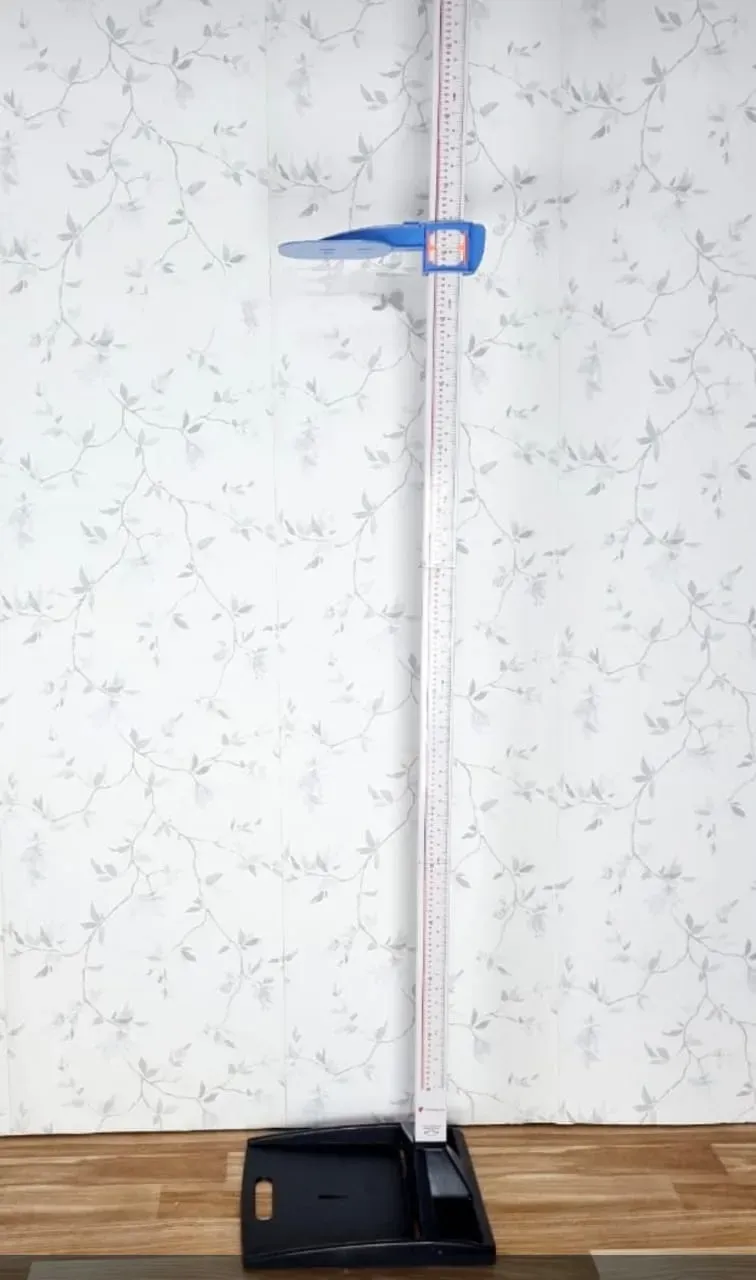
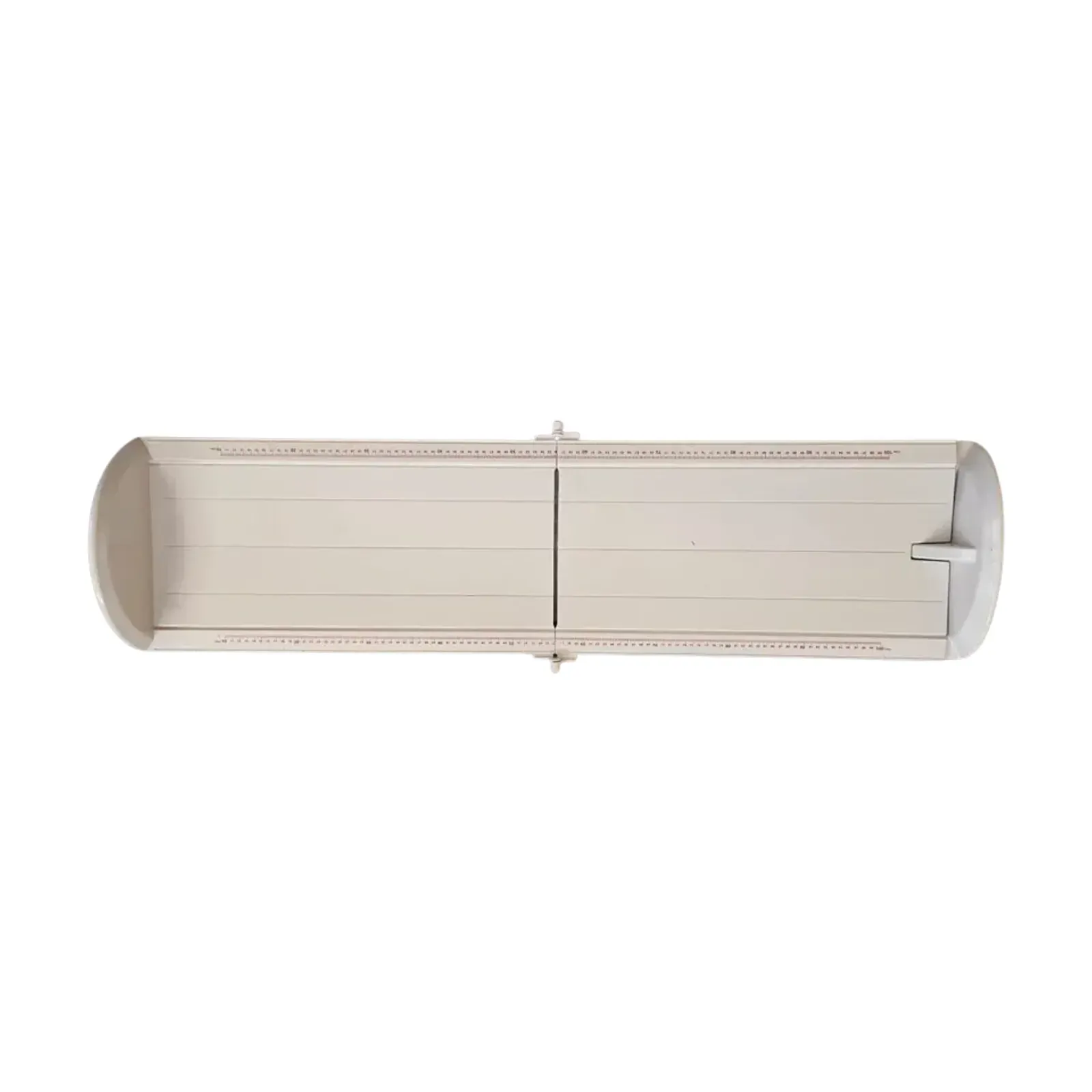
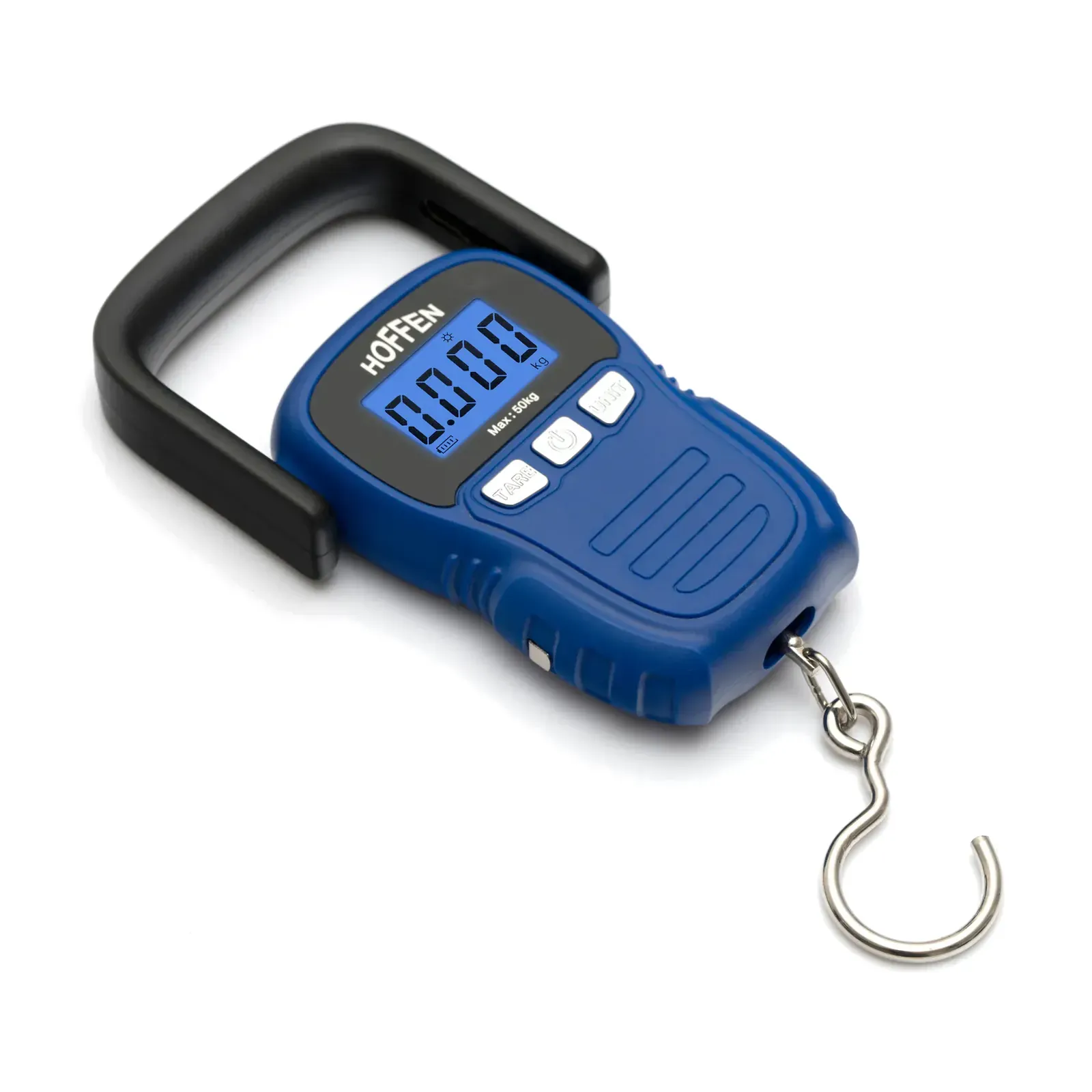
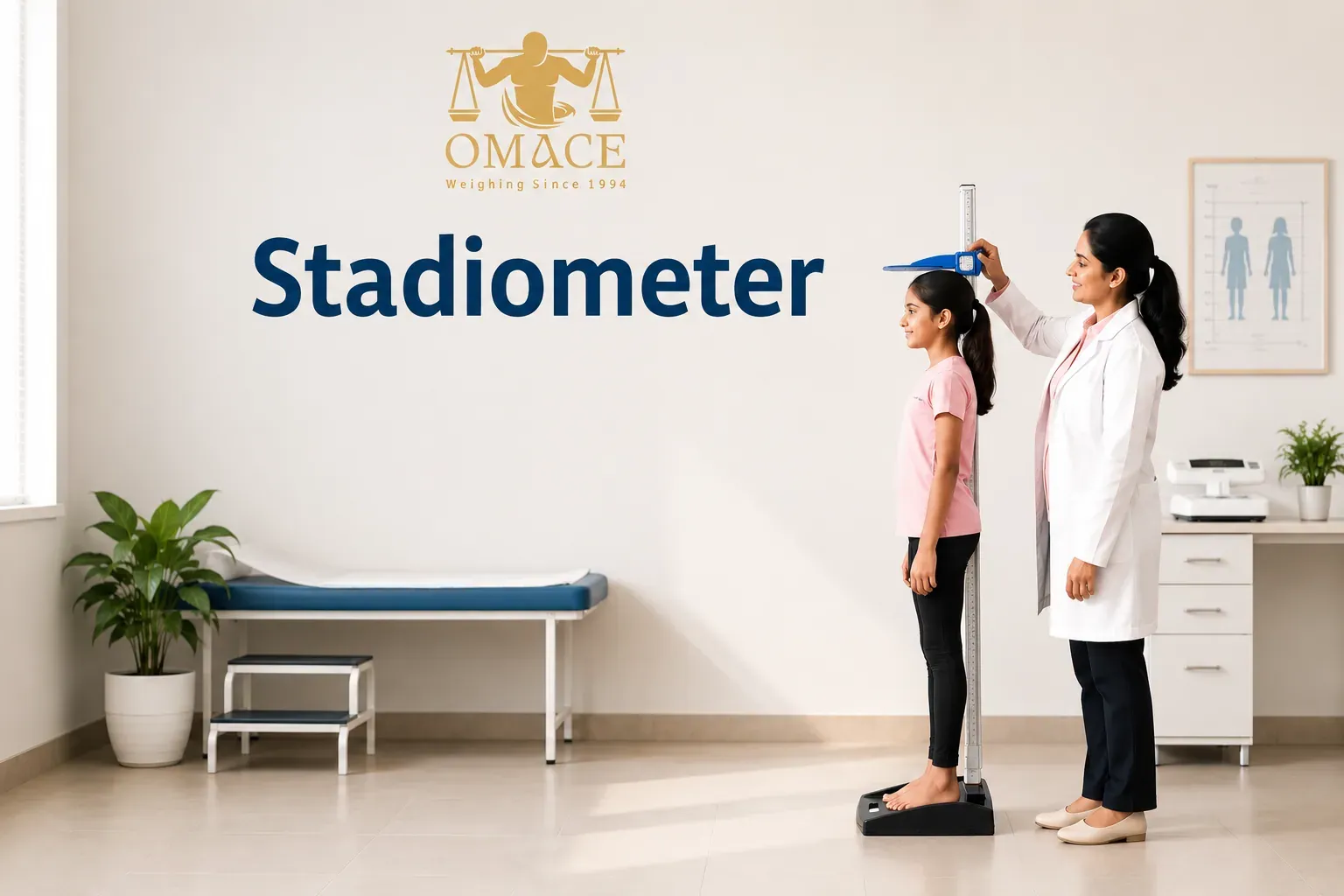
Omace Brands Private Limited has made and supplied weighing scales in India since 1994, from its factory at G-29 RIICO Industrial Area, Bagru, Jaipur, as the About Omace page sets out. As a manufacturer, the company holds ISO 9001:2015 and ISO 13485:2016 quality certificates and an EU MDR quality certificate. It also holds a CE certificate of compliance and a US FDA compliance certificate, listed on the certificates page. Every Omace scale is checked with certified test weights before dispatch at the Bagru factory. Omace products are made in India, and retail purchases from the Omace store carry a 2-year warranty on manufacturing defects. The range includes the stature meter, a portable stadiometer and an infantometer for babies, alongside personal and baby scales.
Picking the right tape for the job
A cased steel tape suits rooms, furniture and building work, where a stiff blade and a sliding hook help. A tailor's tape suits the body and clothes, because it bends around a curve. For height checks that happen again and again, a tape fixed to the wall saves setting up each time. The height measuring instruments range covers wall stature meters, portable stadiometers and infantometers. Whichever tape you use, read it square on, start from a true zero and write down the unit with the number.