Jewellery weighing units in India come in two sets: the gram, milligram and carat on the scale, and the tola, masha and ratti used across the counter. One tola is about 11.66 g and one metric carat is exactly 0.2 g, so a tola of gold weighs close to 58 carats.
Gold, silver and stones are still bought in the units your grandfather used, while the scale on the bench shows grams. This guide puts every unit side by side, shows how to convert each one, and explains which unit the law wants on a bill.
The legal units: gram and milligram
The Legal Metrology Act, 2009 (Department of Consumer Affairs) says in section 4 that every unit of weight or measure shall be in accordance with the metric system based on the international system of units. Section 5 makes the kilogram the base unit of mass, and the gram is one-thousandth of it. The milligram is one-thousandth of a gram, and it is the unit that matters for fine stones and thin chains.
Section 11 of the same Act bars a person from quoting a price, by word of mouth or otherwise, issuing a price list, invoice or cash memo, or publishing an advertisement with a quantity expressed otherwise than in the standard unit. Sub-section 11(2) leaves out exports. In practice a jeweller's bill should show the weight in grams, and a price quoted per tola is the kind of quotation the section is aimed at, so the safe habit is to state grams everywhere and use tola only to help a customer picture the weight. The Act's fuller story is in the post on legal metrology in India. Ask your local Legal Metrology office if your case is unusual, since the Act also lets the government prescribe details by rules.
Conversion table: every jewellery unit in grams
The troy ounce, pennyweight, grain and carat values below come from US NIST tables. The tola is given as a trade figure from a Government of India order. The masha, ratti and bhori are traditional Indian units, and no authority page read for this post states their gram values, so the table gives none.
| Unit | Value in grams | Used for |
|---|---|---|
| Milligram (mg) | 0.001 g | Fine stones, pocket scale readings |
| Carat (metric, ct) | 0.2 g (200 mg) | Diamonds and coloured gems |
| Grain (gr) | 0.0648 g | Old troy system, pearls in some trades |
| Ratti | traditional unit, no official gram value | Gems and gold |
| Masha | traditional unit, no official gram value | Gold and silver |
| Pennyweight (dwt) | 1.5552 g | International bullion trade |
| Tola | about 11.66 g | Gold and silver bars, traditional |
| Bhori | traditional unit, no official gram value | Eastern India |
| Troy ounce (oz t) | 31.1035 g | International gold price |
The NIST appendix lists the metric carat at 0.2 g, the troy ounce at 31.10348 g in rounded form, the pennyweight at 1.555174 g and the grain at 64.79891 mg. Its separate precious metals conversion chart gives the troy ounce as 31.1034768 g, with 20 pennyweights and 480 grains in one ounce. The figures above are rounded from that more exact value.
Tola, masha, ratti and bhori
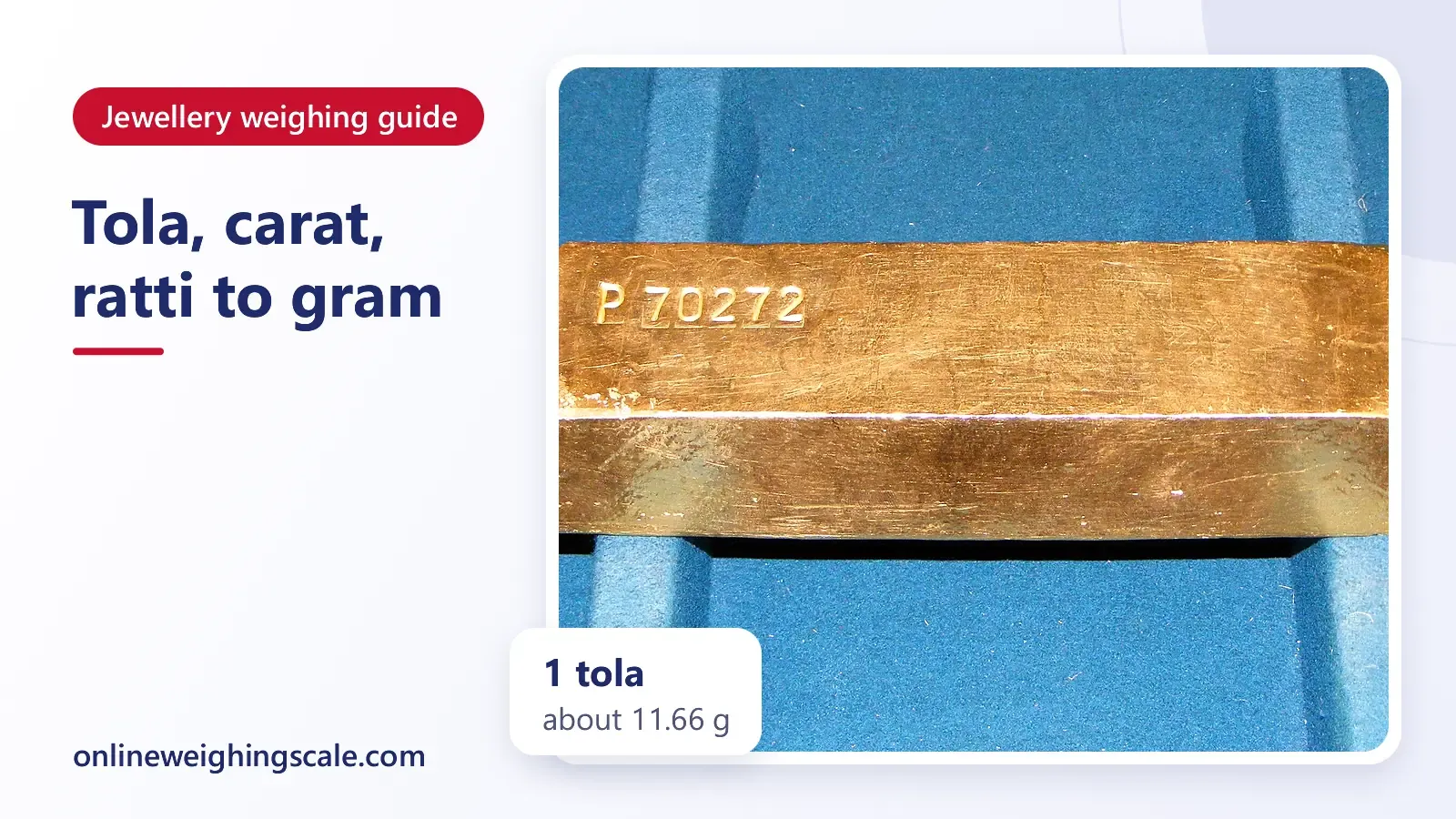
The tola is the unit Indian gold buyers still say first. A Ministry of Finance revision order on a customs case records 10 gold bars of 10 tolas each as totalling 1,166 grams, which is 11.66 g to the tola. It is a trade figure, so a seller who rounds slightly is within the usual habit. Put the gram weight on the bill.
The masha and the ratti are older still, used for gold and for gemstones. The bhori is a regional word for the tola in parts of eastern India. No Indian government or standards page read for this post gives a gram value for the masha, ratti or bhori, and values quoted for them differ from trade to trade, so this post gives none. When a deal depends on the last decimal, ask the seller which value is meant and put the gram weight in writing.
Why the old units survive in Indian jewellery
The tola came from a British-era weight system, and gold bars, coins and bangles in many families were bought by the tola long before grams reached the bazaar. Price boards in a sonar's shop often still quote a rate for 10 g, and a customer converts to tola in the head. Silver is the same: a kilogram bar is easy to read in grams, while older buyers still say how many tola of silver they want.
A scale that can show both grams and carats removes the guesswork. The reading on the display in grams is what you pay on, and the conversion is only for the conversation.
Troy ounce, pennyweight and grain
Gold prices on world markets are quoted per troy ounce, and the NIST chart sets one troy ounce at 31.1034768 g. That is about 2.67 tola at 11.66 g to the tola. Ounce here is the troy ounce, which differs from the ounce on a kitchen scale.
The pennyweight is one-twentieth of a troy ounce, or 1.55517384 g in the NIST chart. The grain is the smallest troy unit, 480 to the ounce. You meet them on imported bullion papers and on older scale dials, and almost never on an Indian bill.
Carat vs karat: weight and purity
Carat with a C is a weight. A metric carat is 0.2 g, so a 0.50 ct diamond weighs 100 mg, and a 2.5 ct stone weighs 0.5 g.
Karat with a K describes how much of an alloy is gold, so 22K and 18K tell you purity and say nothing of weight. A 10 g chain can be 22K or 18K and still weigh 10 g. The two words sound the same, and mixing them up is the most common error on a gem or gold quote. A hallmark centre tests purity, and a scale tests only weight.
Worked examples for the counter
To change grams to tola, divide by 11.66. A 5 g ring is 0.43 tola, and a 10 g chain is about 0.86 tola. To change tola to grams, multiply by 11.66, so 2 tola is 23.32 g.
To change carats to grams, multiply by 0.2. A 3 ct stone is 0.6 g. Going the other way, divide grams by 0.2, so a 1.25 g stone is 6.25 ct.
Gem sellers still quote stones in ratti, and the value of a ratti varies from seller to seller, so ask for the carat or gram weight before you pay.
How to change units on a jewellery scale
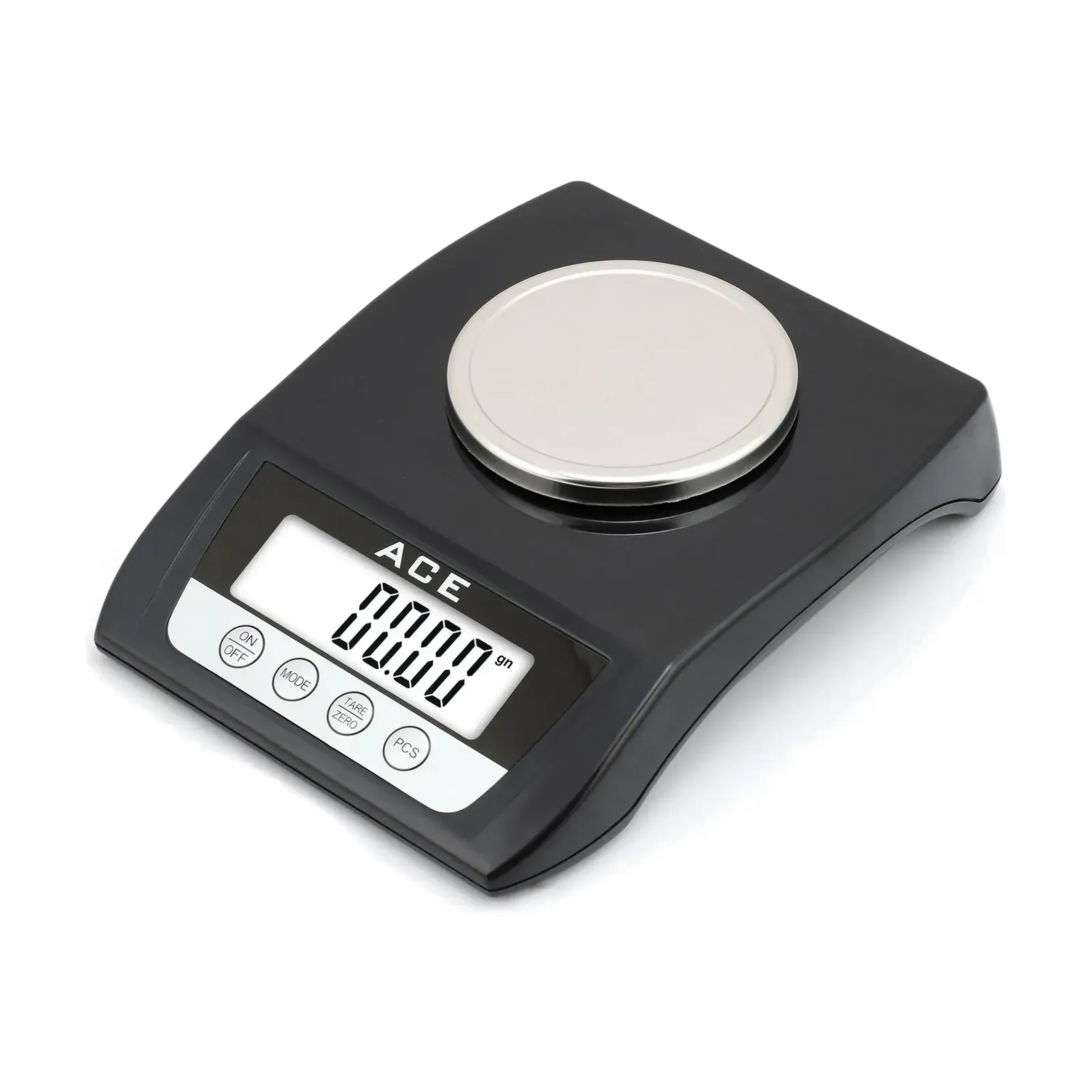
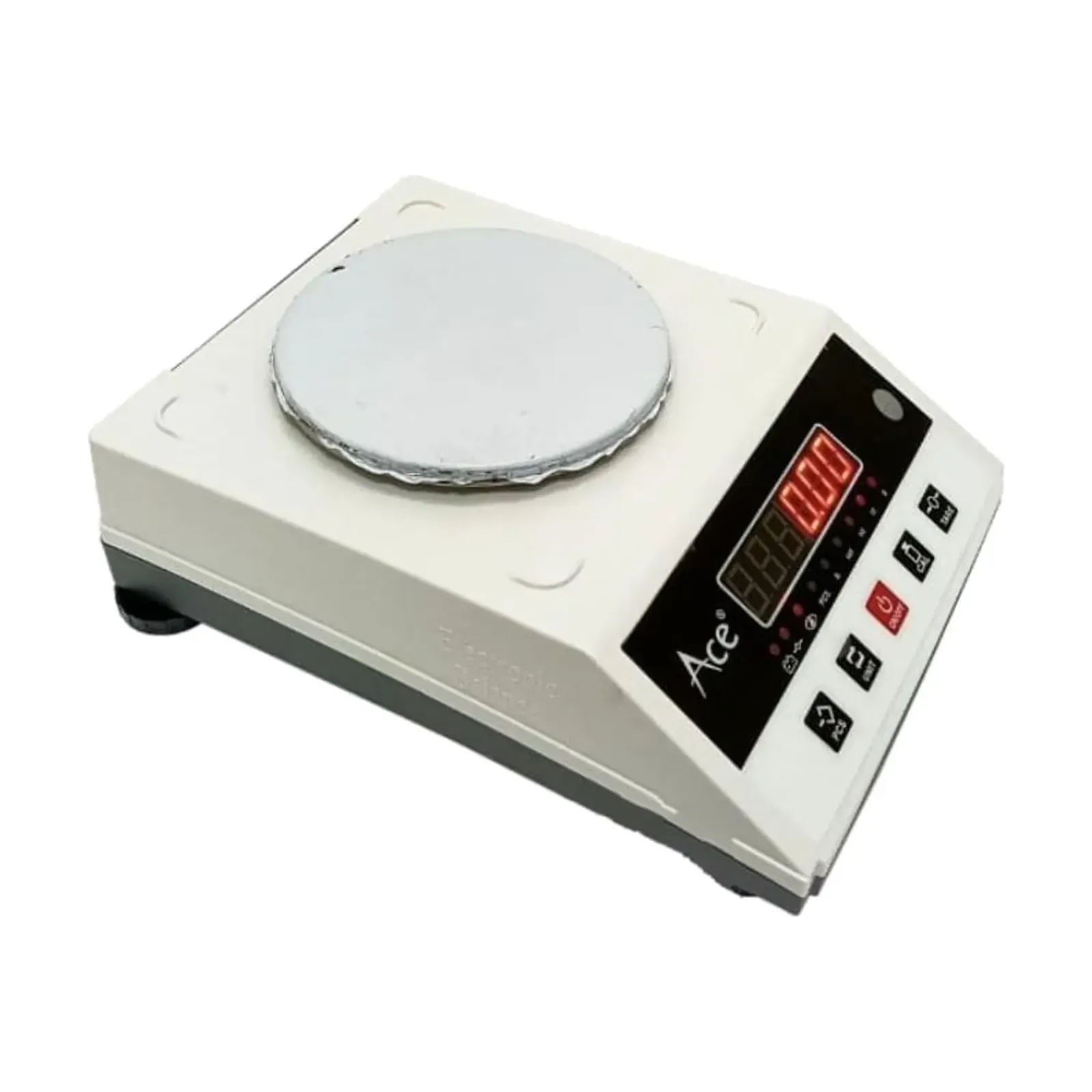
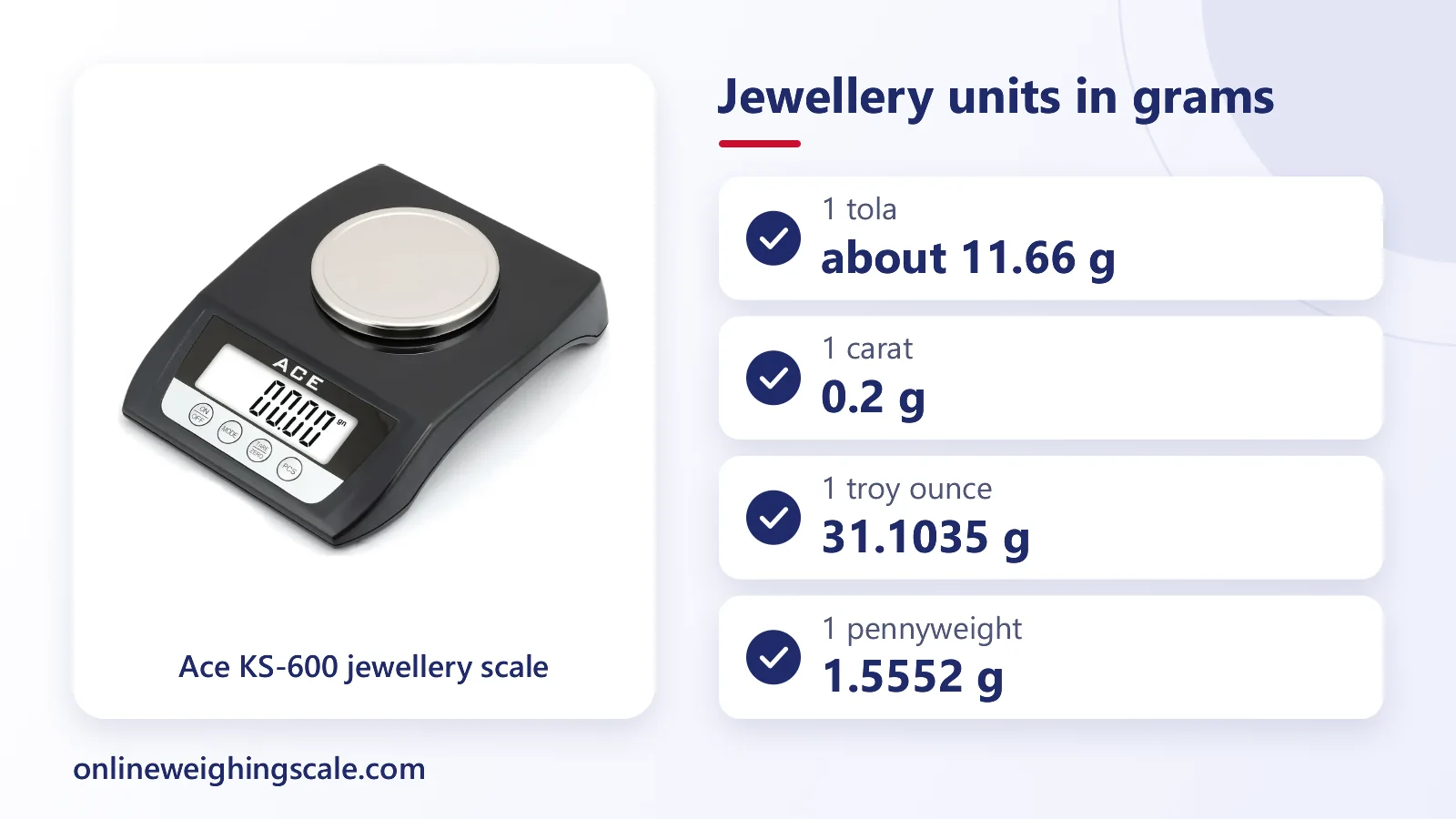
Most digital jewellery scales and pocket scales have a UNIT or MODE key. Each press moves the display to the next unit, usually grams, carats, ounces, grains or pennyweights, and on some models tola. Stop on the one you need and note it before you read the number. The product page of the Ace KS-600 Digital Jewellery Scale lists seven units for this key (g, ct, tola, oz, gn, dwt and ozt), and its price today is ₹3149. The model list changes, so check the unit list for the exact scale you plan to buy. The current models are in the jewellery weighing scale range.
Changing the unit changes only what the display shows, because the scale still measures the same mass. Resolution also changes with the unit, since 0.01 g is a different number of decimals in carats or grains. Keep the scale on grams when you bill, so the printed or written weight matches section 11.
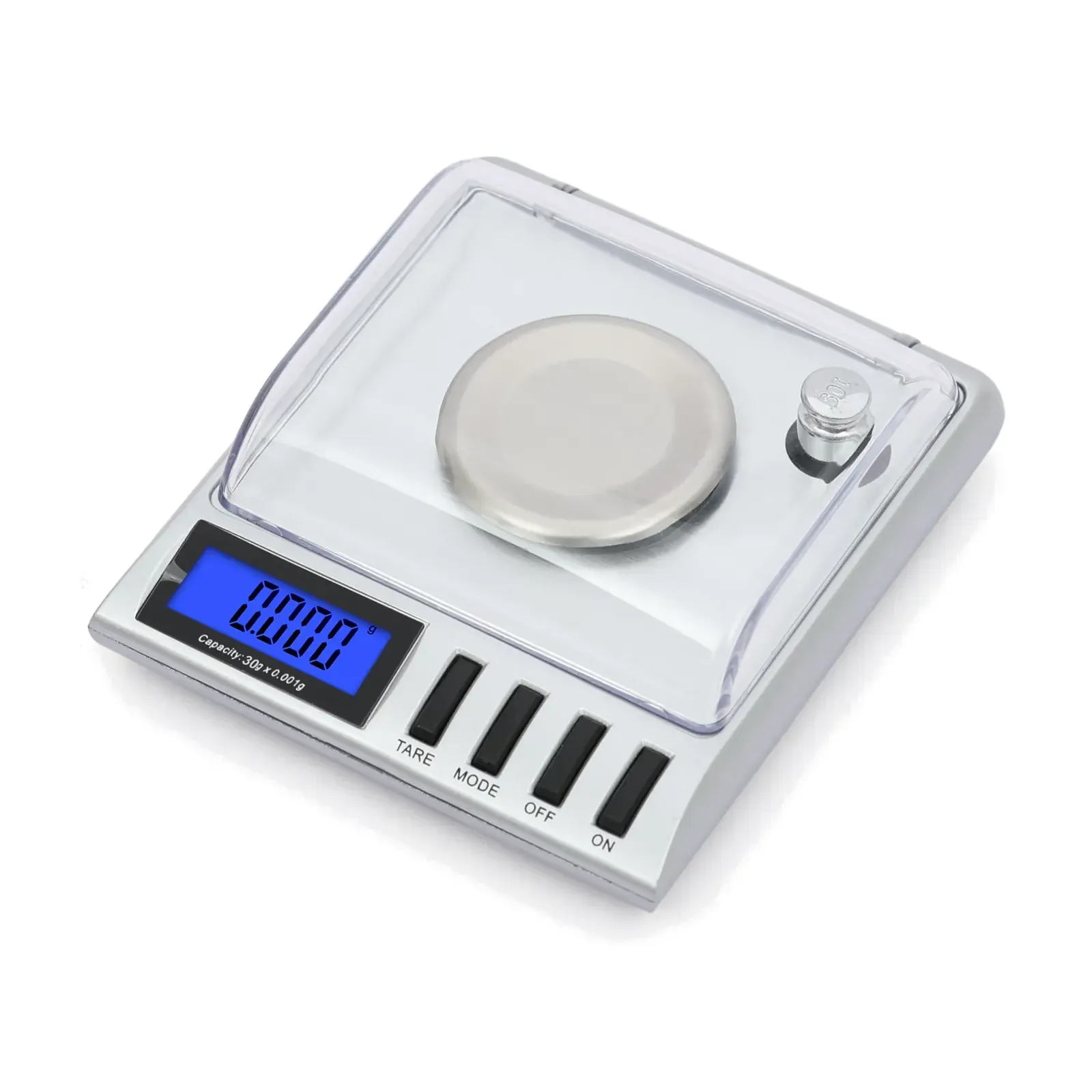
For stones that weigh a few carats, a finer scale reads better. The Ace GM-50 Carat Scale reads 50 g at 0.001 g and costs ₹2729 today. Accuracy also depends on calibration with a test weight, which the post on how to calibrate a gold weighing scale covers. Omace Brands Private Limited has made weighing scales in Bagru, Jaipur since 1994, and On Omace digital scales a long press of TARE opens calibration mode on some models and a long press of the M key on others, and the manual for each model shows which.
If you are choosing between models, the jewellery scale buying guide for goldsmiths compares capacity, readability and display types. For the wider picture of metric and older Indian units, read units of measurement.
Which unit to write on the bill
Write the weight in grams, to two decimals for gold and three decimals for fine stones and gems on a milligram scale. Add carats for a stone if the buyer expects them. Use tola in conversation only if it helps the customer, and let the gram figure carry the transaction.