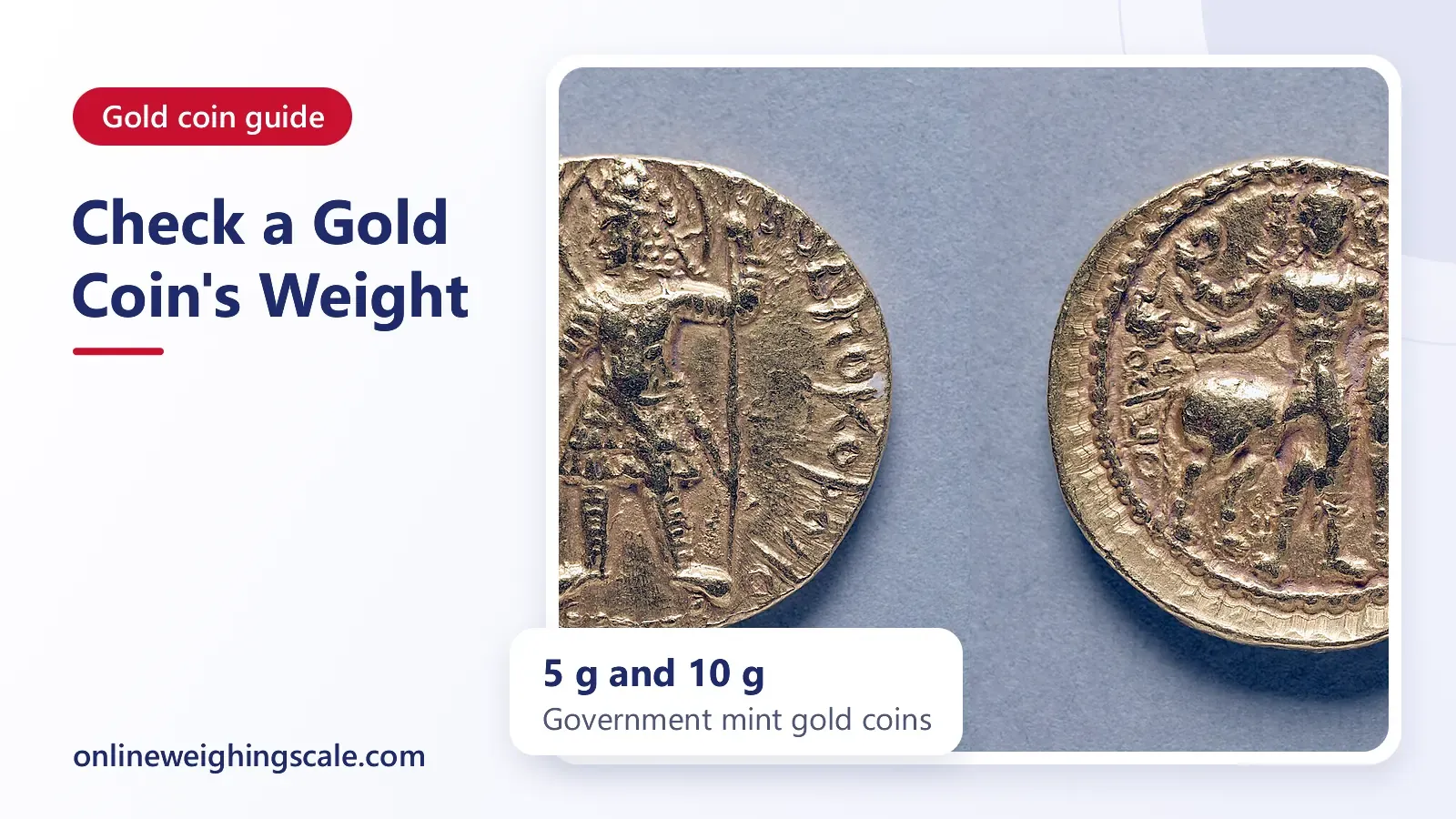
A gold coin sold in India carries its weight in grams as part of its name, and the government mint lists gold coins of 5 g and 10 g on its product page. The weight on the stamp is a promise from the maker, and a scale that reads to 0.01 g lets you test that promise in two minutes at home.
This guide covers the weights you will meet, what a coin's purity mark means, how to weigh a coin properly, and the one thing a scale can never tell you. It is general information, and it names no seller.
Which gold coin weights are sold in India
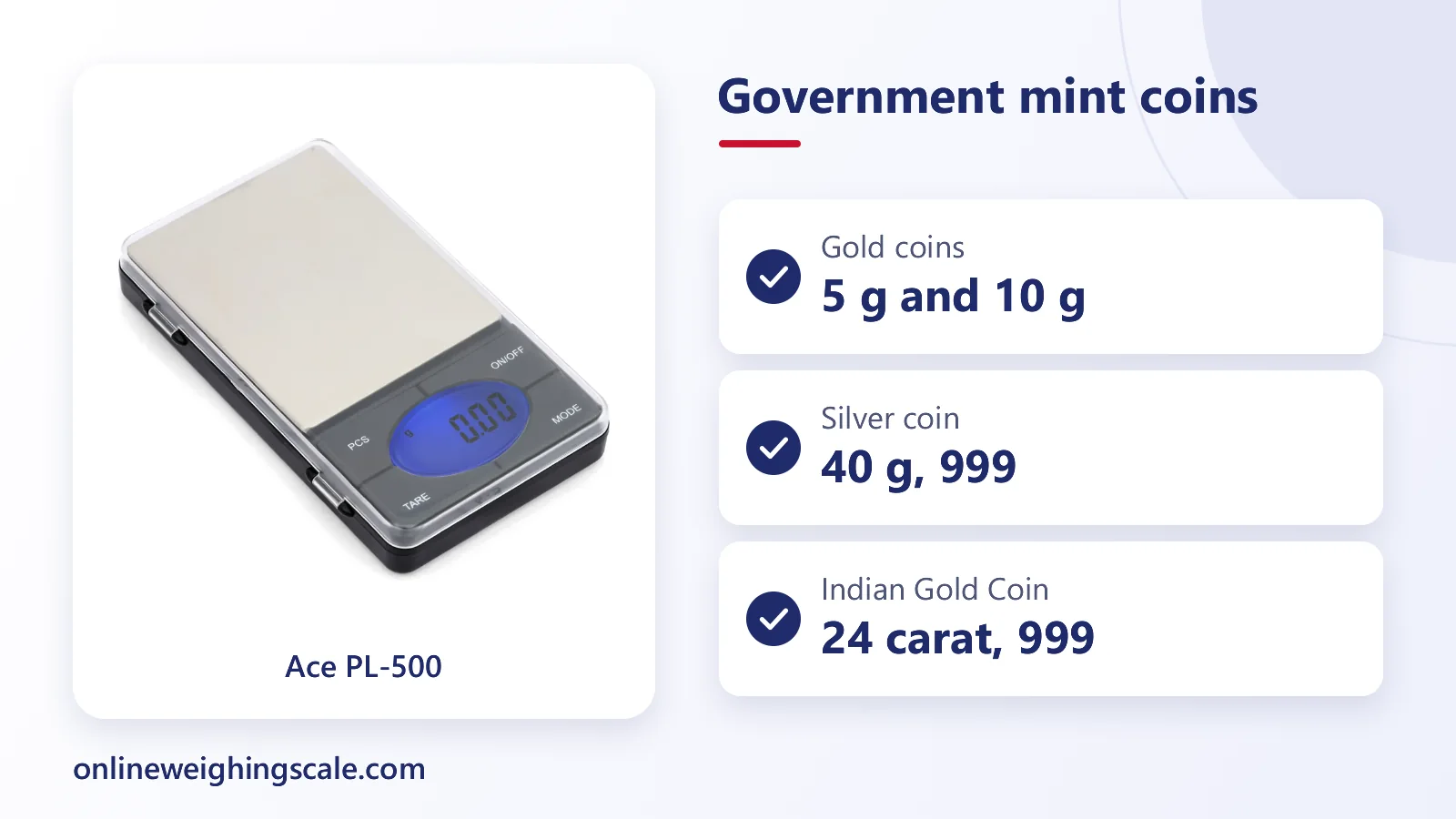
India Government Mint, Mumbai, run by SPMCIL, lists gold coins of 5 gm and 10 gm and a silver coin of 40 gm on its products page. The same page marks the 40 gm silver coin as 999 purity. It does not give the diameter or thickness of any coin, so those numbers are best read from the pack or the maker's own sheet.
The Indian Gold Coin, launched on 5 November 2015, is the government-backed coin most buyers have heard of. The Indian Economic Service's Arthapedia page on the Gold Coin and Bullion Scheme describes it as 5 g and 10 g coins plus a 20 g bar, all of 24 carat purity and 999 fineness. The Ashoka emblem sits on one face and Mahatma Gandhi on the other. The coins come in tamper-proof packs.
Private mints and bank counters sell other sizes, commonly from 1 g and 2 g up to 50 g and 100 g. Those sizes are the maker's choice, so Omace Brands Private Limited has not confirmed them on any official page. The stamped weight and the printed purity on the pack are the only specifications that count for the coin in your hand.
You may also hear of the 8 g gold coin called a sovereign (sovereign gold weight). The word is used loosely in the trade, and no official page confirmed a fixed 8 g size, so treat it as a seller's name and read the stamp.
| Coin or bar | Weight on official page | Purity on official page |
|---|---|---|
| Government mint gold coin | 5 g and 10 g | Not stated on the mint page |
| Indian Gold Coin | 5 g and 10 g, plus a 20 g bar | 24 carat, 999 fineness |
| Government mint silver coin | 40 g | 999 |
What the purity mark on a coin means
Fineness is the number of parts of pure metal in 1,000 parts of the coin. A fineness of 999 means 999 parts gold, and 24 carat is the top carat grade. A coin is therefore almost pure gold, which is why it is soft and scratches easily.
Jewellery follows a different rulebook. The Bureau of Indian Standards (BIS) says in its hallmarking guidance for jewellers that the mandatory order covers gold jewellery and artefacts only. Three marks are required on a hallmarked piece: the BIS standard mark, the purity in carat and fineness, and a six-digit HUID number. Anyone can check a HUID through the BIS Care app.
Coins sit outside that order. The same BIS page says gold bullion and coins of 999 or 995 fineness can be hallmarked only by BIS-approved refineries or mints. So a coin from an approved refinery or a government mint carries a purity claim you can trace, and a loose coin from an unknown source carries only a stamp.
BIS also lists the carat grades that may be hallmarked on jewellery. Its hallmarking FAQ names 14, 18, 20, 22, 23 and 24 carat. A gold chain marked 22 carat is therefore a different material from a 24 carat coin, even before you weigh either.
How to check a gold coin's weight at home
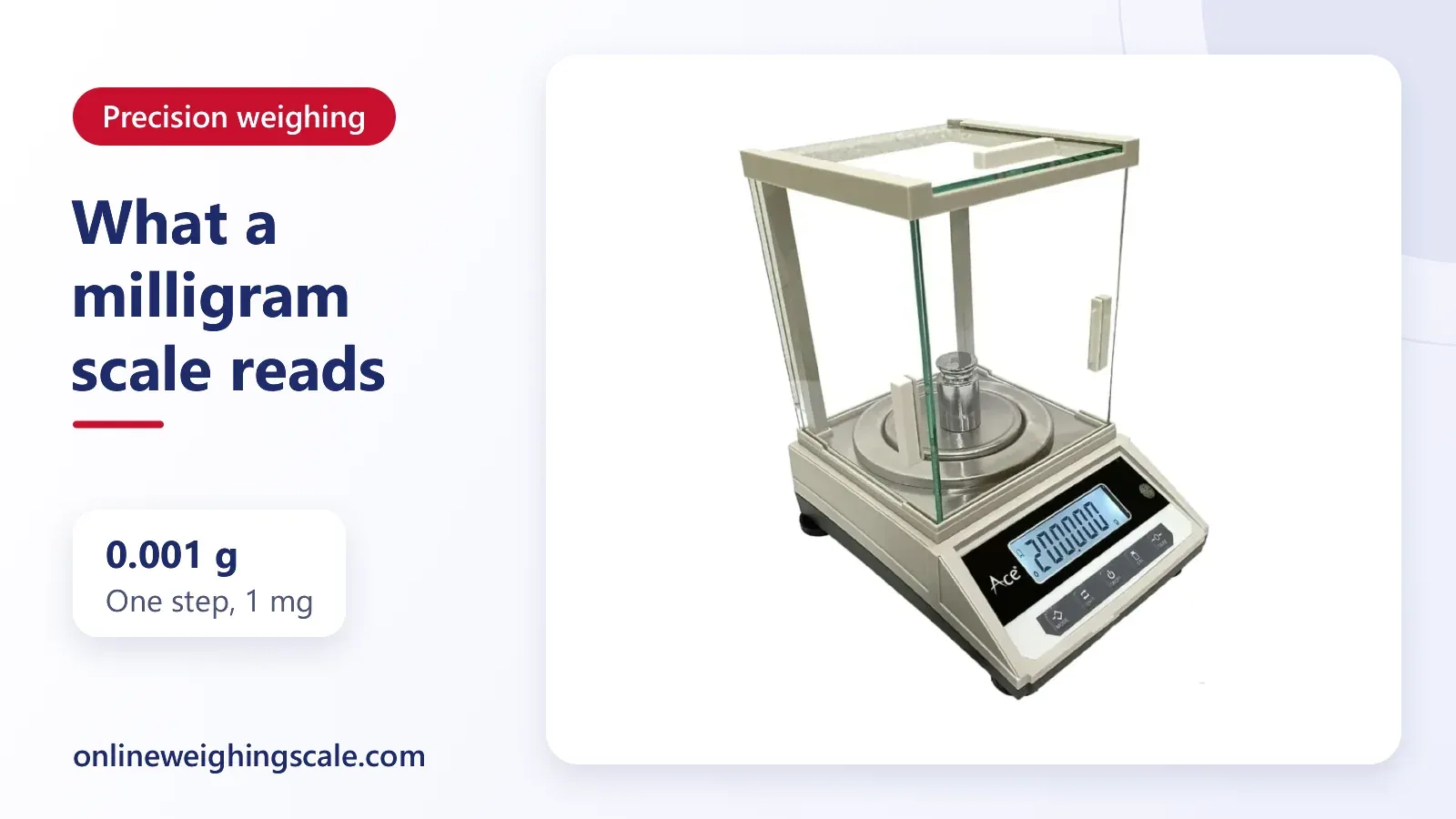
You need a scale that reads to at least 0.01 g, a clean flat surface and a coin taken out of its pack. A 0.01 g reading on a 5 g coin is a resolution of 0.2 per cent, and on a 1 g coin it is 1 per cent. For small coins a 0.001 g balance gives a much tighter check.
- Place the scale on a steady, level table away from fans and open windows. Air movement shifts the last digit.
- Switch it on and let it warm up for a few minutes.
- Check the scale first with a known test weight. A scale that is wrong by 0.05 g will make every coin look wrong. The steps are in how to calibrate a gold weighing scale.
- Press TARE with the empty pan so the display reads 0.00.
- Lift the coin with clean tweezers or a cloth. Oil and sweat from fingers add a few milligrams and spoil the last digit.
- Put the coin in the middle of the pan and wait until the reading stops moving.
- Note the reading, remove the coin and confirm the scale returns to zero. Weigh it twice more.
Compare the reading with the stamped weight. A reading within a few hundredths of a gram of the stamp is normal, because every maker works to a small tolerance. Ask the seller for the tolerance they work to, and do not assume a number. If the reading is off by tenths of a gram on a 5 g coin, weigh again on a second scale before drawing any conclusion.
Always weigh the coin out of its pack. The sealed card or capsule has its own weight, and a scale cannot tell the two apart. If you must weigh the coin inside its capsule, weigh the empty capsule first and subtract it.
Check the size as well as the weight
Weight is one measurement, and a coin has two more: diameter and thickness. A vernier caliper reads both to 0.01 mm or 0.02 mm, depending on the type. Measure the diameter at two different angles and the thickness at the rim.
The three numbers belong together. A coin of the right weight but the wrong thickness is suspicious, because gold is a dense metal and a fixed weight of gold takes up a fixed small volume. Many fakes use a cheaper metal plated or filled to match the weight, and they usually miss on size. Compare your readings with the maker's printed sheet or with a sealed coin of the same type.
The kitchen method of water displacement is also used. Weigh the coin in air, then suspended in water, and compare the two readings. A pure gold coin loses a smaller share of its weight in water than most imitation metals do. This test needs a scale with a hook below the pan and a steady hand, so treat it as a second opinion. The weight of everyday objects post shows how little a coin weighs against common things.
What weight cannot prove
A coin can have the correct stamped weight and still be wrong. A maker can add a heavier core under a gold skin, and a thin layer of gold over another metal can match the weight and the size together. Weight shows that the coin has not lost metal. It does not show how pure the metal is.
Purity is tested by fire assay, X-ray fluorescence or an acid test, all of which are done by trained people with the right equipment. A jeweller's touchstone is an old method that experienced hands still use. A home scale is a good first filter and a poor judge.
This is the reason to buy coins in sealed packs from a government mint or a BIS-approved refinery. The pack and the certificate carry the purity claim, and your scale confirms the weight. Opening a sealed pack to test it can void the buy-back terms, so ask the seller before you do.
Silver coin weight
Silver coins follow the same logic. The India Government Mint page above lists a 40 gm silver coin with 999 purity. Silver is lighter than gold for the same size, so a silver coin of the same diameter as a gold coin weighs less. Silver also tarnishes, and the film adds a tiny weight, so wipe the coin with a soft dry cloth before weighing.
For silver coins, a scale reading to 0.1 g is enough to confirm the stamped weight, since silver coins are usually heavier than gold ones. Gold coins of 1 g to 10 g deserve 0.01 g or 0.001 g.
Which scale to use for coins
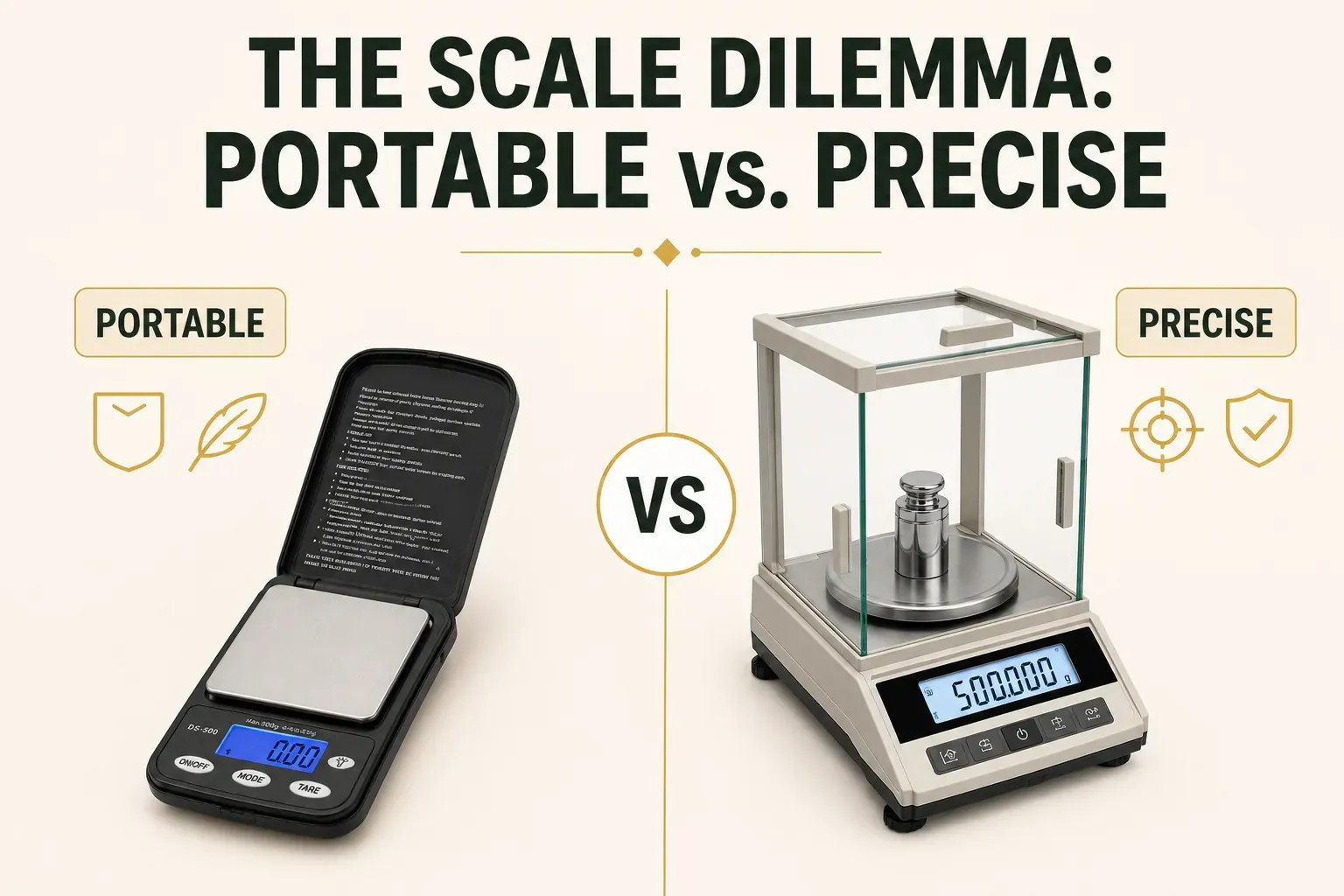
The scale matters more than people expect. A kitchen scale that reads to 1 g cannot tell a 5 g coin from a 4.6 g fake, and an uncalibrated scale shifts every reading. For coins choose a scale with a resolution of 0.01 g or finer, a cover or windshield and a calibration weight.
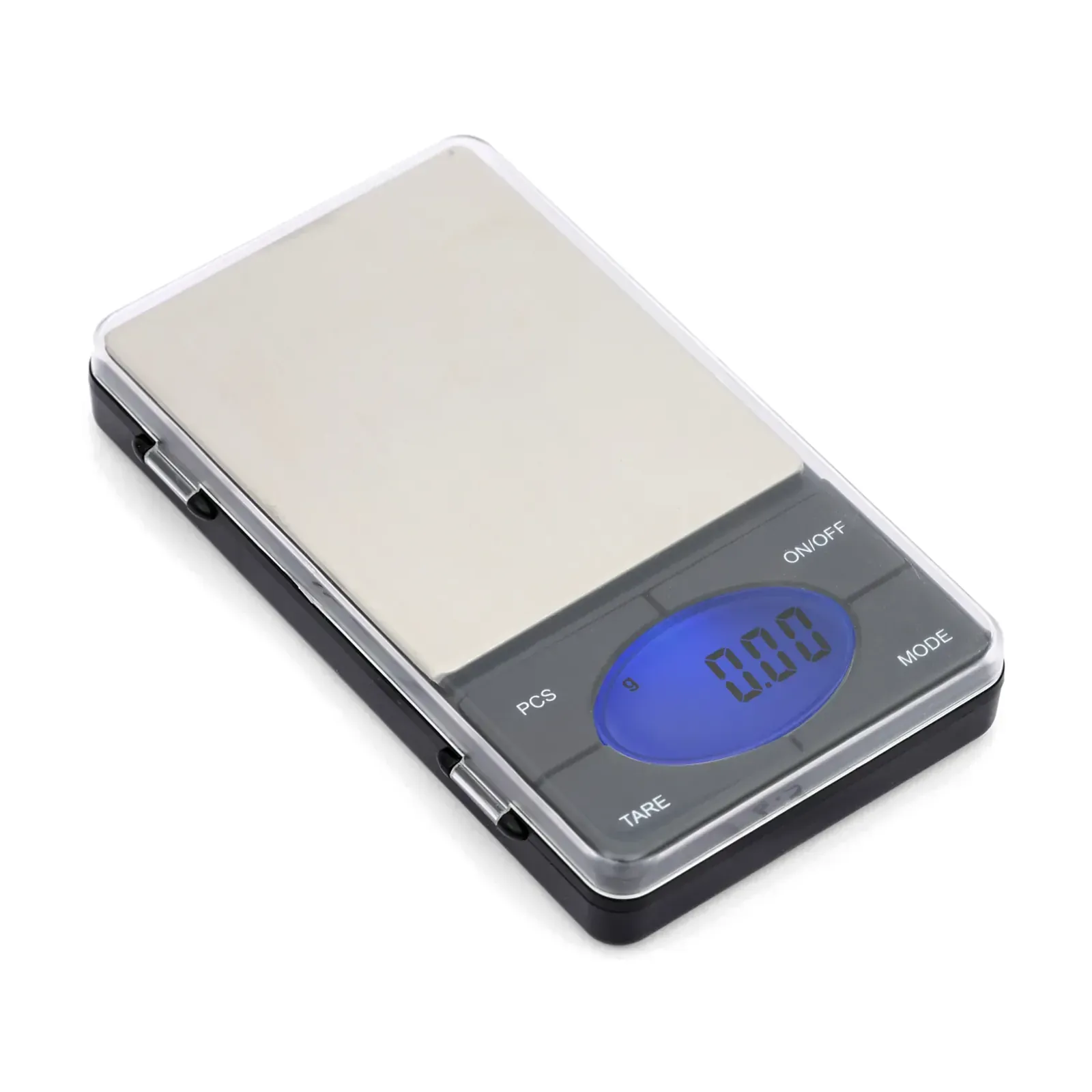
- The Ace PL-500 Pocket Gold Scale reads 500 g x 0.01 g and costs ₹1209. It is a handy carry scale for checking coins at a counter.
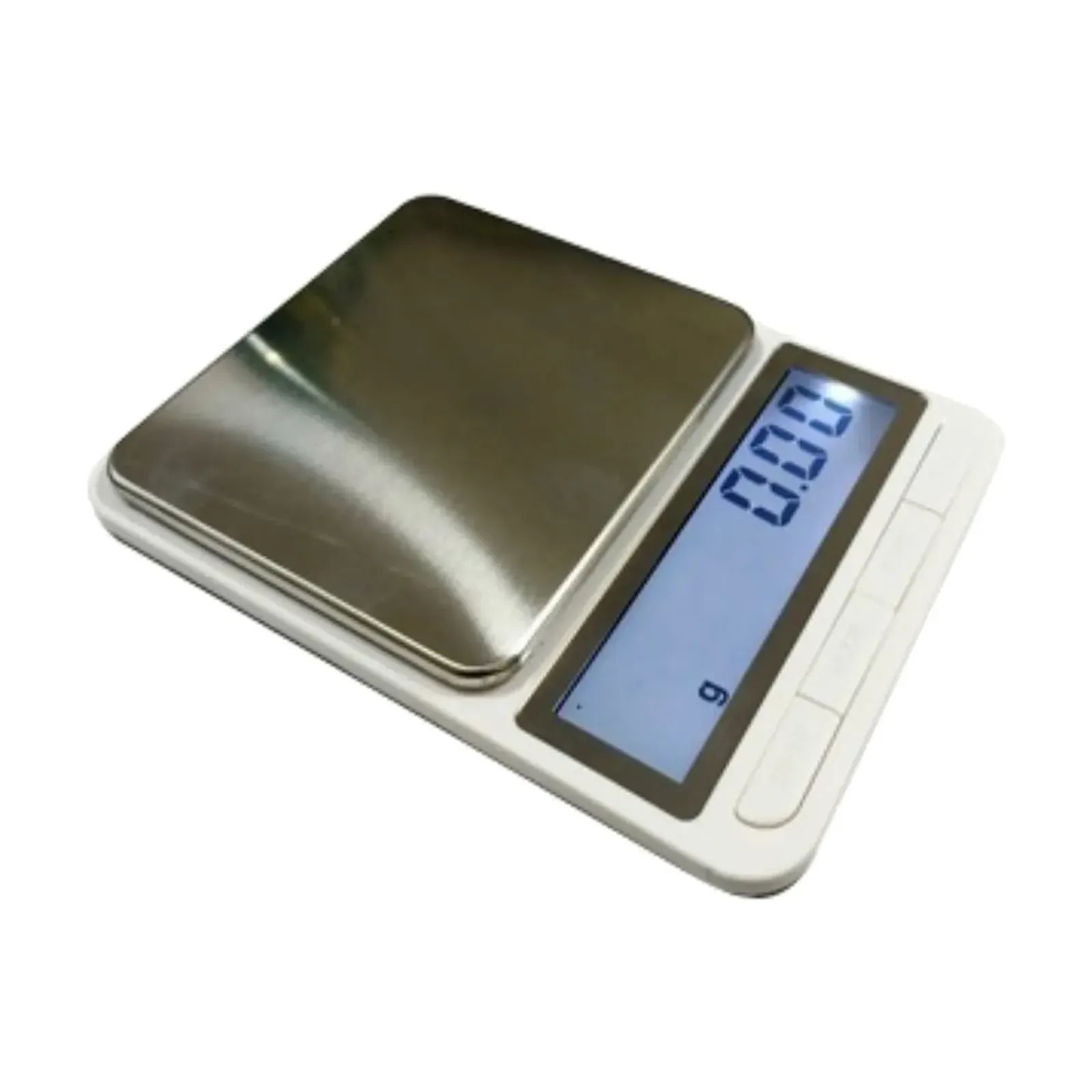
- The Ace KE-500 Digital Scale for Gold and Silver reads 500 g x 0.01 g with a 90 mm pan and costs ₹2619.
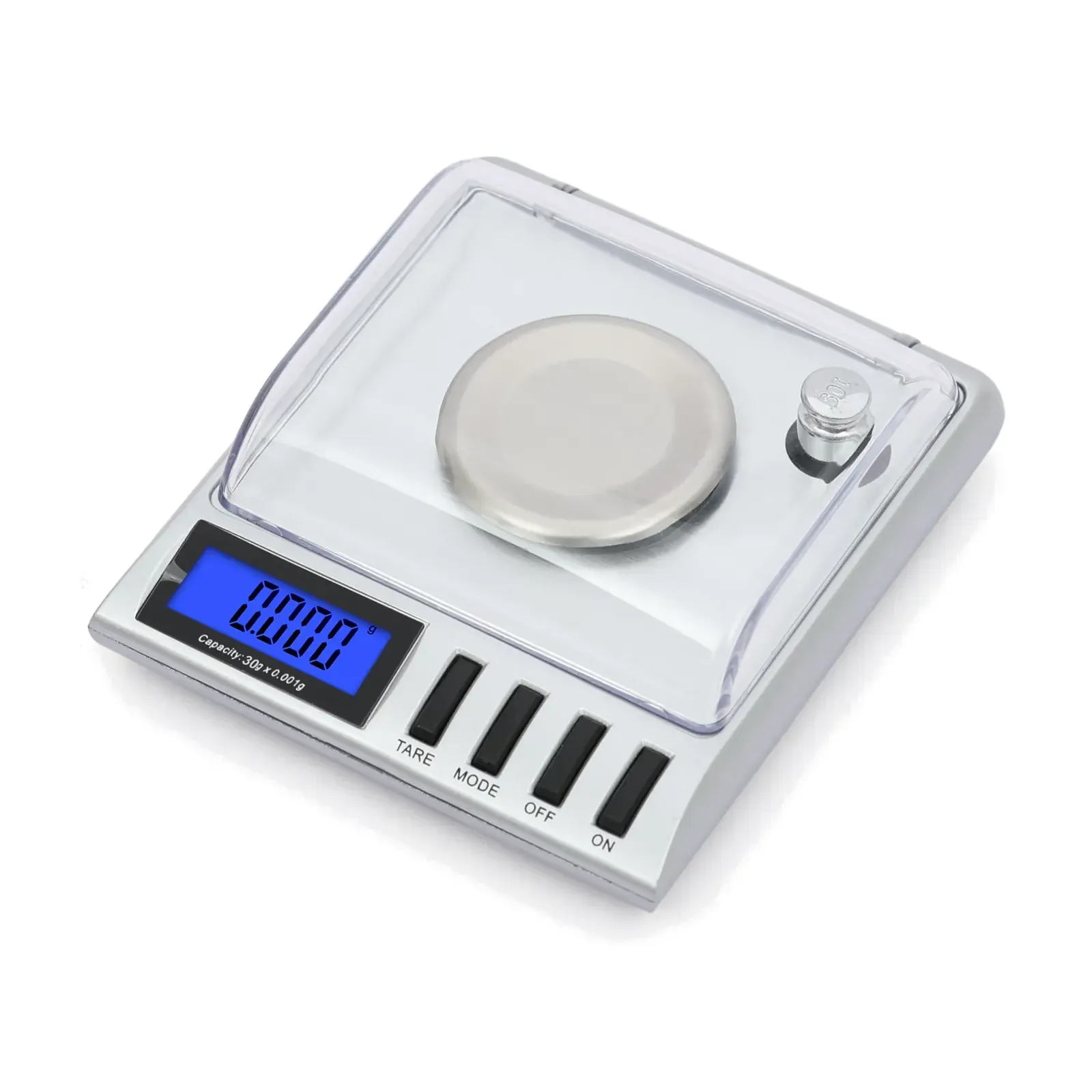
- The Ace GM-50 Carat Scale reads 50 g x 0.001 g with a windshield and calibration weights, and costs ₹2729. It suits small coins and gold bits, where the third decimal helps.
Omace Brands Private Limited has made scales in Bagru, Jaipur since 1994, and every scale is checked with certified test weights before dispatch. Browse the pocket scale and jewellery weighing scale ranges, or read the jewellery scale buying guide before you choose. A pocket scale can also be tested with common coins, as shown in the pocket scale calibration guide.
On Omace digital scales a long press of TARE opens calibration mode on some models and a long press of the M key on others, and the manual for each model shows which. Keep the calibration weight clean and dry, and store it in its case.
Buying a gold coin: points to settle before paying
- Buy from a government mint outlet, a bank counter or a BIS-approved refinery, and keep the invoice.
- Ask for the purity in fineness, such as 999, and check it is printed on the pack.
- Check that the pack is sealed and the printed weight matches the coin's stamp.
- Weigh a coin you hold on your own scale and keep the reading with the bill.
- Ask what the buy-back terms are and whether a broken seal changes them.
Rules and rates change. Check the current terms with the mint or refinery directly before you pay. Details above were checked in November 2026.