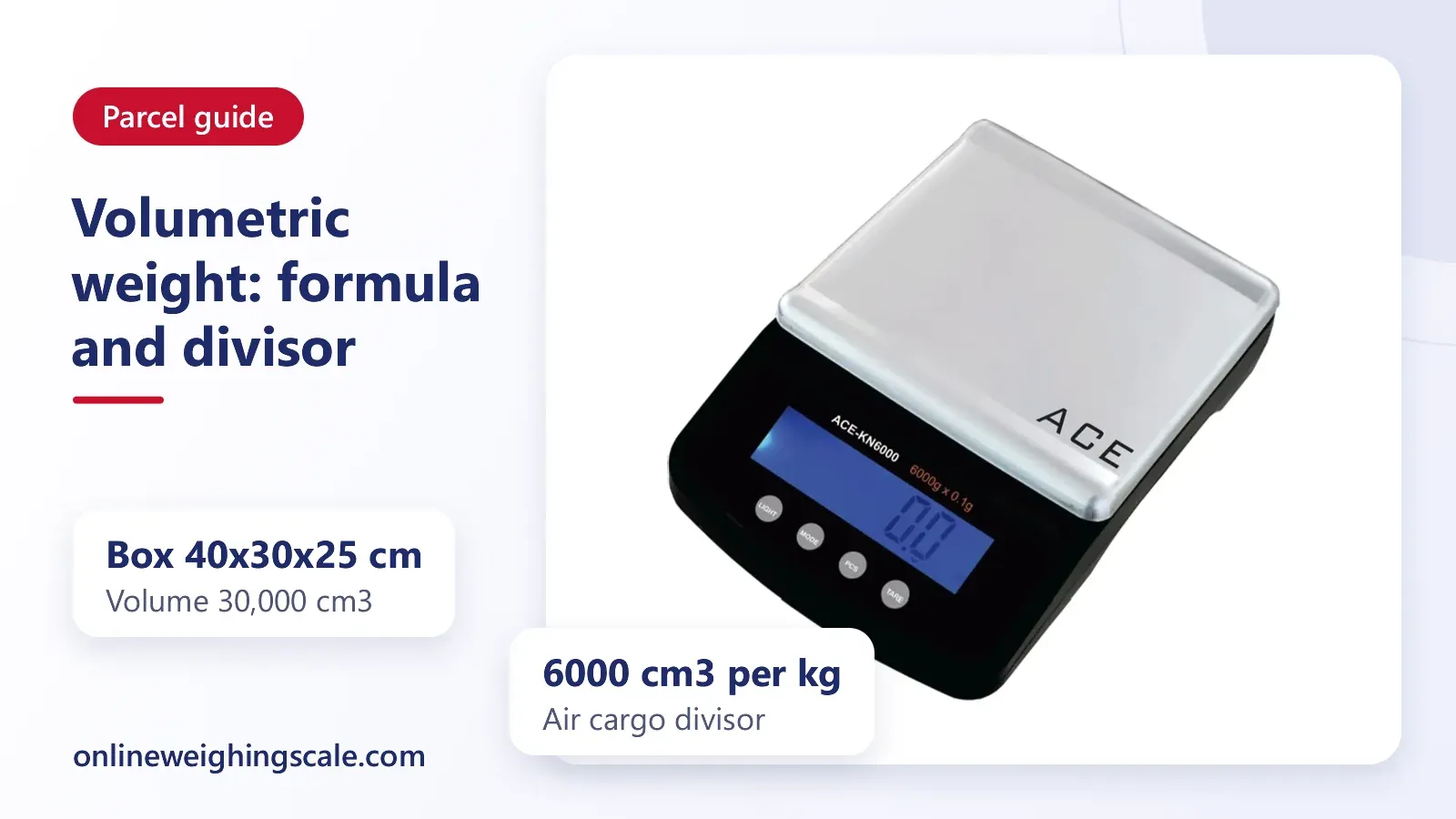
Volumetric weight is the weight a carrier assigns to a parcel from its size instead of from what the scale shows, found by multiplying length, width and height in centimetres and dividing by a fixed number. For air cargo the International Air Transport Association (IATA) gives 6000 as the general rule on its air cargo tariffs and rules page. Road and air parcel services in India publish their own divisor, so the figure on your rate card decides your bill.
Actual weight, volumetric weight and chargeable weight
Three weights appear on a shipping bill, and sellers mix them up. Actual weight, also called dead weight, is what the parcel shows on a scale once it is packed, with the box, tape and filler included. Volumetric weight, also called dimensional weight, is a figure worked out from the outside size of the box. Chargeable weight is the higher of the two, and the freight charge is calculated on it.
IATA states the general rule for air freight in plain terms: divide the volume of the shipment in cubic centimetres by 6000, and price on whichever is higher, the volumetric weight or the actual weight. The reason is simple. A truck or aircraft fills up with space before it fills up with kilograms, so a large light box costs the carrier as much as a small heavy one.
A box of pillows is the usual example. It may weigh 2 kg on the scale, but if it is 60 cm × 40 cm × 40 cm it occupies the space of a much heavier parcel. A steel weight plate in a small box is the opposite case: the scale reading is higher, so actual weight is charged.
The volumetric weight formula
The formula is length × width × height in centimetres, divided by the divisor, and the answer is in kilograms. Measure the packed box from the outside, at the longest point of each side, including any bulge. A box that has swollen at the sides is billed on the swollen size.
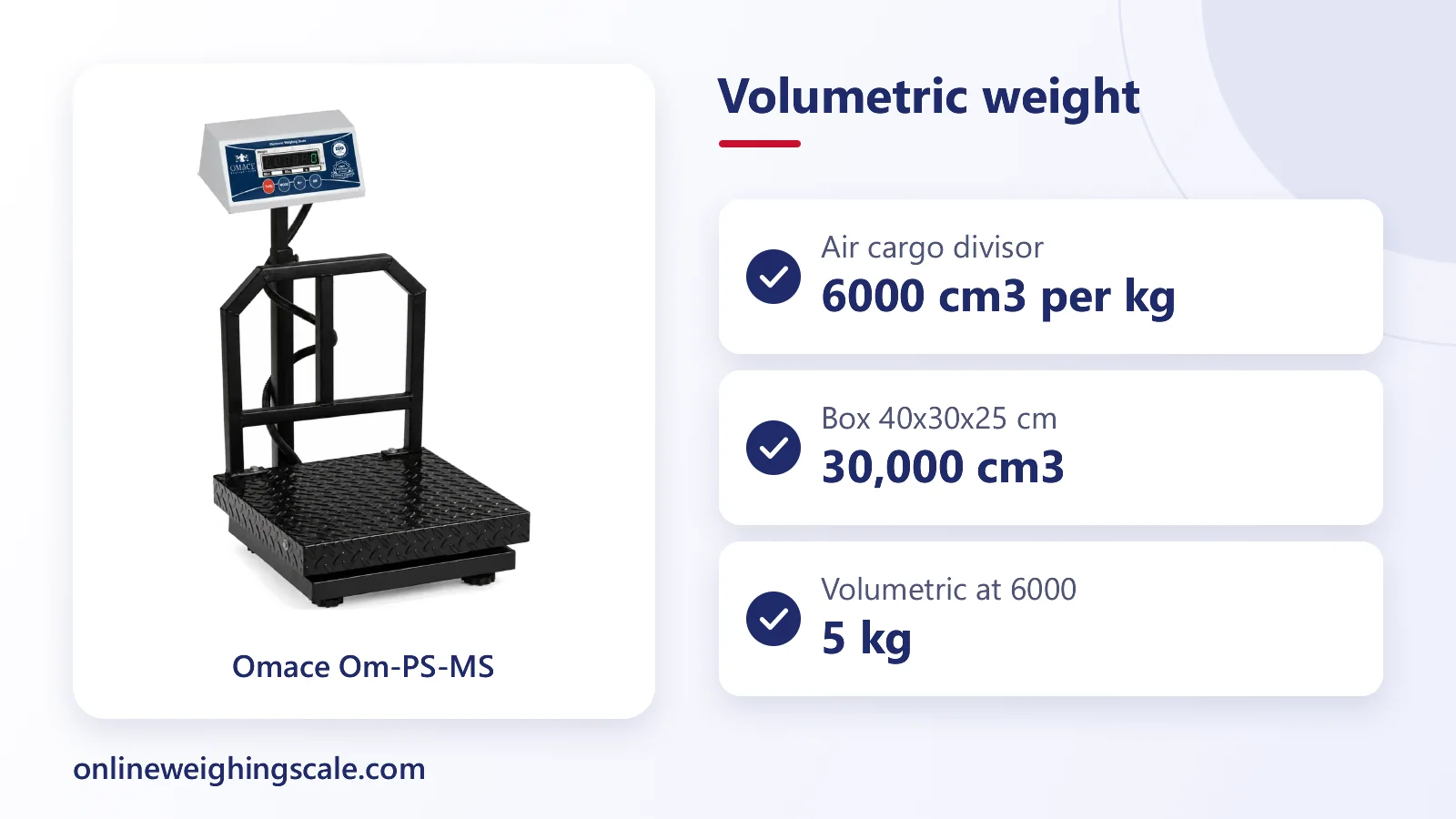
The divisor is where sellers get confused. The IATA figure of 6000 is the general rule for air freight. Parcel services publish their own divisor on their rate cards, and it can differ between surface and air, so read the number from your own rate card and never assume it. The worked examples below use 5000 and 6000 only to show how much the choice matters. India Post, the government postal service, refers to volumetric weight in its Speed Post parcel (domestic) product page, which lists a gross weight limit of 35 kg or the volumetric weight as defined, a length limit of 1.5 metres and a length plus girth limit of 3 metres. That page does not print a divisor, so the tariff notice that applies to your booking is the document to read.
A smaller divisor means a higher volumetric weight for the same box. That is why one box can be cheaper to send by one service than by another even before the price per kilogram is compared.
Worked examples
The table below uses two example divisors on the same boxes, so you can see how much the choice matters. Volumetric weight is the volume divided by the divisor, and chargeable weight is the higher of that and the scale reading.
| Packed box (cm) | Scale weight | Volume (cm³) | Divisor 5000 | Divisor 6000 | Chargeable at 5000 / 6000 |
|---|---|---|---|---|---|
| 30 × 20 × 15 | 1.2 kg | 9,000 | 1.8 kg | 1.5 kg | 1.8 kg / 1.5 kg |
| 40 × 30 × 25 | 3 kg | 30,000 | 6 kg | 5 kg | 6 kg / 5 kg |
| 50 × 40 × 40 | 4 kg | 80,000 | 16 kg | 13.33 kg | 16 kg / 13.33 kg |
| 25 × 20 × 15 | 9 kg | 7,500 | 1.5 kg | 1.25 kg | 9 kg / 9 kg |
The first three boxes are billed on size, and the fourth, a dense box of metal parts, is billed on the scale reading. Carriers usually round up to the next slab, which the rate card states.
How weight disputes happen
A weight dispute is the most common complaint from small sellers: the booking said 1.2 kg, the invoice says 2 kg. The cause is almost always one of four things.
- The seller entered the scale weight and the carrier applied the box size, so the volumetric figure won.
- The box was packed larger than the size entered at booking, for example with extra bubble wrap.
- The seller's scale reads a little off, so a 1.0 kg parcel is entered as 0.9 kg.
- The carrier's hub scale and the seller's scale disagree by a small margin, and a rate slab is crossed.
The first two are about size and can be fixed with a tape measure. The last two are about the scale, which is where a verified scale pays for itself. Our guide on a weighing scale that is not working covers faults, and what calibration means explains how a reading is checked against a known weight.
Keeping proof before the parcel leaves
The carrier's figure is usually final at the hub unless you can show something different. A few minutes at the packing table builds a record that settles most disagreements.
- Pack the box completely, with the label and tape on, before weighing.
- Place it on the scale and photograph the display and the box in the same frame.
- Measure length, width and height with a tape, and photograph the tape along each side.
- Write the three sizes and the weight on the booking record, and keep the photo with the tracking number.
- Use the same scale every time and check it against a known weight at the start of the week.
If the invoice still disagrees, raise it with the carrier in writing and attach the photographs. When the carrier does not respond, the Government of India's National Consumer Helpline is a pre-litigation grievance step: the portal states it works at the pre-litigation stage, forwards the grievance to the company and issues a docket number for follow-up. Keep your weight proof ready for it as well.
Which scale fits which parcel
A scale for parcels needs a capacity above the heaviest box you pack and a pan or platform large enough to hold the box flat. A box that overhangs the pan can press on the frame and shift the reading.
| Parcel | Typical packed weight | Scale type | Omace model |
|---|---|---|---|
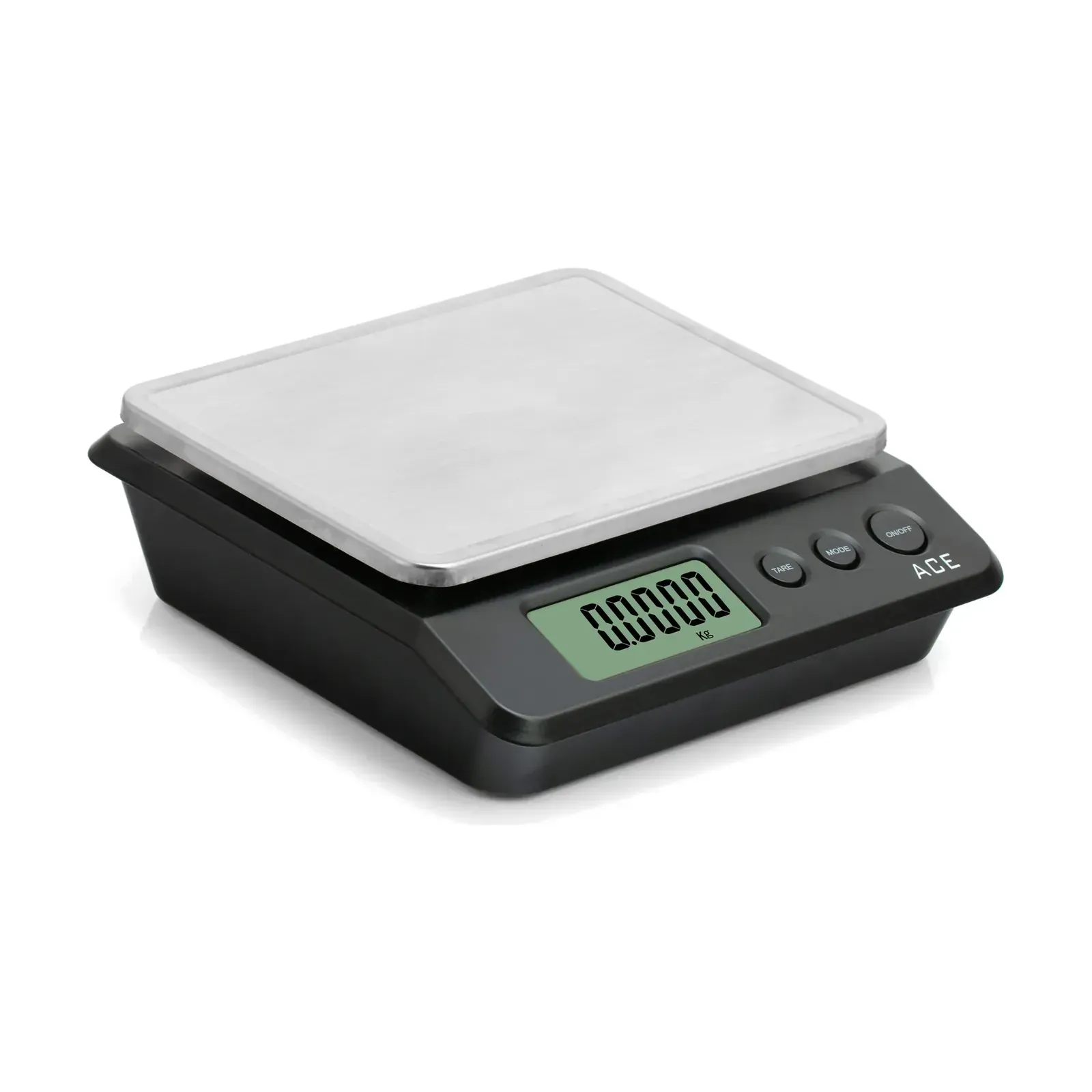
| Small cartons, light goods, garments | Up to about 30 kg | Table-top digital scale | Ace PS-30, 30 kg x 1 g |
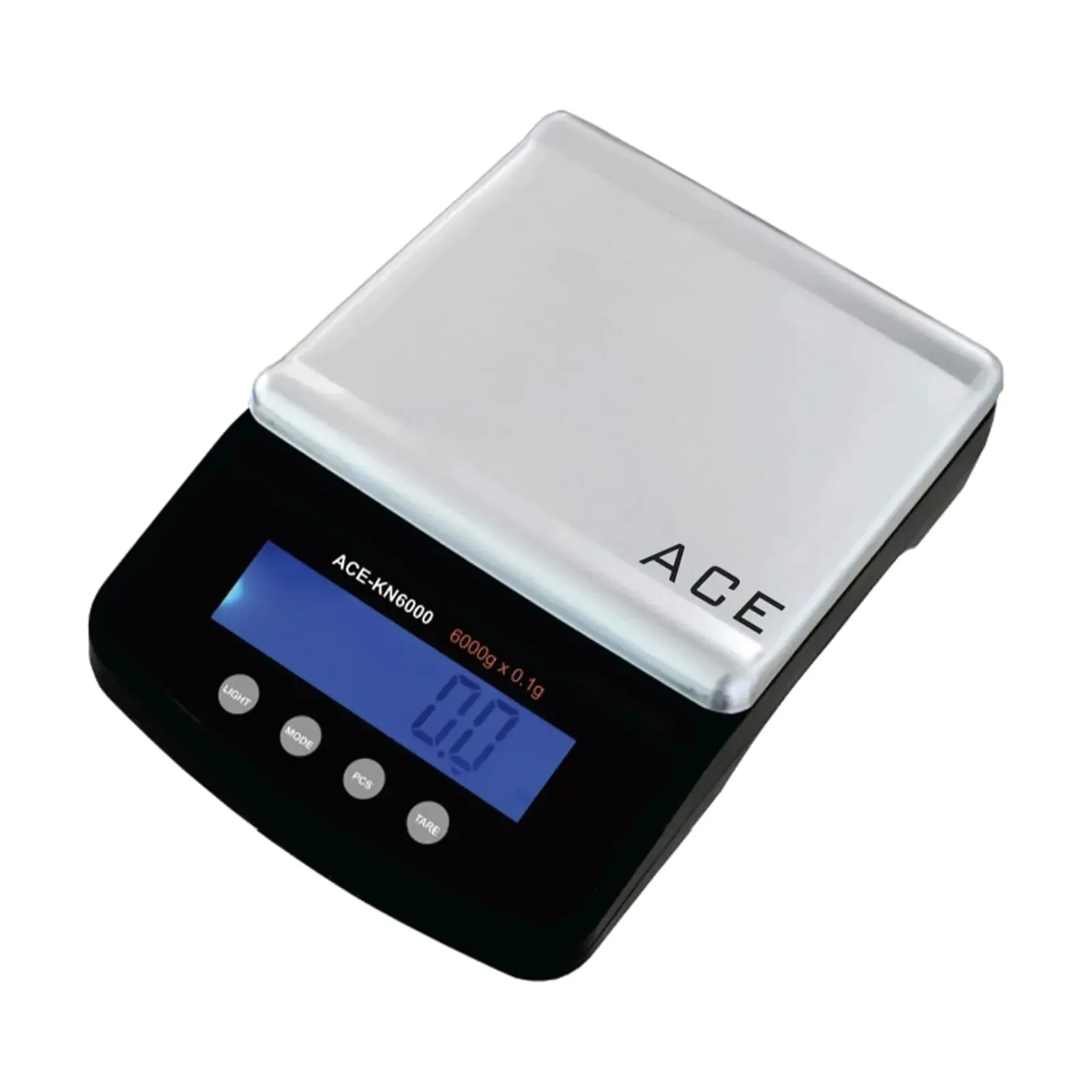
| Mixed cartons, shop orders | Up to 10 kg | Table-top scale with piece counting | Ace KN 10 kg |
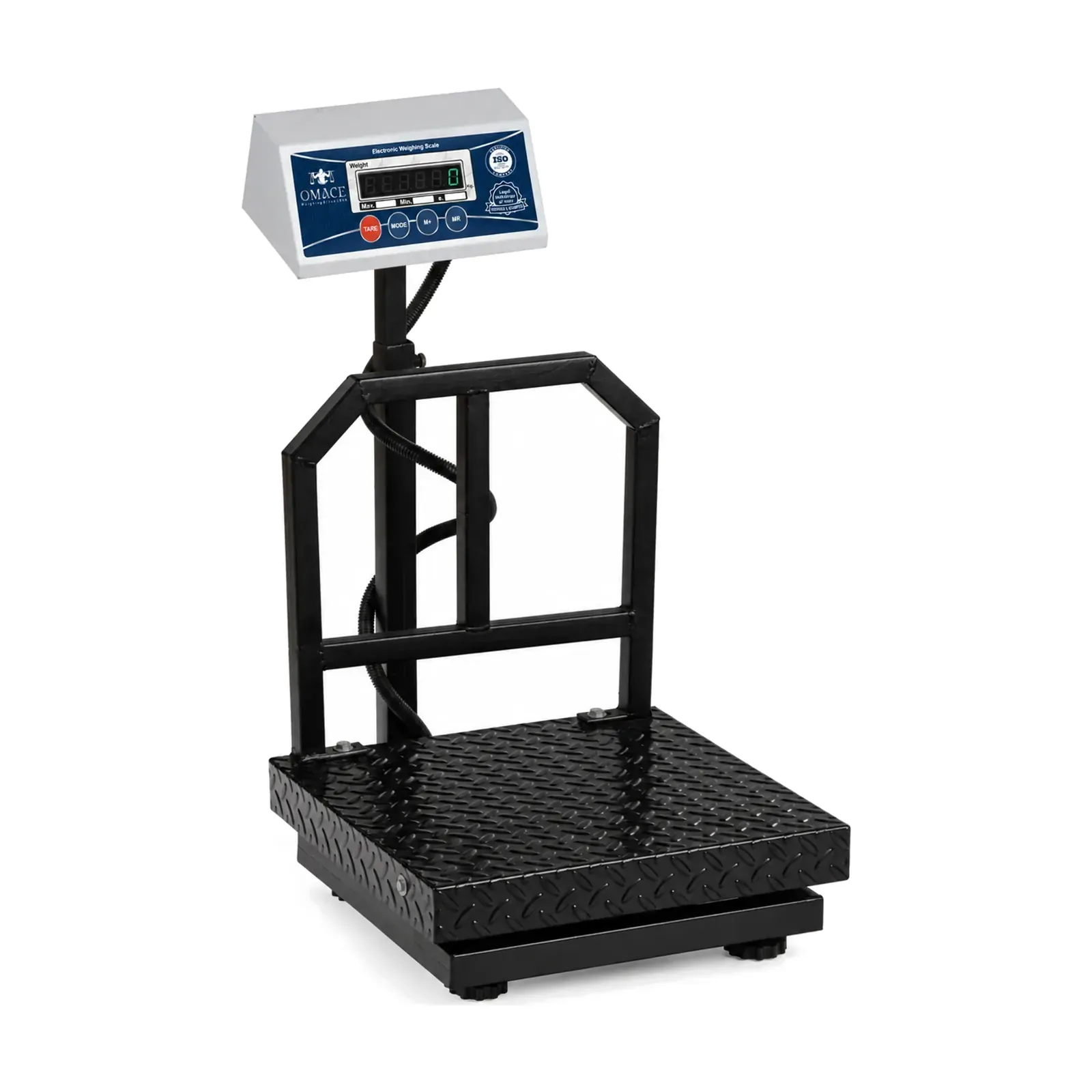
| Large cartons, cases, drums | 100 kg to 500 kg | Platform scale | Omace Platform Kanta |
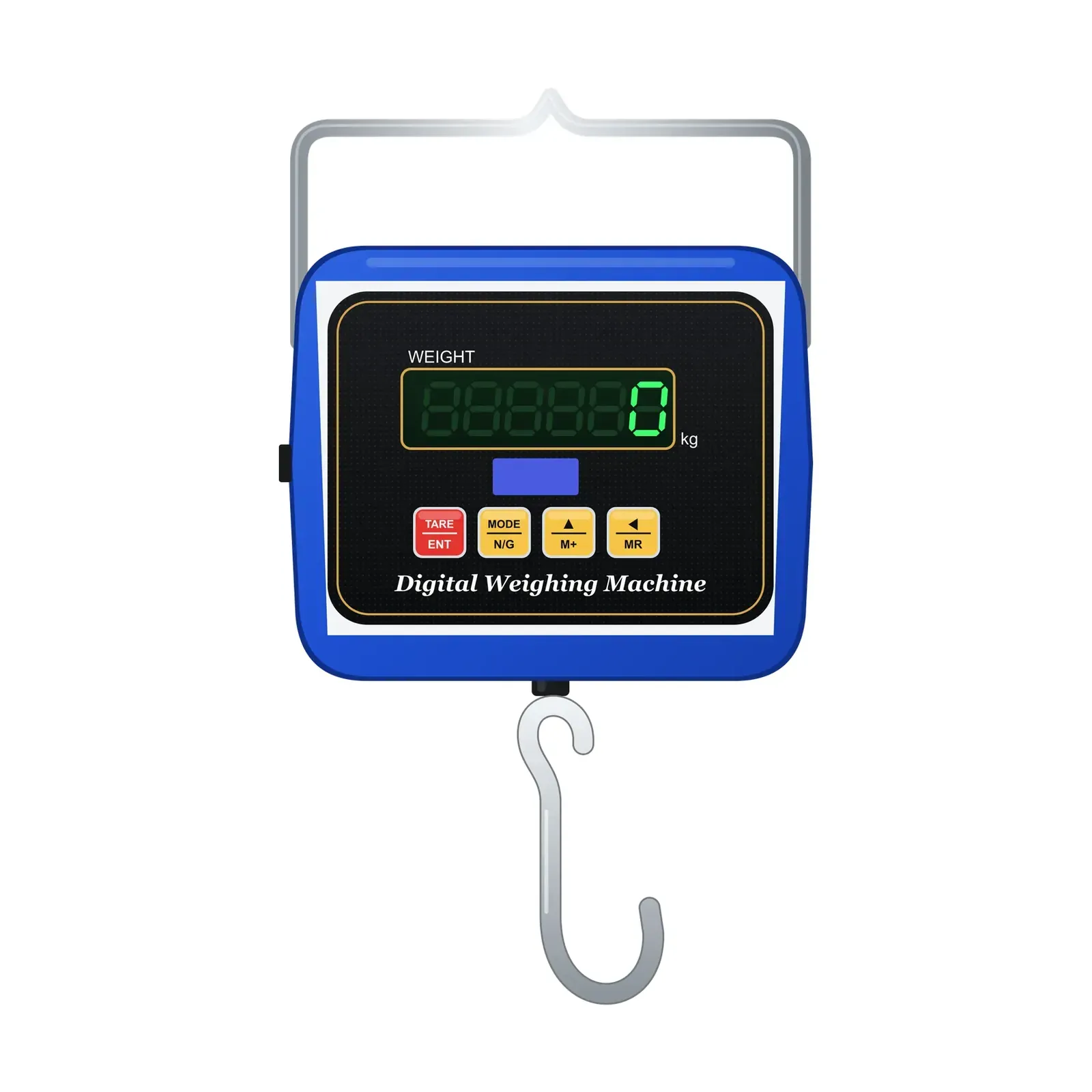
| Odd shapes, bags with handles | Up to 50 kg | Hanging scale | Omace Digital Hanging Scale 50 kg |
For most home businesses, the Ace PS-30 30 kg weighing scale at ₹1889 covers almost every parcel, with a steel pan and a backlit display. Where a shop packs lighter parcels and counts items, the Ace KN 10 kg weighing scale at ₹4199 reads in finer steps. Cartons heavier than 30 kg go on the Omace platform kanta, which starts at ₹6300 for the 100 kg size. For a sack or an awkward parcel that will not sit on a pan, the Omace digital hanging scale 50 kg at ₹3459 takes it by a hook.
The finest step matters for the rate slab. A parcel of 0.95 kg and one of 1.05 kg land in different slabs, and a scale that reads in 1 g steps shows the difference where a scale that reads in 50 g steps hides it.
Trade use and stamping
When a scale is used to bill customers by weight, Indian weights and measures law requires it to be verified and stamped. Omace Brands Private Limited ships its shop, platform, chicken and crane scales from Bagru, Jaipur, stamped by Legal Metrology, and the stamp is valid across India. Our post on Legal Metrology in India explains the department and its rules. A packing-table scale used only to book a parcel is a working tool, but the same habits of checking and keeping records apply.
Cutting volumetric weight
Because size drives the bill, trimming the box is the quickest saving. Pick the smallest box that leaves room for padding, and cut tall boxes down so the lid sits close to the goods. Compress soft goods such as garments in a zip bag. Skip loose air pillows when the goods are tough. When a product ships in many sizes, work out the volumetric weight of each box once and note it on the listing sheet, so every order is booked correctly the first time.
Taking 5 cm off the height of a 40 × 30 × 25 cm box brings the volumetric weight from 6 kg to 4.8 kg at an example divisor of 5000, which can move the parcel down a slab if the rate card has one.
Repairing a commercial scale
Omace Brands Private Limited repairs its commercial scales when the buyer asks. The buyer pays the shipping both ways and the repair cost, and spare parts depend on availability, so ask first through the contact page.