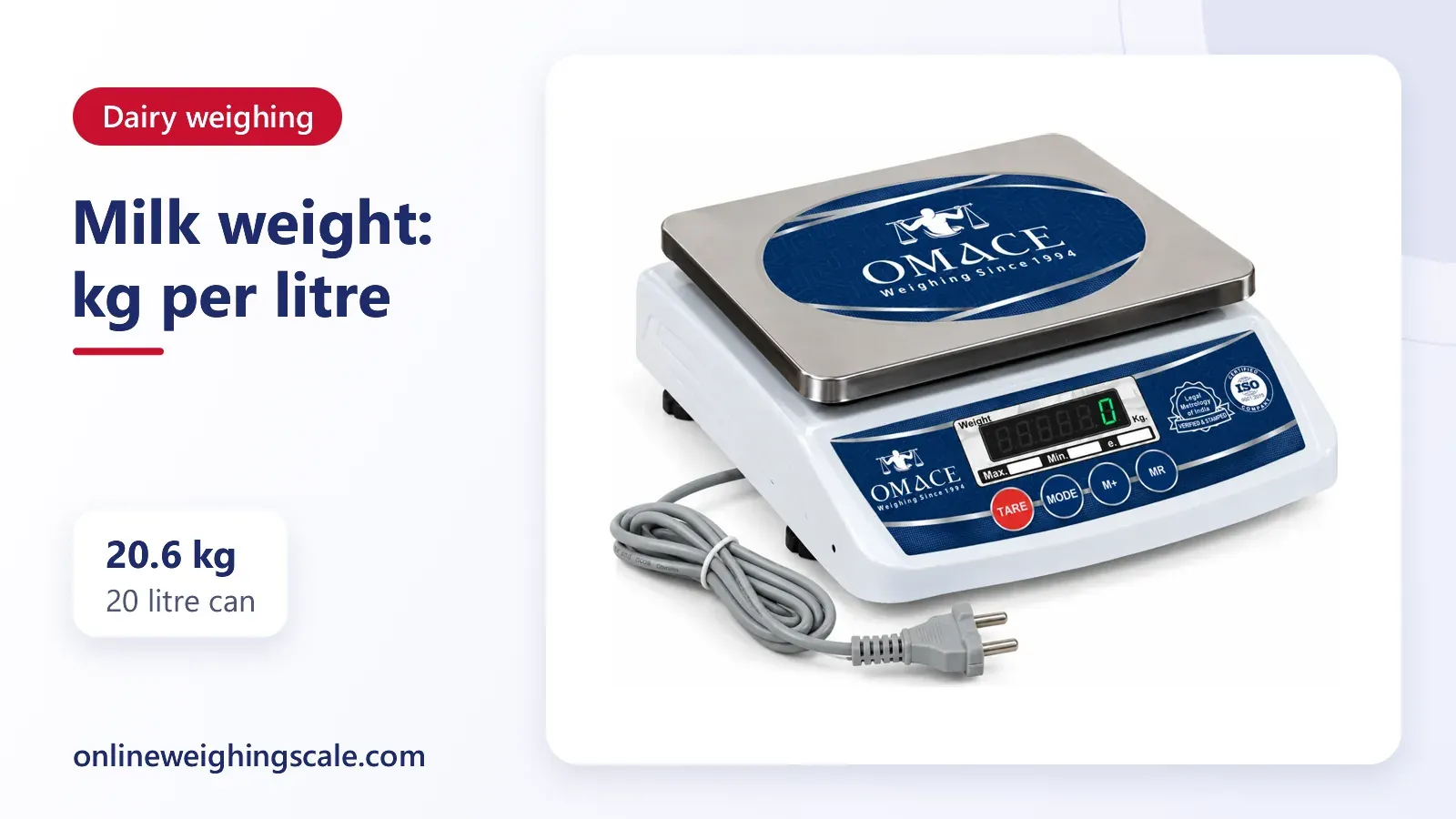
A milk weighing scale reads milk in kilograms, and one litre of milk weighs about 1.03 kg, so a 20-litre can holds roughly 20.6 kg of milk. Many dairy collection points weigh the milk and record kilograms, because weight stays the same whatever the foam, the can shape or the temperature. This guide covers the kg to litre sum, can and bucket weighing with tare, the capacity and division a collection point needs, hanging against platform scales, and cleaning.
Why milk is weighed in kg but sold in litres
Milk reaches a collection point in cans and buckets, and each farmer's lot has to be measured before payment. The Food and Agriculture Organization of the United Nations says in its Small-Scale Dairy Farming Manual that the most common method for measuring milk from farmers is the gravimetric method, which means weighing it. The same manual describes volume methods too, such as dipsticks for large tanks and flow-meters on tankers. Volume readings are converted into kilos before the farmer is paid.
Weight is the safer base for payment. A litre of foamy milk holds less milk than a litre of settled milk, and milk expands slightly when warm. Kilograms do not change with either. Households and shops then buy the same milk by the litre, so the dairy converts between the two. A doodh tolne ki machine at a village society is usually an ordinary digital scale doing exactly this job.
How many kg is 1 litre of milk
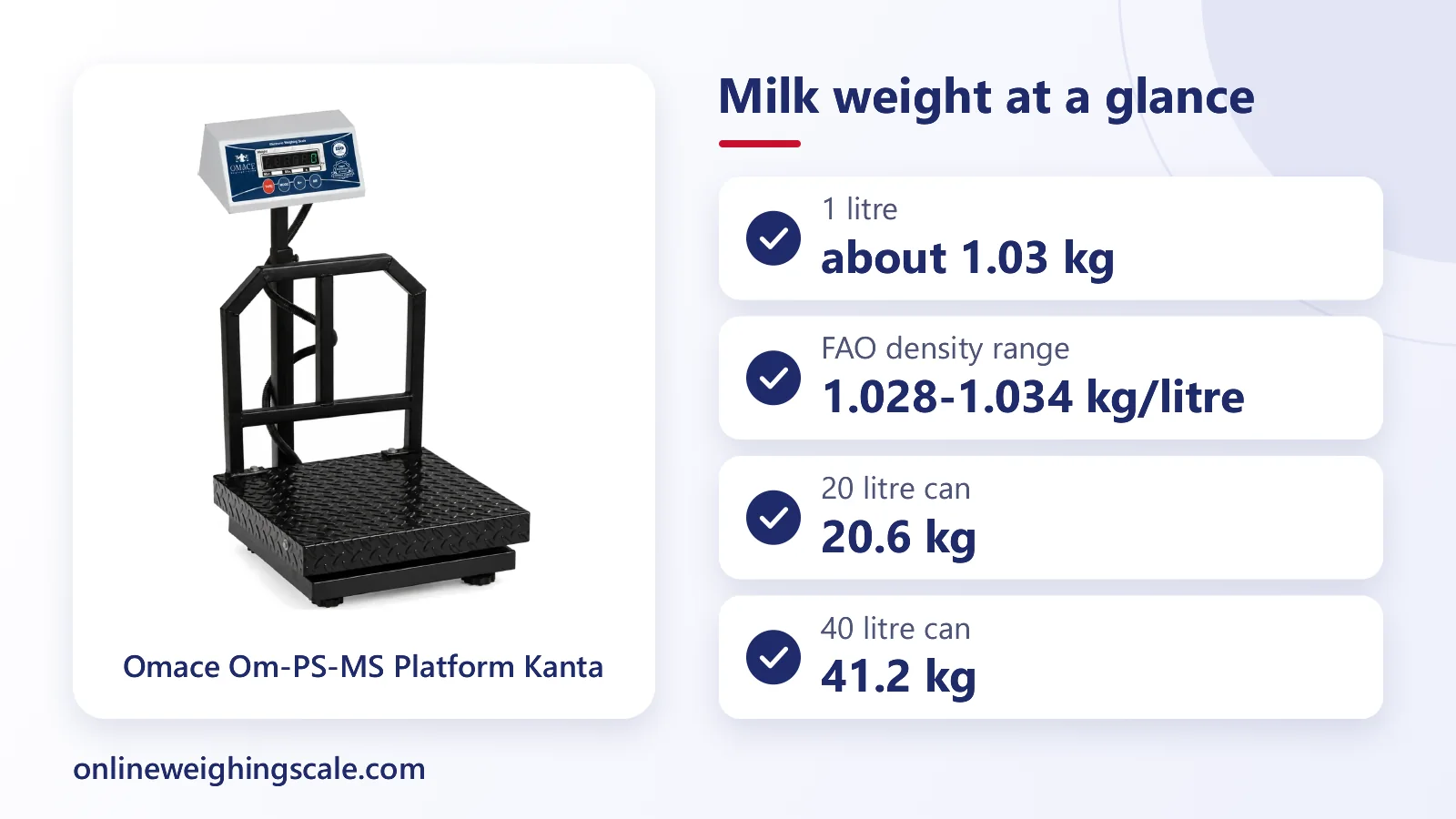
The FAO manual states that the density of milk normally varies between 1.028 and 1.034 kilos per litre, and gives the sum as litres x specific gravity = kilos. This post uses 1.03 as a round working figure (checked November 2026). Milk with more water in it is lighter, and milk with fat removed is heavier, which is why the manual advises testing the density locally over a period to find the right conversion value for your area.
| Milk in litres | Weight in kg at 1.03 |
|---|---|
| 1 litre | 1.03 kg |
| 5 litres | 5.15 kg |
| 10 litres | 10.3 kg |
| 20 litres | 20.6 kg |
| 40 litres | 41.2 kg |
The spread is small for one litre and noticeable for a full can. A 40-litre can weighs 41.12 kg at a density of 1.028 and 41.36 kg at 1.034, a gap of about 0.24 kg. These sums are arithmetic on the FAO range, so use them as a guide and not as a rate card. The ratio between grams and millilitres for other liquids is explained in grams vs millilitres.
Weighing a can or bucket with tare
Every can has its own weight, and only the milk is paid for. The FAO manual gives an example: a can holding about 10 litres weighs 12 kg full and 2 kg empty, so the milk is 10 kg. A digital scale does this subtraction for you with the TARE key.
- Switch the scale on and let it settle at zero with nothing on it.
- Place the empty can or bucket on the scale and press TARE. The display returns to zero.
- Pour in the milk, or swap in the filled can if the farmer arrives with milk already in it.
- Read the display when the number stops moving and note the kilograms.
- Take the can off. The scale shows a negative number equal to the can weight, which is normal. Press TARE again before the next lot.
Set the can down gently and keep it centred. Milk that is still swirling makes the last digit flicker, so wait a second or two. If a farmer's own can is dented or carries dried milk on the base, its weight changes from day to day, and a fresh tare each time takes care of that.
Capacity and division for a collection point
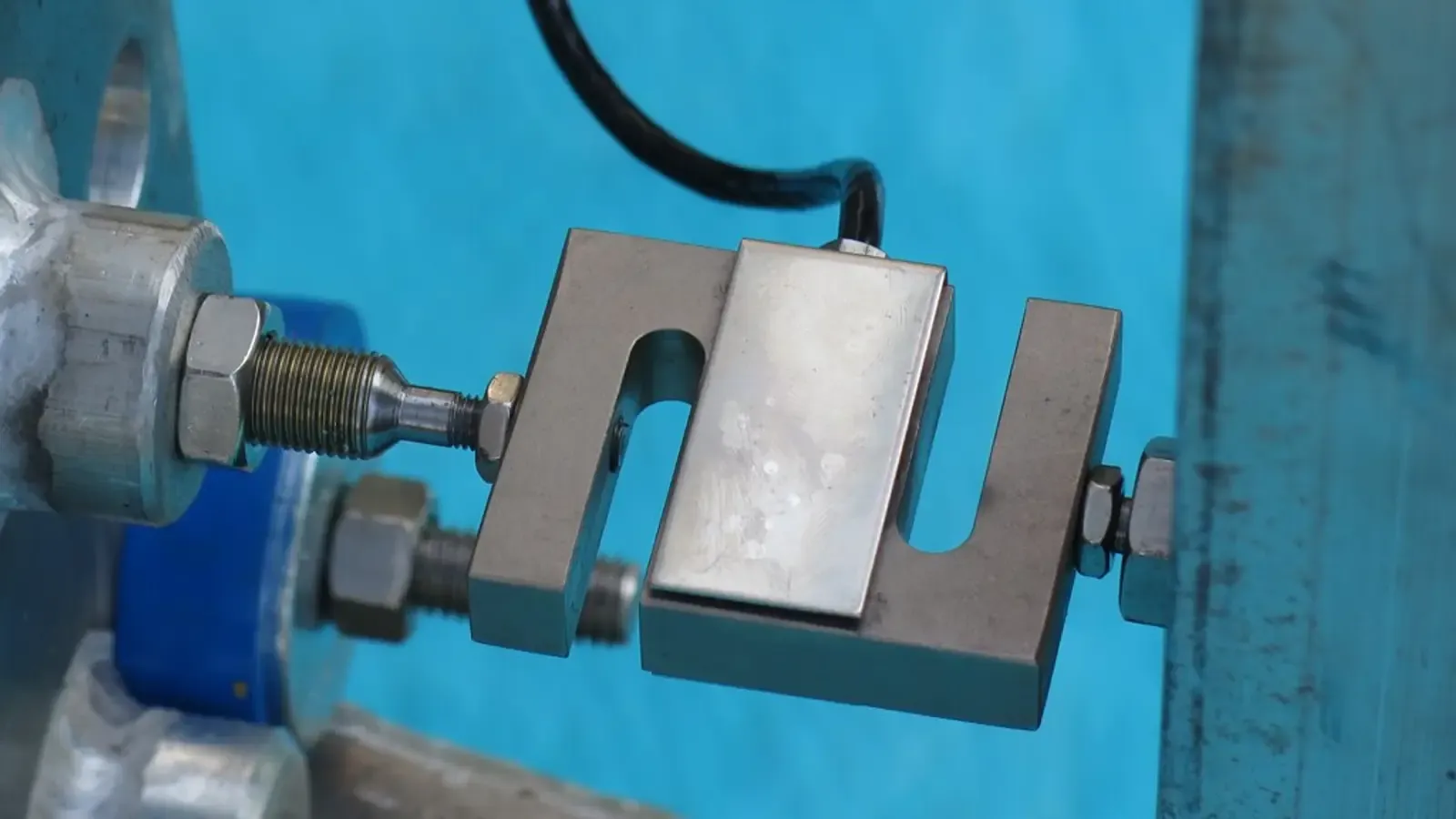
Capacity is the heaviest load the scale may carry. Division is the smallest step it shows, such as 5 g or 10 g. Both come from your busiest day. Take the biggest milk can you handle, full, and choose a scale with room to spare. A 40-litre can holds 41.2 kg of milk at 1.03, and the can itself adds to that, so a 50 kg scale leaves almost no headroom while a 100 kg scale does. Overloading a scale is the quickest way to damage its load cell, the sensor inside that measures the weight.
| Situation | What to look for |
|---|---|
| Farmers bringing 2 to 10 litres in a bucket | 30 kg capacity, 5 g division |
| Filled 20-litre cans, about 20.6 kg of milk each plus the can | 60 kg or more, 10 g division |
| 40-litre cans, 41.2 kg of milk plus the can | 100 kg capacity |
A finer division shows more detail than the weighing itself needs. At 10 g, one step on a 20 kg lot is about 0.05 per cent of the milk. What matters more is that the scale is level, zeroed before each lot and checked with a known weight. The steps for that are in what is calibration.
Hanging scale or platform scale for milk
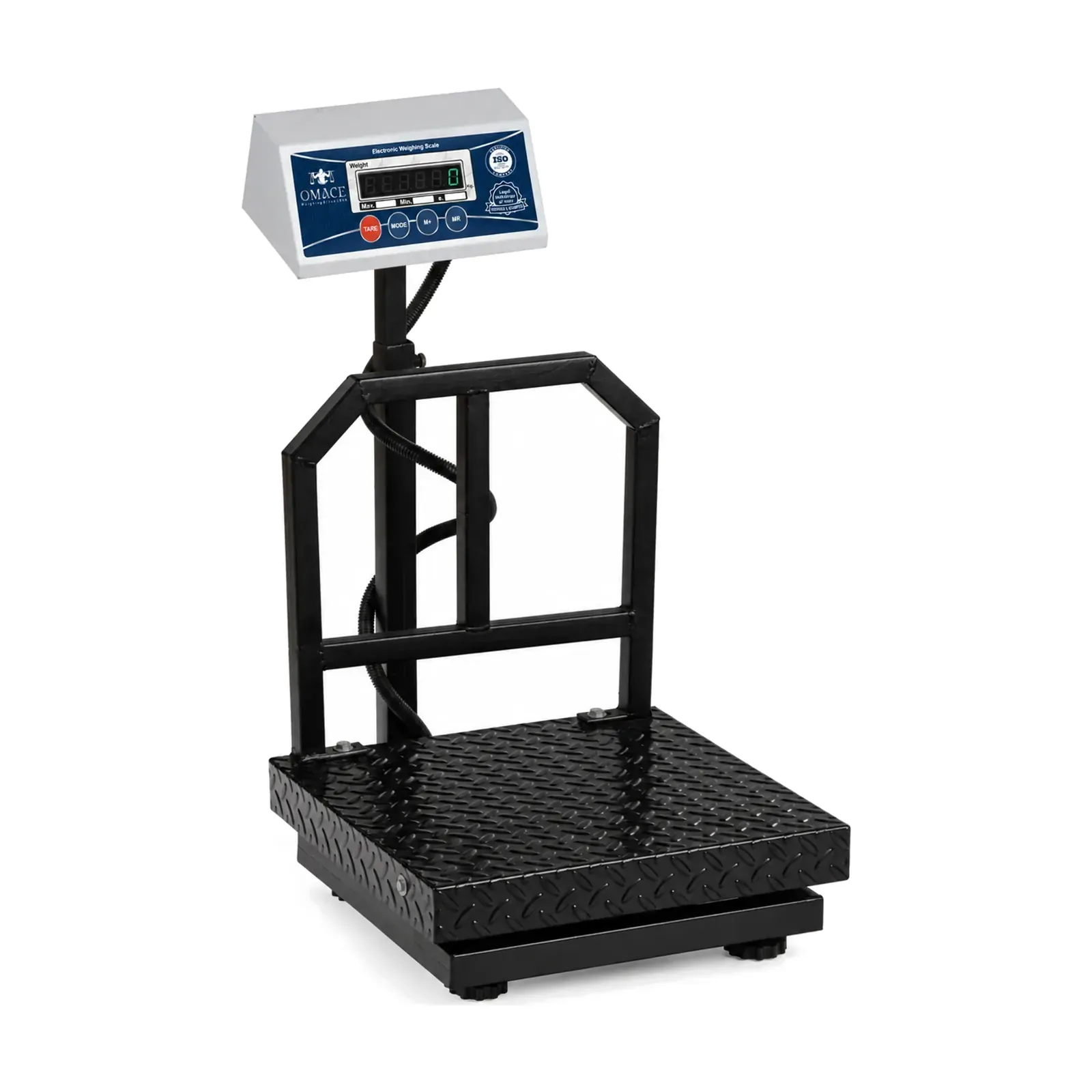
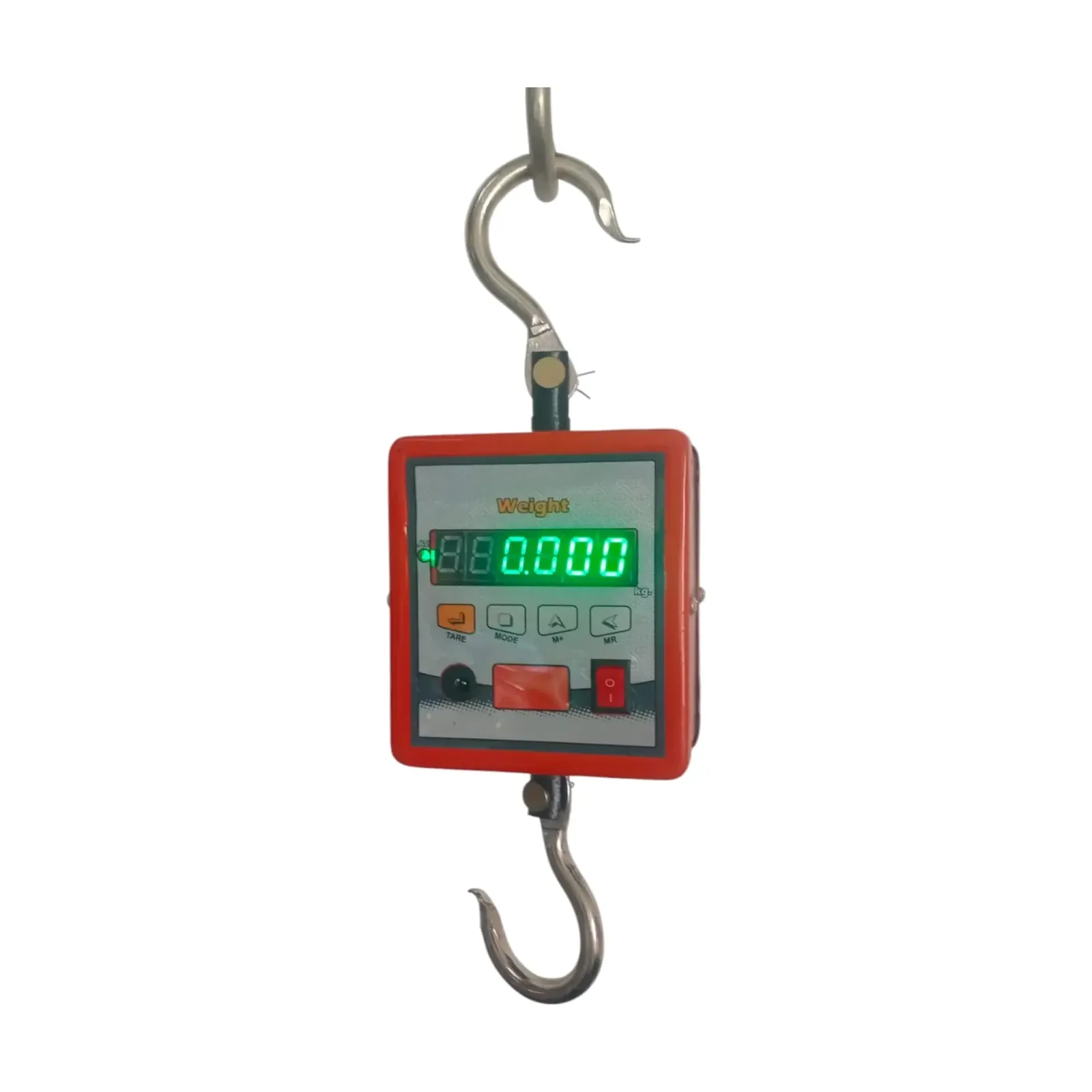
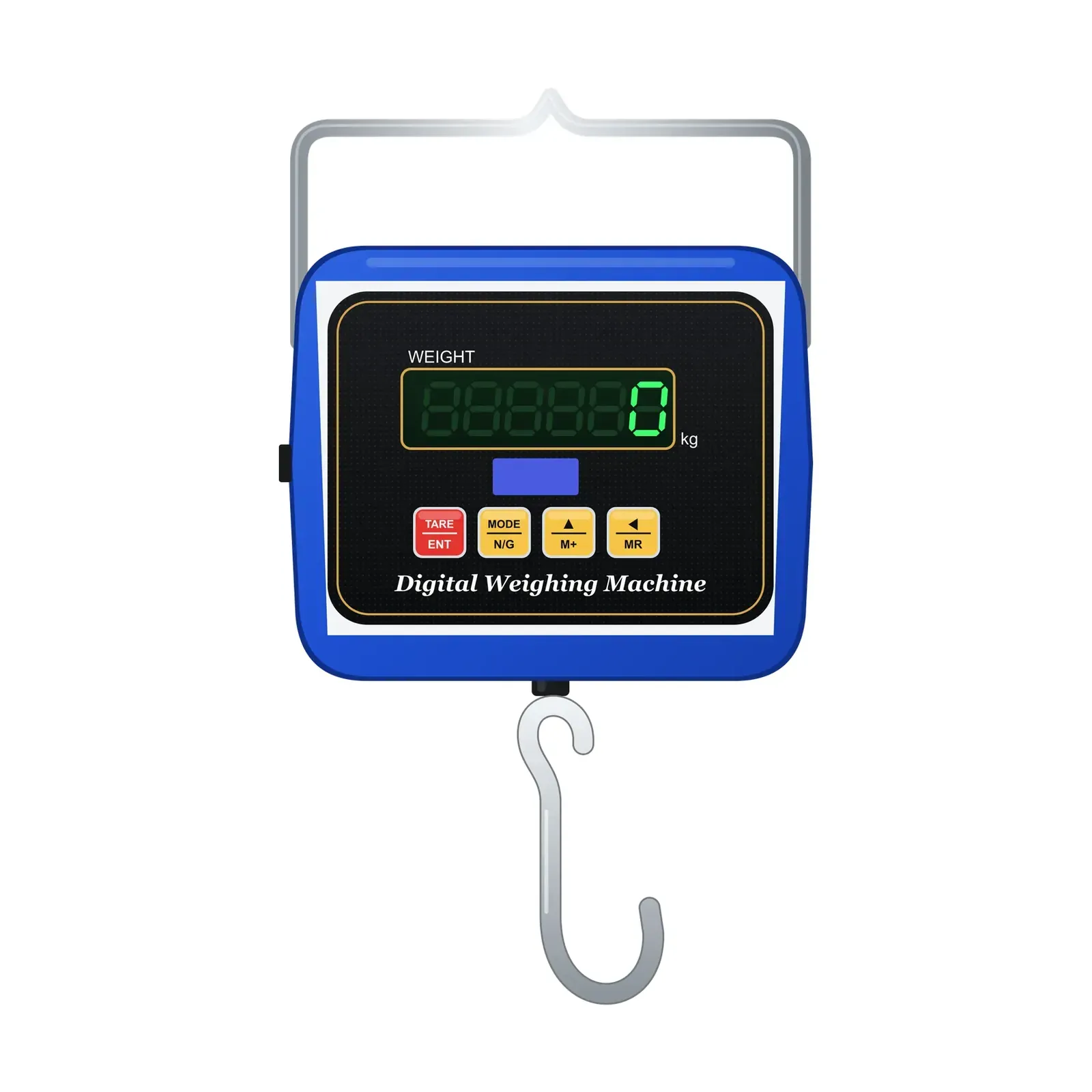
A hanging scale carries the can on a hook, which suits a collection point with a beam or tripod and little floor space. The can swings, so it needs a steady hand and a second or two to settle. A platform weighing scale, called a kanta in most dairies, stands on the floor and the can sits on the plate. It settles faster and handles wider buckets, and a flat plate is easy to wipe down.
Omace Brands Private Limited makes several models that a small society or a milk vendor can consider. These are general-purpose commercial scales and not milk-specific machines.
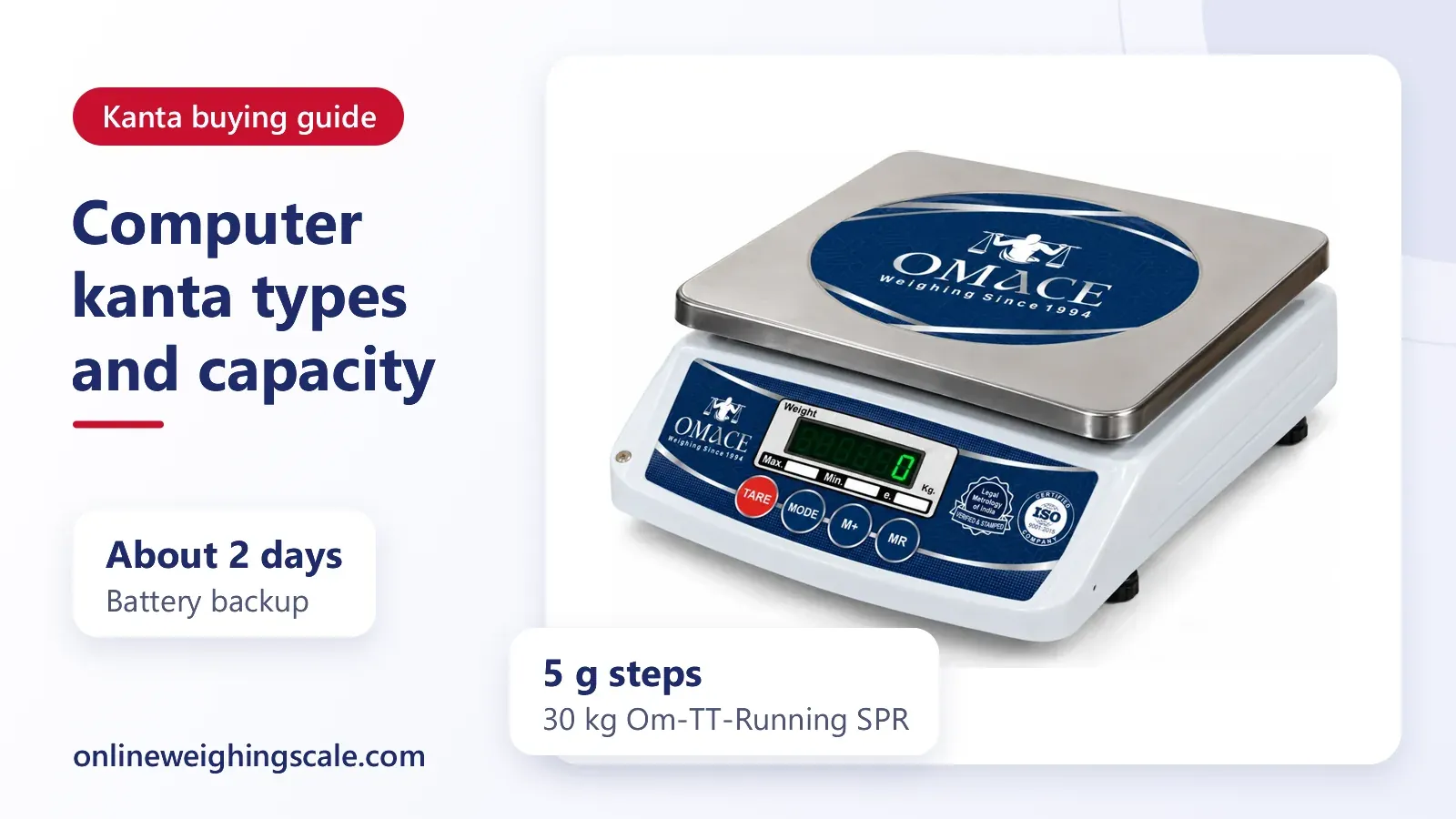
- The Omace Om-TT-Running SPR 30 kg weight machine at ₹3150 suits farmer-side buckets of up to a few litres. It reads 30 kg in 5 g steps on a 240 x 300 mm stainless steel pan, has a built-in battery backup of about 2 days, is accuracy class III and weighs only.
- The Omace Om-PS-MS platform kanta, 100 kg to 500 kg, at ₹6300 suits filled 20-litre and 40-litre cans. The 100 kg size reads in 10 g steps on a 400 x 400 mm platform and the 200 kg size in 10 g steps on 500 x 500 mm, and a built-in battery gives about 2 days of backup.
- The Omace 120 kg hanging scale at ₹4929 reads in 10 g steps and suits a beam or tripod setup.
- The Omace digital hanging scale 50 kg at ₹3459 suits small cans only, since a full 40-litre can leaves it no headroom.
Stamping and checking for trade
Where money changes hands on the basis of a weight reading, the scale is a trade instrument, and Indian law has rules for those. The Legal Metrology guide explains the Act, the department and the verification stamp. Omace platform scales leave Bagru verified and stamped by Legal Metrology, and the stamp is valid across India. Stamping is compulsory on platform scales. The Jan Vishwas (Amendment of Provisions) Act, 2026 revised the penalty amounts under the Legal Metrology Act and added improvement notices, in force from 1 May 2026 by a notification of 27 April 2026. Ask the state Legal Metrology office or your dairy union what applies to your own collection point before you buy.
On Omace digital scales a long press of TARE opens calibration mode on some models and a long press of the M key on others, and the manual for each model shows which. Stamped trade scales are sealed, so a registered repairer recalibrates them. Every scale is checked with certified test weights before dispatch at the Bagru factory in Jaipur, and a scale is replaced under warranty if it reads wrong.
Cleaning a scale used for milk
Milk dries to a sticky film and spoils within a day, so the scale and the tare can both need regular cleaning. Wipe the plate or pan with a clean damp cloth after each session and let it dry. Do not pour water over the display or the base, and do not hose the scale down, because water in the electronics causes wrong readings. Keep the plate free of dried milk, since a crust adds weight and moves the zero. Stainless steel plates wipe clean most easily. Store the scale dry and away from cleaning chemicals. If readings drift, see weighing scale not working.
What Omace does not make
Omace Brands Private Limited does not make milk analysers that test fat and SNF, and it does not make automatic milk collection units with printers and payment software. A weighing scale gives the weight of the lot and nothing about its quality. Omace repairs its commercial scales when the buyer asks. The buyer pays the shipping both ways and the repair cost, and spare parts depend on availability, so contact Omace first through the contact page.