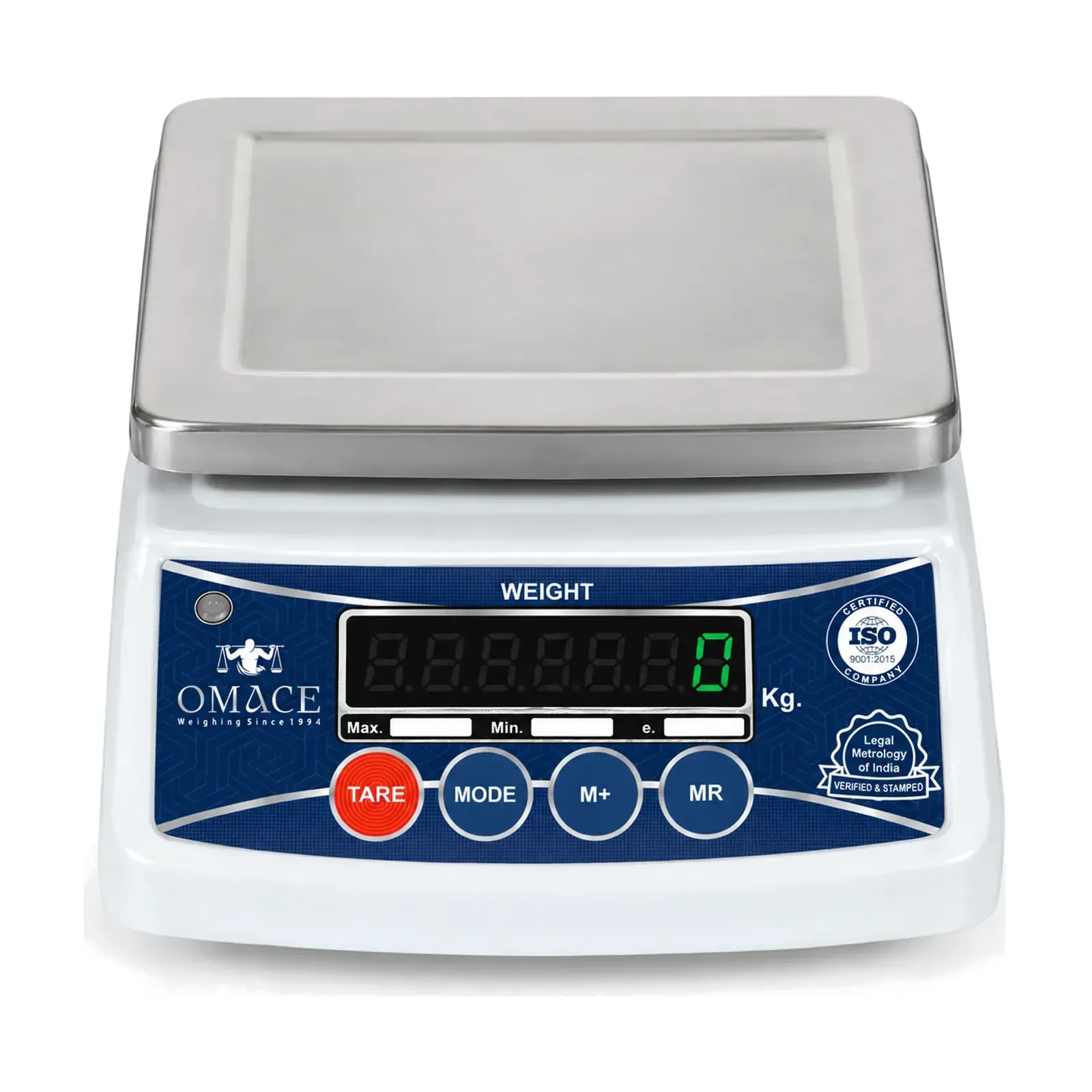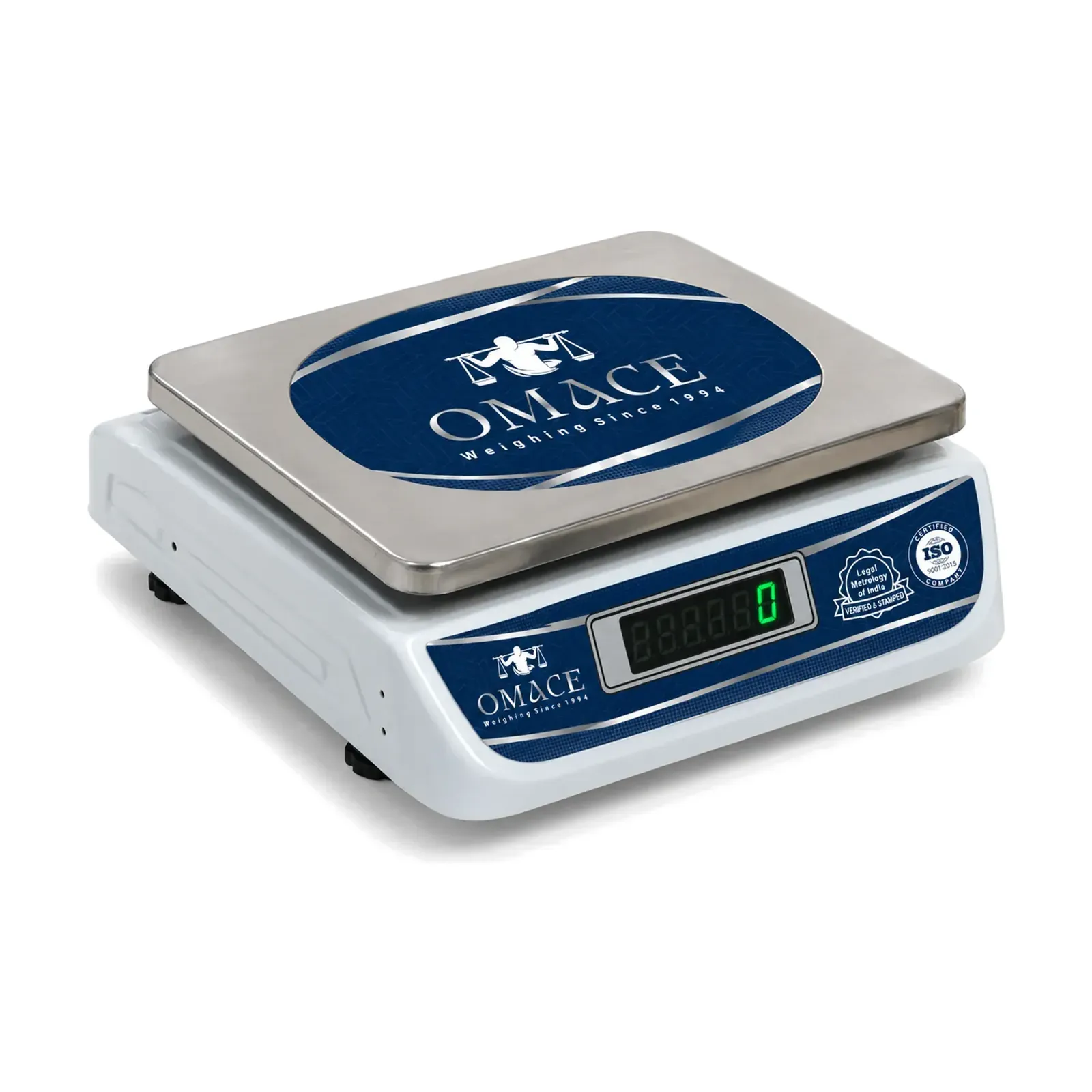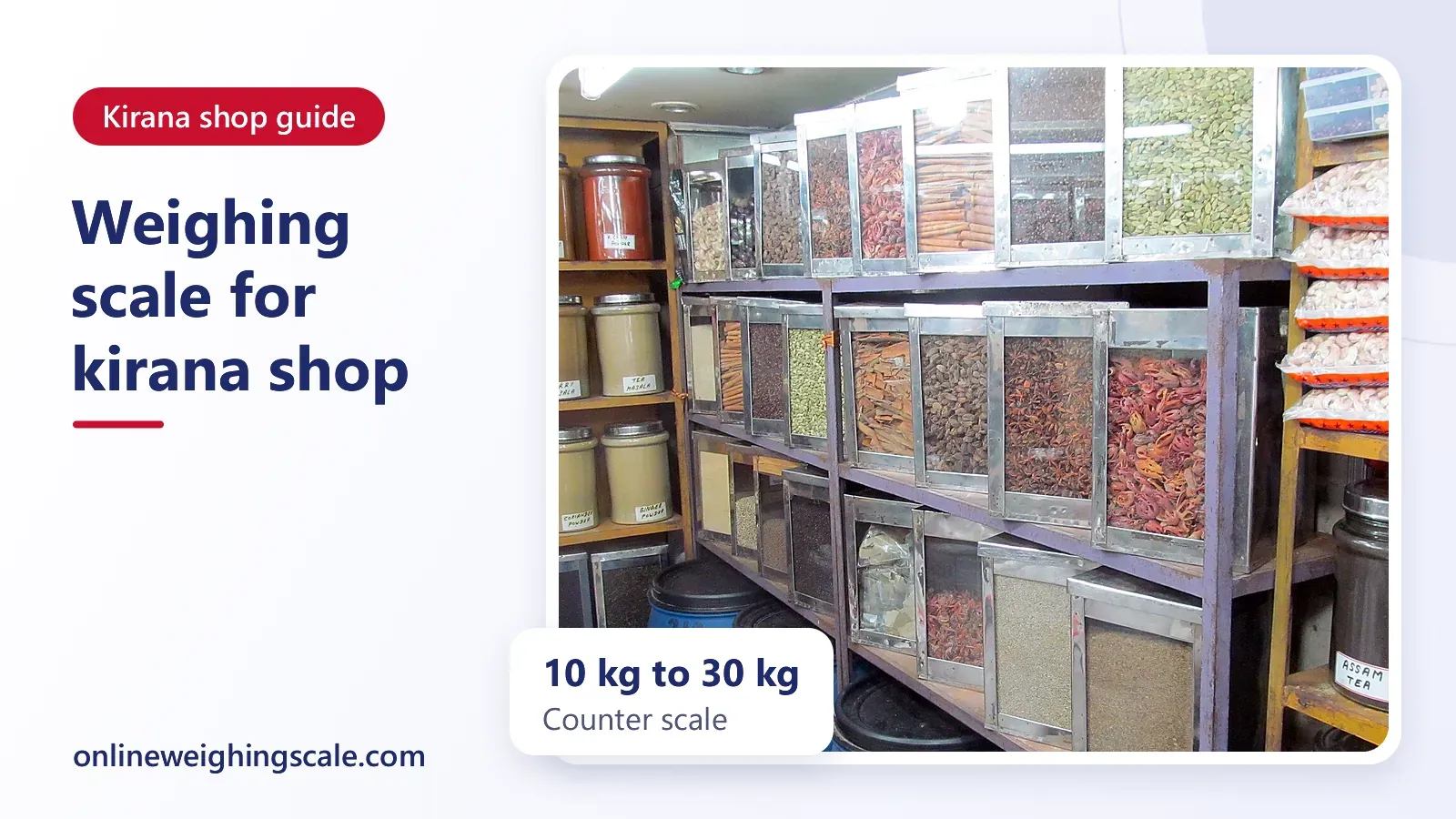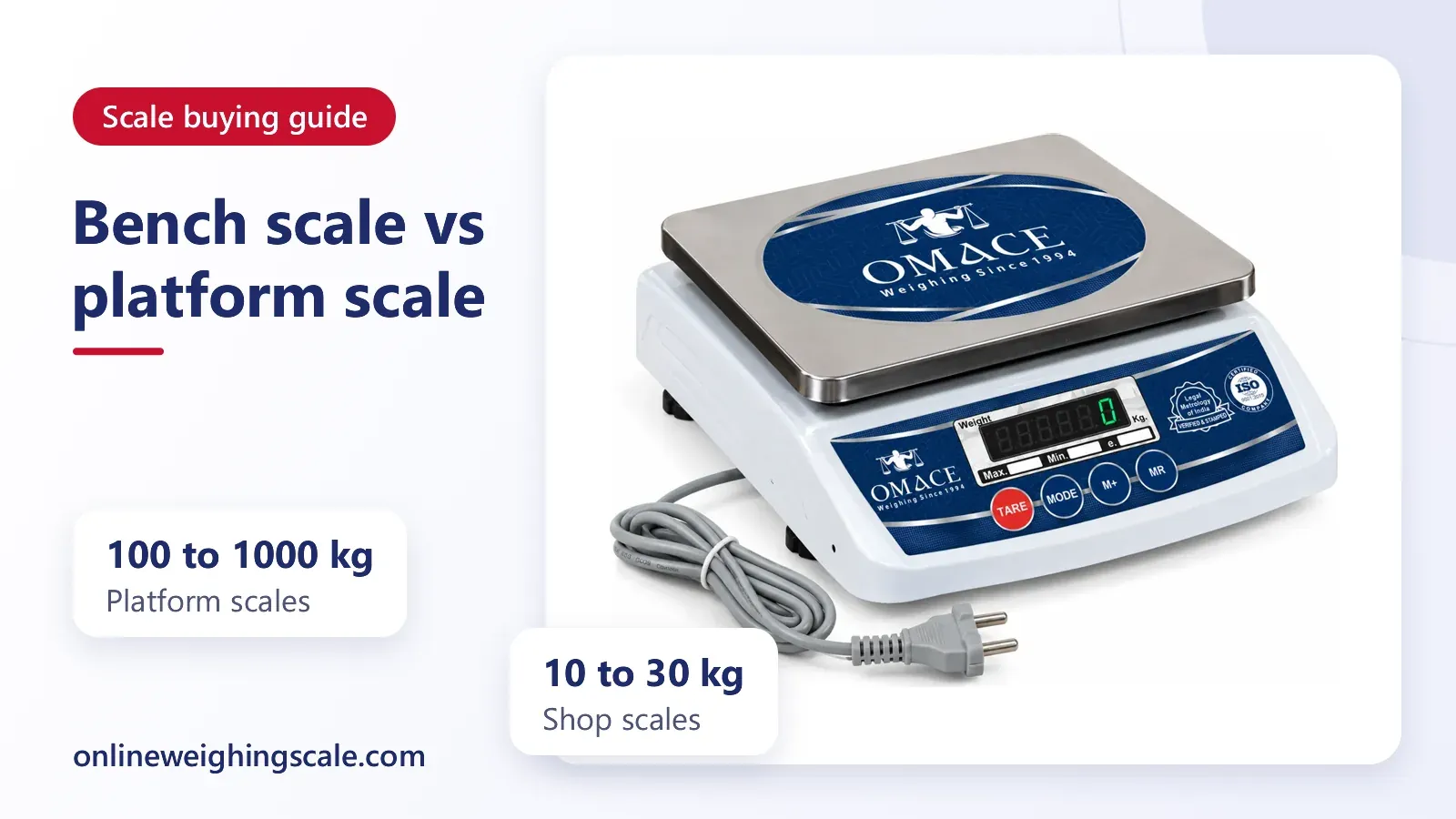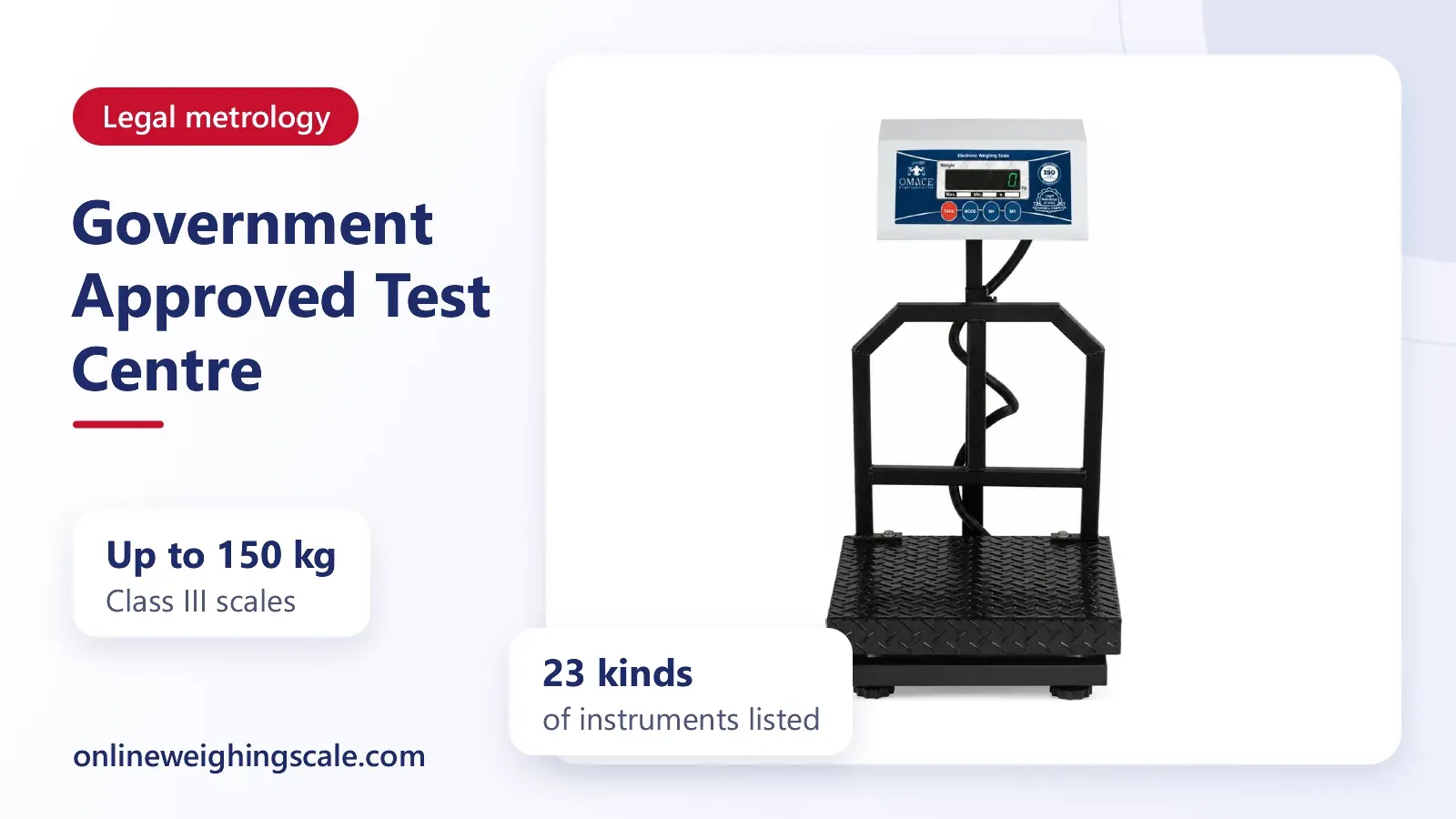
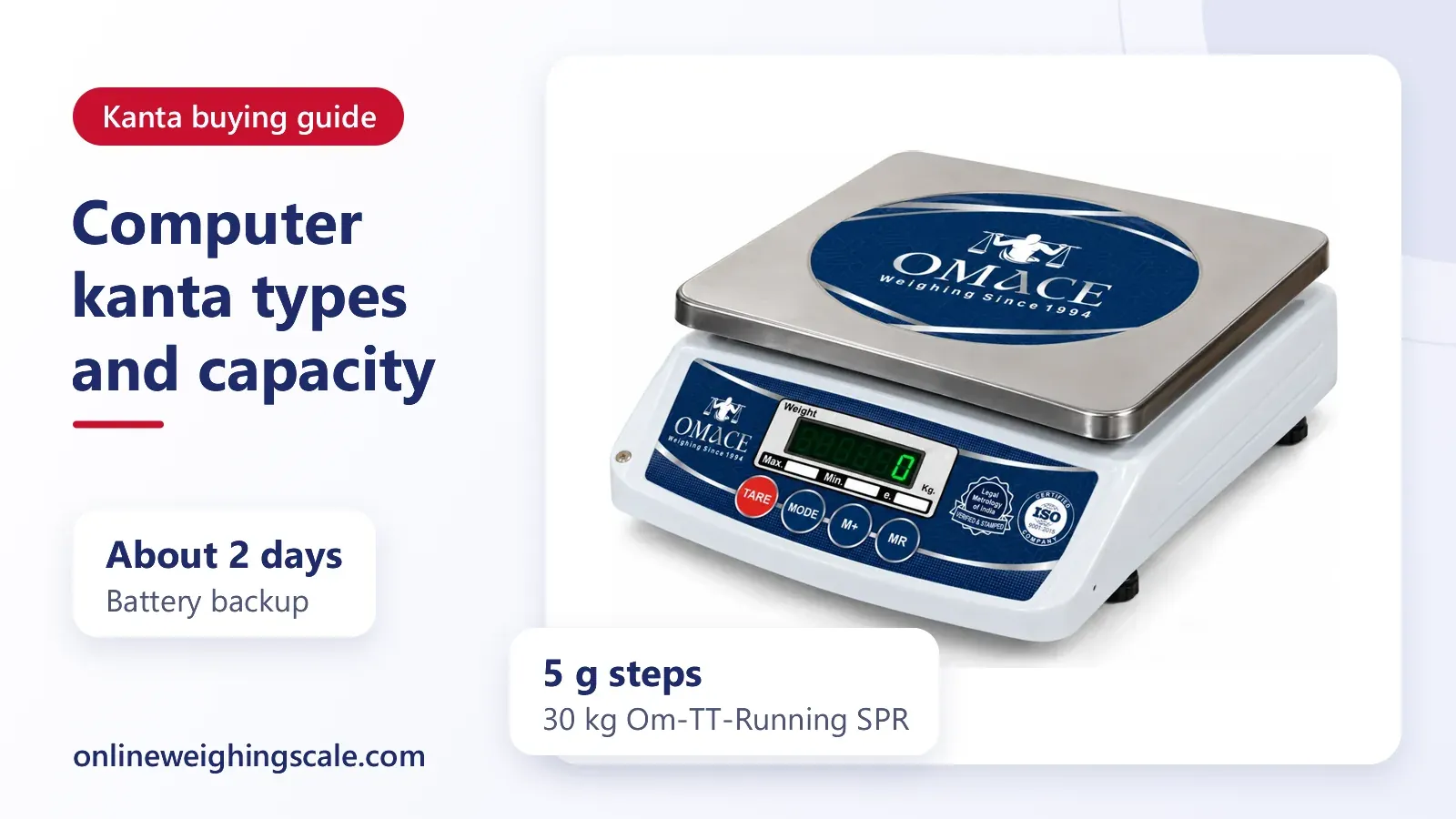
Computer kanta is the everyday Indian name for an electronic weighing scale that shows weight on a digital display, and most shopkeepers who say it do not mean a computer at all. The same machine is also called an electronic kanta, a digital kanta or a vajan kata, and a table-top model for a shop usually weighs from 10 kg to 30 kg.
The word comes from the counter. Years ago a shop weighed with a beam taraju and iron weights, then switched to a machine with a glowing display, and people started calling the new thing a computer. The name stuck. If you are comparing a computer kanta with a spring dial or a beam balance, the analog vs digital weighing machine post explains the difference in detail. For the English names of the old balance, see taraju in English.
What a computer kanta actually is
A computer kanta is a weighing scale built around a load cell, a small metal part that bends very slightly under weight and turns that bend into an electrical signal. A circuit board reads the signal and shows the weight in kilograms and grams. The load cell post covers the principle if you want the working in full.
Two parts decide how the machine behaves in a shop. The first is the capacity, the heaviest load it can weigh. The second is the division, the smallest step the display moves in. A 30 kg kanta that moves in 5 g steps shows a load of 1.005 kg as 1.005 kg, while a kanta with 10 g steps rounds the same load to 1.01 kg. Both numbers are printed on the label or the product page. The two also decide the accuracy class: OIML R 76-1 Table 3 lets class III have at most 10,000 verification intervals (capacity divided by division), so 30 kg at a 5 g division is 6,000 intervals and sits in class III, while 30 kg at a 2 g division is 15,000 and falls under class II.
Omace Brands Private Limited makes these machines in Bagru, Jaipur, and has been in the weighing trade since 1994. The company also publishes the capacity and division on every product page, which is the first thing to read on any kanta you look at.
Names used for the same machine
Shopkeepers across India use several words for nearly the same machine, and the words change by town and trade.
- Computer kanta usually means a table-top electronic scale with a display facing the shopkeeper, and often a second display facing the customer.
- Electronic kanta and digital kanta mean the same thing, and are the words people type when they search online.
- Vajan kata is the common Hindi phrase for any weighing machine, electronic or not.
- Kanta weight machine is the way many buyers phrase a search for a shop scale with a pan.
- Price computing scale is a different model that multiplies weight by a rate you key in and prints or shows the amount to pay. The Om-TT shop kantas weigh only and do not compute price.
The price computing scale is the one machine here that really behaves like a small computer, and Omace's Om-TT kantas are not of that type. Its checks are covered in price computing scale calibration and counting checks.
Types of computer kanta by use and capacity
Pick the type by what you weigh most often and how heavy the heaviest single load is. The table below lists the common types with Omace models and the price shown on the store today, including GST.
| Type | Typical capacity | Used for | Omace model and price today |
|---|---|---|---|
| Small table-top kanta | 10 kg and 20 kg | Kirana, sweets, dry fruit, spices | Om-TT-ECO, 10 kg x 1 g or 20 kg x 2 g, ₹2310 |
| Mini table-top kanta | 10 kg | Small counters, 1 g steps | Om-TT-Micro Mini, ₹1995 |
| Double display table-top | 20 kg and 30 kg | Busy counters where the customer watches the reading | Om-TT-Mini SPR, ₹2625 |
| 30 kg running kanta | 30 kg in 5 g steps | Grocery, mithai, fruit and vegetable stalls | Om-TT-Running SPR, ₹3150 |
| Pole display kanta | 30 kg x 5 g | Stalls where the display must stand at eye level | Om-TT-Running SPD, ₹3255 |
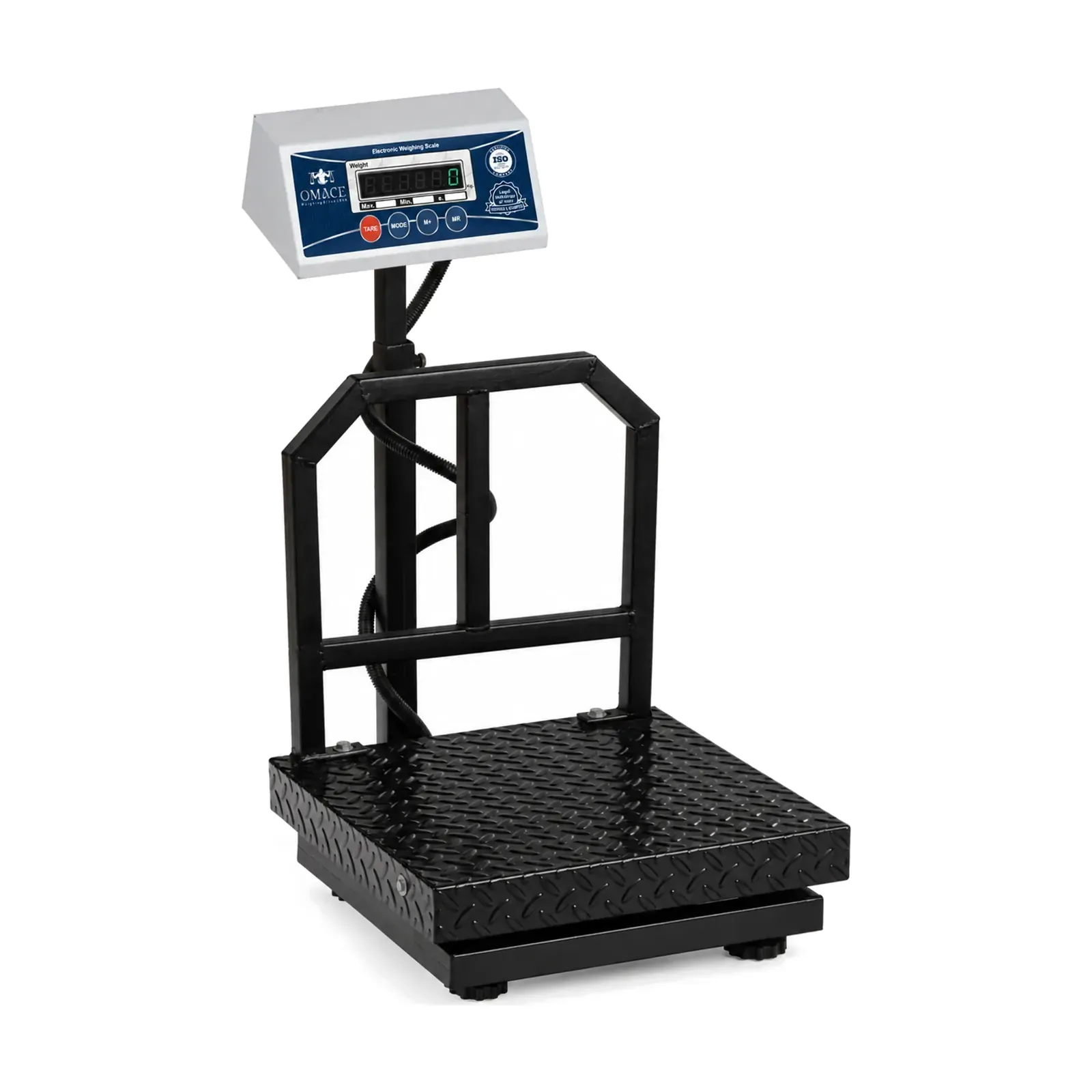
| Platform kanta | 100 kg to 500 kg | Sacks, cartons, grain, godown | Om-PS-MS, ₹6300 |
| 1 tonne platform | 1000 kg | Warehouse, pallets, trade loads | Om-PS-MS 1000 kg, ₹28349 |
The Om-TT-ECO has its own pages for the sizes most kirana owners ask about: the 10 kg kanta and the 20 kg weight machine. For a full walk through a small shop's choices, read the weighing scale for a kirana shop guide.
Computer kanta 30 kg price and 100 kg price
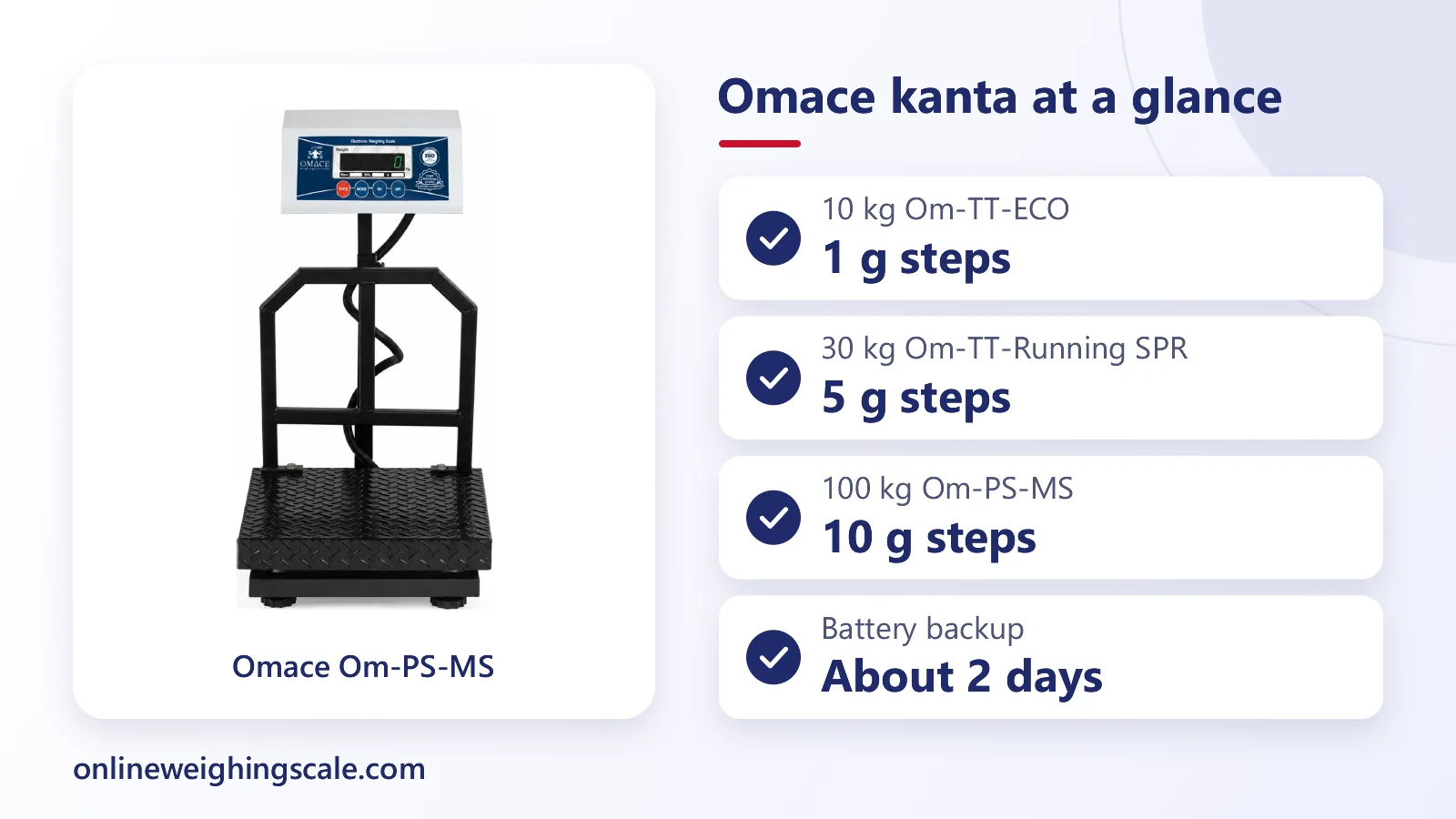
Shoppers search the prices of the 30 kg and the 100 kg size more than any other, so here is what the Omace store shows today. The 30 kg Omace Om-TT-Running SPR weight machine for shop costs ₹3150. The Om-TT-Mini SPR double display model, sold in 20 kg and 30 kg, costs ₹2625. Omace Brands Private Limited also lists a plain 30 kg weighing scale, the Ace PS-30, at ₹1889, which has a steel pan and a backlit LCD and suits a counter that needs a lighter, simpler machine.
For 100 kg, the machine is a platform kanta rather than a table-top one, because a table-top pan is too small and too light for a sack. The 100 kg platform kanta from Omace is the Om-PS-MS model at ₹6300. The same listing continues to 200, 300 and 500 kg.
These numbers move with capacity, display type and body material. A stainless steel platform costs differently from a mild steel one, so read the capacity and material on the exact page before you compare two quotes.
Table-top or platform: how to choose
A table-top computer kanta sits on a counter and weighs what you can lift with one hand. A platform kanta stands on the floor, and you roll or lift the load onto a flat steel deck. The choice depends on weight and on how the load moves.
- If the heaviest thing you weigh is 5 kg, a 10 kg table-top machine is enough and gives the finest steps.
- If you weigh 20 to 30 kg bags of rice or sugar, choose a 30 kg table-top model with a sturdy pan.
- If you weigh sacks, cartons or cans above 30 kg, a platform kanta is the right machine, and 100 kg is the smallest common size.
- If the load hangs, such as a carcass or a cylinder, a hanging scale is the correct type. The hanging weighing scales page lists them.
Buy a capacity with room to spare, but not too much. A 300 kg platform kanta used to weigh 2 kg packets loses a lot of its fineness, because the division is much larger than on a small machine. The number printed on the label matters more than the name.
What to check before you buy a computer kanta
Whether the machine is the cheapest or the dearest, the same checks apply.
- Capacity and division. Both are on the label. Confirm that your usual smallest weighing is at least a few times the division, so a 10 g step does not decide a 50 g pack.
- Legal Metrology stamp. Under the Legal Metrology Act, 2009, weights and measures must be verified and stamped before commercial use, and the government's own summary says weighing machines used in shops and markets must be verified and stamped by Legal Metrology authorities (PIB, India's Evolving Metrology Ecosystem, May 2026). The General Rules amendment of 18 December 2025 sets a verification period of twenty-four months for weights, beam scales and counter machines, and the Jan Vishwas (Amendment of Provisions) Act, 2026 revised the Legal Metrology penalty amounts from 1 May 2026, so ask the state office for the current figure. Omace shop, platform, chicken and crane scales leave Bagru verified and stamped by Legal Metrology, and the stamp is valid across India. For what stamping costs, see the stamping charges post, and for the law itself see Legal Metrology in India.
- Battery and charging. The Om-TT shop kantas have a built-in battery with a backup of about 2 days, charged by plugging the 220 V cord into a socket, so they run through a power cut and can be charged at night.
- Display on both sides. A front and back display lets the customer read the weight as you do, which settles most arguments over the counter before they start.
- Pan material. Stainless steel suits food, wet goods and daily washing. Mild steel suits dry loads and costs less.
- Warranty and calibration. Omace Brands Private Limited gives a warranty on manufacturing defects for 2 years, and On Omace digital scales a long press of TARE opens calibration mode on some models and a long press of the M key on others, and the manual for each model shows which. A stamped trade scale is sealed, so a registered repairer recalibrates it.
Using and caring for a computer kanta
A computer kanta lasts longer if the shop treats it the way a goldsmith treats a balance. Put it on a flat, firm surface and check the display reads zero before each customer. Wipe the pan with a dry cloth, and keep water away from the display and the charging port.
Avoid dropping weight on the pan. A sack thrown on the deck is the most common cause of a bent load cell, and a bent load cell shifts every reading afterwards. Once a month, put a known weight on the pan, such as a sealed 1 kg packet you trust, and see whether the display agrees. If it does not, the calibration guide for a 30 kg kanta shows the steps.
If the machine stops working, the weighing scale not working post covers the usual causes and the fixes you can try yourself. Omace Brands Private Limited repairs its commercial scales when the buyer asks. The buyer pays the shipping both ways and the repair cost, and spare parts depend on availability, so ask first on the contact page.
Computer kanta for dealers and OEM buyers
A trader who wants to stock computer kantas under his own name needs a manufacturer that can supply stamped machines in volume. Omace Brands Private Limited makes weighing scales for OEM buyers, and the private label manufacturing page sets out the order terms. This is the route for a dealer who wants a branded range.
Which computer kanta should you pick
A small kirana that weighs under 10 kg at a time does well with a 10 kg table-top kanta. A grocery, sweet shop or vegetable stall that handles bags and heavy parcels does better with a 30 kg model with a double display. A godown, a mandi stall or a transport counter needs a platform kanta from 100 kg upwards.
Check the stamp, the capacity and the display, and the machine will serve for years. Browse the weighing scales for shops range once you know your capacity.