The best time to weigh yourself is first thing in the morning, after you use the toilet and before you eat or drink anything. At that hour your body has gone through the same overnight fast every day, so one reading can be compared with the next. A study of 80 adults who weighed themselves daily found that weight rises and falls across the week in a regular pattern, which is why a single reading says little on its own.
The routine that makes readings comparable
Omace Brands Private Limited, a scale maker in Bagru, Jaipur, offers these steps for any home scale. A scale can only show a change if everything around it stays the same, so the steps matter more than the exact minute on the clock.
- Weigh yourself soon after waking, once you have used the toilet.
- Do it before breakfast, tea, coffee or water.
- Wear the same light clothes each time, or none, and take off shoes.
- Put the scale on the same hard, flat floor. Tiles work well, and a carpet or a mat makes the reading unsteady.
- Stand still with your weight spread evenly on both feet and look straight ahead until the number settles.
- Note the number once. Stepping on again and again only gives you more numbers to worry about.
The same scale in the same spot matters as much as the hour. Two different scales can show slightly different weights for the same person, and so can one scale moved from tiles to a rug. The sister guide on why a weighing scale shows different readings goes through those causes.
Morning or night: which reading is better?
Morning is easier to repeat, and night is not wrong. Through the day you eat, drink, sweat and use the toilet, so an evening reading carries the weight of everything you took in since waking. The table shows how the two compare in practice.
| Time | What affects the reading | How easy to repeat |
|---|---|---|
| Early morning, after the toilet, before food | Overnight fast, little in the gut, no recent drinks | High, the conditions are alike each day |
| After breakfast or lunch | Food and drink still being digested | Low, meals differ in size |
| After exercise | Sweat loss, then drinks to replace it | Low, depends on the workout |
| Late evening | A full day of meals, drinks and salt | Medium, if the evening routine is fixed |
Water is a simple example. A glass of 250 ml of water weighs about 250 g, so drinking one before stepping on the scale adds that much to the display. Nothing about your body has changed. The scale is only weighing what you are carrying.
If mornings are impossible because of shift work, pick the one time each day that you can repeat and stay with it. A night-shift worker can weigh after waking, whatever the clock says. What counts is the same point in your own day.
Why weight differs from one day to the next
Body weight is not a fixed number. It includes the water in your body, the food and drink passing through your gut, and the day's salt and activity. All of these shift through the day and from one day to the next, which is why two readings a day apart rarely match exactly.
Water, salt and food in the gut
A salty meal can leave you holding more fluid for a while, and a long hot day can leave you holding less. Food that has not yet been digested also counts on the scale. These changes reflect water and digestion. They are not changes in body fat, and they pass.
The week has a rhythm
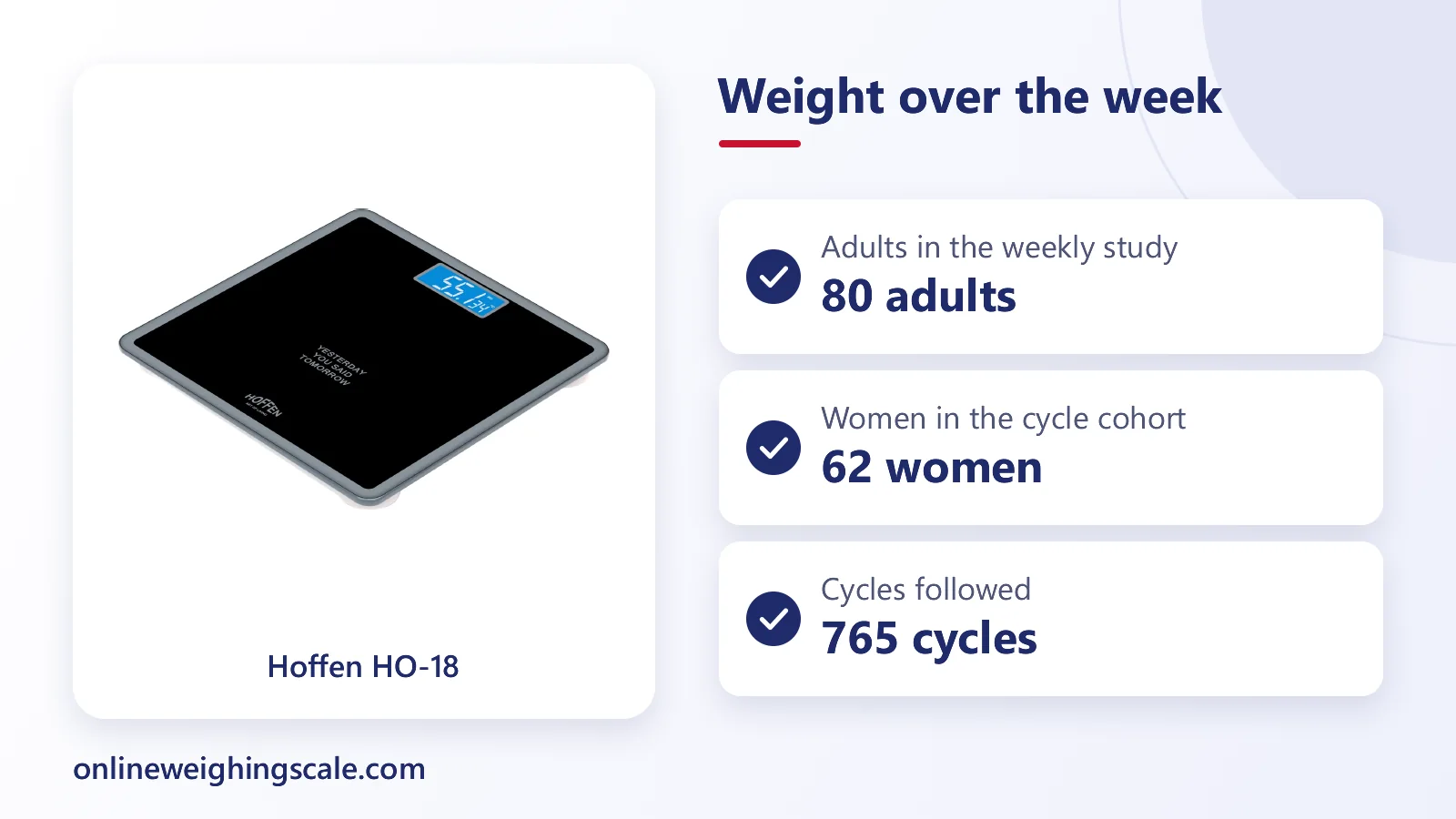
A paper in Obesity Facts analysed the daily weights of 80 adults. Its title sums up the weight rhythm across the week: weight increased over weekends and decreased during weekdays. The authors concluded that weight variations between weekends and weekdays should be considered normal and not a sign of weight gain. The full paper is open on PubMed Central.
The menstrual cycle
Many women notice swelling or bloating at certain points of the cycle. In the Prospective Ovulation Cohort, which followed 62 women over 765 cycles, women's own diary scores for fluid retention were higher around menstruation than at mid-cycle. A 2026 narrative review on women athletes says the evidence on cycle-related fluid shifts is mixed, with substantial individual variability. If your own reading moves around your period, that can be part of your pattern. Weighing at the same point of the cycle gives the cleanest comparison.
Exercise and heat
Sweat takes water out of the body for a few hours, and drinking afterwards puts it back. A reading right after a workout can therefore look different without any change that lasts.
How often to weigh yourself
There is no single schedule that suits everyone, and weighing is optional. Some people like a fixed morning once a week. Others weigh on a few set mornings and look at the pattern. Weighing every day is also fine for those who find it calm rather than stressful. If a reading makes you anxious or upset, it is reasonable to weigh less often or to stop and ask your doctor what to watch instead.
Whatever you choose, keep the days and the routine fixed. Weighing on a Monday one week and a Friday the next puts the weekly rhythm inside your comparison, and the difference you see may come from the day alone.
Reading the numbers: use the average, not the single day
A single reading is a snapshot with water and food in it. The simple fix is to add up your readings for a week and divide by the number of readings. Compare that average with the average of the next week. One high morning then matters little, and a steady direction over several weeks shows up clearly.
Weight is also one small part of how a person is doing. It does not measure fitness, strength, sleep or health. Many people prefer to track how clothes fit or how they feel on stairs along with the scale, or to leave the scale out altogether.
Check that the scale itself is steady
A routine only works if the scale repeats. Step on, note the reading, step off, and step on again after a minute. A steady scale gives the same number or one very close to it. A scale that jumps by a noticeable amount on identical steps may have weak batteries, an uneven floor or a fault. The guide to checking a bathroom scale and its accuracy lists the checks in order.
Omace Brands Private Limited makes personal scales with a 180 kg limit, and each Omace digital scale is factory calibrated and replaced under warranty if it reads wrong. The Venus EPS-2001 digital weighing machine for body weight is listed at ₹579 and the Hoffen HO-18 weighing scale for human at ₹679. The full range sits in the personal weighing scale category.
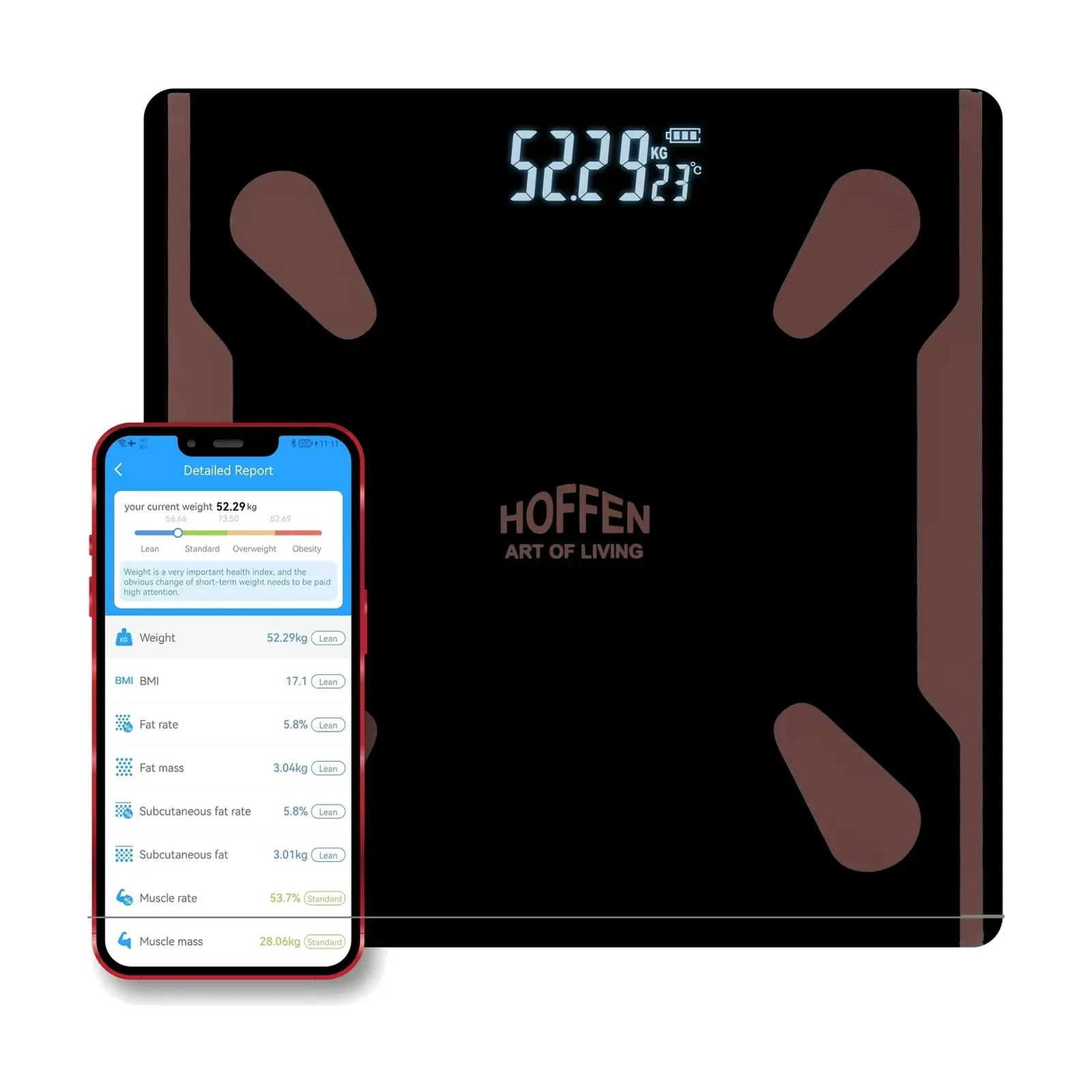
Some people prefer a scale that also shows body fat and other figures. The smart weighing scale category covers those, such as the Hoffen HO-9 BMI weighing machine at ₹729. Weight is the measured figure on any scale. Body fat and similar numbers are estimates, and they swing with water in the body, which is another reason to weigh under the same conditions every time. The post on how accurate smart scales are explains this.
When a doctor should look at your weight
Day-to-day movement is normal, but a steady change over weeks that you cannot explain, or swelling in the feet or face, should be checked by a doctor. Charts and scales are references. A scale does not diagnose anything, and only a doctor can say what a number means for you. Pregnant women and parents of babies have their own measured schedules, and the guides on the pregnancy weight chart and the newborn weight chart are a place to begin before an appointment.
This is general information. Ask your doctor about your own readings.
A steady morning habit
Choose the hour, the floor and the clothes once, and the scale then does its job: it shows how your weight moves over weeks, with the daily noise left out. The BMI calculator on this site can be used alongside, with the same note that it is a reference and a doctor decides what it means for you.