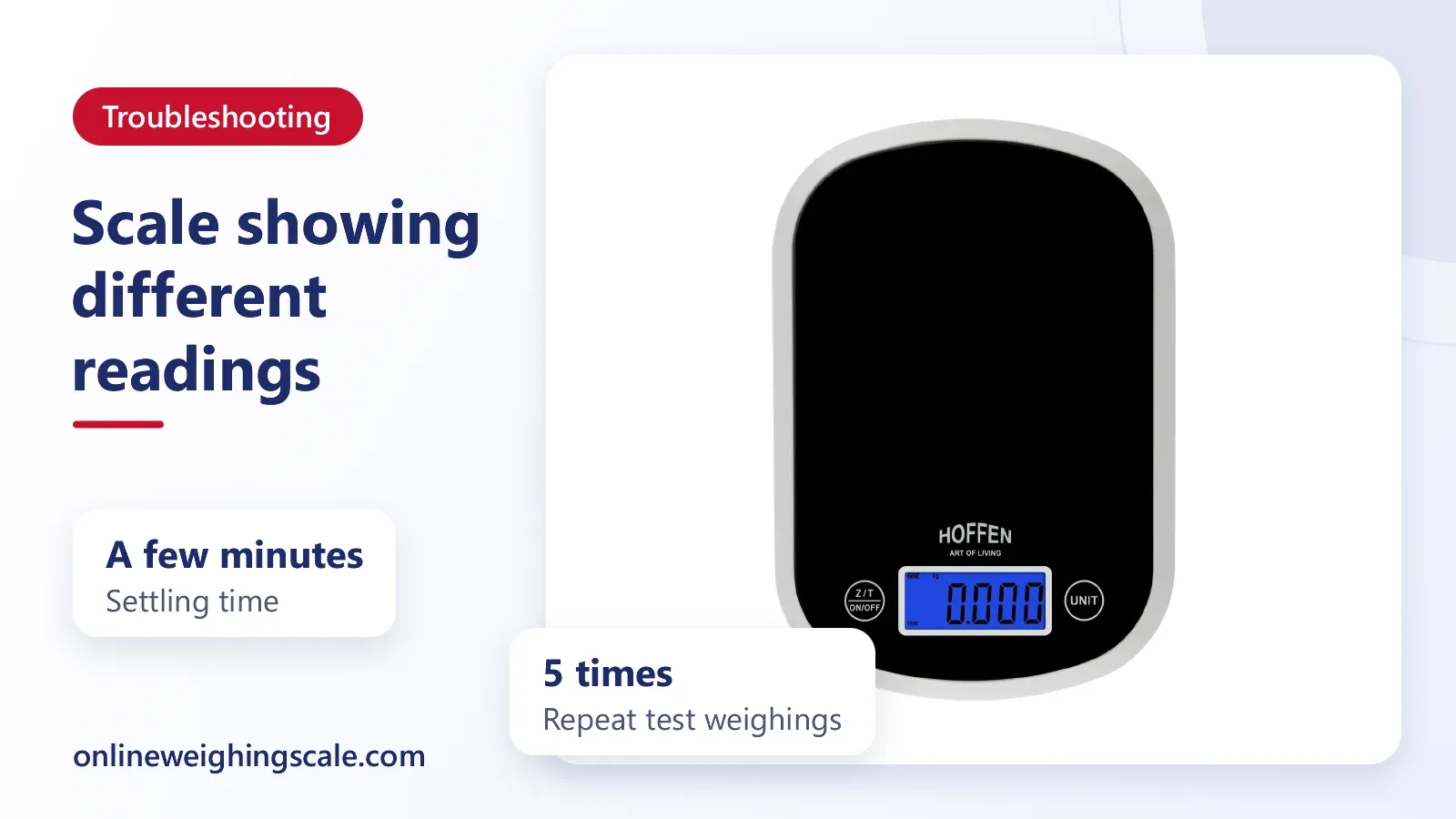
A weighing scale showing different readings for the same load usually has one of about ten causes, and most can be checked at home in under fifteen minutes. The cause is often the floor, the way the load sits on the pan or a tired battery, and rarely the electronics.
This guide goes through the causes in the order a person can check them. It then shows a repeatability test with one object, explains what spread is normal for the scale's step size, and ends with the body-weight question. A scale that is dead, blank or showing an error code belongs in the fault and error-sign guide instead.
The quick check: ten causes in the order to test them
Work down this table. Each test costs nothing and takes a minute or two. Change one thing at a time, or you will not know which fix worked.
| Cause | What you see | What to try |
|---|---|---|
| Soft or uneven floor | Reading changes when you shift your feet or the scale rocks | Move the scale to a hard, flat floor or a firm table |
| Scale was moved | First reading after moving is off | Set it down, wait, zero it empty, then weigh |
| Load not centred | Same object reads differently at the corner and the middle | Place the load in the middle of the platform each time |
| Weak battery | Display dims, digits wander, reading drifts | Fit fresh cells or charge fully, then repeat the test |
| Temperature change and warm-up | Reading creeps up or down in the first minutes | Switch on, wait a few minutes, zero, then weigh |
| Draught or vibration | Last digit flickers, worse near a fan or a running machine | Switch off the fan, move away from the machine |
| Overload or a drop | Reading differs a lot from a known object, even on a good floor | Test with a known weight, then ask the maker |
| Step size too coarse | A small change shows no change | Check the step on the product label |
| Creep under a long load | Reading rises or falls slowly while the load stays on | Read at the same moment each time |
| Weak or damaged load cell | Large, random jumps even after all of the above | Stop using it and ask the maker |
Floor, placement and movement
A digital scale measures the force that reaches its load cell, so anything that changes how the load rests on the scale shows up as a different number. Carpet, a wobbly tile and a slightly tilted table are the usual culprits. Press down on each corner of the empty scale. If it rocks, it is not sitting on all its feet, and every reading will depend on where you stand.
Some scales carry a small bubble level for this reason. The international standard for non-automatic weighing instruments, OIML R 76-1, describes a levelling device and a level indicator for instruments that are liable to be tilted (OIML R 76-1). A kitchen scale has no bubble, so the rocking test on a flat surface is your level.
Where the load sits matters as well. The same standard includes an eccentricity test, in which a load is applied at different positions on the platform and the indications must still stay within the permitted error (OIML R 76-1). Good scales are built to pass it. A cheap or damaged scale can read differently at the corner than at the centre, and an object near the edge of a small pan is the easiest way to see it. Always put the load in the middle.
After moving a scale, give it a moment on its final spot and zero it with nothing on the pan before you weigh. Zeroing first removes most of the "it was fine yesterday" complaints.
Battery, warm-up and temperature
A weak battery is the cheapest thing to rule out, so do it early. A dimming display, a last digit that wanders and a reading that settles slowly are all common with tired cells. Change the cells, or charge a rechargeable model fully, then repeat the same weighing.
Warm-up is a real engineering term. OIML R 76-1 defines warm-up time as the time between switching a scale on and the moment it can meet the standard's requirements, and it asks that an electronic scale show no weighing result during that period (OIML R 76-1). The US National Institute of Standards and Technology (NIST) notes in its mass-calibration guide that balance drift tends to be larger at the start and then settles to a steady state once the balance has warmed up, and that better repeatability follows (NIST IR 6969). A scale brought in from a hot shop or a cold car is no different. Let it sit, switch it on, wait a few minutes and zero it.
Draughts, vibration and a busy counter
Fans, open doors and passing people push on a light pan. On a scale with fine steps, such as a 0.01 g pocket scale, that push is a visible change in the last digit. Switch off the fan or shield the pan from the air.
Vibration works the same way. NIST's handbook on laboratory requirements says that nearness to heavy machinery, railways or busy highways is not recommended for precision balances, and that steps are often taken to damp the vibration (NIST Handbook 143). A shop scale on a counter next to a grinder or a running motor faces a small version of the same problem. Move the scale to a steady surface, or switch the machine off for the test.
Overload, shock and a damaged load cell
A scale that was dropped, loaded beyond its capacity or knocked about in a bag can lose its accuracy. The part that measures is the load cell, and a strained one gives readings that jump or never repeat. The sign is a scale that misbehaves on a perfect floor with a fresh battery. Check it against a known weight. If the error is large and random, stop using it for anything that matters.
Omace Brands Private Limited repairs its commercial scales when the buyer asks. The buyer pays the shipping both ways and the repair cost, and spare parts depend on availability, so write first through the contact page. Omace scales are also factory calibrated, and one that reads wrong is replaced under warranty.
Step size: why a 50 g change may not show
Every digital scale moves in fixed steps. The standard calls this the actual scale interval, written d (OIML R 76-1). A kitchen scale that reads to 1 g moves 1 g at a time. A body scale that moves 100 g at a time cannot show a 50 g change, so it rounds your reading up or down. Two weighings of the same object can then land on neighbouring steps and look different when they are only one step apart.
The step size is printed on the product page or the label, for example 5 kg x 1 g on a kitchen scale. A reading that differs by one step between weighings is ordinary rounding. A difference of several steps points to one of the causes above.
Creep: the reading that moves while the load stays
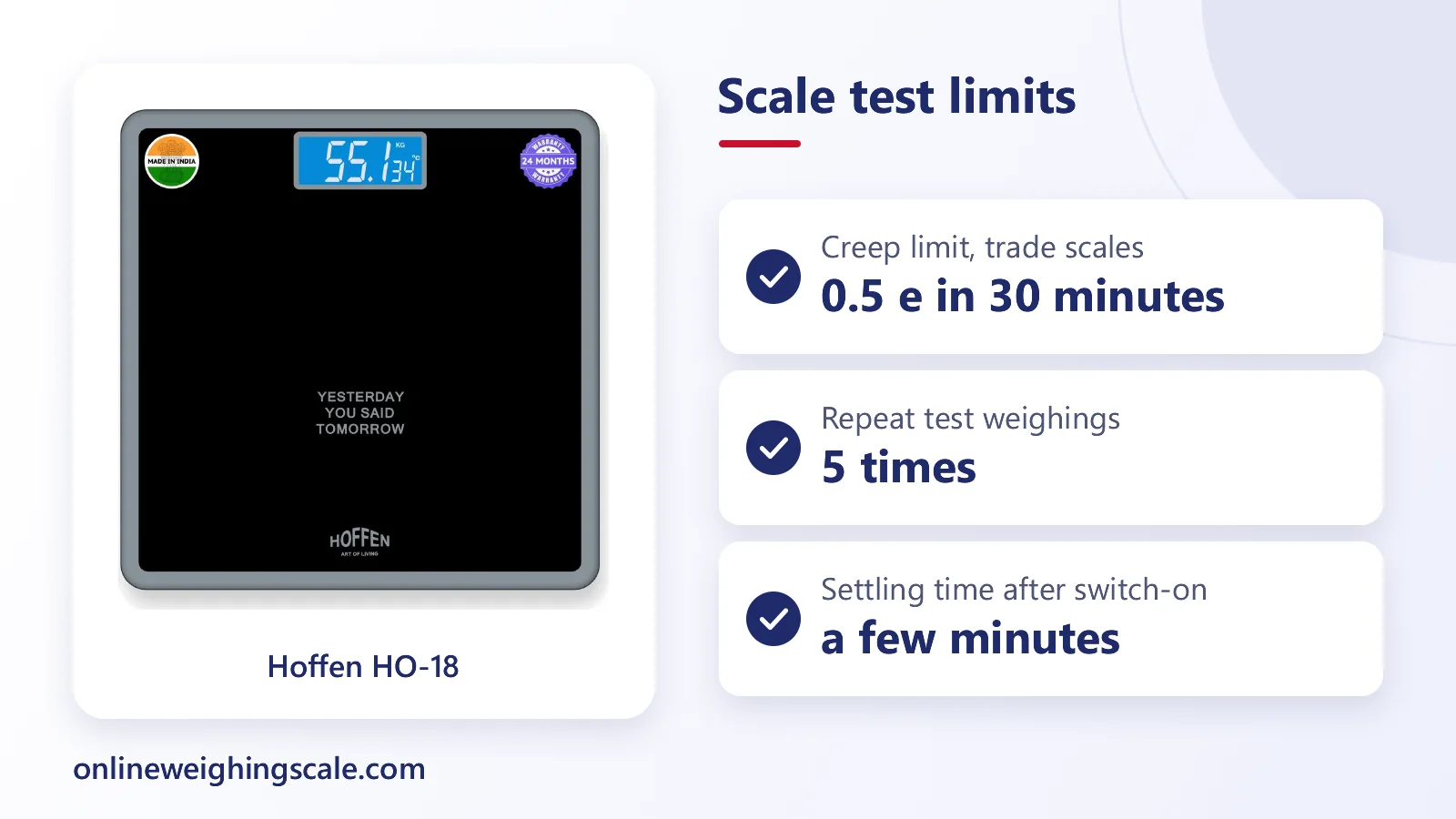
Creep is a slow change in the reading while a load stays on the pan. OIML R 76-1 limits it for legal-trade scales: the difference between the reading just after placing a load and any reading over the next 30 minutes must not exceed 0.5 of a verification scale interval (OIML R 76-1). On a home scale, creep shows up when a heavy pot is left on the pan and the number slowly moves. Weigh, read and remove the load. Do not leave things sitting on the scale.
A five-minute repeatability test with one object
Repeatability is the ability of a scale to give results that agree when the same load is put on it several times in practically the same way under steady conditions (OIML R 76-1). You can test it with anything that does not change weight, such as a sealed packet of sugar or a water bottle with the cap on.
- Put the scale on a hard, flat surface and switch it on. Wait a few minutes.
- Zero it with nothing on the pan.
- Place the object in the middle of the pan, wait for the display to settle, and note the reading.
- Lift it off and check that the display returns to zero. Do not press TARE between weighings unless it fails to return.
- Repeat five times and write the five numbers down.
Read the result like this. If all five numbers match or differ by one step, the scale repeats well, and the problem was probably the floor, the battery or how you were placing the load. If the numbers scatter by several steps, run the same test again with the object near each corner. A scale that agrees in the middle but not at the corners has an eccentricity problem. A scale that scatters everywhere, or does not return to zero, needs the maker. Repeatability only shows that a scale agrees with itself. To find out whether it is right, check it with a known weight, as described in the home calibration guide, and read accuracy vs precision for the difference.
When calibration is the answer
If the scale repeats well but reads wrong against a known weight, it needs calibration, not a new floor. On Omace digital scales a long press of TARE opens calibration mode on some models and a long press of the M key on others, and the manual for each model shows which. Stamped trade scales are sealed, so a registered repairer recalibrates them. Omace Brands Private Limited also checks every scale with certified test weights before dispatch, as described on the tested-before-dispatch page.
When it is your body and not the scale
If a bathroom scale passes the floor and repeat tests but your weight differs from morning to night, the scale may be right. A review of daily self-weighing notes considerable daily variation in measured weight from changes in body water, glycogen and the contents of the gut (PMC review of daily self-weighing). Weigh at the same time, on the same spot, under similar conditions, and look at the trend over weeks instead of a single day. The sister guide on the best time to weigh yourself goes into this. This is general information. Ask your doctor about your own readings.
Fix it before you replace it
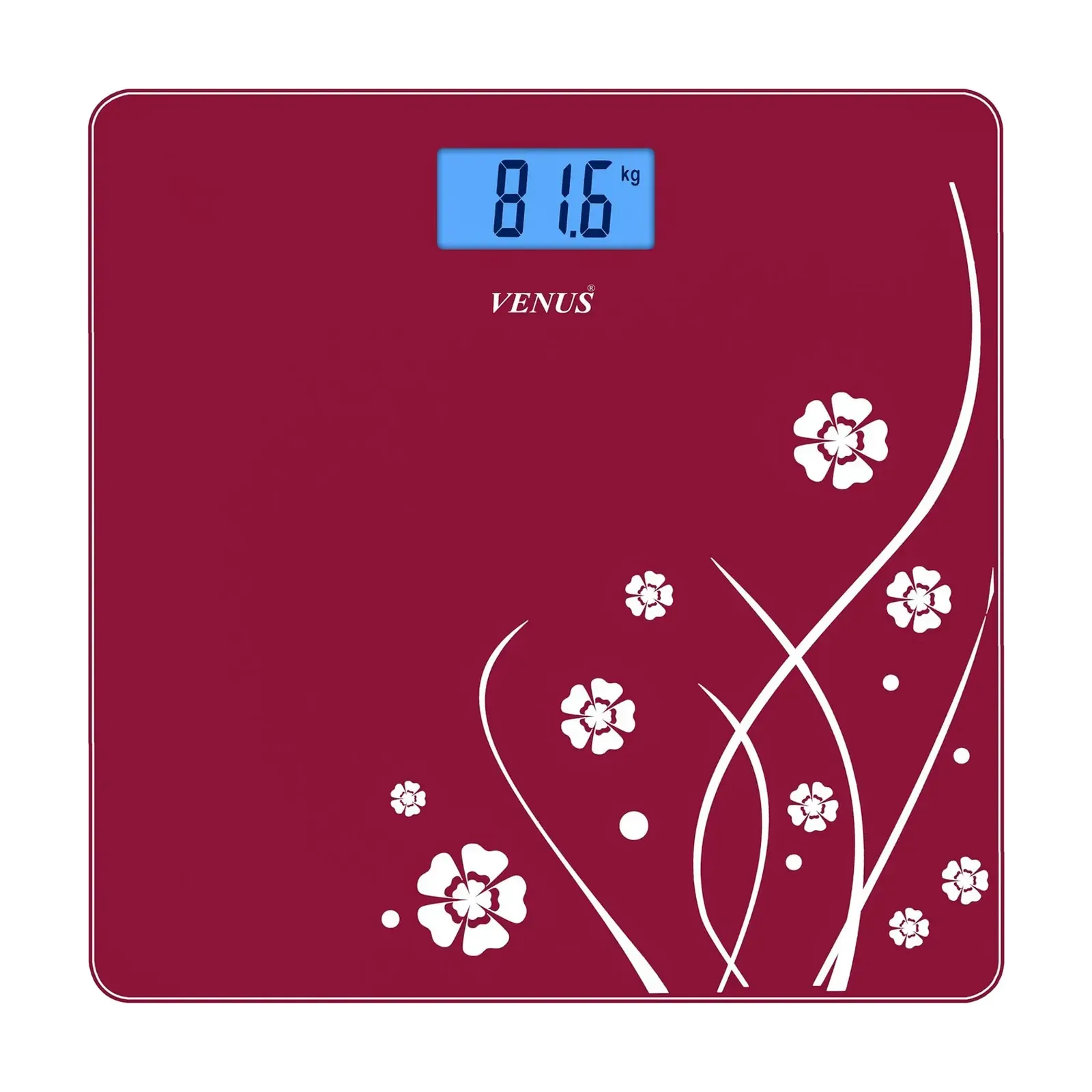
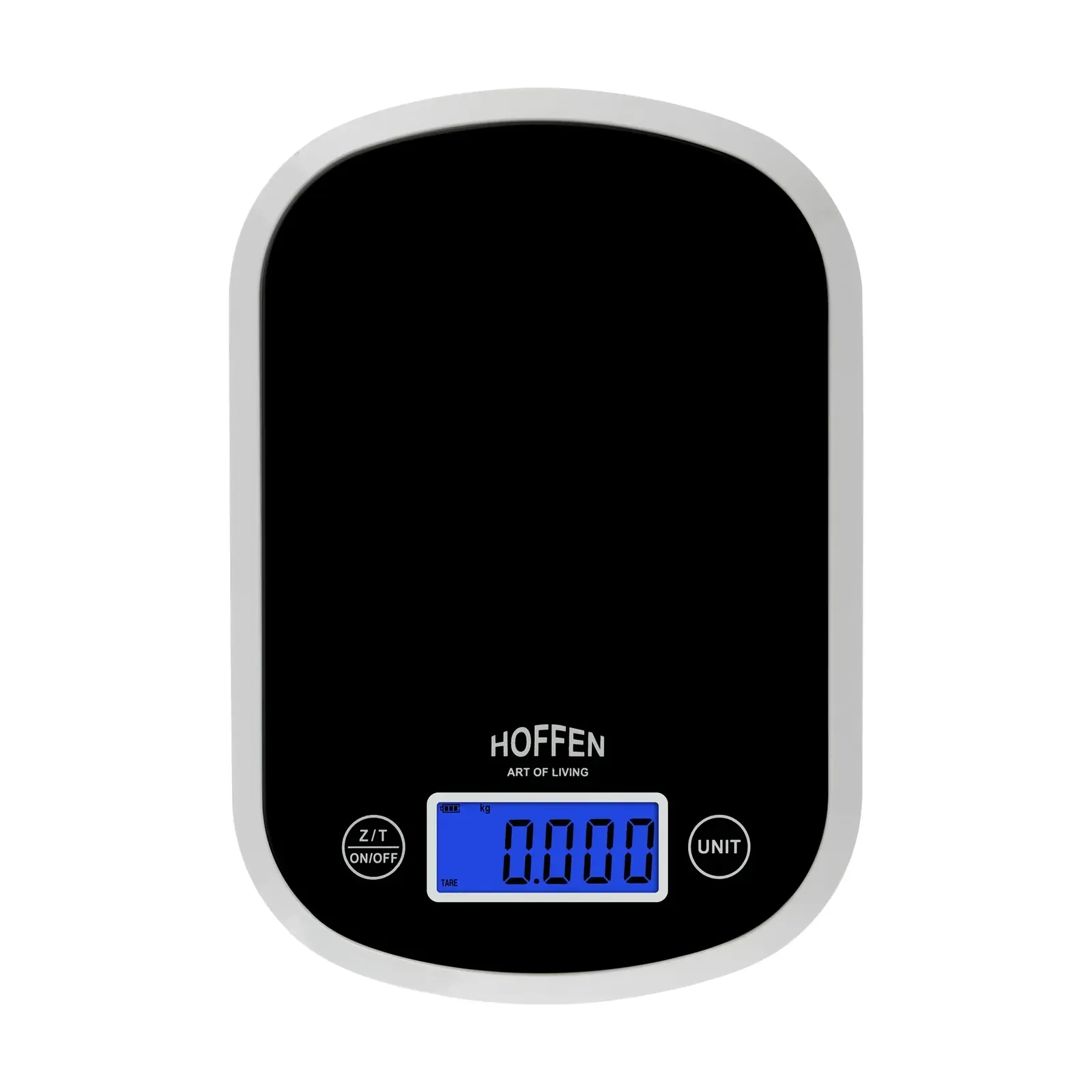
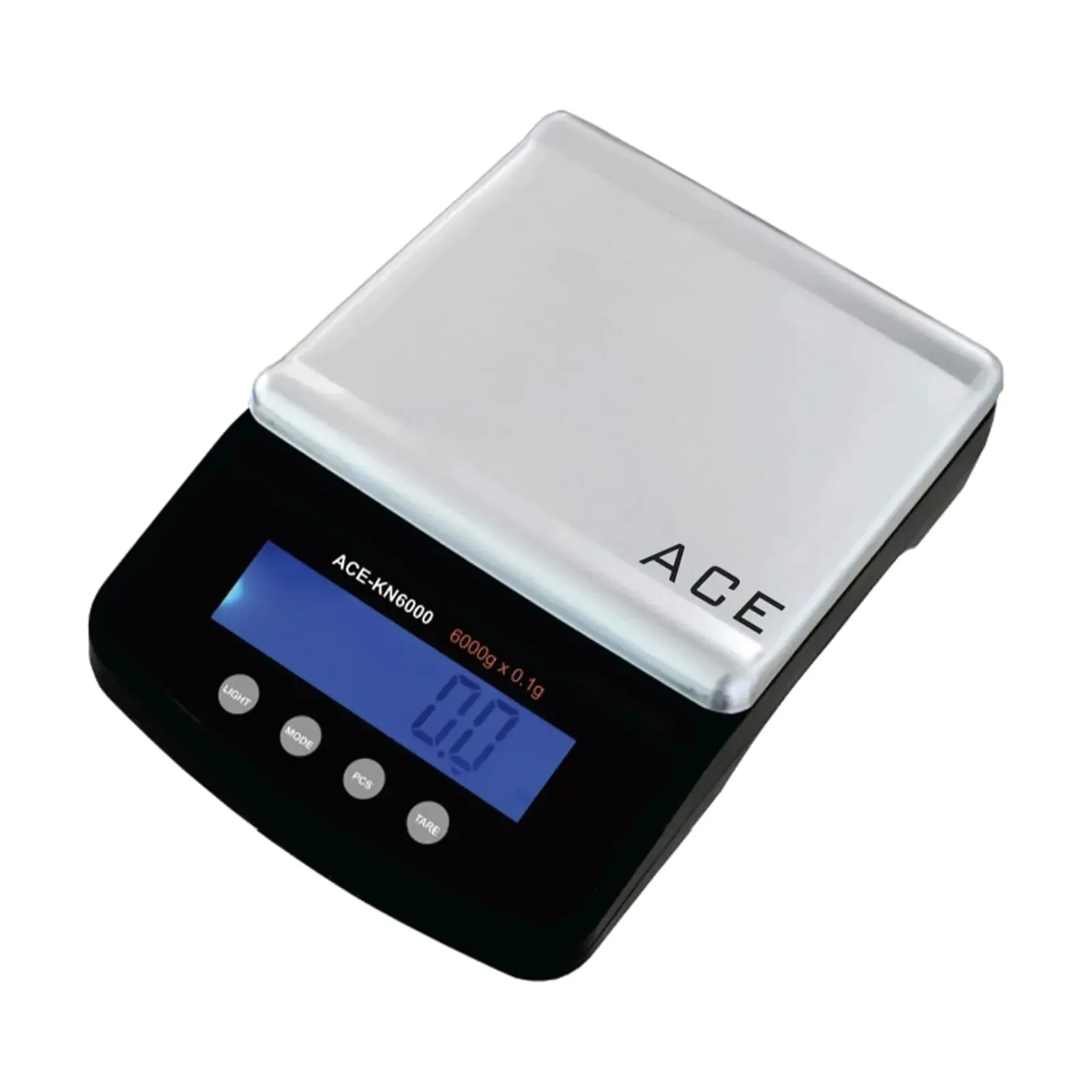
Most reports of different readings come down to a hard flat floor, a centred load, fresh cells and a few minutes of warm-up. Only after those fail does the scale itself deserve blame. If you do need a new one for the house, the personal weighing scale range and the kitchen scale range list step size and capacity on each page, so you can match the step to what you weigh. For example, the Venus EPS-6399 digital bathroom scale reads up to 180 kg in 100 g steps, the Hoffen KS-601 digital kitchen scale reads up to 5 kg in 1 g steps, and the Ace KN 10 kg weighing scale reads 10 kg in 0.5 g steps.