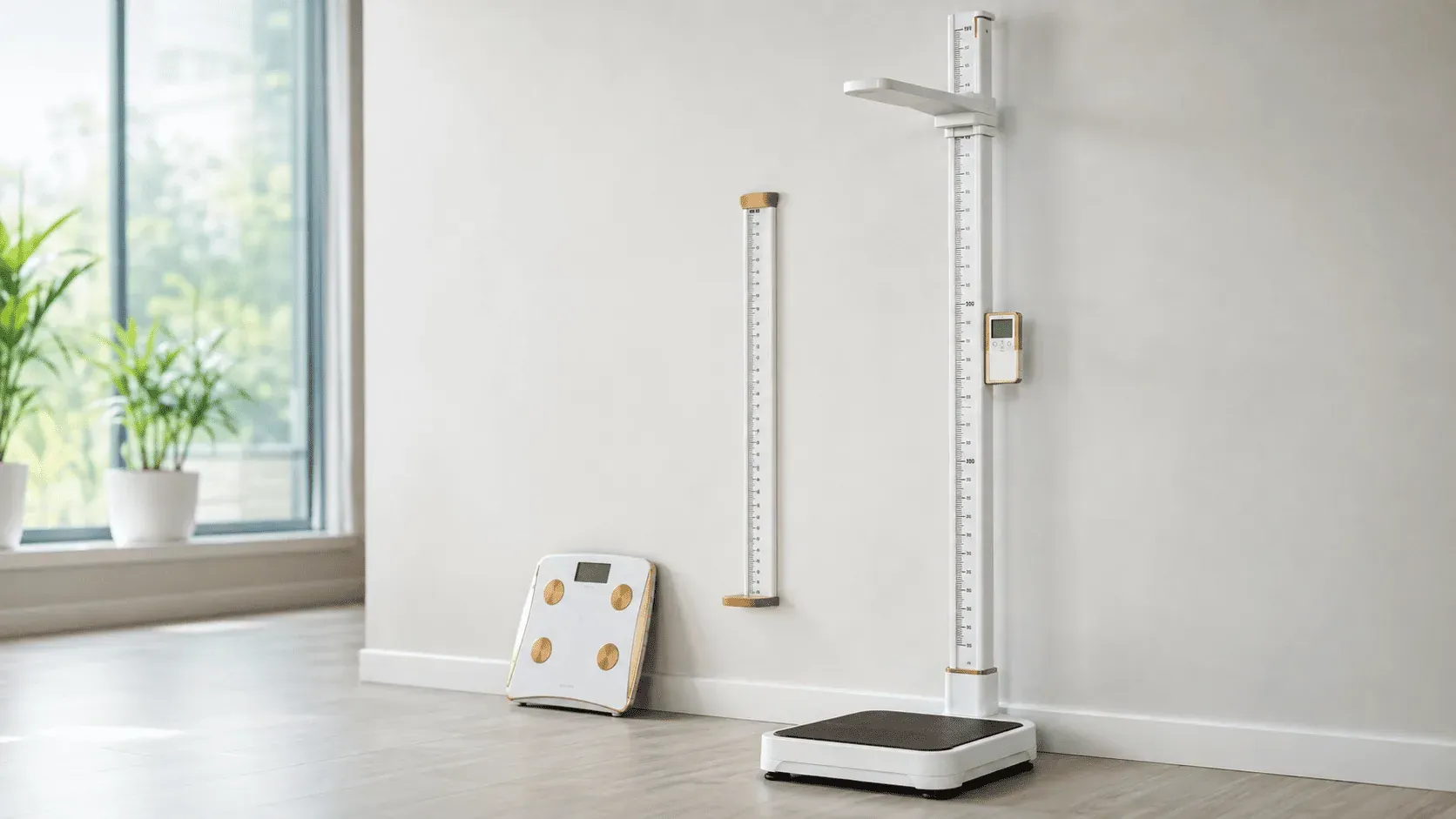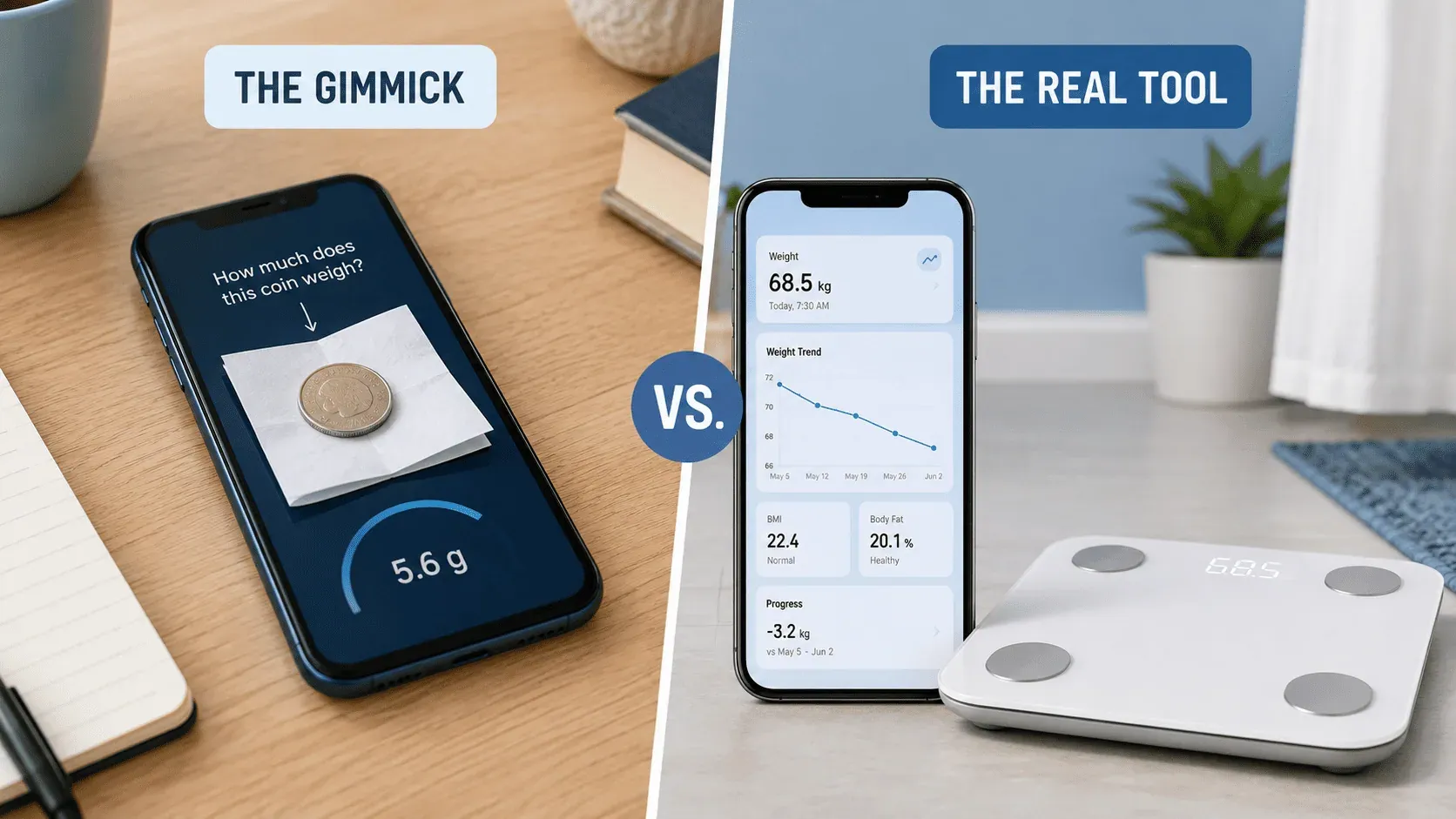
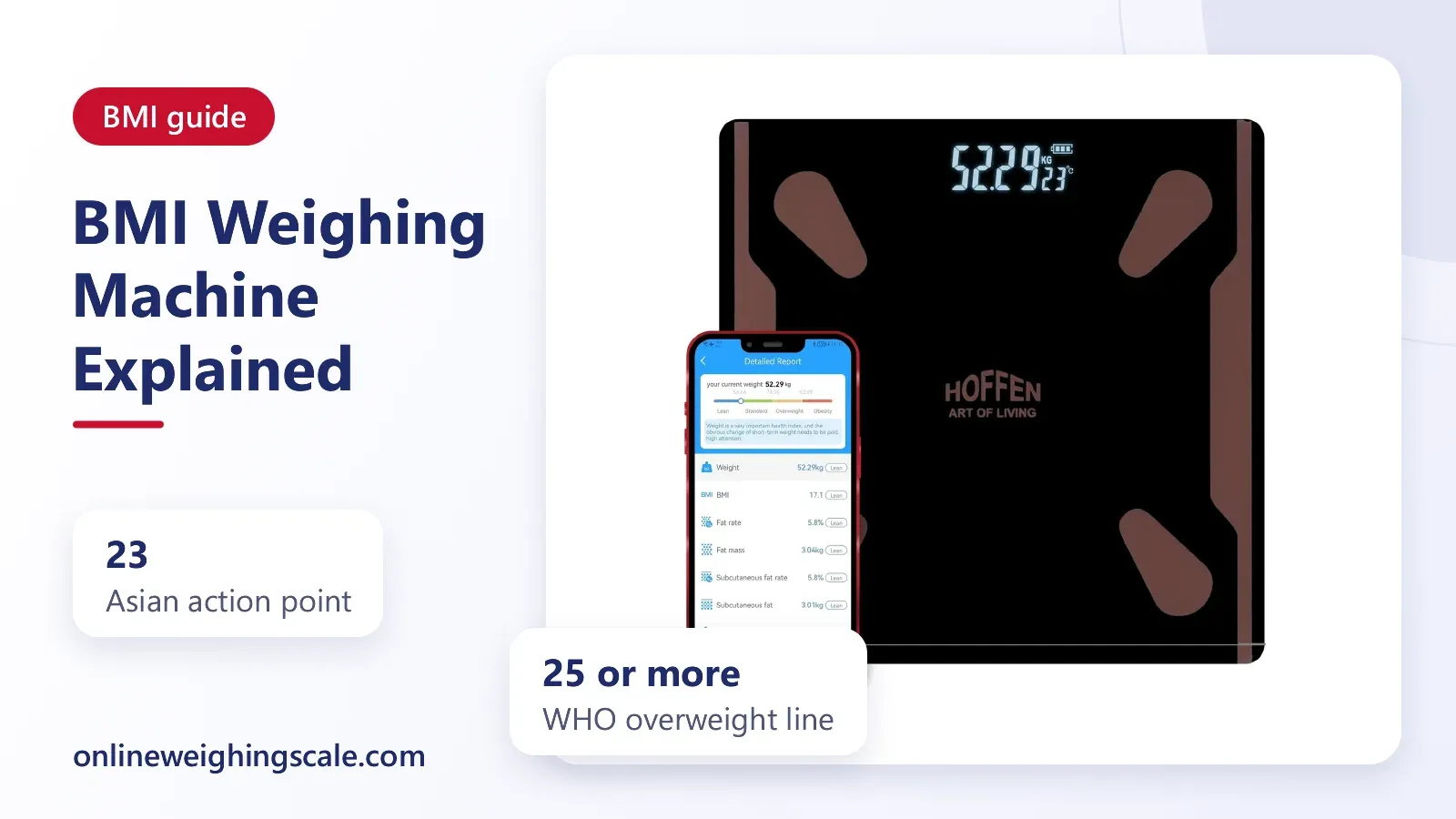
A BMI weighing machine is a weight machine that also works out body mass index, which is your weight in kilograms divided by your height in metres squared. The machine only knows your weight by itself, so the height comes from you or from a height rod.
The World Health Organization defines BMI as weight in kilograms divided by the square of height in metres, and it calls an adult with a BMI of 25 or more overweight and 30 or more obese. This page explains the kinds of BMI machine you will meet, how to read the number, and what the number cannot tell you. This is general information. Ask your doctor about your own readings.
What a BMI weighing machine actually does
A BMI weighing machine measures your weight and then works out your BMI from it. Height is the second input. A home model asks you to type your height once, usually into the machine or an app. A clinic model has a sliding height rod fixed to the same stand, so the weight and the height are both measured on the spot.
The arithmetic is the same on every machine and you can do it by hand. A person who weighs 60 kg and stands 1.65 m tall has a BMI of 60 divided by 2.7225, which is about 22.0. The Omace BMI calculator does the same sum if you only want a quick check, and the height and weight converter helps when your height is known in feet and inches.
The BMI printed by a machine is only as good as the two numbers behind it. A height typed in wrongly by 5 cm shifts the result noticeably. A weight taken on a soft carpet or a tilted floor shifts it too. Stand on a hard, flat floor, take your shoes off and use the same machine at the same time of day if you want readings you can compare with each other.
The kinds of BMI machine
Four kinds of machine give a BMI in India. They differ in where the height comes from and how much else they show.
Home scale with a BMI reading
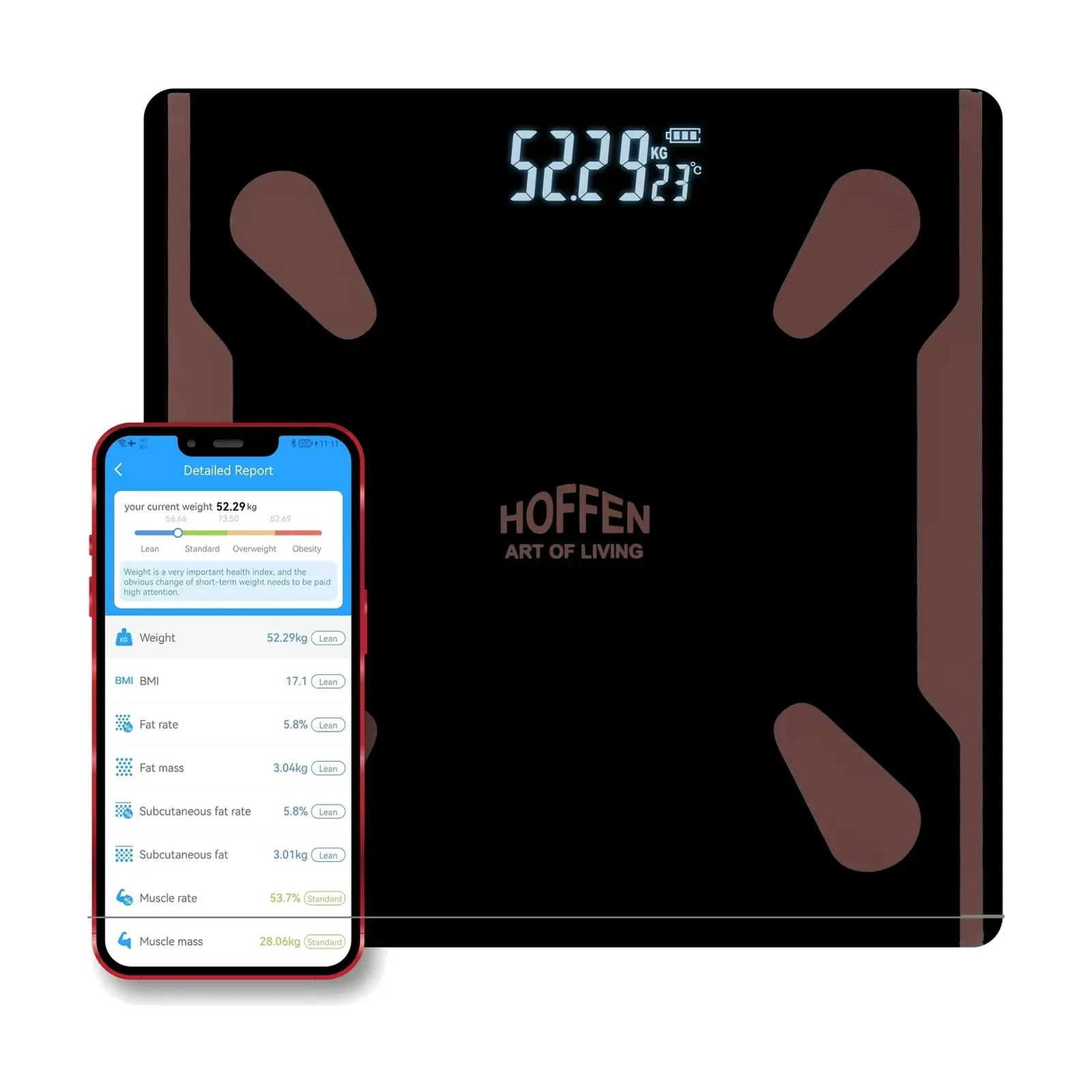
A personal scale with a BMI function suits one household. You enter the height for each user, step on, and read weight and BMI. The Hoffen HO-9 BMI weighing machine is this type: it carries a backlit LCD, a 180 kg capacity and 25+ body metrics through an app, at ₹729 on the store today, and its page asks you to keep your height and age up to date in the app. Muscle mass is among the readings its page lists. Body metrics other than weight are estimates, and the machine only reports numbers.
Smart scale with an app
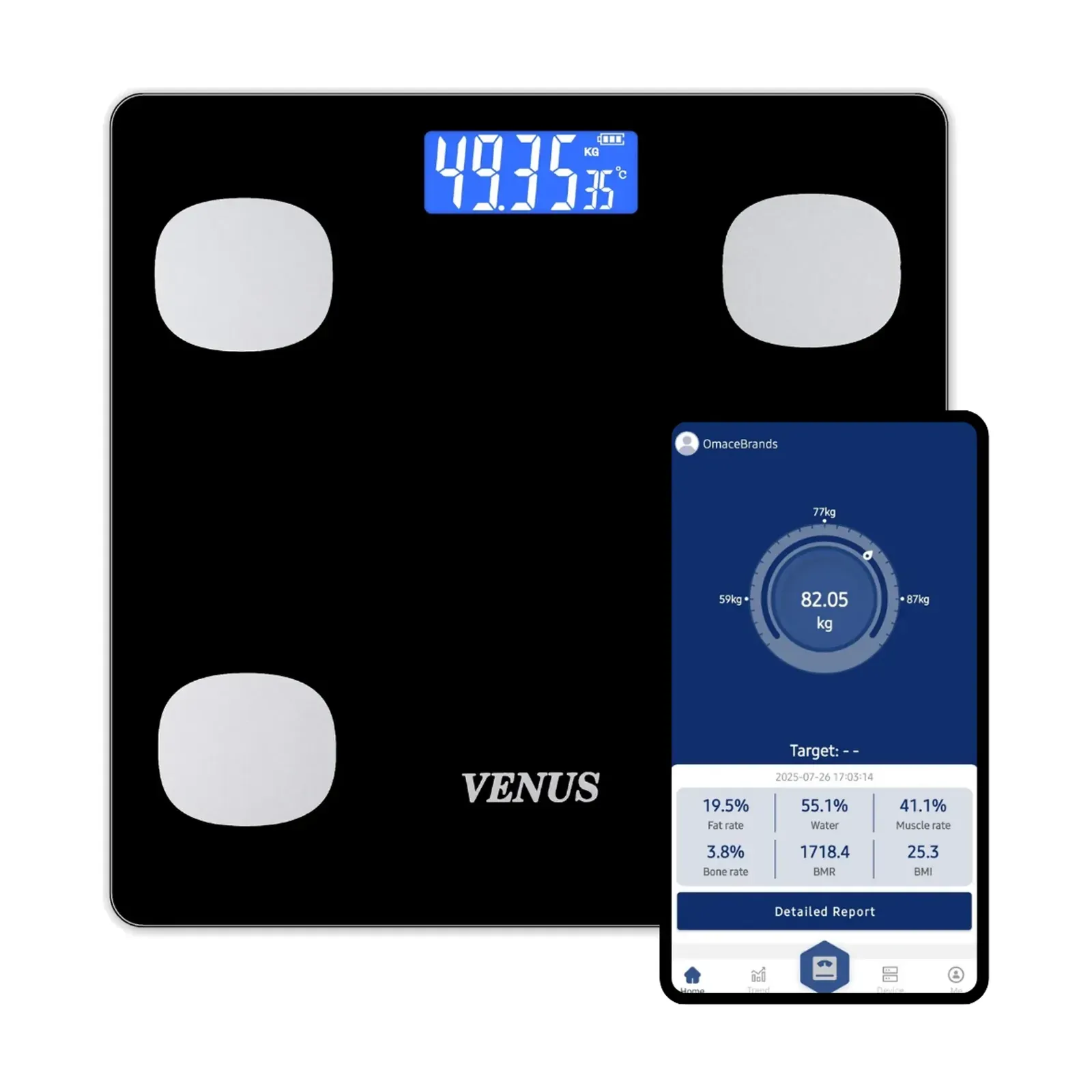
A smart scale sends the reading to your phone, where an app stores each day's weight and BMI as a history. Body fat and other figures shown alongside BMI are estimates. Our posts on how a smart scale measures body fat and whether smart scales are accurate cover those figures. The range of smart body scales sits in one category.
Height and weight machine in a clinic or gym
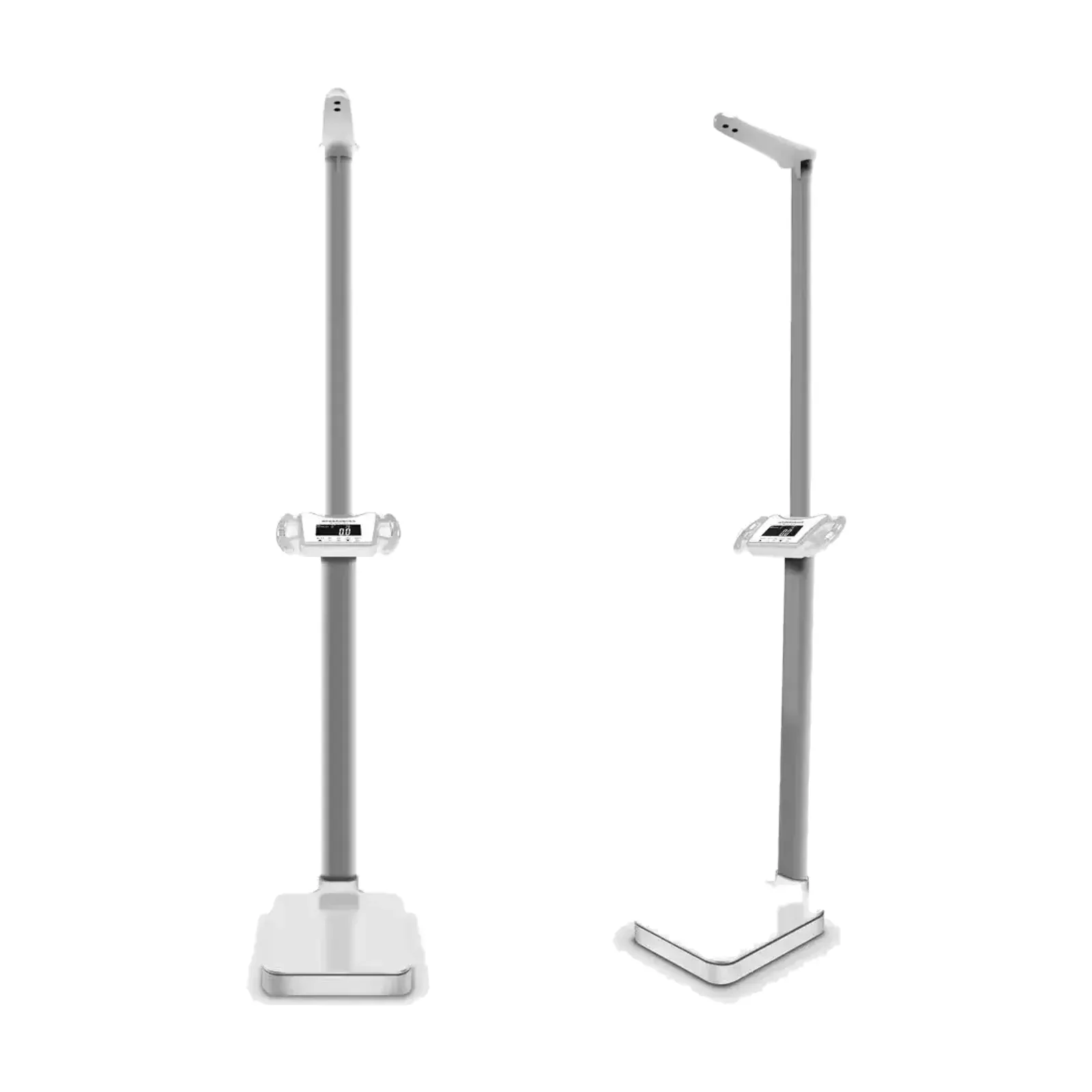
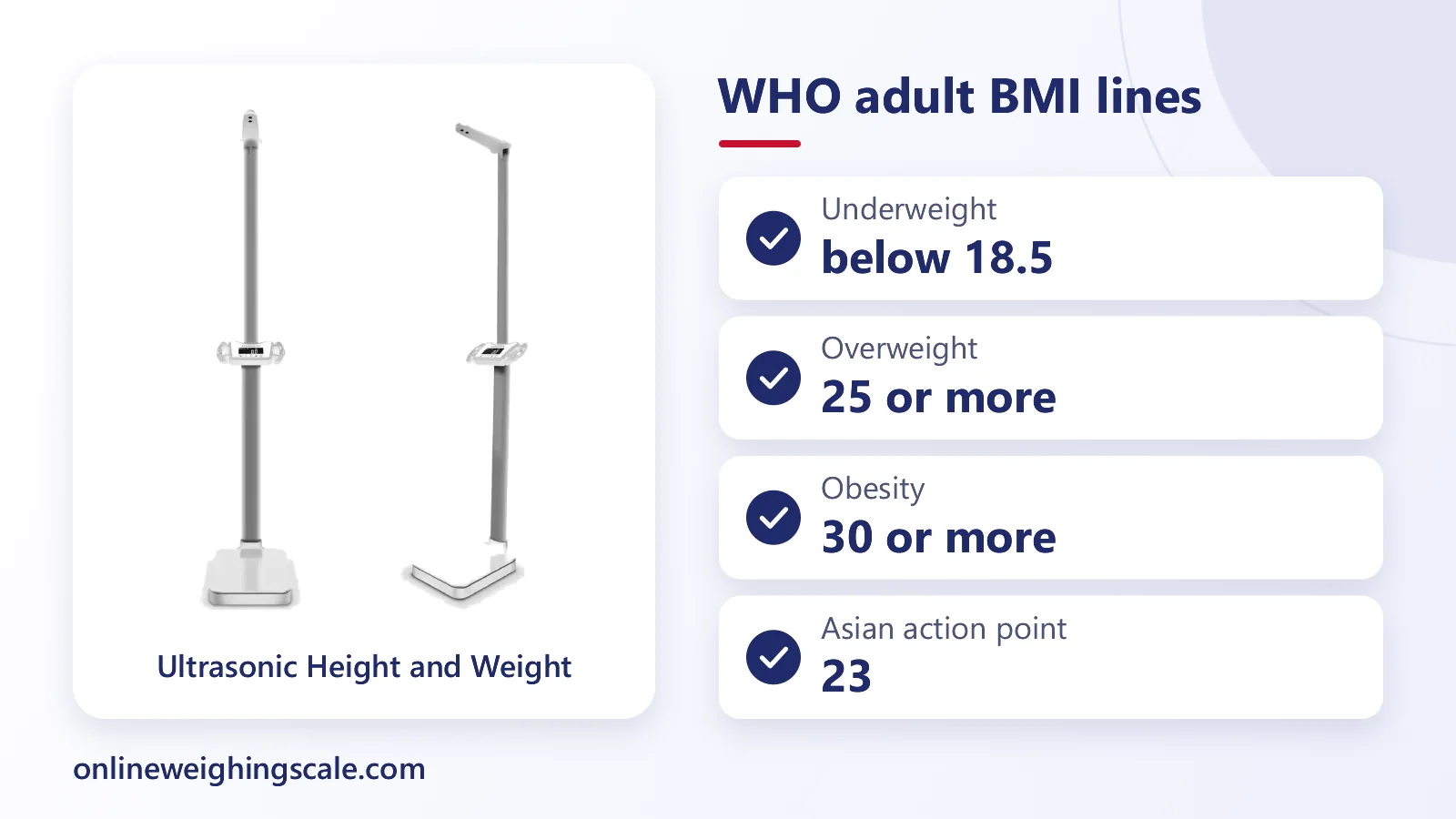
Hospitals, clinics, gyms and some pharmacies keep a height and weight machine that measures both on one stand and prints or shows the BMI. The height is measured, so a typing slip cannot creep in. Omace Brands Private Limited lists an ultrasonic height and weight machine of this kind at ₹17849, with voice output and an app, for clinics, schools and gyms. Its product page lists BMI among 18 metrics and says it shows BMI on the display and reads it aloud.
Public coin-operated machines
Some railway stations, malls and chemist shops have a coin-operated machine that shows weight and sometimes a BMI after you key in your height. Their condition varies from one machine to the next, and nobody may have checked their calibration for a long time. Treat the number as a rough indication. If you search for a BMI machine near you, a clinic, a government health centre or a gym is usually a steadier choice than a street-side machine.
BMI categories for adults
The WHO adult cut-offs are the ones used in most charts. The WHO indicator page for body mass index lists underweight as a BMI below 18.5, overweight as 25 or above and obesity as 30 or above. The range from 18.5 to 24.9 sits between those lines.
| BMI (kg/m²) | WHO adult category |
|---|---|
| Below 18.5 | Underweight |
| 18.5 to 24.9 | Between the underweight and overweight lines |
| 25 to 29.9 | Overweight |
| 30 or more | Obesity |
These are reference lines for groups of people. A BMI near a line says little about one person, and a doctor reads the number together with your age, waist, blood tests and history.
Lower action points for Asian and Indian bodies
WHO accepts that South and East Asian people can carry more body fat and more health risk at a lower BMI. A 2004 WHO expert consultation published in The Lancet kept the international cut-offs and added extra public health action points at 23.0, 27.5, 32.5 and 37.5. It found that the point where risk begins varies between about 22 and 25 across Asian populations.
The UK's NHS obesity page applies lower lines to people of South Asian and other family backgrounds, with overweight starting at a BMI of 23 and obesity at 27.5. Indian endocrinologists went further in a 2009 consensus. A review by Misra and Shrivastava in Nutrients reports the Indian proposal as overweight from 23 to 24.9 and obesity from 25, with a waist of 90 cm or more in men and 80 cm or more in women counted as abdominal obesity.
These lines are screening points and the sources do not agree on one set. A BMI of 24 that the WHO chart calls fine can still be worth a conversation with your doctor, and a BMI of 26 is not a verdict either. Use the lower lines as a prompt to ask, not as a target to chase.
| Source | Overweight starts | Obesity starts |
|---|---|---|
| WHO international cut-offs | 25 | 30 |
| NHS, South Asian backgrounds | 23 | 27.5 |
| Indian consensus as reported by Misra and Shrivastava | 23 | 25 |
What BMI cannot tell you
The US CDC page on BMI calls it a screening measure and says it does not directly measure body fat. It also says BMI does not distinguish between fat, muscle and bone mass, and does not show where people carry fat. The NHS says the same about muscle: its calculator cannot tell muscle from fat, so a muscular person can be placed in a higher group without carrying much fat.
Three situations show the gap clearly.
- A person who trains with weights can have a high BMI and a healthy body.
- An older person who has lost muscle can show a BMI in the middle range and may still carry more fat than the number suggests.
- Two people with the same BMI can store fat in different places, which the BMI figure does not show. That is why doctors also ask for a waist measurement, and the post on visceral fat explains it.
For waist, the NHS suggests that for people with a BMI under 35 the waist should be less than half of height. A tape measure and a height chart add information that a weighing machine cannot. Our posts on anthropometry and lean body mass explain the other measures. The height and weight chart for men and women in India gives the common reference weights by height.
Pregnancy changes weight for good reasons, so a BMI reading mid-pregnancy is not read the usual way. Your doctor or midwife will tell you which reading to use.
Children need growth charts
The adult cut-offs do not apply to children. The WHO obesity fact sheet defines overweight in children aged 5 to 19 as BMI-for-age more than one standard deviation above the WHO Growth Reference median, and obesity as more than two. The CDC page says obesity in children and teens is defined as a BMI at or above the 95th percentile for sex and age. A child's BMI changes naturally as they grow, so one number says little without the chart.
If your child's weight worries you, take the growth record to a paediatrician. Our guides to the height and weight chart for kids 5 to 18 years and the WHO boys growth chart show how those charts look.
Measuring height properly
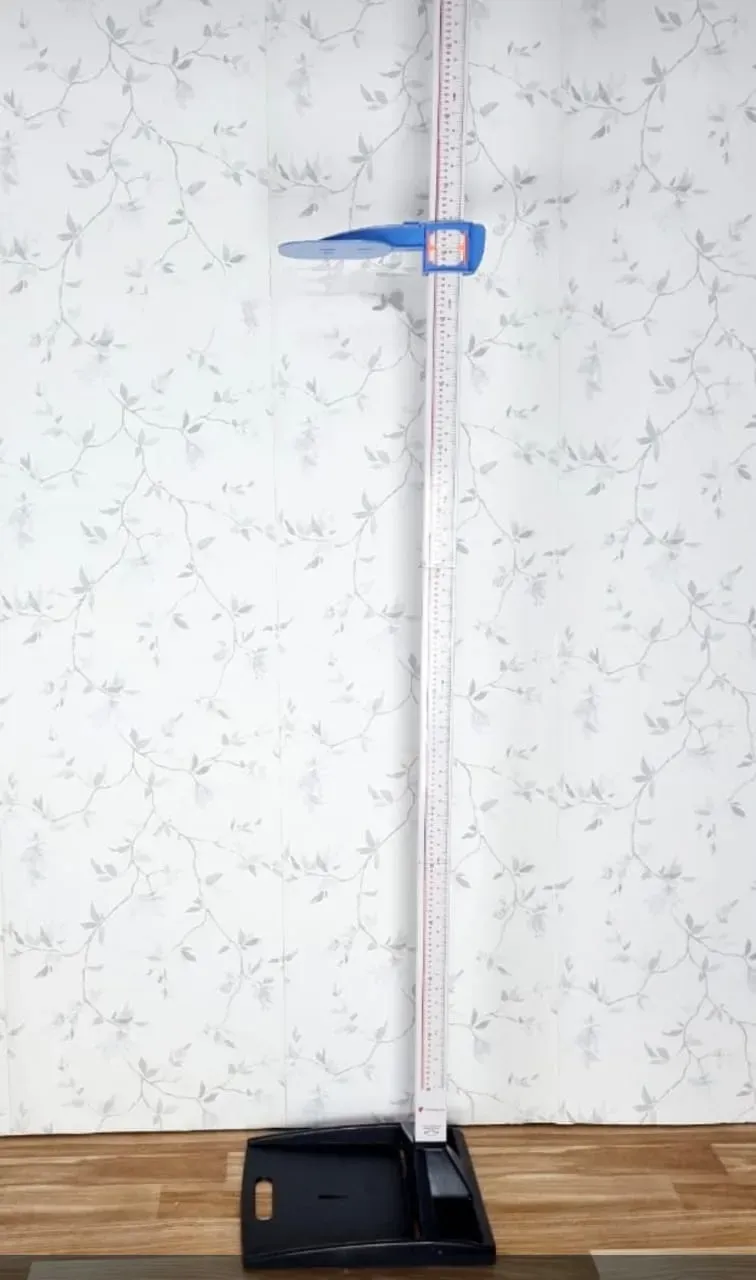
BMI divides by height twice, so a small height error counts double. A wall-mounted stature meter or a portable stadiometer gives a firmer figure than a guess or an old number from school. Stand with your heels together, back straight and eyes level, and read at the top of the head. The post on how to measure height accurately walks through each step, and the full range of height measuring instruments is in one place.
Using a BMI machine sensibly
Weigh yourself at a similar time of day on the same machine, on a hard flat floor. Look at the direction of readings over weeks and ignore a single day's jump, since water, a meal or a long walk can change the weight. Omace Brands Private Limited has made scales in Bagru, Jaipur since 1994 and every scale is checked with certified test weights before dispatch. On Omace digital scales a long press of TARE opens calibration mode on some models and a long press of the M key on others, and the manual for each model shows which, and the bathroom scale calibration guide shows how to test yours.
A BMI is one number among several that your doctor looks at. A weighing machine reports; it does not diagnose, and the choice about what to do next belongs to you and your doctor.
When to talk to a doctor about your BMI
Speak to a doctor if your BMI is below 18.5, if it has changed a lot without a reason, or if you are above the lower Asian lines and have a family history of diabetes or heart disease. Bring your readings and your waist measurement. This is general information. Ask your doctor about your own readings.