A crane scale is used by hanging it between the crane hook and the load, lifting slowly until the load is clear of the ground, and reading the weight only when the display has stopped moving. The scale is only a link in the chain, so the hook, shackle and sling around it must be sound and the crane itself must be able to carry the load.
Under section 29 of the Factories Act, 1948, every lifting machine, chain, rope and lifting tackle in a factory had to be thoroughly examined by a competent person at least once in every period of twelve months, and a register of those examinations had to be kept. The Haryana Labour Department copy of the Act carries that text. A crane scale hangs in the same chain, so it falls under the same discipline of care.
Check the capacity of the scale, the crane and the load
Three limits sit in one lift: the capacity of the crane scale, the safe working load of the crane or hoist, and the safe working load of the sling or hook. The lowest of the three is your limit. Section 29(1)(b) of the Factories Act says no lifting machine, chain, rope or lifting tackle may be loaded beyond its safe working load, except for a test, and that the load must be plainly marked on it. The UK Health and Safety Executive says the same about every item of lifting equipment, accessories included: each must be marked with the maximum load it can safely lift.
If you do not know the weight of the load, estimate it high. A steel coil, a casting or a drum of material often weighs more than the person guessing expects. Pick a scale whose capacity has room above the heaviest load you expect, because a scale used close to its limit on every lift wears faster. The post on how to read a crane load chart shows how the crane itself is rated at different radii, which matters when the crane is a mobile one.
Look over the hook, shackle, safety latch and sling
Do this walk-round before every shift, not once a year. The yearly examination by a competent person is the formal check. Your own look is the daily one.
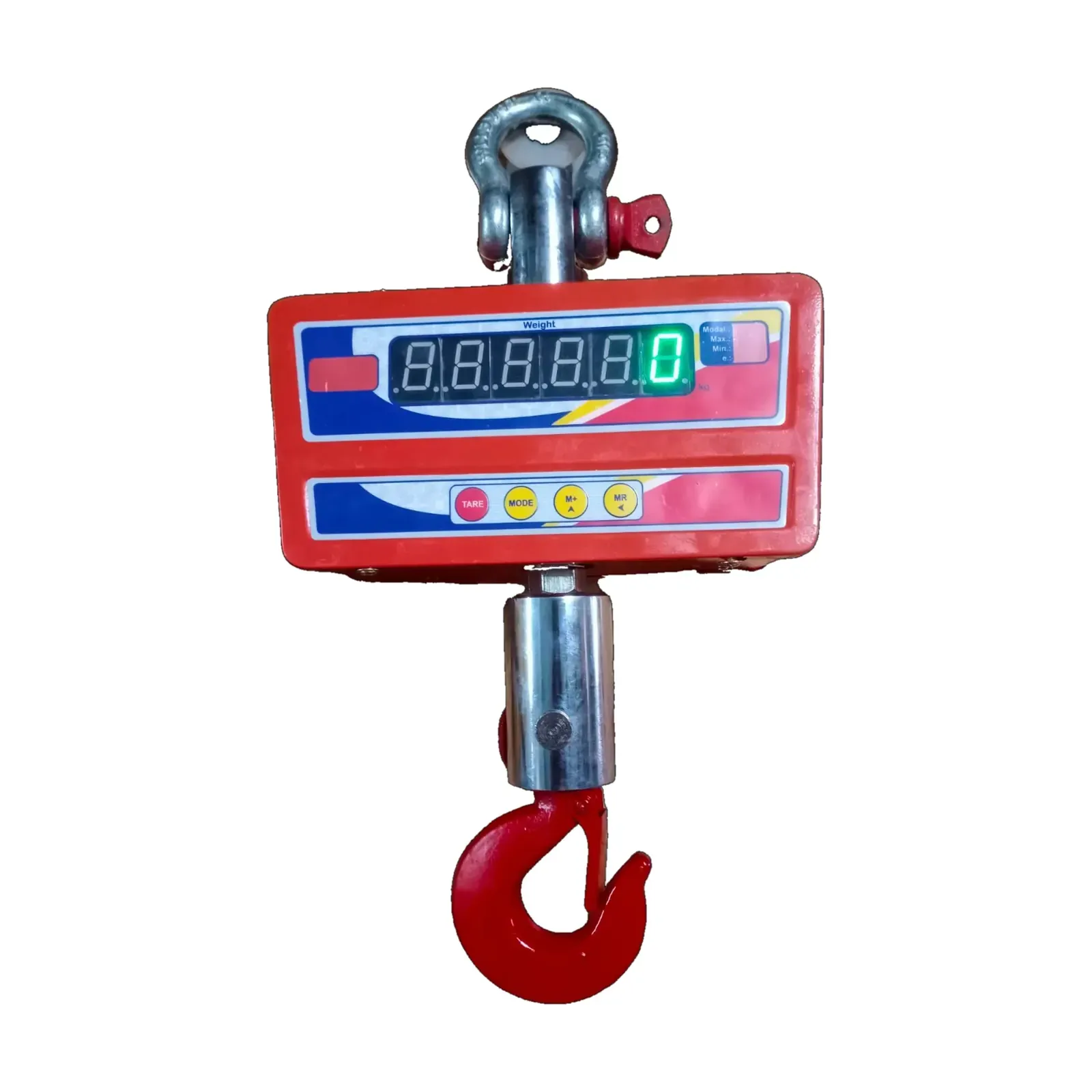
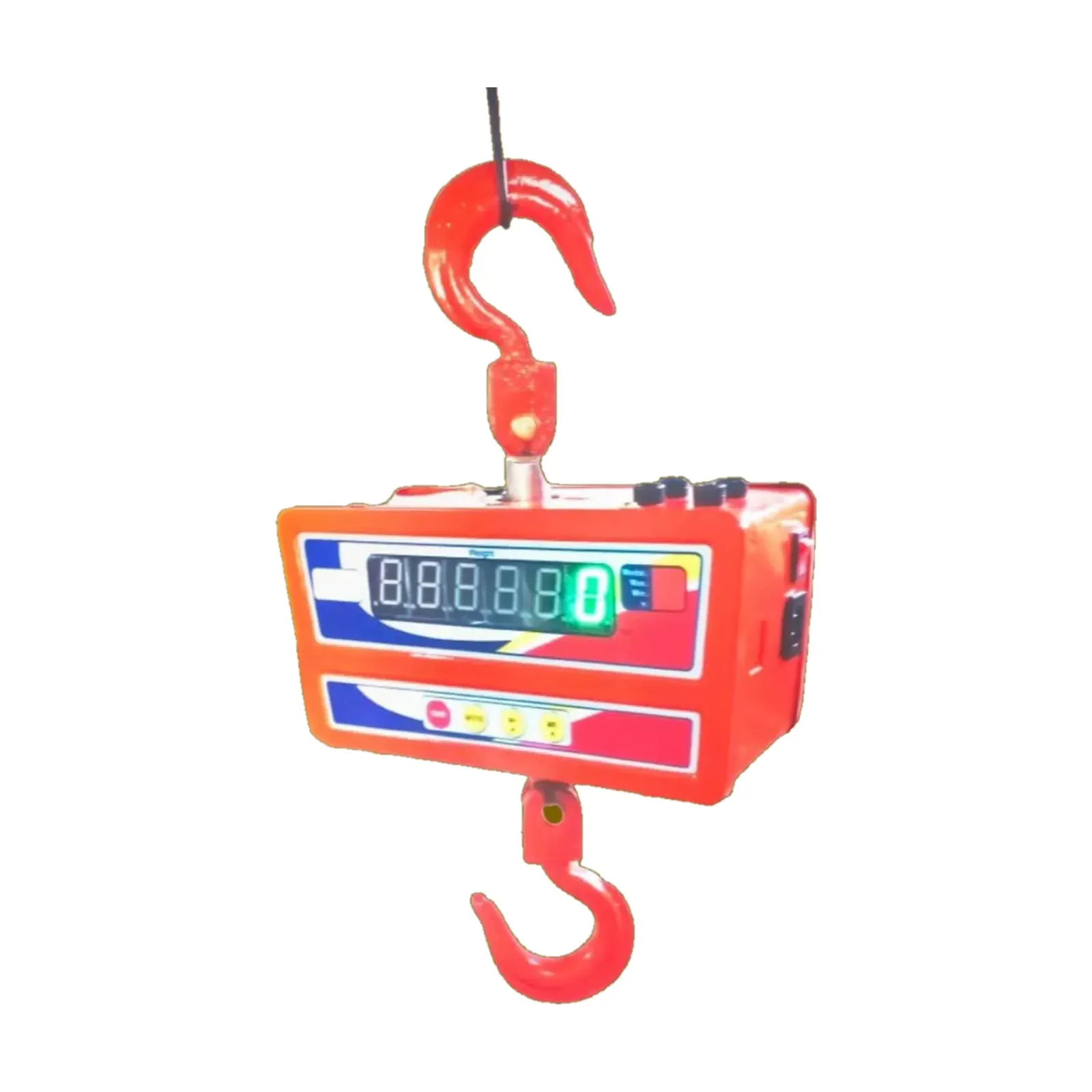
- Hook: no bend, no opened mouth, no cracks or deep nicks, and the safety latch closes by itself and holds the load in place if the sling slackens.
- Shackle: the pin is full length, fully screwed or secured, and has not been replaced by a bolt.
- Scale body and eye: no cracks, no stretched or worn eye, no dents in the body that touch the sensing part.
- Sling or chain: no cuts, kinks, broken strands or stretched links, and a tag showing its own safe working load.
The Health and Safety Executive notes that a hook with a safety catch helps to retain the load if it snags. If any part is damaged, take it out of use and tag it. A bent hook or an opened shackle does not become safe because the load looks light.
Hang the scale in line with the load
A crane scale measures pull along its own axis. Hang it from the crane hook so that it can swing freely and rise straight up to the crane hook, with the load hanging straight beneath it. A load pulled sideways, dragged across the floor or caught on a corner puts a bending force on the scale that it was not built to take. Side pull also gives a false reading, because only part of the force runs along the axis.
Centre the crane hook over the load before the first lift. If the load swings when it leaves the ground, set it down and re-centre the crane. Do not try to steady a swinging load by hand while it is hanging.
When two or more sling legs go to the load, widen the angle with care. The Health and Safety Executive reminds users that the load in each leg of a sling increases as the angle between the legs increases. The scale in the middle sees the total weight, but the sling legs and their hooks see more than their share.
Switch on, zero and lift slowly
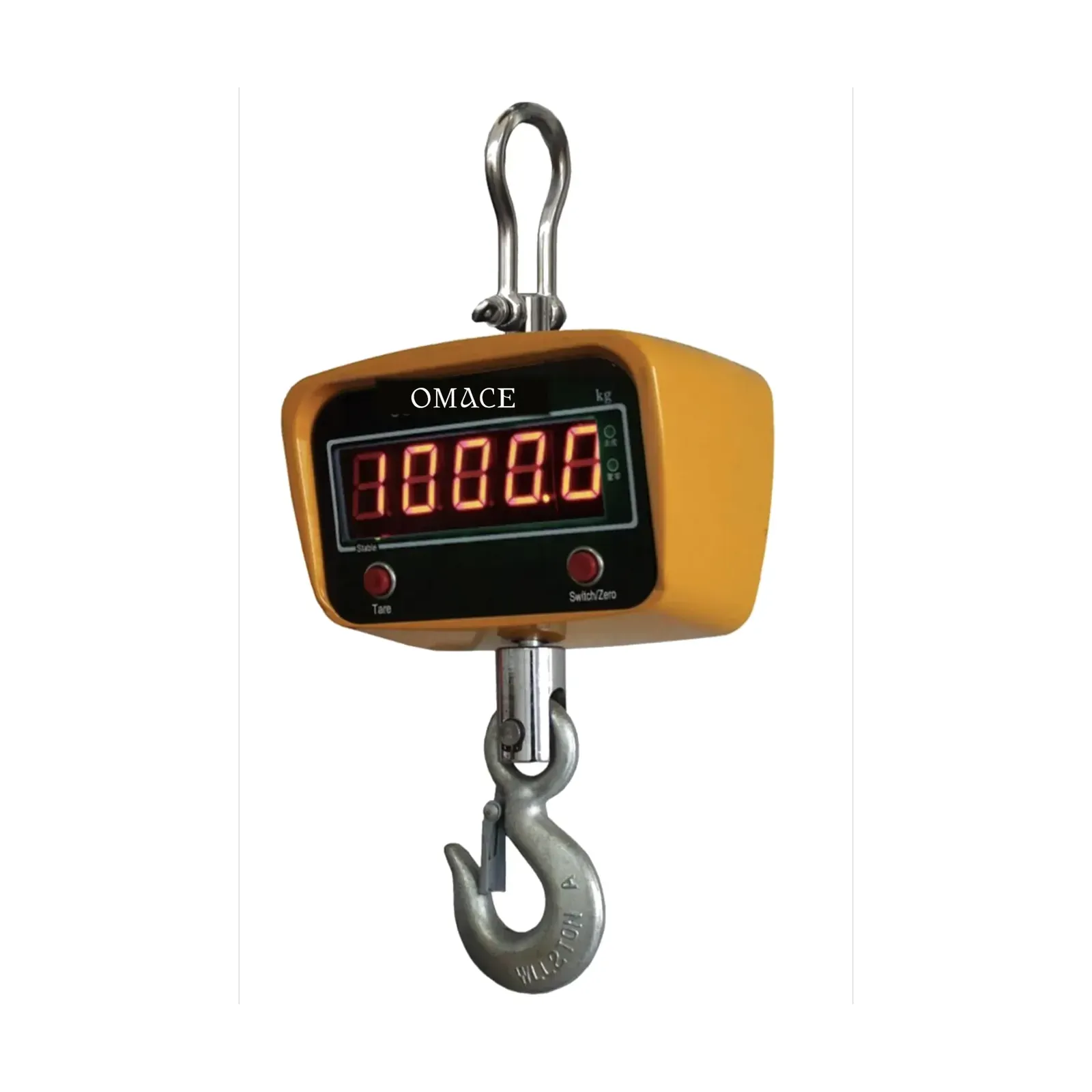
- Switch the scale on and let it show zero while it hangs with no load. If you use a sling or hook below the scale, hang that first, then press TARE so that only the load is weighed.
- Take up the slack with the crane in its slowest speed until the sling is just tight.
- Lift the load only a few centimetres. Stop and check the hook, the latch and the rigging.
- Continue to lift until the load is clear of the ground and of anything it could touch.
- Wait. Read the weight only when the figure is steady. A swinging load makes the display move up and down, and the middle of that swing is not the weight.
- Lower the load slowly onto packing or a pallet, not onto a hard edge.
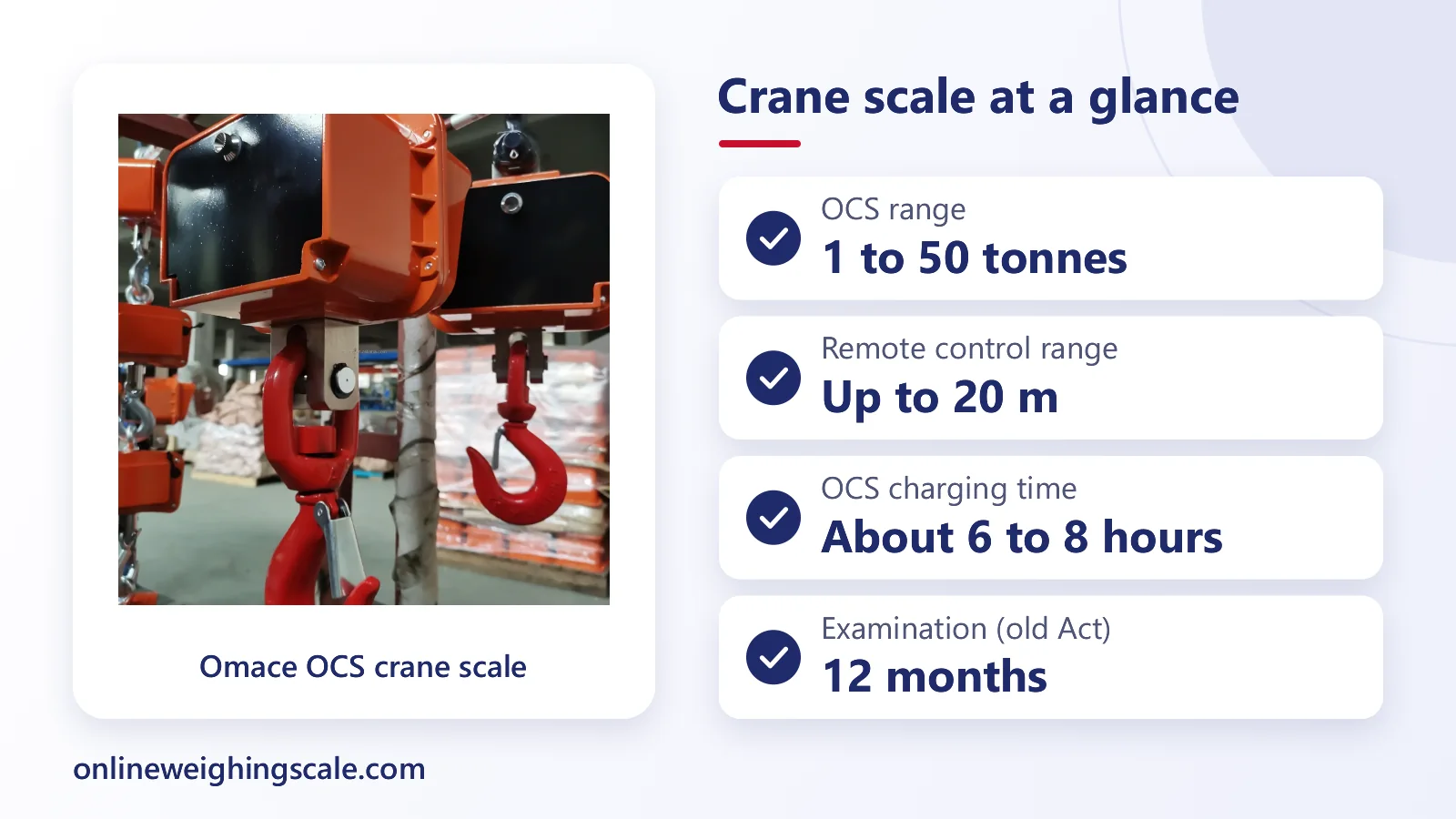
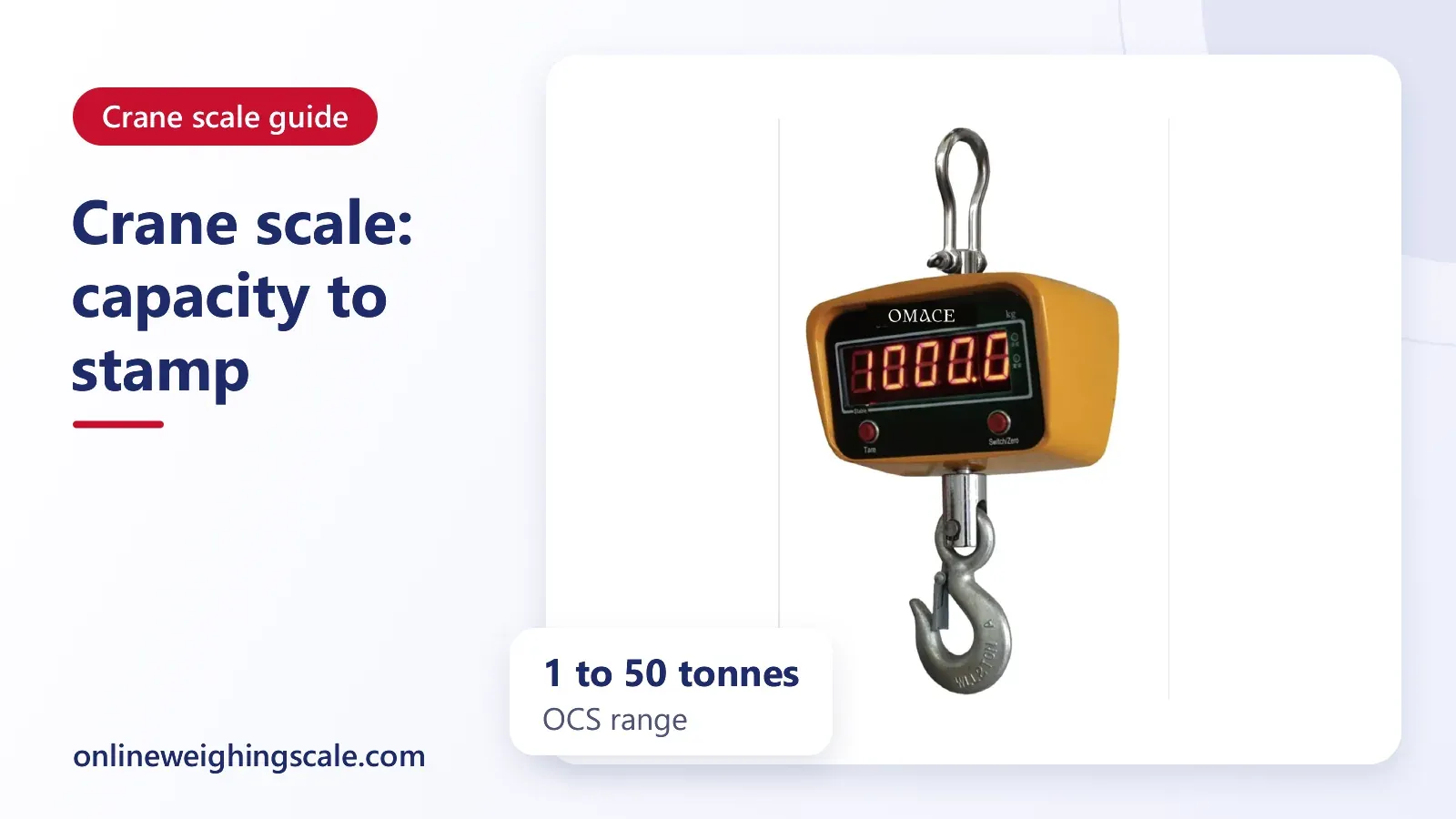
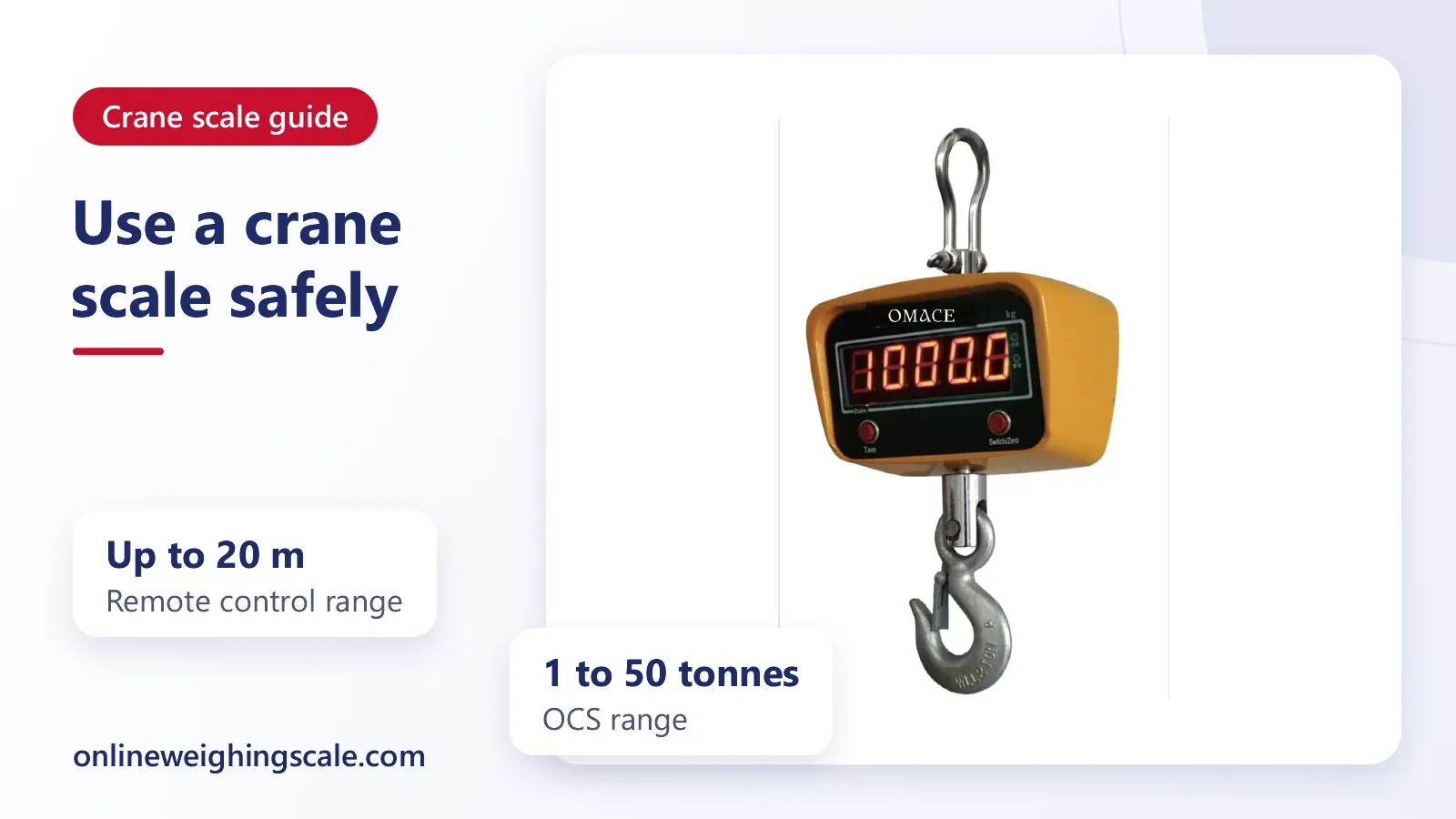
Many crane scales come with a remote control or a remote display, so the person reading the weight can stand at a safe distance and in sight of the load. The Omace OCS crane scale has a remote control for this reason. Read the figure from where you can see both the load and the crane operator, and agree a hand signal before the lift starts.
Avoid overload and shock loading
Shock loading happens when the load is jerked, dropped a short distance and caught, or lifted with a slack sling that snaps tight. The force on the scale for a moment is much higher than the weight of the load. A scale that has been shock loaded may still switch on and show a figure, but its sensing part can be damaged and its readings may drift. The Health and Safety Executive asks users not to subject lifting tackle to sudden loads, and the same applies to the scale in the line.
- Use the crane slowly during take-up and landing.
- Never let a load swing into the scale or the hook.
- Never weigh while the load is being dragged, jerked or pushed.
- If the display shows an overload message or the scale is overloaded even once, put it aside for a check before you trust its reading again.
Never use a crane scale to pull a vehicle out, to straighten a part or to measure the force of a winch unless the maker says it is meant for that. A pull is not a lift, and the hook and eye may not be rated for it.
Stand clear of the load
Nobody should stand under a suspended load. The Health and Safety Executive's guidance says that where practicable loads should not be carried over people, and that people should not walk or stand under loads left suspended. For weighing, the person who reads the scale should stand to the side, outside the path the load would fall or swing along.
Keep a clear zone on the floor, tell others before you lift, and do not leave a load hanging on the scale while anyone goes for a break. If the weight needs to be held for a minute to settle, hold it a short height above the ground, not at full lift.
Look after the display, the battery and the scale between jobs
A weak battery is one of the commonest reasons for a display that dims, resets or shows a wandering figure. Charge a rechargeable scale before the shift, and replace the batteries in a dry cell model when the low-battery sign appears. A scale that blanks out in the middle of a lift can leave the operator with no reading and a load in the air, which is a poor moment to hunt for a charger.
Store the scale in its case, away from rain, welding spatter and dust. Do not hang it on a hook by the display or throw it onto the floor of a truck. Wipe the eye and hook, and keep moving parts free of grit. Check the zero each morning with nothing hanging on it. A reading that moves away from zero is a warning to look at the scale before the next lift.
Lifting tackle, the law and the new Code
Section 29 of the Factories Act, 1948 was the long-standing Indian rule on lifting machines and tackle in factories, with its yearly examination and its safe working load marking. The Ministry of Labour and Employment's annual report states that the Factories Act, 1948 and the Dock Workers (Safety, Health and Welfare) Act, 1986, along with 11 other Acts, have been subsumed in the Occupational Safety, Health and Working Conditions Code, 2020, which came into force on 21 November 2025. The Press Information Bureau announced the four labour codes taking effect from that date.
The Code and the state rules under it now carry the detail, and state rules are still being settled. This post could not confirm whether the twelve-month examination interval has been kept or changed in your state. Ask the factory inspectorate or your safety officer for the current requirement, and keep the examination register the same way. Checked November 2026.
Separate from this, a crane scale used for trade, where a weight decides a price, is a Legal Metrology matter. Omace shop, platform, chicken and crane scales leave Bagru verified and stamped by Legal Metrology, and the stamp is valid across India. Stamping is compulsory on crane scales. The post on crane scale calibration covers test weights and re-verification, so this post leaves that part there.
Which Omace crane scale suits the job
Omace Brands Private Limited makes OCS crane scales from 1 to 50 tonnes, with 40 and 50 tonne scales made on buyer request. Smaller digital hanging models cover workshop and godown loads.
| Model | Capacity | Price incl. GST |
|---|---|---|
| Omace Digital Crane Scale (OM-CS-C-200) | 200 kg and 300 kg | ₹2,939 |
| Omace 500 kg Crane Scale (OM-CS-M-500) | 500 kg | ₹9,999 |
| Omace 1 Ton Crane Scale (OM-CS-M-1000) | 1 tonne | ₹12,999 |
| Omace OCS Crane Scale (OM-CS-C-1000) | 1 to 50 tonnes | ₹11,549 |
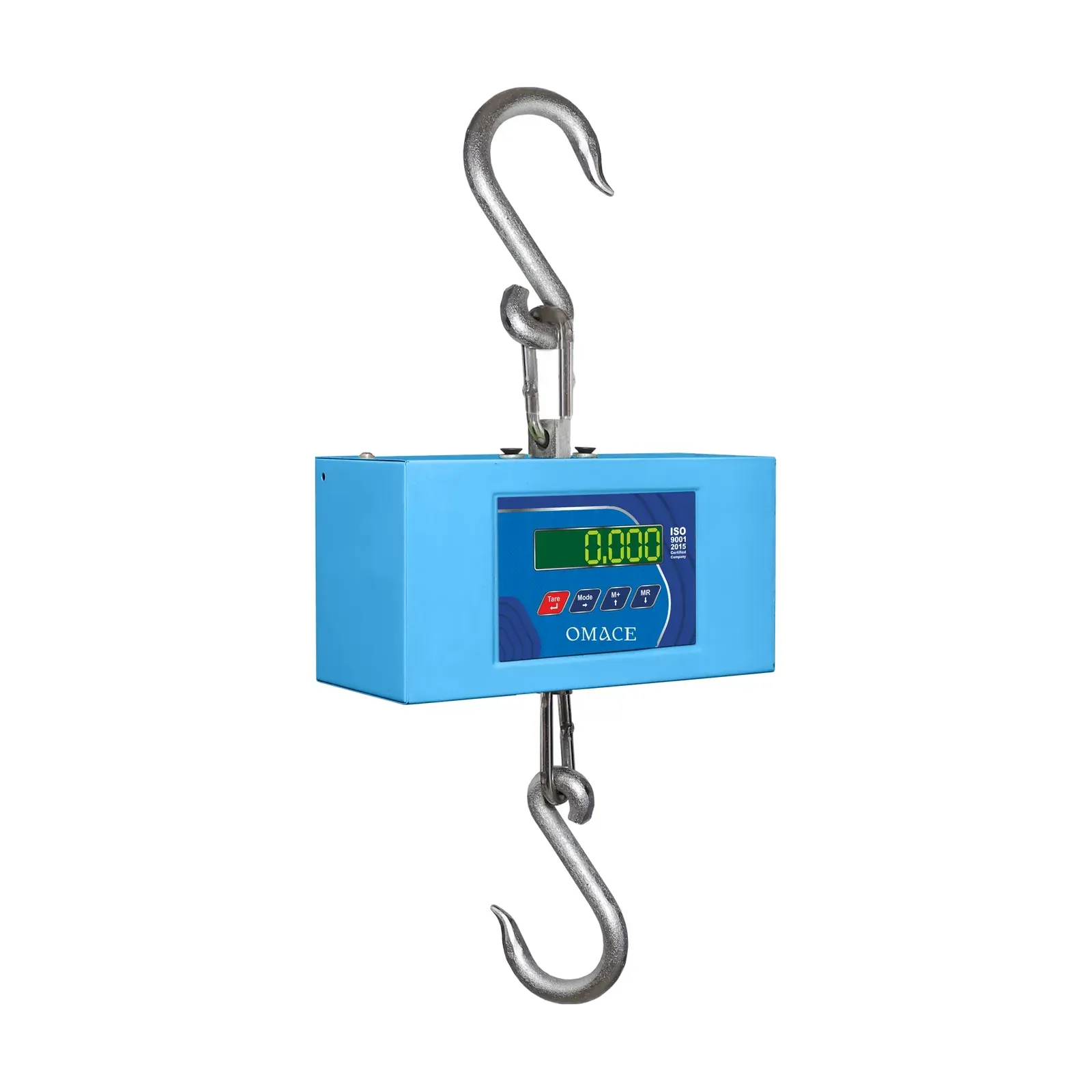
The OCS crane scale has a die-cast body and a remote control. The 1 ton crane scale comes with a shackle and safety hook. Prices are as on the store on 20 November 2026. Browse the full crane scale range to match your heaviest regular load.
Repairs and spare parts
Omace Brands Private Limited repairs its commercial scales when the buyer asks. The buyer pays the shipping both ways and the repair cost, and spare parts depend on availability, so ask first on the contact page. No turnaround time is promised.
Write the check down
A small log beside the crane helps more than a long manual: the date, the scale used, the load, who looked at the hook and latch, and anything odd. Over a few months it shows which scale reads differently from the others and which sling is wearing. If the lifting is for a factory, it also fits the examination register the law expects.